
🇨🇦 Canada Travel Guide
Western Canada: Wild Landscapes, Coastal Cities, Ancient Forests & the Power of the Rockies
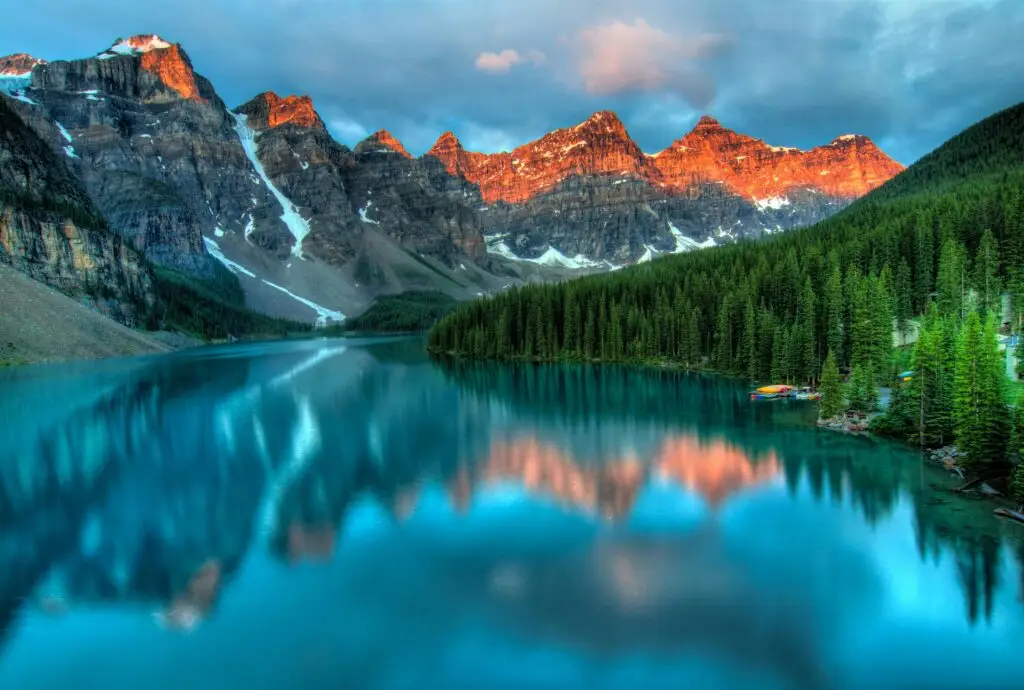
Canada is a land of astonishing scale — a country woven from forests that stretch farther than the horizon, mountains that rise like ancient guardians, rivers that carve deep canyons, and coastlines where whales break the surface of icy blue water. It is a nation shaped by Indigenous cultures thousands of years old, by waves of explorers, by European settlers, by multicultural migration, and by landscapes so dramatic they redefine what “nature” means.
Western Canada, the subject of this first part, is where the wilderness feels closest, the mountains feel tallest, and the Pacific winds bring mist, rain, sunlight, and life to ancient forests. This region includes British Columbia, Alberta, the Canadian Rockies, and the Pacific coast — urban centers like Vancouver and Calgary that thrive beside towering mountains and endless natural parks. Western Canada is cinematic, emotional, and expansive. It is a place where you feel small, but in a way that opens your heart rather than overwhelms you.
This chapter explores the western half of the country in a rich, atmospheric, deeply descriptive style — ideal for the first pillar of your 12,000-word Canada guide.
The Spirit of Western Canada — A Land of Mountains, Water, Forest & Sky
Western Canada is defined by contrast: rugged mountains and calm lakes, stormy coastlines and peaceful islands, bustling cities and quiet wilderness, sunny plains and snow-covered peaks. Everywhere you look, nature dominates. Even in the heart of Vancouver or Calgary, you feel the call of mountains nearby, visible on the horizon like a promise.
The people of Western Canada often speak of the outdoors as part of their identity: hiking on weekends, skiing in winter, surfing on Vancouver Island, camping beside turquoise lakes, cycling, whale watching, or simply standing in awe of the Rocky Mountains. There is a deep respect for wildlife, nature, and the environment — a cultural value shaped by proximity to untouched landscapes.
Western Canada is peaceful, clean, safe, and culturally diverse. You feel a sense of openness, both in the physical space and in the welcoming attitude of the people. The multicultural mix — Indigenous communities, Asian immigration, European settlers, Latin American and Middle Eastern communities — creates vibrant neighborhoods, cuisine, festivals, and creative energy.
But above all, Western Canada is defined by its landscapes: the Pacific Ocean on one side, the Canadian Rockies on the other, and between them forests, lakes, rivers, meadows, and mountains that shape the soul of the region.
VANCOUVER — Pacific Energy, Multicultural Life & Natural Harmony
Vancouver is one of the world’s most livable cities — a coastal metropolis where glass skyscrapers reflect the mountains and ocean, where cherry blossoms bloom in spring, where bicycle lanes weave through neighborhoods, and where parks, beaches, and forests flow into the urban fabric.
The Atmosphere of Vancouver
Vancouver feels fresh, clean, bright, and internationally connected. The scent of rain, cedar trees, and ocean breeze mingles with the aroma of coffee from countless cafés. People walk or cycle to work. Joggers circle the seawall. Seagulls glide over the harbor. Downtown is compact but vibrant — full of restaurants, markets, art galleries, and boutiques.
At sunset, the mountains glow in shades of orange and pink while ships drift into the harbor. The city feels modern, young, creative, and deeply connected to the natural world.
Stanley Park — The Wild Heart of the City
Stanley Park is one of the greatest urban parks on Earth — a lush rainforest peninsula surrounded by the ocean. Its towering cedar and fir trees create a cool, green world of quiet trails and mossy stones. The seawall circling the park is iconic, offering views of downtown, beaches, marinas, mountains, and forests in a continuous loop of beauty.
Totem poles carved by Indigenous artists honor the First Nations who lived here long before Canada existed. Beaches like Second Beach and English Bay invite visitors to relax in summer, while the forest provides shelter from rain in winter.
Granville Island, Gastown & Cultural Life
Granville Island blends markets, artisan studios, theatres, cafés, and handmade crafts. The Public Market is full of fresh produce, seafood, pastries, and local food stalls. Gastown, one of Vancouver’s oldest districts, has brick streets, steam clocks, boutiques, and a trendy restaurant scene.
Cultural influences from around the world flow into Vancouver. Food here reflects global creativity — Japanese ramen shops, Korean BBQ, Chinese dim sum, Indian restaurants, Middle Eastern cafés, Italian bakeries, and Indigenous-inspired cuisine that highlights local ingredients.
Vancouver feels soft, sophisticated, laid-back, and full of natural grace.
VANCOUVER ISLAND — Forests, Beaches, Whales & Island Serenity
Just a ferry ride away lies Vancouver Island — a world of rugged coastlines, ancient forests, misty beaches, and small towns that feel far removed from city life.
Victoria — British Charm & Oceanfront Elegance
Victoria, the provincial capital, blends British colonial architecture with seaside beauty. The Inner Harbour is surrounded by the Empress Hotel, Parliament Buildings, and cafés overlooking the water. Whale-watching boats depart daily, often encountering orcas, humpbacks, and seals.
Victoria has gardens blooming year-round, quiet neighborhoods, and a refined cultural scene — but also a relaxed island rhythm.
Tofino & Pacific Rim National Park
Tofino is one of Canada’s most atmospheric destinations — a surf town surrounded by wild rainforest and long beaches. Storm watching is famous here: waves crash dramatically against the coast, winds roar through the forest, and mist drifts over driftwood and rocky shores.
Pacific Rim National Park Reserve is a place of deep beauty: mossy trails, massive trees, sandy beaches stretching for miles, tide pools full of marine life, and the steady rhythmic music of ocean waves.
Tofino feels spiritual, adventurous, and soothing at the same time.
THE CANADIAN ROCKIES — Mountains of Myth, Ice & Light
The Canadian Rockies are the crown jewel of Western Canada — a vast mountain range stretching across British Columbia and Alberta, filled with peaks, glaciers, turquoise lakes, waterfalls, and forests. This region is one of the most breathtaking places on Earth.
Banff National Park — Turquoise Lakes & Alpine Majesty
Banff is an alpine wonderland. Lakes like Lake Louise and Moraine Lake shine in unreal shades of blue caused by glacial minerals suspended in the water. Sunlight makes the lakes glow like liquid gemstones. The surrounding peaks rise sharply, often snow-capped even in summer.
Banff Town is charming, with cafés, bakeries, restaurants, and mountain-themed shops. Elk wander near the roads. Snow covers the mountains in winter, turning the region into a ski paradise.
Moraine Lake — A Symbol of Canadian Beauty
Moraine Lake is perhaps the most photographed lake in Canada — its deep turquoise water surrounded by the Valley of the Ten Peaks. At sunrise, the mountains reflect on the surface like a painting. It feels ancient, serene, and otherworldly.
Lake Louise — Grace & Grandeur
Lake Louise sits beneath a massive glacier. A wooden boardwalk lines its shore. Canoes drift across glowing water. The Fairmont Chateau hotel sits at the far end, looking like a castle beside a mountain cathedral.
Yoho, Kootenay & Jasper — Wilderness Beyond Words
Yoho National Park has powerful waterfalls, emerald lakes, and rugged limestone peaks. Kootenay National Park blends forests, hot springs, and narrow canyons. Jasper National Park, larger and wilder than Banff, offers dark-sky preserves, wide valleys, glacial lakes, hot springs, wolves, bears, caribou, and mountain ranges that stretch endlessly.
The Icefields Parkway, connecting Banff and Jasper, is one of the most scenic roads in the world — glaciers hanging from cliffs, waterfalls pouring from mountainsides, meadows blooming with wildflowers, and lakes glowing beneath rocky giants.
The Rockies feel sacred, majestic, and awe-inspiring.
CALGARY — Prairie Sky, Mountain Gateway & Western Spirit
Calgary sits where prairie meets mountains. It is modern, clean, friendly, and full of sunshine. The Bow River flows through the center, surrounded by parks and pathways. The Calgary Tower rises above the skyline. The city is famous for the Calgary Stampede, a massive festival celebrating western heritage and rodeo culture.
Calgary feels optimistic, open, and vibrant — a gateway to the Rockies and a city where modern architecture blends with cowboy culture.
EDMONTON — Art, Festivals & Northern Personality
Edmonton, farther north, is a city of creativity and festivals. The North Saskatchewan River winds through deep valleys lined with trails. The city has a strong arts scene, with theatres, museums, and year-round events. Winter is cold and snowy, but Edmontonians embrace it with festivals, skating, skiing, and winter markets.
Edmonton feels youthful, cultural, and full of community spirit.
THE CULTURE OF WESTERN CANADA — Nature, Diversity & Community
Western Canadian culture is shaped by nature: people hike, ski, kayak, bike, surf, and camp as part of their lifestyle. There is a strong emphasis on environmental protection, Indigenous reconciliation, cultural diversity, and healthy living.
Immigration has brought flavors, stories, traditions, languages, and creativity from around the world. Cities feel multicultural and inclusive. Music festivals, art events, farmers markets, and outdoor gatherings bring people together.
Western Canada feels healthy, open-hearted, peaceful, and alive with possibility.
Ontario: Great Lakes, Toronto, Ottawa, Wilderness, Waterfalls & the Heart of Eastern Canada
Ontario is Canada’s beating heart — a vast province where modern cities rise beside ancient lakes, where skyscrapers overlook islands and forests, where waterfalls thunder endlessly, and where the wilderness stretches farther than the human eye can follow. It is the most populated province in the country, home to a rich blend of cultures, languages, cuisines, and traditions from every part of the world. Yet Ontario is also overwhelmingly natural: thousands of lakes, maple forests that blaze in autumn colors, marshlands alive with wildlife, cliffs rising above deep blue water, and national parks where moose, wolves, bears, and loons live in silence.
This second part of your Canada guide explores Ontario in long, atmospheric detail — its cities, landscapes, waterways, heritage, and emotional essence.
The Spirit of Ontario — Lakes, Forests & Multicultural Cities
Ontario’s identity is shaped by water. The province touches four of the five Great Lakes — Superior, Huron, Erie, and Ontario — forming some of the largest freshwater bodies on Earth. These lakes create unique microclimates, long sandy beaches, rugged cliffs, islands, bays, and ecosystems filled with birds, fish, and wildlife. Canoeing and lake culture are deeply woven into Ontario life: cottages by the water, kayaks stored on porches, loons calling across morning mist.
At the same time, Ontario is deeply multicultural. Nearly every language spoken on Earth can be heard in Toronto’s neighborhoods. Restaurants represent every cuisine. Art, music, film, and fashion thrive. Indigenous communities preserve and celebrate their histories. Festivals fill the calendar. This blend of urban energy and natural peace gives Ontario its distinctive personality. It is cosmopolitan and wild, modern and ancient, thoughtful and energetic.
TORONTO — Canada’s Global Metropolis
Toronto is the largest city in Canada — a dynamic waterfront metropolis surrounded by parks, ravines, beaches, islands, skyscrapers, and diverse neighborhoods that each feel like their own world. It is modern, ambitious, creative, and famously multicultural.
The Atmosphere of Toronto
Toronto feels alive. Streetcars glide through neighborhoods. People rush to cafés and offices. Markets buzz with energy. Rooftop patios glow at night. The CN Tower rises above it all, a symbol of the city’s futuristic skyline. Yet despite its urban nature, Toronto is incredibly green: ravines cut through the city, lined with forests and cycling paths; waterfront parks offer views of Lake Ontario; and islands sit just a ferry ride away.
The city feels like a mosaic — a place where difference is not only tolerated but embraced and celebrated.
Neighborhoods With Personality
Every neighborhood in Toronto feels like a different country.
Kensington Market is bohemian, filled with vintage shops, murals, bakeries, live music, and multicultural street food.
Chinatown bursts with markets, herbal shops, dim sum restaurants, and lantern-lit streets.
The Distillery District preserves Victorian industrial buildings transformed into art galleries, cafés, boutiques, and holiday markets.
Queen West is trendy, artistic, full of design studios, cafés, bars, and independent shops.
Little Italy, Little India, Greektown, Koreatown, and countless other enclaves reflect Toronto’s immigration history.
Toronto feels global, but its multiculturalism feels local and personal — woven into daily life rather than simply displayed.
Toronto Islands — Peace Across the Water
A short ferry ride from downtown, the Toronto Islands offer beaches, forests, picnic areas, lagoons, and some of the city’s best skyline views. The islands feel like an escape, yet remain connected to the life of the city. Sailboats drift across the lake. Beaches fill with families in summer. Cyclists glide through shaded trails.
The contrast between the islands’ peaceful atmosphere and Toronto’s skyline defines much of the city’s charm.
OTTAWA — Canada’s Capital of Culture, Heritage & Calm
Ottawa, located where the Ottawa River meets the Rideau Canal, is refined, peaceful, and filled with museums, government buildings, historic architecture, and natural beauty. As Canada’s capital, it blends political importance with cultural richness.
Atmosphere & Identity
Ottawa feels elegant and quiet compared to Toronto. Parliament Hill rises above the river, its Gothic Revival architecture lit dramatically at night. Museums such as the National Gallery, Canadian Museum of History, and Canadian War Museum tell the story of the nation. The Rideau Canal, a UNESCO World Heritage Site, winds through the city and becomes the world’s largest skating rink in winter.
Ottawa balances sophistication with warmth — a city of parks, cafés, cycling paths, embassies, festivals, and seasonal charm.
NIAGARA FALLS — A Natural Wonder of Immense Power
Niagara Falls is one of the world’s most dramatic waterfalls — three massive cascades that send millions of liters of water plunging every second. The roar of the falls is constant. Mist rises into the sky like smoke. Rainbows form across the gorge. Boats sail toward the pounding water, disappearing into the spray.
The Horseshoe Falls, the largest and most powerful, straddles the Canadian border and offers breathtaking views from every angle. At night, lights illuminate the falls in changing colors, adding a dreamlike quality.
Holy places of nature feel sacred; Niagara is one of them.
ALGONQUIN PROVINCIAL PARK — Lakes, Moose, Silence & Canoes
Algonquin Park is one of Canada’s most iconic wilderness regions — a vast network of lakes, rivers, forests, wetlands, and rolling hills home to moose, wolves, bears, beavers, and countless birds. The park is famous for canoe trips that span days or weeks through interconnected waterways, often without seeing another soul.
Mornings in Algonquin feel magical: mist floats above lakes like white silk, loons call hauntingly, and sunlight slowly filters through pines. Autumn transforms the forest into a flame-colored mosaic of red, orange, and gold. Winter blankets the park in silence and snow.
Algonquin is the spiritual wilderness of Ontario, a place where travelers reconnect with nature’s rhythm.
THE GREAT LAKES — Inland Oceans of Blue & Gold
Ontario’s Great Lakes are so vast and deep that they resemble inland seas. Their beaches stretch for kilometers. Their waves crash like ocean surf. Their cliffs rise in dramatic shapes carved by glaciers.
Lake Superior — The Wild Giant
Lake Superior is the largest freshwater lake on Earth by surface area. Its northern shores, part of Lake Superior Provincial Park and Pukaskwa National Park, reveal rugged cliffs, pebble beaches, boreal forests, and water so cold and clear it feels untouched.
Storms sweep across the lake with dramatic force. Sunsets reflect off its surface in fiery tones. The lake feels ancient and powerful.
Bruce Peninsula & Tobermory — Caribbean-Blue Water in Canada
On Lake Huron, the Bruce Peninsula offers astonishingly clear water, limestone cliffs, caves, and forests. Tobermory feels like a charming harbor town with boat tours to Flowerpot Island — a geological wonder with stone pillars and turquoise bays.
This region is one of Ontario’s most beautiful natural landscapes.
NORTHERN ONTARIO — Endless Forests & True Wilderness
Beyond the cities lies a vast northern world of lakes, granite shields, pine forests, remote towns, and northern lights. Communities are spread out. Wildlife is abundant. The feeling is one of freedom, solitude, and untouched beauty.
Places like Thunder Bay, Sudbury, Timmins, Sault Ste. Marie, and remote fly-in fishing camps provide access to this wilderness. In autumn, the forest glows in orange and red. In winter, snow turns the landscape silent and ethereal.
Northern Ontario is raw, quiet, and deeply Canadian.
CULTURE OF ONTARIO — Diversity, Creativity & Heritage
Ontario’s culture is enriched by First Nations, French explorers, British settlers, and immigrants from every continent. This makes the province vibrant, multilingual, and full of artistic expression.
Indigenous traditions — storytelling, music, powwows, drumming, and artwork — remain important cultural pillars.
French heritage influences areas along the Ottawa River and Great Lakes.
British influence lingers in architecture, government, and historic towns.
Immigrant communities bring festivals, cuisine, art, and global energy.
Ontario is not just a province — it is a cultural crossroads.
FOOD & FLAVORS OF ONTARIO — Global, Local & Seasonal
Ontario’s food culture blends Canadian classics with international influences. Toronto’s food scene is world-class: dumplings, shawarma, pasta, sushi, tacos, curries, roti, French pastries, and modern Canadian cuisine appear across the city.
Local ingredients like maple syrup, blueberries, lake fish, venison, corn, and apples define regional dishes.
Farmer’s markets thrive in summer.
Vineyards in Niagara-on-the-Lake produce award-winning wines.
Ontario’s food culture feels fresh, multicultural, and deeply tied to the seasons.
THE EMOTIONAL ESSENCE OF ONTARIO
Ontario leaves a gentle yet strong impression.
It is the whisper of wind through autumn leaves.
The glow of Toronto’s skyline reflected on the lake.
The thunder of Niagara Falls that shakes the air.
The quiet of Algonquin at sunrise.
The playful cry of loons across a misty bay.
The warmth of multicultural neighborhoods where everyone belongs.
Ontario is a place where nature and humanity coexist in harmony — vast, welcoming, peaceful, and full of promise.
Québec: French-Canadian Culture, Winter Spirit, Historic Cities, Fjords, Forests, Mountains & the Soul of La Belle Province
Québec is unlike any other part of Canada. It is a province where French is not just a language but an identity, where European charm blends with North American landscapes, where winters are long and magical, where festivals fill the streets, and where the culture feels deep, proud, poetic, expressive, and beautifully different. Québec has its own rhythm — a mixture of old-world elegance, vibrant creativity, and a warm hospitality shaped by centuries of tradition. It is a place where maple forests glow with color in autumn, where fjords carve dramatic waterways into ancient rock, where snowy villages sparkle in winter, and where the scent of fresh pastries drifts through historic neighborhoods.
This part of your guide dives into the essence of Québec: its cities, nature, history, food, and emotional atmosphere.
The Spirit of Québec — Culture, Language & French Identity
Québec’s identity is built on the French language, which threads through music, literature, education, media, and everyday conversation. French-speaking Québécois people feel a strong connection to their heritage. Signs, menus, street names, radio stations, government services — all primarily in French — give the province a tone and personality that feels distinctly European and distinctly Canadian at the same time.
Québécois culture is festive, artistic, passionate, and often humorous. The province is known for storytelling, music, theatre, poetry, and winter celebrations. People gather for meals, maple syrup festivals, summer markets, open-air concerts, and cozy winter evenings by the fire. There is a sense of community, pride, and resilience — shaped by history, climate, and the desire to preserve a unique cultural identity in North America.
Québec feels expressive, soulful, romantic, and alive with creativity.
MONTRÉAL — Culture, Creativity & Urban Energy
Montréal is the cultural and artistic capital of Québec — a city of festivals, museums, cafés, neighborhoods, nightlife, and historic European charm. It sits on an island in the St. Lawrence River, its skyline crowned by Mount Royal, the small mountain that gives the city its name.
Atmosphere of Montréal
Montréal feels bold and free. It is youthful, energetic, multilingual, and deeply artistic. Murals cover building walls. Musicians play on street corners. Outdoor terraces fill in summer. In winter, the city glows with lights and warmth despite the snow. Montréal’s personality shifts with the seasons: vibrant and sunny in summer, fiery with autumn colors, sparkling and festive in winter, and hopeful in spring.
The streets feel alive: bicycles, pedestrians, cafés spilling onto sidewalks, markets buzzing with activity, and conversations flowing in French, English, and dozens of other languages.
Old Montréal — Cobblestones & European Charm
Vieux-Montréal feels like a piece of Europe transplanted into Canada. Its cobblestone streets, stone buildings, and historic plazas reflect French colonial heritage. The Notre-Dame Basilica, with its blue and gold interior, is breathtaking — one of the most beautiful churches in North America.
Street performers play music near the Old Port. Cafés spill out onto terraces. Horse-drawn carriages pass by. The atmosphere is romantic, timeless, and elegant.
Mile End, Plateau & Montréal’s Creative Soul
These neighborhoods define modern Montréal: artistic, bohemian, multicultural, and full of murals, bakeries, coffee shops, boutiques, vintage stores, and small restaurants serving everything from bagels to falafel to modern Québec cuisine.
Plateau-Mont-Royal, with its colorful staircases and charming row houses, is one of the city’s most photographed neighborhoods. Mile End is known for its creative energy — bookstores, artist studios, independent cafés, and the legendary Montreal-style bagels.
Montréal feels expressive, warm, imaginative, and full of cultural depth.
QUÉBEC CITY — Romance, History & Storybook Beauty
Québec City is one of the oldest European settlements in North America and the only walled city north of Mexico. Its historic center, Old Québec, is a UNESCO World Heritage Site — a masterpiece of cobblestone streets, stone houses, charming shops, cathedrals, and viewpoints overlooking the St. Lawrence River.
Atmosphere of Québec City
Québec City feels magical. The Fairmont Château Frontenac, perched on a cliff, looks like a castle watching over the river. Streets curve and climb. Cafés glow with warm light. In winter, snow turns the city into something out of a fairytale — carriages move through snowy streets, Christmas markets line the Old Town, and lights reflect off icy windows.
The city is steeped in history: battles, fortifications, old churches, cannons, and centuries-old architecture. Yet it remains lively, filled with music, festivals, local cuisine, and a deep sense of pride.
Québec City is romantic, historic, cozy, and profoundly atmospheric.
CHARLEVOIX — Mountains, Culture & the St. Lawrence River
Northeast of Québec City lies Charlevoix — a region of mountains, rolling hills, artisanal villages, farms, art galleries, and dramatic river views. This land was shaped by a meteor impact millions of years ago, creating a circular valley surrounded by stunning scenery.
The region feels peaceful, artistic, agricultural, and full of natural beauty. Small towns like Baie-Saint-Paul are known for painters and craftsmen. The St. Lawrence River widens into a majestic estuary where whales migrate. Mountains rise behind fields. Farms produce cheese, cider, chocolate, and fresh ingredients that define Charlevoix cuisine.
Charlevoix feels soothing, authentic, and pastoral.
THE FJORDS OF SAGUENAY — Majestic, Deep & Timeless
The Saguenay Fjord is one of the only navigable fjords in North America — a deep, dramatic waterway with cliffs rising from dark blue water, surrounded by forests, small villages, and endless quiet. Boats drift through the fjord beneath towering rock faces. Beluga whales swim near river mouths. Kayakers paddle along calm shores surrounded by rugged cliffs.
The fjord region blends adventure and tranquility: hiking trails along cliffs, small harbors, wooden cabins, and viewpoints where the fjord disappears into mist.
Saguenay feels ancient, powerful, and humbling.
LAURENTIANS — Lakes, Chalets & Four-Season Beauty
North of Montréal lies the Laurentians — rolling mountains covered in forests, dotted with lakes, chalets, ski resorts, hiking trails, and charming villages.
Summer & Autumn in the Laurentians
In summer, lakes sparkle in the sun, forests hum with birds, and people swim, canoe, cycle, and relax at lakeside cottages. Villages like Saint-Sauveur and Mont-Tremblant flourish with cafés, bakeries, and outdoor terraces.
Autumn turns the region into a mosaic of red, gold, and orange — one of the most beautiful fall destinations in the world.
Winter Magic
The Laurentians become a world of snow: ski slopes, winter festivals, cozy chalets with crackling fireplaces, snowshoeing trails, frozen lakes, and holiday lights.
The region feels warm, festive, and deeply charming in winter.
GASPÉSIE — Wild Cliffs, Lighthouses & Coastal Freedom
Gaspésie is the wild edge of Québec — a peninsula jutting into the Gulf of St. Lawrence, defined by mountains, cliffside roads, lighthouses, fishing villages, and ocean views that stretch forever.
The region is rugged, windy, dramatic, and incredibly peaceful. The famous Percé Rock — a massive limestone arch rising from the sea — is one of Canada’s iconic natural landmarks. Nearby Bonaventure Island hosts one of the world’s largest gannet colonies.
Gaspésie feels free, wild, remote, and pure.
INDIGENOUS CULTURE — Roots, Stories & Living Heritage
Québec is home to 11 Indigenous nations, including the Innu, Cree, Mohawk, Abenaki, Atikamekw, Huron-Wendat, Inuit, and others. Their traditions remain alive through language, crafts, canoe-building, drumming, powwows, artwork, and storytelling.
Indigenous culture adds depth, wisdom, and ancient continuity to the land — a reminder that Québec’s story is far older than colonial history.
FOOD OF QUÉBEC — Comfort, Creativity & French Inspiration
Québécois cuisine blends French culinary foundations with Canadian ingredients, local farms, and hearty flavors suited to long winters.
Classic Dishes
Poutine, tourtière, sugar pie, pea soup, smoked meat sandwiches, pastries, seafood chowders, and maple desserts define traditional cuisine.
Modern Québécois Cuisine
Chefs across Montréal and Québec City reinterpret these classics with creativity, blending global influences with local ingredients like venison, berries, maple syrup, cider, cheese, and fish from the St. Lawrence River.
Maple Season
In early spring, sugar shacks (cabanes à sucre) serve maple-infused meals: ham, sausages, omelets, beans, pancakes, taffy on snow — a beloved family tradition.
Québec cuisine feels warm, comforting, creative, and deeply rooted in heritage.
THE EMOTIONAL ESSENCE OF QUÉBEC
Québec leaves its mark in subtle, emotional ways:
the glow of Old Québec under falling snow,
the music drifting from Montréal cafés,
the vastness of the Saguenay Fjord,
the colors of autumn forests,
the kindness of locals who speak with warmth and pride,
the poetry of French language echoing through old streets,
the comfort of maple-sweet air after winter storms,
the beauty of villages beside mountains and rivers.
Québec is romantic, soulful, expressive, and filled with heart.
It is a province that feels both ancient and modern, rooted and free, welcoming and unique.
Atlantic Canada & The Far North: Coastlines, Icebergs, Culture, Mountains, Fishing Villages, Northern Lights & the Soul of the Arctic
Canada’s eastern provinces and northern territories reveal a side of the country that feels ancient, poetic, rugged, and deeply human. The Atlantic coast hums with lighthouses, fishing villages, whale calls, warm maritime culture, and landscapes shaped by wind and waves. The North feels vast and mythic — a land of tundra, glaciers, polar bears, Arctic communities, and the silent dance of the Aurora Borealis across the frozen sky.
These regions carry the oldest stories of the land — from Indigenous nations who have lived here for thousands of years to sailors, settlers, cod fishermen, whalers, and explorers who braved the edge of the known world. Together, Atlantic Canada and the North form the emotional capstone of your 12,000-word Canada guide.
🌊 ATLANTIC CANADA — Where Land Meets Ocean, Culture Meets Tradition & Time Slows Down
Atlantic Canada includes Nova Scotia, New Brunswick, Prince Edward Island, and Newfoundland & Labrador — provinces defined by sea cliffs, islands, bays, forests, seafood, Celtic and Acadian roots, and a gentle way of living that feels far removed from city rush.
It is a region of lighthouses glowing in fog, colorful waterfront houses, winding coastal roads, sea winds, whales breaching offshore, fishing boats resting in harbors, and communities shaped by both hardship and hospitality.
The atmosphere is warm, nostalgic, friendly, and deeply tied to nature.
NOVA SCOTIA — Lighthouses, Cliffs, Music & Maritime Magic
Nova Scotia feels like a world built around the ocean. Everywhere you drive, water appears — bays, coves, inlets, islands, endless coastline. The province blends rugged cliffs with gentle fishing towns, Celtic music with Acadian heritage, and ancient forests with world-class seafood.
Halifax — A Friendly Seaside Capital
Halifax is lively, youthful, maritime, and full of history. Wooden boardwalks line the harbor. Sailboats drift past colorful buildings. Pubs play live music every night — folk, Celtic, fiddle, and modern acoustic performances that carry the spirit of Atlantic storytelling.
Halifax feels welcoming, open-hearted, and relaxed.
Peggy’s Cove — A Lighthouse in the Wind
Peggy’s Cove is one of Canada’s most iconic scenes: a small fishing village perched on wave-battered rocks, overlooked by a white lighthouse standing proudly against the ocean wind. The granite boulders glow gold at sunset. Waves crash dramatically. The village’s colorful houses complete the storybook scene.
It is quiet, powerful, timeless.
Cape Breton Island — Mountains, Ocean & the Cabot Trail
Cape Breton Island is the soul of Nova Scotia — wild, mountainous, musical, and culturally rich. The Cabot Trail is one of the world’s most beautiful coastal drives, winding through cliffs, forests, and ocean vistas. Highlands National Park blends dramatic landscapes with wildlife like moose, bald eagles, whales, and foxes.
Cape Breton’s Celtic culture shines in music halls, community dances, and festivals.
The island feels wild, spirited, and deeply emotional.
PRINCE EDWARD ISLAND — Red Cliffs, Gentle Farms & Anne of Green Gables
PEI (Prince Edward Island) is Canada’s smallest province — soft, warm, pastoral, and famous for its red sandstone cliffs, sandy beaches, green fields, lighthouses, potatoes, seafood, and literary history.
Atmosphere of PEI
The island feels soft and soothing — breezy fields, quiet roads, small towns, and rolling coastlines shaped by tides. Beaches stretch in golden arcs. Dunes rise like sandy mountains. Cows graze on gentle hills. Fishing villages serve lobster fresh from the ocean.
Charlottetown & Cultural Roots
Charlottetown, the birthplace of Canadian Confederation, has colorful Victorian houses, waterfront parks, and a charming downtown filled with cafés.
PEI feels peaceful, intimate, nostalgic, and full of simple beauty.
NEW BRUNSWICK — Forests, Tides & Acadian Culture
New Brunswick is the only officially bilingual province in Canada, blending French Acadian culture with Maritime heritage, forested landscapes, and dramatic coastlines.
Bay of Fundy — The Most Extreme Tides on Earth
The Bay of Fundy has tides so powerful they rise and fall up to 16 meters — the highest tidal range in the world. Rocks transform from islands to towers as water drains and returns. Hopewell Rocks, shaped like giant sandstone flowerpots, reveal beaches during low tide and ocean during high tide.
The Fundy coast feels powerful, mysterious, and otherworldly.
Forests, Rivers & Quiet Towns
New Brunswick is covered in forests and rivers — peaceful, green, and filled with wildlife. Acadian culture thrives in music, festivals, cuisine, and traditions passed through generations.
The province feels grounded, earthy, and quietly beautiful.
NEWFOUNDLAND & LABRADOR — Cliffs, Icebergs, Whales & Ancient Stories
Newfoundland & Labrador is one of the most dramatic and unique regions of Canada — rugged cliffs, fjords, fishing outports, Viking heritage, iceberg-filled waters, puffins, whales, and a culture unlike anywhere else.
St. John’s — Color & History on the Edge of the Atlantic
St. John’s, one of the oldest cities in North America, is famous for:
Bright-colored row houses
Steep hills
Harbor views
Live music pubs
Friendly locals with melodic accents
Signal Hill rises above the city with sweeping ocean views. Jellybean Row houses create a rainbow of color across the old streets.
St. John’s feels cheerful, historic, artistic, and full of personality.
Iceberg Alley — Ice Giants Drifting Through Blue Water
From spring to early summer, icebergs drift along Newfoundland’s coast — towering white-and-blue sculptures carved by Arctic forces, glowing under northern sunlight.
They creak, crack, melt, and drift slowly — breathtaking reminders of the North.
Gros Morne National Park — Fjords, Mountains & UNESCO Glory
Gros Morne is one of Canada’s most extraordinary natural wonders:
deep fjords
towering cliffs
glacier-carved valleys
ancient mountains
coastal meadows
dramatic skies
The Tablelands reveal exposed Earth’s mantle — a landscape unlike any other on Earth.
Newfoundland’s wilderness feels raw, humbling, and majestic.
❄️ THE NORTH — YUKON, NORTHWEST TERRITORIES & NUNAVUT
Land of the Midnight Sun, Polar Bears, Glaciers & Northern Lights
Canada’s northern territories are vast, remote, and spiritually powerful. Here, the land meets the sky with breathtaking intensity. The Arctic wind feels ancient. Silence stretches across tundra. Aurora Borealis dances above snow fields. Glaciers shine in blue ice. Wildlife roams free.
This is a region defined by Indigenous cultures, long winters, endless summer daylight, and landscapes untouched by time.
YUKON — Gold Rush History, Mountains & the Call of the Wild
The Yukon is filled with high mountains, wild rivers, gold rush towns, and unbroken wilderness.
Whitehorse
Whitehorse, the capital, sits along the Yukon River — quiet, scenic, and full of northern creativity.
Kluane National Park — Canada’s Tallest Mountains
Home to Mount Logan, Canada’s highest peak, Kluane contains massive glaciers, deep valleys, grizzly bears, and some of the most dramatic scenery in North America.
The Yukon feels adventurous, free, and deeply connected to nature.
NORTHWEST TERRITORIES — Aurora, Lakes & Arctic Beauty
The Northwest Territories contain the best Northern Lights viewing on the planet — bright, swirling ribbons of green, pink, and purple that illuminate winter skies.
Yellowknife
Yellowknife is vibrant, friendly, and built around lakes, ice roads, and Indigenous culture. Winter brings festivals, dog sledding, and magical night skies.
Great Slave Lake & Nahanni National Park
Nahanni is a UNESCO World Heritage Site featuring canyons, waterfalls, hot springs, and deep wilderness.
The Northwest Territories feel spiritual, infinite, and awe-inspiring.
NUNAVUT — The Arctic, Inuit Culture & Raw Polar Landscapes
Nunavut is the true Arctic — vast tundra, polar bears, glaciers, northern lights, Inuit communities, dog teams, sea ice, and traditions thousands of years old.
Inuit Culture
Inuit art, throat singing, carving, storytelling, hunting traditions, and survival knowledge form the heart of Nunavut.
Nature
Baffin Island’s fjords are enormous. Auyuittuq National Park contains glaciers and granite walls that rise sharply against icy skies.
Nunavut feels sacred, timeless, and profoundly humbling.
🌌 THE EMOTIONAL ESSENCE OF CANADA
Canada stays with you.
It stays in the quiet of a northern dawn.
In the glow of the Aurora Borealis across frozen lakes.
In the roar of Niagara Falls and the stillness of Algonquin mornings.
In the turquoise lakes of the Rockies and the fog of Nova Scotia.
In the colorful houses of St. John’s and the French cafés of Montréal.
In Indigenous stories echoing across ancient lands.
In maple forests glowing red in autumn.
In the gentle kindness of the people.
In the limitless sky, endless forests, and wild oceans.
Canada is a country of space, soul, beauty, and emotional depth.
A land of adventure and peace, diversity and unity, nature and culture.
A place that feels vast but welcoming, wild but comforting.
A place that touches the heart quietly, gently, deeply.
Canada is not just a destination — it’s a feeling.
 Related Articles
- Kakslauttanen Arctic Resort
- Top 10 Most Unique Places to Stay in Europe
- 10 Incredible Castles Around the World