
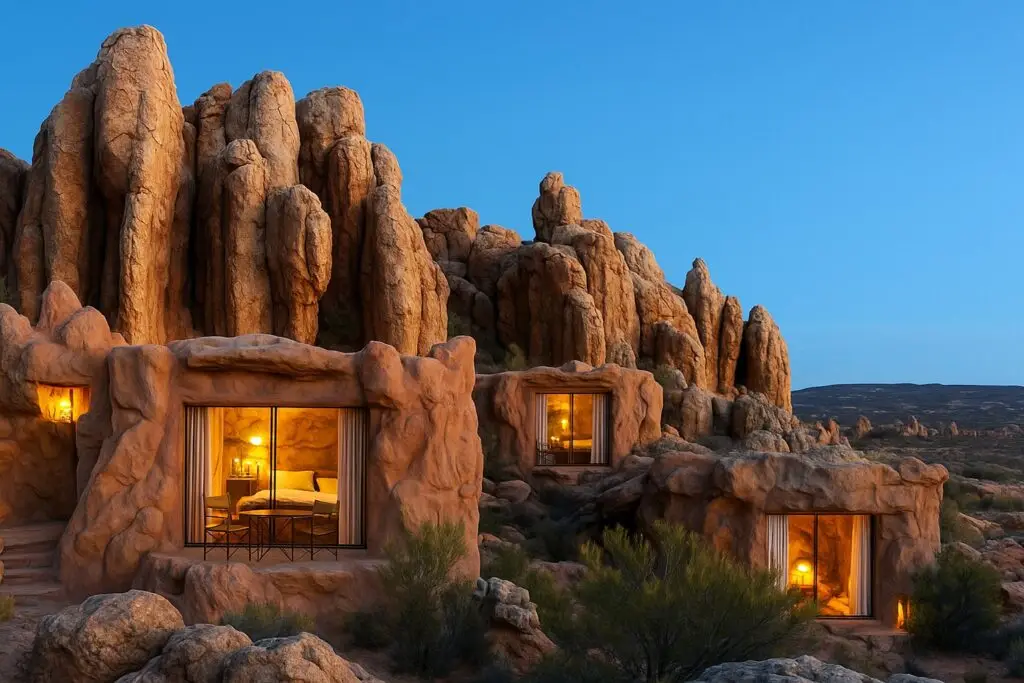
UNIQUE STAYS — DESERT CAMPS & CAVE SUITES
Deserts and caves represent two of the oldest forms of human shelter — environments where people have lived for thousands of years. The desert offers silence, wide horizons, star-filled skies, and landscapes carved by time; caves provide protective sanctuary, natural insulation, and connection to the Earth. Today, travelers can experience both worlds through desert camps and cave-style suites designed for modern comfort but grounded in ancient tradition.
Whether sleeping beneath the Milky Way on crimson sand in Jordan, resting inside an earthen cave in Italy, surrounded by volcanic tuff in Turkey, or checking into a luxury eco-camp in Namibia’s red dunes, these stays create powerful emotional experiences. They immerse guests in open space, geological history, and silence so deep you can hear the wind breathing.
Desert camps often combine luxury glamping with tribal hospitality: hand-woven carpets, tea rituals, low seating, wood-fired meals, and camel or 4×4 excursions. Cave suites, meanwhile, stand in sculpted rock walls and chambers lit by warm ambient light — a blend of minimalism and timeless architecture. Desert camps
This guide explores both desert camps and cave suites across the world, organized by continent and region. It offers a structural foundation for future subpages, accommodations, and booking resources. Desert camps
 Global Overview
You’ll find desert camps and cave suites in:
Middle East
- Jordan
- Oman
- Saudi Arabia
- Israel
Africa
- Morocco
- Namibia
- Egypt
- Tunisia
Asia
- Turkey
- Iran
- India
Europe
- Italy
- Greece
- Spain
Oceania
- Australia
Americas
- United States
- Peru
- Chile
Each destination showcases a distinct type of landscape — from canyon valleys to Sahara dunes, from Mediterranean limestone to volcanic plateaus.
1) MIDDLE EAST — ORIGINS OF DESERT CAMP CULTURE
The Middle East is the spiritual home of desert camps, a legacy of Bedouin tribes who have navigated dunes for centuries.
Top regions:
- Jordan
- Oman
- Saudi Arabia
- Israel
 Jordan
Wadi Rum — known as the Valley of the Moon — offers some of the most dramatic desert landscapes on Earth. Towering sandstone formations, red dunes, and wide valleys set the stage for unforgettable nights in Bedouin camps.
Stays range from traditional goat-hair tents lit by lanterns to futuristic dome suites with 180° desert panoramas. Inside, you’ll often find handcrafted textiles, stone bathrooms, and private terraces for stargazing.
Experiences include:
- Sunrise jeep tours
- Camel treks
- Sandboarding
- Nighttime astronomy
The silence feels ancient; many travelers describe Wadi Rum as otherworldly.
 Oman
Oman
Oman’s desert camps are located mainly in the Wahiba Sands: golden dunes stretching beyond the horizon. The atmosphere is gentle and serene, with camps blending modern comfort and Arabian tradition — woven carpets, candlelit dinners, and Arabian coffee rituals.
Private tented suites often include:
- Timber beds
- Minimalist interiors
- Open stargazing decks
Nearby oases and mountain wadis offer unique day-trip opportunities.
 Saudi Arabia
AlUla is rising as a desert-luxury hub, with camps and cave-style carved retreats set among sandstone canyons reminiscent of Petra.
The desert here is dramatic — dry canyons, rock spires, arches, and palm groves.
 Israel
The Negev Desert features eco-camps and cabin-style desert lodging designed for silence and star observation. Many incorporate local materials and sweeping desert terraces.
2) AFRICA — DUNES, CANYONS & SAHARA MAGIC
Africa’s deserts offer some of the world’s boldest landscapes — shifting dunes, stone plateaus, and nomadic heritage.
Top regions:
- Morocco
- Namibia
- Egypt
- Tunisia
 Morocco
The Sahara Desert around Merzouga and Zagora is one of the most iconic places for desert camps. Accommodation ranges from simple Bedouin tents to luxury glamping suites with tiled bathrooms, Berber rugs, and private terraces.
Evenings feature:
- Traditional music
- Sand-fire cooking
- Tea ceremonies
- Star-filled skies
Colors shift throughout the day — deep gold at sunrise, orange at sunset, and cool silver under the moon.
 Namibia
Namibia’s deserts are wild and sculptural:
- Sossusvlei’s towering red dunes
- Skeleton Coast’s fog-washed sands
- Damaraland’s rock plains
Lodges and camps often blend into the earth using stone, timber, and sand. Rooms focus on simplicity and panoramic views. Wildlife sightings include oryx, desert-adapted elephants, and brown hyenas.
Night skies in Namibia are among the darkest in the world — ideal for astronomy lovers.
 Egypt
Egypt
While desert stays in Egypt are less common, regions like the White Desert offer camp experiences surrounded by chalk rock formations that look sculpted by hand.
 Tunisia
Tunisia offers troglodyte cave homes and Saharan camps. Some cave dwellings are traditional semi-subterranean structures that stay cool even in summer.

3) ASIA — CAVE SUITES & DESERT TRADITIONS
Asia is home to the world’s most famous cave-hotel destination: Cappadocia. It also offers desert retreats influenced by ancient Silk Road culture.
Top regions:
- Turkey
- Iran
- India
- Central Asia
 Turkey — Cappadocia
Cappadocia is the icon of cave suites. Its soft volcanic tuff allowed ancient civilizations to carve homes, chapels, and entire underground cities into the earth.
Today, these rooms have transformed into atmospheric hotels featuring:
- Arched stone ceilings
- Carved nooks
- Private terraces
- Fireplaces
- Warm ambient lighting
They range from minimalist stone chambers to luxurious hideaways with spa baths carved into the rock. Many hotels offer terraces overlooking fairy chimneys and sunrise hot-air balloons.
This region combines desert energy with geological magic.
 Iran
Iran
Iran’s Kandovan village is built into volcanic rock, with unique cave-style homes resembling Cappadocia. Some have been converted into boutique accommodations with traditional Iranian décor and mountain views.
 India
India
India’s desert state — Rajasthan — offers tented camps in Thar Desert regions like Jaisalmer. Here, desert camps feel regal, often decorated with embroidered textiles, brass lanterns, and Mughal-inspired patterns.
4) EUROPE — CAVE SUITES WITH STYLE
Europe’s best cave suites are found in:
- Italy (Matera)
- Greece
- Spain
Here, cave living reflects ancient Mediterranean adaptation to heat.
 Italy — Matera
Matera’s historic cave dwellings (“sassi”) have become some of Europe’s most romantic boutique hotels. Interiors mix:
- Sandstone walls
- Minimalist furnishings
- Warm lighting
- Cliffside terraces
The overall feel is quiet, slow, and poetic.
Matera sits above a dramatic ravine, making the setting even more cinematic.
 Greece
On islands like Santorini, cave suites are carved into volcanic cliffs. Interiors are bright and smooth — cycladic minimalism meets cave tradition. Many include terraces facing the Aegean Sea.
 Spain
Spain
Rural cave dwellings in Andalusia and Granada provide rustic, simple experiences — thick walls keep temperatures stable year-round.

5) OCEANIA — EARTH SHELTERS OF THE OUTBACK
 Australia — Coober Pedy
Coober Pedy is one of the world’s only towns centered around underground living — created to escape extreme heat.
Here, cave-style dugouts turned hotels offer sandstone rooms, cool interiors, and glowing tunnel corridors.
Interiors range from rustic to modern; the atmosphere is cozy, grounded, and surreal.
6) AMERICAS — CANYON CAVES & DESERT LUXE
North and South America offer a mix of canyon desert camps and cave-inspired stays.
Top regions:
- United States
- Peru
- Chile
 United States
In the American Southwest, desert lodges and camps blend into red-rock terrain — places like Utah, Arizona, and New Mexico.
Architectural styles emphasize:
- Natural stone
- Wide glass façades
- Minimalism
Some suites incorporate cave-like chambers into canyon walls.
 Peru
Peru
While not traditionally desert, Peru’s Sacred Valley and Andean foothills include rock-integrated lodges and capsule stays on cliff faces.
The landscape feels arid and rugged — creating a similar atmosphere to desert terrain.
 Chile
Chile
Chile’s Atacama Desert has adobe camps framed by volcanoes and salt flats.
Light is intense during the day, but nights glow with starlight.
What To Expect At Desert Camps
Desert camps highlight:
- Bedouin / nomadic influence
- Stargazing
- Community meals
- Camel or 4×4 outings
- Sunrise and sunset views
- Silence
Accommodations range from rustic tents to luxury domes with private bathrooms, glass walls, plunge pools, and curated interiors.
 What To Expect In Cave Suites
Cave suites emphasize:
- Stone architecture
- Natural cooling
- Low lighting
- Snug acoustics
- Private courtyards
- Terraced views
Atmosphere is central: warm, quiet, meditative.
 Who Are These Stays For?
Ideal for:
- Couples
- Adventure travelers
- Stargazers
- Photographers
- Culture lovers
- Spa & wellness travelers
- Slow travelers
 Best Time To Go
Desert regions:
- Best in spring / autumn
- Summers can be very hot
- Winters can be cold at night
Cave suites:
- Year-round (naturally insulated)
 Tips For Choosing
Consider:
- Desert vs. cave focus
- Access to activities
- Privacy level
- Temperature extremes
- Night sky conditions
 Conclusion
Desert camps and cave suites offer some of the world’s most unique and transformative accommodation experiences. They root travelers in ancient landscapes, celebrate nomadic and ancestral creativity, and foster a dramatic connection between earth and sky.
Whether stargazing from a Bedouin tent in Wadi Rum, sleeping inside Cappadocia’s volcanic caves, or resting in a minimalist desert lodge overlooking Sossusvlei, these stays connect us to nature’s timeless architecture.
This page forms the foundation for future additions — including:
- Country pages
- Best accommodations per region
- Route suggestions
- Seasonal guides
Desert and cave stays are more than lodging — they are poetic, elemental, and unforgettable.
Related Amazing Bucketlist Articles
- 5 Once-in-a-Lifetime Floating Stays
- Hurawalhi Island Resort
- Top 10 Most Romantic Countries in the World for Couples