
COMPLETE COUNTRY PAGE
Introduction to Angola
Angola is one of Africa’s most fascinating, diverse and misunderstood destinations. For decades it was closed off to mainstream tourism, mostly due to conflict and limited infrastructure, but the Angola of today is a rapidly developing country full of natural wonders, vibrant culture, dramatic Atlantic coastlines and some of the most underrated national parks on the continent. Traveling through Angola feels like discovering a place before the world catches on: wide roads stretching through mountain ranges, waterfalls spilling over basalt cliffs, Portuguese-influenced towns standing next to colonial ruins, and wildlife slowly returning to restored reserves.
The country is huge, the seventh-largest in Africa, and each region offers something completely different. The north is tropical, green and culturally rich; the central highlands are cool, mountainous and dotted with historic towns; the coastline stretches for more than 1,600 kilometers with surf-friendly beaches; and the south is wild, remote and home to traditional tribes who still live according to centuries-old customs. Many travelers are surprised to learn how varied Angola really is. In a single trip you might explore Luanda’s modern waterfront, witness the roaring power of Kalandula Falls, drive across the lunar landscapes of Namibe, meet Mucubal and Himba communities in the desert, or watch the sunset in the Serra da Leba mountains.
Although Angola is still developing its tourism infrastructure, the country is opening up faster than ever. Road conditions are improving, domestic flights make it easier to cross the country, national parks are being restored after years of neglect, and people are incredibly welcoming once you get outside the busy capital. Angola rewards travelers who want to go deeper, explore lesser-known places, and see Africa through a completely different lens.
This guide gives you a complete overview of Angola, covering history, geography, best places, culture, food, transportation, travel tips, regions, weather, and everything you need to write or build further subpages later for amazingbucketlist.com.
History of Angola
Angola’s history stretches far beyond its colonial period, but the Portuguese influence remains visible in everything from architecture to language. Before colonization, Angola was home to powerful kingdoms such as the Kingdom of Kongo in the north, the Ndongo kingdom in the central region, and the Ovimbundu groups on the highlands. These societies had sophisticated political structures and extensive trade networks that connected Central Africa to the Atlantic coast.
In the late 15th century, the Portuguese arrived and quickly established trading posts, mainly focused on ivory, minerals, and enslaved people. Angola became one of the largest sources of enslaved Africans sent to Brazil and the Americas. Over centuries, Portuguese control expanded inland, and the region turned into a crucial colony for Portugal.
In the 20th century, anti-colonial sentiment grew and Angola entered a long struggle for independence. After a brutal war, independence was achieved in 1975, but the country immediately fell into a civil war that lasted until 2002. This period shaped modern Angola, affecting infrastructure, wildlife, cities and social structures.
When peace finally arrived in 2002, Angola began a rapid transformation. Luanda became one of Africa’s fastest-growing cities, oil production boomed, and major reconstruction projects reshaped the nation. Today Angola is stable, open for tourism, and working hard to restore national parks, diversify its economy and reconnect with its cultural heritage.
Geography and Natural Regions
Angola’s geography is incredibly diverse. The country is divided into several natural zones that each have their own landscapes, climates and cultures.
The Northern Region
The north is lush, tropical and heavily influenced by the Congo River basin. Rainforests, agricultural villages and rolling green hills dominate the landscape. Provinces like Zaire and Uíge are known for waterfalls, coffee plantations, thick forests and remote historical sites.
The Central Highlands
At the heart of Angola lies a plateau that sits between 1,000 and 2,000 meters above sea level. The climate here is cooler than on the coast, and towns such as Huambo, Lubango and Kuito are surrounded by mountains, farmland and dramatic rock formations. The central highlands are culturally rich and offer some of Angola’s best hiking and panoramic viewpoints.
The Atlantic Coast
With more than 1,600 kilometers of coastline, Angola stretches along some of the most dramatic shores in Africa. The coastline includes sandy beaches, fishing villages, cliffs, bays, and large cities like Luanda, Benguela and Namibe. Some parts of the coast resemble Portugal, while others look more like Namibia’s Skeleton Coast. Waves can be strong, making Angola a hidden gem for surfers.
The Southern Deserts
The south is remote and sparsely populated. The Namibe and Cunene regions transition from semi-arid plains to full desert landscapes. Strange rock formations, red canyons, dunes that meet the ocean, and traditional tribes define this region. It’s one of the most striking landscapes in Africa and an absolute highlight for adventurous travelers.
Rivers and Lakes
Angola is home to major rivers, including parts of the Congo, Cuanza and Cunene. These rivers carved valleys, created fertile lands and influenced settlement patterns. Several lakes and natural springs in the highlands offer scenic stops.
Best Places to Visit in Angola
Angola is full of breathtaking destinations, from natural wonders to cultural sites. Below is a complete overview of the country’s must-see places.
Luanda
Luanda is a city of contrast. The capital mixes modern skyscrapers with colonial-era streets, bustling markets, new shopping malls and a waterfront that continues to develop. The Marginal promenade is the city’s heart, especially at sunset, and the Ilha do Cabo peninsula offers beaches, restaurants and nightlife.
Visitors can explore the old fort of São Miguel, view colorful murals in the city center, and discover museums that explain Angola’s complex history. Luanda can feel chaotic, but it is also fascinating and energetic, showing how quickly Angola is changing.
Kalandula Falls
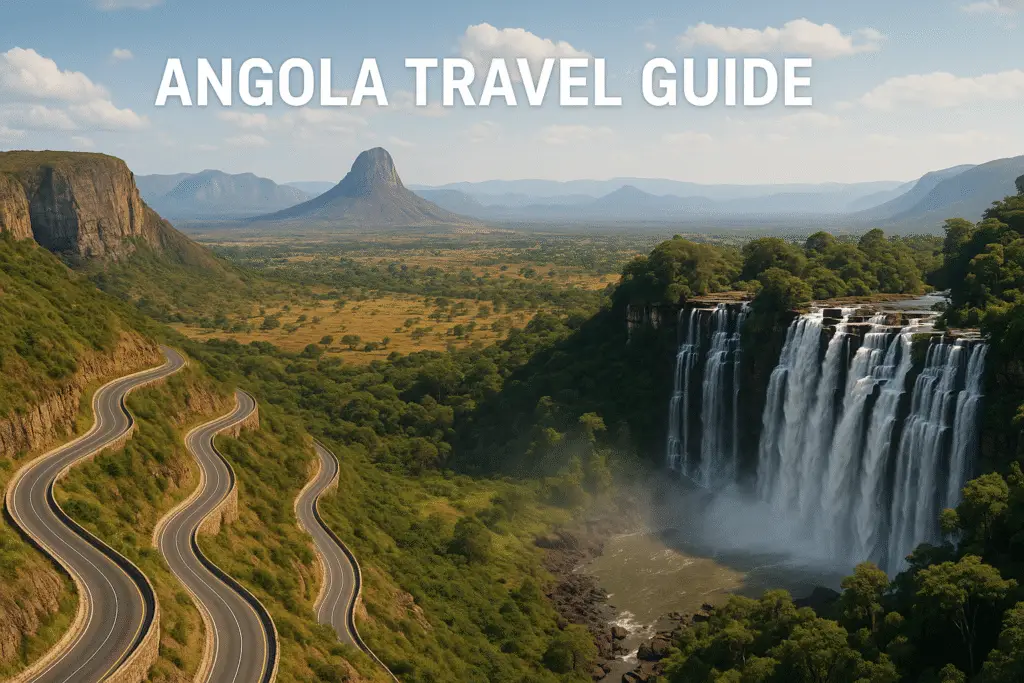
Kalandula Falls is one of Africa’s most spectacular waterfalls. With a width of more than 400 meters and a drop of 105 meters, it rivals Victoria Falls in scale but remains almost unknown outside Central Africa. The falls are surrounded by jungle, mist and rainbows, and the area is dramatically quiet.
The viewpoint is easy to reach by road, while the base requires trekking down a steep path. Just a few kilometers away lies the Pedras Negras (Black Rocks), a geological formation that looks like giant stone towers rising from the forest.
Benguela
Benguela is a relaxed coastal town with colonial charm. Its pastel-colored buildings, palm-lined streets and horseshoe-shaped bay make it one of the most pleasant cities in Angola. The area is known for fishing, friendly locals and cultural events.
Nearby pristine beaches and day trips to surrounding towns make Benguela a perfect base for exploring the central coast.
Lobito
The port city of Lobito sits on a beautiful natural bay, and its historic neighborhood of Restinga is a popular spot for swimming and eating fresh seafood. Lobito is often visited together with Benguela, and its calm waters are ideal for boat tours.
Lubango
Lubango is located high in the mountains and is surrounded by iconic viewpoints. The Christ the King statue stands on a cliff overlooking the city and resembles Rio de Janeiro’s Cristo Redentor. The area around Lubango is full of scenic drives, especially the world-famous Serra da Leba mountain pass.
Serra da Leba
One of the most beautiful roads in Africa, Serra da Leba features hairpin turns carved into the mountainside with jaw-dropping views of cliffs and valleys. It’s a symbol of Angola and a must-visit spot for photographers. Sunrise and sunset offer magical colors and cool mountain air.
Namibe Desert
Namibe province blends desert scenery with ancient tribal culture. The red rocks of Tundavala Gap, the canyons of Virei, and the dunes near the coast create a landscape that feels completely untouched. Wildlife such as oryx, desert-adapted animals and rare plants like the Welwitschia can be found here.
Iona National Park
Iona is one of the oldest and largest national parks in Angola. Located in the desert region near the Namibian border, it features unique ecosystems and wildlife adapted to harsh conditions. Tourism is slowly developing, and wildlife restoration projects are underway.
The Tribal South: Mucubal, Himba and Others
Southern Angola is home to ethnic groups who maintain traditional lifestyles, including the Mucubal, Mwila, Nyaneka and Himba peoples. Their hairstyles, clothing and rituals reflect centuries-old cultural traditions. Visiting these communities offers deep insight into Angola’s cultural diversity.
Tundavala Gap
A dramatic cliff at the edge of the central plateau, Tundavala Gap has panoramic views stretching across hundreds of kilometers. Its glaciated rocky landscape is perfect for photography, picnics and short hikes.
Congo Rainforest Region
In the provinces near the Democratic Republic of Congo, dense forests hide remote villages, waterfalls and historical sites related to the ancient Kingdom of Kongo. This region is rarely visited but offers some of Angola’s most rewarding cultural experiences.
Culture and People of Angola
Angolan culture is incredibly diverse, influenced by Indigenous traditions, Portuguese colonization, Afro-Brazilian connections and modern urban life. There are more than 90 ethnic groups in the country, each with unique customs, languages and music.
Languages
The official language is Portuguese, spoken widely in cities, schools and businesses. It connects Angola to other Lusophone countries like Mozambique, Brazil and Portugal. Besides Portuguese, many local languages are spoken, such as Umbundu, Kimbundu and Kikongo.
Music and Dance
Angola is the birthplace of kizomba, one of the most sensual dance styles in the world. It evolved from semba, a traditional Angolan music genre played during celebrations. Kuduro is another modern music style originating in the streets of Luanda, with energetic beats and dance moves.
Music is deeply rooted in Angolan culture. Almost every celebration, festival or gathering includes singing, drumming and dancing.
Food Culture
Angolan cuisine combines African ingredients with Portuguese influences. Popular dishes include moamba de galinha (chicken stew with palm oil), funge (a corn or cassava porridge), calulu (fish and vegetable stew) and feijoada (a bean dish inherited from Brazil).
Seafood is abundant along the coast, with grilled fish, prawns and lobster common in cities like Benguela and Luanda.
Traditional Tribes
In the south, tribes maintain distinct dress and rituals. The Mwila and Mucubal women are known for elaborate hairstyles made with red ochre, beads and clay. The Himba people of Angola share cultural roots with the Himba in Namibia and live pastoral lifestyles in desert environments.
Religion
Christianity is the dominant religion, influenced by Portuguese missionaries. However, Indigenous beliefs remain strong, especially in rural areas.
Nature and Wildlife
Angola’s wildlife suffered during decades of conflict, but the country is experiencing a slow but steady recovery. Several conservation projects, particularly in national parks, aim to restore wildlife populations and protect natural habitats.
National Parks
Angola has over a dozen national parks and reserves, though not all are fully operational. Some of the most notable include:
Iona National Park: Known for desert wildlife, rocky landscapes and unique plants.
Quiçama (Kissama) National Park: Located near Luanda, it is one of the easiest parks to visit and home to elephants, giraffes, zebras and antelopes.
Cangandala National Park: Famous for the critically endangered Giant Sable Antelope, one of Angola’s national symbols.
Mupa National Park: Remote and still undeveloped but rich in biodiversity.
Marine Life
Angola’s marine life includes whales, dolphins, sea turtles and abundant fish species. Whale watching is possible along the central coast, especially near Benguela.
Birdlife
The country is a paradise for bird enthusiasts. Endemic and rare species can be found in different ecosystems, including forests, wetlands and deserts.
Climate and Best Time to Visit
Angola has a varied climate depending on region and altitude. Overall, the country has a dry season and a rainy season.
Dry Season (May to October)
This is the best time to visit most parts of Angola. Temperatures are mild, skies are clear, and roads are easier to travel.
Rainy Season (November to April)
Rainfall is heaviest in the north and central regions. Travel is still possible but can be more challenging, especially in rural areas.
The coast has a different climate influenced by the cold Benguela current, making it drier and cooler than the inland regions.
How to Travel Around Angola
Traveling around Angola requires some planning due to long distances and varying road conditions.
By Air
Domestic flights connect major cities such as Luanda, Lubango, Benguela, Cabinda and Soyo. Flying is the quickest way to cover long routes.
By Road
Roads vary from excellent highways to rough gravel tracks. The country has been rebuilding its road network, but remote areas can still be challenging. Self-driving is possible for experienced travelers, especially on paved routes connecting major cities.
Public Transport
Buses and shared taxis (known as candongueiros) operate between towns, but schedules may not always be reliable.
4×4 Travel
Exploring the south, deserts and national parks requires a 4×4 vehicle due to difficult terrain. Many remote landscapes are only accessible via off-road tracks.
Regions of Angola – Complete Breakdown
Luanda Province
Home to the capital city, Luanda Province is the economic heart of the country. The Marginal promenade offers views of the bay, while Ilha do Cabo is the top spot for beaches and nightlife. Historical attractions like the National Museum of Slavery and the São Miguel Fortress tell Angola’s story from colonial times to independence.
Benguela Province
Benguela is famous for its beautiful beaches, sleepy towns, and relaxed coastal lifestyle. The province includes the cities of Benguela and Lobito, as well as scenic fishing villages and historic colonial architecture.
Huíla Province
Home to Lubango, Serra da Leba and Tundavala Gap, this province is one of the most scenic in the country. Mountain drives, cool climates and local festivals make it a highlight for travelers.
Namibe Province
Namibe province blends desert scenery with rocky mountains, deep canyons and traditional tribal communities. The landscapes resemble parts of Namibia but retain a distinct Angolan character.
Malanje Province
Malanje is home to Kalandula Falls, Pedras Negras, and lush forests. It’s one of the most underrated regions of Angola and a core destination for nature lovers.
Cabinda Province
Cabinda is separated from the rest of Angola by the DRC. This enclave features forests, beaches, oil facilities and cultural sites. Travel here requires planning due to separate border controls.
Bié, Huambo and the Central Highlands
These inland provinces form the country’s agricultural heartland. Rolling hills, waterfalls, lakes and cooler temperatures characterize the region.
Cunene and Cuando Cubango
These provinces lie in the remote south, where river systems and traditional villages dominate the landscape. These areas are great for wilderness safaris and cultural interaction.
Practical Travel Tips for Angola
Angola remains a developing travel destination, so preparation is key.
Safety
Most regions are safe for visitors, especially during daytime and with standard precautions. The south and countryside are peaceful. Luanda can feel busy and chaotic, so keeping valuables secure is important.
Visas
Angola has introduced an online visa system, making entry much easier than in the past. Always check updated visa requirements before travel.
Money
The local currency is the Angolan kwanza. Credit cards work in major hotels and establishments, but cash is still widely used.
Language
Portuguese is essential for communication. English is increasingly spoken in tourist-facing businesses, but learning some basic phrases goes a long way.
Health
Malaria is present in some regions, especially during the rainy season. Travelers should take preventive measures and consult health professionals before traveling.
Food and Water
Tap water is not recommended. Bottled water is widely available. Local food is delicious and safe in reputable restaurants.
Photography
Angola offers incredible opportunities for photography, especially waterfalls, deserts and mountain vistas. Always be respectful when taking photos of local people.
Unique Experiences in Angola
Visit a Tribal Village in the South
Meeting the Mucubal or Mwila communities is a cultural experience like no other. Their unique hairstyles, body decorations and rituals reflect centuries-old traditions.
Drive the Serra da Leba Road
This mountain pass is one of the most dramatic drives in Africa. The winding road carved into cliffs offers incredible scenic views.
Explore Kalandula Falls
Standing at the edge of one of Africa’s largest waterfalls is unforgettable. The power of the falls, combined with the mist and surrounding jungle, creates a dreamlike scene.
Discover Luanda’s Modern and Historic Sides
Experience the energy of Angola’s capital by exploring both its modern districts and colonial-era streets.
Visit a Desert Oasis in Namibe
The landscapes of Namibe are surreal: canyons, dunes, red rock formations and traditional villages.
Taste Local Angolan Cuisine
Trying funge, moamba, calulu and fresh grilled fish gives visitors a true taste of Angolan culture.
Wildlife Watching in Kissama National Park
Spot elephants, giraffes and antelopes in one of the country’s accessible parks.
Why Angola Is So Underrated
Few countries on Earth are as naturally and culturally rich as Angola while remaining virtually unknown to international tourism. The country’s troubled past kept it isolated, but Angola today is peaceful, stable and eager to welcome visitors. The diversity of landscapes is astonishing: lush tropical forests, Portugal-like coastal cities, mountain passes that resemble the Andes, deserts similar to Namibia, and waterfalls competing with those of Zambia and Zimbabwe.
Angola also has a strong sense of authenticity. Unlike heavily touristic destinations, Angola feels real, untouched and full of discovery. Travelers who enjoy going beyond the typical tourist trails will find Angola one of the most rewarding destinations in Africa.
Extended Cultural Overview
Angola’s cultural wealth goes far beyond what is typically written about it. Each region has its own identity shaped by history, environment and tradition.
In the north, Kikongo and Bakongo traditions remain strong. Rituals celebrate the harvest seasons, and music includes hypnotic rhythms played on wooden instruments. Villages still practice ancient storytelling traditions, passing myths and moral lessons from elders to children in evening gatherings.
The central highlands are considered the intellectual heart of Angola. Cities like Huambo and Kuito have long histories of education, political debate and cultural pride. The Umbundu people of this region organize ceremonies involving dance, masks and symbolic foods.
The south is a world of its own. For the Mucubal, Mwila, Dimba and Himba people, cattle are sacred. Their hairstyles are not merely fashion but represent age, status and personal history. Their semi-nomadic lifestyle is shaped by seasonal migration and the challenges of living in arid environments.
Urban culture is also evolving. Luanda is a melting pot of modern African identity, featuring music festivals, art galleries, street murals and culinary innovation. Kizomba, semba and kuduro dominate nightlife, and young Angolans mix Western fashion with traditional clothing styles.
Economy and Modern Development
Angola’s economy is one of the largest in sub-Saharan Africa, driven mainly by oil and gas. Luanda is a business hub with international connections. Outside the capital, agriculture remains a major sector. Coffee, once a major export, is making a comeback in regions like Uíge and Kwanza Norte.
Tourism is still developing, but the government sees it as a strategic priority. Investment in national parks, roads and airports is ongoing. Angola has the potential to become a major tourism destination in Africa, especially for travelers seeking authenticity and adventure.
Wild Landscapes and Natural Wonders
Angola is filled with dramatic natural landscapes rarely seen by tourists.
The desert meeting the sea near Namibe resembles Namibia’s Skeleton Coast but with even fewer people. The red mountains near Virei create surreal shapes at sunrise and sunset. The high plateau near Huambo is full of hidden lakes, rolling hills and ancient volcanic formations.
Rivers like the Cuanza cut through canyons and valleys, creating excellent fishing and hiking opportunities. Waterfalls are abundant beyond the famous Kalandula Falls, including the little-known Binga Falls, Chiumbe Falls and the waterfalls near Huambo.
Forests in the north hide rare wildlife, medicinal plants and community-based conservation areas. The tropical climate allows lush vegetation to grow year-round.
Religion, Beliefs and Social Customs
Angolans are warm, welcoming and family-oriented. Hospitality is an essential part of social life: visitors are often offered food, tea or a seat in the shade.
Religious beliefs vary. Christianity, both Catholic and Protestant, is strong, but traditional spiritual beliefs persist in rural areas. Many communities practice rituals honoring ancestors, spirits and natural forces.
Respect for elders is important across all ethnic groups. Traditional ceremonies mark milestones such as birth, marriage and harvest seasons.
Angolan Cities and Towns
Luanda
A city of contrasts with skyscrapers, colonial streets, slums and luxury hotels all side by side. Traffic can be intense, but the city has many cultural attractions, beaches and restaurants.
Huambo
A peaceful city on the high plateau, surrounded by green hills. Known for agriculture, cool weather and friendly atmosphere.
Lubango
Located among mountains, with spectacular scenery all around. A gateway to Tundavala, Serra da Leba and desert regions.
Benguela and Lobito
Coastal cities full of charm, beaches, seafood and heritage architecture.
Malanje
A city close to Kalandula Falls, surrounded by tropical scenery and traditional villages.
Namibe
A quiet desert city with Portuguese architecture and access to natural geological wonders.
Traditional Crafts and Markets
Angolan craftwork includes carved wooden masks, pottery, jewelry, woven baskets and sculptures representing animals, daily life or spiritual figures. Markets in Luanda, Huambo and Lubango sell handmade crafts, often supporting local artisans.
Traditional dress varies widely. In the south, Mwila women wear necklaces symbolizing different stages of life. In the central highlands, traditional clothing is used during festivals or ceremonies.
Travel Challenges and Rewards
Angola is an exciting destination but not the easiest. Travelers should expect long distances, sometimes limited tourist facilities, and occasional bureaucracy. However, these challenges come with major rewards: untouched nature, authentic culture and the feeling of discovering places few others have seen.
The country offers incredible potential for adventure tourism, nature photography, cultural immersion, road trips and off-the-beaten-path exploration.
Conclusion: Why Angola Belongs on Your Bucket List
Angola is one of the last truly unexplored countries in Africa for international travelers. With its powerful waterfalls, dramatic desert landscapes, remote tribal cultures, lush northern forests, Portuguese-influenced towns and breathtaking mountain roads, Angola offers an extraordinary variety of experiences.
The country is opening up and improving every year, making now the perfect time to visit before tourism grows. Angola’s authenticity, natural beauty and cultural richness make it one of the most memorable destinations in Africa.
Whether you are interested in nature, photography, culture, adventure or simply exploring new places, Angola delivers an unforgettable journey and a travel story that stands out among all others.
Related Amazing Bucketlist Articles
- 5 Once-in-a-Lifetime Floating Stays
- Hurawalhi Island Resort
- Top 10 Most Romantic Countries in the World for Couples