
Benin Complete Travel Guide
Benin is one of West Africa’s most culturally profound, historically important, and geographically diverse countries. It is a land where ancient kingdoms left monumental legacies, where Voodoo remains a living and respected religion, where palm-fringed beaches stretch along the Atlantic coast, where royal palaces, stilt villages, and sacred forests reveal centuries of heritage, and where wildlife thrives in one of the last great savannas of West Africa. Benin may not be as widely known as some of its neighbors, but for travelers seeking authenticity, culture, history, and nature free from mass tourism, it is one of the continent’s most rewarding destinations.
Located between Togo and Nigeria, with Burkina Faso and Niger to the north, Benin forms a long, narrow stretch of land reaching from the Atlantic coast into the heart of the Sahel. Its landscapes shift dramatically as one travels north, beginning with lagoons, beaches, and wetlands along the coast, rising into rolling plateaus and farmlands in the center, and eventually opening into savannas, rocky hills, and wildlife-filled national parks in the far north. These regional contrasts make Benin a country where each journey feels like entering a new world.
Culturally, Benin is exceptionally rich. It is known as the birthplace of Voodoo, a spiritual system that blends cosmology, ancestor reverence, rituals, and community-based healing traditions. In Benin, Voodoo is not a tourist spectacle but an authentic and widely practiced religion that shapes identity, family structure, and everyday life. Festivals, shrines, sacred forests, traditional priests, and ceremonies are integral to Beninese culture, especially in the south. Yet alongside Voodoo, Christianity, Islam, and other belief systems coexist peacefully, creating a multi-religious and culturally harmonious society.
Benin’s history is equally significant. It was once home to powerful kingdoms, including the Kingdom of Dahomey, known for its elaborate palaces, organized military, and the famed Dahomey Amazons—an elite, all-female regiment unmatched in world history. The city of Abomey, the former royal capital, remains one of the country’s most visited destinations for its palaces, museums, and oral traditions that preserve the memory of centuries of kings. Benin’s coastline also played a major role in the transatlantic slave trade, with ports such as Ouidah serving as departure points for millions of enslaved Africans taken to the Americas. Today, the Route des Esclaves (Slave Route) in Ouidah stands as one of the most important memorial sites on the continent.
Despite these heavy historical themes, Benin is a joyful and expressive country. Its music, dance, festivals, storytelling, and craftsmanship are vibrant, colorful, and spiritually connected. Travelers often describe Benin as a place where traditions remain genuinely alive and where communities proudly share their heritage.
From the tropical lagoons of Ganvié to the wild savannas of Pendjari National Park, from the white sand of Grand-Popo to the historical richness of Porto-Novo and Abomey, from the energetic markets of Cotonou to the ancient rituals of Ouidah, Benin offers a journey that is both emotional and fascinating, with layers of meaning that reveal themselves gradually to travelers who engage deeply with the culture.
Geography, Landscapes, and Natural Regions
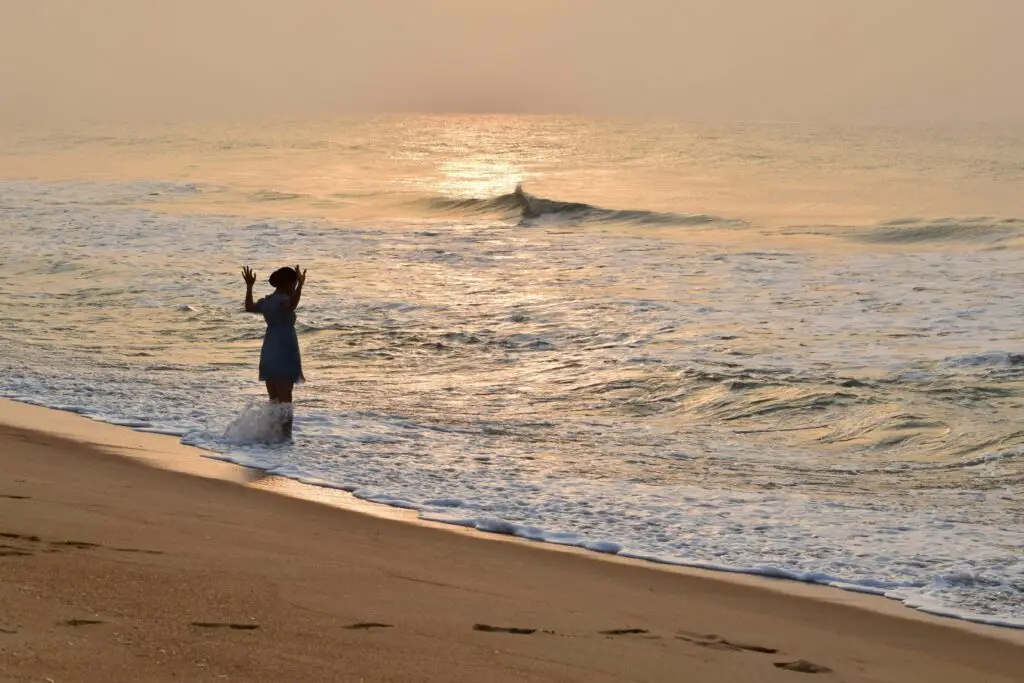
Benin’s geography is surprisingly varied for a country of its size. The southernmost part borders the Atlantic Ocean and is dominated by sandy beaches, coconut groves, fertile farmland, and large lagoon systems. The southern coastline, stretching roughly 120 kilometers, includes urban centers, fishing villages, and quiet stretches of beach that remain untouched and peaceful.
Behind the beaches lies a network of lagoons such as Lake Nokoué, the Ouémé River estuary, and the coastal wetlands. These water systems support fishing communities, stilt villages, and traditional lifestyles that depend on boats for transportation, trade, and daily activities.
Moving northward, the landscape transitions into the Plateau Region—a zone of rolling hills, red earth, palm farms, cashew plantations, and small villages connected by dusty roads. The central region has a warm climate, busy markets, and agricultural productivity. Cashew farming, yam cultivation, and corn production form the economic backbone of many central communities.
Farther north, the land opens into broad savannas dotted with baobab trees, acacia forests, rocky outcrops, and traditional mud-brick houses. This region borders the Sahel and features long dry seasons, dramatic sunsets, and clear star-filled skies. It is here that Benin’s major wildlife areas are found.
The far north is home to spectacular national parks such as Pendjari National Park and the W National Park biosphere complex. These parks protect some of West Africa’s last remaining large mammal populations and contain landscapes that recall what much of West Africa may have looked like centuries ago. The geography of Benin shows the transition from tropical coastline to arid plains, creating a natural diversity that is one of the country’s greatest assets.
Cotonou – The Country’s Economic Heartbeat
Although Porto-Novo is the official capital, Cotonou is Benin’s largest city and the true economic and cultural center. With busy streets, colorful markets, lively nightlife, modern buildings, and traditional districts, Cotonou pulses with energy from dawn to dusk. The city lies between the Atlantic Ocean and Lake Nokoué, giving it a coastal atmosphere combined with lagoon traditions.
The Dantokpa Market, one of the largest open-air markets in West Africa, is the beating heart of the city. People come from across the region to buy textiles, produce, handcrafted goods, drums, sculptures, fabrics, and ritual objects. Vendors call out prices, motorbikes weave through crowds, and the aroma of spices, incense, and freshly cooked meals fills the air. Dantokpa is not only a commercial hub but also a cultural universe where visitors can witness the fast-paced rhythm of daily life.
Cotonou’s coastal areas include beaches, fishing districts, and leisure zones. The city’s coastline is lined with palm trees and fishing boats. Fishermen push their wooden boats into the ocean at sunrise, while others mend nets or prepare their catch for markets. Along the beach, travelers experience a mix of tranquility and local activity, with waves crashing against the shore and young people playing football in the sand.
Cotonou also has modern neighborhoods, busy port facilities, vibrant nightlife, music venues, contemporary art galleries, and restaurants offering both traditional and international cuisine. As the country’s commercial hub, Cotonou is dynamic, young, and expressive—a reflection of Benin’s rapidly evolving identity.
Ganvié – The Famous Stilt Village of Lake Nokoué
Ganvié is one of the most extraordinary destinations in Benin and one of the largest stilt villages in the world. Often referred to as the “Venice of Africa,” Ganvié is a community built entirely on water. Wooden houses stand on stilts above the lake, connected by boat routes rather than streets. Schools, shops, restaurants, markets, and homes all float above the water.
The village was established several centuries ago by the Tofinu people, who settled on the lake to escape raids from slave traders. The water acted as a natural defense, protecting the community from capture. Today, the village remains a powerful symbol of resilience and cultural preservation.
The atmosphere in Ganvié is unique. Boats glide calmly across the lake, children paddle dugout canoes to school, women sell goods from floating markets, and fishermen cast nets in the early morning mist. The lake environment gives the village a peaceful rhythm. Visitors often describe Ganvié as a dreamlike world where water shapes every aspect of life.
Around Lake Nokoué, other stilt and lakeside villages maintain similar lifestyles. The lagoon ecosystem supports fishing traditions that have been practiced for generations, and the lake remains central to the identity of communities who rely on it for transport, trade, and survival.
Ouidah – Spiritual Center and Home of Voodoo
Ouidah is one of the most historically and spiritually significant cities in West Africa. It served as a major port during the transatlantic slave trade, and today it preserves memory through monuments, museums, and the Route des Esclaves, a 4-kilometer path marking the final journey of enslaved people from the slave market to the sea. This path ends at the Door of No Return, a powerful memorial arch facing the Atlantic.
But Ouidah is also the epicenter of Voodoo (Vodun) culture. Here, Voodoo is practiced openly, sincerely, and with deep cultural respect. Shrines, temples, sacred trees, and ritual spaces are part of the city landscape. The Python Temple is one of Ouidah’s most famous landmarks, symbolizing the spiritual importance of the python in Vodun cosmology. Annual ceremonies and rituals take place around sacred forests, lagoons, and community compounds.
Each year on January 10th, Ouidah hosts the National Voodoo Festival, one of the most vibrant cultural celebrations in Africa. Priests, dancers, drummers, initiates, and community members gather from across the country and abroad to perform rituals, dance, chant, and celebrate the spiritual world. The festival is a deeply emotional event, full of color, music, and symbolism, and highlights the importance of Vodun as a living cultural force.
Ouidah harmonizes history and spirituality in unique ways. The echoes of the past, from the slave trade to the Kingdom of Dahomey, blend with present-day religious traditions. Visitors leave Ouidah with a powerful understanding of how deeply culture, memory, and spirituality define Benin’s identity.
Abomey – Royal City of the Dahomey Kings
Abomey is one of the most historically important cities in Africa and the heart of the former Kingdom of Dahomey. For centuries, Dahomey was a powerful state with complex political structures, rich artistic traditions, and a unique military system that included the Dahomey Amazons—female warriors who formed one of the most feared armies in the world.
The Royal Palaces of Abomey, now a UNESCO World Heritage Site, preserve this history through architecture, murals, artifacts, and oral traditions. The palaces were built by successive kings, each adding new structures decorated with bas-reliefs that symbolized their achievements, lineage, and authority. These intricate bas-reliefs depict animals, weapons, spiritual symbols, and scenes from Dahomey history.
Visitors to Abomey encounter a world where history feels alive. The palaces contain thrones, royal drums, ceremonial objects, metalwork, and artworks that reveal the sophistication of the former kingdom. Guides share oral histories passed down for generations, recounting stories of kings such as Ghezo, Glélé, and Béhanzin.
Abomey also has a lively artisan culture. Craftspeople work in woodcarving, metal forging, weaving, and pottery, producing artworks inspired by royal traditions. The city’s atmosphere blends modern life with centuries-old heritage, creating a unique sense of continuity.
Porto-Novo – The Official Capital
Porto-Novo is Benin’s official capital, though smaller and quieter than Cotonou. It is known for its colonial architecture, Afro-Brazilian heritage, and cultural institutions. Many buildings reflect Brazilian influences, a legacy of freed slaves who returned from Brazil in the 19th century and brought with them architectural styles, Catholic traditions, and cultural practices.
The city contains museums, mosques, royal estates, and botanical gardens. Local markets display a blend of Yoruba, Gun, and Afro-Brazilian culture. The city’s calm atmosphere contrasts with Cotonou’s intensity, offering visitors a slower, more reflective experience.
Porto-Novo is also a spiritual center with active Voodoo houses, temples, and sacred spaces. The drums, rhythms, and chants of ceremonies can often be heard in various neighborhoods.
Northern Benin – Wildlife, Savannas, and Ancient Traditions
Northern Benin offers one of West Africa’s most magnificent wilderness regions. The landscape transitions from rolling savannas to rocky hills, seasonally flooded plains, and open forests. Traditional communities live in clay-brick houses, cattle roam across the fields, and ancient rituals continue in rural villages.
Pendjari National Park
Pendjari is one of Africa’s most important national parks and the crown jewel of Benin’s wildlife heritage. It protects lions, elephants, buffalo, hippos, crocodiles, cheetahs, antelopes, baboons, monkeys, and hundreds of bird species. The park’s lion population is especially notable, as West African lions are critically endangered and survive only in a few regions.
Pendjari’s landscapes include river valleys, grasslands, acacia forests, and waterholes where animals gather. Sunsets over the savanna create dramatic scenes of orange light, silhouettes of trees, and grazing wildlife. The park is part of the W-Arly-Pendjari transboundary protected area, one of the largest conservation zones in Africa.
National Park
Shared with Niger and Burkina Faso, W National Park contains diverse wildlife, seasonal rivers, floodplains, and woodland ecosystems. Traveling through this region gives insight into the natural world that once dominated much of West Africa.
Traditional Northern Villages
Northern Benin is home to cultural groups such as the Bariba, Fulani, Dendi, Somba, and Gourmantché. Many villages retain traditional architecture, spiritual practices, and agricultural systems. The Somba people, in particular, are known for their fortress-like mud houses similar to the Batammariba tatas in Togo, built for protection and spiritual symbolism.
The region also hosts festivals that showcase drumming, mask dances, initiation ceremonies, and harvest rituals.
Culture, Traditions, and Music
Benin’s cultural landscape is alive with music, storytelling, festivals, and spiritual practices. Traditional percussion is central to ceremonies and social gatherings. Drums communicate messages, summon spirits, and energize dancers. Musical styles include complex polyrhythms, vocal chants, and call-and-response patterns.
Benin has also influenced global music. The country is the birthplace of international stars, and many musicians blend traditional rhythms with modern funk, jazz, and Afrobeat. In rural areas, ceremonies such as Egungun masquerades, initiation festivals, and harvest celebrations reveal ancient traditions still practiced today.
Craftsmanship is another key part of Beninese culture. Villagers produce textiles, sculptures, beadwork, pottery, metalworks, and masks. The artistic heritage of Benin is deeply tied to symbolism, spirituality, and ancestral reverence.
Cuisine and Food Culture
Beninese cuisine is flavorful, colorful, and diverse. It reflects agricultural traditions and regional variations. In the south, dishes feature maize, cassava, plantains, rice, palm oil, seafood, and leafy greens. In the north, sorghum, millet, yams, beans, and grilled meats are common.
Stews and sauces often combine tomatoes, onions, peppers, spices, and local ingredients such as okra or peanut paste. Street food includes fried plantains, grilled fish, spicy fritters, roasted corn, and dough balls. Markets are full of fresh fruits such as mangoes, pineapples, oranges, papayas, and bananas.
Meals are communal, and hospitality is central to Beninese culture. Visitors often find themselves welcomed with generosity and warmth.
Climate, Seasons, and When to Visit
Benin has a tropical climate in the south and a drier climate in the north. The south experiences two rainy seasons, which support lush landscapes and lagoons. The north has one rainy season, creating a dramatic transformation between dry and green periods. Wildlife viewing is best during the dry months, while the rainy season brings vibrant vegetation and full rivers.
The Benin Travel Experience
Traveling through Benin feels like moving between centuries, landscapes, and worlds. The country is small yet incredibly layered. Travelers encounter spirituality, history, nature, and culture in their purest forms. Benin feels welcoming, peaceful, and deeply meaningful. It is a place where the past and present coexist, where people proudly share their traditions, and where nature retains a powerful presence.
Long after leaving Benin, travelers remember the sound of drums in Ouidah, the calm of Ganvié’s waters, the red earth roads of the Plateaux, the grandeur of Abomey’s palaces, the markets of Cotonou, the savannas of Pendjari, and the energy of festivals that express centuries of cultural heritage. Benin offers a journey of discovery, reflection, and connection—one of West Africa’s most beautiful, authentic, and enriching travel experiences.