
Equatorial Guinea Travel Guide
Equatorial Guinea is one of Africa’s most unusual, diverse and least-visited countries — a compact nation composed of rainforest-covered mainland territory, volcanic islands, remote beaches, Spanish colonial heritage, Fang and Bubi traditions, modern skylines and untouched nature. Despite its small size, the country is split into two main geographic zones: Río Muni, the mainland region that borders Cameroon and Gabon, and the island territories, including Bioko Island (home to the capital Malabo) and Annobón, a remote volcanic island deep in the Gulf of Guinea. This separation gives Equatorial Guinea a rare dual identity — part Central African rainforest culture, part Atlantic island society.
The country’s landscapes range from black-sand beaches and towering volcanic peaks to mangrove swamps, misty cloud forests, crater lakes, dense jungles and small, colorful towns. Its biodiversity is impressive, with endangered primates, sea turtles, tropical birds, whales, and marine ecosystems thriving in areas that remain largely untouched by tourism or development.
Culturally, Equatorial Guinea blends Spanish colonial influence with African traditions. It is the only Spanish-speaking country in Africa, which contributes to its unique character. Spanish architecture appears in cities like Malabo and Bata, alongside traditional Fang, Ndowe, Bubi, and Annobonese communities. The country’s music, food, festivals, and social norms reflect a fusion of Indigenous customs and Iberian heritage.
Equatorial Guinea is not an easy place to visit — travel regulations, visa requirements, limited tourist infrastructure and variable conditions mean it requires preparation. But for travelers seeking remote destinations, hidden natural beauty, wildlife-rich forests, offshore islands, fascinating culture and a country untouched by mass tourism, Equatorial Guinea is one of the most intriguing places in Africa.
Malabo: A Capital of Islands, Volcanoes and Spanish Architecture
Malabo, located on Bioko Island, is one of the most visually striking capitals in Central Africa. Unlike most African cities, which are inland or surrounded by savannas, Malabo sits beside dramatic volcanic mountains, lush forests and the Atlantic Ocean. Its unique geography and Spanish colonial past give it a distinct identity.
Historic and Modern Malabo
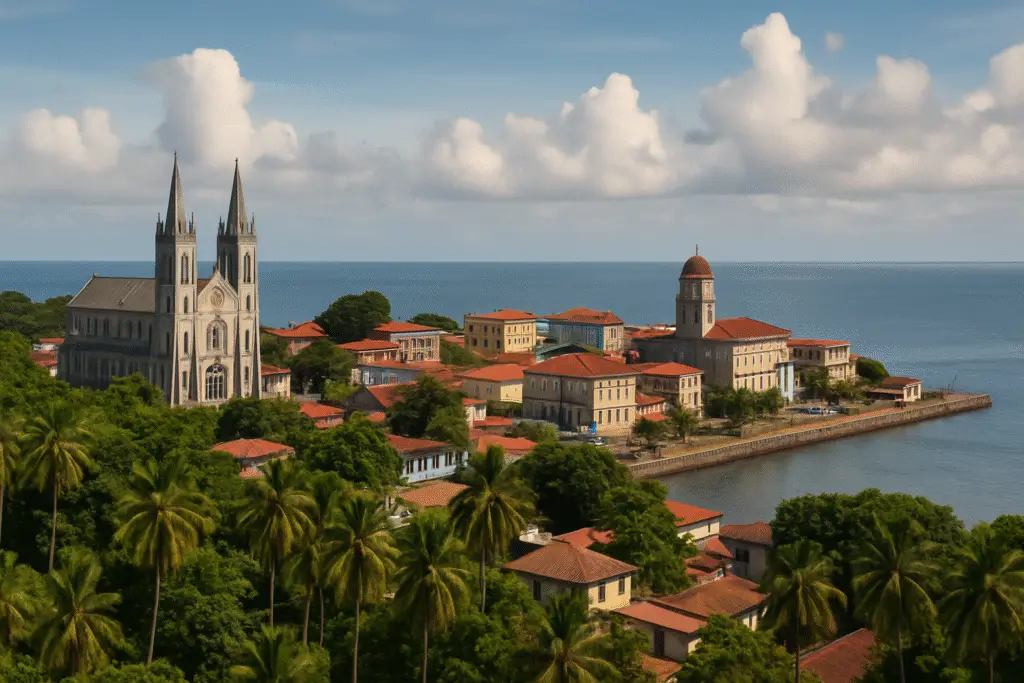
The city’s architecture blends old and new. Spanish colonial buildings with wooden balconies, pastel façades and tile roofs line certain districts. The most famous landmark is the Cathedral of Santa Isabel, a stunning neo-Gothic church with twin towers and stained-glass windows. Built in the early 20th century, it remains the heart of historic Malabo.
In contrast, Malabo II — the newer part of the city — features wide boulevards, modern government buildings, roundabouts, fountains, hotels and spacious neighborhoods. This area reflects Equatorial Guinea’s recent urban development.
Natural Setting
Bioko Island’s volcanic origins shape Malabo’s dramatic landscapes. Green mountains rise behind the city, often covered in mist. Black volcanic cliffs and beaches lie just outside town. The island’s rainforest reaches almost to the outskirts of Malabo, giving the capital a natural, tropical atmosphere.
Palm trees, flowers and ocean breezes soften the city’s intense equatorial climate. Fishing boats color the coastline, and sunsets over the Gulf of Guinea are particularly beautiful.
Markets and Culture
Markets in Malabo sell tropical fruits, vegetables, smoked fish, plantains, cassava, spices and handcrafted items. Spanish influence appears in bakeries, cafes and plazas, while African culture is expressed through music, dance, colorful clothing and traditional ceremonies.
Malabo is both relaxed and lively, shaped by multicultural communities including Fang, Bubi, Igbo (from nearby Nigeria), and families with European or Latin American roots.
Bioko Island: Rainforests, Volcanoes, and Rare Wildlife
Bioko Island is one of the most biodiverse regions in West and Central Africa. The island’s steep mountains, lush forests and isolated beaches create habitats for rare primates, nesting sea turtles, endemic birds and unique plant life.
Pico Basilé
The island’s highest peak, Pico Basilé, is a volcanic giant rising 3,011 meters above sea level. The mountain dominates the skyline and influences the island’s climate. Trails wind through cloud forests, bamboo groves and moss-covered trees. Views from the summit stretch across the island and, on clear days, across the ocean to Cameroon’s Mount Cameroon.
Birdlife is abundant here — hornbills, green pigeons, sunbirds, forest raptors — along with endangered primates like the drill, Bioko red colobus, and Preuss’s monkey. The mountain is one of Bioko’s greatest natural treasures.
Ureka and the Southern Beaches
Ureka, located on the southern coast, is one of the rainiest places in Africa and home to spectacular waterfalls that cascade through rainforest before reaching black-sand beaches. The road to Ureka passes through dense greenery, small villages and dramatic coastal cliffs.
Between November and March, leatherback and green sea turtles come ashore on southern beaches to nest. This makes Bioko one of West Africa’s most important turtle breeding grounds. Turtle-watching tours, conducted responsibly, are one of the island’s highlights.
Luba and Bioko’s West Coast
Luba, a quiet town on the west coast, sits beside calm bays and palm-lined shores. Its colonial-era church and waterfront bring a peaceful atmosphere. The surrounding region has scenic drives, fishing villages and forest-covered hills.
Bioko Island feels wild and isolated, offering extraordinary nature, culture and tranquility.
Bata: Mainland’s Lively Coastal City
Bata is the capital of mainland Equatorial Guinea and the second-largest city in the country. Located along the Atlantic coast, Bata combines Spanish influences with Central African energy. Wide, palm-lined avenues, coastal promenades and a busy port define the city.
Urban Life
Bata’s central districts include colorful markets, shops, bars, cafes, and seafood restaurants. The city is known for its nightlife and cultural events. The waterfront promenade is ideal for walks at sunset, when the heat drops and the ocean breeze picks up.
Beaches
Bata’s coastline includes long sandy beaches just outside the city center. While urban beaches are clean and accessible, quieter stretches appear farther south and north, where fishing communities live beside coconut groves and mangroves.
Culture and Daily Life
The city reflects both modernization and tradition. Spanish speaks alongside Fang and other local languages. Fishermen bring in catches of tuna, barracuda and snapper. Street food vendors offer plantains, grilled meat and fresh fruit. Music fills the air — Afro-pop, Congolese rumba, Spanish ballads, and traditional chants.
Bata is a gateway to mainland forests, villages, reserves and coastal attractions.
Río Muni: The Mainland — Forests, Rivers, Villages and Wildlife
Río Muni, the continental part of Equatorial Guinea, is a region of dense tropical rainforest, rolling hills, rivers, mangroves, logging towns, cocoa farms and traditional villages. It remains one of the least-developed and least-explored regions of Central Africa.
Monte Alén National Park
Monte Alén National Park is one of Central Africa’s most pristine rainforest parks. The park’s lush vegetation, rivers and valleys shelter gorillas, chimpanzees, mandrills, forest elephants, antelope, pangolins and more than 300 bird species.
Trails lead to viewpoints overlooking green mountains and mist-covered valleys. Waterfalls, hidden pools and vine-covered trees create a deep sense of wilderness. The park feels untouched, with dense forest that stretches endlessly.
While wildlife can be difficult to spot due to the forest’s thickness, the experience of trekking through such a pure ecosystem is unforgettable. Local guides share knowledge about medicinal plants, animal tracks, insects and forest traditions.
Ebebiyín
Ebebiyín, in the northeastern corner near Cameroon and Gabon, is a growing town surrounded by forested hills. Markets overflow with produce, textiles, spices and cocoa beans. Roads from here lead into forest settlements, farms and border regions.
Mongomo and the Central Inland Region
Mongomo is known for its monumental cathedral and large avenues. It serves as a political and cultural center for the mainland. The surrounding region includes cocoa plantations, small villages, and rolling hills.
The inland region has a calm atmosphere, shaped by agriculture, family life, and traditional customs.
Annobón: A Remote Island of Volcanoes and Tranquility
Annobón is one of the most remote islands in the Atlantic, located hundreds of kilometers from the mainland. With volcanic cliffs, turquoise bays, crater lakes, colorful wooden houses and a strong community culture, Annobón feels like a world of its own.
San Antonio de Palé
The island’s main town, San Antonio de Palé, is filled with pastel-colored houses, fishing boats, narrow lanes, flowers and coastal views. Life here is simple — fishing, small-scale farming, traditional ceremonies and community gatherings define daily rhythms.
Lake A Pot
At the top of the island lies a volcanic crater lake surrounded by dense vegetation. The lake is peaceful, with mist often settling over the water. Trails around the crater reveal unique flora and spectacular views of the ocean.
Coastlines and Whales
Annobón’s waters are rich in marine life. Whales migrate past the island, dolphins play offshore, and coral reefs thrive in certain areas. Beaches vary from white sand to dramatic lava formations.
Annobón is a place for travelers seeking isolation, authenticity and nature untouched by modernization.
Culture and Identity
Equatorial Guinea’s population includes diverse ethnic groups — Fang, Bubi, Ndowe, Bisió, Annobonese and others — each with deep traditions. Music, dance, storytelling, textiles, wooden carvings, rituals and ceremonies reflect these identities.
Languages
Spanish is the official language, making the country culturally unique in Africa. Fang is widely spoken on the mainland, Bubi on Bioko Island, and Portuguese creole on Annobón.
Music and Dance
Traditional music uses drums, wooden instruments, shakers and chants. Modern music blends African rhythms with Spanish influences. Celebrations involve energetic dancing, elaborate costumes and community gatherings.
Cuisine
Equatorial Guinean cuisine features seafood, plantains, cassava, peanuts, rice, chicken, peppers and spices. Popular dishes include grilled fish with chili sauce, stews, soups and tropical fruits like papaya, mango and guava.
Nature and Wildlife
Equatorial Guinea’s ecosystems are incredibly rich:
Bioko Island houses endangered primates
Monte Alén shelters chimpanzees and gorillas
Coastal areas attract sea turtles
Bird diversity is enormous across all regions
Marine life thrives around Annobón and Bioko
Rainforests, mountains and volcanic landscapes support species found nowhere else.
Travel Practicalities
Equatorial Guinea requires:
Preparation for visas
Local contacts or guides
Respect for regulations and photography rules
Awareness of limited tourist services
Transport between islands requires flights or boats. Roads vary in quality but are improving.
Climate is hot, humid and tropical year-round. Lightweight clothing, rain protection and insect repellent are essential.
Spanish phrases help greatly when talking to locals.
Why Equatorial Guinea Captivates Travelers
Equatorial Guinea is one of the world’s most intriguing and little-known destinations. It offers:
Untouched rainforests
Isolated beaches
Volcanic islands
Rare wildlife
Colorful towns
Spanish-African culture
Warm hospitality
A feeling of discovery
This country is for travelers who seek places off the beaten path, where nature dominates and traditions remain strong. Equatorial Guinea is mysterious, beautiful and unforgettable — a hidden jewel of Central Africa waiting to be explored.
 Related Articles
- Kakslauttanen Arctic Resort
- Top 10 Most Unique Places to Stay in Europe
- 10 Incredible Castles Around the World