
MALI COMPLETE TRAVEL GUIDE
Mali is one of the most culturally important, historically rich, geographically dramatic, musically influential, spiritually layered, and fascinating countries in all of Africa. Stretching across the heart of West Africa, Mali is a land of scorching deserts, fertile river valleys, ancient mosques built from earth, crumbling caravan towns buried beneath the Sahara, mystical cliffside communities, epic empires that once ruled vast regions of the continent, and musical traditions that have shaped global genres from blues to jazz to rock. Mali is a country that carries the memory of kingdoms, the poetry of griots, the spirituality of Sufi lineages, the rhythm of desert nomads, and the architectural beauty of Sudano-Sahelian design. It is a land where the Niger River curves like a green ribbon through otherwise harsh regions, sustaining agriculture, wildlife, and the great cities of past empires.
Mali invites travelers into an atmosphere that feels simultaneously ancient and alive. Standing in Timbuktu’s sandy streets, one can imagine the caravans arriving from Morocco with salt slabs on camelback. Visiting Djenné, one is greeted by the world’s largest mud-brick building, the Great Mosque, glowing in sunlight like a sculpture shaped by human hands over centuries. In Dogon Country, villages cling to cliffs, secrets are whispered during masked ceremonies, and cosmologies stretch far into the past. In the north, the Sahara stretches into a golden infinity, a world shaped by Tuareg nomads who have moved across dunes for generations. In the south, vibrant cities like Bamako pulse with music, markets, griots, artisans, and ceremonies that reflect Mali’s complexity and cultural depth.
Modern Mali has faced challenges, including political instability, insecurity in northern regions, and economic hardship, but the country’s cultural richness, hospitality, heritage, artistry, and memory remain unmatched. Mali is a place where oral tradition is as important as written history, where villages maintain ancient rhythms, where music flows through every celebration, and where archaeological and historical sites connect modern life with past empires that once dominated West Africa.
This long-form guide explores Mali’s geography, culture, ethnic groups, history from ancient eras to modern independence, cities, regions, food, music, crafts, landscapes, and major destinations—written for your site as a full, immersive, SEO-friendly country page.
History of Mali
The history of Mali is one of the greatest stories in Africa—a story of powerful empires, legendary kings, gold caravans, scholars, griots, and desert trade routes that connected Africa to Europe and the Middle East. The region that is now Mali has been inhabited for thousands of years, with evidence of early farming communities, iron-working centers, and river-valley settlements found along the Niger. These early societies created village networks, engaged in regional trade, and developed social systems that would form the building blocks of the empires that followed.
The first major empire associated with Mali’s territory was the Ghana Empire, which flourished between the 7th and 11th centuries in what is now southeastern Mauritania and western Mali. The Ghana Empire controlled gold fields and trans-Saharan trade routes, exporting gold and importing salt, textiles, metal goods, and more. When the Ghana Empire eventually declined, the Mali Empire rose to power.
The Mali Empire, founded by the legendary Sundiata Keita in the 13th century, became one of the most powerful and wealthy empires in world history. Its economy was based on gold, agriculture, trade, and organized governance through lineages and clans. The empire reached its peak under Mansa Musa, one of the richest individuals to ever live. His pilgrimage to Mecca in 1324 became a global legend: his entourage included thousands of attendants, and he distributed so much gold along the way that the metal’s value fluctuated for years.
Under Mansa Musa, Timbuktu became one of the world’s great scholarly centers, home to madrasas, libraries, poets, theologians, jurists, writers, astronomers, and leaders. The Sankoré University attracted scholars from across Africa and the Arab world. Djenné and Gao also flourished as cultural and intellectual hubs. Caravans crossed the Sahara loaded with gold, salt, manuscripts, and slaves, linking Mali directly to Morocco, Tunisia, Egypt, and even the Middle East.
When the Mali Empire declined in the 15th century, the Songhai Empire rose. The Songhai Empire was perhaps even more powerful militarily. Centered in Gao, it stretched across much of West Africa, controlling Niger River cities and routes. The empire’s leaders, such as Askia Muhammad, promoted Islam, scholarship, and expansion. However, conflict with Morocco and internal divisions eventually weakened Songhai.
After the fall of Songhai, Mali became a region of smaller kingdoms, Islamic lineages, desert confederations, and independent trading cities. The Tuareg, Fulani, Bambara, Soninke, Bozo, Dogon, and other groups developed distinct societies across Mali’s regions.
In the 19th century, Islamic reform movements shaped parts of Mali, most notably through the Toucouleur Empire and leaders such as El Hadj Umar Tall. Meanwhile, French colonial forces moved into the region. By the late 19th century, Mali became part of French West Africa, known as French Sudan. Colonial rule created new administrative systems, forced labor policies, taxation structures, and rail infrastructures, but also disrupted local economies.
Mali gained independence in 1960, joining briefly with Senegal before becoming fully sovereign. The first president, Modibo Keïta, pursued socialist policies. After his overthrow, Moussa Traoré ruled for decades. The democratic transition of the 1990s ushered in a new era, though political instability and conflict in the northern regions returned in the 2010s.
Despite challenges, Mali’s history remains one of Africa’s richest. The memory of the empires, the intellectual legacy of Timbuktu, the music of griots, and the traditions of its ethnic groups give Mali a cultural weight that extends far beyond its borders.
Geography and Landscapes
Mali’s geography is a tapestry of contrasts: deserts in the north, river valleys in the center, savannas in the south, and dramatic cliffs in Dogon Country. Nearly two-thirds of Mali lies within the Sahara or Sahel, giving the country a stark and dramatic beauty. Yet the Niger River cuts through the dry land like a spine, sustaining agriculture, trade, transport, and human settlements.
The Sahara region of northern Mali is one of the most remote and visually powerful landscapes on Earth. Golden dunes rise over endless horizons. Rocky plateaus and black volcanic mountains pierce the desert sky. Oasis towns such as Araouane and Taoudenni have served as caravan points for centuries. The region around Tessalit and Kidal is a realm of sandstorms, acacia shrubs, peaks, and ancient rock art.
In central Mali lies the Niger inland delta, a vast flooded ecosystem that supports fishing communities, water birds, rice paddies, and livestock herding. Towns like Mopti are built along channels where pirogues glide through calm waters. Villages appear like islands during high water seasons.
Further south lies Dogon Country, a dramatic landscape where cliffs rise abruptly from the plains. The Bandiagara Escarpment contains caves, ancient dwellings, cliffside villages, and irrigated fields that sustain Dogon communities. This region is one of the most unique cultural landscapes in Africa.
In the south, Mali becomes greener, with rolling savannas, baobab trees, cotton fields, mango orchards, and river valleys. The region around Sikasso is agricultural, fertile, and significantly influenced by rain patterns.
From the dunes of the Sahara to the riverbanks of the Niger to the cliffs of Dogon Country, Mali’s landscapes shape its culture, economy, history, and identity.
Ethnic Groups and Cultures of Mali
Mali’s people represent a mosaic of cultures, languages, and traditions. Over a dozen major ethnic groups contribute to Mali’s vibrant identity.
The Bambara (Bamana), Mali’s largest group, are primarily found in central and southern regions. They have deep traditions in agriculture, initiation, ancestral worship, art, mask dances, and griot storytelling. Their language, Bambara, is spoken widely across the country.
The Fulani (Peul) are pastoralists spread across West Africa. In Mali, they herd cattle across savannas, practice Islam, and preserve rich musical traditions, clothing, and cattle culture.
The Songhai people around Gao and the northeast maintain traditions rooted in the heritage of the Songhai Empire, blending Islam with local customs.
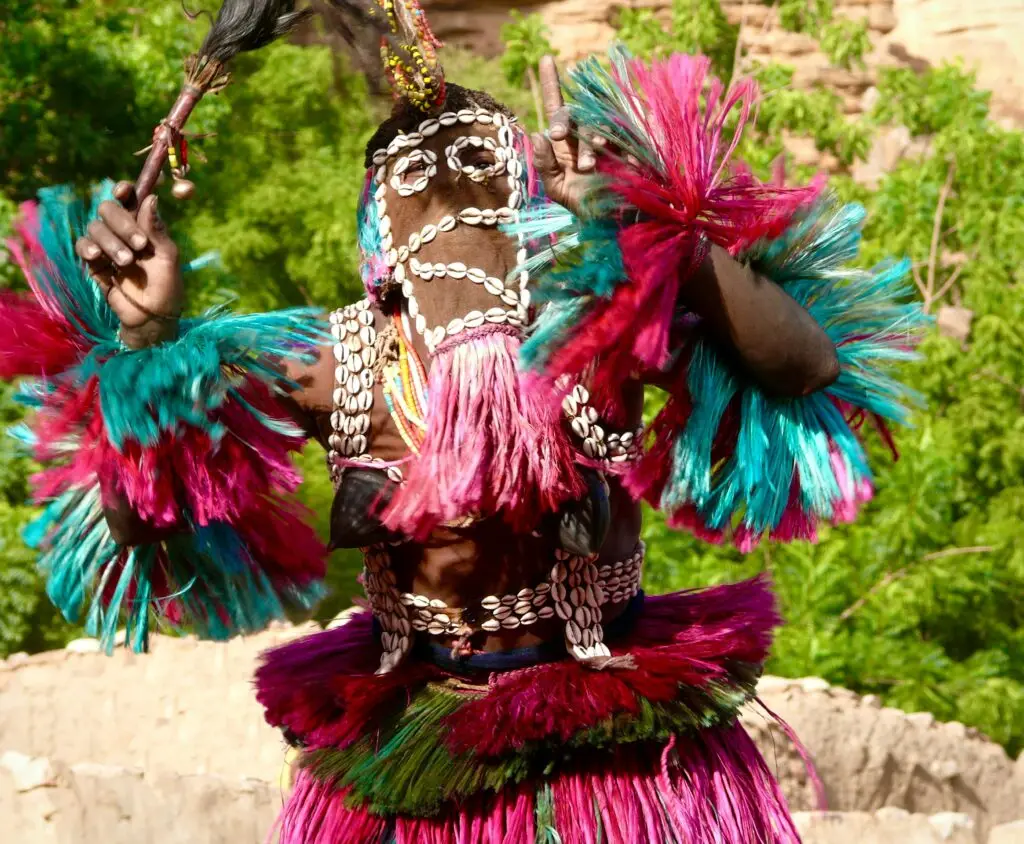
The Dogon are globally known for their cliffside settlements, masked dances, wooden sculpture, astronomy traditions, and ceremonial rituals. Their architecture and cosmology are among the most studied in Africa.
The Bozo, known as the “masters of the river,” are fishing communities who live along the Niger River, using boats, nets, and river knowledge passed down through generations.
The Tuareg, desert nomads of the north, maintain camel-herding lifestyles, blue indigo robes, silver jewelry traditions, poetry, and music. Their language, Tamasheq, uses a unique script called Tifinagh.
The Soninke, descendants of the Ghana Empire, are merchants and traders with strong diaspora networks.
The Tebu people in the extreme north and east maintain desert lifestyles with strong ties to Chad and Libya.
Despite their differences, Mali’s ethnic groups share values of hospitality, family, community, music, spirituality, and respect for ancestry.
Bamako: The Heart of Mali
Bamako, Mali’s capital, is one of West Africa’s most vibrant and culturally expressive cities. Located along the Niger River, Bamako is alive with markets, traffic, musicians, artisans, street vendors, mosques, and the constant movement of people. Its energy is raw, authentic, and deeply connected to culture.
The Grand Marché bursts with textiles, spices, carvings, shea butter, beads, leather goods, and jewelry. Artisans carve wooden statues, weave Bogolan cloth, craft masks, and work with bronze and silver. The city’s neighborhoods reveal everyday life—tea stalls, open-air restaurants, tailors, mechanics, and small boutiques.
Bamako is also one of the greatest music capitals in Africa. Nightclubs, bars, and cultural centers host performances of griot vocalists, kora masters, desert blues bands, balafon ensembles, and Wassoulou singers. Studios in Bamako have produced global stars such as Salif Keita, Oumou Sangaré, Toumani Diabaté, Ali Farka Touré, and Amadou & Mariam.
The National Museum of Mali showcases textiles, sculptures, musical instruments, archaeological artifacts, and traditions from across Mali’s ethnic groups. The city’s mosques, bridges, gardens, and riverbanks add to the atmosphere.
Bamako represents Mali’s modern identity—creative, musical, expressive, and full of cultural life.
Timbuktu: The Legendary City of Gold
Timbuktu is one of the most famous cities in human history. Once a center of learning, trade, wealth, manuscripts, and spirituality, Timbuktu was a key stop along the trans-Saharan trade routes. Caravans arrived with salt, gold, slaves, textiles, dates, and books. Scholars wrote treatises on mathematics, astronomy, law, theology, and medicine. Manuscript libraries filled the city.
The Sankoré Mosque and its university symbolized Timbuktu’s intellectual legacy. The Djinguereber and Sidi Yahia mosques stand as masterpieces of Saharan architecture. The old streets, sand-filled alleys, and earthen buildings maintain the city’s iconic atmosphere.
Although modern instability limits travel, Timbuktu remains one of the most symbolically powerful cities in Africa—a symbol of African scholarship, empire grandeur, trade networks, and cultural memory.
Djenné and the Great Mosque
Djenné is one of Mali’s most iconic towns, famous for its market square and the Great Mosque, the world’s largest mud-brick structure. The mosque is rebuilt every year through a communal festival where residents apply fresh mud plaster, symbolizing unity and tradition. Djenné’s architecture, wooden beams, narrow streets, and traditional houses create a timeless atmosphere.
The town has long been a center of trade, Islamic learning, and crafts. Its weekly market draws villagers from across the region.
Dogon Country and the Bandiagara Escarpment
Dogon Country is one of the most unique cultural landscapes in the world. Villages such as Sangha, Banani, Ende, Tireli, and Ireli cling to cliffs of the Bandiagara Escarpment. The cliffs rise dramatically from the flat plains, creating a natural fortress.
The Dogon are known for their masked ceremonies, wooden sculptures, door carvings, granaries, religious rituals, ancestor worship, and cosmology. Their annual festivals, agricultural cycles, and ceremonial dances reflect ancient traditions.
Walking through Dogon Country offers a journey through culture, architecture, spirituality, and landscapes carved by time.
Gao and the Niger Bend
Gao, once a major capital of the Songhai Empire, sits along the Niger River in eastern Mali. Its streets, markets, and riverfront areas reflect a mix of desert and river cultures. The Tomb of Askia, a UNESCO site, is a striking mud-brick pyramid built in the 15th century.
Gao’s region is shaped by Songhai, Tuareg, and Fulani traditions.
Sikasso and Southern Mali
Sikasso is one of Mali’s greenest cities. The region’s fertile soil supports mangos, cotton, millet, vegetables, and orchards. The city’s history is tied to the Kénédougou Kingdom, which resisted colonial forces.
Southern Mali’s landscapes include savannas, rolling hills, forests, and agricultural villages.
Mopti and the Inland Delta
Mopti is built at the confluence of the Niger and Bani rivers. It sits in the inland delta, a watery region full of rice fields, livestock paths, and pirogue traffic. Mopti’s architecture includes earthen mosques, markets, and bustling fishing ports.
Nearby towns such as Sévaré serve as gateways to Dogon Country and river travel.
Music of Mali
Mali is one of the world’s most musically influential nations. Its griot tradition preserves centuries of history through song, while desert blues musicians like Ali Farka Touré have shaped global genres. Kora masters such as Toumani Diabaté play 21-string harps with astonishing skill. Wassoulou singers like Oumou Sangaré express women’s stories and social issues through powerful vocals.
In Bamako, music fills nightclubs, weddings, baptisms, and celebrations. Instruments such as the kora, balafon, ngoni, djembe, and flute are central.
Cuisine
Mali’s cuisine is shaped by agriculture, river life, and cultural traditions. Dishes include tô (millet or sorghum), rice with peanut sauce, grilled fish, fried plantains, stews of okra and vegetables, and river fish seasoned with spices. Tea ceremonies are central to social life.
Travel Practicalities
Travel in Mali requires planning due to security considerations, but culturally and geographically it remains one of West Africa’s richest destinations. French is the official language, while Bambara is widely spoken.
The best time to visit is during the dry season from November to February. Transportation includes bush taxis, river boats, private vehicles, and domestic flights.
Conclusion: Why Mali Belongs on Your Bucket List
Mali is one of the most culturally powerful, historically meaningful, musically influential, architecturally unique, spiritually deep, and geographically dramatic countries on Earth. Its landscapes range from golden deserts to green savannas, from cliff villages to river deltas. Its history includes the Mali Empire, the gold caravans, Timbuktu’s scholars, and griot storytellers. Its architecture includes earthen mosques, fortified towns, and cliffside villages. Its music has shaped world genres. Its traditions remain alive.
Mali is not just a destination—it is a world of memory, rhythm, empire, spirituality, and heritage. A journey into Mali is a journey into the heart of West Africa’s story.
Related Amazing Bucketlist Articles
- 5 Once-in-a-Lifetime Floating Stays
- Hurawalhi Island Resort
- Top 10 Most Romantic Countries in the World for Couples