Mauritius Travel Guide
Mauritius is one of the world’s most enchanting island destinations — a tropical paradise shaped by turquoise lagoons, volcanic peaks, white-sand beaches, lush forests, multicultural heritage and a warm, welcoming atmosphere. Located in the Indian Ocean east of Madagascar, this small island nation blends natural beauty with deep cultural diversity, historical richness and modern comfort. It is a place where African, Indian, Chinese, French and Creole influences mix into a vibrant society full of flavor, color and rhythm.
The island’s landscapes are spectacular: coral reefs encircle the coastline, protecting calm lagoons where the water glows like liquid sapphire. Inland lies a world of volcanic mountains, green sugarcane fields, hidden waterfalls, crater lakes, ebony forests and national parks. Mauritius is not only for beach lovers — it is a destination for hikers, explorers, culture seekers, wildlife enthusiasts and food lovers.
Historically, Mauritius has been shaped by waves of settlement and colonization — from Arab sailors and Portuguese explorers to Dutch, French and British rule — each leaving traces in architecture, cuisine, languages and traditions. Today, Mauritian society celebrates its multicultural identity through festivals, music, food, temples, churches, mosques and social rituals.
The island’s atmosphere is peaceful and secure. People are friendly, curious and proud of their heritage. The climate is warm year-round, the air scented with frangipani and the sea calm enough for swimming in every season. Whether you seek relaxation, adventure, cultural exploration or natural beauty, Mauritius offers an exceptional experience that feels both luxurious and accessible.
Mauritius is not just an island — it is a world of stories, landscapes, flavors and warm-hearted people. A journey here lingers in memory long after the trip ends.
Port Louis: A City of Cultures, Colors and Indian Ocean Energy
Port Louis, the capital of Mauritius, sits between dramatic mountains and a shimmering harbor. It is a bustling, colorful and culturally rich city reflecting the island’s diverse history. Port Louis combines modern business districts with colonial architecture, historic temples, street markets and lively neighborhoods where people from all backgrounds mingle.
The Central Market
The Central Market is one of the heartbeats of the city. It overflow with tropical fruits, vegetables, spices, herbs, handicrafts, local snacks, juices and traditional remedies. Vendors call out prices, the scent of chili and curry floats in the air, and shoppers move through narrow aisles filled with energy and life. Visiting the Central Market offers a deep dive into Mauritian daily culture.
Caudan Waterfront
Along the harbor lies the Caudan Waterfront, a modern complex with shops, cafes, artisan stalls, restaurants and a lively promenade. Street performers entertain visitors, artists sell handmade jewelry, and the waterfront’s colorful umbrella installation has become one of the city’s most photographed spots.
Religious Diversity
Port Louis reflects Mauritius’ multicultural structure through its diverse religious sites. The Jummah Mosque, with intricate white architecture, sits peacefully in Chinatown. Tamil temples burst with color and sculpted deities. Christian churches stand alongside Chinese pagodas. This mix creates a harmonious city where different traditions coexist naturally.
The Chinatown District
Chinatown adds another layer of cultural flavor. Its red lanterns, herbal shops, noodle restaurants, tea houses and groceries remind visitors of the island’s Chinese heritage. Festivals like the Chinese New Year bring parades, firecrackers, lion dances and music.
Historical Heritage
Port Louis has colonial buildings, fortifications and museums such as the Blue Penny Museum, home to rare stamps and historical exhibits. The old Supreme Court, Government House and Champ de Mars Racecourse — the oldest horse-racing track in the southern hemisphere — reflect the island’s colonial past.
Port Louis is not a beach destination — it is a cultural mosaic, alive with energy and authenticity.
Grand Baie: Northern Mauritius’ Beachfront Playground
Grand Baie, located in the north of the island, is a vibrant coastal town known for its beaches, nightlife, shopping, restaurants and tropical charm. It is one of the most visited areas of Mauritius, offering a lively atmosphere without losing its island soul.
Beach Life
The bay’s calm waters make it ideal for swimming, boating, sailing and snorkeling. Coconut trees sway along the shoreline, boats gently rock in the lagoon, and the turquoise water seems to glow in the sun.
Restaurants and Nightlife
Grand Baie has a dynamic dining scene — Creole seafood, Chinese-Mauritian dishes, Indian curries, French bakeries, cafes, rooftop bars and international cuisine. At night, the town transforms into a social hub with music, cocktails and dancing.
Boat Excursions
From Grand Baie, boats depart for island-hopping adventures — to Coin de Mire, Flat Island, Gabriel Island and the northern lagoon’s reefs.
Grand Baie blends comfort, entertainment and beach life in a uniquely Mauritian way.
Flic-en-Flac: Sunset Coast and Long Golden Beaches
Flic-en-Flac on the western coast is famous for its calm lagoon, powdery sand and spectacular sunsets that paint the sky in pink, purple and gold. Its long beach is lined with casuarina trees that whisper in the breeze, creating shade for picnics and relaxing afternoons.
Beach and Lagoon
The lagoon here is protected by a coral reef, offering clear water ideal for swimming and snorkeling. Tropical fish glide around corals just a short swim from the shore.
Resort Atmosphere
Flic-en-Flac features hotels, apartment rentals, restaurants and bars. Yet the beach maintains a relaxed, family-friendly vibe, with locals gathering for weekend barbecues and music.
The calm, open horizon and gentle waves create a dreamlike coastal environment.
Le Morne Peninsula: Dramatic Scenery and Deep History
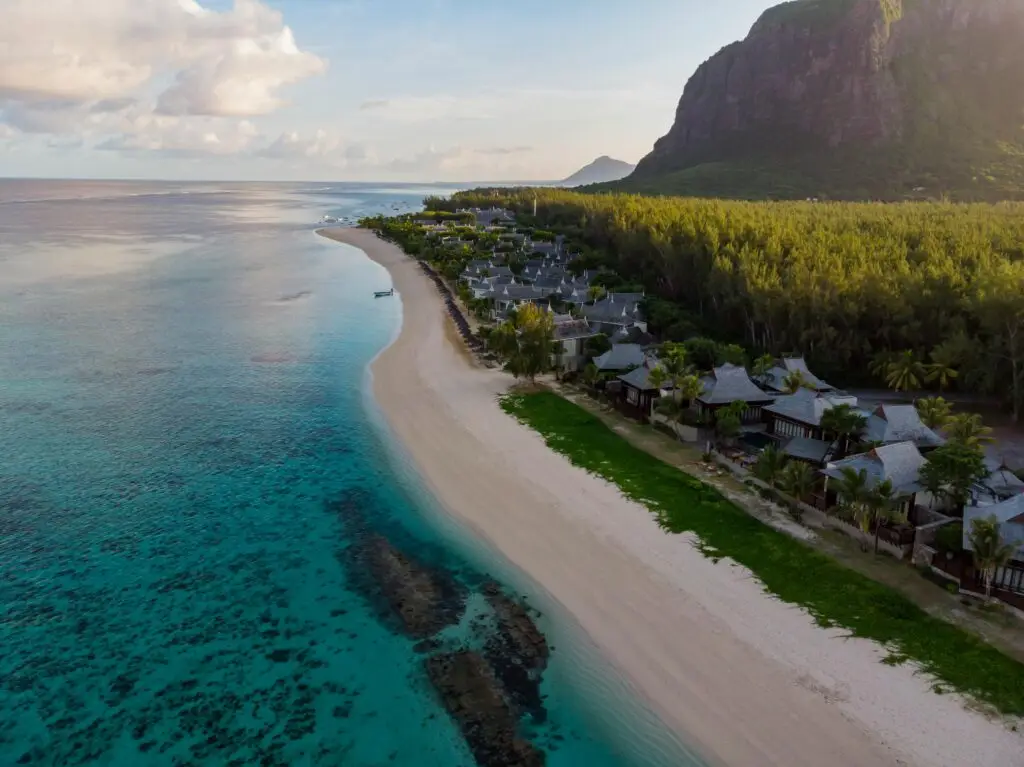
Le Morne Brabant, a UNESCO World Heritage Site, is one of Mauritius’ most iconic landscapes — a towering basalt mountain rising above turquoise lagoons and white beaches. Its cultural significance is equally powerful: the mountain once served as a refuge for escaped slaves, symbolizing resistance, struggle and the fight for freedom.
Natural Beauty
Le Morne is surrounded by crystal-clear water, shallow sandbanks, coral gardens and lush coastal vegetation. The shape of the peninsula creates a dramatic contrast between the ocean’s blue and the mountain’s rugged cliffs.
Kitesurfing Paradise
Steady winds and shallow waters make Le Morne one of the world’s best kitesurfing destinations. Boards and sails glide across the lagoon, adding movement and color to the scenery.
Hiking Le Morne
A trail winds up the slopes of Le Morne, offering panoramic views of the peninsula, the ocean and the surrounding mountains. The summit is peaceful and awe-inspiring — a place where nature and emotion meet.
Le Morne is the soul of Mauritius — a place of beauty, history and spiritual resonance.
Trou aux Biches, Pereybere and Mont Choisy: Northern Gems
Northern Mauritius is dotted with some of the island’s most idyllic beaches.
Trou aux Biches
Known for its long, powdery sands and calm lagoon, Trou aux Biches is perfect for swimming and snorkeling. The sunlight reflects beautifully off the shallow water, creating a dazzling blue palette.
Mont Choisy
Mont Choisy’s crescent-shaped beach offers space, shade and tranquillity. Locals gather on weekends for families, football matches and coast-side cooking.
Pereybere
A smaller but beloved beach, Pereybere is known for its clarity, depth and vibrant atmosphere. Restaurants and ice cream stalls line the street beside the beach.
These northern beaches offer some of Mauritius’ finest and most accessible coastal experiences.
Chamarel: Colored Earth, Waterfalls and Scenic Heights
Chamarel, located in the southwest hills, is a region of natural wonders.
Seven Coloured Earth
The volcanic sands at Chamarel display swirling shades of red, purple, yellow, orange and brown. Their unique composition prevents mixing, creating a surreal and photogenic landscape.
Chamarel Waterfall
One of Mauritius’ tallest waterfalls drops from a basalt cliff into a lush valley. The sound of rushing water echoes through the greenery, creating a serene atmosphere.
Rum and Food Culture
Chamarel has artisanal rum distilleries and restaurants that celebrate local produce, spices and tropical flavors.
The region blends landscape, geology, agriculture and cuisine into a beautiful experience.
Black River Gorges National Park: Wilderness and Trekking
Black River Gorges National Park protects Mauritius’ last remaining native forest — a world of waterfalls, ravines, plateaus and mountain ridges. It shelters endangered birds like the Mauritius kestrel, pink pigeon and echo parakeet, along with wild monkeys, deer and giant trees.
Hiking Trails
Trails range from gentle walks to challenging treks leading to viewpoints where green hills roll endlessly toward the ocean. Waterfalls flow through forest canyons, and the atmosphere is cool, fresh and quiet.
Flora and Fauna
Ebony trees, ferns, palms, orchids, endemic birds and butterflies thrive here. The park feels like a sanctuary — a reminder of what Mauritius looked like before human settlement.
Black River Gorges is the island’s heart of wilderness.
Tea Plantations and the Central Plateau
Mauritius has a long history of tea cultivation. The central plateau features misty fields, colonial-era estates, factories and charming towns like Curepipe.
Bois Chéri Tea Estate
Visitors can tour the plantations, see tea production, walk through gardens and enjoy tastings overlooking scenic lakes and hills.
Central Plateau Towns
Curepipe, Quatre Bornes and Rose Hill offer cooler temperatures, colonial architecture, markets and residential charm.
The plateau adds a refreshing counterbalance to the coastal heat.
Mauritian Culture: Multicultural Harmony
Mauritius is one of the world’s most peaceful and diverse countries. Its population includes descendants of African slaves, Indian indentured laborers, Chinese merchants, Creole families, French settlers and mixed communities.
Languages
Mauritian Creole is the most widely spoken language and symbolizes unity. English and French are used in government, media and education. Many people also speak Bhojpuri, Tamil, Urdu or Mandarin.
Festivals
Mauritius celebrates Hindu, Christian, Muslim and Chinese festivals with equal enthusiasm — Diwali, Eid, Christmas, Thaipoosam Cavadee, Chinese New Year and local celebrations.
Music and Dance
Sega, the traditional Creole dance with rhythmic percussion and soulful lyrics, expresses island identity. Contemporary Mauritian music blends African, Indian and Western influences.
Mauritian culture is a celebration of coexistence, joy and identity.
Cuisine
Mauritian cuisine reflects its multicultural roots. Curries, noodles, grilled fish, stews, rougaille (tomato-based dishes), biryani, dholl puri, fried snacks, chutneys and tropical fruit define its flavors.
Street food is a highlight — hot roti, samosas, fresh mango, chili cakes, pineapple slices with salt and chili, and aromatic noodle bowls.
The country’s cuisine is vibrant, flavorful and deeply comforting.
Why Mauritius Captivates Travelers
Mauritius is magical because it blends:
breathtaking beaches
dramatic mountains
lush forests
rich culture
warm-hearted locals
clear turquoise lagoons
unique wildlife
flavorful cuisine
peaceful villages
luxury yet authenticity
It is an island that feels complete — visually stunning, emotionally soothing and culturally alive.
Mauritius is not just a paradise; it is a feeling.
Een gevoel dat blijft.
 Related Articles
- Kakslauttanen Arctic Resort
- Top 10 Most Unique Places to Stay in Europe
- 10 Incredible Castles Around the World
Grid