
Sierra Leone – Complete Travel Guide
Sierra Leone is one of West Africa’s most vibrant, naturally stunning, and culturally rich countries, yet it remains one of the most underrated travel destinations on the continent. Located along the Atlantic Ocean and bordered by Liberia and Guinea, the country offers an exceptional mix of untouched white-sand beaches, lush rainforests, wildlife-filled reserves, rolling hills, colorful cities, and warm, welcoming people who embody resilience and hospitality. Travelers who venture to Sierra Leone often describe it as a place of unexpected beauty, with coastlines that rival the Caribbean, landscapes filled with tropical birds and green mountains, and villages where traditions have remained strong despite a complicated history.
The name Sierra Leone, meaning “Lion Mountains,” was given by Portuguese explorers who were struck by the dramatic peaks rising near the coast. These mountains still shape the identity of the country today, as they frame Freetown, the capital, providing one of the most scenic urban backdrops in West Africa. But beyond Freetown’s hills lies an incredibly diverse country whose attractions extend from sandy peninsulas and offshore islands to vast savannas and forested highlands. Sierra Leone is also home to some of the most beautiful beaches in Africa, many of which are still largely unknown to the world, offering visitors a serene experience far removed from mass tourism.
The country has a long and complex history that includes indigenous cultures, colonial occupation, the transatlantic slave trade, the resettlement of freed slaves, independence, and later civil war. Despite these challenges, Sierra Leone has emerged today as a peaceful and welcoming destination, marked by extraordinary strength and positivity. Its cultural heritage is visible in its music, food, languages, architecture, festivals, and local customs. The Krio people, descendants of freed enslaved Africans who returned from the Americas and the Caribbean in the late 18th century, play a major role in shaping the country’s identity. Their Creole language, traditions, and style are a central part of the cultural landscape, especially in Freetown.
For many travelers, one of the first impressions of Sierra Leone is the overwhelming friendliness of the people. Locals are known for their hospitality, openness, and ability to make visitors feel comfortable almost immediately. There is a calm and welcoming atmosphere, whether you are walking through Freetown’s lively markets, visiting fishing villages along the coast, or exploring rural communities in the interior. Sierra Leoneans are proud of their country and are often excited to share stories, traditions, and recommendations with visitors.
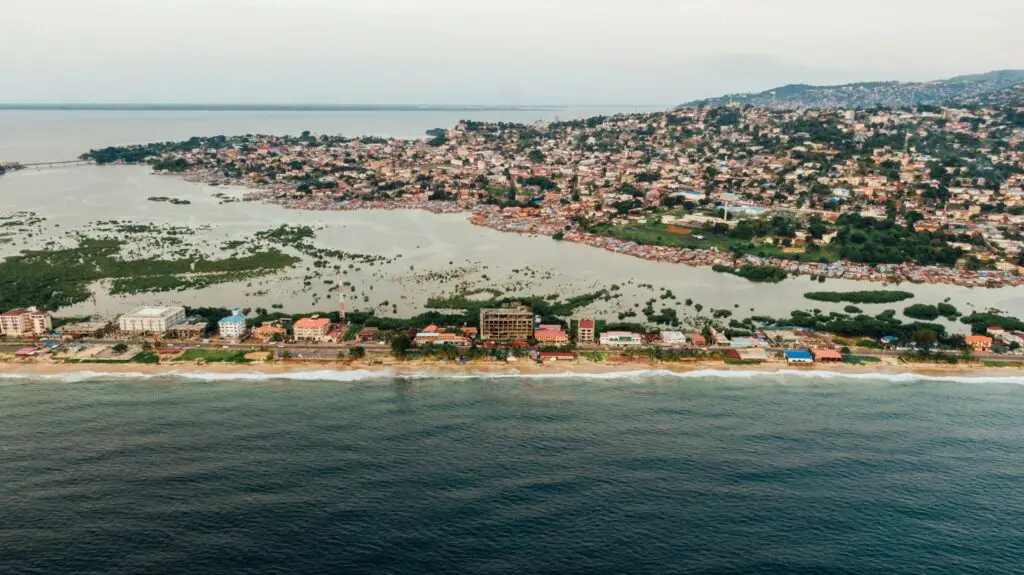
One of the defining attractions of Sierra Leone is its coastline. The Freetown Peninsula stretches out like a natural jewel, dotted with pristine beaches framed by mountains and palm trees. Places like Lumley Beach, River No. 2, Tokeh Beach, Lakka Beach, Bureh Beach, Sussex Beach, and Kent Beach offer some of the clearest waters and softest sands in West Africa. Each beach has its own personality: Lumley is active, full of restaurants and nightlife; River No. 2 is calm and postcard-perfect with white sand and turquoise water; Bureh Beach is the country’s surfing hub; and Tokeh is known for its long stretch of powdery sand and quiet atmosphere. The beaches feel incredibly peaceful, and even the most popular ones are rarely crowded, offering a sense of tranquility that is increasingly hard to find in other parts of the world.
Offshore, the Banana Islands are among Sierra Leone’s most captivating destinations. These three islands—Dublin, Ricketts, and Mes-Meheux—are rich in history and natural beauty. Dublin Island is known for its charming fishing villages and historical sites linked to the slave trade. Ricketts Island offers lush forests, secluded beaches, and eco-lodges that give visitors a close connection to nature. Most travelers visit the Banana Islands to snorkel, dive, relax, explore ruins, or trek through the jungle. The waters surrounding the islands are incredibly clear, with coral reefs, tropical fish, and abundant marine life making it an excellent destination for underwater exploration. Dolphins are often spotted from small boats, and occasionally whales migrate through the coastal waters.
Freetown itself is a dynamic blend of history, culture, and Caribbean-style charm. The city was founded in 1787 as a settlement for freed slaves and later became the home of the Krio people. This unique history has shaped Freetown into a city with an atmosphere unlike anywhere else in West Africa. Colorful colonial-era wooden houses, vibrant markets, bustling street life, and a dramatic setting between the ocean and the mountains make Freetown a fascinating place to explore. Visitors can walk through downtown streets filled with local shops, discover historic landmarks such as the Cotton Tree, visit the National Museum, and enjoy oceanfront dining along Lumley Beach. The city’s streets are alive with music, laughter, and the smell of local dishes being cooked in open-air food stalls.
Outside of the capital, Sierra Leone’s natural attractions become even more impressive. The interior of the country is dominated by rolling hills, dense rainforests, wetlands, and savanna landscapes. Wildlife thrives here, especially in protected areas such as Outamba-Kilimi National Park, Tiwai Island Wildlife Sanctuary, Gola Rainforest National Park, and Loma Mountains National Park. These parks offer some of the best opportunities in West Africa to see primates, forest elephants, rare birds, and other wildlife in their natural habitats. Tiwai Island, located on the Moa River, is particularly famous for its primate population, which includes endangered Diana monkeys and red colobus monkeys. Gola Rainforest is one of the last remaining tracts of Upper Guinean rainforest and is a paradise for birdwatchers, with hundreds of species recorded.
The Loma Mountains, home to Mount Bintumani—the highest peak in Sierra Leone—offer an extraordinary experience for hikers and nature enthusiasts. Climbing the mountain takes travelers through remote villages, savannas, dense forests, and rugged terrain before reaching the summit, which provides sweeping views over the surrounding landscape. The area is home to forest elephants, chimpanzees, and rare bird species, making it a destination not only for adventure but also for wildlife enthusiasts. Outamba-Kilimi National Park, located in the north, features savanna woodlands and river ecosystems where hippos, monkeys, and crocodiles thrive.
Another important piece of Sierra Leone’s natural beauty is its islands. Beyond the Banana Islands, the Sherbro Islands and Turtle Islands offer some of the most remote and untouched coastal ecosystems in West Africa. The Turtle Islands, accessible only by long boat journeys, feel like a world completely removed from modern life. These low-lying islands are home to traditional fishing communities, mangroves, pristine beaches, and a sense of isolation that appeals to travelers seeking raw, authentic experiences.
The natural environment of Sierra Leone also supports a rich array of marine life. The coastal waters are teeming with fish, dolphins, sea turtles, and seasonal whales. Fishing remains a vital part of local culture, and traditional wooden fishing boats called “paddie boats” can be seen leaving the shores at sunrise and returning in the late afternoon. Visitors can watch fishermen haul in nets, smoke fish using traditional methods, or join boat excursions to explore coastal areas.
Culturally, Sierra Leone is one of the most diverse countries in West Africa. The nation is home to more than a dozen ethnic groups, including the Mende, Temne, Limba, Krio, Loko, Fullah, and Kono, each with its own language, traditions, and customs. Music is central to Sierra Leonean life, with genres like gumbe, bubu music, palm wine music, and modern Afrobeats shaping the country’s soundtrack. Dance plays an important cultural role during festivals, celebrations, and community gatherings. Traditional masks, carvings, and textiles reflect the artistic heritage of the various ethnic groups. Sierra Leonean storytelling, often passed down orally through generations, is another important aspect of cultural life, with tales about spirits, heroes, and the natural world.
Festivals and celebrations are joyous events in Sierra Leone, blending music, dance, and cultural traditions. During national holidays, communities come together to celebrate with food, singing, and parades. Religious harmony is also a defining characteristic of Sierra Leone. Muslims and Christians live peacefully side by side, and interfaith friendships, families, and celebrations are common throughout the country.
Sierra Leonean cuisine is flavorful, hearty, and deeply tied to local ingredients. Rice is the staple food and is served with a variety of sauces made from cassava leaves, okra, fish, groundnut, palm oil, and other native ingredients. Popular dishes include cassava leaf stew, groundnut soup, okra stew, jollof rice, and fried plantains. Fresh seafood—such as barracuda, lobster, crab, snapper, and prawns—is abundant along the coast. Street food is an important part of daily life, with vendors selling grilled fish, roasted corn, akara (bean cakes), fried sweet potatoes, and spicy snacks. Tropical fruits such as mangoes, bananas, pineapple, papaya, coconuts, and oranges grow in abundance and are often sold on roadside stalls.
Despite its beauty, Sierra Leone is still a destination where travelers should be prepared for a slower pace and limited infrastructure. Roads outside major cities can be rough, transportation can be unpredictable, and services may operate differently than in more developed tourist destinations. But for many visitors, this is part of the charm. Sierra Leone offers the chance to experience a country in its most authentic form, where daily life unfolds naturally and tourism is still growing. This means that encounters with local communities feel personal, nature remains pure, and the travel experiences are memorable and meaningful.
One of the most interesting historical aspects of Sierra Leone is its connection to the transatlantic slave trade and the later resettlement of freed slaves. In the late 1700s, British abolitionists established Freetown as a refuge for formerly enslaved people from the Americas, the Caribbean, and Britain. These settlers, known as the Krio people, brought with them languages, architectural styles, foods, and cultural customs that blended with the traditions of local ethnic groups. Many parts of Freetown still reflect this Creole heritage, with distinctive wooden houses, old churches, and neighborhoods with Caribbean and colonial influences. The Cotton Tree, which stood for centuries as a symbol of freedom and unity, served as a historical gathering point for freed slaves when they arrived in the city.
Outside Freetown, the country offers a variety of landscapes that showcase the ecological diversity of Sierra Leone. Large parts of the interior are covered by forest reserves, rivers, wetlands, and rolling hills. The Gola Rainforest, one of the country’s most protected ecosystems, is home to chimpanzees, pygmy hippos, rare birds, butterflies, and unique plant species. It is also part of a wider conservation network that includes Liberia, forming one of the most important forest corridors in West Africa. Conservation initiatives across the country aim to protect endangered wildlife and promote eco-tourism as a sustainable way to support local communities.
Tiwai Island, located in the Upper Moa River, is another protected area that attracts nature lovers. The island is one of the best places in West Africa to observe primates and wildlife in a dense tropical forest environment. Visitors can stay at eco-camps, join guided forest walks, take boat trips along the river, and explore the island’s remarkable biodiversity. The soundscape of Tiwai Island—filled with bird calls, rustling leaves, and the distant chatter of monkeys—creates an unforgettable atmosphere of undisturbed nature.
The country’s mining regions, particularly in the eastern districts, are known for diamonds and other minerals. While these areas are not major tourist destinations, the mining history has played a major role in shaping Sierra Leone’s economy and identity. Koidu Town in Kono District is particularly known for its diamond trade. The region’s mountains, rivers, and forests reflect the rugged landscapes of the interior, offering a contrast to the more tropical scenery of the coast.
Another fascinating destination is the Bumbuna region, where waterfalls, lakes, and hills provide a scenic environment for exploration. The Bumbuna Waterfall and Bumbuna Lake attract domestic visitors and adventurous travelers interested in fresh water landscapes and local village life. Rural regions across the country often feel peaceful and untouched, with traditional houses, rice fields, and palm trees stretching across the landscape.
Sierra Leone also has unique cultural crafts and markets. Local artisans produce wood carvings, woven baskets, batik fabrics, jewelry, and handmade instruments that reflect the nation’s heritage. Markets such as Big Market in Freetown offer a lively atmosphere where traders sell colorful textiles, spices, handmade goods, and everyday essentials. Walking through the market is an immersive experience, filled with the vibrant energy of vendors calling out prices, the aroma of spices and fresh produce, and the rhythm of local chatter.
The climate of Sierra Leone is tropical and warm throughout the year. It features a rainy season from May to October and a dry season from November to April. During the dry months, skies are clear, beaches are at their best, and outdoor activities are ideal. The rainy season, although wet, brings the forests alive with vibrant colors and full rivers. Even during rainy months, showers often come in bursts, leaving plenty of time for exploration. The harmattan winds from the Sahara occasionally reach Sierra Leone, bringing hazy skies and cooler nights.
Transportation within the country varies depending on location. In Freetown and along the peninsula, taxis and motorbikes are common ways to move around. Inland regions rely more on shared vehicles, community transport, or private drivers. Road conditions vary widely, with some routes being smooth and others rugged. Traveling between regions can take time, but the changing landscapes provide fascinating views.
One of Sierra Leone’s greatest strengths as a travel destination is its authenticity. Unlike destinations that have adapted themselves heavily for tourism, Sierra Leone retains its natural character. The beaches have minimal development, the forests remain wild, and the towns operate according to local rhythms. This means that visitors enjoy a genuine cultural experience, whether they are eating meals prepared using traditional cooking techniques, participating in local celebrations, or observing everyday life in villages.
Sierra Leone’s resilience is also a key part of its identity. The country has faced challenges—from colonial rule and the slave trade to civil war and the Ebola outbreak—but it has rebuilt itself with determination and unity. Today it is stable, peaceful, and steadily growing. Tourism is increasingly recognized as a valuable way to support conservation, cultural preservation, and sustainable economic development.
Travelers who visit Sierra Leone often find that the country changes their perspective on West Africa. Instead of crowded cities or overly touristy resorts, they discover quiet beaches with golden sunsets, lush forests filled with wildlife, mountains that rise dramatically above the coastline, and people whose kindness leaves a lasting impression. The energy is vibrant yet relaxed, and the natural environment feels pristine and inviting.
Whether exploring Freetown’s historic neighborhoods, swimming in the clear waters of River No. 2 Beach, venturing deep into the Gola Rainforest, hiking to Mount Bintumani, visiting remote fishing villages, discovering cultural traditions, or relaxing on secluded islands, Sierra Leone offers an experience full of depth, diversity, and beauty. It is a destination for travelers who value authenticity, nature, culture, and a sense of discovery.
Sierra Leone remains one of West Africa’s most compelling destinations—a country with immense natural treasures, a rich cultural history, and a spirit of warmth that makes every visitor feel welcome. While the rest of the world rushes forward, Sierra Leone invites travelers to slow down, breathe deeply, and appreciate the simple yet powerful beauty of life along the Atlantic coast. Few destinations combine mountains, beaches, rainforests, wildlife, and vibrant culture with such harmony, making Sierra Leone a country that deserves far more attention than it receives.
For travelers seeking a place that is both serene and adventurous, both culturally rich and naturally pristine, Sierra Leone stands out as a truly special destination. It offers endless opportunities for exploration, reflection, and connection. And as tourism grows carefully and sustainably, the country’s future as a world-class destination becomes clearer each year. Sierra Leone may still be under the radar, but for those who visit, it becomes a place they never forget.
Related Amazing Bucketlist Articles
- 5 Once-in-a-Lifetime Floating Stays
- Hurawalhi Island Resort
- Top 10 Most Romantic Countries in the World for Couples