
Somalia Complete Travel Guide
Somalia – A Land of Ocean, Nomads, Poetry, Strength, and Unbreakable Spirit
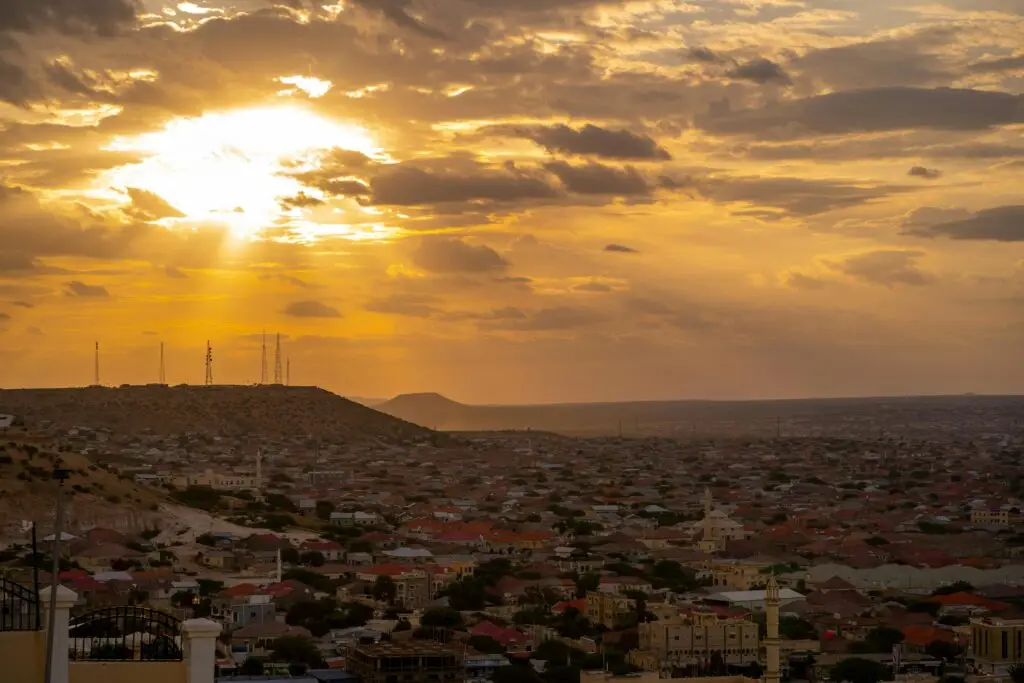
Somalia Complete Travel Guide, and a cultural identity rooted in poetry, courage, hospitality, and ancient tradition. It is a land where camels walk along vast plains of acacia and sand; where fishermen rise before dawn to cast their nets into turquoise waters; where families gather around cups of spiced tea; where the call to prayer echoes softly across towns built of limestone, coral, or sun-baked earth; and where the Somali language—rich, expressive, and poetic—carries the stories of generations.
Somalia is a country of contrasts: serene coastlines and rugged hinterlands, bustling markets and quiet desert nights, ancient ruins and modern cities rising anew. But above all, Somalia is defined by its people—resilient, proud, generous, and deeply connected to their land, their faith, and their culture. The Somali spirit is strong, and it is expressed in everything from storytelling to camel culture, from traditional nomadic hospitality to modern Somali entrepreneurship.
For travelers, Somalia offers a rare journey into a world where tradition remains the foundation of life. The landscapes feel untouched, the culture feels strong, and the emotion of the country—its warmth, pride, and perseverance—lingers long after the journey ends. Somalia is not a simple destination; it is a profound one. A place that challenges, teaches, surprises, and moves those who approach it with respect and an open heart.
Geography and Natural Atmosphere of Somalia
Somalia sits on the Horn of Africa, bordered by the Indian Ocean and the Gulf of Aden, with one of the longest and most pristine coastlines in all of Africa. The coastline stretches for more than 3,000 kilometers, forming a world of soft white beaches, coral reefs, lagoons, cliffs, and fishing villages that live in harmony with the sea.
Inland, Somalia is shaped by desert, semi-desert, and savanna landscapes. The plains are wide and open, dotted with acacia trees, thorny bushes, and herds of camels grazing in the golden sunlight. The desert winds carry the scent of sand and dry grass, while the sky appears vast, open, and endlessly blue. During the rainy seasons, dry riverbeds fill with water, wildflowers bloom briefly, and the land turns green in a dramatic and emotional transformation.
Northern Somalia, especially in Somaliland and Puntland, is defined by mountains and rocky plateaus. The rugged peaks of the Golis Range rise sharply from the earth, offering views across endless plains and distant coastlines. Limestone caves, ancient rock art, and hidden valleys shape the atmosphere—quiet, timeless, and full of history.
Southern Somalia transitions into fertile farmland along the Shebelle and Jubba rivers. Here, banana plantations, vegetable gardens, sugarcane fields, and mango groves thrive alongside rural villages shaded by palm trees. The rivers create peaceful oases where communities gather to farm, fish, and celebrate.
Somalia’s landscapes are emotionally powerful—humble yet majestic, simple yet vast, quiet yet filled with life.
Mogadishu – A Coastal City of Resilience, Beauty, Memory, and Renewal
Mogadishu, Somalia’s capital, is a city of profound contrasts. It stands on a stunning stretch of the Indian Ocean, where waves crash against pale coral stone and beaches glow beneath the sun. The city’s architecture reflects centuries of history—Arabian arches, Italian colonial buildings, mosques with tall minarets, traditional coral houses, lively markets, and modern towers rising as symbols of renewal.
Despite its turbulent past, Mogadishu carries an atmosphere of resilience and hope. The people move with determination and dignity. Markets are full of life, color, and sound—vendors selling fruit, camel milk, spices, tea, fabrics, jewelry, and handcrafted goods. Fishermen paddle colorful boats through turquoise waters at dawn. The scent of freshly grilled fish mixes with ocean breeze and sweet incense.
Lido Beach, one of the city’s most beloved areas, is a place of joy and community. Families gather to swim, relax, eat seafood, or enjoy the sunset. Beachfront cafés and restaurants serve fresh lobster, grilled fish, pasta, rice, and aromatic Somali dishes infused with spices from across the Indian Ocean. The waves reflect warm golden light in the evenings, and laughter drifts along the shore as children play in the water.
Mogadishu’s emotional power lies in its ability to shine despite hardship. It is a city where history meets hope, where beauty coexists with memory, and where life moves forward with determination.
Hargeisa – A Calm, Peaceful Capital of Culture, Mountains, and Modern Life
Hargeisa, the capital of Somaliland, is one of the most peaceful and culturally rich cities in the Horn of Africa. Surrounded by mountains and rocky highlands, it carries a relaxed, friendly, and grounded atmosphere. The streets buzz with markets, cafés, shops, and conversations in Somali and English. People welcome visitors with warmth, pride, and curiosity.
The city’s architecture blends traditional and modern styles. Concrete buildings rise alongside open-air markets where women sell incense, spices, fabrics, and jewelry. The scent of Somali tea—brewed with cardamom, ginger, and cinnamon—fills the air. Goats wander freely through neighborhoods, a reminder of Hargeisa’s deep nomadic heritage.
One of the city’s most important cultural sites is the Hargeisa War Memorial, featuring a fighter jet raised high above the ground as a symbol of struggle and resilience. Museums and galleries host artwork that reflects Somali identity—geometric designs, camel motifs, desert landscapes, and scenes of daily life.
Hargeisa feels safe, calm, and deeply connected to Somali tradition. It is a place where poetry, knowledge, hospitality, and community flourish.
Berbera – Warm Seas, Ancient Ports, Coral Reefs, and Golden Beaches
Berbera, located along the Gulf of Aden, is one of Somalia’s oldest and most culturally significant port cities. Its atmosphere is defined by heat, history, and the endless blue of the sea. The coastline here is stunning—wide, empty beaches, clear water, coral reefs, and soft sand warm beneath the blazing sun.
The old town of Berbera features coral stone houses, carved wooden doors, and faded pastel buildings that reveal centuries of maritime trade with Arabia, Persia, and India. Fishermen bring in fresh tuna, kingfish, and lobster, while markets sell salt, incense, dried fish, fruits, and spices.
Berbera’s beaches are peaceful and pristine. The water glows in shades of blue and green. The sand feels soft and clean underfoot. The atmosphere is calm and healing—ideal for swimming, snorkeling, or simply watching the horizon stretch infinitely toward the sky.
At night, the heat fades into a warm breeze, and the stars shine brilliantly over the desert.
The Somali Coast – A Long Ribbon of Coral, Sand, Wind, and Indian Ocean Beauty
Somalia’s coastline is one of the country’s most extraordinary treasures. Stretching thousands of kilometers, it rivals the beauty of the Maldives, Seychelles, and Mauritius—but remains largely untouched by tourism.
The waves of the Indian Ocean create a soothing rhythm along the shore. Dhows, traditional wooden sailboats, glide gracefully across the water. Fishing villages built from palm leaves and limestone sit along the coast, where families gather to cook, talk, and prepare seafood.
The coral reefs offshore are rich with marine life—turtles, dolphins, whale sharks, manta rays, and colorful fish. The clarity of the water reveals underwater worlds shaped by centuries of natural beauty.
From Kismayo to Hafun, from Eyl to Hobyo, from Marka to Barawe, the Somali coast showcases the emotional power of the ocean—calm, strong, pure, and infinite.
Nomadic Culture – Camels, Poetry, Hospitality, and the Heart of Somali Identity
Nomadism is the foundation of Somali culture. For centuries, Somali families travelled across desert and savanna with their camels, goats, and sheep, guided by seasons, water sources, and ancestral knowledge. Even today, nomadic tradition shapes identity, values, and lifestyle.
Camels are central to Somali life. They provide milk, transportation, wealth, and cultural pride. A camel herd is a sign of success and stability, and camel milk is considered one of the purest, healthiest foods in Somali tradition. Camel caravans moving across the plains form one of the most powerful images of the Somali landscape—timeless, elegant, and symbolic.
Somali poetry is one of the richest oral traditions in the world. Poets recite verses about love, courage, land, family, honor, and faith. Poetry competitions, gatherings, and performances remain deeply respected. Words carry enormous weight in Somali culture—they shape identity, resolve disputes, preserve history, and express deep emotion.
Hospitality is sacred. Guests are treated with generosity regardless of wealth. Tea is served with spices, milk, and sweetness. Meals are shared communally. Stories, laughter, and advice flow freely. The warmth of Somali hospitality leaves a lasting impression on every traveler.
Rural Somalia – Villages, Pastoral Life, River Farming, and Community Strength
Beyond the cities and deserts lie Somalia’s rural communities—villages built from mud, stone, thatch, or wood, surrounded by farmland, grazing land, or riverbanks. Daily life here reflects simplicity, cooperation, and tradition.
In farming regions along the Shebelle and Jubba rivers, people grow bananas, maize, beans, vegetables, mangoes, and papaya. The river breeze cools the air, children play beneath palm trees, and farmers guide oxen or donkeys across fields irrigated with handmade canals.
In pastoral areas, life revolves around herding—moving from place to place in search of water and pasture. Families set up temporary homes made of cloth, wood, and woven mats. The rhythm of pastoral life is shaped by seasons, weather, and livestock. Evening brings quiet—animals settling, families gathering, stars sparkling in clear desert skies.
Community bonds are strong. Elders guide decisions. Women maintain households, cook fragrant meals, raise children, and preserve tradition. Men herd animals, trade goods, build structures, and guard the community. Children learn skills early—herding goats, fetching water, helping in gardens, and absorbing cultural values.
Rural Somalia reveals the heart of the nation—strong, grounded, generous, and deeply tied to land and heritage.
Somali Cuisine – Fragrance, Spice, Ocean Flavor, and Warm Hospitality
Somali cuisine is rich, fragrant, and influenced by centuries of trade with Arabia, Persia, India, and East Africa. Meals are communal, symbolizing unity, family, and hospitality.
Rice dishes cooked with cardamom, cumin, cloves, and cinnamon form the base of many meals. Somali spaghetti—introduced through Italian influence—is often served with spiced goat, chicken, or lamb. Flatbreads, including canjeero (a softer version of injera), accompany stews made with meat, vegetables, and aromatic spices.
Seafood is abundant along the coast—grilled tuna, lobster, kingfish, prawns—prepared with lemon, garlic, chili, and Somali spice blends. Camel meat and milk play important roles in pastoral communities, symbolizing strength and tradition.
Somali tea (shaah) is sweet, spiced, and served constantly throughout the day. It is more than a drink; it is a cultural ritual.
Faith, Spirituality, and Cultural Harmony
Islam is central to Somali identity. Mosques stand in every town, village, and city. The call to prayer shapes the rhythm of daily life. Faith influences values, hospitality, modesty, generosity, and community ethics.
Traditional Somali spirituality also includes respect for ancestors, oral wisdom, poetry, and cultural customs that predate modern religion. Together, these spiritual elements create a worldview rooted in morality, respect, honor, and belonging.
Climate, Seasons, and the Atmosphere of the Land
Somalia’s climate is warm, dry, and sunlit throughout the year. Desert winds blow across the plains, cooling evenings and carrying soft sand across paths and hills. Rainy seasons bring brief but powerful bursts of green—grass covering the plains, trees blossoming, and rivers flowing.
Along the coast, warm ocean breezes create a fresh, calming atmosphere. Sunsets paint the sky in soft orange and pink, while nights reveal constellations shining brightly above the water.
Somalia’s climate adds to its emotional landscape—hard yet beautiful, warm yet refreshing, intense yet calming.
The Emotional Experience of Traveling Through Somalia
Traveling through Somalia is a journey into a land of strength, poetry, courage, resilience, and beauty. It is drinking sweet spiced tea with families who welcome you as one of their own. It is listening to poetry recited beneath starlit skies. It is watching camels walk slowly across golden plains. It is sharing meals of rice, fish, and fresh fruit beside the ocean. It is feeling the breeze of the Indian Ocean on your skin. It is hearing the call to prayer rise gently above ancient towns. It is witnessing a culture that has preserved its values through centuries of change.
Somalia touches travelers deeply because it is authentic, proud, generous, and emotionally powerful.
It is not just a destination.
It is a story.
A spirit.
A rhythm.
A land that lives in the hearts of those who experience it.
Related Amazing Bucketlist Articles
- 5 Once-in-a-Lifetime Floating Stays
- Hurawalhi Island Resort
- Top 10 Most Romantic Countries in the World for Couples