
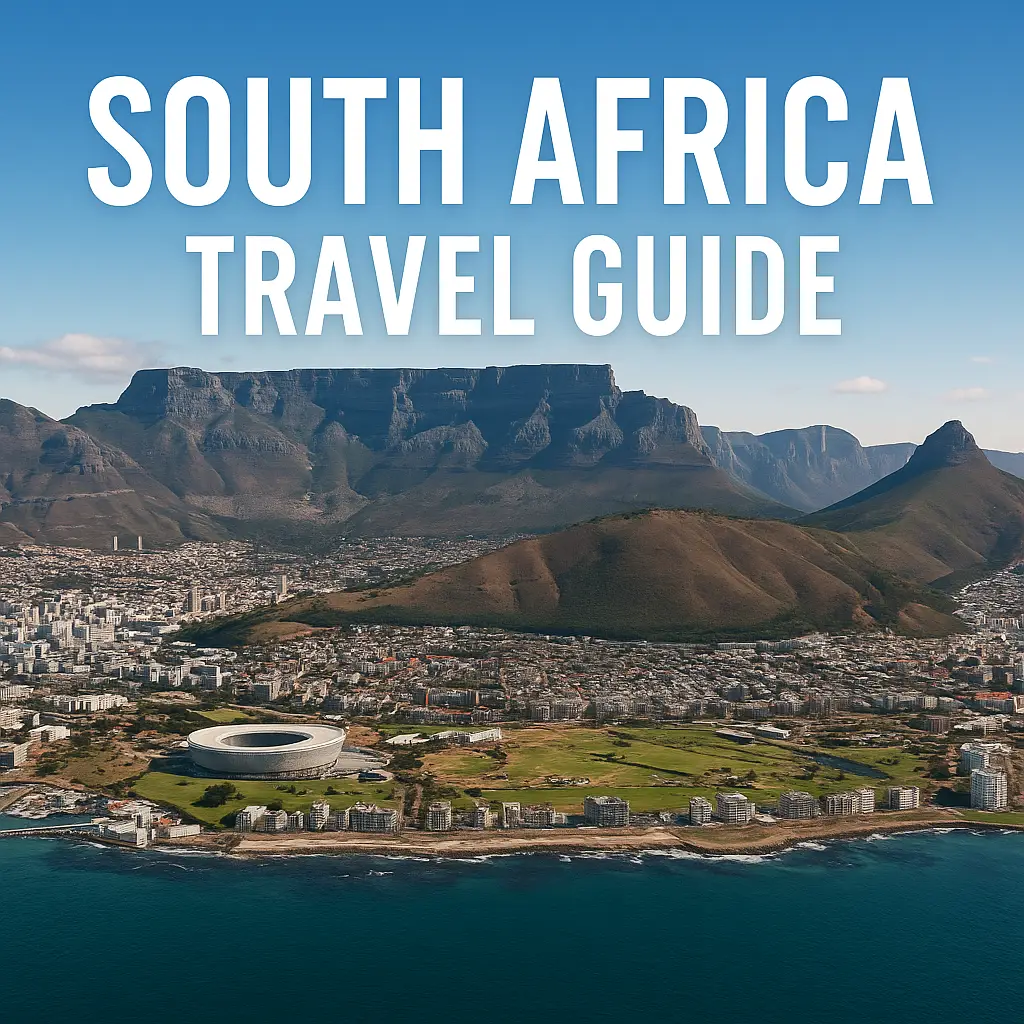
South Africa Travel Guide
South Africa – A Country of Limitless Landscapes, Cultures, and Adventures
South Africa is one of the most captivating destinations on the planet — a country where every horizon transforms into something new, where ancient wilderness meets modern cities, and where eleven languages, diverse climates, and countless ecosystems blend into a vibrant travel experience unmatched anywhere else in the world. Known as the “Rainbow Nation,” South Africa’s identity is shaped by a long and complex history, extraordinary natural beauty, and a spirit of resilience that radiates through its people, food, culture, and landscapes. For travelers seeking a country that feels both vast and intimate, wild and refined, peaceful and thrilling, South Africa is a destination that consistently exceeds expectations.
From world-class wildlife encounters in the Kruger National Park to the cinematic cliffs of the Cape Peninsula, from the cultural rhythm of Johannesburg to the tropical beaches of KwaZulu-Natal, and from centuries-old vineyards in the Winelands to the silent desert plains of the Karoo, South Africa presents a depth and variety of travel opportunities that few countries can match. It is a land of contrast — soft green valleys resting beside arid canyons, warm Indian Ocean waves colliding with cold Atlantic currents, futuristic skylines neighbouring ancient trails, and luxurious safari lodges sharing landscapes with traditional rural villages. This diversity is not only geographical but deeply cultural, creating a destination that feels endlessly rich and layered.
South Africa invites travelers to explore in ways that awaken all senses. The scent of fynbos shrubs along coastal cliffs, the deep roar of lions at dusk, the taste of Cape Malay spices drifting through the streets of Bo-Kaap, the warm texture of red Karoo sand beneath your feet, and the sight of rolling vineyards glowing gold at sunset — every moment here feels immersive and unforgettable. It is a country that draws you in emotionally, visually, and spiritually. The landscapes are vast, the wildlife encounters deeply moving, the culture expressive and colourful, and the people famously warm, curious, and welcoming.
Whether you dream of driving along ocean roads carved into cliffs, hiking through ancient mountains, watching penguins waddle along white-sand beaches, sipping award-winning wines in sunlit valleys, tracing the footsteps of Nelson Mandela, or witnessing elephants cross a golden savanna at sunrise, South Africa offers experiences that stay with you long after the journey ends.
The Geography of South Africa – A Land of Extraordinary Variety
South Africa is one of the most geographically diverse countries on Earth. Its landscapes range from rugged coastlines to soaring mountain ranges, from semi-desert plains to dense forests, from deep river canyons to fertile farmland, and from tropical wetlands to dry highveld plateaus. This variety means that traveling through South Africa often feels like visiting several different countries in a single trip.
The western coastline touches the icy Atlantic Ocean, creating dramatic cliffs, cold currents, and unique marine life including seals, great white sharks, and kelp forests. In contrast, the eastern coastline opens onto the warm Indian Ocean, where tropical waters attract dolphins, sea turtles, and colourful fish. Between these coasts stretch valleys, mountains, and rolling farmlands that change character with every region.
The interior of the country contains high plateaus known as the Highveld, while the vast Karoo stretches across the central regions with its semi-arid desert beauty. To the north, the Limpopo region transitions toward savannas rich with wildlife, while the west displays the stark, lunar-like landscapes of Namaqualand — famous for its explosion of wildflowers in spring. In the east, the Drakensberg Mountains rise like an ancient fortress, their basalt cliffs glowing red in morning light. These geographical contrasts shape South Africa’s climate, vegetation, wildlife, and ways of life.
Travelers quickly discover that even a short road trip can reveal staggering shifts in terrain. One moment you drive through rolling hills covered in vineyards; an hour later you encounter rugged mountain passes; drive further and you enter lowveld savannas dotted with acacia trees and big game. This constant transformation gives South Africa an adventurous quality that keeps travelers curious and engaged.
Wildlife and Nature – The Soul of South Africa
H3: Kruger National Park – One of the World’s Greatest Wildlife Sanctuaries
Kruger National Park is one of the crown jewels of South Africa — a massive protected area larger than some countries, home to an astonishing variety of animals. Few wildlife destinations on Earth offer such reliable sightings of the “Big Five”: lions, leopards, elephants, rhinos, and buffalo. But the richness of Kruger extends far beyond the famous species. The park contains over 500 bird species, countless antelope herds, hyenas, giraffes, hippos, crocodiles, cheetahs, and a thriving ecosystem of plants and insects that together create one of the most complete natural systems on the continent.
Kruger is unique because it is accessible to all types of travelers. Visitors can choose between fully guided safari experiences in luxurious private reserves — such as Sabi Sands, Timbavati, and Kapama — or explore the park independently on a self-drive safari. Both options offer magical moments: elephants crossing the road only meters from your car, lions resting beneath a marula tree at midday, or leopards emerging silently from tall grass at dusk.
The atmosphere of Kruger is unforgettable. The sun rises slowly over the savanna, casting long shadows across golden plains. Birds call from treetops, the air cool and quiet except for the distant grunt of hippos in riverbeds. As the day warms, animals gather near waterholes, predators patrol the shade, and the landscape glows in colours that shift from pale yellow to intense orange. At night, the sky fills with stars, and the sound of the bush — frogs, insects, jackals, distant lions — feels ancient and powerful.
Beyond Kruger – Private Reserves and Diverse Wildlife Regions
South Africa is packed with wildlife areas beyond Kruger. In the Eastern Cape, malaria-free reserves such as Addo Elephant Park, Shamwari, Amakhala, and Kwandwe offer exceptional safari experiences ideal for families or travelers seeking a more relaxed environment. These reserves are home to lions, elephants, leopards, cheetahs, rhinos, and a range of smaller species that thrive in the region’s fynbos, grasslands, and valleys.
KwaZulu-Natal offers rich wildlife combined with Zulu cultural heritage. Hluhluwe-iMfolozi Park is one of the oldest conservation areas in Africa, famous for its successful rhino conservation efforts. The landscapes here are greener and hillier than other parts of the country, creating beautiful, undulating scenery perfect for photography and wildlife viewing.
Even the coastline holds treasures: in Hermanus, southern right whales migrate close to shore; in False Bay, great white sharks circle in cold waters; and in coastal reserves, penguins, seals, and dolphins create unforgettable marine encounters.
Cape Town – One of the World’s Most Beautiful Cities
H3: A City Framed by Mountains and Sea
Cape Town is a masterpiece of natural geography — a city that feels sculpted by dramatic forces. Table Mountain rises abruptly from the earth, its flat top often wrapped in a blanket of cloud known as the “tablecloth.” Below it, beaches shimmer in turquoise water, colourful neighbourhoods line slopes and valleys, and the city stretches out toward the meeting point of two oceans. Cape Town is both wild and urban, ancient and modern, relaxing and exhilarating.
Every corner of the city reveals stunning contrasts. Camps Bay glows with palm-lined boulevards and white-sand beaches, while Clifton’s hidden coves feel exclusive and intimate. The V&A Waterfront mixes shopping, restaurants, markets, and harbour views framed by mountain peaks. Bo-Kaap displays vibrant rainbow-coloured houses and centuries of Cape Malay history. And just minutes outside the centre, the Constantia Winelands offer sunlit vineyards that have produced wine since the 1600s.
Table Mountain offers panoramic views that stretch across the city, ocean, and Peninsula. Hiking up Platteklip Gorge or Lion’s Head is a rite of passage for many visitors. Sunsets from Signal Hill paint the city in gold and pink. Cape Town is not only beautiful — it feels emotionally resonant, alive, and full of creative energy.
The Cape Peninsula – One of the Most Dramatic Drives on Earth
The road from Cape Town to Cape Point is one of the most cinematic coastal drives in the world. Chapman’s Peak Drive is the highlight — a road carved into sheer cliffs, winding above deep blue swells that crash against rocks far below. The combination of orange rock walls, sea spray, curving roadway, and golden sunset light creates a visual experience that feels almost surreal.
Further south, Boulders Beach hosts a colony of African penguins that waddle across sand, nest between rocks, and swim through clear, shallow waters. The road continues toward Simon’s Town, Scarborough, and finally Cape Point — a rugged, windswept headland where cliffs plunge into churning seas. From the viewpoint, travellers often feel a deep sense of isolation and wonder, as though standing at the edge of the world.
Johannesburg – The Heartbeat of Modern South Africa
A City of Energy, Creativity, and Cultural Depth
Johannesburg, often called Joburg or Jozi, is South Africa’s largest city and its economic and cultural powerhouse. It is a city of contrasts — gleaming skyscrapers rising above sprawling suburbs, quiet jacaranda-lined streets just minutes away from bustling markets, and modern art galleries existing alongside historical townships filled with stories that shaped the nation. Johannesburg is not a typical tourist city; it is raw, expressive, and full of momentum, constantly reinventing itself through creativity, entrepreneurship, and cultural fusion.
Visitors often describe Johannesburg as a place that must be “felt” rather than merely seen. The energy here is dense and electric, driven by millions of people from diverse backgrounds working, creating, dreaming, and living side by side. The city’s past is complex and painful, yet its present is defined by reinvention, resilience, and artistic vibrancy. Travelers who explore Johannesburg deeply often discover some of the most meaningful experiences of their entire trip.
Maboneng Precinct is one of the most exciting urban areas in Africa — a centre of art, fashion, music, and innovation. Colourful murals fill the walls, cafés spill onto sidewalks, independent designers showcase bold styles, and restaurants serve everything from South African street food to global fusion dishes. Walking through Maboneng feels like entering a creative renaissance.
Other neighbourhoods like Braamfontein, Rosebank, Melville, and Sandton each offer their own atmosphere. Braamfontein is edgy and artistic, Rosebank refined and cosmopolitan, Melville youthful and bohemian, and Sandton modern and upscale. Together, they form a cultural mosaic that reflects Johannesburg’s constant evolution.
History & Humanity – Understanding South Africa Through Joburg
Johannesburg may be modern and forward-looking, but its history remains deeply present. The Apartheid Museum is one of the most important cultural institutions in the country. Exhibitions guide visitors through the rise and fall of apartheid, the struggle for freedom, the power of protest movements, and the triumph of democracy. It is emotional, enlightening, and essential to understanding South Africa’s identity.
Nearby lies Soweto, the most famous township in the country and a living symbol of resilience. Soweto is not defined by its hardships but by its culture, hospitality, music, and powerful sense of community. Vilakazi Street, where both Nelson Mandela and Desmond Tutu once lived, is a vibrant area where cafés, murals, and local tours tell stories of resistance and hope. Visitors often leave Soweto with a deep admiration for the people and a better understanding of South Africa’s ongoing journey.
Despite its busy pace, Johannesburg maintains pockets of peace and beauty. The city’s canopy of trees — one of the largest urban forests in the world — fills neighbourhoods with green shade. During spring, millions of jacaranda blossoms paint the streets a soft purple, creating a magical atmosphere that feels worlds away from the city’s reputation as a concrete hub.
Johannesburg is not a city of postcard views; it is a city of emotion, history, creativity, and transformation. Its stories shape the narrative of the entire country, making Joburg an essential stop for anyone seeking to truly understand South Africa.
Durban & KwaZulu-Natal – Tropical Beaches, Culture & Warm Ocean Air
H3: A Coastline Washed by the Warm Indian Ocean
Durban and the province of KwaZulu-Natal are the warm, tropical heart of South Africa’s east coast. The humidity, palm trees, and golden beaches give the region a relaxed, summery atmosphere year-round. Unlike Cape Town’s cold Atlantic waters, Durban’s beaches enjoy warm Indian Ocean waves, making swimming, surfing, and beach days popular throughout all seasons.
Durban’s beachfront promenade — stretching from uShaka Marine World to Blue Lagoon — is a lively coastal walkway where families ride bicycles, joggers pass by with ocean views on their left, and surfers catch waves that roll consistently toward the shore. The city’s multicultural heritage shines through its food: Durban is famous for its Indian-influenced cuisine, especially bunny chow, biryanis, samoosas, and spicy seafood dishes that reflect the region’s unique culinary history.
Beyond the city, KwaZulu-Natal’s coastline reveals quieter towns such as Umhlanga, Ballito, Salt Rock, and St. Lucia. These destinations offer pristine beaches, wildlife encounters, estuaries filled with hippos, and opportunities to see sea turtles nesting on remote shores. The region feels lush, warm, and deeply connected to the rhythm of the ocean.
H3: Adventure & Wildlife in KwaZulu-Natal
KwaZulu-Natal is one of South Africa’s richest wildlife regions. iSimangaliso Wetland Park, a UNESCO World Heritage Site, is a breathtaking combination of lakes, forests, beaches, and savannas. Here, hippos wallow in waterways, crocodiles sunbathe along riverbanks, elephants roam through coastal dunes, and humpback whales migrate offshore during the winter months.
On land, Hluhluwe-iMfolozi Park is one of the best safari destinations outside Kruger — a place where rolling green hills stretch into the distance and animals move in and out of forests and valleys. This park is historically significant for saving the white rhino from extinction, and to this day, it remains a sanctuary for this endangered species.
Further inland, the Drakensberg Mountains create one of the most dramatic landscapes in Africa. Towering basalt cliffs rise into the sky, forming jagged spires and natural amphitheatres that glow red at sunrise. Driving through the Drakensberg reveals valleys, waterfalls, ancient San rock art, and hiking trails that lead into high-altitude wilderness. The air is crisp, the scenery enormous, and the sense of peace profound.
KwaZulu-Natal seamlessly blends beach, wildlife, and mountains into one of the most complete travel regions in the country.
Cape Winelands – Vineyards, Oaks & Golden Valleys
H3: South Africa’s Wine Country – Beauty, Heritage & World-Class Flavour
Just beyond Cape Town lies the Cape Winelands, a region of rolling valleys, historic estates, towering mountains, and vineyards that stretch across fertile fields. This is one of the most beautiful wine regions on Earth — comparable to Tuscany or Napa Valley, but with its own distinctive South African charm.
Stellenbosch, Franschhoek, and Paarl are the heart of the Winelands, each offering a different atmosphere. Stellenbosch is elegant and academic, with oak-lined streets, art galleries, wine museums, and centuries-old Cape Dutch architecture. Franschhoek is refined, romantic, and French-inspired, with mountain peaks surrounding vineyards that glow pink at sunset. Paarl is spacious and peaceful, with large estates resting beneath dramatic granite domes.
Wine tasting here is an experience that engages all senses. The smell of oak barrels mixing with fresh grapes, the taste of bold reds and refreshing whites, the sound of birds in manicured gardens, the sight of vineyards rolling into mountains, and the feeling of warm sunshine create a luxurious yet down-to-earth atmosphere. Many estates offer world-class restaurants, beautiful gardens, and historical tours that explain the region’s winemaking heritage dating back to the 1600s.
Beyond wine, the Winelands invite exploration. Curvy mountain passes, small towns, art studios, cheese farms, orchards, and lavender fields add layers of beauty to the landscape. It is a region where travelers slow down, savour their surroundings, and connect with South Africa’s culinary culture.
The Garden Route – South Africa’s Most Famous Coastal Journey
H3: Forests, Cliffs, Beaches & Ocean Light
The Garden Route stretches along the southern coast of South Africa and is one of the country’s most iconic road trips. It is a tapestry of coastal villages, lush forests, lagoons, beaches, mountains, and national parks. The name “Garden Route” comes from the region’s remarkable variety of vegetation — an ever-changing blend of fynbos, forests, wetlands, and coastal flora that thrives in the mild climate.
Towns like Wilderness, Knysna, Plettenberg Bay, and Mossel Bay each offer their own distinct charm. Wilderness is peaceful and green, with lakes and quiet forests. Knysna surrounds a large lagoon framed by sandstone cliffs known as the Knysna Heads. Plettenberg Bay is refined and beach-oriented, with golden sand and dolphins often visible from shore.
The route continues toward Tsitsikamma National Park, where suspension bridges cross dramatic gorges, waves crash against black rock walls, and hiking trails enter dense forest filled with ancient trees. The landscape is diverse, atmospheric, and refreshing — a perfect example of why South Africa is one of the best road-trip countries in the world.
The Karoo – Silence, Stars & Ancient Desert Landscap
A Land of Wide Horizons and Deep Stillness
The Karoo is one of the most mystical landscapes in South Africa — a vast semi-desert stretching across the heart of the country, shaped by wind, sun, and time. Many travelers describe the Karoo not simply as a place, but as a feeling. The sense of space is overwhelming: endless plains dotted with sheep farms, koppies rising like ancient stone islands, dirt roads carving straight lines into the horizon, and skies so wide they seem to absorb the world beneath them.
The light in the Karoo is unlike anything else in the country. Sunsets burn deep orange, pink, and purple across empty valleys. Stars explode into brightness at night, unpolluted by artificial light, turning the sky into a glittering dome. It is a region where silence becomes a companion — a peaceful, deep quiet that slows the mind and invites reflection.
The Karoo holds layers of history. Fossils from the Permian period lie almost within reach, revealing stories of prehistoric creatures long before the age of dinosaurs. Old towns such as Graaff-Reinet, Prince Albert, and Cradock showcase colonial and Cape Dutch architecture, dusty streets lined with stone houses, and charming guest farms that welcome travelers with warmth, traditional food, and enormous skies.
The Karoo is raw, soulful, and restorative. It is a place to disconnect from the world and reconnect with nature, simplicity, and stillness.
The Drakensberg – South Africa’s Mountain Kingdom
H3: Cliffs, Valleys, Waterfalls & Sacred Wilderness
The Drakensberg Mountains form one of the most spectacular regions in southern Africa. Stretching along the eastern spine of the country, these mountains rise in dramatic basalt cliffs, deep gorges, rolling green hills, and high plateaus that feel untouched by time. Known in isiZulu as uKhahlamba — the Barrier of Spears — the Drakensberg has a presence that feels ancient and sacred.
The foothills are lush and inviting, dotted with forests, rivers, and wildlife. Higher up, the mountains transform into jagged peaks and towering walls of stone. Waterfalls spill from cliffs, mist drifts across valleys, and hiking trails lead into wilderness where silence reigns. The Amphitheatre, one of the Drakensberg’s most iconic features, is a vast curved wall of rock that looks almost sculpted by the gods. Tugela Falls cascades from its summit — one of the tallest waterfalls on Earth.
The region is also home to one of the world’s richest collections of ancient San rock art. These paintings, preserved for thousands of years, depict animals, hunters, dances, and spiritual visions. They offer an intimate glimpse into a civilization that lived in harmony with the mountains long before modern borders existed.
Whether exploring the northern Drakensberg near Royal Natal National Park or the central region near Cathedral Peak and Champagne Castle, the Drakensberg offers some of the most awe-inspiring scenery on the continent. It is a paradise for hikers, photographers, and anyone seeking deep natural beauty.
The Eastern Cape – Wild Coasts, Rolling Hills & Cultural Heartlands
H3: A Region of Untamed Beauty and Ancestral Heritage
The Eastern Cape is one of South Africa’s most underrated regions — wild, vast, culturally rich, and filled with landscapes that feel completely untouched. Much of the province remains rural, with small villages scattered across rolling green hills that stretch toward the Indian Ocean. Cows graze near cliff edges, rondavel huts dot the landscape, and coastal paths lead to secluded beaches where the only footprints in the sand may be your own.
The Wild Coast is the crown jewel of the Eastern Cape — a long stretch of dramatic cliffs, waterfalls that plunge directly into the sea, hidden coves, estuaries lined with mangroves, and green headlands that extend into turquoise water. Places like Coffee Bay, Port St. Johns, Hole-in-the-Wall, and Morgan Bay offer raw beauty that feels almost cinematic.
Culturally, the Eastern Cape is the ancestral home of many Xhosa-speaking communities, including prominent leaders such as Nelson Mandela. Visiting the region offers insight into traditional life, community values, music, language, and history. Travelers often find the Eastern Cape deeply authentic — a place where culture is not performed but lived, where hospitality comes naturally, and where landscapes feel ancient and powerful.
Port Elizabeth (Gqeberha), the province’s main coastal city, offers warm beaches, whale watching, and easy access to Addo Elephant National Park — a sanctuary famous for its large elephant herds and rich biodiversity. The Eastern Cape blends ruggedness with warmth, offering experiences that stay with travelers long after they leave.
South African Food Culture – A Fusion of Flavours, Traditions & Global Influences
H3: A Nation Where Every Meal Tells a Story
South Africa’s cuisine is a reflection of its multicultural heritage — a vibrant blend of Indigenous African, Dutch, Malaysian, Indian, British, and modern global influences. The result is a country where food feels like a celebration of identity, history, and family.
A braai (South African barbecue) is more than a meal — it is a tradition, a cultural ritual that brings people together. Flames crackle, the smell of sizzling meat fills the air, and conversations stretch long into the evening. Boerewors (spiced sausage), grilled lamb, marinated chicken, and roosterkoek (grilled bread rolls) often take centre stage.
Cape Malay cuisine adds fragrant notes of cinnamon, turmeric, cardamom, and cloves. Dishes like bobotie — a spiced meat bake topped with a golden egg custard — reflect centuries of influence from the Malay community in Cape Town. In Durban, Indian flavours shine in curries, biryanis, and the famous bunny chow — a hollowed-out bread loaf filled with spicy curry.
Seafood is abundant along both coasts: grilled fish, prawns, mussels, crayfish, and smoked snoek appear on menus in towns from Hout Bay to Knysna to Durban. In the Winelands, fine dining restaurants pair local produce with world-class wines, creating culinary experiences that rival those found anywhere in the world.
Food in South Africa is generous, flavourful, and deeply tied to place. Every region has its specialties, and every meal carries the warmth of cultural heritage.
Culture, Identity & The Spirit of the Rainbow Nation
H3: A Tapestry of Languages, Traditions & Stories
South Africa’s cultural richness is one of its most defining characteristics. With eleven official languages and countless ethnic groups, the country represents a mosaic of identities coexisting within a shared national story. This diversity is visible in music, dance, clothing, spirituality, family traditions, and social values.
Zulu and Xhosa cultures carry powerful ancestral traditions, from storytelling to ceremonies to communal gatherings. Afrikaans culture reflects Dutch, French, and local influences shaped over centuries. Cape Malay communities preserve musical and culinary histories that trace back to Southeast Asia. Indian South Africans contribute vibrant festivals, flavours, and traditions particularly strong in KwaZulu-Natal.
Modern urban culture blends all these influences into something uniquely South African — expressive, rhythmic, colourful, and creative. Music, from gqom to amapiano to traditional drumming, fills communities with energy. Art galleries and murals across Cape Town and Johannesburg reveal bold contemporary identities shaped by struggle, resilience, and aspiration.
South Africa’s history is complex, painful, and inspiring. The legacy of apartheid is still deeply felt, but the country’s journey toward democracy and unity remains one of the most powerful stories of transformation in modern history. Travelers often leave with profound respect for the humanity, strength, and hope that define the nation.
Practical Travel Information for South Africa
Best Time to Visit
South Africa is a year-round destination, but the best season depends on the experience you seek.
Safari is best during the dry winter months (May–September) when wildlife is easier to spot. The Cape region shines in summer (November–March) with beach weather and long sunny days. The Garden Route is beautiful year-round, while the Wild Coast is lush and dramatic during the warmer months.
H3: Safety & Travel Tips
South Africa requires awareness, just like any major global destination. Staying in safe neighbourhoods, avoiding walking at night in unfamiliar areas, using trusted transportation, and keeping valuables secure are simple steps that ensure a smooth and enjoyable trip. The country is extremely rewarding, and millions of visitors travel safely every year.
Getting Around
South Africa is a dream for road trips. Highways are well-maintained, scenery is outstanding, and long-distance drives connect cities, mountains, coasts, and wildlife regions seamlessly. Renting a car gives travelers maximum freedom to explore, especially in areas like the Garden Route, Drakensberg, and Winelands.
Domestic flights connect major cities quickly, and guided tours offer safe, immersive experiences for those who prefer not to self-drive.
Final Conclusion – Why South Africa Is One of the Greatest Travel Destinations in the World
South Africa is not a place you simply visit — it is a country that stays with you. Its landscapes evoke awe, its wildlife inspires wonder, its culture sparks curiosity, and its people radiate warmth and resilience. Every region offers something different: the ocean cliffs of the Cape Peninsula, the roar of lions at dawn in Kruger, the silence of the Karoo’s desert plains, the tropical breeze of KwaZulu-Natal, the vineyards glowing gold at sunset, the mountains rising like ancient monuments in the Drakensberg, and the untamed beauty of the Wild Coast.
South Africa is a journey through nature, history, culture, emotion, and discovery. It is complex, beautiful, surprising, soulful, and unforgettable. For travelers seeking a destination that offers depth, diversity, and true connection, South Africa stands among the most extraordinary countries on Earth.