
🇺🇬 UGANDA TRAVEL GUIDE
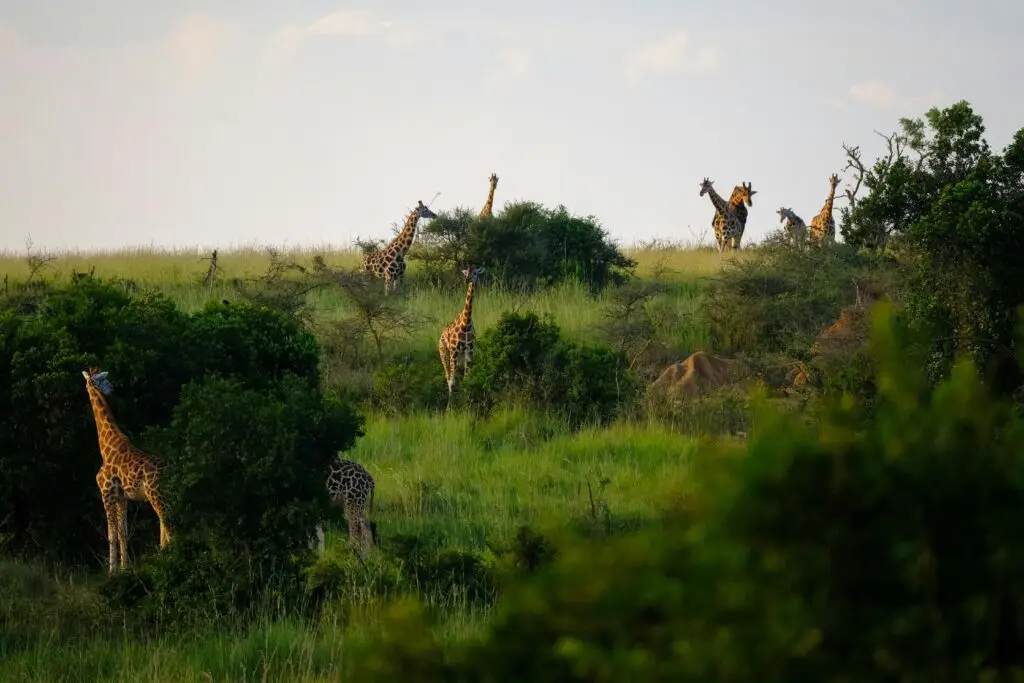
Uganda is one of Africa’s most diverse and naturally gifted countries — a land of mist-covered mountains, endless green valleys, powerful rivers, dense tropical forests, crater lakes, golden savannas and some of the rarest wildlife on Earth. Often called “The Pearl of Africa,” Uganda blends East Africa’s great landscapes into one breathtaking country: the Nile River begins its long journey here, mountain gorillas roam the ancient Bwindi forest, tree-climbing lions stalk the plains of Ishasha, hippos crowd the waters of the Kazinga Channel, and the spectacular Rwenzori Mountains rise into jagged peaks wrapped in clouds. The air is warm, the land is fertile, the soil is red, and the atmosphere feels vibrant, alive and deeply inviting.
What sets Uganda apart is its incredible variety packed into a relatively small area. In just a few days of travel, you can move from rainforest to savanna, from snowcapped mountains to tropical lakeshores, from bustling cities to remote volcanic plains. The country sits on the Equator, giving it a lush climate that supports some of Africa’s richest biodiversity. Rivers flow strongly, lakes shimmer under the sunlight and forests thrum with birdsong and movement. Uganda’s landscapes feel pure and untouched, and they carry a sense of calmness that is rare in today’s fast-paced world.
Uganda’s people are equally inspiring. With more than 50 ethnic groups, the country is a lively mosaic of cultures, languages, dances, rituals and traditions. Yet Ugandans share a warmth and friendliness that leaves a lasting impression on visitors. Smiles come easily here, conversations flow naturally, and guests are welcomed with genuine hospitality. Kampala, the capital, reflects this energy through its markets, music, street life and chaotic but joyful rhythm. Smaller towns and rural villages offer a different kind of magic — slow, peaceful and deeply connected to nature.
Uganda’s wildlife is one of its greatest treasures. It is one of the only places on Earth where you can trek into a rainforest to encounter mountain gorillas — a life-changing experience that connects you to nature on an emotional level. Chimpanzees leap through the trees in Kibale, elephants roam the savannas of Queen Elizabeth, and the Nile flows through Murchison Falls National Park with unstoppable force. Uganda also boasts some of Africa’s most scenic lakes — including Lake Victoria, one of the largest freshwater lakes in the world, and Lake Bunyonyi, a mystical, island-studded lake surrounded by terraced hills.
Uganda is a place that rewards curious travelers, nature lovers and adventurers who want to feel Africa’s heartbeat in a deep and personal way. It is raw, beautiful, rich in wildlife, full of culture and blessed with landscapes that feel like scenes from a dream.
Kampala: Uganda’s Vibrant, Chaotic and Warm-hearted Capital
Kampala is a city of hills, energy, movement and music. It is loud, colorful, lively and endlessly fascinating — a place where markets spill onto the streets, bodas (motorcycle taxis) weave through traffic like schools of fish, and the aroma of grilled meats, spices and fresh fruit fills the air. Kampala is built across seven major hills, each with its own identity, giving the city a rolling, layered beauty when viewed from above.
The city mixes modern buildings with traditional markets, colonial architecture with new developments, and quiet residential areas with bustling commercial districts. The people of Kampala are known for their humor, resilience and friendliness. Conversations begin easily, and the city’s informal nature makes it welcoming once you adapt to its rhythm.
The central markets — especially Nakasero and Owino — are a sensory experience packed with fruit stands, fabric sellers, electronics, spices, street food, second-hand clothing and vendors calling out to customers. The chaos is overwhelming at first, but as you walk among the stalls, you begin to feel the pulse of Kampala and the daily life of Ugandans who come here to trade, buy, socialize and work.
Music is everywhere. From bars and clubs to matatu taxis, Afrobeat, reggae and traditional Ugandan rhythms flow through the city streets. At night, Kampala transforms into one of Africa’s liveliest nightlife hubs. Neighborhoods like Kololo and Kisementi buzz with bars, restaurants, dance venues and outdoor lounges filled with energy and laughter.
Despite its urban intensity, Kampala also offers quiet spaces. The hills provide panoramic views of the city and Lake Victoria. Ugandan cuisine — including dishes like matoke, groundnut sauce, roasted goat and fresh tropical fruits — provides a flavorful introduction to the country’s food culture.
Kampala is not a polished city, but it is real, authentic and alive. It is a place that grows on you the more time you spend exploring its markets, meeting its people and absorbing its rhythm.
Entebbe and Lake Victoria: A Tropical Gateway Full of Calm and Beauty
Just an hour from Kampala, Entebbe offers a completely different atmosphere — relaxed, green, lakeside and peaceful. Located on a peninsula along the northern shores of Lake Victoria, Entebbe feels like the gentle introduction to Uganda, with quiet streets, botanical gardens, lakeside restaurants and warm breezes from Africa’s largest lake.
Lake Victoria is vast — so huge that it looks like an ocean. Its surface stretches to the horizon, reflecting golden light at sunrise and sunset. Fishing boats move slowly across the water, and islands dot the lake in secluded clusters. The lakeshore in Entebbe is lined with palm trees, acacia trees and patches of forest where monkeys leap through branches and colorful birds sit in the canopy.
The Entebbe Botanical Gardens are one of the town’s highlights, offering scenic walking paths through tropical forest, open lawns, lakeside viewpoints and clusters of exotic plants. Vervet monkeys and black-and-white colobus monkeys play in the trees, while hornbills, kingfishers and fish eagles fill the air with song. The gardens provide a peaceful escape for travelers who want to connect with nature before heading deeper into the country.
Entebbe also has several beaches — simple, relaxed stretches of sand where locals gather to swim, socialize and enjoy the cool lake breeze. The atmosphere is warm and unhurried, with music drifting through the air and families enjoying picnics.
The shores of Lake Victoria give a glimpse into Ugandan life shaped by water, fishing, trade and community. For many travelers, Entebbe becomes a place to rest, breathe and adjust to the pace of East Africa before beginning a journey across the country.
Murchison Falls National Park: The Mighty Nile and Uganda’s Great Wilderness
Murchison Falls National Park is one of the most powerful and dramatic landscapes in East Africa — a place where the Nile River crashes through a narrow gorge with astonishing force before expanding into wide waters that host hippos, elephants, crocodiles and countless birds. The falls themselves are unforgettable: a roaring torrent squeezed through a gap only a few meters wide, exploding into a curtain of mist and thunder that can be heard long before it is seen. Standing before the falls, you feel the ground tremble beneath your feet and the energy of the river vibrating through the air.
But the park is more than the falls. Murchison’s savannas, forests and riverbanks form a dramatic wilderness filled with wildlife and sweeping views. The northern section of the park features rolling plains dotted with acacia trees, termite mounds and golden grass that glows in the afternoon sun. Giraffes walk gracefully between the trees, warthogs trot with their tails pointed upward like antennae, and large herds of Uganda kob gather near the river.
Safaris in Murchison often follow routes along the banks of the Nile, where elephants come to drink, buffalo graze in the shade, and crocodiles lie motionless on the sand. The beauty of this region lies not only in the animals you see, but in the landscapes themselves — peaceful, open and bathed in warm light. The Nile adds a sense of rhythm to the land, its waters flowing with strength and calmness through the savanna.
Boat trips on the Nile offer a completely different perspective. Moving slowly along the river, you see hippos rising from the water, birds nesting in reeds, crocodiles lurking near the banks, and giraffes appearing like silhouettes against the sky. The approach to the falls by boat is breathtaking — the thunder grows as you get closer, and the river becomes wild with movement and spray.
Murchison Falls National Park is a blend of power and serenity, where the Nile shapes every corner of the landscape and where the wilderness feels both raw and deeply peaceful.
Kibale Forest: The Realm of Chimpanzees and Deep Tropical Jungle
Kibale Forest is one of the most enchanting places in Uganda — a lush, emerald-green rainforest filled with towering trees, tangled vines, colorful birds and a sense of ancient calm. It is best known as one of the world’s top destinations for chimpanzee trekking, offering intimate encounters with our closest relatives in their natural habitat. But Kibale is also a biodiversity treasure, home to over a dozen primate species, peaceful walking trails, butterfly-filled clearings and forest air that smells fresh and earthy.
Walking into Kibale feels like entering a world untouched by time. The forest canopy towers above, filtering sunlight into soft, green beams that illuminate the forest floor. Leaves rustle overhead, monkeys leap through branches, and birds call from hidden perches. The trails wind through thick vegetation, and every turn reveals new shades of green.
Chimpanzee trekking is an emotional and thrilling experience. Guides lead you through the forest at dawn, listening carefully for calls and movement. When you find a troop, you may see them feeding high in fig trees, grooming each other, playing, communicating or moving silently through the undergrowth. Their expressions — thoughtful, emotional, curious — feel familiar, creating a powerful connection between humans and nature.
Beyond chimpanzees, Kibale is home to red colobus monkeys, black-and-white colobus monkeys, mangabeys, l’Hoest’s monkeys and dozens of other species that animate the canopy. The forest floor is filled with butterflies flickering in bright colors, mushrooms growing on fallen logs, and pathways lined with vibrant plants.
The nearby crater lakes add even more beauty to the region. These blue-green lakes sit in volcanic depressions surrounded by forests, banana plantations and terraced hills. The reflections on the water create peaceful scenes that feel almost dreamlike.
Kibale Forest is Uganda’s jungle heart — tranquil, green, alive and endlessly fascinating.
Queen Elizabeth National Park: A Kingdom of Savannas, Lakes and Tree-Climbing Lions
Queen Elizabeth National Park is one of Uganda’s most beautiful and diverse wilderness areas — a vast expanse of savannas, crater lakes, wetlands, forests and river channels that create an incredible range of habitats. Its beauty lies not only in the wildlife but in the rich variation of landscapes shaped by ancient volcanic activity and fed by the waters of Lake Edward and the Kazinga Channel. Every corner of the park feels different, shifting from open plains to thick bush, from cooled lava flows to shimmering lakeshores.
The Kazinga Channel is the heart of the park — a natural waterway that connects Lake Edward to Lake George. Along its banks, hippos crowd the water in large groups, their ears and eyes poking above the surface as they grunt and blow fountains of spray. Buffaloes stand at the water’s edge, cooling off in the mud, while elephants walk gracefully through the shallows with slow, deliberate steps. The birdlife is astonishing — fish eagles, kingfishers, herons, storks and gulls gather in huge densities, creating constant movement along the channel.
Boat trips along the Kazinga Channel are among the highlights of a visit to Queen Elizabeth National Park. Moving slowly across the water, you glide past scenes of wild Africa unfolding in perfect harmony. Hippos open their mouths in wide yawns, crocodiles slide from the banks into the water, and elephants stand silhouetted against golden light. The stillness of the channel, interrupted only by the sounds of animals, creates an atmosphere of deep peace and awe.
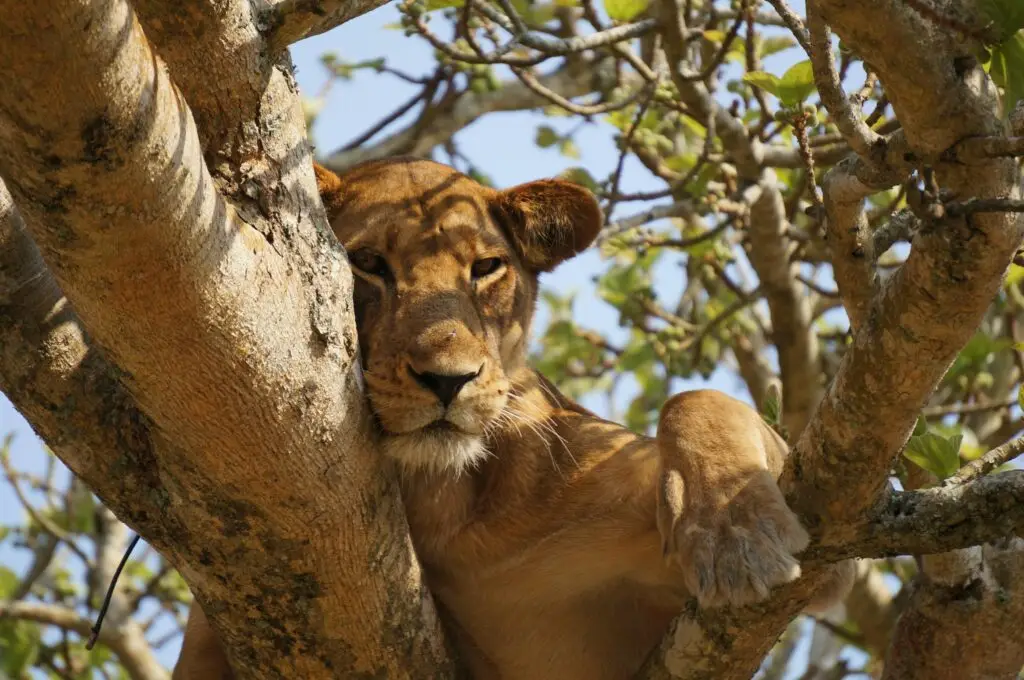
But Queen Elizabeth is also known for something truly unique — the tree-climbing lions of the Ishasha sector. In this southern part of the park, lions have developed the unusual habit of resting in fig or acacia trees. Seeing a full-sized lion sprawled across a branch, high above the ground, is one of the most striking sights in East Africa. The behavior is not completely understood — some believe it helps them escape biting flies, while others think it provides better vantage points or simply cooler breezes. Whatever the reason, the tree-climbing lions have given Ishasha a mystical and unforgettable reputation.
The northern plains of Queen Elizabeth are wide and golden, dotted with acacia trees and volcanic craters filled with lakes. Animals like elephants, warthogs, antelopes, hyenas and leopards move across this landscape in fluid patterns. The park also contains the Rwenzori foothills, where lush green slopes rise sharply into mist-covered peaks that dominate the horizon. These mountains add dramatic height and beauty to the scenery, making Queen Elizabeth one of Africa’s most visually striking parks.
The atmosphere here is warm, wild and full of contrast — lakes and grasslands, forests and open plains, predators and prey living side by side. It is a place where nature feels noble, timeless and richly alive.
Bwindi Impenetrable Forest: The Sacred Home of Mountain Gorillas
Bwindi Impenetrable National Park is one of the most extraordinary places on Earth — a deep, ancient rainforest draped across steep hills in southwestern Uganda. The name “Impenetrable” captures its essence perfectly. The forest is dense, tangled, green and humid, with vegetation so thick that sunlight often struggles to reach the ground. Mist hangs above the treetops in the early morning, giving the forest a mystical, otherworldly feel.
But the real magic of Bwindi lies in its inhabitants: the mountain gorillas. Bwindi is one of the only places in the world where these gentle giants survive, and trekking to see them is one of the most emotionally powerful wildlife experiences imaginable. The journey begins early in the morning, as you follow trained guides and trackers into the forest. The trail moves through steep slopes, muddy paths, vines and thick vegetation. Every sound — a rustle, a snap, a distant call — heightens your senses.
When you finally encounter a gorilla family, time seems to stop. The gorillas often behave as if you are simply part of the forest. A silverback, enormous and powerful, may sit calmly while watching over his family. Females groom each other or care for infants clinging tightly to their fur. Young gorillas play, swing from branches, tumble across the ground and look at visitors with a mix of curiosity and innocence. Their eyes — expressive, deep, emotional — form a connection that is incredibly moving. Seeing a gorilla up close feels less like observing wildlife and more like meeting distant relatives.
The forest itself adds to the atmosphere. Giant trees arch overhead, the air smells of earth and leaves, and distant bird calls echo through the canopy. Bwindi is home to more than just gorillas — chimpanzees, forest elephants, monkeys, bushbucks and hundreds of bird species live in this ecosystem. The soundscape is constantly alive, from buzzing insects to singing birds to the soft movement of vegetation as animals move through the forest.
Bwindi is more than a park — it is a sanctuary of life, an ancient refuge that has survived for millions of years. Visiting this forest helps you understand how precious and fragile our natural world is, and how extraordinary it is that these creatures continue to exist in their ancestral home.
Lake Bunyonyi: A Mystical Lake of Islands, Terraces and Morning Mist
Lake Bunyonyi is one of Uganda’s most beautiful places — a serene, mirror-like lake surrounded by terraced hills, green slopes and tiny islands that look like emerald jewels floating on still water. The lake’s surface reflects clouds, trees and islands in perfect clarity, especially in the early morning when mist clings to the hillsides and the world feels quiet and sacred.
The lake is deep — one of the deepest in Africa — and its volcanic origins give it a unique character. Long, narrow inlets wind between steep hills planted with bananas, sorghum, potatoes and vegetables. Traditional homes sit along the terraces, while dugout canoes glide gracefully across the water. Life around Bunyonyi is peaceful, simple and deeply connected to the land.
Each island has its own history. Some are tiny and covered in forest; others have villages or farms. The lake’s calmness invites slow travel — paddling softly across the surface, listening to the sounds of birds and distant conversations drifting over the water. The air smells fresh and sweet, filled with the scent of soil, flowers and morning dew.
Bunyonyi offers some of the best relaxation in Uganda. Travelers come here to rest after gorilla trekking, to sit on terraces overlooking the lake, to swim in the clean water, or simply to breathe in the beauty of the hills. The surrounding region is one of Uganda’s most scenic — rolling landscapes layered in green, with sunlight catching the fields in soft, golden tones.
This lake feels like a place outside time — calm, mystical and full of quiet magic.
The Rwenzori Mountains: The “Mountains of the Moon,” A Realm of Clouds and Ice
The Rwenzori Mountains rise between Uganda and the Democratic Republic of Congo as one of Africa’s most dramatic mountain ranges. Known since ancient times as the “Mountains of the Moon,” the Rwenzori are unlike any other mountains in Africa. Their peaks are often wrapped in clouds, their valleys filled with jungle, and their highest summits covered in permanent ice and glaciers.
The lower slopes begin with thick forests, where the air is warm, humid and filled with bird calls. As you climb higher, the vegetation changes — bamboo forests appear, followed by heather zones covered in moss, and then surreal landscapes filled with giant lobelias and groundsels. These plants look almost alien, especially when mist hangs low and softens the light.
At higher altitudes, the mountains become rocky, wet and wild. Streams flow between boulders, and waterfalls tumble down steep slopes. The upper peaks rise sharply, their jagged edges glowing silver in the early morning. On the highest summits, glaciers glisten under the sun, creating one of the most unexpected and breathtaking sights in equatorial Africa.
The Rwenzori region is also deeply cultural. Small villages lie in the foothills, where the Bakonzo people live in harmony with the steep terrain. Their traditions, farming methods and mountain expertise have shaped their identity for generations.
The Rwenzori Mountains are mystical, challenging and awe-inspiring — a place where adventure meets pure natural beauty.
Jinja and the Source of the Nile: Adventure, Water and the Spirit of Exploration
Jinja, located in eastern Uganda, is a lively town known as the “Adventure Capital of East Africa.” It sits along the northern shores of Lake Victoria at the place where the Nile River begins its long journey to the Mediterranean Sea. The atmosphere here is youthful, energetic and full of excitement. Travelers come for the river, the water activities and the laid-back lifestyle.
The Source of the Nile is a symbolic and historic location, where explorers once sought to understand the river’s origins. Today, the river begins its journey here, flowing steadily through rapids, forested banks and rural landscapes. The Nile near Jinja is wide, powerful and beautiful.
The surrounding area is filled with activities — river rafting, kayaking, horseback riding, quad biking, mountain biking and bungee jumping. The town itself has a relaxed feeling, with colorful buildings, craft shops, cafes, lakeside bars and gardens.
The landscape around Jinja is green and fertile, with rolling hills, sugarcane plantations and tropical air. Sunsets along the river are peaceful, painting the sky in soft pink and orange tones reflected in the calm water.
Jinja is fun, friendly and refreshing — a place where adventure meets African charm.
Kidepo Valley National Park: Uganda’s Remote, Wild and Untamed Frontier
Kidepo Valley National Park, in far northeastern Uganda, is one of Africa’s last great remote wildernesses. Few travelers reach this isolated region, but those who do are rewarded with some of the most dramatic and untouched landscapes in East Africa. The park sits between rugged mountains, open plains and dry riverbeds that stretch endlessly into a vast horizon.
The Narus Valley is the heart of wildlife activity, a golden savanna where buffaloes, zebras, lions, elephants and antelopes congregate around the remaining water sources. The surrounding mountains create a dramatic backdrop, their sharp peaks glowing orange at sunset. The air is dry, warm and filled with the sound of birds.
Further north, the Kidepo Valley is more arid — a place of palm trees, desert vegetation and incredible silence. The Dry Kidepo River cuts through the land like a pale ribbon, bordered by tall doum palms and open plains. The sense of space here is overwhelming. It feels like standing at the edge of the world.
The park is also home to culturally rich communities like the Karamojong, known for their pastoral lifestyle, traditional dress, cattle culture and unique architecture. Visiting their villages offers insight into a way of life shaped by centuries of adaptation to a harsh but beautiful environment.
Kidepo is wild, emotional, powerful and remote — a place where nature, culture and landscape come together in perfect harmony.
Uganda’s Culture, People and Traditions: Warmth, Diversity and Energy
Uganda’s cultural richness is one of its greatest strengths. More than 50 ethnic groups create a beautiful mosaic of traditions, languages, music and beliefs that blend into a uniquely Ugandan identity. What stands out most is the warmth of the people — Ugandans are known across Africa for their friendliness, hospitality and humor.
In central Uganda, the Baganda people form the country’s largest cultural group. Their kingdom, Buganda, has deep roots in history, with traditions centered on respect, social order, ceremony and community. Kampala’s cultural landscape is shaped strongly by Baganda heritage.
In western Uganda, the Bakiga and Banyankole people live among rolling hills, cattle farms, banana plantations and green valleys. Their music, dance and social customs reflect a connection to land and family.
In the north, the Acholi and Langi communities have traditions built on storytelling, dance, drums and communal life. In the east, the Basoga and Bagisu enrich the region with vibrant ceremonies and agricultural traditions.
Across Uganda, traditional music thrives — drums, xylophones, horns and string instruments create rhythms that accompany dances and celebrations. Modern Ugandan music, including Afrobeat, continues to grow with creativity and youthful energy.
Colorful clothing, handcrafted art, baskets, carvings and beadwork show Uganda’s artisanal heritage. Food reflects the diversity of the land — matoke, posho, groundnut sauce, luwombo, chapati, roasted meats and an abundance of fresh fruit.
Uganda’s culture is joyful, expressive, layered and deeply rooted in community.
Why Uganda Changes Travelers Forever
Uganda is one of the most emotionally powerful and naturally rich destinations in Africa. It combines everything travelers dream of — jungles filled with primates, savannas full of wildlife, mountains rising into mist, lakes reflecting the sky, warm-hearted people and a sense of authenticity that is increasingly rare.
The country is wild yet peaceful, vibrant yet calm, diverse yet harmonious. It feels like a place where nature and culture still breathe together, where rivers flow with ancient force, and where forests protect creatures found nowhere else. Uganda does not overwhelm with crowds or commercialism — it invites you to experience Africa in its purest form.
From gorilla trekking to wildlife safaris, from lake shores to deep forests, from mountains to the Nile, Uganda offers unforgettable beauty and emotional depth. It is truly The Pearl of Africa.
 Related Articles
- Kakslauttanen Arctic Resort
- Top 10 Most Unique Places to Stay in Europe
- 10 Incredible Castles Around the World