
🇦🇫 — COMPLETE TRAVEL GUIDE
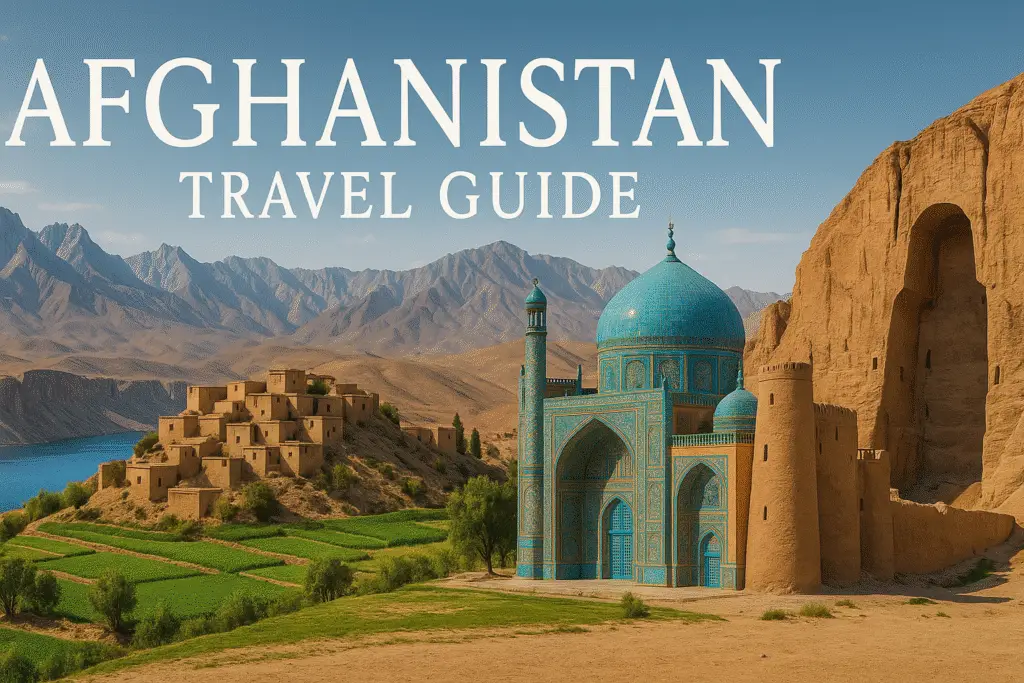
Afghanistan: A Land of Mountains, Poetry, Ancient Civilizations and Timeless Beauty
Afghanistan is one of the most culturally profound and geographically dramatic countries in Asia. Known for its towering mountain ranges, ancient cities, fertile valleys, trading routes, and warm, poetic hospitality, Afghanistan has a heritage that stretches back thousands of years.
For centuries, it was a crossroads of civilizations — Persian, Greek, Buddhist, Turkic, Mongol, Mughal, Central Asian and Silk Road cultures all left their imprint on its architecture, poetry, traditions and landscapes.
The Afghanistan that travelers study and admire is a land of story and memory — snow-capped peaks rising above deep blue lakes, green valleys lined with orchards, deserts shaped by wind, caravan towns, mountain villages perched on cliffs, and ancient fortresses overlooking rivers and plains.
Afghanistan’s culture is rich with poetry, craftsmanship, music, storytelling and hospitality. Families welcome guests with tea, bread, fruit and heartfelt conversation. Villages preserve age-old traditions of weaving, pottery, farming and cooking. Cities carry the echoes of ancient markets and caravan routes. Landscapes offer beauty on a monumental scale — mountains, lakes, river valleys, deserts and lush countryside.
This guide presents Afghanistan as a cultural, historical and natural destination — focusing on its landscapes, architecture, traditions and identity, without political topics.
Afghanistan is a land of vast beauty, deep soul and cultural brilliance.
KABUL — The Cultural Heart, Surrounded by Mountains and History
Kabul, encircled by rugged mountains, is one of Central Asia’s oldest and most atmospheric capitals. Its history spans more than 3,500 years, and throughout that time it saw empires rise, poets write verses of longing, merchants travel the Silk Road, artisans craft jewelry and pottery, and families gather in courtyards filled with grapevines and apricot trees.
Atmosphere and Setting
Kabul’s location in a high valley creates dramatic scenery — mountains tower in every direction, their colors shifting from grey to gold depending on the season and time of day. The city itself is a mixture of modern streets, ancient alleys, bustling markets, gardens, and neighborhoods built across hillsides.
Gardens and Historic Sites
Traditional gardens like Babur’s Gardens reflect classical Persian design: terraces, flowing water channels, fruit trees and mountain views. These gardens remain peaceful, green sanctuaries where families gather to relax and enjoy fresh air.
Kabul’s old bazaars echo with the calls of vendors selling carpets, gemstones (including the famous Afghan lapis lazuli), dried fruits, spices, embroidered clothing and copper items. The scent of kebabs, fresh bread and cardamom tea drifts through the streets.
Daily Life
Kabul’s café culture is strong, with tea houses and bakeries serving warm naan, saffron-flavored rice cakes, dried mulberries and pistachios. The city blends urban energy with traditional rhythms — children playing football in dusty streets, shopkeepers sweeping thresholds, artisans weaving carpets or hammering silver.
Kabul is a place of hospitality, culture and layered history, shaped by mountains and memory.
HERAT — The City of Blue Mosques, Poetry, and Timeless Persian Elegance
Herat, located in Afghanistan’s western region, is considered one of the most beautiful and historically important cities in Central Asia. Its architecture, gardens, poetry and artistic heritage once rivaled the great cities of Persia.
The Herat Citadel
Rising from the desert landscape, the Herat Citadel is a massive fortress with high battlements, towers and long stone walls. It has witnessed centuries of empires, rulers, scholars and merchants passing through the city.
The Friday Mosque of Herat
One of the most stunning mosques in the world, decorated with millions of turquoise, lapis, green and white tiles that shimmer under sunlight. Its courtyards feel serene and luminous — an architectural masterpiece that showcases Afghan and Persian artisanship.
Literary and Artistic Heritage
Herat was once home to great poets, calligraphers and painters. The tradition of miniature painting, elegant script and poetry still influences the city’s cultural atmosphere.
The Old City
Narrow alleys, clay houses, workshops filled with craftsmen, spice markets, bakeries and traditional tea houses create a timeless ambiance. Herat feels warm, historical and emotionally rich — a city where art, architecture and culture blend seamlessly.
MAZAR-I-SHARIF — The City of Blue and White, Guardians of Tradition
Mazar-i-Sharif, located in northern Afghanistan, is known for its iconic Blue Mosque, a stunning architectural treasure shimmering with blue and turquoise tiles. The city feels open, spacious and gentle, surrounded by plains that stretch toward distant mountains.
Blue Mosque (Mazar-i-Sharif Mosque)
Its blue-tiled domes and courtyards create a peaceful and luminous atmosphere. White doves fly across the square, and the entire space feels serene and deeply cultural.
Bazaar Atmosphere
Markets are filled with embroidered clothing, carpets, jewelry, spices and metalwork. The soundscape is a mix of vendors calling prices, horses pulling carts, and traditional music playing from shopfronts.
Northern Hospitality
People in the region are known for their warmth and open-hearted conversation. Tea houses serve strong green tea with sugar cubes, and families welcome guests with naan, fruit and yogurt.
Mazar-i-Sharif is colorful, atmospheric and full of heritage.
BAMYAN — Valleys, Cliffs, Lakes and the Heart of Afghanistan’s Highland Beauty
Bamyan, located in Afghanistan’s central highlands, is one of the country’s most breathtaking regions. It is a land of mountains, ancient history and wide, open skies.
The Bamyan Valley
A long green valley surrounded by sandstone cliffs and jagged mountain ranges. Villages made of mud-brick houses sit beside rivers, barley fields, potato farms and orchards.
Cliff Monuments
The valley is famous for its ancient cliffside niches carved by Buddhist civilizations more than 1,500 years ago — symbols of Afghanistan’s long multicultural history.
Band-e-Amir National Park
A series of stunning deep-blue lakes separated by natural travertine dams. The water is crystal clear, reflecting the mountains in shades of sapphire and turquoise. Sunlight sparkles on the surface, and the surrounding cliffs glow golden.
Atmosphere
Bamyan feels serene and peaceful — a place where mountains stretch endlessly, and the sky feels larger than anywhere else.
THE HAZARA HEARTLAND — Mountains, Villages and Ancient Traditions
The central highlands, often associated with Hazara communities, offer landscapes of extreme beauty and cultural richness.
Village Life
Stone houses climb mountain slopes. Families farm barley, potatoes, apricots, walnuts and legumes. Children play in meadows surrounded by grazing sheep and goats.
Craftsmanship
Hazara artisans are known for weaving carpets, knitting traditional socks, carving wood and creating intricate pottery. Their art reflects mountain life — simple, colorful, and deeply expressive.
Atmosphere
The region feels quiet, respectful and grounded in tradition. The mountains form a sense of protection and timelessness.
NORTH & NORTHEAST — Kunduz, Takhar, Badakhshan and the Roof of Afghanistan
Northern Afghanistan contains lush river valleys, rolling hills and fertile plains.
Northeastern Afghanistan, however, rises dramatically into some of the highest mountains in the world.
Badakhshan
This region is known for its dramatic peaks, blue rivers, crystal lakes and remote villages. It borders the Pamir Mountains — a landscape of snow, rock, wind and sky.
The Wakhan Corridor
This narrow strip of land runs between the towering Hindu Kush and Karakoram mountains. Its valleys are home to Kyrgyz and Wakhi communities who live in stone houses and yurts, raising yaks and sheep.
The scenery here is vast and empty — desert valleys, turquoise rivers, snow-covered passes and enormous skies.
Badakhshan feels pure, raw and awe-inspiring.
KANDAHAR — Southern Culture, Ancient Markets and Warm Traditions
Kandahar, one of Afghanistan’s oldest cities, lies in the country’s south. Historically, it was a major trading center connecting Persia, India and Central Asia.
Atmosphere
The city is warm, desert-like, filled with palm trees, mud-brick houses, and wide streets lined with markets.
Markets
Shops sell pomegranates (the region’s specialty), raisins, pistachios, carpets, pottery and embroidered clothing.
Tradition
Kandahar is deeply rooted in Afghan identity — poetry, tribal hospitality, agriculture and strong family networks shape daily life.
GHOR, FARAH, HELMAND & THE WESTERN HIGHLANDS — Empty Landscapes and Wind-Carved Beauty
The western highlands are dramatic: barren plains, deep valleys, stone villages, and ancient caravan routes carved into desert landscapes.
Ghor
Rolling hills, ancient fortresses and remote villages.
Farah
Desert landscapes glowing gold under the sun.
Helmand River Region
Wide river valleys surrounded by desert cliffs.
These regions feel raw, silent and powerful — landscapes shaped by centuries of wind, sand and sun.
AFGHAN ARCHITECTURE — Earth, Stone, Color and Craftsmanship
Afghanistan’s architecture reflects centuries of cultural exchange.
Caravanserais
Old Silk Road stops with thick walls, courtyards and arched passageways.
Mosques
Decorated with turquoise tiles, geometric patterns and elegant calligraphy.
Mountain Villages
Stone or mud-brick houses stacked along cliffs, blending into the mountains.
Clay Fortresses
Desert forts rising from plains like ancient guardians.
Woodwork & Gypsum Art
Intricate wooden doors, carved balconies and white gypsum window decorations.
Afghan architecture embodies harmony, tradition and natural beauty.
AFGHAN CULTURE — Poetry, Hospitality, Music and Deep Emotional Identity
Afghanistan has one of the richest cultural traditions in Asia.
Poetry
Afghans love poetry — from Rumi to Khushal Khan Khattak. Poetry is recited at gatherings, woven into conversations and preserved through memory.
Hospitality
Guests are treated with honor — served tea, bread, fruit, rice dishes and sweets.
Music & Dance
Rubab and tabla instruments, folk songs, traditional dances.
Clothing
Colorful dresses, embroidered coats, woven hats, shawls and turbans.
Crafts
Carpets, kilims, jewelry, pottery, metalwork and textiles.
Afghan culture is emotional, expressive and rooted in history.
AFGHAN CUISINE — Fragrant, Rich, Hearty and Full of Flavor
Afghan cuisine is warm, aromatic and satisfying.
Staple Dishes
Kabuli Pulao — rice with raisins, carrots and lamb
Mantu — dumplings with yogurt and lentils
Ashak — leek-filled dumplings
Bolani — stuffed flatbread with potatoes, herbs or pumpkin
Qorma — stews simmered with spices and yogurt
Kebabs — lamb or chicken grilled over coals
Bread
Fresh naan baked in tandoor ovens — essential to every meal.
Desserts
Firni, jalebi, halwa and dried fruit mixes.
Tea Culture
Black tea, green tea, cardamom tea — served all day with conversation.
Afghan food reflects mountain life, hospitality and family tradition.
NATURE OF AFGHANISTAN — Mountains, Deserts, Rivers and High Valleys
Mountains
The Hindu Kush dominates the landscape — snow-capped peaks, glaciers, and high passes.
Valleys
Green agricultural valleys filled with orchards and farmland.
Deserts
Golden dunes, dry plains and camel routes.
Lakes
Band-e-Amir (deep blue), Zorkul (mirror-clear), and mountain lakes in Badakhshan.
Rivers
Amu Darya, Helmand, Kabul River — lifelines of the land.
Afghanistan’s nature is dramatic, wild and unforgettable.
ITINERARIES (No driving tips)
7 Days
Kabul → Bamyan → Band-e-Amir → Herat → return flight.
10 Days
Add Mazar-i-Sharif, Panjshir Valley and highland villages.
14 Days
Add Badakhshan, Wakhan Corridor, additional lakes, mountains and cultural stops.
CONCLUSION — Why Afghanistan Touches the Heart
Afghanistan is a land of mountains and poetry, deserts and blue lakes, ancient cities and village traditions.
It is a place of:
towering peaks
stone villages
emerald valleys
silk road memories
hospitality and warmth
music, culture and craft
Afghanistan leaves a lasting emotional imprint because of its beauty, its people, its history and its landscapes that feel almost mythic.
It is not only a destination — it is a story carved into mountains, valleys, rivers and human memory.
A land that stays with you forever.
Related Amazing Bucketlist Articles
- 5 Once-in-a-Lifetime Floating Stays
- Hurawalhi Island Resort
- Top 10 Most Romantic Countries in the World for Couples