
🇦🇿 Azerbaijan Travel Guide
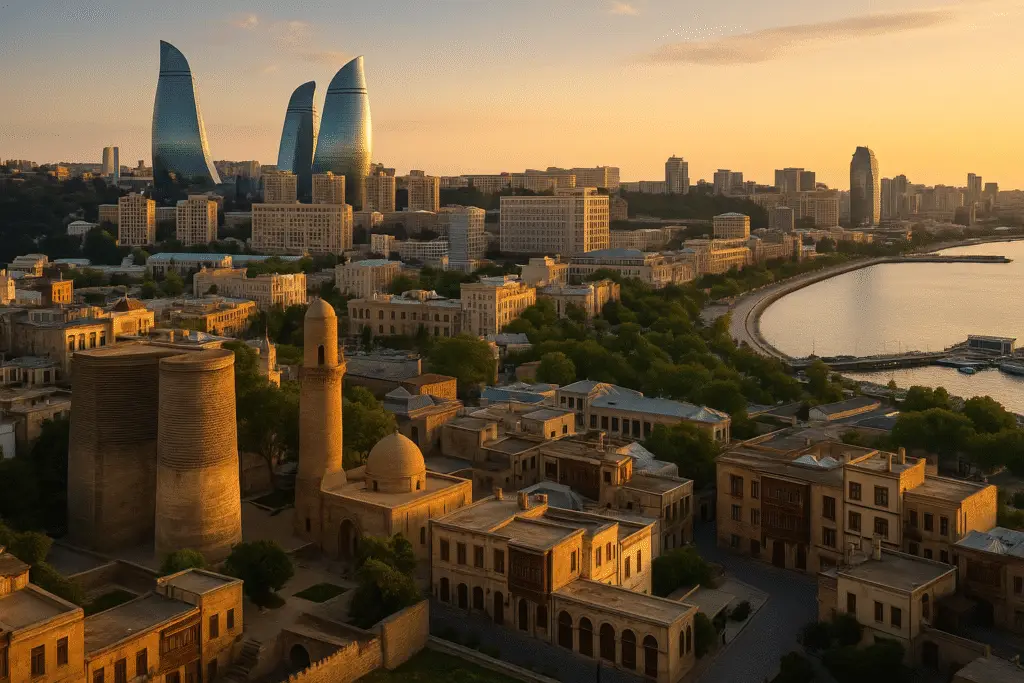
A deep, atmospheric journey through fire temples, mountain villages, medieval fortresses, the Caspian Sea coast, Silk Road bazaars, tea culture, and the unique blend of Europe and Asia that defines the Land of Fire.
Azerbaijan is one of the most fascinating and diverse countries in the Caucasus — a place where East and West meet, where ancient traditions mix with futuristic architecture, where the desert lies just hours from lush mountains, and where fire has shaped both the landscape and the spirit of the people. Known as the “Land of Fire,” Azerbaijan blends Persian heritage, Turkic culture, Soviet influence, Islamic architecture, and modern innovation into one vibrant and compelling identity.
Traveling through Azerbaijan feels like stepping through layers of history: Zoroastrian fire temples, Silk Road caravansaries, medieval old towns, Soviet avenues, and brand-new skyline landmarks like the Flame Towers. It is a country of contrasts — mountain villages frozen in time, volcanic mud bubbling on the coast, sophisticated cafés in Baku, shepherds leading sheep across high plateaus, and desert landscapes glowing under a red sunset. Through all this diversity, Azeri hospitality shines strongly. Tea is offered generously, conversations flow easily, and families open their homes with warm smiles.
This extensive guide explores Azerbaijan in deep detail: its geography, culture, cities, cuisine, mountains, Caspian coastline, ancient sites, Soviet heritage, modern transformation, rural villages, and the dynamic energy that makes the country so captivating.
1. Introduction — The Soul of the Land of Fire
Azerbaijan is ancient, yet modern. It is rooted in the Silk Road, yet reaching toward the future. It feels Middle Eastern, but also European. It is influenced by Russia, Turkey, Iran, and Central Asia — yet remains completely unique. Its people speak a Turkic language, drink endless glasses of strong tea, practice hospitality with pride, and honor traditions that stretch back centuries.
The moment you arrive in Azerbaijan, you notice contrasts. The futuristic skyline of Baku rises along the Caspian Sea, while just outside the city, you find villages where life has barely changed for generations. Shepherds lead flocks through mountain passes. Farmers prepare tandir bread in clay ovens. Women sell herbs, fruits, and homemade cheese at roadside markets. The country feels both advanced and timeless.
The fire symbolism runs deep. Natural gas burns from the ground in places like Yanar Dag (“Burning Mountain”), and flames have long been a spiritual symbol in Azerbaijan’s ancient Zoroastrian culture. Even today, the modern Flame Towers reflect this identity — glowing with shifting fire patterns at night, representing old heritage in a new form.
Azerbaijan’s character is shaped by these layers: ancient beliefs, Islamic culture, Soviet past, and modern ambition. It is a country with a strong sense of identity and a rich blend of influences.
2. Geography — From Caspian Shores to Snowy Peaks
Azerbaijan’s geography is incredibly diverse for a relatively small country. Its landscapes range from semi-deserts near the coast to lush forests, wide grasslands, volcanic mountains, and snowy peaks in the Greater Caucasus range.
The Caspian Sea Coast
Baku, Sumqayit, and numerous resort towns line the Caspian Sea — the world’s largest inland body of water. Sunsets over the Caspian are soft and glowing, with light reflecting across wide, calm waters.
The Absheron Peninsula
Dry, almost desert-like, home to mud volcanoes, ancient fire temples, and gas vents burning from the earth.
The Greater Caucasus Mountains
Running along the northern border, these mountains rise dramatically — jagged peaks, deep valleys, alpine villages, and winding roads. They include some of the tallest peaks in Europe.
The Lesser Caucasus Mountains
Green forests, canyons, rivers, and highland meadows define western and southwestern Azerbaijan.
Gobustan Region
A surreal landscape of mud volcanoes, rock formations, burning gas vents, and caves covered in prehistoric rock art.
Rivers, Lakes & Forests
Lush forests appear in the northwest, around Qabala and Sheki. Rivers cut through narrow gorges, and wildflower meadows appear in spring.
Azerbaijan’s geographic diversity makes it feel like multiple countries in one — desert, coast, mountains, forests, and volcanic plains all exist side by side.
3. History — Silk Road, Empires, Khanates & Soviet Legacy
Azerbaijan has thousands of years of history. Early civilizations left petroglyphs in Gobustan. Zoroastrian fire worship flourished here. Persian empires controlled the region for centuries. Silk Road caravans stopped in cities like Sheki and Baku. Later, the land was divided into khanates — semi-independent kingdoms. In the 19th century, Azerbaijan became part of the Russian Empire, then the Soviet Union, before gaining independence in 1991.
This rich history explains Azerbaijan’s cultural blend. Its architecture shows Islamic domes and minarets, Persian motifs, Soviet apartment blocks, medieval fortifications, and modern glass skyscrapers.
The combination of influences creates a unique atmosphere — familiar yet different, ancient yet dynamic.
4. Culture — Tea, Music, Carpets & Hospitality
Azerbaijani culture is warm, expressive, and proud. Tea is at the center of social life — served black, hot, and strong in pear-shaped glasses called armudu. It often comes with jam, sugar, dried fruits, or sweets like halva.
Carpet weaving is a centuries-old tradition. Azerbaijani carpets are famous for their detailed patterns, bright colors, and symbolic designs. Many rural families still weave carpets at home using traditional techniques.
Music is an essential part of the culture. Mugham, a traditional Azerbaijani musical form, blends vocals with string instruments like the tar and kamancha. It is emotional, poetic, and deeply spiritual.
Hospitality is sacred. Guests are treated with generosity, often offered tea, bread, fruit, or sweets even by strangers. Respect for elders is strong. Families are close. Cultural traditions are preserved through festivals, crafts, poetry, and rituals.
Azerbaijani culture feels vibrant, colorful, and full of emotion.
5. Baku — Futuristic Skyline, Ancient Walls & Caspian Beauty
Baku is one of the most striking capitals in the world — a city of contrasts where medieval old streets stand beside ultra-modern architecture. The Caspian Sea breeze mixes with the scent of tea and grilled meat, and the city glows under night lights reflecting on glass towers.
Icherisheher (Old City)
The ancient walled city is a UNESCO World Heritage Site. Its narrow stone streets twist between old mosques, caravanserais, artisan shops, and traditional houses with balconies. Inside the Old City stands the mysterious Maiden Tower — a cylindrical fortress with legends dating back a thousand years.
The Palace of the Shirvanshahs is another architectural gem — courtyards, stone arches, mausoleums, and delicate carvings showing the beauty of medieval Azerbaijan.
Modern Baku
Outside the walls, modern Baku rises:
— Flame Towers glowing at night
— Heydar Aliyev Center, a futuristic building with fluid curves
— Baku Boulevard, a long waterfront promenade with parks, tea houses, and cafes
— Modern malls, museums, and stylish districts
Baku at Night
The city becomes magical after sunset. Lights reflect on the sea. Skyscrapers glow with animated patterns. The old city appears warm and intimate. The modern districts shine with neon and music.
Baku blends ancient and futuristic atmospheres in a way few cities in the world can match.
6. Quba & Khinaliq — Mountain Villages & High Caucasus Beauty
Northern Azerbaijan leads into the Caucasus Mountains, where the air becomes crisp and the landscapes dramatic. Quba is the gateway to this region, known for forests, rivers, apple orchards, and carpet workshops.
From Quba, a mountain road climbs toward Khinaliq — one of the highest and oldest continuously inhabited villages in the world. Perched on a mountain ridge at over 2,000 meters, Khinaliq feels isolated, timeless, and breathtakingly beautiful.
Stone houses cling to slopes. Sheep graze on high pastures. Villagers speak a unique language found nowhere else. Clouds roll through valleys like rivers of mist. Sunset turns the mountains pink and purple.
Khinaliq offers a deep connection to rural Azerbaijani life — quiet, authentic, and full of natural grandeur.
7. Sheki — Silk Road Elegance, Khan Palaces & Mountain Charm
Sheki is one of Azerbaijan’s most atmospheric towns — a green, mountainous city full of history, craftsmanship, and Silk Road culture. The town sits among forested hills, with stone houses, cobbled streets, and the scent of fresh bread drifting through the air.
The Sheki Khan’s Palace is the highlight — a masterpiece of Persian-style architecture with stained-glass windows (called shebeke), colorful murals, and detailed wooden carvings. Its beauty is astonishing.
Nearby caravanserais — ancient inns where Silk Road traders stayed — now serve as cafés and boutique hotels. Walking through them feels like stepping into the past.
Sheki is also famous for sweets, especially halva made with nuts and layered dough. Tea houses offer relaxing views of the mountains and calming energy.
The surrounding region is full of waterfalls, villages, and hiking trails — making Sheki perfect for cultural and nature lovers alike.
8. Gabala (Qabala) — Forests, Lakes, Resorts & Mountain Air
Gabala is a scenic resort area surrounded by high forests, lakes, rivers, and mountains. Once part of an ancient Caucasian kingdom, today it is known for outdoor adventure, ski resorts, hiking, and family attractions.
Nohur Lake is calm and reflective, surrounded by green hills. Tufandag Mountain offers cable car rides to high viewpoints. Waterfalls and forest paths attract nature lovers.
Gabala offers a softer, greener side of Azerbaijan — peaceful and refreshing.
9. Ganja — Azerbaijan’s Second City
Ganja is one of the oldest cities in Azerbaijan, with tree-lined boulevards, classic architecture, mosques, parks, and a youthful energy thanks to its large student population. The city has historic buildings, including the Javad Khan Mausoleum and Shah Abbas Mosque, as well as the charming Lake Goygol nearby — a serene alpine lake with crystal-blue water.
10. Nakhchivan — Isolated but Extraordinary
Separated from the rest of Azerbaijan by Armenian territory, the Nakhchivan Autonomous Republic feels like a different world. It is quiet, historic, and full of unique landscapes: salt caves, ancient tombs, deserts, and mountains.
Alinja Castle, often called the “Machu Picchu of Azerbaijan,” sits dramatically on a steep mountain — offering panoramic views. Ashabi-Kahf is a spiritual cave complex. The city of Nakhchivan holds mausoleums, museums, and cultural sites.
Despite its isolation, Nakhchivan is one of the most interesting regions in the country.
11. Gobustan & Mud Volcanoes — Surreal Landscapes
South of Baku lies Gobustan National Park — a UNESCO site with ancient rock carvings showing hunting scenes, dancers, boats, animals, and symbols.
Nearby, the mud volcano field is almost lunar — grey bubbling pools, cracks in the earth, and cold mud erupting in dome-shaped craters. Azerbaijan holds almost half of the world’s mud volcanoes.
This region feels raw, otherworldly, and unforgettable.
12. Food of Azerbaijan — Warm, Rich & Aromatic
Azerbaijani cuisine is full of flavor, influenced by Persian, Turkish, and Central Asian traditions.
Plov (rice pilaf) is a national dish — fragrant rice cooked with saffron, dried fruits, nuts, and tender meat. Kebabs are grilled over coals. Dolma is made of stuffed grape leaves or vegetables. Dushbara (tiny dumplings in broth) is comforting and delicious. Lavangi — chicken or fish stuffed with walnut paste — is a local favorite.
Bread is sacred and comes in many varieties. Tea is drunk at any time of day. Desserts like pakhlava and sheki halva are sweet and rich.
Azerbaijani food is hearty, aromatic, and deeply tied to hospitality.
13. Why Azerbaijan Belongs on Your Bucket List
✔ A blend of Europe and Asia unlike anywhere else
✔ Fascinating contrasts of ancient and modern
✔ Mountain villages frozen in time
✔ Futuristic architecture in Baku
✔ Stunning landscapes: deserts, volcanoes, forests, lakes
✔ Silk Road heritage & medieval palaces
✔ Delicious cuisine & warm hospitality
✔ Affordable, safe, and full of surprises
Azerbaijan is emotional, beautiful, diverse, and deeply atmospheric — a destination that stays with you long after you leave.
 Related Articles
- Kakslauttanen Arctic Resort
- Top 10 Most Unique Places to Stay in Europe
- 10 Incredible Castles Around the World