
🇧🇳 Brunei Travel Guide
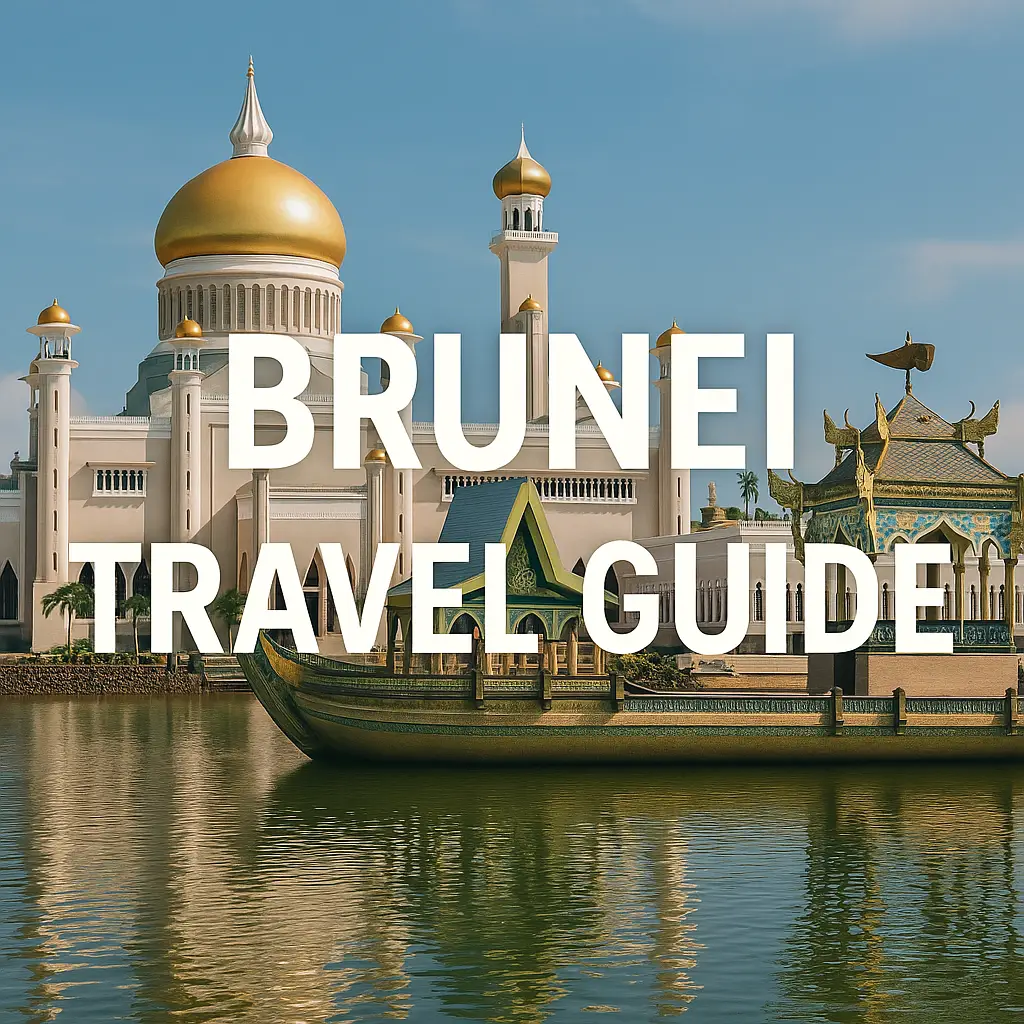
A deep journey through rainforest kingdoms, golden mosques, water villages, untouched nature, royal heritage, and the peaceful rhythm of one of Southeast Asia’s most underrated countries.
Brunei Darussalam — “The Abode of Peace” — is one of Southeast Asia’s smallest yet most intriguing countries. Nestled on the island of Borneo, surrounded by Malaysian territory and the South China Sea, Brunei is a quiet, wealthy, deeply traditional nation where rainforests thrive, rivers wind through thick jungle, and Islamic architecture glows under the tropical sun. For many travelers, Brunei is a surprising discovery: serene, clean, safe, and deeply connected to its heritage.
Unlike its fast-paced neighbors, Brunei moves at a slower, gentler rhythm. Life is calm, respectful, and guided by cultural and religious values. You feel an atmosphere of order and tranquility the moment you arrive. Streets are spotless. Mosques rise elegantly above palm trees. Water villages stretch across rivers like floating communities frozen in time. And just beyond the urban areas, Borneo’s rainforest — one of the oldest ecosystems on Earth — stretches endlessly, filled with hornbills, proboscis monkeys, rivers, waterfalls, and thick green canopies.
This extensive guide explores Brunei in rare depth: its history, culture, geography, cities, protected rainforests, mosques, wildlife, water villages, cuisine, traditions, and the peaceful identity that makes this country so unique.
1. Introduction — A Peaceful Nation with Deep Roots
Brunei is small in size but rich in identity. The country is deeply influenced by Malay culture, Islamic traditions, the legacy of the Bruneian Empire, and centuries of trade across the South China Sea. Its atmosphere differs greatly from other parts of Southeast Asia. There is no chaotic traffic, no loud nightlife, no towering skylines. Instead, Brunei is calm, green, organized, and deeply spiritual.
The country’s wealth from oil and gas has allowed it to invest in social welfare, education, and infrastructure. Citizens enjoy free healthcare, free schooling, subsidized housing, and low crime rates. This stability creates a relaxed lifestyle where families gather in parks, riverfronts remain peaceful, and people greet visitors with warm hospitality.
Brunei rarely appears on mass tourism itineraries, which makes it appealing for travelers seeking authenticity. It offers space, silence, and cultural depth — a chance to see Borneo in a purer, quieter form, and to experience Malay-Islamic identity in its most refined expression.
2. Geography — Rainforest, Rivers, Coast & Mangrove Kingdoms
Brunei covers only about 5,700 square kilometers, yet its landscapes are incredibly diverse. Much of the country is carpeted by ancient rainforest — some of the best preserved in Southeast Asia. The geography includes:
Coastal Plains
Long stretches of coastline face the South China Sea. Beaches are wide, dramatic, and almost empty, creating a sense of peaceful isolation.
River Systems
Rivers like the Brunei River and Temburong River carve through thick jungle, forming the backbone of traditional settlements and modern eco-tourism.
Rainforest Interior
The heart of Brunei is dense, steamy, and vibrant. Primary rainforest rises above rivers in thick canopies of green. Some areas remain untouched for millennia.
Mangroves
Brunei’s mangrove estuaries shelter wildlife — especially proboscis monkeys — and contribute to the country’s ecological richness.
Temburong District
Separated from the rest of Brunei by Malaysian territory, Temburong is a pristine nature reserve with national parks, canopy walks, waterfalls, and thick jungle ecosystems.
Brunei’s geographic heart lies in its natural landscapes, making it one of the best destinations for rainforest experiences in all of Southeast Asia.
3. History — Empires, Sultans & Maritime Power
Brunei’s history stretches back more than a thousand years. During the 14th to 17th centuries, the Bruneian Empire dominated large parts of Borneo, the southern Philippines, and coastal regions of Southeast Asia. The empire thrived on trade — spices, forest products, ceramics, and Chinese goods traveled through Bruneian ports.
Islam arrived in the region through Arab traders, deeply shaping Bruneian identity. The Sultanate became the center of power, law, and culture. Over time, the empire weakened due to internal struggles and European colonization of surrounding areas.
Unlike many neighboring regions, Brunei was never fully colonized. It became a British protectorate but retained its monarchy. The discovery of oil in the early 20th century transformed Brunei’s economy and enabled rapid modernization.
In 1984, Brunei gained full independence and has since maintained political stability under the leadership of the Sultan. This historical continuity is visible today in ceremonial traditions, royal institutions, and cultural values.
4. Culture — Malay Traditions, Islamic Heritage & Hospitality
Brunei’s culture is grounded in the Malay world and Islamic faith. Malay customs shape family life, festivals, clothing, language, etiquette, and community values. Islam is central to the cultural identity, influencing architecture, daily rhythms, and celebrations.
Hospitality
Bruneians are warm, polite, and respectful. Guests are welcomed with generosity. Elders are honored. Conversations are gentle and meaningful.
Traditional Clothing
Men wear the baju melayu, often with a songkok cap. Women wear the baju kurung or baju kebaya, usually elegant and colorful but modest.
Art & Music
Bruneian artistic traditions include brasswork, silverwork, weaving, and songket textiles. Traditional music features gongs, drums, and instruments like the gulintangan.
Ceremonies & Festivals
Religious events — especially Ramadan, Hari Raya Aidilfitri, and ceremonies at the royal palace — are deeply important and celebrated with great care.
Brunei’s culture feels genuine, warm, and deeply connected to history.
5. Bandar Seri Begawan — The Peaceful Capital
Brunei’s capital, Bandar Seri Begawan (often called “BSB”), is one of Southeast Asia’s most unique cities. It’s quiet, green, and elegant, sitting on the banks of the Brunei River. There are no skyscrapers, no sprawling chaos — just calm streets, grand mosques, water villages, and cultural landmarks.
Sultan Omar Ali Saifuddien Mosque
A breathtaking symbol of Brunei, this mosque features a massive golden dome, white marble walls, reflective pools, and bridges linking to ceremonial platforms. It glows beautifully at night and stands as one of the most stunning mosques in Asia.
Jame’ Asr Hassanil Bolkiah Mosque
Dedicated to the current Sultan, this mosque is equally grand — adorned with 29 golden domes, landscaped gardens, and exquisite interiors.
Kampong Ayer — The Venice of the East
Kampong Ayer is one of the world’s largest water villages, home to thousands of residents who live in traditional wooden houses supported by stilts over the river. The community has schools, shops, mosques, and fire stations — all built above water. Wooden walkways and boat taxis connect the neighborhoods. Walking through Kampong Ayer feels like stepping into living history.
Royal Regalia Museum
This museum showcases the wealth, history, and ceremonial regalia of the Sultan, including royal chariots, crowns, gifts, and historical collections.
Eco-Corridors & Riverfront Parks
Modern Bandar features gardens, riverside walkways, fountains, and quiet places to relax.
The capital blends cultural grandeur with quiet beauty, offering a unique window into Bruneian life.
6. Temburong — The Green Heart of Brunei
Temburong District is a paradise for nature lovers. Separated from the main part of Brunei, it is accessible via a modern bridge or boat. This region is almost entirely covered in pristine rainforest.
Ulu Temburong National Park
One of Borneo’s best-preserved rainforests, this park feels ancient, with towering trees, misty mornings, and a symphony of jungle sounds.
The highlight is the canopy walkway — a network of metal towers and suspension bridges rising above the treetops. At dawn, mist floats among the canopies, sunlight pierces through, and hornbills glide overhead.
Rivers & Waterfalls
The Temburong River winds through lush jungle, with longboat rides offering unforgettable views of dense foliage, wildlife, and crystal-clear water. Waterfalls and natural pools lie hidden in the jungle.
Biodiversity
The rainforest is home to monkeys, reptiles, rare birds, insects, and countless plant species. It remains untouched by mass tourism.
Temburong is Brunei’s greatest natural treasure — a glimpse of Borneo before human development.
7. Tutong — Beaches, Forests & Quiet Villages
Tutong District is known for rural life, quiet coastlines, and cultural diversity. Small villages lie between palm forests and rice fields. The beaches here feel wild and empty, offering long stretches of golden sand and dramatic waves.
Tasek Merimbun, Brunei’s largest natural lake, is located here — surrounded by dense forest and known for its serene beauty. Traditional communities live nearby, preserving local customs and crafts.
8. Belait — Industry, Colonies & Local Life
Belait is the center of Brunei’s oil and gas industry. The town of Kuala Belait features colonial-era buildings, peaceful streets, and a coastline with calm beaches. Seria, another town, holds oilfield landmarks and heritage sites.
Despite its industrial identity, Belait has a relaxed, friendly atmosphere and remains deeply connected to Brunei’s cultural values.
9. Nature & Wildlife — Proboscis Monkeys, Hornbills, Rainforest Life
Brunei’s wildlife survives thanks to its commitment to preserving jungle ecosystems.
Proboscis Monkeys
These unusual monkeys — famous for their long noses — live in mangrove forests along the Brunei River.
Hornbills
Large birds with striking beaks often soar above Temburong.
Rainforest Animals
The jungles house macaques, slow lorises, flying squirrels, exotic insects, and occasional clouded leopards deep in the forest.
Reptiles & Amphibians
Monitor lizards, tree frogs, and brightly colored reptiles are commonly seen near rivers and forest trails.
Brunei’s wildlife thrives in protected habitats, offering a glimpse into Borneo’s ancient ecosystems.
10. Bruneian Cuisine — Warm, Flavorful & Comforting
Brunei’s cuisine blends Malay, Indonesian, and Chinese influences, creating warm, aromatic dishes that are deeply tied to cultural traditions.
Ambuyat is the national dish — a starchy sago-based food eaten with flavorful dips like sour binjai sauce or spicy chili paste.
Beef and chicken dishes often feature coconut milk, ginger, turmeric, lemongrass, and local herbs. Nasi katok — simple rice, fried chicken, and sambal — is beloved throughout the country.
Markets offer sweet treats like kuih (traditional cakes), pandan desserts, and sticky rice dishes wrapped in banana leaves. Tea and coffee are enjoyed with pastries and snacks.
The cuisine is comforting, aromatic, and filled with local character.
11. Why Brunei Belongs on Your Bucket List
Brunei is quiet, but quietly extraordinary. It offers:
✔ Ancient rainforest untouched by mass tourism
✔ Some of Asia’s most beautiful mosques
✔ Massive water villages full of culture
✔ Safe, clean cities with peaceful energy
✔ Rich Malay and Islamic heritage
✔ Wildlife-filled mangroves & jungle rivers
✔ Pristine beaches with almost no crowds
✔ Warm, respectful hospitality
Brunei is a destination for travelers who prefer depth over noise — a place where you can reflect, explore, and connect with nature and culture in an intimate way.
 Related Articles
- Kakslauttanen Arctic Resort
- Top 10 Most Unique Places to Stay in Europe
- 10 Incredible Castles Around the World