
🇰🇭 Cambodia Travel Guide — A Journey Through Ancient Temples, Lush Jungles, Floating Villages & the Heart of Southeast Asia
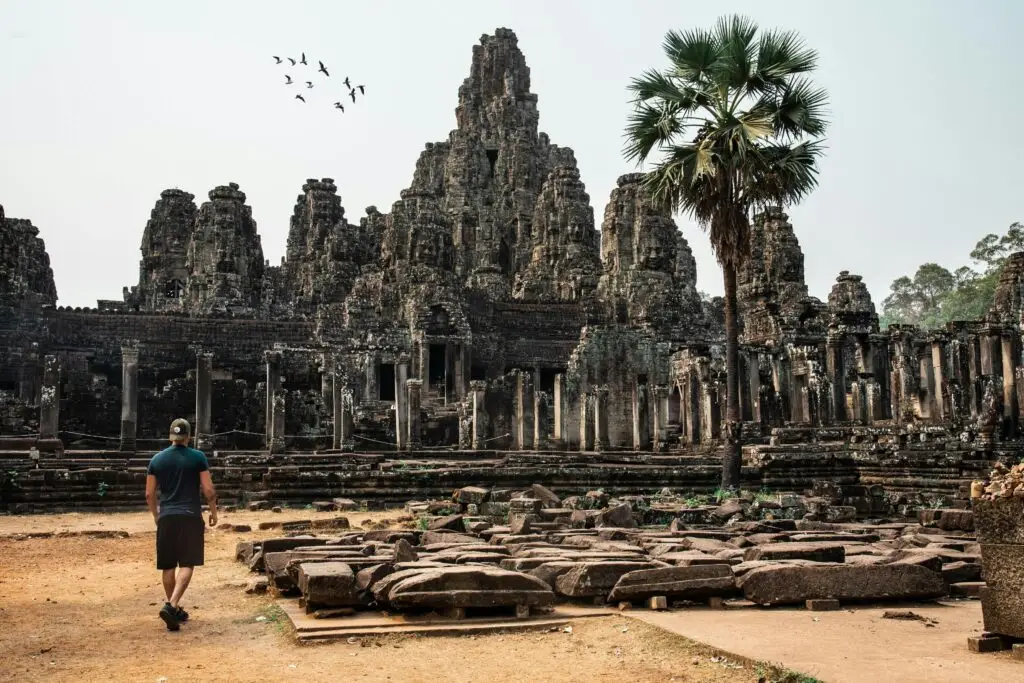
Cambodia is one of the most mesmerizing, emotionally rich, historically profound, and visually stunning countries in Southeast Asia. It is a land where legendary temples rise from the jungle like ancient guardians, where saffron-robed monks walk peacefully at sunrise, where rural villages flourish along winding rivers, where tropical coastlines hide quiet islands, and where the spirit of the Cambodian people shines with resilience, kindness, and an unbreakable connection to tradition.
Traveling through Cambodia is like moving through different worlds. In Siem Reap, the temples of Angkor — including the iconic Angkor Wat, Bayon, and Ta Prohm — reveal stone towers, sacred bas-reliefs, giant smiling faces, crumbling ruins, and jungles reclaiming ancient cities. In Phnom Penh, the Mekong River glitters beside wide boulevards, royal palaces, golden pagodas, and bustling markets. In the countryside, rice fields glow green beneath blue skies, farmers lead water buffalo through mud-drenched fields, and traditional stilt houses rise above shimmering wetlands. In the south, palm-fringed beaches and tropical islands offer quiet beauty, gentle waves, coral reefs, and sunsets that burn gold over the horizon.
Cambodia’s story is complex — filled with glory, tragedy, survival, and rebirth. The ancient Khmer Empire once ruled vast territories, building monumental temples and sophisticated irrigation systems. Centuries later, the country faced immense suffering, war, and destruction during the Khmer Rouge regime. Yet despite hardship, Cambodia’s culture, identity, and hope remain remarkably strong. The warmth of its people, their deep spirituality, and their extraordinary ability to rebuild continue to inspire travelers.
This guide explores Cambodia in exceptional depth — its landscapes, cities, temples, traditions, food, culture, history, and spirit. It is designed to capture the essence of the country and help readers truly understand what makes Cambodia one of the most unforgettable destinations in the world.
A Geography Shaped by Rivers, Forests & the Heartbeat of Water
Cambodia’s geography is defined by water, forest, and fertile land. The Mekong River flows like a lifeline through the nation, nourishing farms, fishing villages, and river towns. Its tributaries, including the Tonlé Sap River, shape ecosystems that have supported life for centuries.
The Tonlé Sap Lake, Southeast Asia’s largest freshwater lake, changes dramatically with the seasons. During the monsoon, it expands several times its normal size, flooding surrounding forests and villages. Floating homes, schools, and markets rise and fall with the water level, creating communities entirely adapted to water-based life. The lake is home to rare birds, fish, crocodiles, and ecosystems essential to Cambodia’s culture and food supply.
The north and east contain lush forests, mountains, and wildlife-rich regions. Protected areas such as the Cardamom Mountains remain wild and remote — full of waterfalls, rivers, rare animals, and tropical flora. The eastern provinces around Mondulkiri and Ratanakiri offer rolling hills, indigenous villages, volcanic lakes, and elephant sanctuaries.
The southern coastline reveals another face of Cambodia. Tropical islands such as Koh Rong and Koh Rong Samloem offer turquoise water, white-sand beaches, coral reefs, and relaxed island life. Towns like Kampot and Kep combine riverside charm with colonial architecture, pepper plantations, mangroves, and beautiful sunsets over the sea.
Cambodia’s geography creates a blend of landscapes — jungles, rivers, rice paddies, coastlines, and mountain regions — all woven into a peaceful, visually captivating tapestry.
A History of Kingdoms, Empire, Tragedy & Renewal
Cambodia’s history is both glorious and heartbreaking. The peak of its ancient civilization came during the Khmer Empire, which flourished from the 9th to the 15th century. This empire built many of the greatest architectural wonders in Asia, including Angkor Wat — the world’s largest religious structure — and the city of Angkor Thom, an enormous capital filled with temples, palaces, gates, and hydraulic engineering that astonishes archaeologists today.
Angkor Wat itself is a masterpiece of symbolism, cosmology, mythology, and devotion. Its towers represent sacred mountains, its galleries depict epic tales of gods and warriors, and its reflection in surrounding pools creates one of the most famous sunrise views in the world.
The decline of the Khmer Empire led to centuries of conflict, migration, and foreign influence. In the 19th century, Cambodia became part of French Indochina, introducing European architecture, education, and infrastructure. Phnom Penh’s boulevards, villas, and riverfront areas still show traces of French influence.
The twentieth century brought tragedy during the Khmer Rouge regime (1975–1979), when millions lost their lives. The period left wounds that still shape Cambodia today, but the country has rebuilt with incredible resilience. Today, Cambodia is peaceful, developing, and welcoming — a testament to the strength of its people.
Travelers who visit Cambodia quickly learn that its history is not simply a story of suffering but also a story of triumph, restoration, spirituality, and cultural pride.
Siem Reap & Angkor — The Spiritual Heart of Cambodia
Siem Reap is the gateway to the temples of Angkor, but it is also a lively town full of markets, cafés, artisan workshops, and cultural shows. The real magic, however, lies just beyond the town — in the vast archaeological park where the ancient Khmer civilization built its masterpieces.
Angkor Wat is the most famous temple — a symbol of Cambodia and one of the world’s greatest architectural creations. Its five towers, lotus-shaped and serene, rise above long galleries filled with carvings depicting gods, demons, battles, and celestial dancers. At sunrise, crowds gather to watch the temple turn gold.
Angkor Thom, the ancient capital, is equally impressive. The Bayon Temple, with its massive stone faces smiling gently in every direction, feels spiritual and mysterious. The Terrace of the Elephants, the South Gate, and the Baphuon reveal the grandeur of the ancient city.
Ta Prohm offers another kind of magic. Here, massive roots of silk-cotton and strangler fig trees wrap around towers and walls, creating a breathtaking fusion of nature and ruins. It feels like stepping into a lost world.
Beyond these major temples lie dozens of equally enchanting structures — Preah Khan, Ta Som, Neak Pean, Banteay Kdei, Pre Rup, and the pink-sandstone marvel of Banteay Srei, famous for its delicate carvings.
Angkor is not just a place; it is an experience that connects travelers to a civilization of extraordinary creativity, engineering, spirituality, and symbolism.
Phnom Penh — A City of Contrasts, Memory & Modern Life
Phnom Penh sits at the confluence of three rivers — the Mekong, Tonlé Sap, and Bassac — creating a waterfront full of life and activity. The city blends modern energy with traditional charm. Motorbikes weave through fragrant markets, monks walk barefoot along boulevards, and colonial architecture stands beside golden temples.
The Royal Palace and Silver Pagoda showcase Khmer artistry through shimmering tiles, golden spires, and precious Buddhist relics. The city’s markets, including the Central Market and Russian Market, burst with textiles, jewelry, spices, fruits, and handmade crafts.
Phnom Penh also serves as a place of remembrance. The Tuol Sleng Genocide Museum (S-21) and the Killing Fields at Choeung Ek preserve stories from the Khmer Rouge period. These sites are emotional and important, offering insight into Cambodia’s resilience and dedication to peace.
Despite its past, Phnom Penh is full of life. Riverfront cafés glow at sunset. Rooftop bars overlook the city skyline. People gather along the Tonlé Sap promenade to exercise, dance, and socialize.
Phnom Penh feels dynamic, sincere, and full of contrasts.
Battambang — Art, Rice Fields & Colonial Charm
Battambang reveals Cambodia’s countryside beauty — green rice paddies, small villages, bamboo bridges, and quiet rural landscapes. The town itself is known for its colonial architecture, art galleries, and creative community.
Nearby attractions include ancient temples, bat caves, and local farms where travelers can observe traditional Cambodian life. The bamboo train, once a simple platform powered by small engines, has become a unique cultural experience.
Battambang is peaceful, artistic, and authentic.
Kampot, Kep & the Southern Coast — Rivers, Pepper Farms & Quiet Beaches
Kampot is a riverside town known for its calm atmosphere, French-colonial charm, and beautiful mountain scenery. The Bokor Mountains rise behind the town, offering views of misty forests, waterfalls, and abandoned colonial-era buildings.
Nearby pepper farms produce some of the world’s finest pepper — a product prized by chefs worldwide. Visiting these farms reveals sustainable agriculture and traditional processing techniques.
Kep, once a glamorous seaside resort, is now a quiet coastal destination famous for its crab market, seafood, and small islands offshore.
These southern towns offer relaxation, culture, nature, and a slower pace of life.
Sihanoukville & the Islands — White Sands & Tropical Peace
Sihanoukville is the launching point for Cambodia’s islands. While the town itself has grown quickly, the surrounding islands remain stunning and peaceful.
Koh Rong offers long beaches, clear turquoise water, coral reefs, and rustic island life. Koh Rong Samloem is quieter and more serene, with small resorts, hammock-lined beaches, and glowing bioluminescent plankton at night.
These islands feel tropical, beautiful, and peaceful — ideal for snorkeling, kayaking, swimming, and unwinding.
Eastern Cambodia — Mountain Tribes, Waterfalls & Forest Wilderness
The eastern provinces, including Mondulkiri and Ratanakiri, reveal another side of Cambodia. Here, the landscape becomes hilly, forested, and filled with waterfalls, wildlife, and indigenous communities.
Mondulkiri is known for its cooler climate, elephant sanctuaries, pine forests, and traditional Bunong villages. Ratanakiri features crater lakes, dense jungle, rivers, and tribal settlements where animist traditions remain strong.
These regions feel remote, natural, and deeply connected to ancient cultural heritage.
Culture, Religion & Daily Life in Cambodia
Khmer culture is rooted in spirituality, family, community, and tradition. Buddhism plays a central role, shaping festivals, ethics, architecture, and daily routines. Monasteries serve as community centers, and monks receive offerings each morning.
Village life is calm and agricultural. Families grow rice, vegetables, and fruit. Meals are enjoyed together. Traditional houses stand on stilts to protect against floods.
Art, dance, and music remain important cultural expressions. The Royal Ballet of Cambodia, with its elegant hand movements and ornate costumes, represents one of the country’s most treasured art forms.
Hospitality in Cambodia is warm and genuine. Visitors are welcomed with smiles, kindness, and generosity.
Cuisine — Fresh, Fragrant, Colorful & Comforting
Cambodian cuisine is subtle, aromatic, balanced, and delicious. Fish amok, a creamy coconut curry steamed in banana leaves, is the national dish. Rice is a staple, served with soups, stir-fries, grilled meats, pickled vegetables, and fresh herbs.
Street food offers grilled meats, noodles, coconut desserts, and tropical fruit. Markets overflow with mangoes, bananas, jackfruit, longan, and lychees.
Meals emphasize harmony — salty, sweet, bitter, sour, and aromatic flavors blend beautifully.
Cambodian food is gentle, comforting, and lovingly prepared.
Why Cambodia Leaves a Lasting Impression
Cambodia is a country that lives in the heart long after a traveler leaves. It is emotional, spiritual, ancient, modern, tragic, hopeful, beautiful, and human all at once.
It is the golden sunrise over Angkor Wat.
The warm smile of a village child.
The sound of monks chanting at dawn.
The feeling of walking through ancient corridors where history still breathes.
The quiet of rice fields stretching beneath endless skies.
The taste of fresh fruit after a long journey.
The peaceful rhythm of rivers and lakes.
The strength of a people who endured and rebuild with dignity.
Cambodia touches travelers deeply — through its stories, landscapes, culture, and soul.
 Related Articles
- Kakslauttanen Arctic Resort
- Top 10 Most Unique Places to Stay in Europe
- 10 Incredible Castles Around the World