
🇬🇪 Georgia Travel Guide — A Journey Through the Caucasus Land of Mountains, Wine, Ancient Kingdoms & Timeless Hospitality
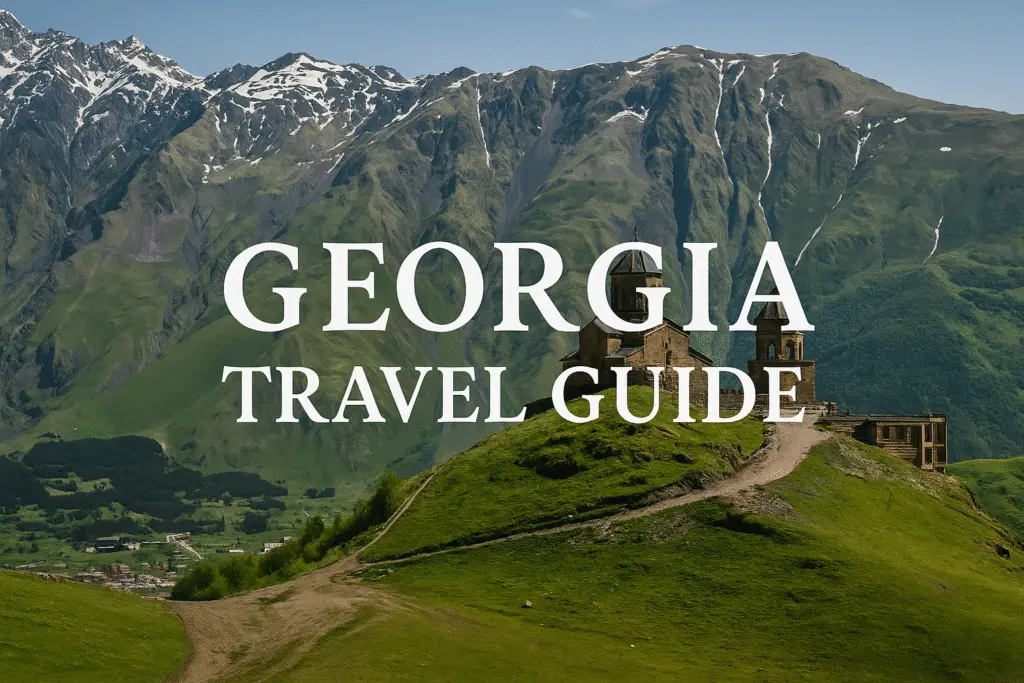
Georgia is one of the most enchanting countries in the world — a place where snow-capped mountains rise like cathedrals, where ancient fortresses crown rugged hills, where vineyards stretch across fertile valleys, where old churches sit perched on cliffs, and where warm hospitality is not a custom but a way of life. Situated at the crossroads of Europe and Asia, Georgia blends cultures, landscapes, traditions, and histories into a tapestry that feels both mystical and deeply alive. It is a land shaped by legends, spiritual devotion, centuries-old winemaking, and a fierce love for freedom that has defined its people for millennia.
Traveling through Georgia means walking through layers of time. You encounter prehistoric settlements, cave monasteries carved into cliffsides, medieval towers rising from mountain villages, Silk Road trading towns, and Soviet-era avenues lined with wide boulevards. Yet Georgia is not stuck in the past. Its cities pulse with innovation, cuisine has evolved into modern culinary art, and tourism has flourished thanks to the country’s incredible diversity — from beaches along the Black Sea to alpine regions reminiscent of the Swiss Alps, from desert landscapes in the southeast to lush green valleys in Kakheti.
Georgia’s emotional impact on travelers is powerful. The country’s landscapes feel grand, ancient, and untouched. Its culture is rich, expressive, musical, and full of pride. Its people are famously welcoming. Its food and wine are unforgettable. Georgia is a place that stays in your memory long after you leave — a land of soul, mountains, and stories.
A Geography of Dramatic Contrasts
Georgia may be small on a map, but its landscapes are among the most varied in the world. The country is dominated by the Caucasus Mountains — a majestic chain stretching from the Black Sea to the Caspian Sea. These peaks form natural borders and shape the country’s climate, traditions, and ways of life.
To the north, the Greater Caucasus is rugged and alpine, with towering summits rising above 5,000 meters. Mount Shkhara, Mount Kazbegi, and Mount Ushba are among the tallest and most dramatic peaks in Eurasia. Mountain villages sit tucked between cliffs and valleys, snow remains on high ridges throughout the year, and ancient defensive towers rise from villages like stone guardians.
To the south lies the Lesser Caucasus — a region of rolling hills, volcanic plateaus, forests, mineral springs, and serene lakes. Between these two mountain ranges lies eastern Georgia’s fertile agricultural heartland, where wine grapes grow in abundance and traditional villages preserve centuries-old customs.
The western region of the country slopes down toward the Black Sea, with subtropical forests, warm beaches, citrus plantations, and tea fields. The environment here is lush and humid, shaped by sea breezes, waterfalls, and botanical diversity.
Further east, the landscape shifts dramatically. Semi-arid plains, canyons, and desert-like hills stretch toward the border with Azerbaijan. Monasteries cling to cliffs, caves reveal ancient dwellings, and rocky valleys hold the remnants of early Christian settlements.
Georgia’s geography feels like a compressed version of an entire continent — mountains, sea, desert, forests, and plains within a few hours’ drive of each other.
A Cultural Crossroads for Thousands of Years
Georgia’s location — between East and West, between empires and trade routes — shaped its identity for thousands of years. It has been influenced by Greek, Persian, Roman, Arab, Mongol, Ottoman, and Russian civilizations, yet always maintained its own language, script, religion, and traditions.
The Georgian language is ancient and unrelated to any major world language family. Its alphabet, with its smooth round shapes, is one of the world’s oldest scripts. This unique linguistic heritage has helped keep Georgian identity strong through centuries of political change.
Religion plays a central role in cultural life. Georgia adopted Christianity in the 4th century, making it one of the world’s oldest Christian nations. Churches and monasteries dot the landscape — from clifftop chapels to mountain hermitages. Their architecture, frescoes, and locations are breathtaking, and they stand as monuments to Georgia’s spiritual heritage.
Music and dance are also deeply rooted in identity. Traditional polyphonic singing — where multiple voices harmonize in complex, emotional layers — is recognized by UNESCO for its cultural significance. Dance ensembles perform dynamic, acrobatic routines that reflect historical regions and stories.
Hospitality is legendary. Guests are treated like gifts from God. Tables overflow with food and wine. Toasting traditions led by a “tamada” (toastmaster) form the heart of Georgian celebrations. Friendship, family, honor, and generosity guide social interactions.
Modern Georgia blends this deep heritage with a vibrant, youthful energy shaped by art, film, cuisine, design, and tourism.
Tbilisi — A City of Complexity, Charm & Soul
Tbilisi, Georgia’s capital, is a city of unexpected beauty and endless layers. It lies in a valley along the Mtkvari River, surrounded by hills, cliffs, and balconies overlooking old neighborhoods. The city’s architecture reflects a mixture of influences — Persian, Russian, Byzantine, Art Nouveau, Soviet, and modern forms.
The Old Town is a maze of winding streets, carved wooden balconies, ancient sulfur baths, historic churches, and small courtyards full of grapevines. Each district has its own atmosphere. Abanotubani glows with steam rising from thermal baths. Mtatsminda offers panoramic city views. Sololaki is filled with ornate 19th-century architecture. Fabrika is young, creative, and energetic.
Tbilisi is poetic — full of contrasts, contradictions, and charm. Old and new blend naturally. Street art decorates walls near medieval churches. Modern bridges cross rivers beneath ancient fortresses. Cafés, wine bars, artisan shops, and music venues line streets where history lives in every stone.
The spirit of Tbilisi is warm, emotional, artistic, and resilient. Travelers often fall in love with the city’s authenticity, diversity, and the quiet beauty hidden in its alleys and sidewalks.
Kakheti — The Cradle of Wine Civilization
Georgia claims to be the birthplace of wine, with evidence of winemaking dating back more than 8,000 years. This heritage remains alive in Kakheti, the country’s most famous wine region.
Vineyards stretch across green valleys framed by snowy mountains. Traditional wine is made in qvevri — large clay vessels buried underground, where grape juice ferments naturally. This method creates earthy, amber-colored wines that are gaining global recognition.
Villages here feel timeless. Families produce wine with rituals passed down through generations. Toasts are long, poetic, and deeply meaningful. Hospitality is unmatched. Travelers are welcomed like relatives returning home.
Telavi, the region’s main town, is surrounded by castles, monasteries, and wineries. Sighnaghi, perched on a hill overlooking the Alazani Valley, is romantic, peaceful, and full of color. Monasteries like Alaverdi and Ikalto connect spirituality with tradition in serene landscapes.
Kakheti is more than a wine region — it is a place where culture, land, and human connection come together in harmony.
Kazbegi & The High Caucasus — Georgia’s Mountain Soul
The Kazbegi region, officially known as Stepantsminda, is one of Georgia’s most breathtaking destinations. The iconic image of Gergeti Trinity Church — a solitary church perched on a hill beneath snow-covered Mount Kazbek — is one of the most dramatic sights in Eurasia.
Mountains dominate everything here. Valleys cut deep between peaks. Rivers flow from glaciers. Clouds drift across ridges. Villages appear like clusters of stone houses surrounded by alpine beauty.
Hiking is a way of life. Trails lead to waterfalls, lakes, and glaciers. Roads wind along cliffs and through narrow gorges. The Dariali Gorge, leading toward the Russian border, feels mythological.
This is a place where nature inspires awe and humility. The mountains are old, wise, and powerful. People who live here carry traditions shaped by seasons, altitude, and community.
Kazbegi is Georgia’s wild, emotional, and spiritual heart.
Svaneti — Land of Towers & Untouched Beauty
Svaneti is one of the most remote and magical regions of Georgia. Its stone defense towers rise from villages like ancient guardians, built centuries ago to protect families from invaders and avalanches.
Surrounded by some of the tallest peaks in the Caucasus, Svaneti feels like a world apart. Roads wind through deep valleys and forests before opening into highland meadows dotted with villages.
Mestia, the regional center, is lively and beautifully located. Ushguli, one of the highest villages in Europe, sits beneath Mount Shkhara and feels frozen in time. Snow covers the mountains for much of the year, and summers are lush and colorful.
Svan culture is strong — music, dance, architecture, and traditions preserved despite centuries of isolation. Visiting Svaneti feels like entering a living museum of mountain life, yet full of warmth and authenticity.
Adjara & The Black Sea Coast — Sun, Sea & Subtropical Forests
Western Georgia’s coastal region offers a different kind of beauty — subtropical forests, warm waters, mountain rivers, and lush hillsides.
Batumi, the main city, blends seaside relaxation with modern architecture, colorful gardens, palm-lined boulevards, and a lively cultural scene. Its botanical garden showcases flora from around the world, and the city’s coastline is perfect for summer holidays.
Further inland, Adjara’s mountain villages offer cool air, waterfalls, wooden houses, and green valleys. Tea plantations, citrus groves, and chestnut forests create a landscape rich in biodiversity.
The Black Sea region is relaxed, warm, and full of charm — ideal for travelers seeking both nature and coastal life.
Imereti — Land of Caves, Valleys & Historical Mysteries
Central Georgia is home to Imereti, a region of gentle hills, forests, rivers, and deep cultural roots. Kutaisi, Georgia’s second-largest city, blends historic monuments with a calm atmosphere.
Nearby, the Gelati Monastery — a UNESCO site — stands as one of Georgia’s greatest medieval achievements. The Sataplia and Prometheus caves reveal underground worlds of stalactites, turquoise lakes, and prehistoric secrets.
Imereti is peaceful, green, and filled with stories, offering a more relaxed experience than other regions.
Kartli, Mtskheta & The Ancient Heart of Georgia
Kartli is the political, cultural, and historical center of Georgia. Mtskheta, one of the oldest continuously inhabited towns in the world, served as the ancient capital. Its monuments — Jvari Monastery and Svetitskhoveli Cathedral — are among the most sacred and iconic in the country.
Nearby, Gori features the Uplistsikhe cave city — a vast complex carved into rock cliffs, once a key Silk Road settlement. Fortresses, rivers, orchards, and vineyards define the region.
Kartli offers deep insight into Georgia’s past, architecture, religion, and culture.
Samtskhe-Javakheti — Castles, Lakes & Volcanic Landscapes
This southern region offers dramatic diversity — barren volcanic plateaus, green valleys, medieval castles, cave monasteries, and serene lakes.
Vardzia, Georgia’s legendary cave monastery, is carved into a massive cliff and once housed thousands of monks. Rabati Castle in Akhaltsikhe blends different architectural styles in a restored hilltop fortress. Lake Paravani and Lake Saghamo create peaceful open landscapes.
The region feels ancient, mystical, and full of surprises.
Cuisine — A Feast of Tradition, Flavor & Warmth
Georgian cuisine is one of the most beloved in the world. It is rich, flavorful, generous, and deeply tied to culture and hospitality.
Khachapuri — melted cheese bread — comes in many regional varieties. Khinkali — juicy dumplings — are eaten with hands and full of aromatic broth. Pkhali, stews, grilled meats, walnut sauces, fresh herbs, and unique spices shape unforgettable meals.
Food is always accompanied by wine, toasts, laughter, and friendship.
Why Georgia Stays in Your Heart
Georgia is a country that cannot be forgotten. It is emotional, wild, ancient, modern, sincere, proud, and soulful. Travelers come for the landscapes but stay for the people. They arrive as visitors and leave as friends.
The country’s mountains, wine, culture, and hospitality create an experience unlike anywhere else — a place of stories, traditions, and beauty that becomes a part of your memory forever.
 Related Articles
- Kakslauttanen Arctic Resort
- Top 10 Most Unique Places to Stay in Europe
- 10 Incredible Castles Around the World