
🇮🇳 **India Travel Guide —
A Land of Infinite Stories, Colors, Landscapes & Civilizations**
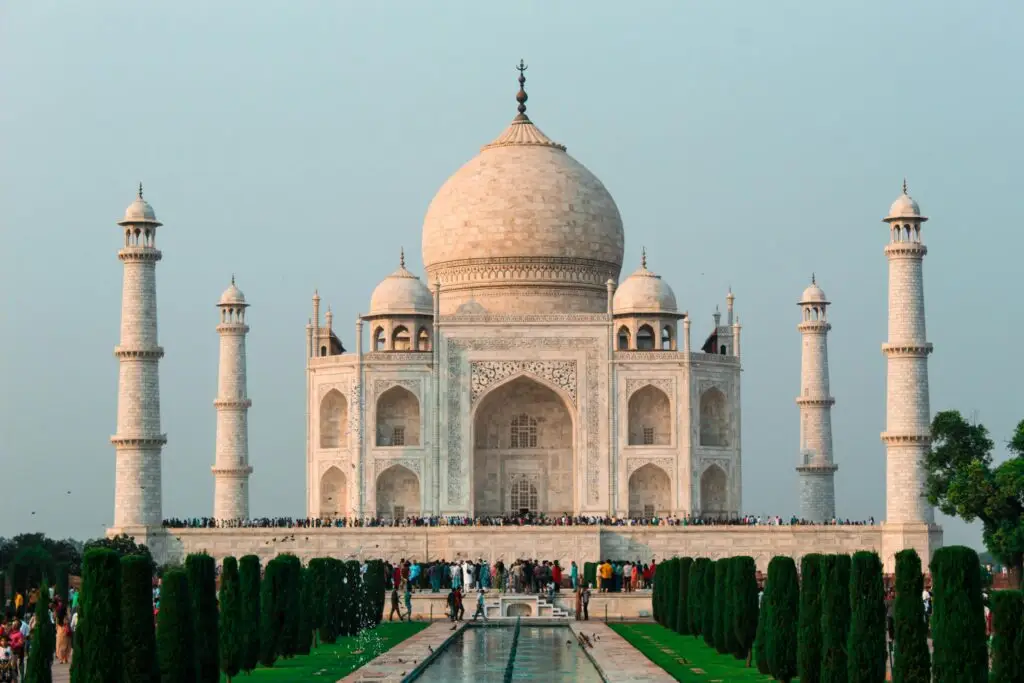
India is not merely a country — it is an entire world contained within borders, a living civilization older than recorded history, a vast mosaic of languages, religions, cultures, landscapes, and traditions that weave together into one of the richest and most extraordinary destinations on Earth. To travel through India is to witness a universe of contrasts: ancient and modern, sacred and bustling, chaotic and peaceful, traditional and innovative. It is a place where Himalayan peaks scrape the sky, where deserts glow under the sun, where tropical forests hum with wildlife, where palm-fringed beaches invite relaxation, where temples shimmer with devotion, where cities pulse with energy, and where villages preserve centuries-old ways of life.
India overwhelms in the best possible way. Every sense comes alive — the scent of masala chai at a roadside stall, the sound of temple bells at dawn, the sight of colorful saris moving through markets, the touch of warm coastal breezes, the taste of spices that have been traded for centuries. India is a journey that challenges, inspires, and transforms. It forces travelers to slow down, observe deeply, feel intensely, and appreciate humanity’s complexity. There is no single “Indian experience” because the country is too vast, too diverse, too layered — it becomes whatever each traveler is ready to receive.
In this first part of the India Travel Guide, we explore the soul of India — its geography, its ancient roots, its dynamic cultures, its religious traditions, and the emotional essence that makes the country so unforgettable. This is India in its purest form: a land shaped by time, nature, spirituality, and the stories of more than a billion people.
A Geography as Vast and Varied as a Continent
India stretches from the snow-covered Himalayas in the north to the tropical shores of the Indian Ocean in the south. It is home to deserts, jungles, mountains, plateaus, deltas, lakes, backwaters, islands, and some of the world’s largest river systems. Its geography is one of the most diverse on the planet, giving the country a dramatic sense of scale and wonder.
In the far north, the Himalayas rise in majestic silence. Peaks like Nanda Devi, Kangchenjunga, and the sacred mountains of Uttarakhand and Himachal Pradesh form natural walls reaching into the clouds. Ranges stretch across Ladakh, Kashmir, and the northeastern states, creating isolated valleys, alpine meadows, glacial rivers, and monastic cultures shaped by Tibetan Buddhism. The air here is thin and crisp, prayer flags flutter on mountain passes, and small villages appear like scattered jewels along winding roads. This region feels ancient, reverent, and deeply connected to nature.
Moving southward, the mountains give way to the fertile plains of the Ganges and Yamuna rivers. This vast stretch of land has supported civilizations for more than 5,000 years. Cities like Varanasi, Prayagraj, Lucknow, Kanpur, and Patna line the riverbanks, each shaped by rituals, royal histories, and spiritual traditions. The Ganges Plains are the agricultural heart of India, a region of rice fields, sugarcane plantations, mango orchards, and endless horizons.
Further west, the Thar Desert unfolds across Rajasthan — a landscape of golden sand dunes, fort cities, nomadic herders, camels, and starlit nights. The desert is not barren; it is full of life, music, dance, and centuries of tradition. Fortresses rise like mirages, painted havelis line old trading towns, and caravans once followed these routes deep into Central Asia.
To the south lies the Deccan Plateau, a region of rocky hills, ancient cave complexes, waterfalls, and historic capitals. This landmass shaped some of India’s great dynasties — the Vijayanagara Empire, the Marathas, and the Bahmani Sultanate — whose ruins and palaces still adorn the landscape.
India’s coastline stretches more than 7,500 kilometers. To the west, the Arabian Sea washes the shores of Goa, Maharashtra, Kerala, and Gujarat. Fishing villages, coconut groves, estuaries, mangroves, and centuries-old ports define this coast. To the east, the Bay of Bengal shapes Tamil Nadu, Andhra Pradesh, Odisha, and West Bengal, with long sandy shores, pilgrimage towns, and delta ecosystems.
And then there are the islands: the palm-fringed beaches of the Andaman & Nicobar Islands and the coral-ringed atolls of Lakshadweep. These islands feel like tropical dreams — quiet, pure, and far removed from the mainland.
India’s geography is not merely diverse; it is monumental, emotional, and essential to understanding the soul of the country.
A Civilization Older Than Time
India’s history stretches back to the dawn of humanity. The Indus Valley Civilization flourished over 4,500 years ago, with cities like Harappa and Mohenjo-Daro demonstrating advanced urban planning, drainage systems, and cultural sophistication. Over the centuries, India became a crossroads of ideas, trade, philosophy, and empire.
Hinduism, Buddhism, Jainism, and Sikhism all originated in India. Ancient scriptures like the Vedas, Upanishads, and Mahabharata shaped world literature and spirituality. Empires such as the Mauryas, Guptas, Cholas, and Mughals created golden ages of architecture, science, art, and governance.
Ancient universities like Nalanda and Takshashila attracted scholars from across Asia. Maritime trade connected India to Rome, Arabia, Africa, and China. Spices, textiles, gems, and ideas traveled along these routes, making India one of the world’s greatest centers of commerce.
The arrival of Muslim dynasties brought Persian art, calligraphy, astronomy, and architecture into the cultural fabric. The Mughal period produced iconic monuments such as the Taj Mahal, Red Fort, and Fatehpur Sikri — masterpieces blending Hindu, Persian, and Central Asian aesthetics.
European colonialism transformed coastal economies, introduced rail networks, and laid the groundwork for modern India. The independence movement, led by figures such as Mahatma Gandhi and Jawaharlal Nehru, remains one of the most remarkable nonviolent struggles in world history.
Modern India is a vibrant democracy, a global economic power, a center for technology and culture, and a nation that continues to evolve while preserving its ancient soul.
A Cultural Mosaic of Hundreds of Identities
India is not defined by a single culture — it is a fusion of hundreds. Each state, region, and community has its own traditions, languages, festivals, foods, music, and rituals. Traveling across India feels like traveling across multiple countries.
More than twenty major languages are spoken across the nation, with Hindi, Bengali, Tamil, Telugu, Gujarati, Marathi, Punjabi, Malayalam, Kannada, Odia, Assamese, and Urdu each representing millions of speakers. Hundreds of dialects add even more complexity. Every language carries its own poetry, stories, songs, and worldview.
Religion in India is diverse and deeply woven into daily life. Hindu temples stand beside mosques, churches, synagogues, Buddhist monasteries, Sikh gurdwaras, and Jain temples. Spirituality is expressed not only through worship but through festivals, art, music, dance, and storytelling.
Indian classical arts are among the world’s oldest — from Bharatanatyam and Kathak dance forms to Carnatic and Hindustani classical music. Folk traditions vary by region, with festivals that bring communities together in celebrations of harvest, love, mythology, and nature.
Clothing varies dramatically across the country. The colorful turbans of Rajasthan, the elegant saris of Tamil Nadu, the phirans of Kashmir, the gamchas of Bengal, the salwar suits of Punjab, and the woven shawls of the Northeast all reflect regional identities and climates.
Indian culture is alive, expressive, emotional, and endlessly diverse.
Spirituality & Religion — The Heartbeat of India
India is one of the world’s most spiritually rich countries. Temples, mosques, churches, and monasteries form the center of many communities. Rituals, pilgrimages, hymns, mantras, and festivals fill everyday life with meaning.
Hinduism, one of the world’s oldest religions, is deeply rooted in India’s cultural foundations. It is not a single belief system but a vast philosophical landscape with countless deities, stories, schools of thought, and rituals. Temples range from simple shrines under banyan trees to architectural marvels carved from stone.
Buddhism began in India with the teachings of Siddhartha Gautama, the Buddha. Sites like Bodh Gaya, Sarnath, and Kushinagar attract pilgrims from around the world. Monasteries in Ladakh, Sikkim, and Arunachal Pradesh preserve Tibetan Buddhist traditions.
Islam arrived centuries ago and flourished through trade, dynasties, and artistic influences. India’s mosques and tombs — from Delhi’s Jama Masjid to Hyderabad’s Mecca Masjid and the Taj Mahal — showcase extraordinary beauty.
Sikhism, born in Punjab, centers on equality, service, and devotion. The Golden Temple in Amritsar radiates peace and community spirit.
Christianity arrived with St. Thomas in Kerala long before the arrival of European colonizers. Today, churches throughout India reflect both ancient and colonial heritage.
Jainism’s nonviolent philosophy shaped India’s ethical traditions. Its temples, especially those in Rajasthan and Gujarat, are known for intricately carved marble.
India’s spirituality is not confined to religion — it is felt in the land, in music, in festivals, in family life, in the respect for elders, in the rhythm of daily rituals, and in the sense of connectedness between people.
The Emotional Essence of India
What truly defines India is not just its monuments, landscapes, or food — it is the feeling it gives travelers. India is intense, overwhelming, inspiring, chaotic, peaceful, complicated, joyous, and meaningful all at once.
It is the smell of incense drifting from temple gates at dawn.
It is the hum of tuk-tuks weaving through markets.
It is the taste of fresh chapati cooked over an open flame.
It is the sound of a train whistle echoing across fields.
It is the sight of women in bright saris walking along village roads.
It is the cool marble floors of old palaces.
It is the endless ocean stretching along Goa’s shores.
It is the thrill of watching the Himalayas glow in golden light at sunrise.
It is the warmth of strangers offering tea, food, and stories.
It is the contrast between silence and noise, sacred and worldly, tradition and modernity.
India is a place that stays with you — not just in your mind, but in your heart.
Great Cities, Legendary Regions, Mighty Monuments & Landscapes That Define a Civilization**
India’s immensity becomes fully visible when exploring its regions and major cities. Each part of the country feels like its own cultural universe, shaped by geography, history, climate, language, and tradition. Traveling from the Himalayas to the deserts of Rajasthan, from the temple-rich South to the tea gardens of the Northeast, from coastal Kerala to the bustling megacities of Mumbai and Delhi, feels like crossing multiple worlds within one nation.
In this second part of the India Travel Guide, we dive deep into the regions, cities, monuments, landscapes, and cultural identities that make India one of the most fascinating destinations on Earth.
North India — The Kingdom of Mountains, Plains, Palaces & Sacred Rivers
North India is a region of enormous historical and cultural depth. It is home to the Ganges River, some of India’s most important religious sites, and cities that once served as the capitals of great empires. Its landscapes stretch from the cloud-touching Himalayan peaks to the golden fields of Punjab, the deserts of Rajasthan, and the ancient river plains of Uttar Pradesh.
Delhi — A City of Empires
Delhi is a living chronicle of India’s past and present. The city has been built, destroyed, and rebuilt many times by different dynasties, each leaving architectural treasures. Wide boulevards from the British colonial era coexist with ancient Mughal fortresses, bustling bazaars, skyscrapers, temples, tombs, gardens, and markets filled with scents of spices and street food.
Old Delhi hums with life. Rickshaws weave through narrow lanes. The air is thick with the aroma of kebabs, sweets, and chai. The Red Fort rises proudly above the city, a monument to the Mughal Empire’s grandeur. Nearby, Jama Masjid, with its towering minarets, is one of the largest mosques in India.
New Delhi reveals a different side — spacious, tree-lined avenues, grand government buildings, museums, galleries, and quiet parks. The Lotus Temple, India Gate, Qutub Minar, and Humayun’s Tomb showcase architectural finesse blended with spirituality.
Delhi is layered, intense, poignant, and endlessly fascinating.
Agra — The City of the Taj Mahal
Agra is synonymous with the Taj Mahal, one of the most iconic monuments ever built. This white marble mausoleum reflects love, devotion, craftsmanship, and the Mughal Empire’s artistic glory. At sunrise, the Taj glows in shades of pink and gold. Its marble feels cool under the feet, and its symmetry is so perfect that it feels dreamlike.
Beyond the Taj, Agra Fort and Fatehpur Sikri reveal palaces, courtyards, halls, and mosques that once housed emperors and their courts.
Varanasi — India’s Eternal Soul
Varanasi, also called Kashi or Benares, is one of the world’s oldest continuously inhabited cities. It sits along the sacred Ganges River, where rituals have taken place for thousands of years. This is the spiritual heart of India — where people come to pray, bathe, meditate, perform ceremonies, study scriptures, and connect with divine energy.
At sunrise, pilgrims and monks gather along the ghats. The air fills with the sound of bells, chants, and temple music. Boats glide through misty waters. Flames flicker from sacred ceremonies in the evening as priests perform the Ganga Aarti.
Varanasi can feel overwhelming, emotional, and transformative — a place that leaves a deep imprint on every traveler.
Rajasthan — Desert Kingdoms & Royal Heritage
Rajasthan is a land of desert dunes, forts rising from golden hills, palaces adorned with mirror-work and frescoes, vibrant markets, camel caravans, folk songs, and royal stories. Cities like Jaipur, Jodhpur, Udaipur, and Jaisalmer create a tapestry of regal splendor.
In Jaipur, the “Pink City,” palaces, bazaars, and massive forts dominate the landscape. Jaisalmer rises from the desert like a fantasy, its sandstone walls glowing in the sun. Udaipur offers serene lakes and romantic palaces. Jodhpur, the “Blue City,” spreads beneath the towering Mehrangarh Fort.
Rajasthan feels timeless, colorful, artistic, and royal — a living museum of India’s warrior clans and architectural mastery.
Punjab — Land of Fields, Faith & Hospitality
Punjab is the breadbasket of India, covered in fields of wheat, mustard, and sugarcane. But it is also home to the Golden Temple in Amritsar, one of the most spiritually uplifting places in the world. Its golden domes shine above a sacred pool where pilgrims gather in peaceful devotion.
Punjab’s culture is known for its music, dance, cuisine, and warm hospitality. It is energetic, expressive, and deeply community-oriented.
South India — Temples, Coastlines, Rainforests & Ancient Dravidian Culture
South India feels different from the north — greener, more tropical, deeply traditional yet modern, and culturally distinct with Dravidian languages, cuisine, architecture, and festivals.
Kerala — Backwaters, Ayurveda & Lush Greenery
Kerala is often called “God’s Own Country,” and its landscapes explain why. Palm-fringed beaches, coconut groves, tea plantations, wildlife forests, and tranquil backwaters define this region. Traditional houseboats glide along canals shaded by palms. Villages reflect in still water. Fishermen pull nets at dawn on quiet beaches.
Kerala’s Ayurveda heritage, spice plantations, hill stations like Munnar, and national parks like Periyar create a peaceful, rejuvenating atmosphere.
Tamil Nadu — Temples & Classical Heritage
Tamil Nadu is the cradle of Dravidian architecture, classical dance, and ancient Tamil culture. Massive temples dominate cities like Madurai, Thanjavur, and Chennai. The Meenakshi Temple, with its towering gopurams covered in colorful sculptures, is one of India’s greatest architectural achievements.
Tamil culture is rooted in literature, philosophy, culinary traditions, classical arts, and spirituality. Festivals like Pongal celebrate harvest and community.
Karnataka — Palaces, Hill Stations & Tech Cities
Karnataka blends nature, heritage, and innovation. Mysore’s palace glitters with royal beauty. Hampi’s ruins spread across a boulder-filled landscape that seems otherworldly. The Western Ghats bring waterfalls, rainforests, and lush mountain retreats.
Bangalore stands at the heart of India’s tech revolution — youthful, energetic, and cosmopolitan.
Andhra Pradesh & Telangana — Coastal Beauty & Rich History
These states combine temple heritage, distinctive cuisine, coastal landscapes, and modern innovation. Hyderabad’s Charminar, Golconda Fort, and rich food culture stand out.
East India — Green Hills, River Deltas & Colonial Echoes
East India offers a blend of mountains, deltas, tribal cultures, colonial heritage, and spiritual depth.
Kolkata — The Cultural Heart
Kolkata is poetic, intellectual, artistic, and historical. Once the capital of British India, it retains colonial architecture, tram lines, bookstores, galleries, theaters, and a deep literary culture. The Hooghly River flows peacefully beside ghats and flower markets.
The city feels emotional, nostalgic, lively, and deeply human.
Odisha — Temples & Untouched Coastlines
Odisha’s temples, tribal regions, beaches, and national parks make it one of India’s underrated gems. The Sun Temple at Konark, the ancient city of Puri, and the Chilika Lake lagoon create a stunning mix of spirituality and nature.
Northeast India — Misty Hills, Tribal Traditions & Untamed Nature
The Northeast feels unlike any other part of India — a world of green mountains, tea gardens, tribal cultures, bamboo forests, and gentle rivers. States like Assam, Meghalaya, Nagaland, Manipur, Arunachal Pradesh, Mizoram, Tripura, and Sikkim each have their own identity.
Tea plantations in Assam stretch endlessly across rolling hills. Meghalaya’s living root bridges showcase nature and ingenuity intertwined. Sikkim’s Buddhist monasteries, snow peaks, and peaceful villages create a serene atmosphere. Nagaland’s tribal cultures preserve ancient warrior traditions.
The region is pure, untouched, spiritual, and breathtakingly beautiful.
West India — Megacities, Coastlines, Sacred Sites & Desert Frontiers
Mumbai — The City of Dreams
Mumbai is India’s largest city — fast-paced, glamorous, chaotic, inspiring, and full of contrasts. Skyscrapers rise beside fishing villages. Colonial buildings stand beside ultra-modern districts. Beaches stretch along the coastline as temples, luxury hotels, street-food stalls, and film studios fill the city with energy.
Mumbai never sleeps. It celebrates ambition, creativity, and hustle.
Goa — Beaches, Villages & Freedom
Goa mixes Portuguese heritage with tropical beauty. Palm-lined beaches, seafood, music, yoga retreats, and quiet villages define this coastal paradise. North Goa feels lively and youthful; South Goa feels peaceful and pristine.
Gujarat — Culture, Craftsmanship & Spiritual Sites
Gujarat offers deserts, wildlife sanctuaries, temples, coastal towns, and one of the world’s greatest statue monuments: the Statue of Unity. Handicrafts, textiles, and festivals create a colorful cultural tapestry.
The Himalayas — India’s Sacred Mountains
The Himalayas are India’s spiritual spine — a region of monasteries, pilgrimages, trekking routes, glaciers, and villages clinging to mountain slopes. Ladakh feels like a high-altitude desert with Tibetan culture at its core. Himachal Pradesh brings pine forests, rivers, and hill towns. Uttarakhand holds sacred Char Dham pilgrimage sites, lakes, and snow peaks.
The Himalayas feel divine, powerful, and humbling — a place where nature dominates and humanity adapts.
Spirituality, Festivals, Wildlife, Food, People, Journeys, Beaches & the Heart of India**
India is more than a country you see — it is a place you feel.
It is a destination that changes you slowly, quietly, deeply.
In its spirituality, its festivals, its flavors, its wildlife, its music, its landscapes, and its people, India reveals a truth that few places on Earth can offer: that life is vast, mysterious, emotional, chaotic, beautiful, painful, joyful and sacred all at once.
This final part explores the spiritual, cultural, sensory and emotional essence of India — the things that remain in the heart long after one’s journey ends.
The Spirit of India — A Quiet Force That Moves Millions
Spirituality in India flows like its rivers — constant, ancient, and woven into everyday existence. It is not limited to temples, ceremonies, or rituals; it is present in how people speak, how they pray, how they celebrate, and how they face hardship.
India teaches that spirituality is not something separate from life; it is life.
The fragrance of incense drifting through a home at dawn.
The soft chant of “Om” echoing from an ashram.
The lighting of oil lamps at sunset.
The simple gesture of offering water to a guest.
The sound of temple bells floating across a city.
India’s spiritual energy comes from diversity — Hinduism, Buddhism, Jainism, Sikhism, Islam, Christianity and tribal traditions all coexist, overlap, and influence one another. Festivals honor gods, seasons, harvests, ancestors, and the rhythm of cosmic cycles. Sacred rivers, trees, caves, mountains, and stones become places of pilgrimage.
To many travelers, India’s spirituality is its greatest mystery — not something to “see,” but something felt in the heart.
Temples, Mosques, Churches & Monasteries — Architecture of Faith
India’s sacred architecture is immense in scale and emotion. Ancient temples carved from cliffs stand beside marble mosques, golden shrines, wooden monasteries and Gothic cathedrals.
In Tamil Nadu, temple towers covered in thousands of sculptures create worlds within worlds.
In Rajasthan, Jain temples carved from white marble glow in soft light.
In Delhi, the Jama Masjid gathers thousands under its vast courtyard.
In Punjab, the Golden Temple reflects like a jewel on holy waters.
In Ladakh, Buddhist monasteries cling to cliffs, prayer flags fluttering in the cold wind.
In Goa, churches built by Portuguese missionaries whisper stories of colonial history.
These places are not museums — they are living centers of worship, community and prayer.
The Festivals of India — Color, Light, Joy & Emotion
India celebrates life with a passion unmatched anywhere in the world. Its festivals are not events — they are explosions of color, sound, devotion, and community.
Holi brings clouds of colored powder swirling across streets.
Diwali lights every home and every heart with oil lamps and fireworks.
Eid fills cities with sweet fragrances and family gatherings.
Navratri resonates with drums, dancing and devotion.
Durga Puja transforms Kolkata into an epic city-wide celebration.
Pongal, Onam, Baisakhi, Govardhan Puja, Christmas, Buddha Purnima — each celebrates a unique blend of faith, harvest, mythology, and culture.
Festivals in India feel overwhelming and beautiful — they pull you into waves of collective joy and emotion.
Indian Cuisine — A Universe of Flavors, Spices & Stories
Indian food is not just delicious — it is cultural memory, family tradition, regional identity and sensory poetry.
To eat in India is to travel through centuries of culinary evolution shaped by climate, geography, religion, trade routes and creativity.
North India brings rich curries, tandoori dishes, soft breads, creamy gravies and bold spices.
South India serves dosa, idli, coconut-based curries, tamarind, rice dishes and coastal seafood.
West India mixes sweet, sour, spicy and crunchy elements into thalis and street specialties.
East India offers fish curries, rice, mustard oil, sweets, and subtle flavors.
Northeast India reveals bamboo shoots, herbs, smoked meats, and tribal ingredients.
The aroma of masala chai at a roadside stall.
The sound of fresh roti slapped onto a hot pan.
The taste of mangoes in summer.
The sweetness of jalebi.
The heat of chili, the fragrance of turmeric, the richness of ghee.
Indian cuisine is vast, regional, emotional, and unforgettable.
The People of India — Warm, Resilient, Expressive & Full of Life
India’s greatest treasure is its people.
More than 1.4 billion individuals create a mosaic of humanity — diverse in language, religion, identity, skin tone, clothing, and worldview.
Travelers often speak of the kindness they encounter.
A family sharing tea without asking anything in return.
A child offering a flower.
A shopkeeper giving directions with a smile.
A taxi driver explaining stories of the city.
A farmer waving from a field.
Indian hospitality is sincere — guests are considered sacred.
Life is not always easy in India; the country is full of contradictions and challenges. But the resilience, optimism and vibrancy of its people leave a deep mark on those who visit.
Indian Wildlife — National Parks, Tigers, Elephants & Sacred Nature
India’s biodiversity is extraordinary. National parks, tiger reserves, mountain forests, wetlands, deserts and coral reefs host an astonishing variety of life.
The Bengal tiger symbolizes India’s wild heart. Seeing one in the forests of Ranthambore, Bandhavgarh or Jim Corbett creates an emotion that cannot be described — a blend of awe, silence and primal beauty.
Elephants roam the hills of Kerala and Karnataka, often moving in graceful herds along forest edges.
The one-horned rhinoceros thrives in Assam’s Kaziranga National Park.
Snow leopards prowl the frozen peaks of Ladakh.
Lions roam the unique forests of Gir in Gujarat.
Bird sanctuaries like Bharatpur and Chilika Lake attract flocks from across continents.
India treats nature with reverence — forests, animals and rivers are often considered sacred, protected through centuries-old traditions.
Indian Journeys — Trains, Roads, Lakes & Mountain Paths
Travelling through India is an adventure shaped by movement.
The country’s train network is one of the world’s largest — a living, breathing machine connecting remote villages with megacities. Taking a train across the plains feels like watching a nation unfold through windows: farmland, towns, temples, rivers, markets, mountains and life in constant motion.
Road journeys reveal markets, tea stalls, wedding processions, trucks decorated like moving artworks, and highways stretching under endless blue skies.
In the Himalayas, narrow roads wind along cliffs, rivers crash through valleys, and snow peaks appear unexpectedly around bends.
In Kerala, houseboats drift gently along backwaters beneath coconut trees.
In Goa, scooters glide past rice fields, beaches, and Portuguese villas.
In Rajasthan, camels cross golden dunes under evening light.
Every journey in India feels like a story unfolding.
The Coastline & Islands — Sun, Sand, Coconut Trees & Hidden Paradises
India’s coastline is vast — from western sunsets along the Arabian Sea to eastern sunrises along the Bay of Bengal.
Goa offers freedom, beach cafés, palm groves, and soft waves.
Kerala’s beaches mix fishing villages with Ayurveda resorts.
Tamil Nadu’s shores hold ancient temples facing the sea.
Andhra Pradesh and Odisha have long untouched beaches.
Gujarat’s coast reveals wildlife sanctuaries and quiet seaside towns.
Then there are the islands.
The Andaman & Nicobar Islands feel like another world — turquoise lagoons, coral reefs, tropical forests, and beaches so quiet you hear only waves and wind.
Lakshadweep offers atolls, crystal water, coconut plantations, and marine life beyond imagination.
India’s islands bring peace, purity and tropical bliss.
Why India Stays With You Forever
India is not a trip — it is an awakening.
A mirror that shows you the world as it is, and yourself as you are.
A place where beauty and struggle coexist, where ancient and modern entwine, where stories live in every corner.
India teaches patience, humility, curiosity, compassion, and wonder.
It overwhelms and soothes. It challenges and rewards. It breaks preconceptions and builds new perspectives.
India is the temple bell in the morning silence.
The cry of a peacock at dusk.
The sparkle of bangles in a sunlit market.
The cool marble of the Taj Mahal under bare feet.
The aroma of chai mixed with dust and monsoon rain.
The laughter of children running through alleys.
The sound of ocean waves along tropical shores.
The rhythm of trains crossing endless plains.
The light of a thousand oil lamps floating on a river at night.
India stays in the heart, forever.
 Related Articles
- Kakslauttanen Arctic Resort
- Top 10 Most Unique Places to Stay in Europe
- 10 Incredible Castles Around the World