
Kyrgyzstan Travel Guide
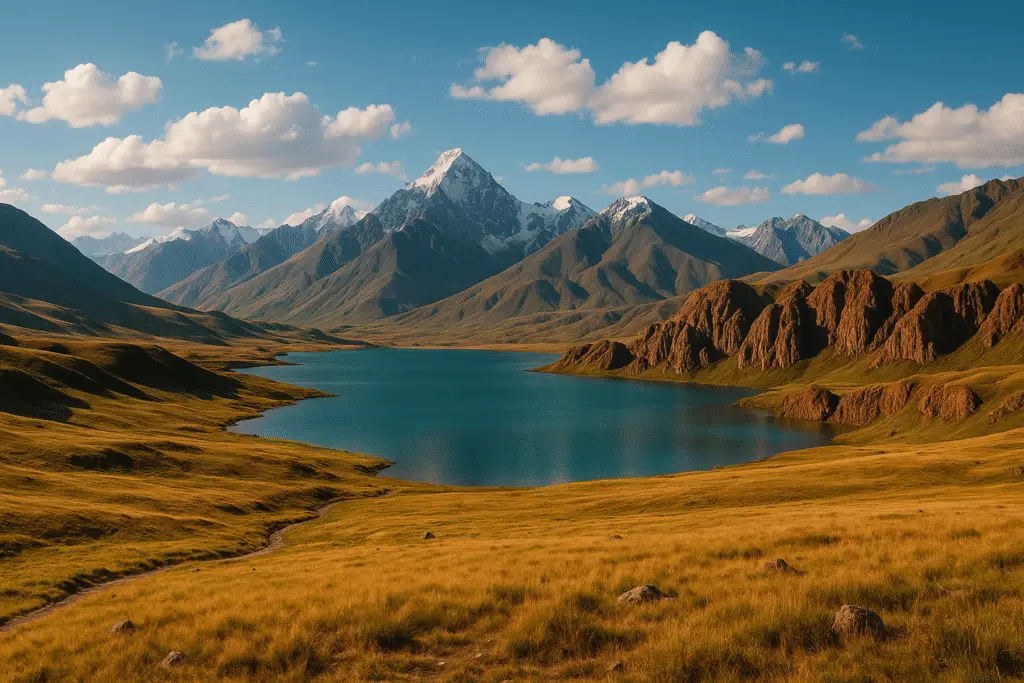
Explore mountains, nomadic culture, and timeless landscapes in the heart of Central Asia
Kyrgyzstan is one of the world’s most underrated travel destinations — a place where dramatic mountain ranges dominate the horizon, where turquoise alpine lakes sit untouched for centuries, and where nomadic traditions still shape everyday life. It is a country defined by nature and freedom. More than 80% of the landmass consists of mountains, giving Kyrgyzstan its nickname: the Switzerland of Central Asia. Yet unlike Europe, the landscapes here feel almost prehistoric, wild, and completely free of crowds. Traveling in Kyrgyzstan means stepping into a world of eagle hunters, yurt camps, vast summer pastures, and winding mountain roads that seem to disappear into the sky.
This guide explores Kyrgyzstan in depth — its landscapes, cities, culture, food, history, and everything travelers should know before visiting. It is written as a long, detailed text so you can place it directly on your country page.
A Land Shaped by Mountains
Kyrgyzstan’s identity is built around the Tien Shan mountain range, which runs across most of the country like a giant spine. These mountains rise sharply from valley floors, creating a dramatic world of snow-covered peaks, deep gorges, glaciers, and alpine meadows. The landscapes feel almost endless, with passes that climb to 3500 or even 4000 meters, connecting remote towns where life hasn’t changed much in generations.
What makes Kyrgyzstan special is the accessibility of these landscapes. Even travelers with limited outdoor experience can hike to mountain lakes, ride horses on the high pastures, or sleep in traditional yurts hosted by shepherd families. Tourism is still young here, which means you often have entire valleys, viewpoints, or alpine lakes to yourself. The unspoiled nature and peaceful atmosphere make it an ideal destination for travelers seeking authenticity, adventure, and solitude.
Despite being landlocked, Kyrgyzstan feels alive with water — from the monumental Issyk-Kul Lake to crystal-clear rivers flowing through the mountain gorges. Combined with the warmth of the Kyrgyz people, the fusion of nomadic culture, and the legacy of the Silk Road, the country offers far more than just breathtaking scenery.
History and Cultural Background
Kyrgyzstan’s story stretches back thousands of years, shaped by migration, nomadism, and the great trading routes that once connected China with the Middle East and Europe. The early Kyrgyz tribes were traditionally nomadic, moving across the highlands with their livestock through the seasons. Unlike many other Central Asian nations, this nomadic identity remained strong. Even today, you can see shepherd families living in yurts on the summer pastures.
Throughout the early centuries, Kyrgyz groups lived across the central Siberian region before gradually settling around the Tien Shan region. During the Silk Road era, Kyrgyz territory became an important link for merchants traveling between Kashgar, Samarkand, and farther west. Caravanserais, old trade roads, and markets developed, giving modern Kyrgyzstan touches of Persian, Turkic, and Chinese influence.
In the 19th century, the Russian Empire expanded into Central Asia and incorporated the Kyrgyz lands. Later, during the Soviet era, the nomadic lifestyle was challenged as the USSR pushed for collectivization, settlement, and industrial development. Despite these changes, Kyrgyzstan preserved much of its cultural heritage — felt crafts, horseback games, traditional music, and unique cuisine.
In 1991, Kyrgyzstan became independent. Since then, it has positioned itself as the most open and traveler-friendly country in the region, with visa-free entry for many nationalities and a strong focus on sustainable, community-based tourism.
Geography: Mountains, Alpine Lakes, and Endless Vistas
Kyrgyzstan’s geography is dominated by the Tien Shan, one of the world’s largest mountain systems. The peaks in the country often exceed 4,000 meters, and some of the highest — like Peak Pobeda and Khan Tengri — rise above 7,000 meters. This makes Kyrgyzstan a paradise for trekkers, mountaineers, climbers, and photographers.
The country’s most famous natural wonders include Issyk-Kul Lake, Ala-Kul Lake, Son-Kul Lake, the Alamedin and Ala-Archa valleys near Bishkek, and the red sandstone formations of Jeti-Oguz. These places offer a mix of dramatic landscapes: alpine meadows, glacial lakes with impossibly blue water, red cliffs, waterfalls, and vast open plains.
Because Kyrgyzstan has such diverse elevations, the climate also varies significantly. Summers are warm in the valleys but cool and fresh in the mountains. Winters can be harsh, but the snow transforms the landscapes into a magical, white paradise. This variety makes Kyrgyzstan a year-round destination.
Bishkek: A Capital Between Mountains and History
Bishkek is usually the first stop for travelers entering the country. Unlike other capitals, it is relatively calm, spacious, and surrounded by impressive mountain views. The city offers wide boulevards, large parks, Soviet-era architecture, and modern cafés. It’s not a metropolis of global landmarks, but it is an excellent base for day trips and for experiencing local culture.
Ala-Too Square serves as the heart of the city, with fountains, monuments, and open spaces where children play and families gather. The State History Museum and the iconic statue of Manas (the legendary Kyrgyz hero) give insight into the nation’s identity. Osh Bazaar on the west side of the city is a vibrant, colorful market filled with spices, fruits, nuts, fresh breads, and traditional clothing.
Green spaces are everywhere in Bishkek, and on clear days you can look south and see the towering peaks of the Ala-Too mountains. Only 40 minutes from the city lies the Ala-Archa National Park — a dramatic valley with waterfalls, glaciers, and hiking routes.
Issyk-Kul Lake: The Pearl of Kyrgyzstan
No place symbolizes Kyrgyzstan’s beauty more than Issyk-Kul, one of the world’s largest and highest lakes. Surrounded by snow-covered mountains, it stays ice-free year-round despite its high altitude. The lake is so vast that it almost feels like an inland sea, and its water shines in shades of deep blue and turquoise.
On the northern shore, towns like Cholpon-Ata offer beaches, summer resorts, and archaeological sites such as the petroglyphs — ancient rock carvings that date back thousands of years. The southern shore is more rugged and peaceful, featuring villages, hot springs, and incredible views. The landscapes on this side feel more authentic and untouched.
Issyk-Kul is also home to some of Kyrgyzstan’s best hikes, including the Ala-Kol trek in the Karakol region. The mix of lake views, mountain passes, and wildflower-filled valleys makes the region ideal for travelers who enjoy nature and adventure.
Karakol: Gateway to Alpine Treasures
Karakol is a charming town located near the eastern edge of Issyk-Kul. It has a friendly atmosphere, wooden houses, colorful gardens, and a fascinating history shaped by Russian settlers, Dungan communities, and explorers who passed through the area.
The town is most famous for its access to mountain adventures. Trails leading into the Karakol Valley take you through forests, rivers, and steep alpine slopes. The Ala-Kul Lake, with its brilliant turquoise color, is one of the highlights of the entire country. Reaching the lake involves a challenging climb, but the view from the top feels like stepping into another world.
Another iconic natural wonder near Karakol is the Jeti-Oguz Gorge, known for its deep red sandstone cliffs. The name means “Seven Bulls,” and the rocks are shaped in a way that resembles a group of giant bulls lying side by side. At sunrise, the red cliffs glow like fire, creating a magical scene.
Karakol also has cultural treasures, such as the wooden Dungan Mosque, which was built without any nails, and the Holy Trinity Orthodox Church, known for its green roofs and detailed architecture.
Son-Kul Lake: The Heart of Nomadic Life
Son-Kul is a remote, high-altitude lake located on a vast plateau surrounded by rolling mountains. At more than 3,000 meters above sea level, the lake is accessible only during the warmer months, usually from late May until mid-September.
Son-Kul is one of the best places to experience the traditional nomadic lifestyle. Shepherd families bring their livestock here for summer grazing, setting up yurt camps along the shoreline. The atmosphere is peaceful and timeless. Days are filled with the sound of horses galloping and the wind blowing across the grasslands. At night, the sky becomes completely dark, offering one of the clearest views of the Milky Way anywhere in the world.
Exploring Son-Kul often involves horseback riding, hiking, or simply watching daily life unfold — women preparing fresh bread, men training their horses, and children running freely across the open fields. Staying in a yurt, wrapped in thick felt blankets with a fire burning in the center, feels like stepping into a chapter of ancient history.
Naryn and the Road to Tash Rabat
South of Son-Kul lies the town of Naryn, which sits in a long valley surrounded by dramatic peaks. The landscapes here are more rugged and isolated, giving travelers a sense of being far away from civilization.
One of the region’s most iconic attractions is Tash Rabat, a well-preserved 15th-century caravanserai located in a remote valley near the Chinese border. This stone structure served as a resting place for Silk Road traders traveling with their caravans. The building is made of thick stone walls and features small, dark chambers that once provided shelter for travelers and their animals. The surrounding mountains create an almost mystical atmosphere, making Tash Rabat one of the country’s most unforgettable historical sites.
The area around Naryn is also home to the remote Ak-Sai region and the rugged At-Bashy mountains. These landscapes are perfect for adventurous travelers seeking hiking, horseback expeditions, and quiet nature retreats.
Osh: A City With Thousands of Years of History
While Bishkek is the modern capital, Osh is the cultural heart of the south. It is one of the oldest cities in Central Asia, with a history stretching back more than 3,000 years. Osh was a key stop on the Silk Road, and its famous Jayma Bazaar remains one of the busiest markets in the region.
The city’s defining landmark is Sulaiman-Too, a sacred mountain rising in the center of the urban area. It has been a pilgrimage site for centuries and is now recognized as a UNESCO World Heritage Site. Climbing to the top offers panoramic views of the city and the surrounding valley.
Compared to the northern regions, Osh has a different cultural atmosphere — more Uzbek influence, diverse communities, and a warmer climate. From Osh, travelers can explore the leafy Fergana Valley or take the adventurous road north towards Kazarman, which winds through some of the most dramatic mountain passes in the country.
Nature and Wildlife
Kyrgyzstan’s natural environment supports a variety of wildlife thanks to its untouched ecosystems. Snow leopards still roam the higher altitudes, though they are rarely seen. Ibex, Marco Polo sheep, wolves, golden eagles, lynxes, and foxes inhabit the mountains, valleys, and forests.
Birdlife is impressive, especially in the Issyk-Kul region, where wetlands and lakes attract species such as herons, eagles, and migratory birds. The country’s alpine meadows bloom with wildflowers during summer, turning the highlands into colorful tapestries of purple, yellow, and white.
Because the country remains lightly populated and mostly undeveloped, its natural habitats are preserved in a way that is becoming increasingly rare in other parts of the world.
Nomadic Culture and Traditions
The soul of Kyrgyzstan lies in its nomadic heritage. Traditions are deeply rooted, and even as modern life grows in the cities, the countryside preserves customs that have survived for centuries.
Hospitality is central to Kyrgyz culture. Guests are welcomed warmly and often offered tea, bread, dried fruit, or fresh dairy. The yurt — a circular tent made of felt and wooden frames — remains a powerful symbol of identity. It represents mobility, freedom, and a close connection to nature.
Kyrgyz horseback culture is another defining element. Traveling by horse was once the only way to navigate the mountain terrain, and today horseback riding remains an important part of daily life. Traditional games such as kok-boru (a horseback game similar to polo, using a goat carcass) are still practiced during festivals and celebrations.
Craftsmanship is also significant. Felt carpets, colorful textiles, handmade instruments, and decorated leather items reflect the artistic heritage of the Kyrgyz people. The patterns often have symbolic meanings tied to nature, animals, or spiritual beliefs.
Cuisine: Mountain Flavors and Simple Ingredients
Kyrgyz cuisine is hearty, rich, and shaped by the nomadic lifestyle. Meals traditionally consist of meat, dairy, and bread, often prepared with simple but delicious flavors.
Beshbarmak is considered the national dish — a combination of boiled meat served over flat noodles with onions. Lagman, a noodle dish with meat and vegetables, shows the influence of neighboring cultures, especially the Uyghurs. Other popular dishes include plov (fried rice with vegetables and meat), manty (steamed dumplings), and samsa (baked pastries filled with meat or vegetables).
Dairy plays an important role, especially in rural regions. Kumis — fermented mare’s milk — is a traditional drink believed to have health benefits. Travelers will also encounter curd snacks, yogurt, and fresh bread baked in traditional clay ovens.
Tea is served everywhere, often accompanied by small treats. Meals in Kyrgyzstan are not just about food but also about hospitality and community.
Transportation and Travel Logistics
Traveling through Kyrgyzstan is surprisingly easy compared to many mountain countries. Roads connect most cities and regions, although some passes may close during winter due to snow.
Buses and minibuses (called marshrutkas) operate between major towns. Taxis and shared taxis are also common for longer distances. For reaching remote areas like Son-Kul or high mountain valleys, travelers may need a private driver or a guided tour, especially early or late in the season.
Domestic flights connect Bishkek with Osh, reducing travel time between north and south. However, the most scenic and memorable journeys happen on the road, with mountain passes offering incredible vistas.
Internet access is widely available, especially in cities, and SIM cards are inexpensive. In rural areas, coverage can be limited, adding to the sense of adventure.
When to Visit
The best time to visit Kyrgyzstan is from June to September, when the mountains are accessible, the weather is warm, and the yurt camps are open. July and August are peak months for trekking, horseback riding, and exploring high-altitude regions.
Spring (April–May) and autumn (late September–October) offer cooler temperatures and beautiful colors, though some mountain routes may be closed.
Winter (November–March) turns the country into a snowy wonderland. Ski resorts near Karakol attract winter sports enthusiasts, and the mountains look especially magical under fresh snow.
Why Kyrgyzstan Should Be on Your Travel Bucket List
Kyrgyzstan stands out because it is still pure — a country untouched by mass tourism, where nature feels limitless and traditions remain authentic. Travelers who seek wilderness, raw beauty, and cultural depth will find everything they dream of here. Whether you’re hiking through alpine valleys, sleeping in a yurt under a starry sky, or exploring ancient Silk Road landmarks, the experience feels genuinely meaningful.
The sense of freedom is overwhelming. There are few borders, few restrictions, and endless places to explore. Every valley has its own character, every lake has its own color, and every village has its own charm. Kyrgyzstan combines adventure with tranquility, making it a destination that stays with you long after you leave.
Conclusion
Kyrgyzstan is not just a place to visit — it is a place to feel. The mountains shape the horizon, the nomadic spirit shapes the culture, and the quiet beauty shapes your memories. It is a land where modern cities and ancient traditions coexist, where every journey brings a new landscape, and where travelers find something rare: authenticity in its purest form.
Whether you dream of hiking to alpine lakes, riding horses across high pastures, discovering Silk Road history, or simply escaping into pristine nature, Kyrgyzstan offers an unmatched experience. This vast, peaceful, breathtaking country deserves a place on every traveler’s bucket list.
 Related Articles
- Kakslauttanen Arctic Resort
- Top 10 Most Unique Places to Stay in Europe
- 10 Incredible Castles Around the World