
🇱🇦 Laos Travel Guide
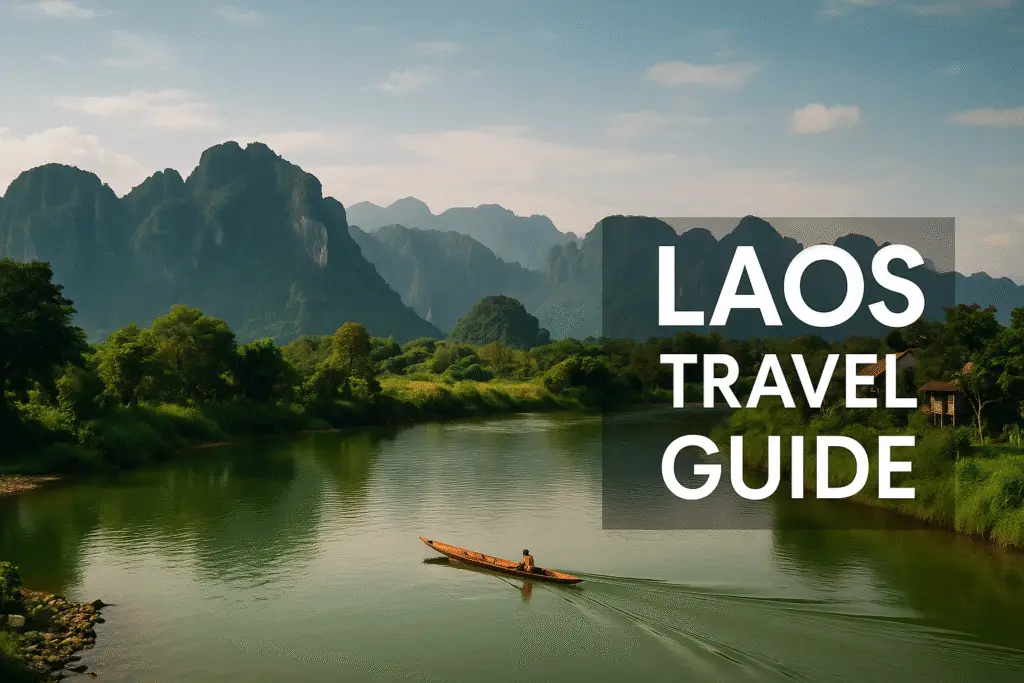
A deep, atmospheric journey through misty mountains, ancient temples, slow rivers, golden sunsets, and Southeast Asia’s most peaceful culture.
Laos is one of the most enchanting countries in Southeast Asia — a land defined by mountain silhouettes fading into the horizon, rivers that curve gently through valleys, saffron-robed monks walking silently at dawn, waterfalls cascading into turquoise pools, and a pace of life so slow and serene that travelers often feel as if time has stopped. Unlike its neighbors Thailand, Vietnam, and Cambodia, Laos remains quiet, calm, and untouched. No big crowds, no chaotic traffic, no overwhelming tourism — just authenticity, nature, spirituality, and gentle hospitality.
Traveling through Laos is not about rushing from attraction to attraction. It is about drifting along the Mekong River, wandering through ancient temples, sitting in wooden cafés overlooking mountains, swimming under waterfalls, exploring rural villages, and connecting with local life. The country’s modesty, silence, and natural beauty create a deeply emotional travel experience.
This long-form guide provides one of the most complete overviews of Laos available online — covering geography, history, culture, cities, rivers, temples, nature, food, mountain regions, local life, and why Laos is one of the world’s most magical hidden gems.
1. The Quiet Soul of Southeast Asia
Laos has a unique rhythm. Everything moves slowly — the boats, the bicycles, the footsteps, even the conversations. People greet you with smiles that feel genuine, not commercialized. Monks line the streets in the early morning, collecting alms from local families. Farmers work barefoot in emerald rice paddies. Water buffalo walk freely. Children laugh and wave at travelers. And across the country, the Mekong River flows endlessly, shaping the land and the lives of the people.
In Laos, tranquility is not something you search for — it surrounds you everywhere. This atmosphere makes Laos a perfect destination for travelers who want to rest, reconnect with nature, and experience culture without rush or pressure.
2. Geography — Mountains, Rivers, Waterfalls & Remote Beauty
Laos is the only landlocked country in Southeast Asia, bordered by Thailand, Vietnam, Cambodia, China, and Myanmar. But despite lacking a coast, its landscapes are among the most breathtaking in Asia.
Mountains & Highlands
More than 70% of Laos is mountainous. The northern region around Luang Prabang, Luang Namtha, and Muang Ngoi is filled with jagged limestone peaks, jungle valleys, and dramatic cliffs. Sunsets over these mountains create silhouettes layered in purple and gold — incredibly photogenic and peaceful.
The Mekong River
The lifeline of the country. It flows through most major towns, including Luang Prabang, Vientiane, Vang Vieng, and Champasak. Boat trips on the Mekong define the Laos travel experience.
Waterfalls & Blue Lagoons
Laos is full of waterfalls — huge, gentle, dramatic, hidden, small, or monumental. The south is home to some of Southeast Asia’s widest waterfalls, while the north has turquoise pools surrounded by forest.
Caves & Karst Landscapes
Vang Vieng and Khammouane province are famous for dramatic karst formations, huge cave systems, and underground rivers.
Climate
– Dry season: November to April
– Wet season: May to October
– Coolest months: December–January
– Hottest months: March–May
The best travel time is during the dry cooler season.
3. History — Kingdoms, Buddhism & Resilience
Laos has a deep history shaped by kingdoms, tribal cultures, Buddhism, colonialism, and conflict.
The Lao Kingdoms
The most influential was Lan Xang (“Land of a Million Elephants”), founded in the 14th century. It created much of the country’s cultural identity, architecture, and Buddhist heritage.
French Colonial Influence
In the late 19th and early 20th centuries, Laos became part of French Indochina. Streets, bakeries, and architecture in cities like Luang Prabang and Vientiane show this legacy.
Modern History
During the 20th century, Laos experienced war, revolution, and political change. Today it is a peaceful, stable nation focused on tradition, nature, and cultural preservation.
Despite a turbulent past, Lao culture has survived with dignity, and the people remain gentle and welcoming.
4. Culture — Humility, Buddhism & the Lao Way of Life
Laotian culture revolves around kindness, respect, community, and balance.
Buddhism
Temples are everywhere — from glittering golden stupas to wooden riverside monasteries. Monks play a central role in community life, and their morning alms ritual is one of the most sacred traditions.
Family & Community
Families are close. Social life often revolves around shared meals, farming, festivals, and temple events.
Village Lifestyle
Most Laotians live in rural villages with wooden houses, rice paddies, livestock, and communal traditions. Travelers often find the village atmosphere one of the most meaningful experiences in Laos.
Pace of Life
Everything is slow. Shops open late. Boats move gently. People don’t rush. This is the Laos charm — calm, unhurried, peaceful.
5. Luang Prabang — The Spiritual Heart of Laos
Luang Prabang is one of Southeast Asia’s most magical towns — a place where French colonial villas meet golden temples, where monks in saffron robes walk down quiet streets, and where sunsets illuminate the Mekong River in shimmering gold.
UNESCO Heritage
The entire town is a protected World Heritage Site. Streets are lined with traditional Lao wooden houses, French colonial buildings, and dozens of temples.
Temples of Luang Prabang
Wat Xieng Thong is the crown jewel — a masterpiece of Lao architecture with golden patterns, sweeping roofs, and colorful mosaics.
Alms-Giving Ceremony
Every dawn, the town becomes silent as monks collect offerings. Done respectfully, it’s one of the most spiritual experiences in Asia.
Kuang Si Waterfall
A magical multi-layered turquoise waterfall surrounded by jungle. Swimming in the pools feels refreshing and dreamlike.
Mount Phousi
A hill in the center of town offering panoramic sunset views over mountains and rivers.
Night Markets
Crafts, textiles, lanterns, food — full of color and friendly sellers.
Luang Prabang is enchanting, peaceful, and deeply cultural.
6. Vang Vieng — Mountains, Blue Lagoons & Pure Nature
Once known for backpacker nightlife, Vang Vieng has transformed into one of Asia’s most stunning nature-based destinations.
Landscape
Towering limestone cliffs rise dramatically above lush rice fields. The scenery looks like a fantasy movie.
Blue Lagoons
Pools of turquoise water hidden among forests and caves.
Caves
Large caves with underground rivers and stalactite halls.
Nam Song River
Kayaking, tubing, and sunset views with mountains silhouetted in the background.
Hot-air Ballooning
Floating above the cliffs at sunrise is one of the most beautiful experiences in Southeast Asia.
Vang Vieng is perfect for nature lovers, photographers, and adventure travelers.
7. Vientiane — A Quiet, Friendly Capital
Vientiane is one of the most peaceful capitals in the world — small, relaxed, and easy-going.
Pha That Luang
A huge golden stupa and the symbol of Laos. It glows beautifully at sunrise and sunset.
Patuxai Monument
The Lao version of the Arc de Triomphe, with panoramic views from the top.
Riverside Promenade
A peaceful waterfront lined with food stalls, night markets, and sunset views over Thailand.
Temples
Wat Sisaket, Wat Si Muang, and Haw Phra Kaew hold centuries of stories, statues, and sacred relics.
Vientiane isn’t loud or flashy — it is calm, atmospheric, and charming.
8. Northern Laos — Villages, Trekking & Mountain Culture
Northern Laos offers some of the best trekking, hill tribe encounters, and rural landscapes in Asia.
Luang Namtha
Jungle trekking, tribal villages, eco-lodges, and river trips.
Muang Ngoi
A remote village accessible by boat only — mountains, rice fields, and total serenity.
Nong Khiaw
A breathtaking mountain town with viewpoints, boat trips, and hiking trails.
Life here is simple, natural, and deeply traditional.
9. Southern Laos — Waterfalls, Islands & Ancient Ruins
The south of Laos is full of nature, waterfalls, and cultural treasures.
Champasak
Home to Wat Phou, an ancient Khmer temple complex older than Angkor Wat.
Bolaven Plateau
Highland forests, coffee farms, and huge waterfalls like Tad Fane and Tad Yuang.
4000 Islands (Si Phan Don)
A river archipelago where travelers relax in wooden huts, watch sunsets, cycle through villages, and see the rare Irrawaddy dolphins.
Southern Laos is quiet, warm, and full of natural beauty.
10. Laos Cuisine — Fresh, Herby, Fragrant & Comforting
Laotian food is subtle, herbal, and refreshing.
Sticky Rice (Khao Niao)
The foundation of Lao cuisine — eaten with almost every meal.
Laap (Larb)
A minced meat salad with herbs, lime, and roasted rice powder.
Tam Mak Hoong
The Lao version of papaya salad — spicy, sour, and delicious.
Khao Soi & Noodle Soups
Comforting bowls perfect for breakfast.
Grilled Fish
Often prepared with lemongrass, ginger, herbs, and lime.
Food in Laos is humble, organic, and incredibly flavorful.
11. Why Laos Belongs on Your Bucket List
✔ Breathtaking mountain landscapes
✔ Golden temples and spiritual traditions
✔ Quiet riverside towns
✔ Ethnic diversity and authentic village life
✔ Waterfalls and turquoise pools
✔ Incredible value for travelers
✔ Peaceful atmosphere
✔ Warm, gentle, welcoming people
Laos offers one of the most relaxing, meaningful, and nature-filled travel experiences in the world. It is not a place to rush — it is a place to breathe, reflect, and connect.
 Related Articles
- Kakslauttanen Arctic Resort
- Top 10 Most Unique Places to Stay in Europe
- 10 Incredible Castles Around the World