
🇵🇭 Philippines Travel Guide
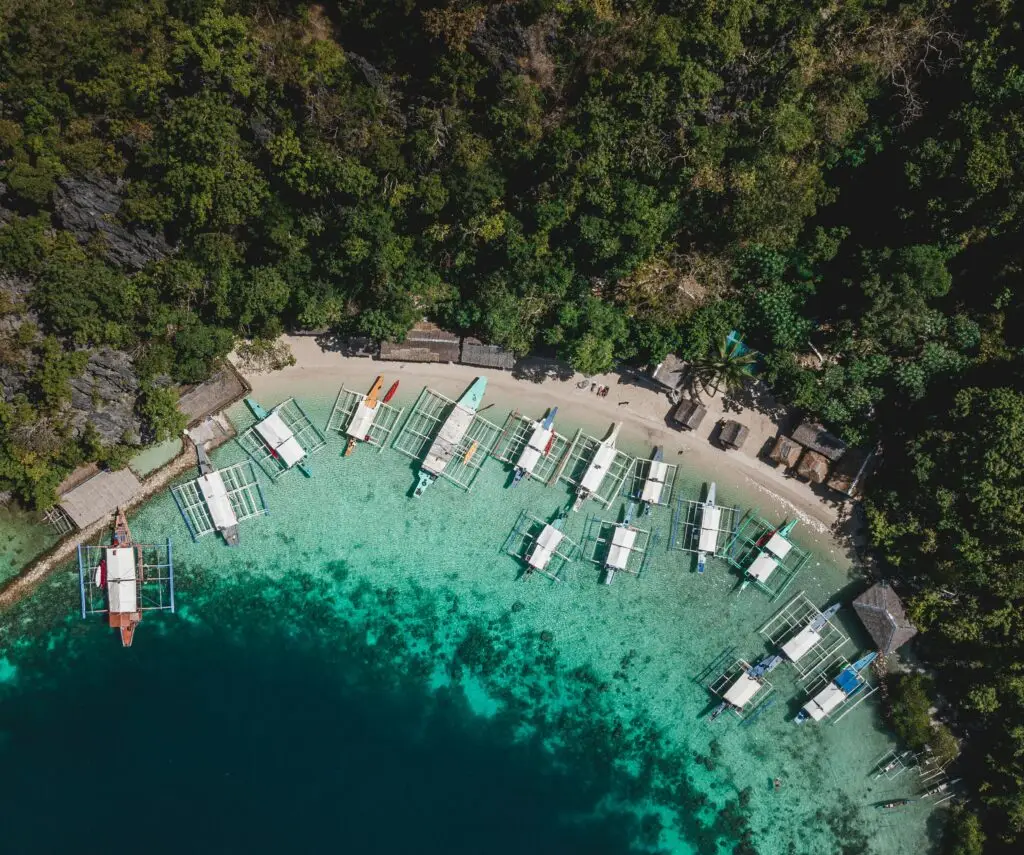
Explore islands of impossible beauty, emerald rice terraces, volcanoes, coral kingdoms, and warm Filipino hospitality
Philippines Travel Guide It is a land where emerald rice terraces climb mountains like stairways to the sky, where underground rivers twist through cathedral-like chambers, where volcanoes simmer with ancient power, and where beaches glow with powder-white sand and crystal-clear water. The Philippines feels wild and free, shaped by natural wonders and the vibrant, joyful spirit of its people.
For many travelers, the Philippines is a place of firsts: the first time seeing water so clear it looks unreal, the first time swimming with giant whale sharks, the first time hearing the deep hum of jeepneys passing through tropical streets, and the first time feeling the genuine warmth and kindness of Filipino hospitality. It is a country that welcomes you like family — with smiles, laughter, and an effortless sense of connection. The Philippines doesn’t just offer beauty; it offers heart.
This guide explores the entire country in extraordinary detail — the islands, culture, history, landscapes, food, people, festivals, transportation, and everything that makes the Philippines a world-class travel destination.
1. Introduction – A Country of Islands, Stories, and Sunlight
The Philippines stretches across the western Pacific like a giant necklace of emeralds and turquoise gems. The islands vary dramatically: some are covered in thick tropical jungle, others shaped by cliffs and limestone karsts rising sharply from blue water, others lined with beaches so white they almost glow. Each island feels like its own universe, shaped by waves, volcanic forces, coral reefs, and centuries of human history.
But it is not just nature that defines the Philippines. Filipinos play an essential role in shaping the country’s identity. Known worldwide for their warmth, humor, musical talent, and resilience, Filipinos create the welcoming atmosphere that sets the country apart. Conversations are lively, smiles are genuine, and strangers quickly become friends. Hospitality is deeply rooted in culture — offering food, help, or laughter comes naturally.
The Philippines also carries a fascinating blend of cultural influences. It has indigenous foundations, centuries-old Asian traditions, Spanish colonial architecture, American cultural touchpoints, and local customs that make daily life feel unique. This combination makes the Philippines both familiar and completely new to travelers.
2. Geography – A Vast Archipelago of 7,600+ Islands
The Philippines is one of the world’s largest archipelagos. The islands are spread across three major regions:
Luzon – the northern island group, home to Manila, volcanoes, rice terraces, and historical sites.
Visayas – the central region, filled with beaches, coral reefs, festivals, and island-hopping paradise.
Mindanao – the southern region, known for mountains, lakes, ethnic diversity, and rich cultural traditions.
The landscape of the Philippines is incredibly varied. One day you can hike through cool mountain forests surrounded by pine trees; the next day you can snorkel on a vibrant coral reef or trek across volcanic slopes.
The Waters
The seas around the Philippines are some of the most biodiverse in the world. Coral reefs, seagrass beds, and deep ocean trenches create a heaven for marine life. Whale sharks, manta rays, turtles, sardine shoals, and countless fish species thrive here.
The Mountains
From the Cordillera Mountains in the north to the volcanic peaks of Luzon, Visayas, and Mindanao, the Philippines has dramatic mountain scenery. Many areas are covered in rice terraces carved into hillsides more than 2,000 years ago.
The Volcanoes
The Philippines lies on the Pacific Ring of Fire, giving it spectacular volcanoes like Mount Mayon, Taal Volcano, and Mount Pinatubo. These volcanoes have shaped the land for millions of years.
The Beaches
White sand, pink sand, volcanic black sand — the Philippines has it all. The coastline stretches for more than 36,000 kilometers, creating endless beach opportunities.
3. History & Identity – A Story of Resilience
Precolonial Philippines
Before European influence, the islands were home to rich indigenous cultures, maritime traders, and sultanates in the south. Early Filipinos lived in coastal barangays, practiced animism or Islam, and traded with China, India, and Southeast Asia.
Spanish Colonial Era (1521–1898)
Spain ruled the Philippines for more than 300 years. Catholicism became widespread, baroque churches were built, and many traditions, foods, and celebrations developed under Spanish influence. Town plazas, fiestas, and surnames reflect this era.
American Period (1898–1946)
Education, English language use, and democratic ideals expanded during American administration. Many aspects of modern Filipino culture — basketball, school systems, and certain foods — originated in this period.
Japanese Occupation and Independence
World War II brought suffering and heroism. After the war, the Philippines finally gained full independence in 1946.
Identity Today
The Philippines is a place where ancient traditions blend with Spanish heritage, American culture, and Asian connections. This mix makes the country remarkably unique.
4. Filipino Culture – Warmth, Family, and Celebration
Filipino culture is colorful, expressive, and community-oriented. Family is at the center of everything, and gatherings often include extended relatives, neighbors, and friends.
Hospitality
Filipinos are famous for welcoming guests with food and conversation. Even travelers often receive personal kindness — directions, help, or just a friendly greeting.
Festivities
Every region, town, and island has festivals known as fiestas, featuring parades, costumes, traditional dancing, street food, and fireworks. Some of the most famous include:
– Sinulog (Cebu)
– Dinagyang (Iloilo)
– Ati-Atihan (Aklan)
– Pahiyas (Lucban)
– Kadayawan (Davao)
Religion
Catholicism is dominant, but Islam is important in the south, and indigenous beliefs remain alive in some mountain regions.
Music & Dance
Filipinos love music — karaoke is almost a national sport. Traditional dances like Tinikling reflect centuries-old customs.
5. Major Regions & Top Destinations (Deep Exploration)
This section explores the Philippines island by island — long, descriptive, atmospheric.
LUZON — The Northern Giant
Luzon is the country’s largest island, home to the capital Manila, breathtaking mountain landscapes, rice terraces, volcanoes, and historical towns.
Manila — Chaos, Culture, History, and Urban Life
Manila is vibrant, chaotic, alive, and full of contrasts. Traffic is heavy, energy is high, and history flows through every street. Intramuros, the old walled city, is filled with Spanish-era architecture, cobblestone streets, and colonial churches. Fort Santiago offers insight into revolution and wartime stories. Nearby, Rizal Park honors national hero José Rizal.
Modern Manila glows with skyscrapers, shopping malls, and nightlife. Makati and Bonifacio Global City feel modern and international, while markets like Divisoria and Quiapo burst with local energy.
Manila may be overwhelming at first, but it is the cultural heart of the nation — a blend of past, present, and future.
Tagaytay & Taal Volcano
Just a short drive from Manila, Tagaytay offers cool climate and stunning views of Taal Volcano — a volcano within a lake within a volcano. The landscape is surreal, peaceful, and perfect for relaxing weekends.
Banaue & Batad Rice Terraces
High in the Cordillera Mountains lie the 2,000-year-old rice terraces carved entirely by hand. The Batad amphitheater terraces resemble giant green stairways cascading down the mountains. Hiking here feels like stepping back in time.
Village life remains traditional, with wooden houses, woven clothing, and rituals preserved for generations.
Sagada — Caves, Mountains, and Hanging Coffins
Sagada is a peaceful mountain town famous for its hanging coffins — a centuries-old burial tradition. Misty pine forests, limestone caves, waterfalls, and cool mountain air create a tranquil escape.
Baguio — The Cool Mountain City
Known as the “Summer Capital,” Baguio offers cool temperatures, pine trees, strawberry farms, and mountain culture. It blends colonial history with modern arts, cafés, and universities.
Ilocos Region — Windmills, Heritage & Sand Dunes
Ilocos Norte and Ilocos Sur offer Spanish colonial towns, rugged coastlines, windmill farms, and unique regional cuisine. Vigan, a UNESCO Heritage City, has preserved Spanish-era streets lined with wooden houses and stone mansions.
Bicol & Mayon Volcano
Bicol is home to the perfectly symmetrical Mayon Volcano, often considered the world’s most beautiful cone. The landscape around it is lush and fertile. Nearby beaches, whale sharks in Donsol, and spicy cuisine complete the region’s charm.
VISAYAS — The Heart of the Archipelago
The Visayas are the central islands — famous for beaches, island-hopping, crystal-clear water, festivals, diving, and friendly coastal towns.
Cebu — History, Beaches, and Whale Sharks
Cebu is a major travel hub offering a perfect mix of city and nature. Cebu City holds historical landmarks like Magellan’s Cross and Fort San Pedro. South Cebu is famous for Kawasan Falls, canyoneering adventures, and whale sharks in Oslob. North Cebu offers island escapes like Bantayan and Malapascua — home of the thresher shark dive.
Bohol — Chocolate Hills & Tiny Tarsiers
Bohol’s landscape is iconic thanks to the Chocolate Hills — thousands of smooth, symmetrical hills rising from the earth. The island is also home to the tiny tarsier, one of the world’s smallest primates. Panglao Island offers beaches, snorkeling, and diving.
Boracay — White Beach Paradise
Once overcrowded, Boracay has undergone major restoration. Today it offers one of the purest white-sand beaches on the planet. The water is clear, the nightlife vibrant, and the sunsets legendary.
Iloilo — Culture, Architecture, and Dinagyang Festival
Iloilo blends colonial heritage with modern development. The city is historic, artistic, clean, and known for its culinary excellence. The nearby island of Guimaras produces some of the world’s sweetest mangoes.
Negros — Waterfalls, Marine Sanctuaries, and Heritage
Negros offers two major highlights:
Dumaguete — a laid-back university town near Apo Island’s famous sea turtles.
Bacolod — the City of Smiles, home to the MassKara Festival.
The island’s volcanic soil creates lush landscapes, sugar plantations, and waterfalls.
Siquijor — The Mystic Island
Siquijor is known for magic, folklore, waterfalls, and relaxing beaches. Locals share stories of healers and traditions preserved for centuries. Despite the legends, the island is extremely peaceful and friendly.
MINDANAO — The Southern Frontier
Mindanao is wild, diverse, mountainous, and culturally rich. It is often misunderstood but offers some of the most beautiful landscapes in the country.
Davao — Home of Mount Apo
Davao is clean, organized, and home to Mount Apo, the highest peak in the Philippines. The region also features Eden Nature Park, Samal Island, and the Philippine Eagle Center.
Camiguin — The Island Born of Fire
Camiguin is covered in volcanoes, hot springs, waterfalls, and white sandbars. Although small, it is one of the most scenic islands in the country.
Siargao — The Surfing Capital
Siargao has become one of the Philippines’ most beloved islands — not just for surfers, but for travelers seeking crystal-clear water, palm-lined roads, lagoons, mangroves, and peaceful island life.
NATURE & WILDLIFE — A BIODIVERSITY HOTSPOT
The Philippines is part of the Coral Triangle, one of the world’s richest marine biodiversity zones. Underwater life includes colorful reefs, sardine shoals, giant clams, thresher sharks, hammerheads, manta rays, whale sharks, dolphins, turtles, and thousands of fish species.
On land, wildlife includes tarsiers, Philippine eagles, monitor lizards, flying lemurs, and endemic birds.
Mountain forests, mangroves, coral reefs, and tropical jungles create endless opportunities for exploration.
FILIPINO CUISINE — A Delicious Blend of Cultures
Filipino food combines indigenous flavors with Asian, Spanish, and American influences.
Popular dishes include:
– adobo (soy-vinegar braised chicken or pork)
– sinigang (sour tamarind soup)
– lechon (crispy roasted pig)
– pancit (noodles)
– halo-halo (shaved ice dessert)
– sisig (crispy pork dish)
Street food is everywhere — skewers, barbecue stands, and snacks like banana cue or kwek-kwek fill the air with irresistible aromas.
TRANSPORTATION — HOW TO GET AROUND
Traveling through the Philippines means combining flights, ferries, boats, jeepneys, and tricycles.
Domestic flights connect distant islands. Ferries are common for shorter stretches. Jeepneys are colorful, iconic minibuses found across the country. Tricycles serve as local taxis.
WHEN TO VISIT — WEATHER & SEASONS
Dry season: November–May (best for travel)
Wet season: June–October (still possible, but wetter)
Typhoons mostly occur July–September
But even during rainy season, many regions remain beautiful.
WHY THE PHILIPPINES BELONGS ON YOUR BUCKET LIST
Because it offers everything:
⟡ Beaches that look unreal
⟡ Some of the world’s best diving
⟡ Volcanoes and mountain views
⟡ Wildlife encounters
⟡ Hidden lagoons and caves
⟡ Rich culture and warm hospitality
⟡ Affordable travel
⟡ Endless island adventures
The Philippines is a place that stays with you — in its beauty, its people, and its stories. Every sunset feels golden, every island feels special, and every experience feels genuine.
 Related Articles
- Kakslauttanen Arctic Resort
- Top 10 Most Unique Places to Stay in Europe
- 10 Incredible Castles Around the World