
🇰🇷 South Korea Travel Guide
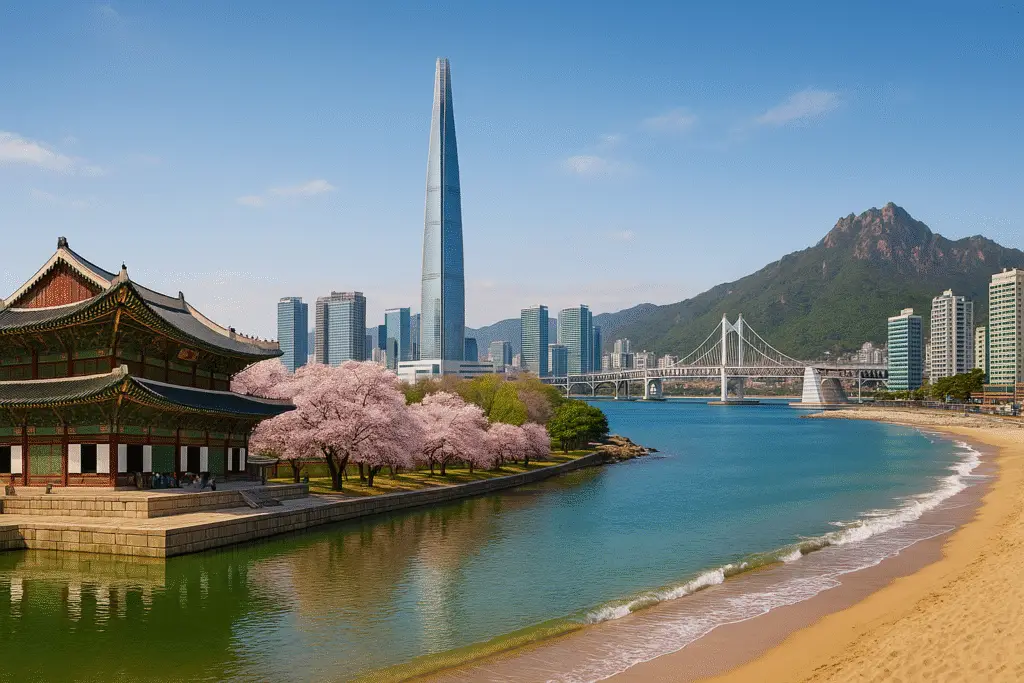
A complete, immersive, long-form exploration of the Land of Morning Calm
South Korea is a nation where ancient kingdoms, high-tech cities, cinematic landscapes, and deep traditions blend into a uniquely vibrant cultural identity. Few countries evolve as quickly as Korea — a place where neon-lit skyscrapers stand beside centuries-old palaces, where world-famous K-pop groups share space with Buddhist temples hidden in misty mountains, and where food markets burst with flavors that have shaped generations.
Today, South Korea is one of Asia’s most exciting destinations — safe, modern, scenic, and endlessly fascinating. Whether you are wandering the traditional hanok villages of Seoul, hiking emerald mountains in autumn foliage, relaxing on Jeju’s volcanic shores, or exploring coastal cities like Busan, the country has a sense of rhythm and energy that captivates travelers.
This is a complete travel guide to South Korea — detailed, rich, atmospheric, and designed as a full country page for your website.
1. Introduction — The Pulse of a Modern, Ancient Nation
South Korea is a land of contrasts. Its cities are among the most futuristic in the world, filled with technology, style, and innovation, yet the nation remains deeply rooted in Confucian values, historical traditions, and a cultural heritage stretching back thousands of years.
Travelers arriving in Seoul often feel the intensity immediately — subway systems that work flawlessly, glittering shopping districts, street food vendors grilling spicy rice cakes, and music spilling from cafés and fashion stores. But step beyond the urban energy and you encounter tranquil rice fields, peaceful temples, fishing villages, volcanic islands, and mountain trails that reveal a quieter Korea.
What makes Korea unique is this balance: the ultramodern and the ancient, the energetic and the meditative, the global and the deeply local. It is a country with incredible diversity packed into a compact, easy-to-explore territory.
2. Geography & Climate — A Land of Mountains, Coasts, and Islands
South Korea occupies the southern half of the Korean Peninsula, bordered by the Yellow Sea to the west, the East Sea to the east, and the Korea Strait to the south. Much of the interior is mountainous — nearly 70% of the land is forest or highlands — which shapes both weather patterns and outdoor activities.
Mountains
Korea is a hiker’s paradise. Ridges and peaks run through the nation, creating national parks, temples hidden in valleys, and panoramic views. The Taebaek Mountain Range dominates the east, while volcanic formations shape Jeju Island.
Coasts & Islands
South Korea has thousands of small islands scattered along its southern coast, giving it a rugged, diverse shoreline. The most famous island is Jeju, but Penang-do, Namhae, Odongdo, and Geoje offer equally scenic landscapes.
Climate
South Korea experiences four distinct seasons:
Spring (March–May): Cherry blossoms, mild temperatures, soft landscapes.
Summer (June–August): Hot, humid, lively, with monsoon rains.
Autumn (September–November): Crystal-clear skies and some of Asia’s best foliage.
Winter (December–February): Cold, snowy, ideal for skiing.
Autumn is often considered the best season — golden ginkgo trees, fiery red maples, cool air, and clear visibility across mountains make the country breathtaking.
3. A Deep Historical Overview — From Ancient Kingdoms to Global Influence
To understand today’s South Korea, you need to appreciate its extraordinary history.
The Three Kingdoms (1st Century BCE – 668 CE)
Goguryeo, Baekje, and Silla shaped early Korean culture, warfare, art, and architecture. Remains of fortresses, temples, and royal tombs still exist and form UNESCO heritage sites.
Unified Silla & Goryeo
Silla united the peninsula and oversaw a golden age of Buddhism and culture. Goryeo, from which the name “Korea” originates, continued artistic traditions like celadon pottery.
Joseon Dynasty (1392–1910)
The longest and most influential era in Korean history. Confucianism shaped society, Seoul became the capital, and iconic palaces like Gyeongbokgung were built. Hanbok clothing, tea ceremonies, and scholarly traditions evolved here.
Japanese Occupation (1910–1945)
A harsh period that profoundly affected Korean identity, culture, and resistance movements.
Korean War (1950–1953)
The conflict divided the peninsula into North and South. The war devastated the region but laid the foundation for the rapid modernization that followed.
Modern Korea
In just decades, South Korea transformed from a war-impacted nation to one of the world’s most innovative economies. Today it leads in technology, entertainment, fashion, cosmetics, and design, becoming a cultural phenomenon through K-pop, K-dramas, and global brands like Samsung, Hyundai, and LG.
4. Korean Culture — Tradition, Respect, and Vibrant Modern Life
Korean culture is warm, colorful, deeply respectful, and full of joyful expression. It blends ancient philosophies with fast-paced modern trends.
Confucian Values
Respect for elders, politeness, and humility shape social interactions. Bowing is still common, as is speaking formally to older people.
Family and Community
Families remain central in Korean life, and holidays such as Chuseok (Korean Thanksgiving) and Seollal (Lunar New Year) bring relatives together for food, ancestral rites, and celebrations.
K-pop & Entertainment
South Korea’s entertainment industry is global. Groups like BTS, Blackpink, Twice, EXO, and Stray Kids, along with K-dramas on Netflix, have introduced millions to Korean language, fashion, and culture.
Fashion & Beauty
Korean skincare and cosmetics dominate international markets. Seoul’s shopping districts feel like style capitals of the world.
Cuisine
Korean food is bold, flavorful, spicy, fermented, and incredibly diverse. It emphasizes balance — sweet, sour, spicy, salty — and communal eating.
Popular dishes include bibimbap, bulgogi, kimchi, tteokbokki, samgyeopsal, Korean fried chicken, jjigae stews, cold noodles, and seafood pancakes.
5. Seoul — The Magnetic Capital (Extremely Detailed)
Seoul is one of the most dynamic cities in Asia — a metropolis of neon lights, royal palaces, trendy districts, traditional villages, and endless food options. It is a city that never stops, always glowing, always transforming.
Gyeongbokgung Palace
The largest and most majestic Joseon-era palace, framed by mountain peaks. Travelers explore sweeping courtyards, throne rooms, hanbok rentals, and the daily changing of the guard ceremony.
Bukchon Hanok Village
A beautiful neighborhood filled with traditional wooden homes, narrow alleys, and teahouses. It feels timeless and atmospheric.
Insadong
A cultural hub with craft shops, tea houses, calligraphy stores, and art galleries. A perfect place to explore Korean tradition.
Myeongdong
A vibrant shopping district famous for its cosmetics stores, fashion, and street food. Evenings are electric — full of sizzling skewers, neon signs, and K-pop music.
Hongdae
The heart of youth culture. Cafés, clubs, street performers, live music, experimental art, and indie fashion make Hongdae one of Seoul’s coolest neighborhoods.
Gangnam
High-end, glamorous, and modern. Famous for luxury shops, plastic surgery clinics, skyscrapers, and stylish restaurants.
Namsan Seoul Tower
Offering panoramic views of the entire city. The walk to the top feels romantic and scenic.
Dongdaemun Design Plaza (DDP)
An architectural marvel hosting fashion shows, exhibitions, night markets, and art installations.
Lotte World Tower
One of the tallest buildings in the world, with an observation deck, aquarium, luxury mall, and sky walk.
Korean Traditional Markets
Gwangjang Market is legendary for street food — mung bean pancakes, mayak kimbap, and spicy noodles. Namdaemun Market offers everything from souvenirs to local snacks.
Seoul alone can fill an entire trip — but South Korea’s beauty extends far beyond.
6. Busan — Korea’s Coastal Soul
If Seoul is the beating heart of South Korea’s modern energy, Busan is the country’s laid-back coastal soul. It is a city where mountains drop directly into the sea, where skyscrapers rise beside fishing villages, and where seafood markets bustle with life from sunrise to late night. Busan feels warmer — in temperature, attitude, and atmosphere. It is a place where urban culture blends seamlessly with the calm rhythm of the ocean.
Haeundae Beach
This is Korea’s most famous beach — a long, soft stretch of sand lined with hotels, cafés, restaurants, and holidaymakers. In summer, the beach fills with parasols and swimmers. At night, Haeundae becomes a lively district of bars, street performers, and romantic walks along the illuminated sand.
Gwangalli Beach
Smaller and trendier, Gwangalli is known for its iconic view of the Gwangan Bridge — a massive suspension bridge that glows at night in colorful lights. Cafés and cocktail bars line the beachfront, making it ideal for evening relaxation.
Gamcheon Culture Village
Often called the “Santorini of Korea,” Gamcheon is a hillside community painted in bold colors, filled with murals, cafés, and artisan shops. Narrow alleys wind between blue, pink, and yellow houses, creating a vibrant maze that feels like an open-air art museum.
Jagalchi Fish Market
Busan’s seafood culture is legendary, and Jagalchi is the heart of it all. This enormous market sells everything from squid and octopus to crabs, clams, sea cucumbers, and fish so fresh they’re still swimming. Many travelers choose a fish and have it cooked on the spot in nearby stalls. The energy is loud, fast, and unforgettable.
Haedong Yonggungsa Temple
One of Korea’s few seaside temples. Built on cliffs overlooking the waves, Haedong Yonggungsa is stunning at sunrise. Stone lanterns, dragon statues, and ocean views make it one of the most photogenic sites in the country.
Taejongdae Park
A peninsula of dramatic cliffs, forests, and walking paths. It feels wild and peaceful, with panoramic ocean views.
Shinsegae Centum City
One of the world’s largest department stores, filled with spas, cinemas, an indoor ice rink, food courts, and luxury shops.
Busan combines relaxation and excitement in a way few cities do. It is the perfect contrast to Seoul’s intensity.
7. Jeju Island — Korea’s Volcanic Paradise
Jeju Island is South Korea’s tropical escape — a place of volcanic landscapes, emerald forests, beaches, cliffs, lava tubes, waterfalls, and unique local culture. Jeju feels like a completely different world from the mainland, shaped by winds, mythology, and centuries of isolation.
Hallasan Mountain
The highest mountain in South Korea, Hallasan is a dormant volcano with several hiking trails leading to incredible crater views. The slopes are covered in blooming flowers in spring and fiery foliage in autumn.
Seongsan Ilchulbong (Sunrise Peak)
A UNESCO World Heritage site. This tuff cone crater rises dramatically from the sea. Hiking at dawn offers breathtaking views as the sun rises over the ocean.
Manjanggul Lava Tube
Jeju’s underground world is fascinating. The Manjanggul Lava Tube is one of the longest lava tubes on Earth, filled with rock formations formed 200,000 years ago.
Jeongbang & Cheonjiyeon Waterfalls
Jeju’s waterfalls feel lush and tropical. Jeongbang is famous for falling directly into the ocean — one of the few waterfalls in Asia that does so.
Hamdeok Beach
Soft white sand and turquoise water make this one of Jeju’s most-loved beaches.
Jusangjeolli Lava Cliffs
Hexagonal basalt columns formed by cooling lava tower over pounding waves. The cliffs look otherworldly and sculptural.
Jeju Folk Village
A living cultural museum that shows ancient Jeju life, including thatched roofs, stone guardians, and traditions unique to the island.
Hallabong & Local Food
Jeju produces hallabong oranges, black pork barbecue, abalone dishes, and fresh seafood caught by the haenyeo — Jeju’s legendary female divers who harvest the ocean without oxygen tanks.
Jeju combines nature, food, and culture into one of Korea’s greatest destinations.
8. Gyeongju — The Museum Without Walls
Gyeongju is the historical heart of Korea — the ancient capital of the Silla Kingdom. The entire region feels like a living museum, filled with royal tombs, temples, pagodas, palaces, and historical relics.
Bulguksa Temple
A UNESCO World Heritage temple and masterpiece of Korean Buddhist architecture. Its wooden halls, stone pagodas, lotus ponds, and mountain setting create a serene atmosphere.
Seokguram Grotto
High in the mountains, this granite cave holds an 8th-century statue of Buddha facing the sunrise. It is one of Korea’s most sacred and artistic treasures.
Tumuli Park
Giant grass-covered mounds mark the tombs of Silla kings and queens. Walking among them feels peaceful and surreal.
Anapji Pond
A restored royal garden illuminated beautifully at night. The reflections of pavilions in the water create a timeless, romantic scene.
Yangdong Folk Village
A perfectly preserved traditional village, offering a window into noble life during the Joseon Dynasty.
Gyeongju is essential for travelers interested in history, architecture, and Korea’s ancient spiritual culture.
9. Korean Cuisine (Deep Dive)
Food is one of the greatest joys of traveling in South Korea. It is bold, flavorful, communal, and diverse — every region has specialties shaped by local ingredients and climate.
Seoul Food
In the capital, classics like samgyeopsal (grilled pork belly), tteokbokki (chewy spicy rice cakes), kimchi jjigae, and kalguksu noodles are everywhere. Street food stalls fill markets with aromas of frying batter and spicy sauces.
Busan Seafood
Busan’s cuisine centers on the sea — raw fish, cold noodles, seafood stews, and salt-grilled mackerel.
Jeju Specialties
Black pork, abalone porridge, seafood braised dishes, and hallabong desserts make Jeju dining unforgettable.
Regional Dishes
In Jeonju, bibimbap is elevated to an art form. In Andong, jjimdak (braised chicken) is famous. In Gangwon province, mountain herbs and buckwheat noodles are staples.
Korean BBQ
Perhaps the most iconic Korean dining experience. Smoky flavors, sizzling meat, lettuce wraps, garlic, dipping sauces, and communal energy.
Traditional Markets
Gwangjang, Namdaemun, Jagalchi, and local markets across the country create lively sensory experiences.
Korean cuisine is both modern and deeply traditional — perfect for food-focused travelers.
10. National Parks & Nature — Korea’s Landscapes in Detail
South Korea’s national parks offer some of the most beautiful scenery in East Asia.
Seoraksan National Park
Famous for sharp granite peaks, deep valleys, Buddhist temples, and brilliant autumn foliage. The hike to Ulsanbawi Rock is iconic.
Jirisan National Park
Home to Korea’s largest mountain range. Misty ridges, hidden temples, and wildlife like the Asiatic black bear fill the region.
Bukhansan National Park (Seoul)
Just outside Seoul, this park offers dramatic rock formations, forest trails, and panoramic city views. It is one of the world’s most-visited national parks due to its urban location.
Hallasan (Jeju)
Volcanic craters, alpine plants, lava formations, and snow-capped peaks in winter.
Taebaeksan & Odaesan
Famous for winter snowscapes and ancient temples.
Korea’s nature is accessible, scenic, and varied — ideal for hikers and outdoor lovers.
11. Daegu — The Warm, Vibrant City of the Southeast
Daegu is often overshadowed by Seoul and Busan, yet it is one of Korea’s most culturally rich and emotionally warm cities. Known for its hot summers, textile industry, herbal medicine markets, and youthful downtown energy, Daegu feels both traditional and modern.
Its mountains create a bowl-like geography, giving the city dramatic landscapes and beautiful hiking trails. Palgong Mountain is one of the most famous peaks, with scenic temples and walking paths that glow with cherry blossoms in spring and fiery colors in autumn.
Daegu’s downtown, Dongseongno, is always alive with cafés, fashion shops, food stalls, and students gathering after classes. The city has a relaxed yet energetic vibe, especially around night markets, where grilled skewers, dumplings, fried snacks, and fresh juices line the streets.
One of Daegu’s most iconic cultural sites is Donghwasa Temple. Nestled between forested mountains, the temple features a massive stone Buddha that watches over the valley. The atmosphere is quiet, spiritual, and deeply peaceful — a perfect place to breathe and reflect.
Daegu also has the Seomun Market, one of the largest traditional markets in Korea, offering textiles, street food, and handmade crafts. For travelers wanting a more local experience away from Korea’s busiest tourist zones, Daegu is a beautiful discovery.
12. Incheon — Gate to Korea & Island-Strewn Coastline
Incheon is more than just the airport gateway to Korea; it is a coastal region filled with islands, beaches, boardwalks, and historical neighborhoods. The city’s Chinese Quarter, Korea’s largest Chinatown, blends traditional gates, lanterns, and Sino-Korean cuisine. Nearby Songwol-dong Fairy Tale Village is filled with murals and colorful houses — playful, artistic, and perfect for walking.
The city’s modern heart is Songdo, a futuristic smart city built on reclaimed land. Songdo Central Park, surrounded by glass towers and a man-made canal, reflects Korea’s ambition to create sustainable urban environments.
But the true hidden gems of Incheon lie offshore. The islands — Muuido, Sindo, Sido, Yeongjongdo, Deokjeokdo — offer beaches, hiking trails, cliff views, and quiet fishing villages. It feels like a different world compared to urban Korea. Sunset views over the Yellow Sea create soft golden hues that feel almost Mediterranean.
13. Gangwon Province — Mountains, Forests & Winter Magic
Gangwon-do is one of Korea’s most beautiful regions — dense with mountains, forests, lakes, and coastal scenery. The air here feels fresh and crisp, the landscapes calm and cinematic, and the pace of life slower than in the bustling cities.
Sokcho & Seoraksan
Sokcho serves as a gateway to Seoraksan National Park, one of Korea’s most adored natural treasures. The city offers beaches, seafood markets, and lake views, while Seoraksan promises granite cliffs, Buddhist statues, waterfalls, and trails through fragrant pine forests. In autumn, the foliage becomes a firestorm of oranges, reds, and golds.
Gangneung
A coastal city known for beautiful beaches, coffee culture, and the Gyeongpo coast. Gangneung gained global attention during the PyeongChang 2018 Winter Olympics, and today it remains a popular getaway for Seoul residents seeking the sea.
PyeongChang
The winter sports capital of Korea. Ski resorts, cozy lodges, snowy forests, and highland farms make this region perfect for winter travel.
Gangwon-do is a breath of fresh air — often literally — for anyone seeking nature, hiking, beaches, or quiet spaces.
14. Korean Islands Beyond Jeju — Hidden Coastal Paradises
While Jeju is the most famous island, Korea has hundreds of lesser-known islands filled with charm, culture, and coastal beauty.
Ulleungdo
A remote volcanic island in the East Sea, Ulleungdo feels untouched and dramatic. Cliffs rise straight out of the deep blue water, villages cling to narrow coastlines, and hiking trails lead through forests to panoramic viewpoints. Local specialties include squid dishes and pumpkin candy.
Geoje
Located near Busan, Geoje offers beaches, mountain views, and Oedo Island — a stunning botanical garden sculpted into cliffs overlooking turquoise water.
Namhae Island
Known for its rice terraces, fishing villages, coastal roads, and the German Village — a unique community built in honor of Korean workers who once lived in Germany.
Odongdo Island
A small but scenic island covered in camellia flowers, ideal for coastal walks.
These islands offer peaceful escapes into Korea’s quieter, slower side.
15. Korean Etiquette — How to Respect Local Culture
Koreans are warm, polite, and community-oriented. Visitors who show respect for traditions are always welcomed with genuine kindness.
Politeness & Respect
Bowing slightly when greeting someone is normal. Speaking respectfully to elders is important.
Shoes Off Indoors
In homes, some restaurants, and traditional accommodations (hanoks), shoes must be removed.
Dining Etiquette
Wait for the eldest person to begin eating. It is polite to pour drinks for others before yourself. Sharing food is normal — Korean meals are communal.
Public Behavior
Koreans value modesty and calmness. Loud or disruptive behavior, especially on public transport, is discouraged.
Gift-Giving
Small gifts like snacks or souvenirs are appreciated when visiting someone’s home.
Understanding these customs deepens the connection between travelers and locals.
16. Transportation — Navigating Korea Easily
South Korea has one of the best transportation systems in the world. Everything is efficient, clean, on time, and foreigner-friendly.
The KTX (High-Speed Train)
The KTX connects major cities — Seoul, Busan, Daejeon, Gwangju, Daegu — at speeds over 300 km/h. Comfortable, smooth, and fast.
Subways
Korean subway systems (especially Seoul and Busan) are extensive, spotless, and have signs in English. Navigating them is incredibly easy.
Buses
Express buses connect every region of the country. Local city buses are frequent and cheap.
Taxis
Taxis are safe, affordable, and widely available. In big cities, taxi apps make booking convenient.
Domestic Flights
Useful for reaching Jeju, Ulleungdo (via ferry), or distant southern regions.
Walking & Hiking
Korea is extremely walkable. Cities blend pedestrian zones, markets, parks, and river promenades.
17. Korean Daily Life — A Beautiful Blend of Tradition & Modernity
To understand South Korea fully, you must observe everyday life.
Café Culture
Korea has one of the world’s most creative café scenes. Themed cafés, minimalist cafés, rooftop cafés, dessert cafés — all beautifully designed. Koreans love coffee, conversation, and design.
Night Markets
Evenings are vibrant. Markets like Gwangjang, Nampo-dong, and Myeongdong are filled with sizzling food, clothing stalls, and young people exploring with friends.
Karaoke (Noraebang)
These karaoke rooms are everywhere — cozy, fun, affordable, and perfect for late-night gatherings.
Shopping Districts
Korean fashion is global. Districts like Hongdae, Gangnam, and Dongdaemun are hubs for style, vintage stores, and indie brands.
Health & Wellness
Public parks, hiking trails, and outdoor gyms reflect Korea’s love of fitness. Traditional bathhouses (jjimjilbangs) offer saunas, pools, and relaxation rooms.
Daily life in Korea feels fast but warm, efficient yet emotional, structured yet expressive.
18. The DMZ — A Powerful Reminder of History
The Demilitarized Zone separating North and South Korea is one of the most surreal borders in the world. Visiting the DMZ reveals:
– observatories overlooking North Korea
– historic tunnels dug beneath the border
– blue conference buildings where peace talks occur
– quiet military presence
It’s a place of tension, loss, hope, and deep history — essential for understanding Korea’s present.
19. Festivals & Seasons — Korea’s Cultural Calendar
South Korea celebrates hundreds of festivals throughout the year, reflecting its rich heritage, artistic traditions, and deep love of community. Each season brings its own atmosphere, colors, and events that transform the country.
Spring – Cherry Blossoms, Flowers, and Soft Breezes
Spring is one of the most beautiful times to visit. Cherry blossoms bloom along rivers, palaces, and mountainsides, turning Seoul, Busan, and smaller cities into pastel landscapes. The Jinhae Cherry Blossom Festival is especially famous — tens of thousands of blossoming trees line the streets, bridges, and streams.
Other spring celebrations include flower festivals in Goyang, Jeju’s canola flower fields, and seasonal markets filled with strawberries and spring greens. The air feels cool and sweet, and Koreans flock outdoors for picnics beneath flowering trees.
Summer – Beaches, Music, and Mountain Greens
Korean summers are hot, humid, lively, and full of energy. Beaches in Busan, Gangneung, Jeju, and the southern islands attract thousands of swimmers. Summer events like the Boryeong Mud Festival turn coastlines into playful carnival grounds. Music festivals, fireworks, and outdoor cinemas create a festive vibe across the country.
Monsoon rains arrive in July and early August, soaking the land and deepening the greens of forests and rice fields. It’s a dramatic and atmospheric time — thunderstorms echo between mountains, and mist hangs over hiking trails.
Autumn – Foliage, Clear Skies, and Traditional Holidays
Autumn in Korea is arguably the most breathtaking season. The air becomes crisp, the skies turn a brilliant blue, and the forests flare with red, orange, and gold leaves. National parks like Seoraksan and Naejangsan explode with color. It’s perfect for hiking, photography, and road trips.
Chuseok (Korean Thanksgiving) is celebrated in autumn, when families honor ancestors, cook traditional foods, and travel home from cities to villages. Markets overflow with seasonal fruits like pears, apples, and persimmons.
Winter – Snow, Festivals, and Cozy Warmth
Korean winters are cold, dry, and often snowy — especially in Gangwon Province. Ski resorts in PyeongChang and Yongpyong create a winter sports paradise. Lantern festivals light up frozen rivers. Street vendors sell hot sweet pancakes (hotteok), spicy fish cakes, and roasted chestnuts.
Temples and mountain paths feel silent, powerful, and meditative in wintertime.
20. Safety, Health & Travel Comfort — One of the Safest Places on Earth
South Korea is exceptionally safe. Crime rates are low, public spaces are clean, and transportation is reliable. Solo travelers, families, and backpackers all feel comfortable at any time of day.
The country is also highly organized:
– tap water is safe
– hospitals and clinics are modern
– pharmacies are everywhere
– public restrooms are clean and free
Even in large cities, walking at night feels secure.
21. Budget, Money & Affordability
South Korea is more affordable than Japan or Singapore but slightly more expensive than Southeast Asia. However, it offers excellent value.
Accommodation
Budget hostels: €15–30
Mid-range hotels: €50–100
Modern apartments or boutique rooms: €70–150
High-end hotels: €180–350+
Luxury hotels in Seoul / Busan: €300–800+
Food
Street food: €2–5
A meal in a local restaurant: €5–10
Korean BBQ for two: €20–35
Cafés & desserts: €3–6
Transportation
Metro ride: €0.90–€1.20
KTX high-speed train (Seoul–Busan): €30–45
Domestic flights: €30–70
Activities
Palace entry: €2–4
Temples: often free
Observation decks: €10–20
Theme parks: €35–50
Travelers can experience Korea comfortably at any budget level.
22. Best Places Depending on Traveler Type
For First-Time Visitors
– Seoul
– Busan
– Jeju Island
– Gyeongju
This combination gives a perfect mix of city, coast, history, and nature.
For Culture Lovers
– Gyeongju
– Andong
– Seoul’s palaces
– Jeonju Hanok Village
For Nature Enthusiasts
– Seoraksan
– Jeju Island
– Jirisan
– Ulleungdo
– Taebaeksan
For Food Lovers
– Seoul markets (Gwangjang, Namdaemun)
– Busan seafood
– Jeonju bibimbap
– Jeju black pork
For Beach Travelers
– Haeundae
– Gwangalli
– Jeju’s Hamdeok Beach
– Namhae & Geoje
– Gangneung
For Adventure Travelers
– Hallasan hike
– Paragliding in Danyang
– Surfing in Busan or Yangyang
– Caving in Jeju
– Winter sports in PyeongChang
Korea adapts to every travel style.
23. Suggested Itineraries — Bringing Korea to Life
7-Day Classic Korea
Day 1–3: Seoul (palaces, markets, nightlife, museums)
Day 4: DMZ or Nami Island
Day 5–6: Busan (beaches, seafood, culture village)
Day 7: Seoul shopping & departure
10-Day Nature & Culture Trip
Seoul → Gyeongju → Busan → Jeju Island
14-Day Complete Korea
– Seoul
– Sokcho/Seoraksan
– Gyeongju
– Busan
– Jeju Island
– Daegu or Andong
These itineraries blend history, nature, and modern life.
24. Why South Korea Is a Bucket List Destination
South Korea is not just a place you visit — it’s a place you feel.
It captivates with its contrasts:
the rush of Seoul and the peace of temples,
the neon glow of city nights and the silence of misty mountains,
the flavors of fiery street food and the calmness of tea houses,
the futuristic architecture and the ancient palaces beneath them.
Every region has a soul, every meal has a memory, every mountain has a story.
And everywhere you go, people greet you with warmth, politeness, and curiosity.
Korea offers one of the most dynamic cultural experiences in the world — blending tradition and modernity with confidence, creativity, and heart.
It is a country that surprises you, inspires you, energizes you, and stays with you long after you leave.
🌸 Conclusion — The Land of Morning Calm Awaits You
From volcanic islands to glittering skylines, from mountain temples to bustling night markets, South Korea is an unforgettable blend of peace, excitement, culture, and natural beauty. Whether you come for the food, the landscapes, the music, the people, or the history, you will find yourself immersed in a world that feels both ancient and futuristic.
 Related Articles
- Kakslauttanen Arctic Resort
- Top 10 Most Unique Places to Stay in Europe
- 10 Incredible Castles Around the World