
🇹🇼 Taiwan Travel Guide
A Deep Journey Into Taiwan’s Geography, Identity, Culture, Spirit & Story
Taiwan is an island that feels alive — an island where mountains rise like giant emerald spines, where clouds wrap themselves around ridges and temples glimmer on hilltops, where night markets pulse with energy, where coastlines curve around turquoise bays, and where the warmth of the people leaves an imprint long after the journey ends. It is a place where ancient Chinese traditions mix with Indigenous heritage, where Japanese influences remain woven into architecture and food, where modern technology meets spiritual rituals, and where the land itself seems to breathe with volcanic heat, ocean winds, typhoon rains, and monsoon seasons. Taiwan is not just a destination; it is an experience of contrasts, emotions, landscapes, and stories.
Travelers who arrive in Taiwan often describe a unique feeling — a sense that the island is familiar yet exotic, peaceful yet energetic, modern yet deeply traditional. The air carries scents of incense, night-market food, tea plantations, mountain forests, and fresh sea breezes. The soundscape blends temple bells, scooter engines, ocean waves, indigenous chants, Mandarin conversations, and the hum of vibrant city streets. Taiwan is a sensory world of its own, filled with small surprises and quiet wonders at every corner.
More than anything, Taiwan is shaped by its landscapes. The island may be small, but its geography is astonishingly diverse. The spine of Taiwan is the Central Mountain Range — a chain of dramatic peaks, many rising above 3,000 meters, covered in forests, rivers, hot springs, cliffs, and hidden temples. To the west lie vast plains where cities and farmland stretch toward the sea. To the east, dramatic cliffs plunge into the Pacific Ocean. The island hosts dormant volcanoes, deep gorges, coral reefs, offshore archipelagos, and coastal national parks. This combination of nature and urban dynamism creates an environment where adventure and culture blend seamlessly.
But Taiwan is also shaped by its history — a complex, layered story of migration, colonization, trade, resistance, and reinvention. Indigenous peoples lived here thousands of years before others arrived. Waves of settlers came from China’s Fujian and Guangdong provinces. The Dutch and Spanish established trading bases. The Qing Dynasty administered the island. The Japanese ruled Taiwan for fifty years, leaving lasting marks on architecture, infrastructure, food, and daily life. After 1949, the Republic of China government arrived following the Chinese Civil War. Over decades, Taiwan transformed into one of Asia’s most democratic, open, creative, and technologically advanced societies.
This first part of the travel guide introduces Taiwan in its deepest essence — its geography, history, cultural identity, languages, people, atmosphere, spirit, and emotional landscape. It is the foundation for understanding the Taiwan that travelers experience today.
THE GEOGRAPHY OF TAIWAN — AN ISLAND BUILT BY EARTH, WIND & OCEAN
Taiwan is a geographical miracle — a narrow island that contains nearly every type of environment imaginable. Its geology is young and restless, formed by the collision of tectonic plates that continue to push mountains upward each year. Earthquakes, hot springs, waterfalls, canyons, steep cliffs, and forest ecosystems all testify to the island’s dynamic origins.
The Central Mountain Range runs from north to south like a rugged backbone. This range holds more than 260 peaks above 3,000 meters. Its slopes and valleys host dense forests of cedar, cypress, bamboo, pine, and broadleaf trees. Mist often blankets the ridges, creating mystical atmospheres where temples appear through clouds and sunlight filters through mountain fog in soft golden beams. Wildlife thrives here — Formosan black bears, macaques, deer, civets, birds, butterflies, and countless plant species unique to the island.
To the east, the mountains drop sharply into the Pacific Ocean. This coastline is dramatic, carved by erosion into cliffs, caves, beaches, and rocky outcrops. The Pacific winds shape the land and influence weather patterns, bringing monsoons, typhoons, and breezes that carry salt, moisture, and the smell of faraway tropical waters.
To the west, the land lowers into plains and basins — the heart of Taiwan’s agricultural and urban life. Rice paddies shimmer in the sun, cities buzz with activity, and rivers flow from the mountains to the Taiwan Strait.
The east coast is wilder, more open, less developed, and deeply scenic. The west coast is urban, connected, industrial, and culturally dense. Both sides reveal different rhythms of Taiwanese life.
Offshore islands add even more diversity — volcanic landscapes in the north, coral atolls in the south, military history on Kinmen and Matsu, and Indigenous cultures on Lanyu and Green Island.
Taiwan’s geography is not just scenery — it is the soul of the island.
A HISTORY WRITTEN BY WAVES OF CULTURES
Taiwan’s history is not linear; it is layered like an ancient manuscript with chapters written by Indigenous peoples, colonial powers, traders, settlers, revolutionaries, and modern citizens.
Indigenous Taiwan — The First Peoples
The story begins thousands of years ago with the Austronesian Indigenous peoples — the ancestors of communities found today across the Pacific and Indian Oceans. Their myths, languages, crafts, music, and traditions remain essential parts of Taiwan’s identity. Tribes such as the Amis, Atayal, Paiwan, Bunun, Rukai, Puyuma, and Tao still live across the island, each with unique rituals, architecture, clothing, spiritual systems, and oral histories.
Chinese Migration
Starting in the 1600s, large numbers of settlers arrived from China’s Fujian and Guangdong provinces — mostly Hokkien and Hakka ethnic groups. They brought languages, farming techniques, religious traditions, clan systems, and cultural practices that shaped Taiwan’s west coast.
European Arrival
The Dutch and Spanish briefly claimed parts of the island in the 17th century, introducing trade networks, fortresses, and new economic systems.
Qing Dynasty Influence
The Qing Empire incorporated Taiwan in 1683, encouraging more migration and integrating the island into broader Chinese cultural, administrative, and religious frameworks.
Japanese Rule (1895–1945)
Japan transformed Taiwan over five decades. They built railways, modern roads, government buildings, hospitals, schools, and public infrastructure. Japanese aesthetics influenced architecture, food, gardens, and urban planning. Many aspects of Taiwanese culture, politeness, design, and orderliness bear Japanese fingerprints today.
Modern Taiwan
After 1949, Taiwan entered a new era of political and economic development. Over decades, it transformed into a democracy, celebrated globally for its freedom, innovation, culture, and human rights.
This complex history explains why Taiwan feels simultaneously Chinese, Japanese, Indigenous, Southeast Asian, and entirely unique.
THE CULTURE OF TAIWAN — WARM, POLITE, CREATIVE & DEEPLY HUMAN
Taiwanese culture is a masterpiece made from many threads. It is rooted in politeness, community, respect, and warmth. People speak softly, treat strangers with courtesy, and value harmony in daily interactions. Taiwanese hospitality is heartfelt — offering tea, giving directions kindly, sharing food, and making visitors feel welcome.
Taiwan’s culture blends:
Hokkien traditions — language, temples, folk rituals, night markets
Hakka culture — unique cuisine, music, tea, festivals
Indigenous culture — weaving, hunting, nature worship, songs, myths
Japanese influences — design, punctuality, order, aesthetics
Modern global culture — creativity, technology, innovation
This combination shapes everything: architecture, festivals, ceremonies, education, food, family life, and social expectations.
RELIGION & SPIRITUALITY — THE LIVING HEART OF TAIWAN
Temples are everywhere:
on mountains, in cities, beside rivers, near beaches, within alleys, at crossroads, in forests, and on tiny offshore islands.
Taiwanese spirituality blends Taoism, Buddhism, Confucianism, ancestral worship, folk religion, and Indigenous beliefs. Rituals involve offerings of incense, fruit, tea, flowers, lanterns, and prayers. Festivals illuminate entire cities with fireworks, parades, drums, lions, dragons, gods, and dancers.
Every temple feels alive — a place where history, faith, art, and emotion come together in vibrant harmony.
LANGUAGES — A MULTI-LAYERED VOICE OF IDENTITY
Mandarin is the official language, but Taiwanese Hokkien is spoken widely in homes, markets, and entertainment. Hakka communities preserve their language with pride. Indigenous tribes speak Austronesian languages with unique phonetics and rhythm. English is widely understood in cities.
Each language carries memories, identity, emotion, and worldview — essential for understanding Taiwanese culture.
THE TAIWANESE PEOPLE — KIND, RESPECTFUL, GENEROUS & PROUD
The soul of Taiwan lives in its people. Travelers often describe Taiwanese kindness as one of the island’s greatest treasures. People stop to help, give advice, share stories, protect traditions, and welcome guests with sincerity.
The Taiwanese character blends gentleness, creativity, practicality, and resilience. Decades of earthquakes, typhoons, political challenges, and economic transitions have shaped a society that is adaptable, hardworking, and community-focused.
Taiwan’s people give the island its warmth, safety, harmony, and emotional beauty.
AIPEI — The Beating Heart of Taiwan
Taipei is the first place many travelers meet when they arrive in Taiwan, and the city makes a lasting impression. It is a place where ancient temples sit between modern towers, where mountains surround urban neighborhoods, where night markets glow in every district, where innovation meets tradition, and where everyday life is balanced, peaceful, expressive, and full of small wonders.
Taipei is not overwhelming like some other Asian capitals. Instead, it feels intimate, friendly, creative, and refined — a city built for people, culture, community, and the good things of life.
The Atmosphere of Taipei
Taipei’s atmosphere is complex and beautiful. The scent of incense mixes with the aroma of bubble tea and street food. Scooters hum constantly yet politely. The city lights glow softly rather than harshly. Mountains rise behind buildings in almost every direction, giving the city a natural backdrop that makes it feel grounded and embraced by nature.
Rain showers often pass over Taipei, creating reflections on the streets and adding a cozy, atmospheric charm. In the early morning, the streets feel peaceful. By late afternoon, the city becomes vibrant. At night, it glows — with lanterns, neon signs, temples, food stalls, cafés, and people enjoying life.
Taipei feels human and alive.
Taipei 101 & Xinyi District — Modernity, Culture & Global Style
Taipei 101 is the symbol of modern Taiwan — tall, elegant, inspired by bamboo, and standing proudly against the mountain skyline. Once the tallest building in the world, it remains a masterpiece of engineering and design. Its observatory offers sweeping views of the entire city, from the Tamsui River to distant mountain ranges.
The surrounding Xinyi District is modern Taipei at its finest. Wide boulevards, shopping malls, art installations, designer boutiques, live music, rooftop bars, and luxury cinemas create a vibrant urban lifestyle. Yet even here, temples and small eateries remain tucked between skyscrapers, blending old Taiwan with new Taiwan effortlessly.
This district represents the forward-looking spirit of the island — bold, creative, confident, and proud.
Daan & Zhongzheng — Parks, Universities & Cultural Centers
Taipei’s central districts are full of culture, education, and nature.
Daan District hosts Daan Forest Park — Taipei’s “Central Park.” It is a large green sanctuary where families picnic, musicians practice, birds gather in ponds, and people relax beneath shady trees. The park is a reminder of Taiwan’s commitment to nature even in the heart of the city.
Nearby, National Taiwan University (NTU) stands as one of Asia’s most respected academic institutions, surrounded by leafy boulevards, student cafés, bookshops, and peaceful gardens. The campus atmosphere adds youthful vibrance to the district.
Zhongzheng District contains Chiang Kai-shek Memorial Hall — an enormous cultural landmark with white walls, blue roofs, grand gates, gardens, classical pavilions, and daily marching ceremonies. This area serves as a bridge between Taiwan’s past and its evolving democratic identity.
Wanhua — Temples, History & the Old Soul of Taipei
Wanhua is the oldest district in Taipei, rich with tradition and layered cultural memory. Its most famous landmark is Longshan Temple, one of Taiwan’s most beloved temples. Inside, incense drifts toward beams of sunlight, elderly women chant softly, visitors bow to ornate gods, and candles illuminate carvings that date back centuries.
Around the temple, narrow streets host herb shops, fortune tellers, snack stalls, and local markets. Wanhua feels authentic, spiritual, deeply human — a district where old Taipei remains alive.
Ximending — Youth Culture, Fashion & Nightlife
Ximending is Taipei’s vibrant youth district, filled with street performers, anime stores, tattoo studios, fashion shops, cinemas, and bubble tea bars. At night, its pedestrian streets glow under colorful lights and digital billboards. It is often compared to Tokyo’s Shibuya or Seoul’s Myeongdong, but Ximending retains unique Taiwanese character — edgy but warm, modern but respectful, loud but friendly.
For many travelers, Ximending is the place to feel Taipei’s modern pulse.
Taipei’s Food Culture — Night Markets & Beyond
Night markets are the heartbeat of Taiwanese culinary life, and Taipei hosts some of the most famous in the country.
Shilin Night Market bursts with energy — fried chicken, oyster omelets, shaved ice, grilled squid, bubble tea, pepper buns, and more.
Raohe Night Market offers more traditional atmosphere with iconic pepper buns baked in clay ovens.
Ningxia Night Market focuses on local flavors and family-run stalls.
The food culture of Taipei is not just about eating — it is about community, comfort, tradition, creativity, and joy. Taiwanese people express hospitality and love through food, and this is most visible in these markets.
Beitou — Hot Springs, Mountains & Japanese Charm
Beitou, in northern Taipei, is a hot-spring paradise shaped by volcanic activity. Steam rises from rivers, bathhouses line leafy streets, and the air smells of minerals. The Japanese developed the region during the early 20th century, leaving elegant bathhouses and wooden inns.
The Beitou Hot Spring Museum, built in classic Japanese style, tells the story of the area’s heritage. Nearby, the Thermal Valley releases constant clouds of steam from its jade-colored volcanic pool.
Beitou feels peaceful, nostalgic, and deeply connected to Taiwan’s natural geology.
Tamsui — Sunset Coast, River Views & Historic Streets
Tamsui (Danshui), located at the mouth of the Tamsui River, offers a slower pace. Its waterfront promenade is perfect for evening strolls. Fishermen cast lines into the river. Bicycles pass by. Street vendors prepare snacks like Tamsui fish balls and iron eggs. The sunset here is legendary — turning the sky gold, pink, and orange over the river.
The district’s old streets, forts, churches, and seaside atmosphere reflect Taiwanese history and everyday charm.
Jiufen, Shifen & Pingxi — Mountain Villages & Lantern Dreams
Just outside Taipei lie mountain towns full of cinematic beauty.
Jiufen
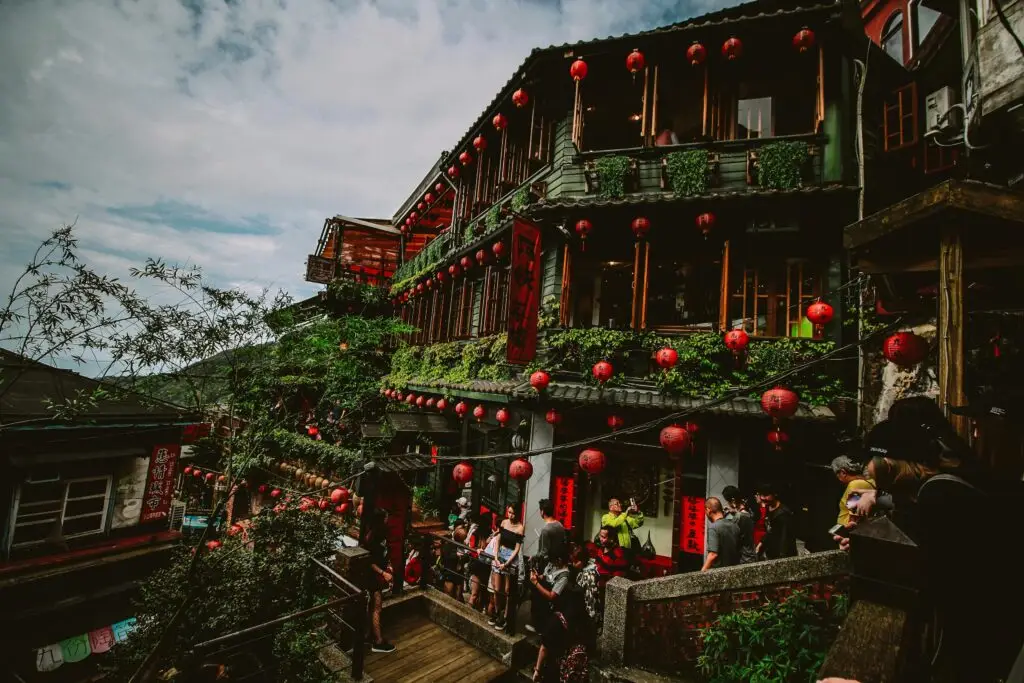
Jiufen is built into steep hillsides, with narrow stairways lined by lanterns, teahouses, nostalgic shops, and ocean views. At night, red lanterns glow above the alleys, creating a magical atmosphere reminiscent of a fantasy film. The aroma of tea, taro balls, herbal cakes, and traditional snacks fills the air.
Shifen
Shifen is famous for its broad railway street where people release sky lanterns bearing wishes and prayers. A waterfall known as the “Little Niagara of Taiwan” lies nearby, adding to the area’s scenic charm.
Pingxi
Pingxi is quieter and surrounded by lush valleys. Its annual lantern festival transforms the night sky into a sea of floating light.
These villages highlight Taiwan’s poetic side — nostalgic, emotional, atmospheric, and deeply tied to mountains and tradition.
Keelung — Port City, Seafood, Mist & Night Market Magic
Keelung is a coastal port city north of Taipei, famous for its misty weather, dramatic harbor, and one of the best night markets in Taiwan — Miaokou Night Market. The city’s streets carry a maritime atmosphere, with ships entering the harbor and the scent of the sea everywhere.
Keelung’s coastline features rock formations, sea caves, viewpoints, and small fishing villages. The city bridges the gap between urban Taiwan and the open Pacific.
Taoyuan — Gateway to Taiwan & Growing Metropolis
Taoyuan is home to Taiwan’s main international airport, but it is far more than a gateway. It has lakes, mountains, Hakka culture, innovation centers, and urban districts. The Shimen Reservoir is a scenic area perfect for hiking and boating. Daxi Old Street preserves traditional architecture, wooden furniture shops, and local delicacies.
Taoyuan combines modern industry with historical roots and nature.
Hsinchu — Technology, Wind & Culture
Hsinchu is Taiwan’s “Windy City,” famous for strong coastal breezes and for being the heart of Taiwan’s technology industry. The Hsinchu Science Park powers much of the island’s semiconductor and tech innovation, contributing to Taiwan’s global role.
Yet Hsinchu also has cultural depth — a charming old town, a large Hakka community, specialty foods like rice noodles and pork balls, and coastal wetlands where birds gather at sunset.
Hsinchu is a blend of tradition and high-tech modernity.
Taichung — Art, Sun, Creativity & Warmth
Taichung is the major city of central Taiwan — relaxed, artistic, green, and full of sunshine. It feels more spacious and laid-back than Taipei, with wide boulevards, parks, museums, and cafés.
The National Taichung Theater, designed by Toyo Ito, is a stunning architectural masterpiece with fluid, cave-like interiors. The National Museum of Natural Science, Taichung Park, Calligraphy Greenway, and Rainbow Village showcase the city’s artistic heart.
Taichung is also the gateway to many central Taiwanese treasures like Sun Moon Lake, Alishan, and mountainous regions filled with Indigenous villages.
Central Taiwan Landscapes — Lakes, Forests & Mountain Villages
Central Taiwan is deeply scenic. Mountains rise in layers. Tea plantations spread across slopes. Forests hum with insects and birds. Rivers cut through gorges. The region feels calm, refreshing, and spiritually connected to nature.
Sun Moon Lake
This is one of Taiwan’s most famous natural landmarks — a serene lake surrounded by mountains, temples, villages, and cycling paths. The water reflects morning mist and afternoon sunlight. Indigenous Thao culture enriches the destination with stories, songs, and rituals.
Alishan
Alishan is legendary — cedar forests, mountain railways, cloud seas, and sunrises that paint the sky gold. The Alishan Forest Railway climbs through misty mountains, while the park offers cedar trails, sacred trees, and romantic atmosphere.
Nantou & Mountain Heartlands
The central mountains host Indigenous villages, tea fields, fruit orchards, waterfalls, and deep cultural heritage tied to land and tradition.
KAOHSIUNG — Port City, Art Capital & Gateway to the Tropics
Kaohsiung is Taiwan’s southern metropolis — a harbor city that blends industrial history with modern creativity, tropical vibes, and waterfront charm. It feels more spacious than Taipei, with wide streets, bright sunshine, and views that open toward the sea. Yet the city is full of cultural gems, parks, temples, and artistic landmarks that reflect a deeply imaginative soul.
The Love River & Waterfront Life
The Love River runs through the center of Kaohsiung like a peaceful vein. Cafés, promenades, cycling paths, park benches, and trees line the riverbanks. At night, bridges light up in soft colors, creating reflections on the water. Street musicians and couples gather along the river, and boats glide under illuminated arches. It is a romantic, atmospheric, and distinctly Kaohsiung experience.
Pier-2 Art Center — Creativity by the Harbor
Pier-2 is one of Taiwan’s most famous creative districts — a former warehouse area transformed into an arts and culture wonderland. Murals stretch across buildings. Installations stand in open squares. Cafés, galleries, indie shops, workshops, and performance spaces fill the area. The atmosphere is youthful and expressive, blending industrial structures with imaginative art.
Lotus Pond — Temples, Towers & Dragon Gates
Lotus Pond is a scenic lake surrounded by some of Kaohsiung’s most iconic temples and towers. The Dragon and Tiger Pagodas lure visitors with the promise of good fortune — enter through the dragon’s mouth and exit through the tiger’s to symbolically turn bad luck into good. The lake is dotted with lotus flowers in summer and surrounded by shrines, pavilions, and bridges that create an almost fantasy-like setting.
Cijin Island — Seaside Simplicity & Ocean Breeze
Just a short ferry ride from Kaohsiung’s harbor lies Cijin Island — a narrow strip of land offering beaches, seafood, lighthouses, fort ruins, and ocean views. Bicycles line the streets, and the atmosphere feels like a small fishing community frozen in time. Fresh seafood grills fill the air with smoky aromas. Waves crash against volcanic rock formations. Sunsets paint the coastline gold and purple.
Cijin represents the gentle, coastal spirit of Taiwan’s south.
TAINAN — Taiwan’s Ancient Soul, Temples & Timeless Streets
Tainan is the oldest city in Taiwan, the former capital, and the cultural heart of the island. No other place in Taiwan preserves as much history, tradition, architecture, and spiritual energy. Temples stand on nearly every corner, each filled with incense clouds, glowing lanterns, deity statues, and centuries-old rituals. Old streets wind between heritage houses, markets, and courtyards where craftsmen carve wood, metal, and stone.
The Atmosphere of Tainan
Tainan feels warm, nostalgic, and intimate. The air is filled with a slow-moving peacefulness. Temple bells ring in the distance. Elderly residents practice tai chi in parks. Vendors sell traditional snacks passed down through generations. Lanterns sway in the breeze as the sun sets over narrow alleyways. The city breathes history — softly, beautifully, and endlessly.
Temples Everywhere
Tainan has more temples than any other city in Taiwan. The Confucius Temple is a serene sanctuary of red walls, ancient trees, and scholarly symbolism. The Grand Matsu Temple honors the goddess of the sea — protector of sailors and fishermen. Countless smaller temples glow with candles, wooden carvings, incense coils, and offerings.
In Tainan, spirituality is not a practice; it is a way of life woven into the rhythm of the city.
Historic Streets & Local Identity
Shennong Street is one of the most atmospheric alleys in Taiwan — full of vintage houses, craft shops, tea rooms, and small bars hidden behind wooden doors. At night, lanterns light up the entire street, creating a magical glow. Chihkan Tower, Anping Old Fort, and Anping Tree House reveal layers of Tainan’s past, from Dutch forts to Japanese industries reclaimed by banyan roots.
Tainan is a living museum — not frozen, but thriving with modern creativity.
PINGTUNG & KENTING — Taiwan’s Tropical Paradise
At the southern tip of Taiwan lies Kenting, a region where the island transforms into a tropical dreamscape. The climate becomes warmer, the vegetation more lush, the beaches more vibrant, and the energy more relaxed. This is the place where travelers come to swim, snorkel, surf, hike, dive, and enjoy the island’s sunniest weather.
Kenting National Park
Kenting National Park is Taiwan’s most famous coastal playground. Palm trees sway in the breeze. Coral reefs shimmer beneath turquoise waves. Trails wind through forests, grasslands, and cliffs overlooking the Pacific Ocean. The park includes mountains, beaches, hot springs, waterfalls, and volcanic landscapes.
Beaches & Coastline
Baisha Beach, Nanwan (South Bay), and Xiaowan offer golden sand and warm water. Sailboats dot the horizon. Snorkelers observe colorful fish. Surfers chase gentle waves. The sound of the ocean is constant, calming, and full of life.
Eluanbi Lighthouse
At Taiwan’s southernmost point stands the elegant Eluanbi Lighthouse. Windswept grasses, rocky outcrops, and endless ocean panoramas surround it. It feels like the edge of the world — where the Pacific meets the South China Sea in a symphony of blue.
Nightlife
Kenting’s main street transforms at night into a lively night market full of snacks, music, drinks, and tropical energy.
Kenting is carefree, warm, and full of summer spirit.
TAITUNG — The Slow Life, Indigenous Heart & Ocean Breeze
Taitung is one of Taiwan’s most soulful regions — gentle, natural, spacious, and deeply connected to Indigenous culture. Here, rice fields stretch toward green mountains. The Pacific crashes against long stretches of beach. Temples stand beside tribal murals. Hot-air balloons rise over vast plains during the annual Taitung Balloon Festival. Taitung feels open, airy, peaceful, and profoundly healing.
The East Rift Valley
The East Rift Valley is a long, fertile stretch between the Central Mountain Range and the Coastal Range. Hot springs bubble beside rivers. Farmlands glow in the sun. Indigenous villages preserve ancient stories, dances, and ceremonies. The valley feels like a peaceful world within a world — a place where time slows down.
Coastal Road of Dreams
Highway 11, running along the Taitung-to-Hualien coast, is one of Asia’s most scenic drives. Mountains rise sharply on one side, while the Pacific stretches endlessly on the other. Black beaches, rock formations, and small fishing harbors appear along the route.
Taitung’s coast feels wild, intimate, and poetic.
HUALIEN — Gateway to One of Earth’s Greatest Wonders
Hualien is a coastal city surrounded by mountains, ocean, rice paddies, and the breathtaking Taroko Gorge. Its atmosphere is warm, quiet, and inviting. At night, the city glows softly with lanterns, night markets, and local restaurants. During the day, travelers set out toward Taroko National Park — a place of natural wonder beyond imagination.
TAROKO GORGE — Marble Canyons, Rivers & Sacred Landscapes
Taroko Gorge is one of the most extraordinary landscapes in Asia — a vast marble canyon carved by the turquoise Liwu River. Steep cliffs rise hundreds of meters. Waterfalls plunge into deep pools. Suspended bridges cross gorges. Shrines cling to cliffsides. Tunnels and pathways lead into landscapes that feel ancient, spiritual, and humbling.
Walking through Taroko is like journeying through a world built by gods.
The Atmosphere
Mist rises from the river. Sunlight filters through canyon walls. Deep green forests cling to rock faces. Water echoes from every direction. Visitors often describe a sense of awe and peace — a feeling of standing in the presence of something far older and more powerful than human civilization.
Indigenous History
Taroko is homeland to the Truku people, whose traditions and mythology are tied to the mountains, rivers, and spirits of this land. Their connection to nature is woven into the identity of the region.
Taroko is a sacred masterpiece of stone, water, vegetation, and sky.
YILAN — Hot Springs, Sea Breezes & Mountain Tunnels
North of Hualien lies Yilan, a region known for hot springs, waterfalls, surfing beaches, green rice paddies, and misty mountains. The Suhua Highway connects Hualien and Yilan through tunnels carved into cliffs — an engineering feat that opens breathtaking views of the Pacific.
Yilan feels calm, rural, and full of fresh air — a perfect blend of coast and countryside.
TAIWAN’S OFFSHORE ISLANDS — Remote Beauty, Culture, Volcanoes & Ocean Mysticism
Taiwan’s offshore islands are wonders of their own, each with a distinct personality shaped by geography, history, and cultural traditions.
Green Island (Lüdao) — Coral Reefs, Volcanic Cliffs & Wild Beauty
Green Island is rugged, volcanic, and surrounded by crystal-clear waters. Coral reefs flourish offshore. The coastline is dramatic, filled with blowholes, cliffs, and natural pools. The island is famous for its saltwater hot spring — one of the few seawater hot springs in the world. Night skies on Green Island reveal stars stretching across the universe.
The island feels raw, wild, and serene.
Lanyu (Orchid Island) — Tao Culture & Untouched Nature
Lanyu is one of Taiwan’s most culturally significant islands. It is home to the Tao people — an Indigenous Austronesian group with ancient traditions, ocean rituals, flying-fish culture, wooden canoes, and ceremonies tied deeply to nature.
Steep volcanic mountains rise behind villages. Waves crash against black lava rocks. Traditional homes, underground for typhoon protection, reflect ancient architectural wisdom. Lanyu feels sacred, remote, and profoundly authentic.
Penghu — Archipelago of Wind, Stone, & Ocean
Penghu is a group of islands in the Taiwan Strait known for basalt rock formations, temples, beaches, ancient villages, and powerful seasonal winds. Fishermen’s traditions shape daily life. Stone houses built to withstand harsh ocean breezes fill historic neighborhoods. The sea here feels deep, dramatic, and full of life.
In summer, Penghu becomes warm and magical — a blend of clear waters, festivals, barbecues, and island hospitality.
Kinmen — History, War Relics & Rural Charm
Kinmen sits just off the coast of mainland China. It is a place where military history mixes with traditional villages, lakes, fields, and wind-lion guardian statues. Old war bunkers and tunnels remain as silent witnesses of past conflict. But Kinmen is peaceful today — calm, agricultural, and blessed with beautiful architecture and countryside landscapes.
Matsu — Fog, Lighthouses, Blue Tears & Island Mystery
Matsu is a mysterious, mist-covered archipelago of islands filled with granite houses, cliffside temples, old military outposts, and natural wonders. During certain seasons, bioluminescent plankton create the phenomenon known as “Blue Tears” — glowing waves that sparkle like stars in the night sea.
Matsu feels mystical, remote, and enchanting.
TAIWANESE FOOD CULTURE — A WORLD OF FLAVORS, EMOTIONS & STORIES
Food in Taiwan is not just nourishment. It is comfort, identity, history, ritual, and love. Taiwanese cuisine is shaped by Indigenous traditions, Hokkien and Hakka flavors, Japanese culinary influence, and global creativity. The variety is immense — from slow-cooked broths to spicy stir-fries, from delicate teas to bold street snacks, from seafood feasts to vegetarian temples.
To understand Taiwan, you must understand its food.
Night Markets — The Beating Culinary Heart
Night markets are more than marketplaces; they are social worlds. Families gather for dinner, couples wander arm-in-arm, students laugh with friends, vendors shout greetings, and colorful signs illuminate the night. The smell of frying, grilling, simmering, steaming, and baking fills the air in waves.
Every city has night markets — busy ones, small ones, neighborhood ones, and legendary ones. Here, food is affordable, fresh, flavorful, and made with pride. Night markets represent the warmth of Taiwanese society: informal, joyful, communal, and full of personality.
Iconic Taiwanese Dishes & Their Cultural Meaning
Taiwan’s signature dishes carry stories from history, migration, and family tradition. Beef noodle soup expresses comfort and heartiness. Oyster omelets reflect coastal life. Bubble tea showcases youthful creativity. Three-Cup Chicken brings bold Hokkien flavor. Taiwanese breakfast — warm soy milk, flaky egg pancakes, radish cakes — feels like home for millions.
Hakka cuisine highlights rural wisdom with pickled vegetables, stewed meats, simple seasonings, and dishes made to last through hard times. Indigenous cooking uses millet, taro, bamboo shoots, mountain herbs, seafood, and grilled meats — flavors tied to the land, sea, and seasons.
Taiwanese food is a mosaic of cultures, yet unified by warmth, generosity, and balance.
INDIGENOUS CULTURES — WISDOM, MUSIC, HERITAGE & SPIRITUALITY
Indigenous Taiwanese cultures are among the island’s deepest treasures. They are keepers of stories, songs, rituals, craftsmanship, and ecological knowledge. Their traditions are tied to mountains, rivers, forests, and ancestral spirits. Each tribe has its own mythology, ceremonies, dances, clothing styles, and community structure.
Connection to Nature
Indigenous communities live in harmony with nature, guided by a worldview that land, water, animals, and plants are sacred. Hunting rituals honor spirits. Ceremonies thank the earth for harvests. Architecture uses wood, stone, thatch, and underground design suited to climate and typhoon protection.
Music & Dance
Traditional songs often use polyphonic harmonies, creating hauntingly beautiful melodies passed down orally. Dances involve circular movements symbolizing unity, seasons, and cosmic balance.
Cultural Continuity
Today, many Indigenous traditions flourish again — through cultural festivals, museums, youth groups, and language revival programs. Visiting tribal villages in Hualien, Taitung, Nantou, and Alishan reveals Taiwan’s most ancient living heritage.
FESTIVALS — TAIWAN’S COLORFUL CELEBRATIONS OF SPIRIT & COMMUNITY
Taiwanese festivals are vibrant, emotional, dramatic, and deeply rooted in culture. They transform towns into seas of lanterns, fireworks, drums, deities, costumes, floats, dances, and rituals. Each festival reflects a piece of Taiwan’s soul.
Lunar New Year
Families gather for meals, blessings, and traditions that honor ancestors and new beginnings. Streets glow with red decorations symbolizing luck and happiness.
Lantern Festival
In the north, sky lanterns float into the night sky carrying hopes and wishes. In the south, firecracker rituals and temple processions create thrilling atmospheres of devotion and spectacle.
Dragon Boat Festival
Colorful boats race across rivers in rhythmic unity while the scent of zongzi — sticky rice wrapped in leaves — fills the air.
Ghost Month
Ancestral offerings, rituals for wandering spirits, and temple events reflect Taiwan’s blend of spirituality, respect, and cultural roots.
Mid-Autumn Festival
Families enjoy mooncakes while gazing at the full moon. Barbecues fill parks with delicious smoky aromas.
Indigenous Festivals
Tribal communities celebrate harvests, coming-of-age rituals, ancestral traditions, and nature’s cycles with powerful music and emotional dance.
These festivals express Taiwan’s deepest values: family, spirituality, gratitude, community, resilience, and joy.
DAILY LIFE IN TAIWAN — KINDNESS, RHYTHM & HUMANITY
Despite the richness of its landscapes and festivals, Taiwan’s true magic often lies in simple, everyday experiences.
Morning markets bustle with fresh vegetables, fish, tofu, fruit, and the calls of elderly vendors who have known their customers for decades. Commuters ride scooters and trains with polite efficiency. Students gather at tea shops after school. Elderly neighbors exercise in parks at dawn. Families share meals every night. Cats sleep on scooter seats. Lanterns glow in neighborhood alleys. A grandmother waves from her doorstep with a warm smile.
Daily life in Taiwan carries a softness — a gentle, respectful rhythm. People apologize easily, smile often, help freely, and treat strangers with care. Even in busy cities, kindness flows naturally. It is one of the most memorable aspects of traveling in Taiwan.
TRANSPORTATION — EASY, SAFE & BEAUTIFULLY CONNECTED
Taiwan’s transportation system is one of the best in Asia. High-speed trains glide along the west coast, connecting cities in minutes. Local trains weave through mountains, plains, and coastal towns. Buses reach remote villages and scenic areas. Metro systems in Taipei and Kaohsiung are clean, efficient, organized, and safe. Ferries carry passengers to offshore islands. Highways twist through dramatic landscapes.
Transportation in Taiwan reflects the country’s values: order, quality, accessibility, environmental care, and public comfort.
TAIWAN’S MODERN IDENTITY — INNOVATIVE, CREATIVE & FREE
Taiwan today is a vibrant democracy celebrated for human rights, freedom of expression, creativity, gender equality, and technological innovation. It is home to world-leading semiconductor industries, futuristic design, and high-tech culture. Yet it also values tradition, family, and cultural memory.
This balance between modernity and heritage gives Taiwan a distinct personality — a place where the future and the past coexist with grace.
THE EMOTIONAL ESSENCE OF TAIWAN — WHAT STAYS WITH YOU FOREVER
Taiwan leaves a mark on the heart.
It is the softness of a sunrise over Alishan’s sea of clouds.
The warmth of a vendor handing you a bowl of noodles with a smile.
The scent of incense rising from a temple at dusk.
The laughter of children running by the river.
The ocean breeze on the east coast.
The glowing lanterns floating into the sky.
The peaceful hum of mountains.
The quiet strength of Indigenous culture.
The honesty and kindness of its people.
Taiwan is a place that welcomes you gently and stays with you deeply.
It is not overwhelming or loud; it is comforting, inspiring, nourishing, and full of soul.
Travelers often say that Taiwan feels like home — even if they have never been there before.
 Related Articles
- Kakslauttanen Arctic Resort
- Top 10 Most Unique Places to Stay in Europe
- 10 Incredible Castles Around the World