
🇹🇯 Tajikistan Travel Guide
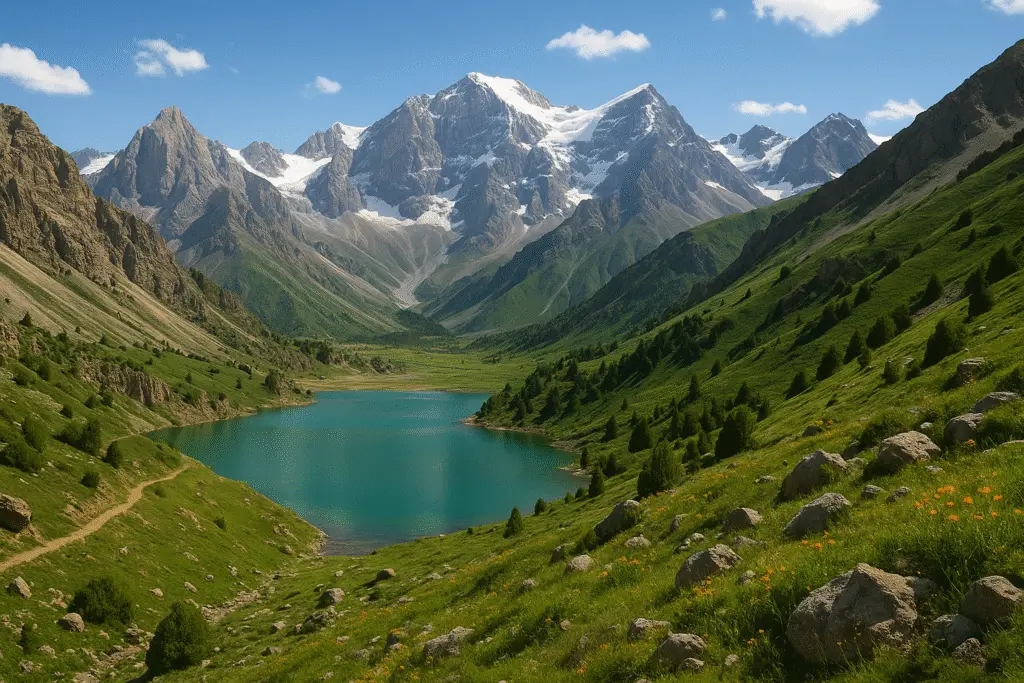
A deep, atmospheric, long-form journey through Central Asia’s most dramatic mountains, Silk Road history, and warm hospitality
Tajikistan is one of the most breathtaking and underrated countries on Earth — a land carved by mountains, shaped by ancient civilizations, and defined by a hospitality so warm that visitors often feel like honored guests rather than tourists. This is a country where the Pamir Mountains rise like stone cathedrals, where the valleys bloom with apricot trees, where turquoise rivers cut through deep canyons, and where centuries-old caravan routes once connected the East and the West. Tajikistan is raw, powerful, untouched, and incredibly beautiful.
For travelers seeking adventure, culture, and authenticity, Tajikistan offers everything: dizzying high-altitude passes, remote villages where time moves slowly, Silk Road ruins, alpine lakes with water so clear they mirror the sky, and ancient traditions preserved in remote mountain communities. It is a place that feels wild yet welcoming, dramatic yet peaceful, and endlessly fascinating.
This guide explores Tajikistan in long, immersive detail — geography, history, culture, cities, the Pamir Highway, nature, food, people, and everything that makes this Central Asian nation unforgettable.
1. Introduction — The Hidden Jewel of Central Asia
Tajikistan is one of the world’s great mountain kingdoms. More than 90% of the country is mountainous, and about half sits above 3,000 meters. It is a destination where you don’t simply “look at” scenery — you enter it, you live inside it, you breathe it. The landscapes are incredibly pure, shaped by glaciers, winds, and rivers. Some villages are so isolated that local languages, crafts, and customs have remained unchanged for centuries.
Despite its dramatic terrain, Tajikistan is also warm, friendly, and deeply human. The Tajik people — descendants of ancient Persian cultures — are proud of their heritage, poetry, craftsmanship, and hospitality. In many regions, visitors are welcomed into homes for tea, bread, and conversation. Life flows with a gentler pace, shaped by seasons, family, and community.
This combination of wilderness and humanity makes Tajikistan unlike any place in the world.
2. Geography — A Land Built by Mountains
Tajikistan lies in the heart of Central Asia, bordered by Afghanistan, Uzbekistan, China, and Kyrgyzstan. But its identity is defined less by borders and more by mountains — colossal ranges like the Pamirs, the Fann Mountains, and the Alay Mountains dominate the landscape.
The Pamirs — “Roof of the World”
These mountains are among the highest and most remote on Earth. Peaks soar past 7,000 meters, villages cling to steep slopes, and roads wind through dizzying passes. The Pamirs feel ancient and untouched — a world of stone, snow, and sky.
The Fann Mountains
Easier to access and incredibly beautiful, the Fanns are known for emerald lakes, jagged peaks, and trekking routes.
Rivers & Lakes
Glacial rivers like the Panj and Vakhsh carve through cliffs and valleys. Lakes such as Iskanderkul and Karakul reflect the mountains like mirrors.
Climate
Summers can be hot in the valleys but cool at altitude. Winters are harsh in the mountains but mild in cities like Dushanbe.
Geography shapes every part of Tajik life — from agriculture to lifestyle to architecture.
3. History — Ancient Civilizations & Silk Road Echoes
Tajikistan’s history stretches back thousands of years. Long before modern borders were drawn, these lands formed part of ancient Persian empires, Greco-Bactrian kingdoms, and Silk Road trade networks.
Early Civilizations
The Tajik identity traces back to ancient Iranian and Persian peoples. Archaeological sites reveal cities, temples, and settlements from over 3,000 years ago.
Persian Empires
Throughout history, Tajikistan was influenced by empires such as the Achaemenids, Sassanids, and Samanids — the Samanid Empire being particularly important in shaping Tajik culture, language, and identity.
The Silk Road
Merchants, scholars, caravans, and explorers traveled through Tajikistan for centuries. Cities like Penjikent and Khujand served as major Silk Road hubs.
Islamic Influence
Islam arrived between the 8th and 10th centuries, shaping culture, architecture, music, and traditions.
Soviet Era
In the 20th century, Tajikistan became part of the USSR. This period brought modernization, but also upheaval, collectivization, and later a civil war after independence.
Modern Tajikistan
Independent since 1991, Tajikistan is peaceful, stable, and slowly developing while preserving its ancient heritage.
4. Dushanbe — A Calm, Green, Charming Capital
Dushanbe is one of the most pleasant, leafy capitals in Central Asia. It is not overwhelming; instead, it is relaxed, walkable, and filled with tree-lined boulevards, fountains, markets, and new architecture.
Registan Square & Rudaki Avenue
The national avenue is full of cafés, museums, gardens, and monuments.
Flagpole Park
Once home to the tallest flagpole in the world, the park offers views of lakes and massive government buildings.
National Museum of Tajikistan
An impressive museum displaying Silk Road artifacts, ancient art, and archaeological treasures.
Mehrgon Market
A modern take on the traditional bazaar — colorful, clean, vibrant.
Botanical Gardens
A peaceful place filled with exotic trees, flowers, and walking paths.
Dushanbe blends Soviet architecture, Persian influences, and modern development into a calm, inviting city.
5. The Pamir Highway — One of the World’s Greatest Road Trips
The Pamir Highway, also known as the M41, is legendary — one of the highest, wildest, and most breathtaking roads on Earth. It stretches from Dushanbe through the Pamirs toward Kyrgyzstan, passing through landscapes so dramatic they feel unreal.
Traveling the Pamir Highway is not simply a drive — it is an expedition. You cross high alpine passes, travel beside the Afghan border, stay in remote villages, and witness scenery that changes every hour.
Route Highlights
Khorog
The main town in the Pamirs, surrounded by mountains and home to a peaceful riverside park and the botanical garden perched high above the valley.
The Wakhan Valley
A narrow, fertile strip of land along the Panj River, with Afghanistan on the opposite bank. The valley is dotted with ancient fortresses, shrines, hot springs, and Pamiri villages with unique house architecture.
Langar & the Petroglyphs
Ancient rock carvings etched into cliffs, telling stories of early civilizations, animals, and hunters.
Murghab
A high-altitude town where life feels raw and intense. Yurts, shepherds, and endless plains make this region feel like the top of the world.
Karakul Lake
A turquoise, wind-swept lake in a crater basin surrounded by mountains. At sunrise and sunset, the water glows with pinks and silvers.
The Ak-Baital Pass
One of the highest road passes in the world (4,655 meters): barren, majestic, unforgettable.
Why the Pamir Highway Is Special
Because it is more than scenery — it is about life at altitude, the kindness of Pamiri families, the silence of vast valleys, and the feeling of being far from everything modern.
6. The Fann Mountains — A Paradise of Lakes & Peaks
The Fann Mountains are easier to reach than the Pamirs and offer some of the most beautiful trekking on Earth. Their lakes glow in shades of turquoise, green, and sapphire.
Iskanderkul Lake
Named after Alexander the Great, this lake sits at the heart of the mountains — surrounded by cliffs, forests, and rivers. The water shines a vivid blue, especially at sunrise.
Seven Lakes (Haft Kul)
A chain of mountain lakes stacked like stepping stones. Each lake has a different color — from deep blue to emerald to crystal clear.
Artuch & Chimtarga Pass
Trekking routes take you through high passes with jaw-dropping views.
Villages of the Fann Region
Homes built from stone, apple orchards, children playing freely, and the smell of fresh bread baking in clay ovens.
The Fann Mountains combine accessibility, beauty, and authenticity — a perfect area for both trekkers and casual travelers.
7. Khujand — History, Markets & Silk Road Energy
Khujand is one of the oldest cities in Central Asia, founded by Alexander the Great. Today, it blends ancient history, market life, and Soviet architecture.
Panjshanbe Bazaar
One of the liveliest markets in the region — colorful, noisy, full of spices, fruits, sweets, fabrics, and local products.
Khujand Fortress & Museum of Archaeology
History brought to life through artifacts, reconstructions, and stories of Silk Road civilizations.
Somoni Park & Arbob Palace
A majestic palace resembling the Winter Palace of St. Petersburg, surrounded by gardens.
Khujand feels warm, cultural, and distinctly Tajik.
8. Istaravshan — A City of Blue Domes & Ancient Crafts
Istaravshan is one of the most atmospheric cities in Tajikistan, filled with artisans, old bazaars, and historic madrassas.
Mug Teppe Citadel
Ruins of ancient settlements dating back thousands of years.
Kok Gumbaz Mosque
A beautiful blue-domed mosque built during the Timurid era.
Craft Workshops
Blacksmiths, woodcarvers, and potters preserve skills passed down through generations.
Istaravshan feels timeless — an authentic Silk Road experience.
9. Penjikent — The Pompeii of Central Asia
Penjikent holds some of the most important archaeological ruins in the region.
Old Penjikent Ruins
Clay houses, ancient temples, murals, and streets frozen in time from a 7th-century city.
Modern Penjikent
A relaxed town serving as a gateway to the Fann Mountains.
Local Culture
Traditional singing, dancing, and Tajik poetry are strong in this region.
Penjikent beautifully blends history and nature.
10. Tajik Culture — Hospitality, Traditions, and Daily Life
Tajik culture is warm, poetic, and deeply rooted in family and tradition.
Hospitality
Guests are treated with honor. Tea, sweets, fruits, bread, and plov are offered generously.
Pamiri Houses
Unique architectural style where wooden beams represent cultural and spiritual values.
Poetry & Music
Tajiks love poetry — especially the works of Rudaki and Hafez. Music is traditional, rhythmic, and symbolic.
Clothing & Festivals
Traditional costumes are colorful, embroidered, and often hand-crafted.
Community Life
Families gather for meals, celebrations, and storytelling.
Tajik hospitality is unforgettable — every visitor feels welcome.
11. Tajik Food — Fresh, Simple, Delicious
Tajik cuisine reflects mountain life: warm, hearty, and full of flavor.
Plov (Oshi Palov)
The national dish — rice, carrots, meat, and spices.
Sambusa
Savory pastries filled with meat or pumpkin.
Laghman Noodles
Hand-pulled noodles with vegetables and meat.
Non / Lepeshka
Circular bread baked in clay ovens.
Tea Culture
Tea is served constantly — green or black, always with sweets or dried fruits.
Tajik food is comforting, communal, and delicious.
12. Nature & Wildlife — Pure, Untouched, Ancient
Tajikistan’s nature is raw and powerful.
Snow Leopards
Rare but present in remote mountain zones.
Marco Polo Sheep
With giant spiraling horns, these legendary animals live in the Pamirs.
Birdlife
Lakes and valleys are full of eagles, falcons, and migratory birds.
Flora
Wildflowers, apricot trees, walnut forests, and alpine plants cover the country.
Nature here feels ancient, untouched, and deeply spiritual.
13. Travel Experience — Why Tajikistan Feels Different
Unlike many destinations, Tajikistan is not built for tourists — and that is exactly what makes it special.
You travel on remote roads.
You stay in homestays instead of hotels.
You eat homemade bread instead of restaurant meals.
You meet shepherds, farmers, children, and villagers.
You see life as it truly is.
The landscapes are cinematic — but it is the human connection that stays with you.
14. Why Tajikistan Belongs on Your Bucket List
✔ Unbelievable mountain scenery
✔ Warm and generous people
✔ Authentic Silk Road culture
✔ Epic road trips
✔ Ancient ruins
✔ Alpine lakes
✔ A sense of peace, remoteness, and purity
Tajikistan is not a place you visit — it is a place you feel.
 Related Articles
- Kakslauttanen Arctic Resort
- Top 10 Most Unique Places to Stay in Europe
- 10 Incredible Castles Around the World