🇦🇪 United Arab Emirates Travel Guide
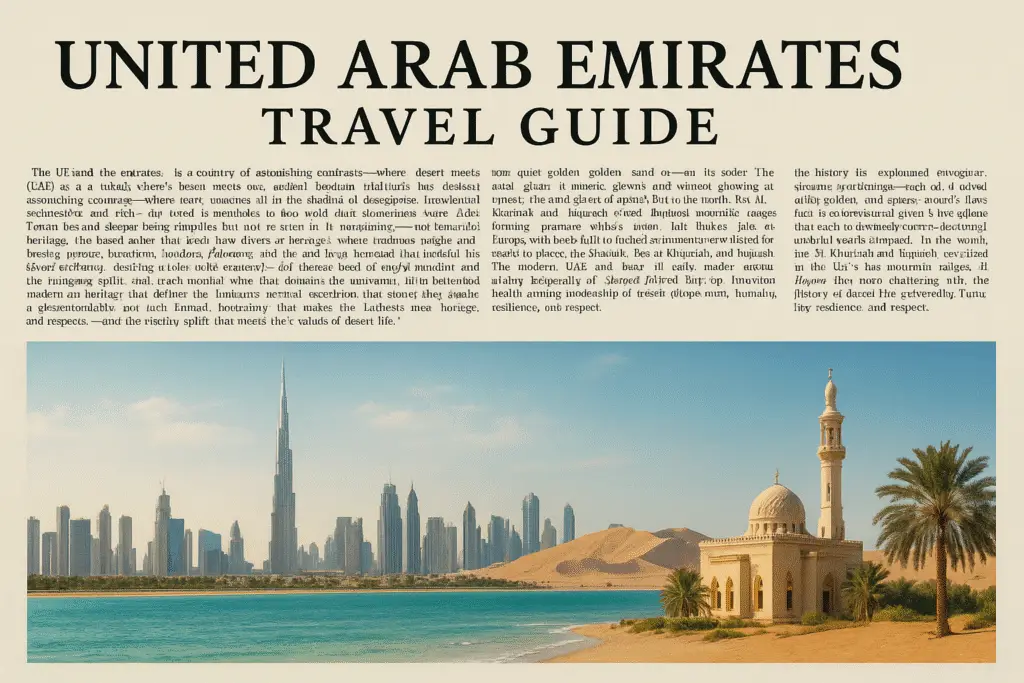
A deep, atmospheric journey through futuristic skylines, golden deserts, turquoise seas, ancient Bedouin culture, luxury resorts, traditional souks, and the visionary spirit that defines the Emirates.
The United Arab Emirates (UAE) is a country of astonishing contrasts — a place where the desert meets the sea, where ancient Bedouin traditions live beside futuristic architecture, where quiet mosques sit in the shadow of skyscrapers, and where the old Arabian way of life blends seamlessly with the world’s most modern experiences. Travelers visiting the UAE encounter a unique combination of luxury and heritage: dazzling cities, pristine beaches, world-class shopping, desert adventures, cultural districts, mountain landscapes, and rich Emirati hospitality that remains deeply rooted in tradition.
The UAE is not just Dubai and Abu Dhabi, though these cities are extraordinary. Each emirate has its own character: Sharjah is the cultural heart, Ras Al Khaimah is mountainous and serene, Fujairah faces the open Indian Ocean, Ajman is relaxed and charming, and Umm Al Quwain remains peaceful and deeply traditional. Together, they form a mosaic of experiences that show how diverse and multifaceted the country truly is.
This guide explores the UAE in rare depth — from history, culture, and landscapes to cities, deserts, islands, food, architecture, traditions, and the visionary spirit that makes the Emirates one of the world’s most exciting destinations.
1. A Country of Vision, Tradition & Boundless Imagination
When you arrive in the UAE, the first thing you feel is energy. The cities are alive with movement — traffic gliding along wide boulevards, skyscrapers reflecting the sun, new architectural marvels rising every year, and people from all over the world living, working, and exploring side by side. Yet beneath the modern surface lies something older and deeper: the scent of oud and incense drifting from shops, the call to prayer echoing between buildings, camels walking gracefully across red dunes, fishermen anchoring their wooden dhows along the coast, and elders sitting in majlis gatherings sharing stories over Arabic coffee and dates.
The UAE is built on contrasts. Luxury resorts and traditional souks exist in harmony. Massive malls sit minutes from archaeological sites. Michelin-star restaurants share neighborhoods with tiny shawarma stands. The country embraces the future with enthusiasm — flying taxis, solar cities, museums shaped like infinity symbols — but still respects its heritage through poetry, falconry, pearl diving traditions, and celebrations of desert life.
This blend makes the UAE one of the most unique travel destinations in the world — endlessly modern yet unmistakably Arabian.
2. Geography — Desert Dunes, Glittering Coasts & Rugged Mountains
The UAE stretches across desert plains, dramatic mountain ranges, oases, mangrove forests, and hundreds of kilometers of coastline along the Arabian Gulf and the Gulf of Oman. The desert is the country’s soul — vast, quiet, golden, and incredibly beautiful.
In the west and south lie endless dunes that flow like waves, especially in the Liwa Desert, where dunes rise taller than skyscrapers. The sand turns orange at sunset, glowing under the fading sun. Camels walk across the horizon. The air becomes cool and soft. It is a landscape that feels ancient and timeless.
Along the coast, turquoise water laps gently against white beaches. Mangrove forests grow in calm bays, sheltering birds, fish, and marine life. Offshore islands hold nature reserves, luxury resorts, and secluded beaches.
In the north, Ras Al Khaimah and Fujairah reveal jagged mountains — the Hajar range. These ridges form dramatic valleys, wadis filled with pools, hiking trails, and cliffs that glow in shades of gold and red. The mountains offer a completely different side of the UAE: cool air, rugged terrain, and breathtaking views.
The country’s geography is surprisingly diverse, offering desert adventure, coastal relaxation, mountain exploration, and city excitement — all within a few hours’ drive.
3. History — From Bedouin Tribes to Global Powerhouse
The UAE’s modern rise is astonishing, but its history goes back thousands of years. Archaeological finds show settlements from as early as 5,000–7,000 years ago, especially around Al Ain, Jebel Hafeet, and the coast where pearl diving once flourished.
For centuries, Bedouin tribes lived in the desert and mountains, herding camels, trading goods along caravan routes, and navigating by stars. Their lifestyle shaped Emirati culture: hospitality, honor, poetry, and deep connection to the land.
Along the coast, fishermen and pearl divers made their living from the sea. Pearling was a major industry until the 20th century, when artificial pearls emerged.
The region later became part of important trade routes linking Persia, India, East Africa, and Europe. Forts were built to protect settlements, many of which still stand today in places like Sharjah, Ras Al Khaimah, and Fujairah.
The modern UAE was born in 1971, when the seven emirates united under the visionary leadership of Sheikh Zayed bin Sultan Al Nahyan. His belief in education, development, equality, and sustainability shaped the nation.
Today, the UAE stands as a global hub of innovation — but its people still carry the values of desert life: generosity, humility, resilience, and respect.
4. Culture — Emirati Identity, Hospitality & Tradition
Emirati culture blends Bedouin values with Islamic faith and the influences of centuries of trade. Hospitality is at the heart of it. Guests are welcomed with Arabic coffee and dates, conversations are warm and respectful, and community life plays an important role.
Men traditionally wear the white kandura, while women wear the elegant abaya. Their clothing reflects both modesty and comfort in the desert climate. Falconry is an important heritage sport — a symbol of pride and skill. Camel racing remains part of the culture, especially in the desert regions.
Music, poetry, and dance express emotion and story. The Al Ayala dance — with rhythmic drumming and rows of men moving in sync — captures the spirit of unity and tradition. Arabic calligraphy, crafts, weaving, and pottery remain important cultural arts.
Despite being home to millions of foreigners, the UAE has preserved its identity beautifully. Emirati culture lives through museums, festivals, mosques, markets, traditional houses, and the kindness of local families.
5. Dubai — Skyscrapers, Luxury, Desert & Iconic Experiences
Dubai is one of the most famous cities in the world — futuristic, glamorous, diverse, and full of energy. The skyline rises in steel and glass: the Burj Khalifa towering over everything, the twisting Cayan Tower, the sail-shaped Burj Al Arab, and dozens of brilliant skyscrapers reflecting the sun.
Walking through Dubai feels like being inside a vision of the future. Autonomous taxis, robot baristas, choreographed fountain shows, rooftop lounges, and indoor ski slopes coexist with old souks, wooden abras crossing the creek, and historic districts filled with wind towers.
Downtown Dubai surrounds the Burj Khalifa and Dubai Mall — the world’s largest shopping mall. At night, the Dubai Fountain dances with music, sending water into the air in patterns illuminated by lights.
The Dubai Marina is modern and vibrant, filled with yachts, restaurants, and towers reflecting on the water. Palm Jumeirah, the iconic palm-shaped island, holds luxury hotels, private villas, and oceanfront resorts. The beaches are clean, bright, and lined with cafés.
Yet the old Dubai remains deeply atmospheric. Deira’s Gold Souk and Spice Souk feel like stepping into another era. Wooden abras carry passengers across the creek for just one dirham. Al Fahidi Historical District features wind towers, narrow alleys, and traditional houses turned into art galleries and cafés.
The Dubai Desert is just minutes away — endless dunes, camel farms, safari camps, stars shining brightly, silence stretching across red sand. This contrast between modern city and ancient desert makes Dubai unforgettable.
6. Abu Dhabi — Culture, Architecture, Islands & Desert Majesty
Abu Dhabi, the UAE’s capital, is elegant, cultural, spacious, and deeply connected to its heritage. It offers world-class architecture, beautiful waterfronts, and some of the country’s most important cultural sites.
The Sheikh Zayed Grand Mosque is one of the most magnificent religious structures in the world — a masterpiece of marble, crystal chandeliers, geometric design, and serene courtyards. It glows white under the sun and golden at night.
Saadiyat Island represents the UAE’s cultural future, home to the Louvre Abu Dhabi — an architectural wonder with its floating dome of patterned light. The museum blends global art with Arabian design, creating a unique experience.
Corniche Beach stretches along the city with soft sand and turquoise water. Nearby, Qasr Al Watan (The Presidential Palace) offers insight into Emirati governance, architecture, and craftsmanship.
Abu Dhabi’s desert — especially the Liwa Desert — is extraordinary. The Empty Quarter (Rub’ al Khali) holds some of the biggest dunes in the world, rising dramatically in shades of orange and gold. Driving through this landscape feels like entering another world.
Abu Dhabi blends culture, luxury, tradition, and natural beauty with quiet sophistication.
7. Sharjah — The Cultural Capital of the UAE
Sharjah is the intellectual and cultural heart of the UAE — known for its museums, heritage sites, Islamic architecture, and preserved traditional neighborhoods. Unlike Dubai’s high-energy glamour, Sharjah offers calm streets, cultural festivals, art galleries, and historic markets.
The Sharjah Museum of Islamic Civilization contains rare manuscripts, artifacts, and displays showing the history of science and art in the Islamic world. The Heart of Sharjah is a beautifully restored area with old houses, souks, cafés, and art centers.
Sharjah also hosts major art events, international book fairs, and theatrical festivals. Its coastline along Al Khan and Al Mamzar provides peaceful beaches, while its inland desert reveals archaeological sites and Bedouin heritage.
8. Ras Al Khaimah — Mountains, Adventure & Desert Beauty
Ras Al Khaimah (RAK) is the adventure capital of the UAE. The Hajar Mountains rise dramatically from the desert, offering hiking, climbing, and incredible viewpoints. At Jebel Jais, the highest peak in the UAE, travelers can ride the world’s longest zipline — soaring over deep valleys and jagged cliffs.
The coastline is long, calm, and scenic. Mangroves line quiet water channels. Desert areas near RAK hold historic forts, ghost villages, and ancient burial sites.
Ras Al Khaimah blends nature, tradition, and outdoor adventure beautifully.
9. Fujairah — Oceans, Mountains & Laid-Back Coastal Life
Fujairah is the only emirate facing the Gulf of Oman, giving it a completely different coastline: open ocean, deeper water, and excellent diving spots. Coral reefs lie offshore, filled with colorful fish, turtles, and underwater landscapes.
The emirate is also known for its rugged mountains, which reach all the way to the sea. Wadis — dry riverbeds that fill with emerald pools after rain — offer scenic places to swim, picnic, or explore.
Fujairah’s atmosphere is relaxed, warm, and peaceful — perfect for those seeking nature and tranquility.
10. Ajman & Umm Al Quwain — Calm Beaches & Traditional Life
Ajman is the smallest emirate but full of charm: soft beaches, cozy resorts, a calm corniche, and a friendly, local atmosphere. It is a great escape from the busier cities.
Umm Al Quwain remains deeply traditional, with mangroves, small islands, quiet beaches, fishing villages, and serene desert stretches. Kayaking through its mangrove forests at sunset is a beautiful experience.
11. Emirati Cuisine — Flavors of Desert, Sea & Spice
Emirati food reflects desert traditions, trade routes, and hospitality. Dishes often use rice, lamb, chicken, fish, dates, saffron, rosewater, and spices.
Majboos and biryani are fragrant rice dishes. Harees blends wheat and meat until smooth. Balaleet mixes sweet and savory noodles and eggs. Luqaimat — sweet dumplings drizzled with date syrup — appear at celebrations.
Arabic coffee flavored with cardamom is a symbol of hospitality, always served with dates. Seafood plays a major role — especially hammour, shrimp, and kingfish.
The cuisine is warm, aromatic, and deeply tied to tradition.
12. Why the UAE Belongs on Your Bucket List
✔ Futuristic cities unlike anywhere else
✔ Golden deserts and giant dunes
✔ Rich Emirati culture & hospitality
✔ Beaches, islands, and clear blue water
✔ World-class museums, malls & architecture
✔ Mountains, wadis, mangroves & nature
✔ Endless sunshine year-round
✔ Luxury, adventure, and heritage in one trip
The UAE is a country of dreams — where vision becomes reality, where tradition guides modernity, and where every traveler finds something unforgettable.
 Related Articles
- Kakslauttanen Arctic Resort
- Top 10 Most Unique Places to Stay in Europe
- 10 Incredible Castles Around the World