
 Saint Kitts & Nevis Travel Guide – The Twin-Island Paradise of Volcanoes, Sugar, and Serenity
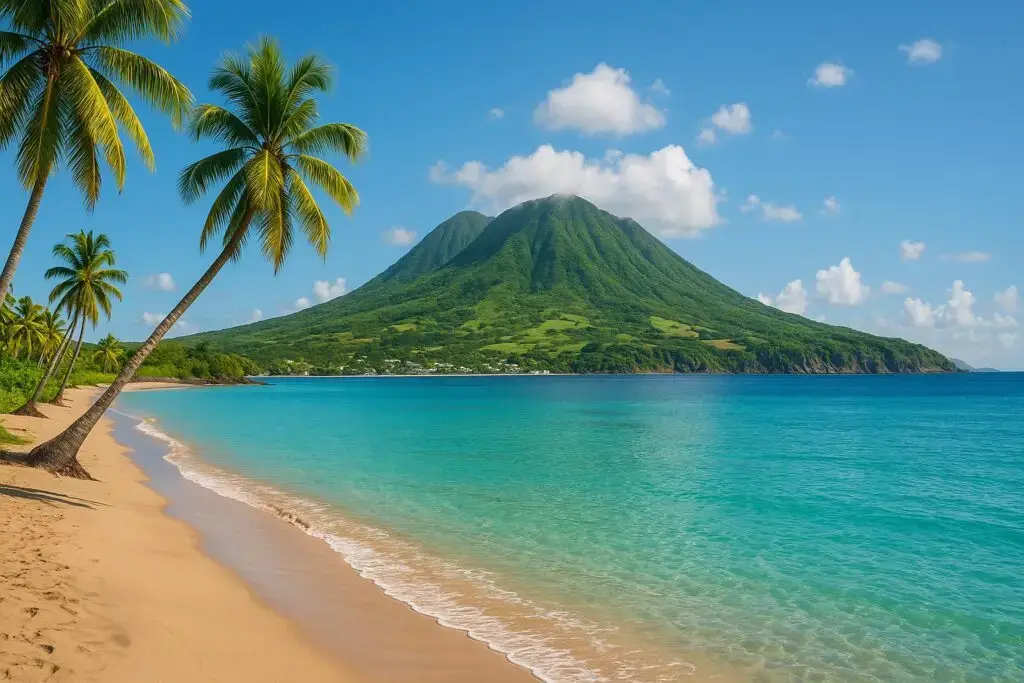
Saint kitts & Nevis Rising out of the Caribbean Sea like emerald jewels, Saint Kitts and Nevis are two of the most captivating islands in the West Indies. Known for their volcanic peaks, lush rainforests, sugar-mill ruins, and tranquil beaches, these twin islands combine tropical relaxation with centuries of history.
Though small — with Saint Kitts just 29 km long and Nevis only 13 km — they feel vast in beauty and character. Saint Kitts hums with life: colorful colonial towns, old plantations, and the towering Mount Liamuiga. Nevis, by contrast, is peaceful and refined — a circle of coconut palms, clear water, and timeless charm.
Together, they offer everything a traveler dreams of: tropical beauty, adventure, culture, and a deep sense of calm. Saint Kitts & Nevis aren’t just places you visit — they’re places you feel.
 Geography & Landscape
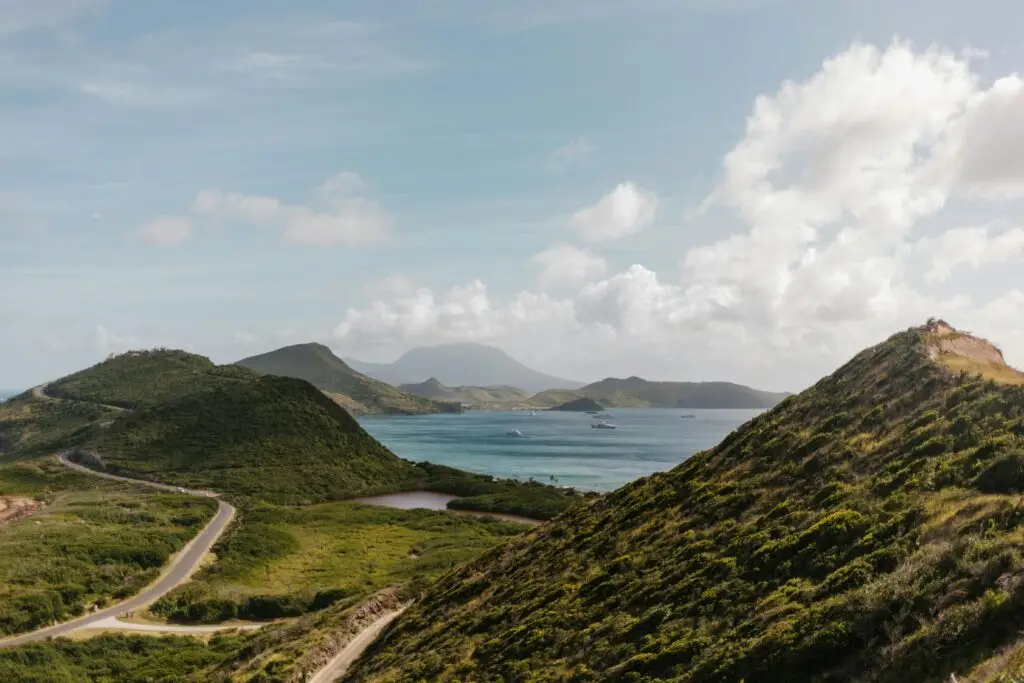
Saint Kitts
The larger of the two islands, Saint Kitts is volcanic, mountainous, and full of contrasts.
- Area: 168 km²
- Highest Point: Mount Liamuiga (1,156 m), a dormant volcano covered in rainforest.
- Landscape: Central mountains, rolling sugarcane fields, and black-sand beaches.
- Coastline: Rugged Atlantic east, calm Caribbean west.
Nevis
- Area: 93 km²
- Highest Point: Nevis Peak (985 m), often capped with clouds.
- Landscape: Circular island with beaches, historic estates, and hot springs.
- Vibe: Peaceful, refined, and deeply traditional.
A narrow channel called The Narrows separates the islands — just 3 km wide. Ferries and small boats cross it daily, keeping the islands connected yet distinct in personality. Saint kitts & Nevis
 A Brief History Saint kitts & Nevis
Pre-Colonial & European Settlement
Before Columbus arrived in 1493, the islands were home to the Arawak and later the Carib people. They called Saint Kitts Liamuiga (“fertile land”) and Nevis Oualie (“land of beautiful waters”).
Colonial Era
- 1623: English colonists established the first British settlement in the Leeward Islands.
- 1624: The French arrived; both nations shared Saint Kitts for a time.
- 18th Century: The islands became centers of sugarcane production using enslaved African labor.
- 1800s: After slavery’s abolition, the plantations declined, but their ruins remain.
- 1983: Independence from Britain — the smallest sovereign state in the Western Hemisphere.
Today, sugar has given way to tourism, but history lingers everywhere: in stone mills, fortresses, and colonial estates turned into elegant hotels.
 Basseterre – The Capital
Basseterre, on Saint Kitts’ southern coast, is one of the oldest towns in the Eastern Caribbean and remains the cultural and economic heart of the federation.
Top Attractions
- Independence Square: Once a slave market, now a tranquil park surrounded by Georgian architecture.
- St. George’s Anglican Church: Rebuilt after fires and hurricanes, it’s Basseterre’s most prominent landmark.
- The Circus: A roundabout modeled after London’s Piccadilly Circus, complete with the Berkeley Memorial clock tower.
- National Museum: Located in the old Treasury Building, showcasing Kittitian and Nevisian history.
- Port Zante: Cruise-ship terminal with shops, cafés, and colorful market stalls.
Basseterre mixes old Caribbean charm with modern bustle — a gateway to the island’s heart.
 Brimstone Hill Fortress National Park
A UNESCO World Heritage Site and the “Gibraltar of the West Indies,” Brimstone Hill Fortress is Saint Kitts’ most famous landmark. Saint kitts & Nevis
About the Fortress
Built by enslaved Africans for the British military in the 17th–18th centuries, the fortress sits atop a steep volcanic hill overlooking the Caribbean.
Highlights
- Panoramic Views: From the ramparts, you can see neighboring islands — Sint Eustatius, Saba, and even Saint Barthélemy.
- Exhibits: Cannons, stone walls, and a museum detailing the island’s colonial conflicts.
- Symbolism: Today, it stands as both a national treasure and a monument to endurance and freedom.
Brimstone Hill is not just a fort; it’s the soul of Saint Kitts — a place where history meets sky.
 Mount Liamuiga – Volcano Adventure
Dominating Saint Kitts’ skyline, Mount Liamuiga offers one of the Caribbean’s most scenic hikes.
- Trail Length: 3–4 hours round trip.
- Difficulty: Moderate to challenging — steep, muddy, and lush.
- Summit View: Look down into a 1-km-wide volcanic crater blanketed in mist and ferns.
- Wildlife: Vervet monkeys, hummingbirds, and tropical orchids.
Standing atop Mount Liamuiga, you see the curve of the island and the turquoise sea beyond — a moment few forget.
Book here
 Beaches of Saint Kitts
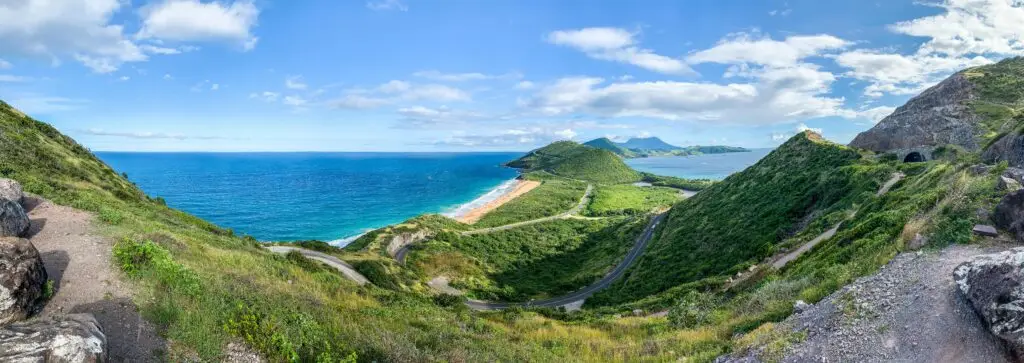
Saint Kitts’ beaches come in every color — golden, silver, even volcanic black.
| Beach | Location | Highlights |
|---|---|---|
| South Friars Bay | Southeast Peninsula | Calm waters, beach bars, snorkeling |
| Cockleshell Beach | Southern tip | Famous for Reggae Beach Bar & views of Nevis |
| Frigate Bay | Near Basseterre | Resort area with nightlife and restaurants |
| Dieppe Bay Beach | Northwest | Black sand, coral reef protection |
| Sandy Bank Bay | Southeast | Secluded, great for photography |
| Banana Bay | End of the peninsula | Tranquil, ideal for swimming |
From lively hangouts to hidden coves, Saint Kitts offers a beach for every mood.
 Nature & Adventure on Saint Kitts
Rainforest Exploration
The Central Forest Reserve covers a quarter of the island — thick jungle filled with giant ferns, vines, and monkeys.
Zip-lining
Fly through the canopy near Wingfield Estate with panoramic mountain views.
Railway Tour
The St. Kitts Scenic Railway, built for sugar transport, now offers a 3-hour scenic loop with commentary, drinks, and sweeping coastal views.
Kayaking & Paddleboarding
The calm Caribbean side near Frigate Bay is ideal for water sports.
ATV & Safari Tours
Explore old sugar mills and hidden beaches by 4×4.
Saint Kitts rewards curiosity — every valley hides a view, every path a story. Saint kitts & Nevis
 Wingfield Estate & Romney Manor
Near Old Road Town, these estates reveal the island’s colonial past.
- Romney Manor: Once owned by an ancestor of Thomas Jefferson, now home to lush gardens and the Caribelle Batik Workshop, where artisans create colorful fabrics by hand.
- Wingfield Estate: The oldest surviving sugar mill on the island, with ruins, aqueducts, and rainforest backdrop.
History, art, and nature come together here in harmony.
 Nevis – The Queen of the Caribbean
While Saint Kitts vibrates with energy, Nevis whispers serenity. The smaller island is ringed by golden beaches and crowned by the cloud-covered Nevis Peak.
Getting There
Frequent ferries and water taxis cross The Narrows in 10–15 minutes from Basseterre or the Southeast Peninsula.
First Impressions
Nevis feels timeless — no traffic lights, few resorts, and an atmosphere of calm. It’s where green hills meet blue sea, and history meets peace. Saint kitts & Nevis
Charlestown – Nevis’ Capital
A picturesque town of Georgian stone buildings and seaside charm.
Top Sights
- Hamilton House: Birthplace of Alexander Hamilton, now a museum dedicated to the U.S. founding father.
- Nevisian Heritage Village: Recreates traditional island homes and life from colonial to modern times.
- Charlestown Market: Lively hub for fresh produce and conversation.
- Bath Hotel & Hot Springs: Built in 1778, one of the Caribbean’s oldest hotels, with nearby geothermal pools still used today.
Charlestown embodies Nevis — dignified, historical, and friendly.
Nevis Peak Hike
The centerpiece of the island, Nevis Peak offers a challenging but unforgettable climb.
- Height: 985 m
- Duration: 4–5 hours round trip
- Difficulty: Strenuous, often slippery; guide recommended.
- View: On clear days, you can see Saint Kitts, Montserrat, and Antigua.
For those who prefer gentler adventures, the lower slopes have scenic trails through old sugar plantations and forests.
Beaches of Nevis
| Beach | Highlights |
|---|---|
| Pinney’s Beach | Long golden shore near Charlestown; home to Nevis’ famous beachfront restaurants. |
| Oualie Beach | Calm waters and perfect for kayaking or snorkeling. |
| Lover’s Beach | Secluded and romantic, with Nevis Peak as backdrop. |
| Nisbet Beach | Historic, with the colonial-era Nisbet Plantation nearby. |
| Cades Bay Beach | Quiet and picturesque with clear water. |
Nevis’ beaches feel natural and uncrowded — ideal for travelers seeking peace.
 Culture & Festivals Saint kitts & Nevis
Despite their size, Saint Kitts & Nevis have vibrant cultural traditions.
Carnival (Sugar Mas)
Held from December to January, blending Christmas festivities with soca, steelpan, and calypso.
Nevis Culturama (July–August)
A celebration of emancipation with parades, pageants, and African drumming.
Music Festival (June)
World-class acts perform at Warner Park — reggae, R&B, soca, and pop.
Sailing Events
The Nevis to St. Kitts Cross Channel Swim and Caribbean Sailing Week draw international visitors.
Islanders celebrate life with color, laughter, and rhythm — every event a reflection of pride.
 Cuisine – Island Flavor Saint kitts & Nevis
The food of Saint Kitts & Nevis reflects African, British, and Creole influences.
Signature Dishes
- Goat Water: A spiced goat stew, hearty and beloved.
- Stewed Saltfish & Dumplings: A breakfast favorite.
- Johnny Cakes: Fried bread eaten with anything.
- Roti: Soft wraps filled with curry.
- Plantains, Breadfruit, and Yams: Local staples.
- Conch Chowder & Lobster: Fresh from island waters.
Drinks & Desserts
- Ting with a Sting: Grapefruit soda mixed with rum.
- Carib Beer: Local favorite.
- Rum Punch: Sweet and potent.
- Guava Cheese & Coconut Drops: Traditional sweets.
Dining on the islands is casual and communal — a reminder that good food and good company go hand in hand.
 Diving & Snorkeling
Clear waters, coral gardens, and old wrecks make these islands a diver’s delight.
Top Dive Sites
- River Taw Wreck: 70-year-old ship near Saint Kitts.
- Nags Head: Coral walls off the Southeast Peninsula.
- Monkey Shoals: Reef system between the two islands.
- Christena Wreck: Ferry that sank in 1970, now an artificial reef near Nevis.
- Coconut Tree Reef: Colorful marine life and shallow depths perfect for beginners.
Visibility averages 20–30 meters, and warm waters make diving year-round possible.
 Plantation Inns & Heritage Hotels
Many old sugar estates have been transformed into boutique hotels preserving their colonial charm.
- Ottley’s Plantation Inn (Saint Kitts): Overlooks rainforest and ocean.
- Rawlins Plantation: Historic architecture surrounded by gardens.
- Nisbet Plantation (Nevis): Once home to Fanny Nisbet, wife of Admiral Nelson.
- Montpelier Plantation: Elegant and tranquil; where Nelson himself was married.
Staying in one of these estates is like living inside history — with comfort and grace.
 Shopping & Local Crafts
- Basseterre Market: Spices, fruits, and crafts.
- Caribelle Batik (Saint Kitts): Hand-dyed fabrics and souvenirs.
- Charlestown Art Galleries (Nevis): Paintings, pottery, and jewelry.
- Spice Souvenirs: Cinnamon, nutmeg, and pepper sauces are favorites.
 Getting Around
- Car Rental: Recommended; drive on the left-hand side.
- Ferries: Frequent connections between Basseterre and Charlestown.
- Taxis: Reliable and friendly drivers often double as guides.
- Buses: Minivans serving local routes cheaply.
- Walking & Cycling: Great for exploring small towns and coastal roads.
You can circle each island in under two hours — perfect for day trips and scenic drives.
 Climate & Best Time to Visit
Saint Kitts & Nevis enjoy a warm tropical climate year-round.
- Dry Season: December – May (best weather)
- Wet Season: June – November (green landscapes, fewer crowds)
- Average Temperature: 26–31°C (79–88°F)
- Hurricane Season: August – October (rare severe storms)
The best time to visit is January–April — sunny days, calm seas, and vibrant festivals.
 Practical Information
- Capital: Basseterre (Saint Kitts)
- Population: ~55,000
- Language: English (official), local Creole spoken
- Currency: Eastern Caribbean Dollar (XCD); USD accepted
- Electricity: 230V, British-style plugs (Type G)
- Time Zone: UTC –4
- Safety: Among the Caribbean’s safest islands.
- Health: Excellent facilities; tap water is safe to drink.
 Why You’ll Love Saint Kitts & Nevis
Because they’re two islands, one soul — a perfect balance of beauty, history, and tranquility.
Saint Kitts thrills the explorer with volcano hikes, old forts, and rainforests alive with monkeys. Nevis soothes the spirit with beaches, hot springs, and quiet elegance.
Together, they’re everything that makes the Caribbean unforgettable: Saint kitts & Nevis
 The sound of steelpan under starlight. Saint kitts & Nevis
The scent of sugarcane and sea breeze. Saint kitts & Nevis
 The sight of Nevis Peak glowing at sunset. Saint kitts & Nevis
You’ll leave Saint Kitts & Nevis with more than memories — you’ll leave with peace.
 Related Articles
- 5 Once-in-a-Lifetime Floating Stays
- Top 10 Most Unique Places to Stay in Europe
- 10 Incredible Castles Around the World