 Corsica, France – The Island of Mountains, Sea & Timeless Villages
 Introduction
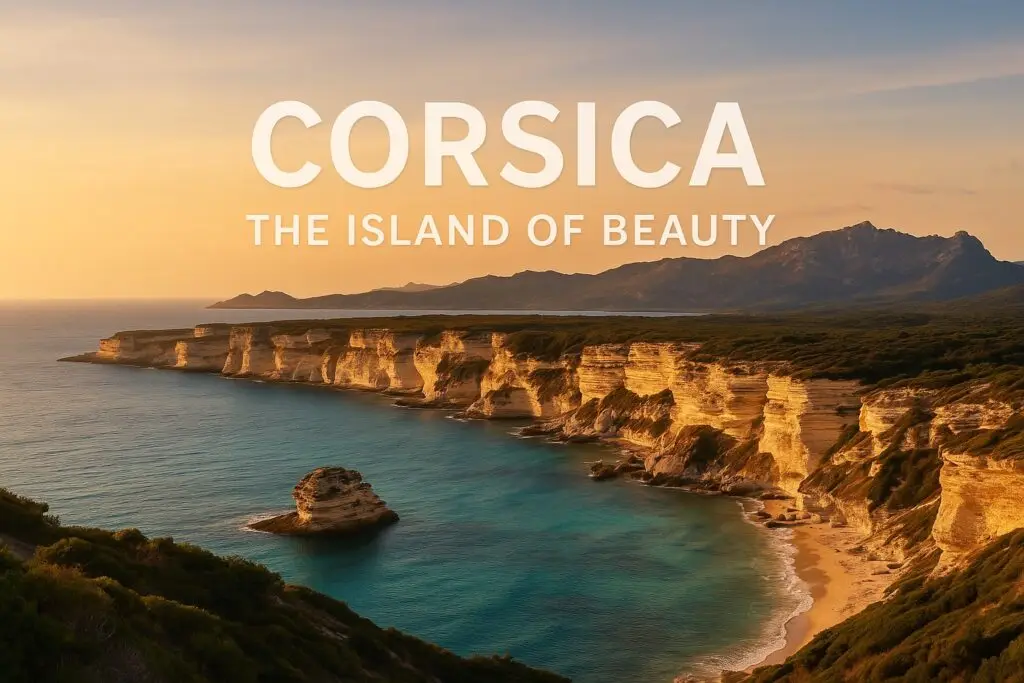
Discover France Corsica Floating between France and Italy, the rugged island of Corsica is one of Europe’s most fascinating and underrated destinations. Known as “Île de Beauté” (the Island of Beauty), it combines Mediterranean charm with wild, untouched nature.
Here you’ll find everything: snow-capped mountains, turquoise coves, ancient citadels, pine forests, and white-sand beaches that rival the Caribbean.
Corsica feels different from mainland France — it has its own culture, language, traditions, and rhythm of life. The landscapes change dramatically within a few kilometers: one moment you’re swimming in crystal-clear bays, the next you’re hiking through alpine valleys or exploring medieval villages perched high above the sea.
Whether you come for its beaches, mountain adventures, or authentic Corsican spirit, this island has a soul unlike any other in Europe.
 Geography & Natural Landscape
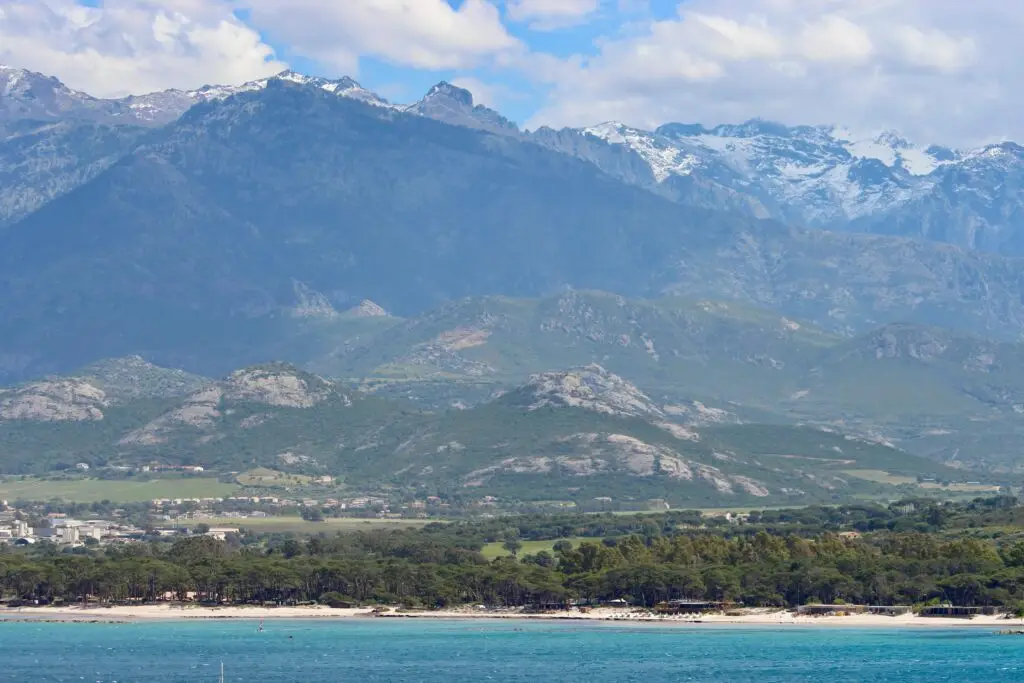
Corsica is located in the Mediterranean Sea, southeast of France and west of Italy, about 170 km from the French Riviera. Despite its modest size (183 km long and 83 km wide), it’s incredibly diverse — with over 1,000 km of coastline and 120 mountain peaks above 2,000 meters.
The island’s rugged terrain is dominated by the Corsican Mountains, which run through the center from north to south. The highest peak, Monte Cinto (2,706 m), offers breathtaking panoramic views across the island and even toward Sardinia on clear days.
Corsica’s natural variety means that in a single day, you can go from sandy beaches and hidden coves to dense pine forests, mountain lakes, and rocky cliffs overlooking the sea.
Major natural regions include:
- Cap Corse – a wild, narrow peninsula in the north with dramatic cliffs and ancient watchtowers.
- Balagne – the island’s “garden,” full of olive groves, villages, and beaches.
- Corte & the Central Mountains – alpine landscapes, rivers, and hiking trails.
- Southern Corsica – home to Bonifacio and Porto-Vecchio, with turquoise lagoons and white cliffs.
 Coastline & Beaches
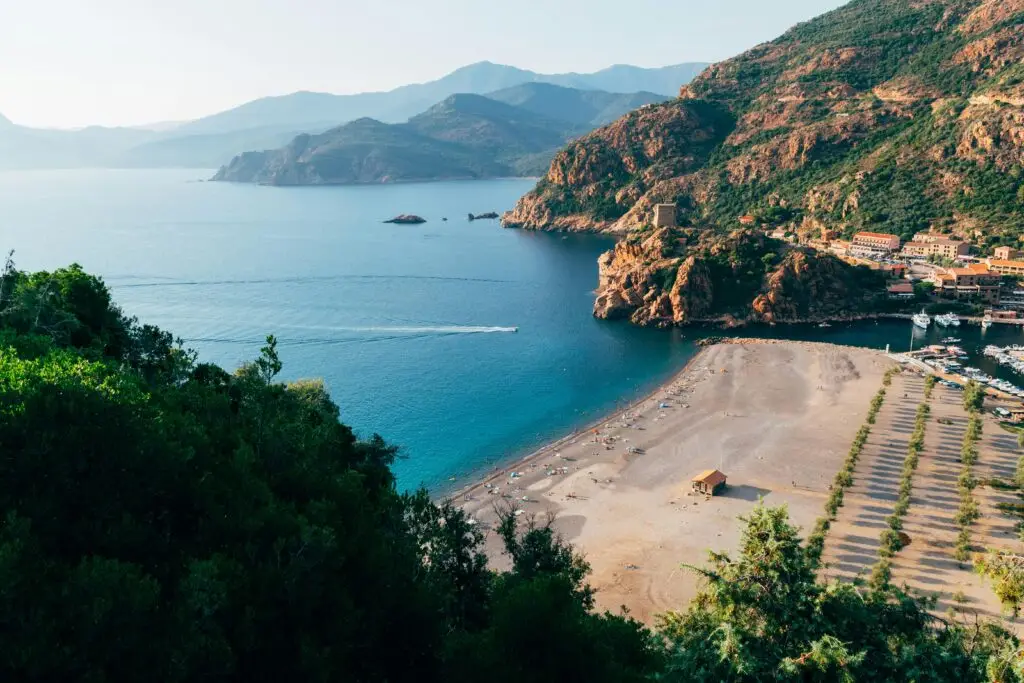
Corsica’s coastline is one of the most beautiful in Europe. The western coast is rugged and dramatic, while the east is flatter and lined with long sandy beaches.
Best Beaches in Corsica
- Palombaggia Beach (Porto-Vecchio) – A postcard-perfect beach with fine white sand and crystal-clear turquoise water, surrounded by pine trees.
- Santa Giulia – A shallow lagoon with calm waters, ideal for families and snorkeling.
- Rondinara Bay – A perfectly round bay shaped like a crescent, famous for its serenity.
- Saleccia Beach (Desert des Agriates) – Remote and pristine, reachable by 4×4 or boat.
- L’Ostriconi Beach – Wild and uncrowded, backed by dunes and rivers.
- Calvi Beach – Long, sandy, with views of the citadel and mountains.
The west coast — from Ajaccio to Porto — is more dramatic, with cliffs, coves, and red granite formations that glow in the sunset light.
Don’t miss the Calanques de Piana, a UNESCO World Heritage Site famous for its surreal rock formations towering above the sea.
 Mountains & Nature
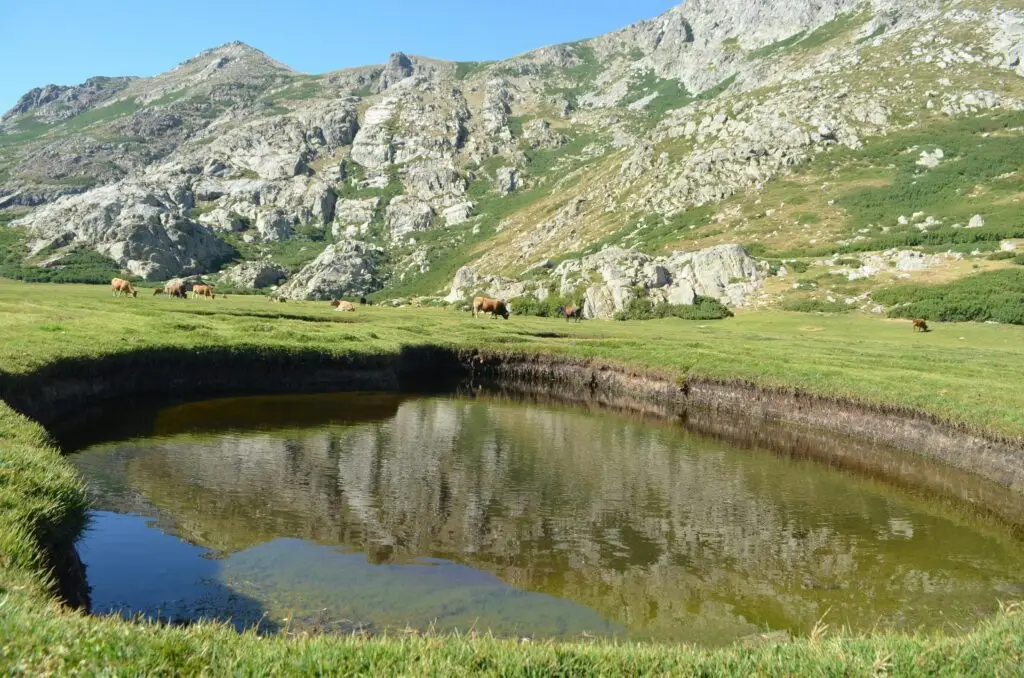
Corsica’s interior is a paradise for hikers and nature lovers.
The island’s mountains are part of the Parc Naturel Régional de Corse, which covers almost 40% of its surface — one of the largest protected areas in France.
Top Nature Highlights:
- GR20 Trail – Often called Europe’s toughest and most beautiful long-distance hiking route. It runs 180 km from Calenzana in the north to Conca in the south, crossing ridges, rivers, and alpine passes.
- Restonica Valley (near Corte) – Crystal-clear rivers, natural pools, and granite cliffs perfect for swimming and canyoning.
- Lac de Melo & Lac de Capitello – Two glacial lakes surrounded by steep mountain peaks.
- Aiguilles de Bavella – Striking spires of pink granite, popular with climbers and hikers.
- Gorges de la Spelunca – A scenic canyon with old stone bridges and hiking trails through chestnut forests.
In winter, the high mountains even get snow — you can ski at small resorts like Ghisoni or Val d’Ese, then drive to the beach the same afternoon.
 Main Towns & Cities
Ajaccio
The capital of Corsica and birthplace of Napoleon Bonaparte. Ajaccio sits along a calm bay, lined with palm trees and pastel houses.
Explore the Maison Bonaparte Museum, Ajaccio Cathedral, and Fesch Museum. The nearby Sanguinaires Islands are perfect for sunset views.
Bastia
Located on the northeastern coast, Bastia is Corsica’s main port and gateway from mainland France. Its old harbor, Terra Vecchia, is filled with cafés and colorful houses reflecting in the water.
Visit Place Saint-Nicolas, the Citadel, and local markets selling Corsican cheeses and charcuterie.
Corte
The historic heart of the island and former capital during the Corsican Republic.
Corte feels authentically local, surrounded by mountains and rivers.
The Citadel of Corte houses the Musée de la Corse, which explores the island’s culture, language, and identity.
Calvi
On the northwest coast, Calvi is famous for its beautiful bay and medieval citadel.
It’s said to be the birthplace of Christopher Columbus, and today it’s a lively town with beaches, restaurants, and water sports.
Behind Calvi lies the Balagne region, dotted with hilltop villages like Sant’Antonino, Pigna, and Speloncato.
Bonifacio
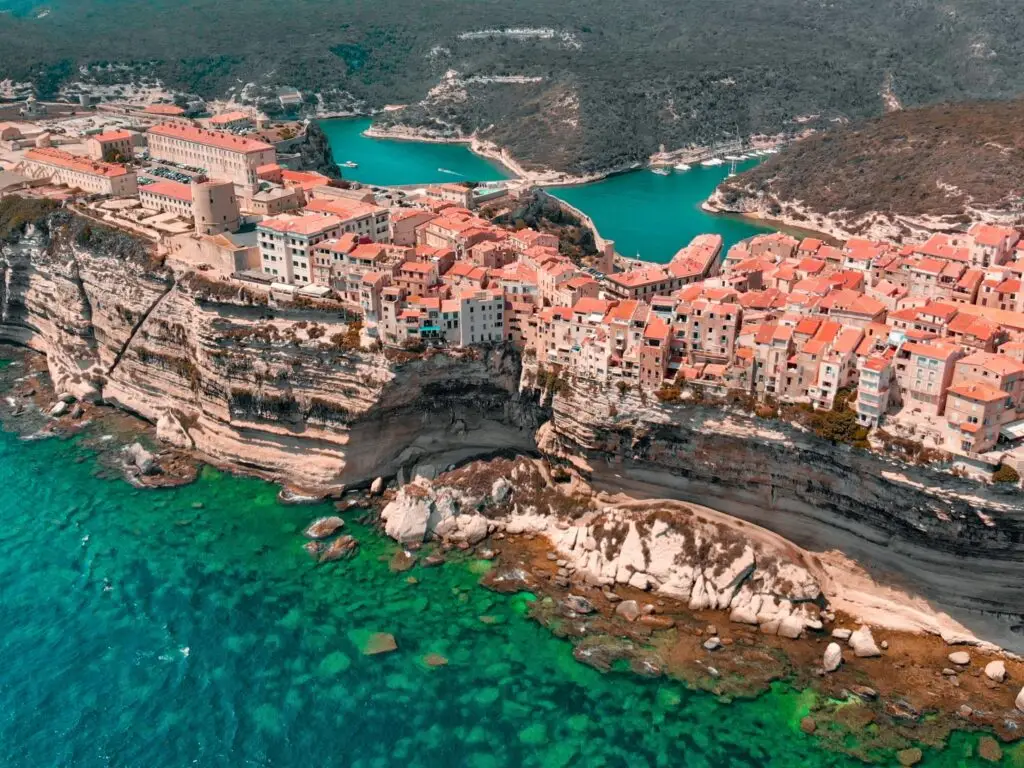
Perhaps the most spectacular town in Corsica, Bonifacio sits on limestone cliffs rising 70 meters above the sea.
Its old town, narrow alleys, and sea views are breathtaking. Take a boat trip beneath the cliffs or walk the King of Aragon’s Stairway, carved directly into the rock.
Porto-Vecchio
Located in southern Corsica, Porto-Vecchio blends history, beaches, and nightlife. The town’s old citadel overlooks a marina full of yachts, while nearby beaches like Palombaggia and Santa Giulia are among Europe’s best.
 Villages & Cultural Heritage
Corsica’s villages are the soul of the island. They cling to mountainsides, hidden among olive trees and chestnut forests, preserving a lifestyle that hasn’t changed in centuries.
Some of the most charming villages include:
- Sant’Antonino – One of France’s oldest villages, with panoramic views over the Balagne plain.
- Pigna – Famous for artisans, music workshops, and handmade ceramics.
- Zonza – In southern Corsica, surrounded by pine forests and close to Bavella peaks.
- Sartène – Known as “the most Corsican of Corsican towns,” with stone houses and strong traditions.
- Nonza (Cap Corse) – Perched on a cliff above a black pebble beach.
- Evisa – Gateway to the Gorges de la Spelunca.
 Culture & Traditions
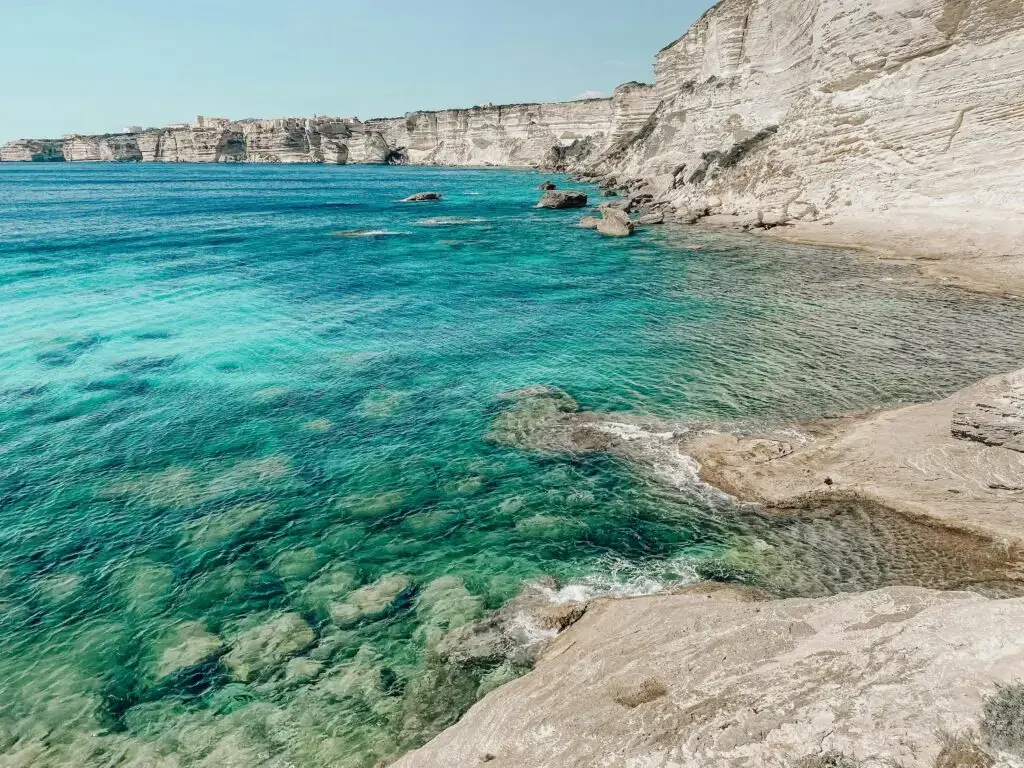
Corsica’s culture is a blend of French, Italian, and local influences. The Corsican language, Corsu, is still spoken in many villages, and traditional polyphonic singing (Paghjella) is recognized by UNESCO.
Local festivals celebrate everything from wine and music to religious processions.
The island’s pride and independence run deep — even though it’s part of France, Corsicans maintain a strong local identity.
Local specialties:
- Charcuterie – air-dried meats like coppa, lonzu, and figatellu.
- Cheese – especially brocciu, a soft sheep’s milk cheese used in pastries and dishes.
- Chestnuts – used in flour, cakes, and soups, especially in the mountains.
- Wine – Corsica has nine AOC wine regions, producing reds and rosés with character.
- Honey & Olive oil – from mountain flowers and old groves.
 Outdoor Activities
Corsica is made for adventure.
You can go hiking, canyoning, diving, kayaking, sailing, horse riding, or rock climbing — often in the same week.
Top Experiences:
- GR20 Trail (multi-day hike)
- Boat tour to Scandola Nature Reserve – accessible only by sea, with dramatic cliffs and wildlife.
- Canyoning in the Bavella region – through turquoise pools and waterfalls.
- Diving near Bonifacio or Calvi – underwater caves and wrecks.
- River swimming – Restonica, Tavignano, and Fango rivers are famous for natural pools.
- Cycling – challenging but rewarding routes along coastal roads.
 Climate & Best Time to Visit
Corsica enjoys a Mediterranean climate, with hot, dry summers and mild winters.
However, due to its mountains, weather can vary dramatically between the coast and the interior.
| Season | Description |
|---|---|
| Spring (April–June) | Flowers bloom, temperatures are pleasant (20–25°C), and it’s perfect for hiking before summer heat. |
| Summer (July–August) | Peak season: warm seas, festivals, and lively beaches (25–35°C). |
| Autumn (September–October) | Fewer crowds, sea still warm, great for hiking and photography. |
| Winter (November–March) | Quiet, with snow in the mountains and mild weather on the coast (10–15°C). |
 Getting Around
Corsica is accessible by ferry (from Nice, Marseille, or Toulon) and air (airports in Ajaccio, Bastia, Calvi, and Figari).
To explore freely, renting a car is essential — public transport is limited and many natural spots are remote.
Driving is an experience itself: winding mountain roads, coastal routes, and endless viewpoints.
 Suggested Itineraries (Inspiration)
Even without specific tours, you can design your own route:
7-Day Highlights Itinerary:
- Day 1–2: Ajaccio & Sanguinaires Islands
- Day 3: Calanques de Piana & Porto
- Day 4: Corte & Restonica Valley
- Day 5: Bonifacio cliffs
- Day 6–7: Porto-Vecchio & beaches
10-Day Nature & Culture Route:
Ajaccio → Piana → Corte → Bavella → Bonifacio → Porto-Vecchio → Bastia (loop)
 Why Visit Corsica
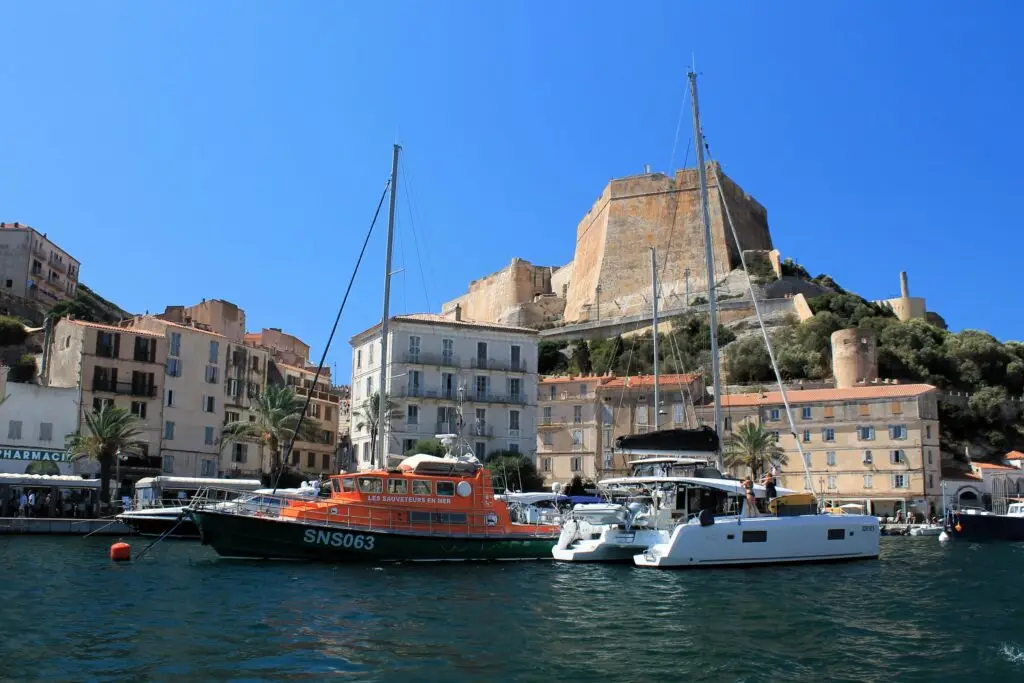
Corsica is an island where mountains meet the sea, where every road leads to another breathtaking view, and where you still feel the heartbeat of authentic Mediterranean life.
It’s adventurous yet relaxing, wild yet refined.
Whether you love hiking, swimming, photography, or simply wandering through sunlit villages — Corsica offers moments you’ll never forget.
 Related Amazing Bucketlist Articles
- Top 10 Most Beautiful Places in France
- The Ultimate Monaco Travel Guide
- The Most Expensive Hotels in Every Continent