
Occitanie, France – From the Pyrenees to the Mediterranean Coast

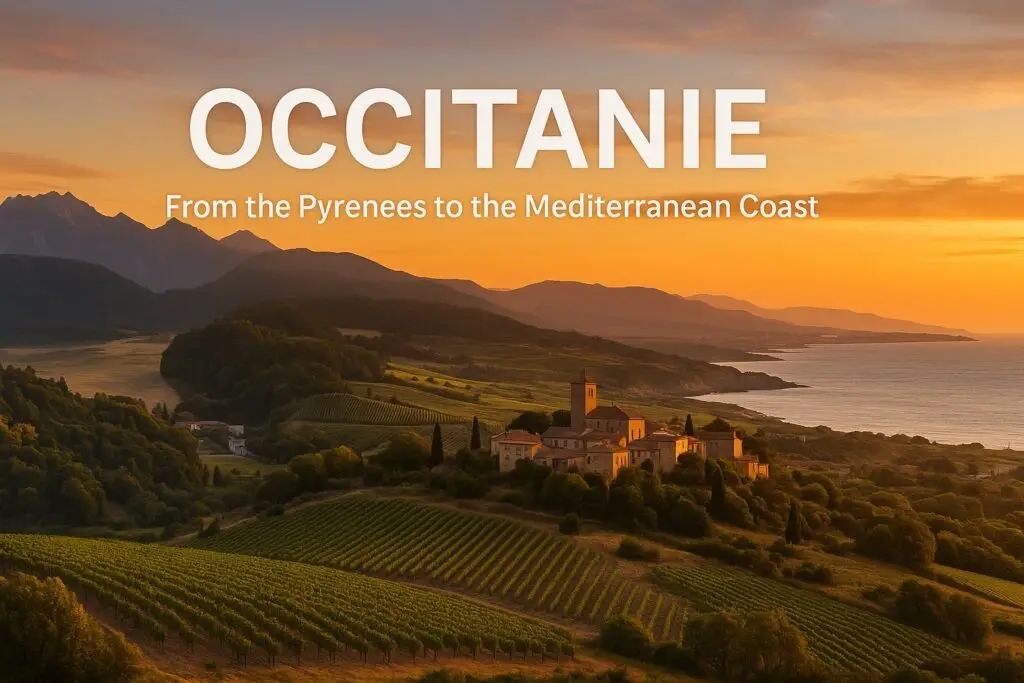
Few regions in Europe capture the essence of southern France quite like Occitanie.
Stretching from the snow-capped Pyrenees mountains to the sun-drenched Mediterranean coast, this vast and diverse region is a land of contrasts — where medieval villages meet modern cities, and where ancient Roman ruins rise beside wild, untouched nature.
Occitanie was formed from the historical regions of Languedoc-Roussillon and Midi-Pyrénées, blending two powerful identities into one. Today, it’s one of France’s most fascinating territories: rich in history, architecture, gastronomy, and natural beauty.
It’s a place where every traveler finds their rhythm — whether it’s exploring Toulouse’s pink-brick streets, swimming in the azure waters of the Camargue, hiking in the Pyrenees, or tasting wine among the sun-baked vineyards of Minervois and Corbières.
AI image prompt: “Wide panoramic sunrise view of Occitanie landscape from Pyrenees to Mediterranean coast, vineyards and medieval villages under golden light.”
 Geography & Regions
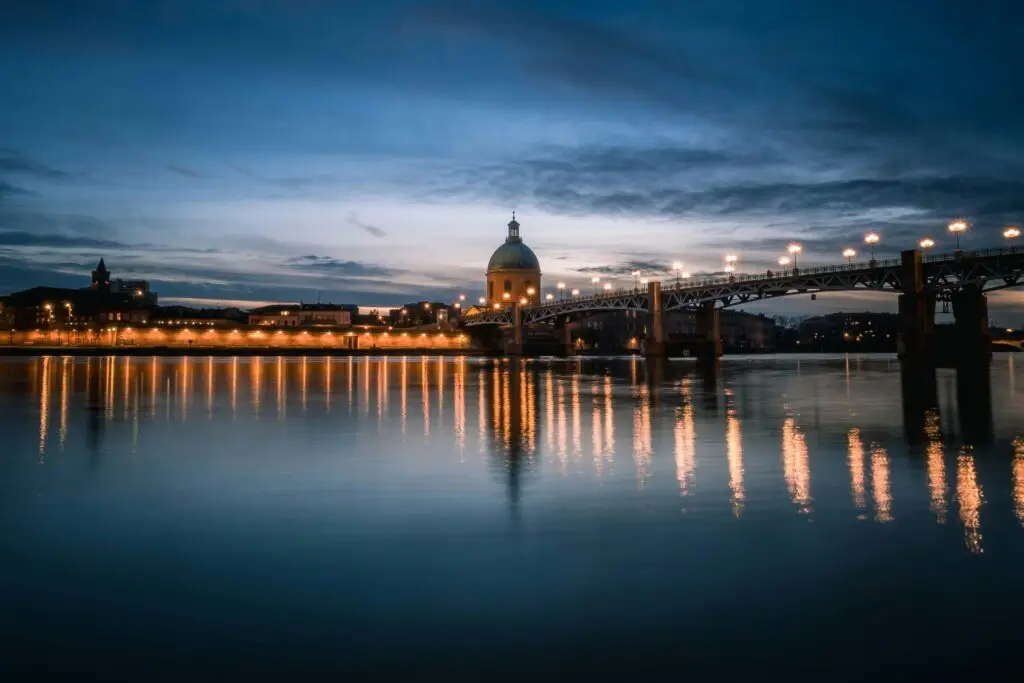
Occitanie is the second-largest region in France, covering a stunningly varied landscape that includes mountains, plains, vineyards, lakes, and coastline.
It’s bordered by Spain and Andorra to the south, the Mediterranean Sea to the east, and the regions of Nouvelle-Aquitaine, Auvergne-Rhône-Alpes, and Provence-Alpes-Côte d’Azur to the north and east.
 Key Geographical Zones:
- The Pyrenees Mountains: Stretching across the southern edge of the region, offering hiking, skiing, and breathtaking alpine scenery.
- The Mediterranean Coast: Includes over 200 km of sandy beaches, lagoons, and seaside resorts.
- The Toulouse Plain: Fertile agricultural heartland centered around the Garonne River.
- The Cévennes & Grands Causses: Rugged limestone plateaus and dramatic gorges ideal for nature adventures.
- The Vineyards of Languedoc: One of the largest wine-producing areas in the world.
The diversity of landscapes makes Occitanie feel like multiple countries in one — from snow to sea, and from wild highlands to lively coastal cities.
AI image prompt: “Map-style aerial image showing Occitanie region of France from Pyrenees to Mediterranean coast, green mountains and blue sea visible.”
 History & Heritage
Occitanie’s story stretches back thousands of years — from prehistoric cave art to medieval crusades and Renaissance prosperity.
Roman Legacy
Few regions in France preserve as much Roman heritage.
Cities like Nîmes, Béziers, and Narbonne still display perfectly preserved amphitheaters, aqueducts, and temples.
The Pont du Gard, an ancient aqueduct built in the 1st century AD, remains one of the finest Roman monuments in the world — a masterpiece of engineering and symmetry.
Medieval Power & The Cathars
During the Middle Ages, this region was a stronghold of the Cathars — a religious group declared heretical by the Catholic Church. The dramatic Cathar castles, perched atop mountain peaks (like Montségur, Peyrepertuse, and Queribus), still dominate the landscape as silent witnesses to a turbulent past.
The Age of the Counts & the Rise of Toulouse
In the 12th century, the Counts of Toulouse ruled vast territories, making the city a cultural and political center. The local language, Occitan, flourished — inspiring poets and troubadours who celebrated love, honor, and freedom.
From Languedoc to Modern France
By the 17th century, the region became an agricultural hub linked by the Canal du Midi — a UNESCO-listed canal connecting the Mediterranean with the Atlantic. In the 21st century, the merger of Languedoc-Roussillon and Midi-Pyrénées into Occitanie reconnected these ancient identities under one banner.
AI image prompt: “Ancient Roman amphitheater in Nîmes at sunset, golden light and dramatic sky, travel photography style.”
 Major Cities of Occitanie
The region’s cities each carry a distinct identity — from the aerospace innovation of Toulouse to the Mediterranean charm of Montpellier and the medieval soul of Carcassonne.

Toulouse – The Pink City
Known as La Ville Rose (The Pink City) for its terracotta brick buildings, Toulouse is both historic and forward-thinking.
It’s the capital of Occitanie and the European hub of aerospace, home to Airbus and the Cité de l’Espace museum.
Wander along the Garonne River, explore Place du Capitole, and marvel at the Basilique Saint-Sernin, one of Europe’s largest Romanesque churches.
The city’s atmosphere blends student energy, southern warmth, and cultural sophistication — with vibrant markets, music festivals, and a lively café scene.
AI image prompt: “Toulouse city skyline with Garonne River and Pont Neuf bridge at sunset, warm pink and orange tones.”

Montpellier – Youthful & Mediterranean
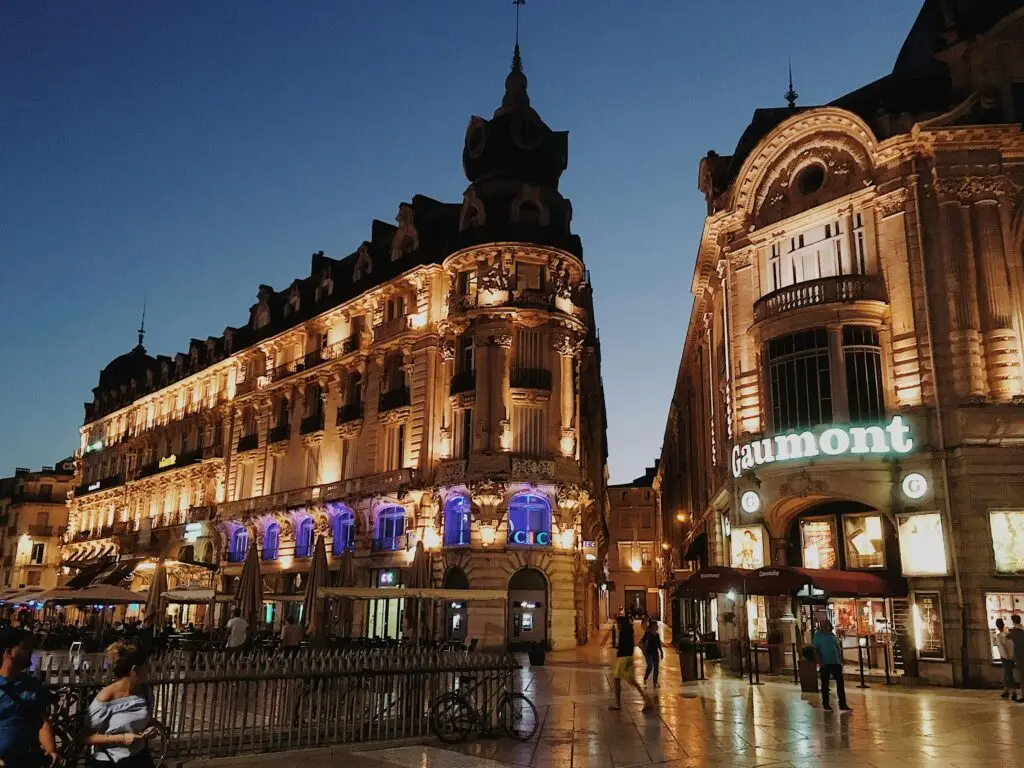
Just 10 km from the Mediterranean coast, Montpellier is one of France’s fastest-growing and most dynamic cities.
It’s youthful, creative, and sunny — a blend of medieval alleys, elegant 17th-century mansions, and modern architecture.
Highlights include:
- Place de la Comédie – the heart of the city, with fountains and street performers.
- Musée Fabre – a leading fine arts museum.
- Promenade du Peyrou – offering panoramic views over the city and beyond.
Montpellier’s proximity to beaches like Palavas-les-Flots and La Grande-Motte makes it ideal for travelers seeking both culture and relaxation.
AI image prompt: “Montpellier Place de la Comédie with fountains and people under blue sky, vibrant summer day.”
Carcassonne – A Medieval Dream
Few places in Europe feel as storybook-perfect as Carcassonne.
Its double-walled fortress — the Cité de Carcassonne — is one of the best-preserved medieval citadels in the world and a UNESCO World Heritage Site.
Walk across drawbridges, explore stone towers, and wander cobbled lanes that seem frozen in time.
At night, the city glows with golden light — an unforgettable sight.
AI image prompt: “Carcassonne medieval fortress illuminated at night, golden towers and moonlit sky, cinematic lighting.”

Nîmes – The Roman Jewel
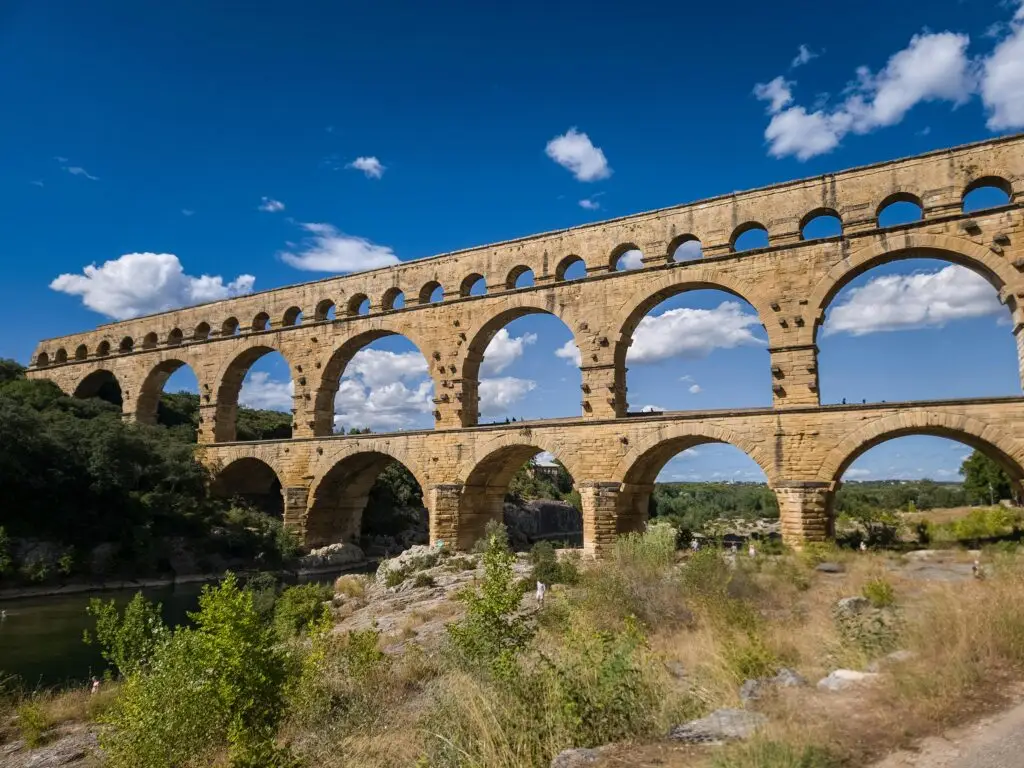
Known as the “French Rome,” Nîmes boasts some of the best-preserved Roman architecture in the world.
The Arena of Nîmes, a colossal amphitheater, still hosts concerts and festivals today. Nearby stand the Maison Carrée, an ancient Roman temple, and the Jardins de la Fontaine, one of Europe’s earliest public gardens.
The city exudes Mediterranean elegance — white stone, green palms, and a vibrant Provençal lifestyle.
AI image prompt: “Aerial view of Nîmes Arena and city rooftops in golden afternoon light, warm tones.”

Perpignan – Gateway to Catalonia
Closer to Spain than to Paris, Perpignan carries a distinct Catalan influence — in its food, festivals, and even its bilingual street signs.
The Palais des Rois de Majorque (Palace of the Kings of Majorca) showcases Gothic architecture and sweeping views.
Perpignan’s colorful old town, palm-lined squares, and easy access to the Mediterranean coast and Pyrenees-Orientales make it a unique cultural crossroads.
AI image prompt: “Perpignan old town with colorful Catalan-style houses and palm trees, mountains visible in distance.”

Albi – City of Art & Red Brick
Perched along the Tarn River, Albi is a UNESCO World Heritage Site best known for the Sainte-Cécile Cathedral, a fortress-like Gothic masterpiece built entirely of red brick.
The adjacent Toulouse-Lautrec Museum celebrates the works of the city’s most famous native artist.
Albi’s blend of medieval charm and artistic heritage makes it one of the most picturesque towns in southern France.
AI image prompt: “Aerial view of Albi cathedral and old town reflected in Tarn River at sunset, warm red tones.”
Béziers & Narbonne – Ancient Cities of the South
Both Béziers and Narbonne trace their roots to Roman times.
- Béziers is known for the Canal du Midi locks, bullfighting traditions, and dramatic views from Saint-Nazaire Cathedral.
- Narbonne, once a major Roman port, features the Via Domitia (an ancient Roman road) still visible in its city center, and the Narbonne Cathedral, a masterpiece of Gothic architecture.
Nature & Landscapes – Wild Beauty in Every Direction
Occitanie is one of the most geographically diverse regions in Europe.
From snow-capped peaks to vast vineyards and sunlit coasts, its landscapes tell the story of France in miniature — grand, varied, and endlessly photogenic.

The Pyrenees Mountains
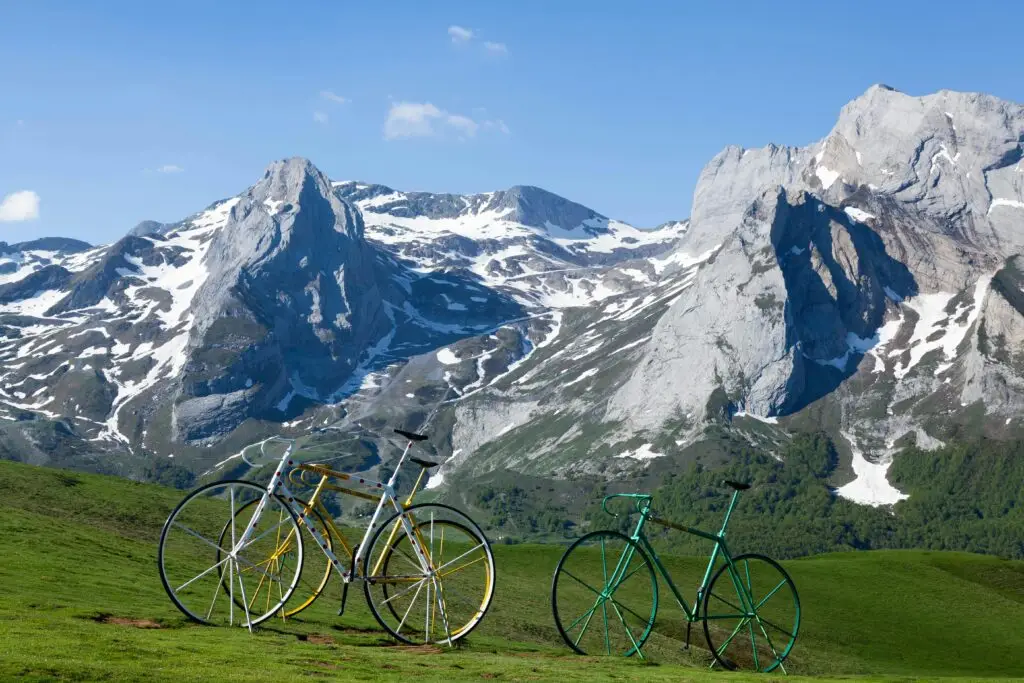
The southern border of Occitanie is lined by the French Pyrenees, a rugged mountain range forming a natural frontier with Spain and Andorra.
Here, alpine meadows, deep valleys, and dramatic cliffs create some of France’s most breathtaking scenery.
Top highlights include:
- Cirque de Gavarnie – a UNESCO-listed natural amphitheater with waterfalls plunging from over 400 meters.
- Pic du Midi de Bigorre – famous for its astronomical observatory and panoramic views.
- Luz-Saint-Sauveur and Cauterets – charming mountain villages surrounded by hiking trails and ski slopes.
In summer, the Pyrenees are perfect for hiking and paragliding; in winter, for skiing and snowshoeing at resorts like Font-Romeu, Saint-Lary-Soulan, and Ax-les-Thermes.
AI image prompt: “Panoramic view of Pyrenees mountains in Occitanie, France with snow peaks, alpine meadows and small villages in sunlight.”

The Mediterranean Coast
The eastern edge of Occitanie meets the Mediterranean Sea in a blend of golden beaches, salt lagoons, and fishing villages.
This coastline stretches from the Camargue in the west to the Spanish border in the east — a paradise for sunseekers, sailors, and birdwatchers alike.
Top coastal destinations:
- Collioure – a pastel-colored fishing town beloved by artists like Matisse and Picasso.
- Argelès-sur-Mer – long sandy beaches backed by the Pyrenees foothills.
- Gruissan – famous for its circular old town and pink salt flats.
- La Grande-Motte & Palavas-les-Flots – stylish seaside resorts near Montpellier.
- Sète – known as the “Venice of Languedoc,” crisscrossed by canals and vibrant with seafood restaurants.
The Étang de Thau, a vast lagoon near Sète, is famous for oyster farming — you can often see small boats and wooden racks scattered across the calm blue water.
AI image prompt: “Mediterranean coast of Occitanie at sunrise with sandy beaches, turquoise sea, and pastel houses in Collioure.”

Cévennes & Grands Causses
In the northern part of Occitanie, the Cévennes National Park and Grands Causses form a landscape of rugged plateaus, deep gorges, and chestnut forests.
This is rural France at its most authentic — dotted with stone hamlets, winding mountain roads, and hidden rivers.
- Gorges du Tarn – one of Europe’s most spectacular river canyons, perfect for kayaking and hiking.
- Mont Aigoual – a windswept summit offering sweeping views across southern France.
- Meyrueis and Sainte-Enimie – charming base villages for outdoor exploration.
AI image prompt: “Aerial view of Gorges du Tarn with turquoise river winding through limestone cliffs and small stone village.”

Lakes, Rivers & Natural Parks
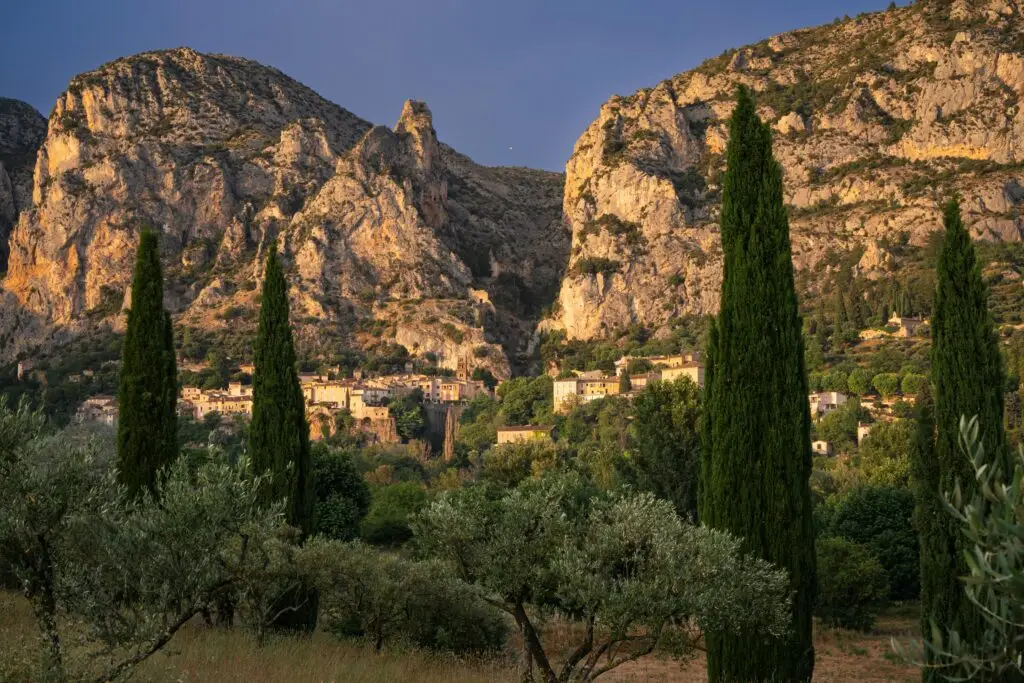
Occitanie is full of serene lakes and green havens.
The Canal du Midi (UNESCO World Heritage Site) stretches 240 km between Toulouse and the Mediterranean — lined by plane trees and bridges, perfect for cycling or boat trips.
Other natural highlights:
- Lac de Saint-Ferréol – near Revel, part of the Canal du Midi’s water system.
- Lac de Montbel – turquoise waters surrounded by forests in the Ariège.
- Camargue Gardoise – a mosaic of salt marshes, flamingos, and white horses.
- Regional Nature Parks: Haut-Languedoc, Causses du Quercy, and Pyrenees Ariégeoises.
AI image prompt: “Canal du Midi with boats, green trees reflected in calm water, early morning light and cyclists on the towpath.”
Castles, Fortresses & Villages
Occitanie is dotted with over 500 castles and fortifications, ranging from Roman ruins to Cathar strongholds and Renaissance estates.

The Cathar Castles
These mountaintop ruins are symbols of freedom and faith, perched like stone eagles above the valleys of the Aude and Ariège.
Top ones include:
- Montségur – the most legendary, site of the Cathars’ final stand in 1244.
- Peyrepertuse – “the citadel of the winds,” clinging to a jagged limestone ridge.
- Queribus – last refuge of the Cathars, with panoramic views toward the Mediterranean.
- Lastours Castles – four towers guarding the valley north of Carcassonne.

Renaissance Châteaux & Noble Estates
In the plains and river valleys, elegant manors tell another story — of Renaissance wealth and refinement.
- Château de Flaugergues (Montpellier) – surrounded by vineyards.
- Château de Pennautier (near Carcassonne) – nicknamed the “Little Versailles of the Languedoc.”
- Château de Merville (north of Toulouse) – famous for its hedge maze and gardens.

Most Beautiful Villages of Occitanie
Occitanie has more villages listed among Les Plus Beaux Villages de France than almost any other region.
These towns embody the soul of rural France — cobblestone lanes, ivy-covered walls, and timeless charm.
- Cordes-sur-Ciel – perched high above the Tarn Valley, often wrapped in clouds.
- Conques – a pilgrimage stop with a golden Romanesque abbey.
- Saint-Guilhem-le-Désert – nestled in a canyon with a medieval monastery.
- Lagrasse – a riverside gem with a stone bridge and abbey.
- Lautrec – known for its pastel-colored mills and pink garlic.
- Rocamadour – though technically near the border, it’s one of France’s most striking cliffside sanctuaries.
Beaches & the Coastline of Occitanie
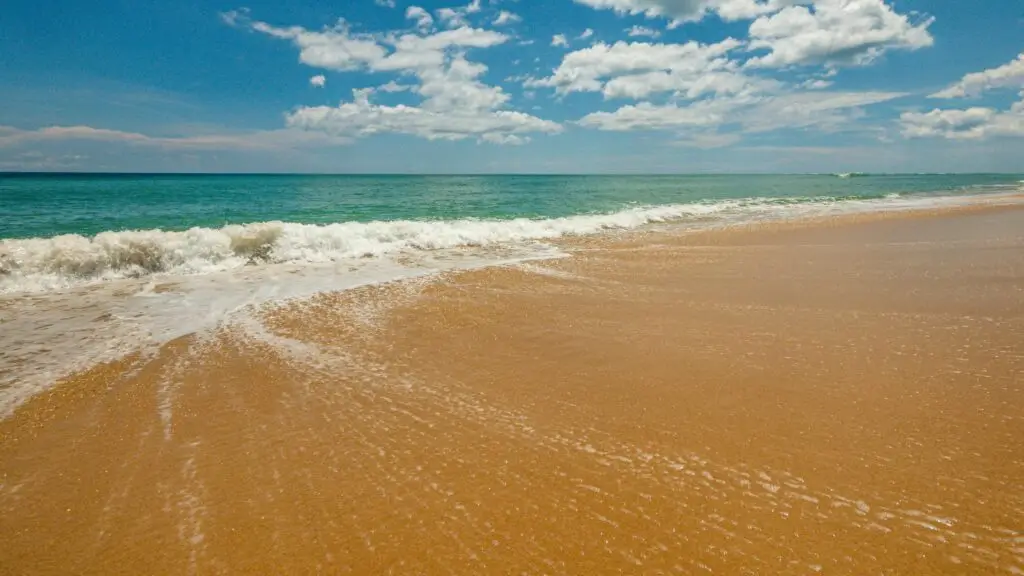
The Mediterranean coast of Occitanie is long, golden, and far less crowded than the Côte d’Azur — yet equally beautiful.
It’s a land of fishing ports, lagoons, flamingos, and windsurfing towns.

Top Beaches:
- Argelès-sur-Mer: Family-friendly and scenic, backed by the Pyrenees foothills.
- Leucate & La Franqui: Great for kitesurfing and endless coastal walks.
- Espiguette Beach (near Le Grau-du-Roi): Vast and wild, one of France’s longest sandy beaches.
- Collioure: Small coves surrounded by colorful houses and old fortifications.
- Narbonne-Plage: Wide and sunny, ideal for relaxation.

Wine, Food & Gastronomy
Occitanie is the largest wine-producing region in France — even larger than Bordeaux.
Vineyards stretch across sun-drenched hills, from the Mediterranean coast to the foothills of the Pyrenees.

Wine Regions:
- Languedoc AOC: One of the world’s oldest and most diverse appellations.
- Minervois & Corbières: Full-bodied reds grown on stony hillsides.
- Gaillac: Near Albi, producing wines since Roman times.
- Cahors: Famous for its deep, rich Malbec-based reds.
- Costières de Nîmes: Blends of Grenache and Syrah with a Mediterranean touch.

Cuisine Highlights:
- Cassoulet (Toulouse & Carcassonne): A slow-cooked stew of beans, sausage, and duck.
- Brandade de Nîmes: Creamy salt cod purée with olive oil.
- Aligot: Mashed potatoes whipped with cheese, butter, and garlic.
- Duck confit, foie gras, and truffles: Staples of southern French dining.
- Cheeses: Roquefort (Aveyron), Pélardon (Cévennes), and Tomme des Pyrénées.
Farmers’ markets — like those in Uzès, Revel, and Mirepoix — burst with colors, scents, and local pride.
Culture, Art & Traditions
Occitanie’s identity is a beautiful fusion of French, Catalan, and Occitan influences.
It’s a region where ancient languages still echo through stone streets, and festivals celebrate the land’s deep connection to music, food, and the seasons.

The Occitan Spirit
The word Occitanie comes from the medieval langue d’oc, the ancient language once spoken across southern France.
Today, it survives in local songs, street names, and traditions. Towns like Toulouse, Albi, and Montpellier host events celebrating the culture of Oc — a symbol of pride and independence that defines southern France’s personality.
AI image prompt: “Folk musicians in traditional Occitan clothes performing with tambourines and bagpipes in a sunlit French village square.”

Art & Architecture
From Roman engineering to Renaissance refinement, Occitanie’s architecture spans two millennia.
- Roman: Nîmes, Narbonne, and the Pont du Gard remain as open-air museums of the Empire.
- Medieval: The citadel of Carcassonne and the abbeys of Conques and Saint-Guilhem-le-Désert.
- Renaissance: The pastel-colored mansions of Toulouse and Pézenas, once home to playwright Molière.
- Modern: The new districts of Montpellier and Toulouse, with cutting-edge design like Jean Nouvel’s Halles de la Machine or the futuristic Cité de l’Espace.
Art flourishes in festivals and museums — the Musée Toulouse-Lautrec in Albi, the Musée Fabre in Montpellier, and smaller galleries tucked into medieval streets across the region.
AI image prompt: “Collage of Occitanie architecture: Carcassonne fortress, Pont du Gard aqueduct, and modern Montpellier skyline at sunset.”

Festivals & Events
Occitanie celebrates life with festivals almost every month.
- Feria de Nîmes & Béziers: Bullfighting, music, parades, and fireworks fill the streets each summer.
- Festival de Carcassonne: World-class concerts and theater performances inside the medieval walls.
- Jazz in Marciac: One of Europe’s most famous jazz festivals, attracting global artists.
- Les Déferlantes (Argelès-sur-Mer): Rock and pop music on the Mediterranean shore.
- Wine & Gastronomy Fairs: From Les Vendanges de Banyuls to Vignes en Fête near Montpellier.
AI image prompt: “Night festival in Carcassonne castle courtyard with lights, music stage and summer crowd.”

Outdoor Adventures & Active Travel
With its mix of mountains, rivers, and coastline, Occitanie is a paradise for outdoor lovers.

Hiking
- GR10 Trail: A long-distance route crossing the Pyrenees from the Atlantic to the Mediterranean.
- Cévennes National Park: Forest trails, limestone ridges, and old shepherd paths.
- Cathar Trail (Sentier Cathare): Linking many of the region’s mountaintop castles.

Cycling & Canal Paths
The Canal du Midi is perfect for cycling or leisurely boating, passing vineyards, villages, and bridges shaded by plane trees.
Cyclists can also enjoy the Véloroute 81 from the Pyrenees to the coast.

Canyoning & Climbing
The Gorges du Tarn and Hérault Valley are top destinations for canyoning, rock climbing, and kayaking through turquoise waters.

Hot-Air Ballooning & Paragliding
Balloon flights over Albi, Lavaur, or the Pyrenean foothills give stunning bird’s-eye views of castles and vineyards.
AI image prompt: “Hot-air balloons flying over vineyards and rivers of Occitanie at sunrise, mountains in distance.”
Religious Heritage & Pilgrimage Routes
Occitanie sits at the heart of the Camino de Santiago (Way of St. James) network, one of Europe’s most important pilgrimage paths.
Key stops include:
- Conques: The Abbey-Church of Sainte-Foy, with golden reliquaries.
- Moissac: The Abbey of Saint-Pierre, famous for its carved Romanesque portal.
- Cahors: Cathedral of Saint-Étienne and its medieval bridge, the Pont Valentré.
Pilgrims, hikers, and spiritual travelers alike are drawn to these timeless routes that combine faith, art, and history.
AI image prompt: “Pilgrims walking through medieval village in Occitanie at dawn with church tower and misty hills.”
Historical Routes & Road Trips
To experience the best of Occitanie, follow themed road trips that weave together its castles, vineyards, and coastline.
 The Cathar Castles Route (Aude & Ariège)
Start in Carcassonne and explore the dramatic fortresses of Lastours, Peyrepertuse, and Montségur — ending in Foix, a picturesque town crowned by a medieval castle.
 The Wine & Canal Route (Hérault & Aude)
Begin in Béziers, follow the Canal du Midi past vineyards and olive groves, stopping in Capestang, Homps, and Minerve — one of France’s prettiest hilltop villages.
 The Pyrenees Road (Hautes-Pyrénées)
A journey through valleys, spa towns, and mountain passes: from Lourdes and Gavarnie to Saint-Lary and Bagnères-de-Bigorre.
 The Coastal Route (Gard to Pyrénées-Orientales)
From the Roman arenas of Nîmes to the beaches of Collioure, combining culture, seafood, and Mediterranean sunshine.
AI image prompt: “Scenic French road winding through vineyards with mountains and castles in background, sunny blue sky.”

UNESCO World Heritage Sites
Occitanie proudly holds more than a dozen UNESCO designations:
- Pont du Gard – Roman aqueduct masterpiece.
- Cité de Carcassonne – perfectly preserved medieval fortress.
- Canal du Midi – engineering wonder of the 17th century.
- Saint-Sernin Basilica (Toulouse) – key stop on the Camino de Santiago.
- Cirque de Gavarnie – dramatic Pyrenean natural amphitheater.
- Causses & Cévennes Cultural Landscape – living tradition of agro-pastoralism.
These sites collectively tell the human story of France — from Roman times to today.
AI image prompt: “Collage showing Pont du Gard, Carcassonne fortress, and Canal du Midi under sunlight, travel poster style.”

Best Time to Visit
Occitanie enjoys a Mediterranean climate, with warm, dry summers and mild winters — though mountain areas have cooler conditions.
| Season | Weather | Highlights |
|---|---|---|
| Spring (April–June) | Pleasant (18–25 °C) | Wildflowers, ideal for hiking and exploring villages |
| Summer (July–August) | Hot (25–35 °C) | Beaches, festivals, long evenings |
| Autumn (September–October) | Mild (20–28 °C) | Wine harvests, golden landscapes |
| Winter (November–March) | Cool (10–15 °C) |

Getting There & Around
Occitanie is vast — almost the size of Ireland — so planning how to travel through it makes all the difference.

By Air
The region has several airports with both domestic and international connections:
- Toulouse-Blagnac Airport (TLS): Main hub for southern France, with flights from across Europe.
- Montpellier-Méditerranée (MPL): Best for beach access and the eastern region.
- Perpignan-Rivesaltes (PGF): For Catalonia and the Pyrenees.
- Carcassonne Airport (CCF): Budget-friendly flights from the UK and Ireland.
- Nîmes-Arles-Camargue Airport (FNI): Good for exploring the Gard and Provence border area.
AI image prompt: “Aerial view of Toulouse-Blagnac Airport with planes and city skyline in distance under golden morning light.”

By Train
The TGV high-speed train connects Occitanie’s major cities with the rest of France.
- Paris → Toulouse in 4h30
- Lyon → Montpellier in 1h45
- Marseille → Nîmes in 1h20
Regional trains (TER Occitanie) are reliable for shorter hops — ideal for scenic journeys between Toulouse, Carcassonne, Narbonne, Nîmes, and Montpellier.
AI image prompt: “Modern French TGV train crossing countryside with vineyards and castle in background.”

By Car
Driving is the best way to explore Occitanie’s countryside, hidden villages, and mountain routes at your own pace.
Highways like the A61 (Toulouse–Narbonne) and A9 (Nîmes–Perpignan) connect main cities, while smaller routes départementales lead to charming rural gems.
Road trips here are cinematic — lavender fields, castles on hilltops, vineyards glowing in the sun.
Parking is easy in smaller towns, but limited in medieval centers like Carcassonne and Albi.
AI image prompt: “Car driving on scenic road in southern France with vineyards, mountains, and stone villages in background.”

By Bike or Boat
Occitanie’s slow travel options are unforgettable.
- Lo Camin de l’Aigle (Eagle’s Route) – cycling between medieval bastides.
- Canal du Midi by boat – rent a barge for a few days and glide through vineyards and villages.
This relaxed rhythm matches the soul of the region — peaceful, sunlit, and deeply connected to the land.
AI image prompt: “Small canal boat gliding on Canal du Midi under green trees with reflections in the water.”

Suggested Itineraries
Here are three sample routes to inspire your Occitanie adventure:
5-Day Culture & Castles Tour
Day 1: Arrive in Toulouse → explore Place du Capitole and Saint-Sernin Basilica.
Day 2: Drive to Albi → visit the cathedral and Toulouse-Lautrec Museum.
Day 3: Carcassonne → walk the medieval ramparts and stay overnight inside the fortress.
Day 4: Narbonne & Béziers → Roman ruins and Canal du Midi.
Day 5: Nîmes → explore the arena and Pont du Gard before departing.
AI image prompt: “Map illustration showing 5-day cultural route across southern France with castles and cities marked.”
7-Day Nature & Coast Escape
Day 1–2: Toulouse → Canal du Midi boat ride.
Day 3: Gorges du Tarn hiking and kayaking.
Day 4: Cévennes National Park → scenic drives and mountain villages.
Day 5: Montpellier → explore old town and beach day at Palavas-les-Flots.
Day 6–7: Perpignan → Collioure and Argelès-sur-Mer on the coast.
10-Day Wine & Heritage Journey
Toulouse → Albi → Gaillac → Carcassonne → Minervois → Narbonne → Montpellier → Nîmes → Camargue → Perpignan.
This route blends vineyard tours, Roman ruins, and Mediterranean sunsets.
AI image prompt: “Panoramic vineyard and mountain landscape in southern France at sunset, road winding through fields.”
Travel Tips & Practical Information
- Language: French, though many locals also understand English; in the south, some speak Catalan or Occitan dialects.
- Currency: Euro (€).
- Safety: Very safe for travelers; smaller towns are calm and welcoming.
- Driving: Keep coins for tolls; speed limits are strictly enforced.
- Markets: Usually held in mornings (except Mondays); bring cash for local goods.
- Cultural Note: Lunch hours (12:00–14:00) are sacred — plan visits around them.
AI image prompt: “Colorful French market square in a medieval town with people, flowers, and stone houses.”

Summary – The Spirit of Occitanie
Occitanie is not just a region — it’s an entire world contained within one corner of France.
It’s where mountains touch the sea, where Roman stones meet Gothic spires, and where every sunset feels like a painting.
Here, time slows down — in the vineyards of Minervois, the narrow lanes of Carcassonne, and the blue waters of Collioure.
You can sip wine in the shadow of a castle, hike across ancient pilgrimage trails, or simply watch the light change over the Pyrenees.
Occitanie is authentic France — full of stories, flavors, and colors that stay with you long after you’ve gone.
Related Amazing Bucketlist Articles
- Top 10 Most Beautiful Places in France
- Bordeaux Travel Guide
- Top 10 Most Romantic Countries in the World for Couples