Berlin in, Germany – A City of History, Culture, and Constant Reinvention
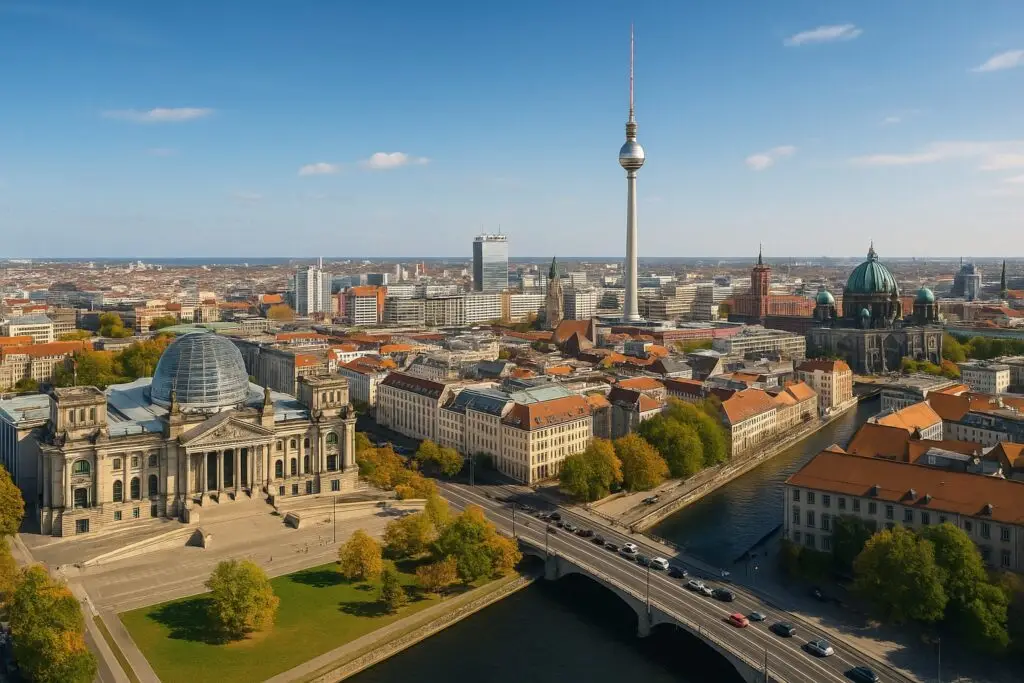
– The Beating Heart of Modern Europe
Germany Berlin is not just Germany’s capital — it’s a living symbol of transformation. Once divided by a wall, scarred by war, and shaped by revolutions, it has become one of the most creative and open-minded cities in the world.
From its monumental landmarks like the Brandenburg Gate and Reichstag to the street art of Kreuzberg and the techno temples of Friedrichshain, Berlin thrives on contrasts — history and innovation, elegance and chaos, memory and reinvention.
Here, every street tells a story: of emperors and artists, of Cold War spies and freedom fighters, of communities from every corner of the globe who’ve turned Berlin into a city like no other.
A Brief History of Berlin
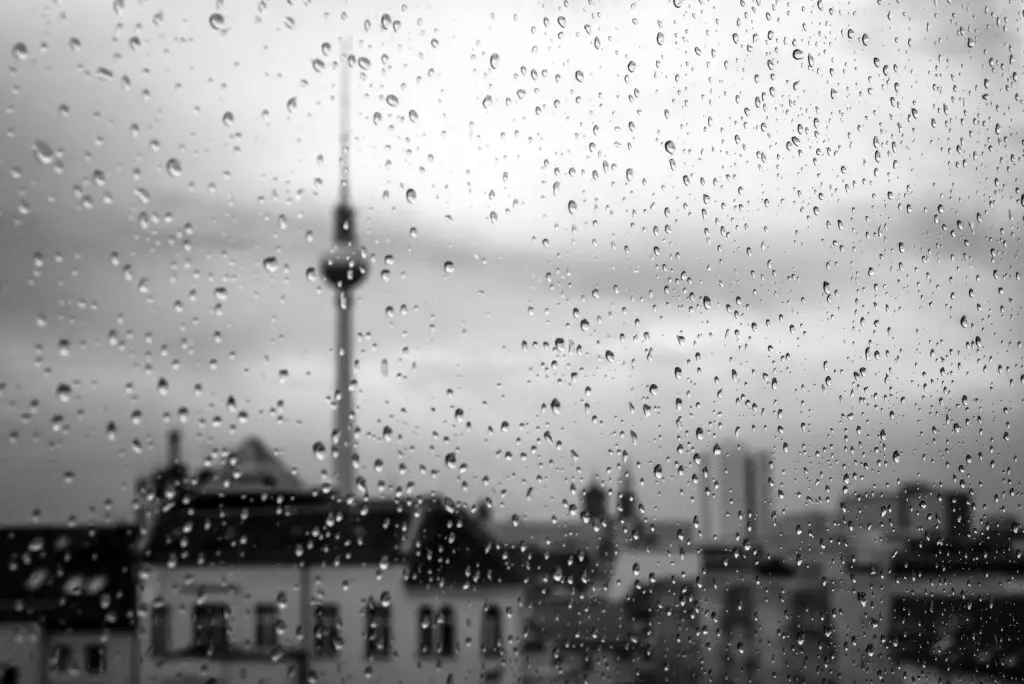
Germany Berlin story stretches over 800 years, but its most defining moments happened in the 20th century.
- 1871: Berlin becomes the capital of the newly unified German Empire, a city of grandeur and progress.
- 1918–1933: The Weimar Republic brings freedom, art, and expression — but also political unrest.
- 1933–1945: The rise of the Nazis transforms Berlin into the center of dictatorship. World War II leaves the city in ruins.
- 1949–1989: After the war, Berlin becomes a symbol of the Cold War, split into East and West by the Berlin Wall.
- 1989: The Wall falls. The city rejoices, and Berlin begins an era of rebirth.
- Today: Berlin stands as a united, cosmopolitan hub — a mix of art, tech, history, and diversity.
This complex past makesGermany Berlin one of Europe’s most fascinating destinations — a place where tragedy and triumph coexist in powerful harmony.
Top Landmarks and Historic Sights
1. Brandenburg Gate (Brandenburger Tor)
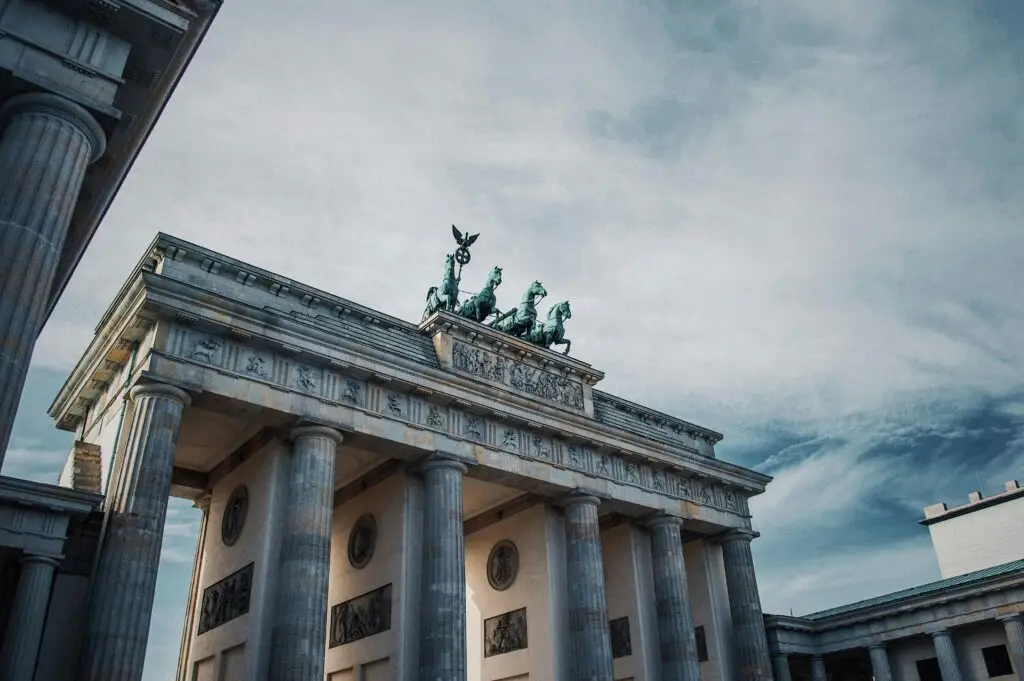
No trip to Berlin is complete without seeing the Brandenburg Gate, the city’s most iconic monument. Built in the late 18th century as a symbol of peace, it later became the backdrop to political rallies, wartime parades, and, eventually, the joyous reunification of Germany in 1989.
Today it stands at the heart of Pariser Platz, radiating both grandeur and resilience.
2. Reichstag Building
Just steps away from the Brandenburg Gate stands the Reichstag, home of the German Parliament (Bundestag).
Its glass dome — designed by architect Norman Foster — symbolizes government transparency and offers a panoramic view over Germany Berlin skyline. Visitors can climb to the top (free entry with reservation) and gaze over a city constantly rebuilding itself.
3. Berlin Wall Memorial & East Side Gallery Germany Berlin
The Berlin Wall once stretched over 150 km, dividing families and communities for nearly 30 years.
Today, its fragments remain powerful reminders of division and hope.
- At Bernauer Strasse, the Berlin Wall Memorial preserves original sections with watchtowers and exhibits about escape attempts.
- Along the Spree River, the East Side Gallery transforms a surviving stretch of wall into the world’s largest open-air art gallery — over 1.3 km of murals painted by artists from around the globe, celebrating freedom and unity.
4. Checkpoint Charlie
Once the most famous crossing point between East and West Germany Berlin Checkpoint Charlie now features a small museum documenting Cold War espionage, daring escapes, and the life behind the Iron Curtain.
While somewhat touristy, it remains a poignant stop for understanding how Berlin became the front line of the global ideological divide.
5. Museum Island (Museumsinsel)
A UNESCO World Heritage Site, Museum Island houses five world-class museums on the Spree:
- Pergamon Museum: Home to monumental treasures like the Ishtar Gate of Babylon and the Pergamon Altar.
- Neues Museum: Displays the bust of Nefertiti, one of the most famous artifacts in the world.
- Alte Nationalgalerie: Showcases 19th-century art, including works by Caspar David Friedrich.
- Bode Museum & Altes Museum: Collections of sculpture, coins, and classical antiquities.
Together, they form the cultural heart of Berlin — an island of history surrounded by the modern pulse of the city.
Book here a tour
Neighborhoods: The Soul of Germany Berlin
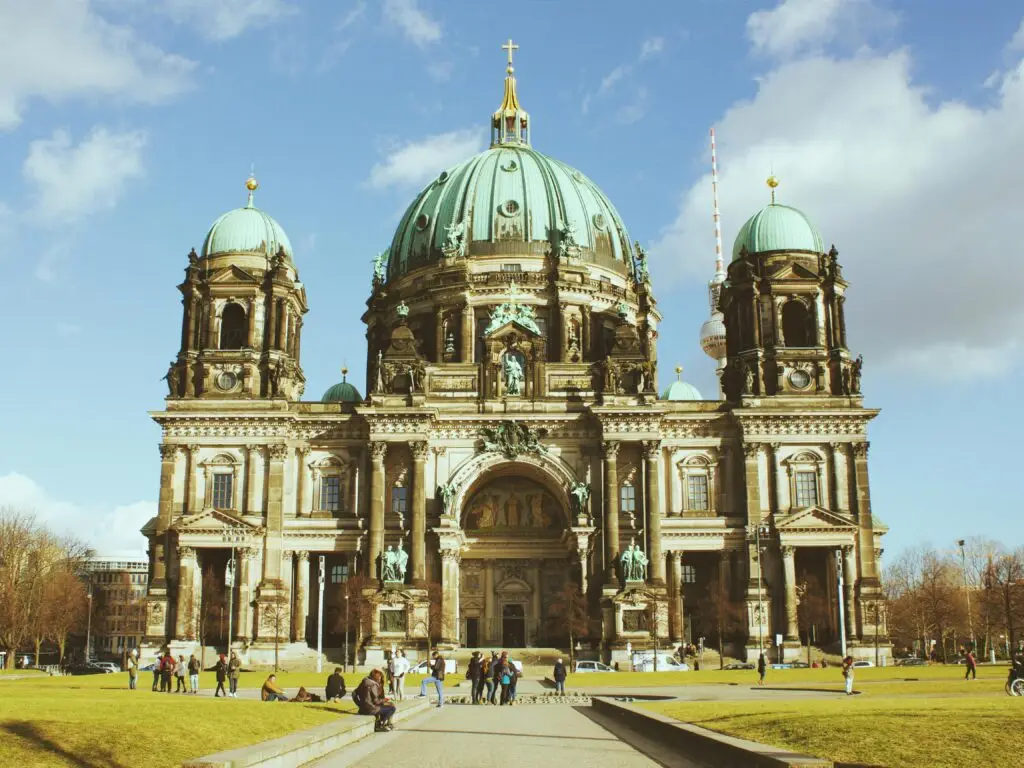
Germany Berlin magic lies in its neighborhoods — each a world of its own.
They reflect the city’s diversity, creativity, and history in unique ways.
Mitte – The Historic Core
Mitte (literally “center”) is where Berlin’s most famous landmarks stand: the Brandenburg Gate, the Reichstag, Unter den Linden boulevard, and Museum Island.
It’s ideal for first-time visitors who want to feel the grandeur of Berlin’s imperial and political legacy.
But beyond the monuments, you’ll find stylish boutiques, rooftop bars, and quiet courtyards filled with cafés and galleries.
Kreuzberg – The Bohemian Heart Germany Berlin
Once part of West Berlin, Kreuzberg became home to students, artists, and immigrants after the Wall went up.
Today, it’s one of the city’s most colorful and multicultural districts. Turkish kebab shops stand next to vegan cafés and vintage stores.
Street art covers every wall, and the nightlife ranges from underground techno clubs to cozy jazz bars.
Don’t miss:
- Görlitzer Park – a laid-back local hangout.
- Markthalle Neun – a foodie’s paradise offering everything from ramen to craft beer.
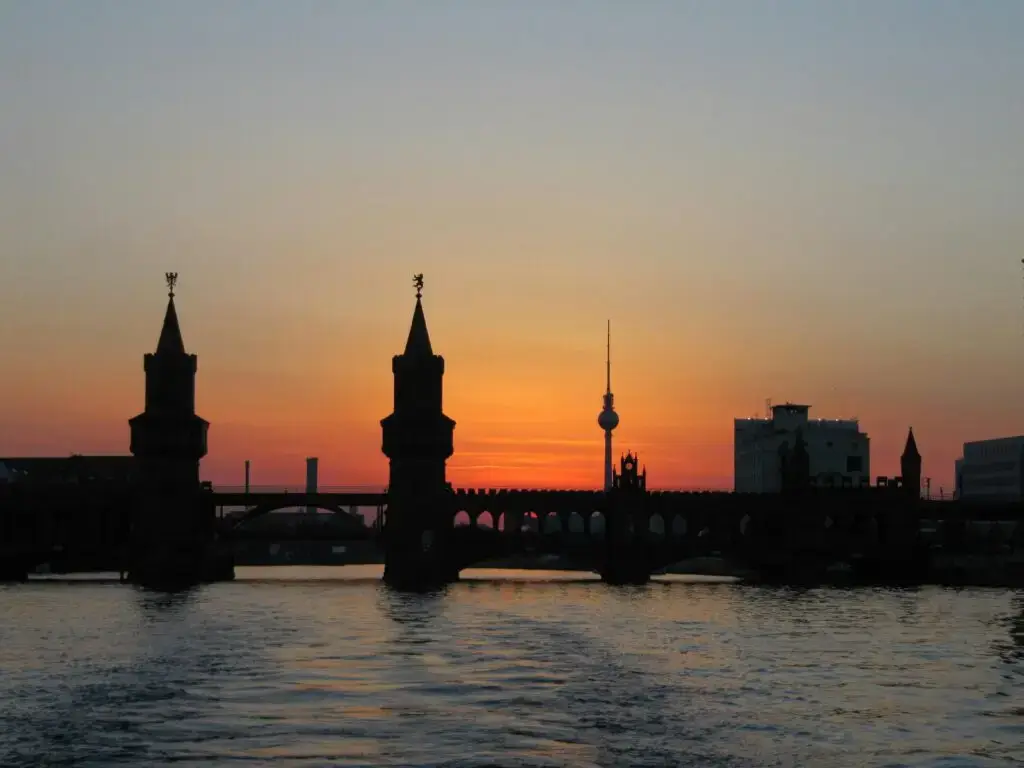
- Oberbaum Bridge – one of Berlin’s most beautiful bridges, connecting Kreuzberg to Friedrichshain.
Friedrichshain – Party and Rebellion
Across the Spree River lies Friedrichshain, once a working-class East Berlin neighborhood and now home to some of the world’s most legendary nightclubs, including Berghain, Sisyphos, and Kater Blau.
The area also features the East Side Gallery and creative spaces built inside former factories.
During the day, you’ll find cozy coffee spots, riverside walks, and flea markets that showcase Berlin’s love for all things alternative.
Prenzlauer Berg – Trendy and Elegant
With its leafy streets and Art Nouveau architecture, Prenzlauer Berg offers a more relaxed, family-friendly side of Berlin.
Once a haven for young artists after reunification, it’s now filled with chic boutiques, organic markets, and wine bars.
The Sunday flea market at Mauerpark is a must — not just for treasures, but for the open-air karaoke that turns the park into a festival every weekend.
Charlottenburg – Old West Berlin Glamour
Charlottenburg embodies the elegance of pre-war Berlin.
The Kurfürstendamm (Ku’damm) boulevard rivals Paris’s Champs-Élysées, lined with designer shops and cafés.
The Charlottenburg Palace, built for Queen Sophie Charlotte in the 17th century, remains one of the city’s most magnificent residences — complete with manicured gardens and Rococo interiors.
Nearby, the Berlin Zoo (Germany’s oldest) and the Kaiser Wilhelm Memorial Church tell another story — of beauty, loss, and rebirth.
Germany Berlin and Nature: Parks, Lakes, and Escapes
Despite its urban sprawl, Berlin is one of Europe’s greenest capitals — nearly half its area is covered by parks, forests, and lakes.
Tiergarten Park
Right in the center, Tiergarten is Berlin’s answer to Central Park — a vast green lung filled with walking paths, lakes, and monuments.
Cyclists and joggers share the trails with sunbathers and picnickers. Germany Berlin
At its heart stands the Victory Column (Siegessäule), crowned by a golden angel, offering panoramic views over the city.
Tempelhofer Feld
Once an airport, now a park like no other — Tempelhofer Feld is a symbol of Berlin’s freedom and creativity.
Locals cycle, skate, and even barbecue on the former runways, turning this vast space into a playground for everyone.
The park’s community gardens, kite areas, and open-air concerts make it a microcosm of Berlin’s spirit: spontaneous and inclusive.
Wannsee and Müggelsee
On summer days, Berliners escape to the lakes.
The most popular is Wannsee, west of the city, where you can swim, sail, or rent pedal boats.
To the east lies Müggelsee, surrounded by forests and trails — perfect for a day trip by bike or train.
Both offer golden sunsets and peaceful waters that contrast beautifully with the energy of the inner city.
Tropical Islands – Berlin’s Indoor Paradise
Just 60 km south of Berlin lies an unexpected tropical escape: Tropical Islands Resort — one of the largest indoor water parks in the world.
Built inside a massive former airship hangar, this paradise features sandy beaches, lagoons, rainforests, slides, and even overnight accommodations in tents and lodges.
With a constant temperature of around 26°C, it’s a perfect getaway year-round — families, couples, and even backpackers love its surreal mix of fun and relaxation.
Tropical Islands represents Berlin’s playful side — where engineering and imagination create worlds beyond the ordinary.
Visitors can float in turquoise lagoons while snow falls outside — a uniquely German kind of magic.
Germany Berlin: Art, Architecture, Food & Modern Culture
Modern Architecture and the Rebuilt Capital
Berlin’s skyline tells the story of a city that has reinvented itself time and again. After reunification, cranes dominated the horizon as new government quarters, glass towers, and cultural hubs rose from the ruins of the Cold War.
Potsdamer Platz – From No-Man’s-Land to Urban Icon
Once a wasteland divided by the Wall, Potsdamer Platz is now a showcase of 21 st-century architecture. Sleek glass structures designed by Renzo Piano and Helmut Jahn house offices, cinemas, and restaurants beneath the steel canopy of the Sony Center.
The contrast between the modern skyline and the cobblestone markers of the former Wall captures Berlin’s constant dance between past and future.
Government District and the Reichstag Dome
The Band des Bundes (“Ribbon of the Federal Government”) stretches along the Spree River – a chain of transparent buildings symbolizing unity. Bridges literally connect the once-divided East and West banks. The Reichstag Dome, visible from miles away, glows like a beacon of democracy each night.
Berlin Hauptbahnhof
Europe’s largest train station, opened in 2006, is a marvel of engineering: five levels of steel and glass, crossed by sunlight and trains from every corner of the continent. It’s more than a transit hub – it’s a metaphor for Berlin’s openness to the world.
Museums, Art & Creative Spaces Germany Berlin
Berlin has over 170 museums – but its artistic heartbeat extends far beyond traditional galleries.
Hamburger Bahnhof – Contemporary Art Powerhouse
Once a railway terminal, Hamburger Bahnhof now hosts cutting-edge works by Warhol, Beuys, Hanne Darboven, and Ai Weiwei. Vast industrial halls display installations, videos, and sculpture on a monumental scale – a dialogue between the mechanical and the imaginative.
Berlinische Galerie & KW Institute for Contemporary Art
The Berlinische Galerie focuses on local modernism, photography, and architecture from 1870 to today, while KW Institute in Mitte supports experimental art and residencies – epicenter of Berlin’s avant-garde.
Street Art and Urban Galleries
No city embraces street art like Berlin. Walls in Kreuzberg, Friedrichshain, and Wedding are open canvases – from the riotous murals of Urban Nation Museum to RAW-Gelände, a former railway depot turned culture park of skate ramps, bars, and graffiti.
Every spray stroke feels like a political statement, a reminder that creativity is the city’s unofficial constitution. Germany Berlin
The Legacy of the Cold War
Germany BerlinWall Memorial (Bernauer Strasse)
Here, an open-air exhibition reveals how the Wall cut through homes, churches, and cemeteries. Steel rods mark the border, while preserved watchtowers loom above the silence. The chapel of Reconciliation stands where a church was once demolished to clear the death strip.
Teufelsberg – Devil’s Mountain
In Grunewald Forest, a hill built from WWII rubble hides a Cold War listening station. The abandoned radar domes of Teufelsberg now serve as one of Berlin’s strangest attractions – a massive graffiti-covered lookout with 360° views. Climb the domes, feel the wind, hear echoes of spy secrets – it’s pure Germany Berlin
Music, Nightlife & Freedom
Techno and Clubbing Culture
After 1989, empty warehouses became temples of sound. Berlin’s techno scene is now legendary.
- Berghain – often called “the church of techno.” The music, the architecture, and the notoriously selective door policy created mythic status.
- Tresor – the original pioneer inside a vault beneath a department store.
- Watergate, Kater Blau, and Sisyphos offer riverside dancing until sunrise.
But Berlin’s nights aren’t only electronic. Quasimodo and A-Trane host world-class jazz, while indie bands fill venues like SO36 and Lido.
The city lives by a simple rule: no curfew, just creativity.
Festivals
- Fête de la Musique (June): free performances across every district.
- Berlin Festival of Lights (October): monuments illuminated in artistic light shows.
- Karneval der Kulturen (May): multicultural parade with music and costumes celebrating Berlin’s diversity.
- New Year’s Eve at Brandenburg Gate: one of Europe’s largest outdoor parties.
Culinary Germany Berlin
Berlin’s food scene mirrors its population – diverse, experimental, and approachable. Germany Berlin
Traditional German Flavors
- Currywurst: the city’s signature snack – sliced sausage in spiced ketchup and curry powder.
- Berliner Pfannkuchen: jam-filled doughnut enjoyed year-round.
- Eisbein: slow-cooked pork knuckle served with sauerkraut and potatoes.
- Königsberger Klopse: meatballs in creamy caper sauce, a Prussian classic.
International and Modern Cuisine
Turkish doner, Vietnamese pho, Ethiopian injera, Israeli falafel, Korean bibimbap – you’ll find it all.
Markets like Markthalle Neun, Arminiusmarkthalle, and Thai Park bring flavors from every continent.
For fine dining, Berlin boasts Michelin-starred restaurants such as Tim Raue, Nobelhart & Schmutzig, and Rutz, redefining local ingredients through modern creativity.
Cafés and Bars
Third-wave coffee thrives in Prenzlauer Berg and Neukölln; rooftop bars like Klunkerkranich and Deck5 turn sunsets into rituals.
Craft beer breweries (Berliner Kindl, BRLO, Vagabund) stand beside historic beer gardens like Prater, founded in 1837.
In Berlin, social life happens outdoors – on canal steps, in courtyards, under strings of light bulbs.
Day Trips from Berlin
Potsdam
Just 40 minutes away, Potsdam was the royal residence of the Prussian kings. The UNESCO-listed Sanssouci Palace and gardens rival Versailles, while the Dutch Quarter and Glienicke Bridge offer a glimpse into Cold War drama.
Sachsenhausen Concentration Camp Memorial
Located in Oranienburg, 35 km north of Berlin, this site honors the memory of tens of thousands who suffered under the Nazi regime. Sobering but essential for understanding Germany’s history.
Spreewald Biosphere Reserve
A maze of canals and forests south of Berlin – perfect for kayaking, cycling, and sampling pickled gherkins, the local specialty. UNESCO has protected its unique wetland ecosystem since 1991.
Tropical Islands Resort
(Already linked above with your video embed.) Great for overnight escapes – and one of Germany’s most unexpected destinations.
Shopping and Local Design Germany Berlin
Berlin’s fashion scene is independent and sustainable.
Concept stores like Voo Store (Kreuzberg) and SOTO (Mitte) showcase local designers.
Markets such as Mauerpark Flea Market, Nowkoelln Flowmarkt, and Boxhagener Platz offer vintage clothing and handmade crafts.
For souvenirs, skip mass-produced items – choose Berlin-made chocolates, illustrated maps, or vinyl records from local labels.
Public Transport & Travel Tips Germany Berlin
Berlin’s transport network is one of Europe’s best:
- U-Bahn & S-Bahn: Subway and city train lines run 24 hours on weekends.
- Trams & Buses: Essential in the East; night buses cover everywhere.
- Berlin Welcome Card: offers unlimited rides plus discounts to attractions.
- Bikes & Scooters: Rent via apps – flat terrain makes cycling easy.
- Airports: Berlin Brandenburg (“BER”) connects to major cities worldwide.
Safety: Berlin is generally safe, but stay alert at night in crowded party areas.
Currency: Euro (€).
Language: German is official; English widely understood.
When to Visit Berlin
- Spring (March–May): Parks bloom, cafés fill terraces, temperatures mild.
- Summer (June–August): Festivals, open-air cinemas, lake swims.
- Autumn (September–November): Ideal for culture trips and lower prices.
- Winter (December–February): Christmas markets and snow transform the city into a fairy-tale backdrop.
Hidden Corners and Local Secrets
- Prinzessinnengarten: urban gardening oasis in Kreuzberg.
- Spreepark: abandoned amusement park now an art venue.
- Liquidrom: spa with saltwater pools and underwater music.
- Curry 36 vs Konnopke’s Imbiss: local rivalry over the best Currywurst.
- Badeschiff: floating pool on the Spree with skyline views.
- Flughafen Tempelhof Tours: explore runways and bunkers of a legendary airport.
Berlin Today – A Living Metaphor for Freedom
Few cities have reinvented themselves as often as Berlin. It has been imperial capital, ruin, front line, and creative haven – and each identity still echoes in its streets.
Walk through Kreuzberg and hear Turkish pop mix with techno; stand by the Wall and watch children laugh where soldiers once stood.
That’s the essence of Berlin – a city that never forgets but always moves forward.
Berlin is not perfect – it’s honest, raw, and alive. It welcomes dreamers, rebels, and seekers of all kinds.
Whether you’re here for its art, its nightlife, its history, or simply its freedom, Berlin will leave a mark on your soul.
 Related Articles
- Staying Overnight at Tropical Islands Resort Berlin
- Top 10 Most Unique Places to Stay in Europe
- 10 Incredible Castles Around the World