
Hamburg, Germany – The Gateway to the World
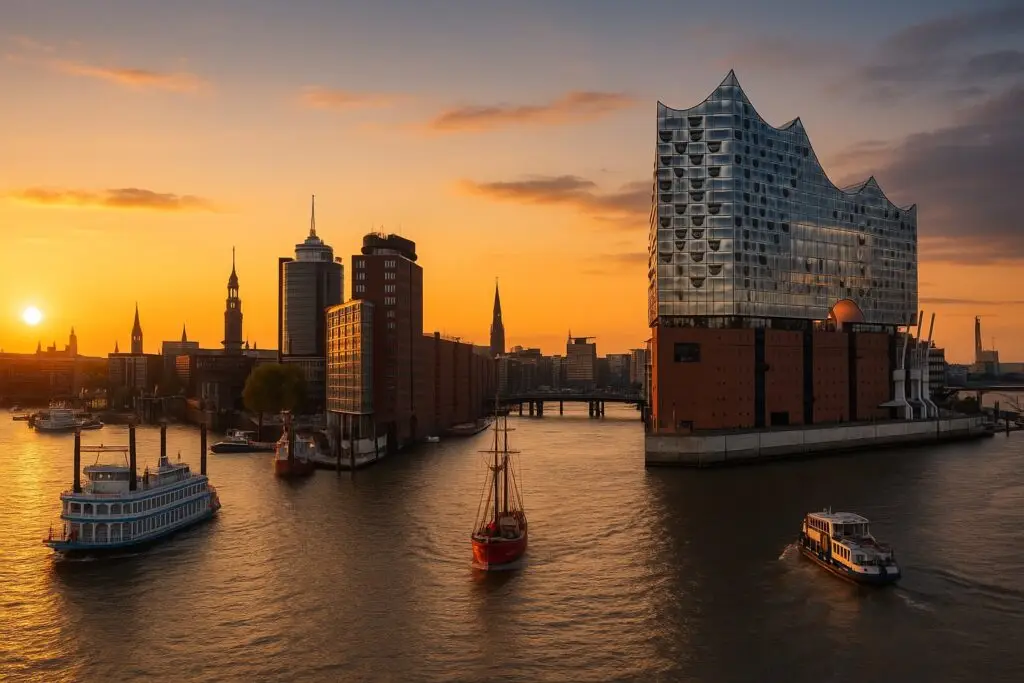
– A City Between Water and Wind
Germany Hamburg, Germany’s second-largest city, is often described as the nation’s “Gateway to the World.”
Built around water, defined by trade, and powered by creativity, it’s a place where ships from every continent meet modern architecture, music, and maritime charm. Germany Hamburg
Set at the confluence of the Elbe River and the Alster Lakes, Hamburg feels both cosmopolitan and relaxed.
It’s home to one of Europe’s busiest ports, a skyline filled with steeples and glass towers, and an energy that blends old-world elegance with avant-garde flair.
From the red-brick warehouses of the Speicherstadt to the futuristic Elbphilharmonie Concert Hall, Hamburg offers a journey through centuries of ambition and reinvention.
It’s a city that thrives on contrasts — history and innovation, calm canals and wild nightlife, classical music and raw street culture.
A Brief History – From Hanseatic Power to Modern Metropolis
Hamburg’s story began more than 1,200 years ago, when Charlemagne ordered a fortress built here to defend Christianity in Northern Europe.
Its location on the River Elbe soon made it a hub of trade and diplomacy. By the 13th century, Hamburg had joined the Hanseatic League, a powerful alliance of merchant cities stretching from London to Riga.
This membership brought enormous wealth and independence. Germany Hamburg
The city’s merchants developed a distinct civic pride — symbolized by its coat of arms: three towers behind fortified gates, representing strength, freedom, and hospitality.
Through the centuries, Hamburg survived fire, war, and flood. The Great Fire of 1842 destroyed a third of the city but paved the way for urban renewal.
World War II left heavy scars — massive bombings in 1943 leveled entire neighborhoods — yet Hamburg rebuilt, becoming a symbol of resilience.
Today, the city remains proud of its Hanseatic roots: modest in tone but ambitious in vision, with a maritime spirit that continues to drive it forward. Germany Hamburg
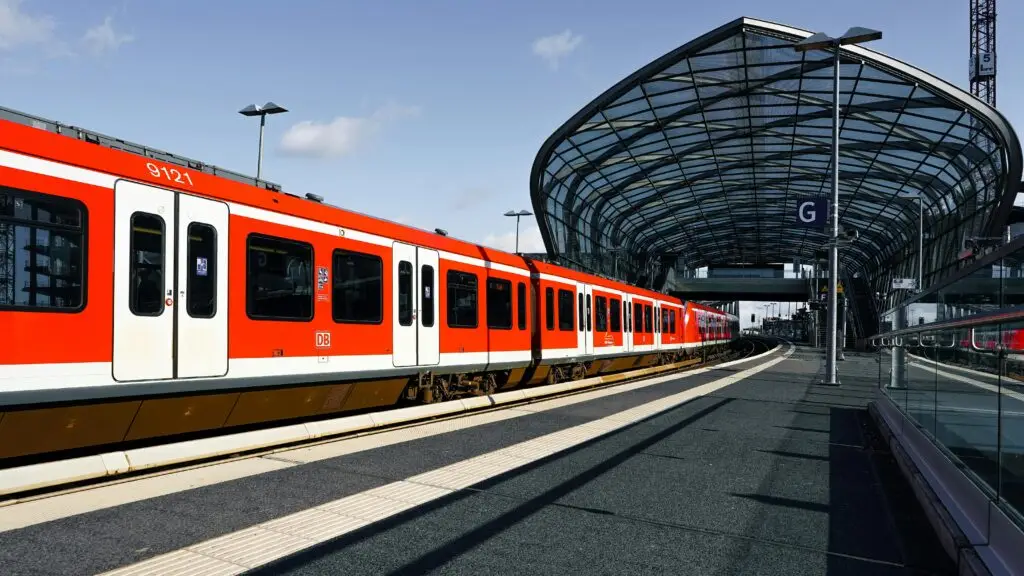
The Port of Germany Hamburg – Heart of the City
No place defines Hamburg more than its port, one of Europe’s largest and most important.
Known locally as the HafenCity, this “city within a city” is a vibrant mix of docks, offices, museums, and modern apartments built along the Elbe.
Landungsbrücken – Where It All Begins Germany Hamburg
The Landungsbrücken piers in St. Pauli are the beating heart of the harbor.
From here, ferries glide past container ships and cranes that stretch like steel giants along the river.
Visitors can board harbor tours, stroll along promenades lined with seafood stalls, or simply watch the sunset over the Elbe as ships drift by from all corners of the world.
Nearby stands the Rickmer Rickmers, a 19th-century sailing ship turned museum, and the Cap San Diego, the world’s largest operational museum cargo vessel.
Together they tell the story of Hamburg’s seafaring heritage.
The Speicherstadt – A UNESCO World Heritage Treasure Germany Hamburg
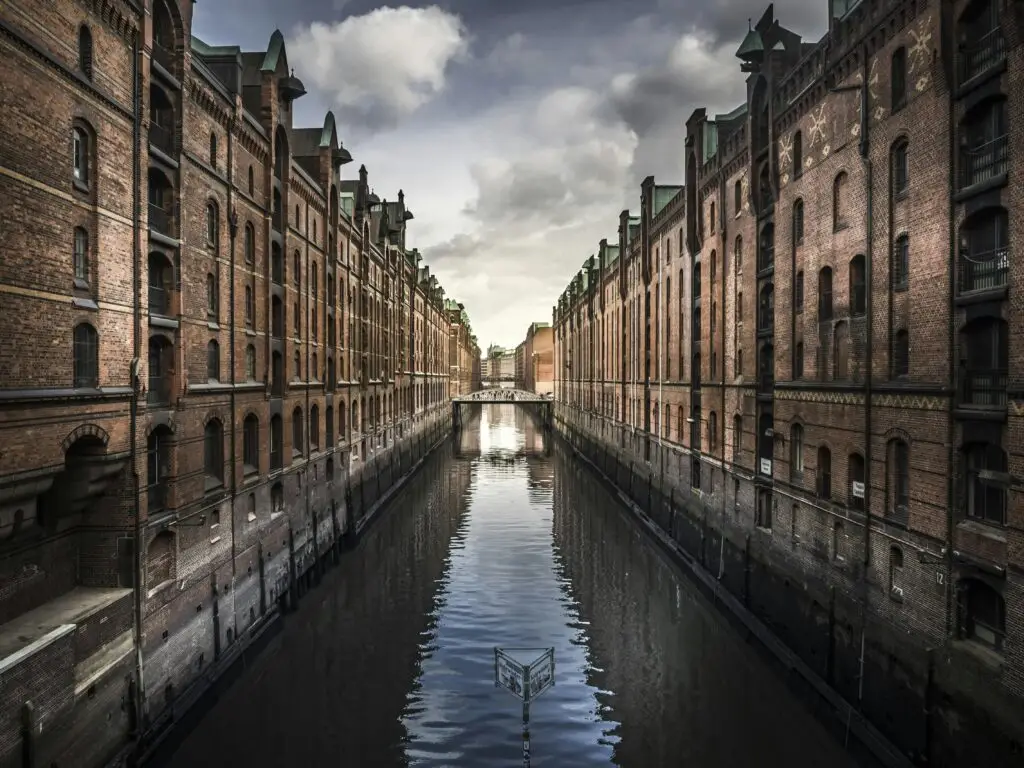
The Speicherstadt (“City of Warehouses”) is Hamburg’s most iconic district — an architectural masterpiece of red-brick Gothic Revival design.
Built between 1883 and 1927, it once stored coffee, spices, and carpets from across the globe.
Today its narrow canals and arched bridges form one of Europe’s most photogenic urban landscapes.
Inside, the warehouses now house museums, galleries, and creative studios.
Highlights include the Miniatur Wunderland, the world’s largest model railway, and the International Maritime Museum, which traces 3,000 years of naval history. Germany Hamburg
At night, the Speicherstadt glows — literally — with soft amber lighting reflected in the water, turning it into one of Germany’s most romantic sights.
HafenCity – Hamburg’s Future
Just east of the Speicherstadt lies HafenCity, Europe’s largest inner-city development project.
Here, innovative architecture replaces old docks, creating a district of glass façades, parks, and waterfront cafés.
The centerpiece is the Elbphilharmonie, a stunning concert hall that has become Hamburg’s new icon.
Rising from an old warehouse base, its shimmering glass top resembles waves or sails, symbolizing the city’s bond with the sea.
Inside, acoustics are world-class, and the public viewing platform — the “Plaza” — offers panoramic views of the Elbe and skyline.
Landmarks and Must-See Sights
St. Michael’s Church (Der Michel)
Hamburg’s most famous church, St. Michael’s, has stood watch over the city since the 17th century.
Its copper dome and 132-meter tower dominate the skyline.
Climb the 452 steps (or take the lift) for one of the best views in Northern Germany — the Elbe stretching westward, the city’s towers rising in every direction.
The church’s interior, with its white-and-gold Baroque design, exudes light and hope — a fitting symbol for a city that has endured so much.
The Elbe Tunnel (Alter Elbtunnel)
Opened in 1911, this historic tunnel connects St. Pauli with the docks on the opposite riverbank.
Walking or cycling through its tiled passageways feels like stepping back in time.
Emerging on the south side, you’ll be rewarded with postcard views of the Hamburg skyline.
Town Hall (Rathaus) and City Center
Hamburg’s Rathaus, built in Neo-Renaissance style in the late 19th century, reflects the wealth of a city that ruled itself as a free Hanseatic republic. Germany Hamburg
Its grand façade boasts over 600 statues, and the interior is equally majestic — 647 rooms of marble and oak.
Nearby, the Binnenalster and Außenalster lakes form the city’s sparkling heart, surrounded by promenades, boats, and historic cafés. Germany Hamburg
Neighborhoods of Germany Hamburg
Altstadt and Neustadt – History and Shopping
The Altstadt (Old Town) is the city’s oldest core, filled with narrow streets, churches, and courtyards.
Nearby, the Neustadt (New Town) blends elegant boutiques and luxury shopping streets like Jungfernstieg with the calm of canals and parks. Germany Hamburg
Together, they form Hamburg’s commercial and cultural heart.
St. Pauli – Freedom, Music, and the Reeperbahn
Few districts in the world carry such a mix of reputation and legend as St. Pauli.
Home to the famous Reeperbahn, Hamburg’s entertainment strip has been the cradle of cabaret, rock ’n’ roll, and rebellion.
In the early 1960s, a young band called The Beatles played here nightly — long before they conquered the world.
Today, the Reeperbahn still pulses with neon lights, theaters, music clubs, and bars, while nearby Karoviertel offers vintage shops and cafés with bohemian flair. Germany Hamburg
St. Pauli’s mix of grit and creativity perfectly embodies Hamburg’s restless spirit.
Schanzenviertel and Sternschanze – Urban Cool
What Kreuzberg is to Berlin, Schanze is to Hamburg: a hub of street art, independent stores, and alternative energy.
The area’s converted factories now house coffee roasters, design studios, and vegan restaurants.
By night, its courtyards and bars fill with laughter and music — locals and travelers mingling under hanging lights.
Blankenese – Hamburg’s Riviera
On the western edge of the city lies Blankenese, a picturesque hillside neighborhood overlooking the Elbe.
Once a fishing village, it’s now one of Hamburg’s most charming (and affluent) areas.
Winding stairways lead past white villas and flower gardens down to the beach — perfect for a riverside walk or a ferry ride back to the city center.
Eppendorf and Winterhude – Lakeside Elegance
North of the Alster, these districts combine stately homes, leafy streets, and relaxed cafés.
Kayaks glide over tranquil canals, locals stroll along tree-lined boulevards, and weekly markets sell everything from fresh bread to flowers.
It’s easy to forget you’re in a major port city — this is Hamburg at its most peaceful. Germany Hamburg
Museums and Culture
- Hamburger Kunsthalle: One of Germany’s premier art museums, spanning seven centuries from medieval altarpieces to contemporary installations.
- Deichtorhallen: A pair of former market halls turned modern art and photography spaces.
- Museum für Kunst und Gewerbe: Dedicated to design, fashion, and applied arts.
- BallinStadt Emigration Museum: A moving tribute to the millions of Europeans who departed from Hamburg for the New World between 1850 and 1930.
- Planetarium Hamburg: Housed in a converted water tower, this is one of the oldest planetariums in the world, offering immersive shows among the stars.
Parks, Lakes, and Nature
Hamburg is one of Europe’s greenest cities — with nearly half its area covered by parks, gardens, and waterways.
- Planten un Blomen: A central oasis featuring botanical gardens, water-light shows, and ice-skating in winter.
- Stadtpark: A vast park with open-air concerts, lakes, and the city’s famous Planetarium.
- Alster Lakes: The inner and outer Alster form Hamburg’s blue heart — perfect for sailing, jogging, or enjoying sunset at a lakeside café.
- Jenischpark & Altonaer Balkon: Overlooking the Elbe, these offer some of Hamburg’s best panoramic views.
Cuisine – From the Sea to the Table Germany Hamburg
Hamburg’s cuisine is a reflection of its maritime soul — hearty, fresh, and globally inspired.
Local Specialties
- Fischbrötchen: Fresh fish sandwiches, sold everywhere from harbor stalls to gourmet bistros.
- Labskaus: A traditional sailor’s dish of corned beef, potatoes, beetroot, and a fried egg — surprisingly tasty once tried!
- Aalsuppe: A sweet-and-sour soup (usually without eel, despite the name).
- Franzbrötchen: Hamburg’s answer to the croissant — buttery, cinnamon-swirled, and addictive.
- Rote Grütze: A red berry dessert served with vanilla sauce, beloved across northern Germany.
Cafés and Markets
- Fischmarkt: Every Sunday morning, the historic Fish Market bursts into life with shouting vendors, live music, and fresh seafood.
- Schanzenmarkt: An organic and local food market beloved by locals.
- Eppendorfer Weg: Known for its stylish cafés and brunch culture.
Events and Nightlife Germany Hamburg
- Hafengeburtstag (Port Anniversary): Every May, over a million people celebrate the port’s “birthday” with ship parades, fireworks, and live concerts.
- Reeperbahn Festival: Europe’s largest club festival for emerging musicians, held each September.
- Alstervergnügen: Summer festival around the Alster lakes, with street food and performances.
- Christmas Markets: From Rathausmarkt to Jungfernstieg, Hamburg’s markets are among Germany’s most magical.
At night, the city transforms — from jazz in cozy cellar bars to open-air cinema by the water.
Hamburg’s nightlife is as diverse as its people: elegant in Altona, wild in St. Pauli, stylish in HafenCity.
Day Trips from Germany Hamburg
- Lübeck: Just an hour away, this medieval Hanseatic city of spires and marzipan is a UNESCO World Heritage Site.
- Heligoland: Germany’s only offshore island in the North Sea, famous for red cliffs and seals.
- Lüneburg: A beautiful salt-trading town with cobbled streets and historic charm.
- Wadden Sea National Park: Explore tidal flats, seabirds, and endless horizons — nature at its rawest.
Getting Around Germany Hamburg
Hamburg’s public transport (HVV) is one of Europe’s best.
- U-Bahn & S-Bahn: Fast, clean, and reliable.
- Ferries: Part of the regular ticket network — take Line 62 for a scenic “mini-cruise” along the Elbe.
- Bicycles: The city is flat and bike-friendly.
- Best Time to Visit: May–September for festivals and sunshine, December for cozy Christmas charm.
Why Hamburg Belongs on Every Bucket List
Because it’s more than a city — it’s a feeling. Germany Hamburg
Hamburg has sea air in its lungs, music in its veins, and an openness that comes from centuries of welcoming the world.
You’ll find beauty in its contrasts: gothic spires beside glass towers, sailors beside artists, tradition beside innovation.
It’s where Germany feels both northern and global, historic yet constantly new.
Whether you’re watching the sunrise over the harbor, the sunset behind the Elbphilharmonie, or the lights of the Reeperbahn at midnight — Hamburg will stay with you.
 Related Articles
- Staying Overnight at Tropical Islands Resort Berlin
- Top 10 Most Unique Places to Stay in Europe
- 10 Incredible Castles Around the World