
 Moselle Valley, Germany – A Complete Travel Guide Through Vineyards, Castles, and River Villages
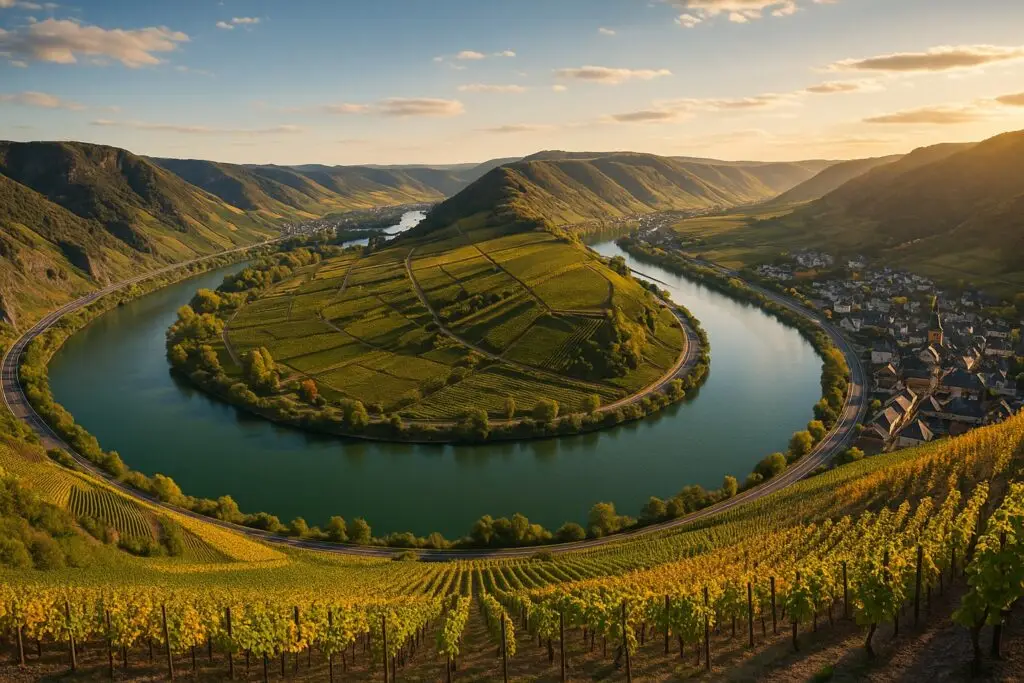
Discover the Germany Moselle Valley – Germany’s most romantic wine region, where medieval castles crown forested hills, half-timbered houses line riverside villages, and vineyards roll endlessly along one of Europe’s most scenic rivers.
Few regions in Germany can rival the charm, tranquility, and timeless beauty of the Moselle Valley (Moseltal). Flowing gracefully for nearly 250 kilometers between Trier and Koblenz, the Moselle River winds through a landscape of steep vineyard slopes, fairy-tale towns, and ancient fortresses that seem frozen in time.
This is the heart of Germany’s wine country, where life moves to the rhythm of the river and every curve reveals a new masterpiece of nature and history. Fishermen once sailed here under Roman bridges, monks cultivated the first Riesling vines on terraced slopes, and kings built castles to protect their trade routes. Today, visitors come to the Moselle to taste world-class wines, hike along scenic trails, or simply drift past hilltop ruins and sleepy villages on a slow-moving boat.
The Moselle Valley is not about speed or spectacle — it’s about savoring the moment. Whether you’re watching the sunrise over misty vineyards, wandering through cobblestone streets, or sharing a glass of crisp Riesling with locals, this region captures everything that makes Germany so enchanting.
Geography and Landscape Germany Moselle Valley
The Course of the River
The Moselle River begins in the Vosges Mountains of France and flows through Luxembourg before entering Germany near Trier. The German stretch — the most celebrated part — runs approximately 195 kilometers through the states of Rhineland-Palatinate and Saarland, before joining the Rhine at Koblenz. Germany Moselle Valley
Here, the river snakes through narrow valleys carved deep into the slate hills of western Germany. The result is one of Europe’s most dramatic river landscapes — a continuous pattern of sweeping bends, terraced vineyards, and villages tucked between cliffs and water.
The Vineyards
The Moselle Valley is home to some of the steepest vineyards in the world, many with gradients exceeding 60 degrees. These slopes face the river to capture sunlight, creating perfect conditions for Riesling, Germany’s most iconic grape.
The soil is primarily composed of slate, which absorbs heat during the day and releases it at night — producing wines with mineral-rich aromas and refreshing acidity. Each bend of the river creates a different microclimate, meaning every village has its own distinct character and flavor of wine. Germany Moselle Valley
The Landscape Beyond the River
Beyond the vineyards, the Moselle region is full of forests, rolling hills, and quiet meadows. The upper valley near Trier is more open and agricultural, while the middle and lower valleys are narrower and more romantic, with dramatic cliffs and castle views. Germany Moselle Valley
From every high vantage point — whether from the Calmont Climb or the Eltz Castle trail — you’ll see the Moselle’s silver ribbon winding gracefully through shades of green and gold.
History and Wine Heritage
Roman Roots
The Moselle Valley’s story begins over 2,000 years ago, when the Romans brought vines to the region during their expansion into Germania. The city of Trier, founded around 16 BC, became the northern capital of the Roman Empire and remains full of ancient monuments — from baths and basilicas to the mighty Porta Nigra gate.
Roman engineers recognized the fertile slopes along the Moselle as ideal for viticulture. Amphorae filled with Moselle wine were shipped along the river to Gaul and Britain, making this one of Europe’s earliest organized wine regions.
Medieval Growth
During the Middle Ages, monasteries and abbeys took over vineyard management, perfecting the craft of winemaking. Castles like Reichsburg Cochem and Burg Eltz were built to guard the river and trade routes. The Moselle towns flourished under the protection of princes and bishops, with markets, guilds, and half-timbered houses that survive to this day.
The Golden Age of Riesling
By the 18th and 19th centuries, Moselle Riesling had become one of the most prized wines in Europe, served in royal courts and exported across the continent. Its balance of sweetness, minerality, and freshness made it distinct from any other wine in the world.
Today, the Moselle remains synonymous with quality Riesling, with hundreds of family-run wineries continuing traditions that date back centuries. Visitors can explore these vineyards by car, bike, or even on foot — following the gentle rhythm of the river.
Top Towns and Villages of the Moselle Valley
Trier – The Roman Heart of the Moselle
Known as Germany’s oldest city, Trier blends Roman history, medieval architecture, and modern life in perfect harmony.
Highlights:
- Porta Nigra: A monumental Roman gate built around 180 AD.
- Trier Cathedral: One of the oldest cathedrals in Europe, with Gothic and Romanesque elements.
- Roman Baths (Kaiserthermen): The ruins of vast public baths that once rivaled those in Rome.
- Liebfrauenkirche: A UNESCO-listed church with intricate Gothic design.
- Moselle Promenade: Relaxed cafés and views of the river.
Trier makes a perfect starting point for exploring the Moselle Valley — a city where ancient stones tell stories of emperors and monks.
Bernkastel-Kues – The Heart of Moselle Wine Country
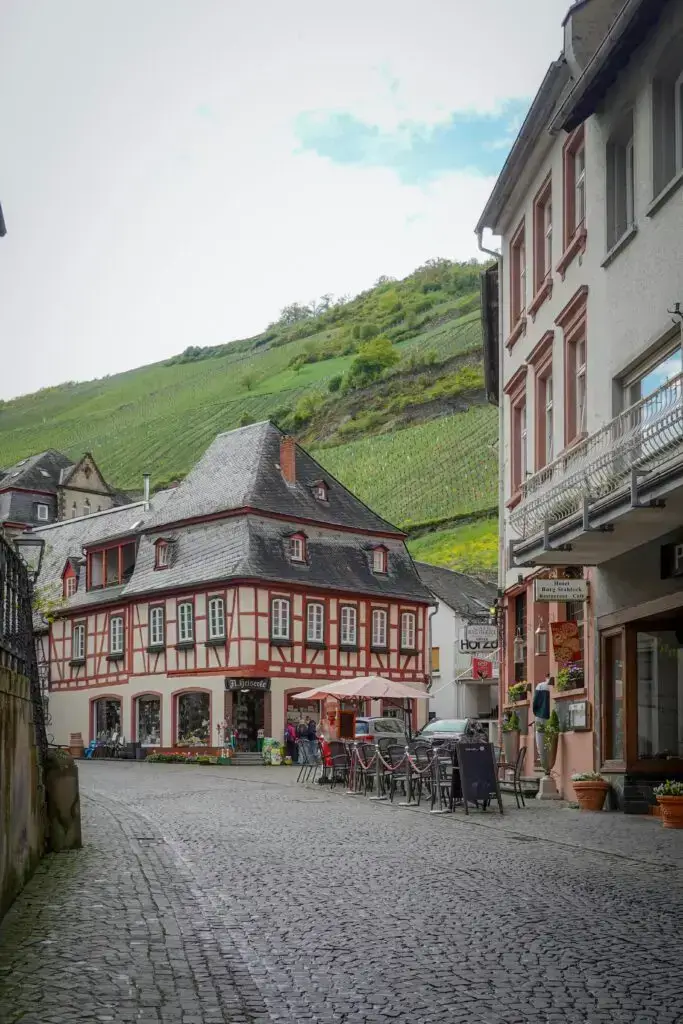
Few towns capture the spirit of the Moselle like Bernkastel-Kues. Set on both sides of the river, this picturesque town is filled with timbered houses, cobblestone alleys, and bustling wine taverns.
Don’t Miss:
- Market Square (Marktplatz): Surrounded by colorful half-timbered buildings from the 17th century.
- St. Michael’s Fountain: The centerpiece of the old town.
- Burg Landshut: The ruins of a castle offering panoramic views over the river and vineyards.
- Mosel Wine Museum: Learn about the region’s wine-growing history.
Bernkastel-Kues is also one of the best places to sample local Rieslings directly from family-owned cellars — often poured by the winemakers themselves.
Cochem – The Icon of the Moselle Germany Moselle Valley
Perhaps the most photographed town in the Moselle Valley, Cochem is pure storybook Germany.
Top Attractions:
- Reichsburg Cochem (Cochem Castle): Perched high above the town, this 11th-century fortress overlooks the river and vineyards. Its turrets and towers are quintessentially medieval, and guided tours reveal centuries of history.
- Old Town (Altstadt): Full of cozy wine taverns, boutique shops, and waterfront cafés.
- Enderttor Gate: The last surviving gate from the town’s medieval walls.
- Moselle Promenade: A lovely walk with views of passing cruise boats.
Cochem is also an excellent base for exploring nearby Burg Eltz, one of Europe’s most enchanting castles.
Beilstein – The Sleeping Beauty of the Moselle
Tiny Beilstein, with just a few hundred residents, is often called the “Sleeping Beauty of the Moselle.” Its narrow lanes, ivy-clad houses, and riverside setting make it one of the most romantic villages in Germany. Germany Moselle Valley
Highlights:
- Metternich Castle: A picturesque ruin offering spectacular views.
- Carmelite Monastery: Known for its peaceful courtyard and panoramic terrace.
- Historic Square: Perfect for sipping wine under hanging flowers.
Beilstein is also a favorite spot for filmmakers thanks to its perfectly preserved medieval charm.
Traben-Trarbach – Art Nouveau on the Moselle
Unlike many medieval towns along the river, Traben-Trarbach tells a different story — one of wealth, elegance, and the early 20th century wine boom. During the late 1800s, this twin town became one of the largest wine trading centers in Europe, second only to Bordeaux.
Highlights:
- Art Nouveau Architecture: The town’s prosperity is reflected in its graceful Belle Époque facades and ornate villas designed by Berlin architect Bruno Möhring.
- Grevenburg Castle Ruins: Overlooking the town, the castle offers sweeping views of the Moselle Valley.
- Underground Wine Cellars: Beneath Traben-Trarbach lies a vast network of tunnels used to store barrels of Riesling — today, many can be visited during tours and festivals.
- Buddhist Center (Buddha Museum): A unique museum dedicated to Asian art and philosophy, housed in an old wine cellar.
Traben-Trarbach combines old-world grandeur with relaxed riverside charm — perfect for travelers who appreciate both history and quiet sophistication.
Zell – Home of the Black Cat Wine
Further down the river lies Zell, famous for its wine label Zeller Schwarze Katz (“Black Cat”). According to legend, a black cat fiercely guarded a particular wine barrel, signaling that the contents were truly special — a marketing story that has endured for centuries.
What to See:
- Vineyards and Wine Trail: Hike through the slopes above Zell for fantastic views and stops at local wineries.
- Zeller Tower (Rundturm): A medieval watchtower that now offers panoramic views of the river.
- Mosel Promenade: Peaceful and perfect for evening walks along the water.
Zell is less crowded than Cochem or Bernkastel, making it ideal for travelers seeking authenticity and quiet charm.
Bremm and the Calmont Climb – The Steepest Vineyard in Europe
Between Zell and Cochem lies the tiny village of Bremm, home to one of the Moselle’s most dramatic natural wonders: the Calmont Vineyard, with slopes reaching up to 68 degrees — the steepest in Europe.
Top Experiences:
- Calmont Klettersteig (Climb): A scenic via ferrata trail with iron ladders and cables leading up the mountain, offering breathtaking views of the Moselle River bend below.
- Panorama Viewpoint: Once at the top, the sweeping vista of the river’s horseshoe bend is unforgettable.
- Wine Tasting in Bremm: Local winemakers produce small-batch Rieslings that reflect the extreme terroir.
For adventurous travelers, the Calmont trail is one of the best hikes in all of Germany — challenging but immensely rewarding.
Koblenz – Where the Moselle Meets the Rhine
At the northern end of the valley, Koblenz marks the point where the Moselle merges with the mighty Rhine at Deutsches Eck (“German Corner”). This city blends river life with history and modernity.
Don’t Miss:
- Ehrenbreitstein Fortress: One of Europe’s largest fortresses, accessible by cable car from the Rhine side.
- Deutsches Eck: Monumental confluence of the Moselle and Rhine rivers, crowned by an equestrian statue of Emperor Wilhelm I.
- Old Town: Cobbled streets, fountains, and inviting restaurants.
- Basilica of St. Castor: The city’s oldest church, dating back to 836 AD.
Koblenz is both an ending and a beginning — a gateway to the Rhine, yet still deeply tied to the spirit of the Moselle.
Castles and Fortresses Germany Moselle Valley
The Moselle Valley is one of Europe’s most castle-rich regions. Perched on cliffs or hidden in forests, these fortresses reflect the area’s turbulent medieval history. Germany Moselle Valley
Burg Eltz – Germany’s Hidden Gem
Deep in a forested valley between Cochem and Koblenz, Burg Eltz is perhaps the most perfectly preserved medieval castle in Germany. Unlike many others, it was never destroyed and has been owned by the same family for over 850 years.
What Makes It Special:
- Fairytale towers rising from misty woods.
- Fully furnished interiors with armor, art, and antiques.
- Guided tours that reveal the castle’s family history.
Burg Eltz feels straight out of a storybook — a place where knights and legends still linger in the air.
Reichsburg Cochem
Dominating the skyline above Cochem, Reichsburg Castle offers both romance and history. Though rebuilt in the 19th century after French destruction, it retains an authentic medieval atmosphere. Its vantage point over the river is one of the most photographed scenes in Germany.
Thurant Castle (Burg Thurant)**
Near Alken, this twin-towered castle provides panoramic views and a more intimate visitor experience. It’s less crowded, with beautiful gardens and a sense of peaceful isolation.
River Cruises and Scenic Drives
Moselle River Cruises
The best way to experience the Moselle’s timeless beauty is from the water. Boats glide slowly between Trier and Koblenz, passing vineyards, castles, and riverside towns.
Cruise Highlights:
- Short local cruises between towns like Cochem and Beilstein.
- Full-day routes from Trier to Koblenz.
- Evening wine cruises with music and tastings.
The pace is slow, the views are breathtaking, and the experience feels like drifting through a living painting.
The Moselle Wine Road (Moselweinstraße)
Running parallel to the river, this scenic road connects nearly every wine village between Koblenz and Trier. Along the way, travelers find endless photo stops, tasting rooms, and hilltop viewpoints.
Top Stops Along the Route:
- Kröv (famous for Kröver Nacktarsch wine)
- Traben-Trarbach (Art Nouveau town)
- Bernkastel-Kues (wine capital)
- Beilstein (the Sleeping Beauty)
- Cochem (castle views)
- Bremm (Calmont bend)
The drive is especially stunning in autumn, when the vineyards glow gold and red.
Hiking and Cycling Germany Moselle Valley
The Moselsteig Trail
Stretching for over 365 kilometers, the Moselsteig Trail is one of Germany’s most spectacular long-distance hikes. It follows the entire course of the German Moselle, from Perl near the Luxembourg border to Koblenz, passing through every major village and viewpoint along the way. Germany Moselle Valley
Highlights:
- Calmont Climb and Bremm Bend.
- Vineyards of Bernkastel-Kues.
- Forested paths near Traben-Trarbach.
- River panoramas above Cochem.
Each section can be hiked independently, making it perfect for both casual walkers and serious trekkers.
Cycling the Moselle
The Mosel Cycle Route (Mosel-Radweg) follows the river from Trier to Koblenz, almost entirely on flat terrain. It’s one of Europe’s best cycling routes — well-marked, scenic, and dotted with villages where you can stop for wine, food, or a swim.
Most visitors take 3–5 days to complete the route, though it’s easy to do shorter day trips.
Cuisine and Local Flavors Germany Moselle Valley
The Taste of the Moselle
The region’s cuisine is hearty, seasonal, and full of local flavor. Dishes often feature river fish, venison, and fresh produce from the valley.
Typical Dishes:
- Winzersteak: Pork steak marinated in Riesling.
- Moselfisch: Fresh fish from the river, often trout or pike.
- Zwiebelkuchen: Savory onion pie served during the wine harvest.
- Spundekäs: Creamy cheese dip, perfect with pretzels and wine.
- Apfelstrudel: Traditional German apple dessert with vanilla sauce.
Wine Culture
The Moselle Riesling is the star of the region — light, fragrant, and full of minerality.
Other varieties include Elbling, Müller-Thurgau, and Pinot Blanc.
Many wineries offer casual tastings, and in almost every village you’ll find a Weinstube (wine tavern) where locals gather in the evenings.
Festivals and Traditions Germany Moselle Valley
Wine Festivals
Every summer and autumn, the Moselle Valley bursts into celebration. Wine festivals (Weinfeste) are held in nearly every village, featuring music, dancing, and endless glasses of Riesling.
Top Festivals:
- Bernkastel-Kues Wine Festival (September): The largest and most famous on the Moselle.
- Trier Wine Festival: Combining Roman heritage and local wine.
- Cochem Wine Week: Fireworks over the castle and riverside tastings.
Christmas Markets
In winter, towns like Trier, Cochem, and Bernkastel transform into magical Christmas villages with twinkling lights, mulled wine (Glühwein), and handcrafted gifts. Germany Moselle Valley
Nature and Viewpoints
Beyond wine and castles, the Moselle Valley is rich in natural beauty.
Top Scenic Spots:
- Calmont Viewpoint: The best panoramic view of the river’s famous bend.
- Pinnerkreuz (Cochem): A short hike above town with postcard views.
- Ehrenbreitstein Fortress (Koblenz): Overlooks the confluence of Moselle and Rhine.
- Landshut Castle Ruins (Bernkastel): Perfect sunset viewpoint.
Each bend of the Moselle feels like a new discovery — softer and more serene than the Rhine, yet equally dramatic.
Best Time to Visit
- Spring (April–June): Mild weather, blooming vineyards, fewer crowds.
- Summer (July–August): Warm, lively, ideal for cruises and festivals.
- Autumn (September–October): Harvest season — vineyards turn golden, and wine festivals abound.
- Winter (November–December): Peaceful, with Christmas markets and snow-dusted castles.
The Moselle is a true year-round destination, each season offering a different kind of magic.
Practical Information
- Main Cities: Trier, Cochem, Koblenz
- Language: German (English widely understood in tourist areas)
- Currency: Euro (€)
- Transport:
- Excellent train connections along the river.
- River cruises and car routes.
- Cycling paths for slow travel.
- Accommodation: From boutique hotels to vineyard guesthouses.
- Local Tip: Always greet locals with a friendly “Hallo” or “Guten Tag” — hospitality here is part of the culture.
Why You’ll Love the Moselle Valley
Because it feels timeless. The Moselle isn’t just a destination — it’s an experience that engages all your senses. You’ll see sunlight shimmer on the river, hear church bells echo from hilltops, taste crisp Riesling under old grapevines, and breathe the calm air of a place where the modern world seems far away. Germany Moselle Valley
Every bend tells a story: of Romans and monks, of farmers and kings, of people who’ve lived for centuries between river and vineyard. Germany Moselle Valley
The Moselle Valley is Germany at its most romantic — slow, scenic, and unforgettable.
 Related Articles
- Staying Overnight at Tropical Islands Resort Berlin
- Top 10 Most Unique Places to Stay in Europe
- 10 Incredible Castles Around the World