
Germany Saxony – A Land of Art, Nature and History
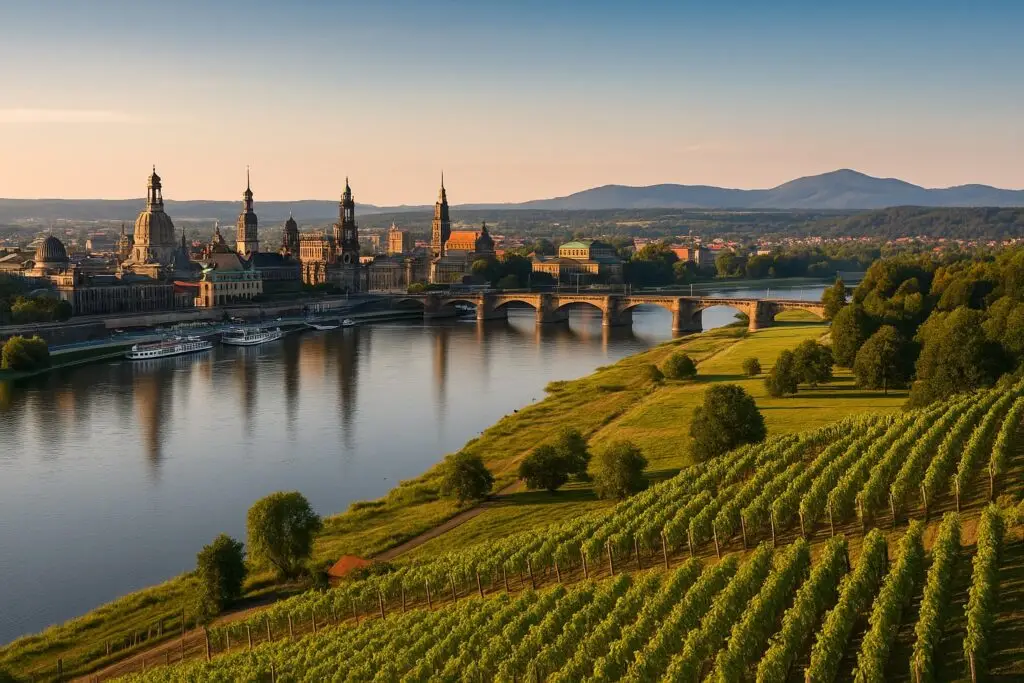
Where Tradition Meets Transformation Germany Saxony
Germany Saxony Tucked away in Germany’s east, bordering Poland and the Czech Republic, Saxony (Sachsen) is a region where centuries of artistry, science, and architecture blend seamlessly with wild rivers and forested hills.
It’s a place where Baroque palaces sparkle along the Elbe, where composers like Bach and Wagner found inspiration, and where nature has carved sandstone cathedrals out of ancient rock. Germany Saxony
For travelers, Saxony offers a rare balance — urban elegance and rural peace. Germany Saxony
In one day, you might stand beneath the domes of Dresden’s Frauenkirche, listen to an orchestra in Leipzig, and then hike through the misty canyons of Saxon Switzerland.
The state’s compact size and excellent transport links make it ideal for exploration, while its warm people, rich traditions, and sense of renewal give it lasting charm. Germany Saxony
Dresden – The Baroque Jewel on the Elbe
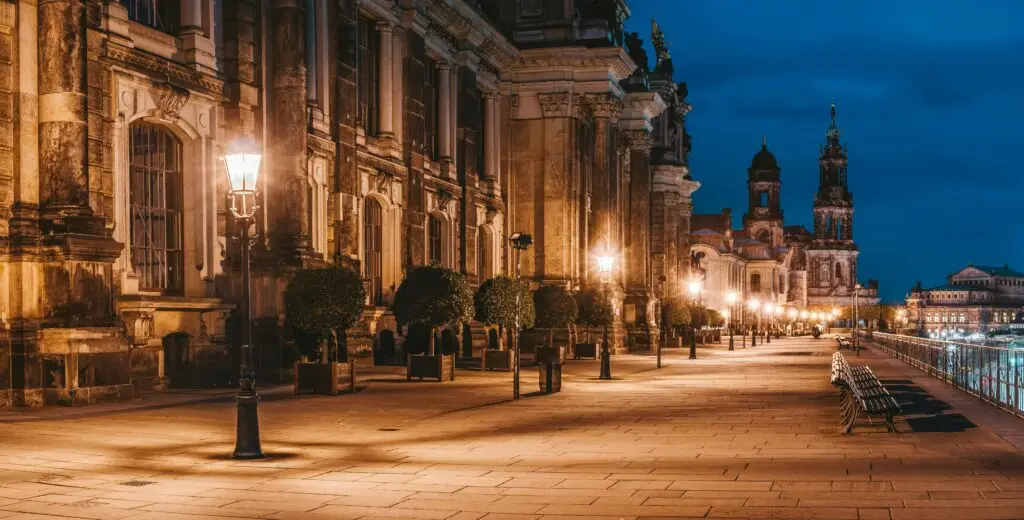
Few cities in Europe have a story as dramatic as Dresden.
Once known as the “Florence on the Elbe” for its wealth of art and architecture, it was almost completely destroyed in World War II — then painstakingly rebuilt to its former beauty.
Today, Dresden shines again as the cultural heart of Saxony, with world-class museums, restored palaces, and river promenades that glow at sunset.
The Historic Old Town Germany Saxony
At the center lies the Altstadt, a masterpiece of Baroque design. Germany Saxony
Here, the Frauenkirche dominates the skyline — its grand stone dome reconstructed from thousands of original fragments. Step inside to feel a city’s resilience carved in sandstone.
Nearby stands the Zwinger Palace, an ornate courtyard complex built by August the Strong in the 18th century. Inside, the Old Masters Picture Gallery displays works by Raphael, Titian, Rembrandt, and Vermeer, while fountains sparkle outside amid perfect symmetry.
Walk along the Brühl’s Terrace, nicknamed “Europe’s balcony,” for sweeping views over the Elbe River and the New Town beyond. Germany Saxony
The Semper Opera House and the Royal Palace complete Dresden’s ensemble of grandeur — a living reminder of the city’s golden age.
Museums and Art
Dresden’s artistic legacy runs deep.
- The Green Vault (Grünes Gewölbe) showcases one of Europe’s most dazzling collections of jewels and treasures.
- The Albertinum presents modern art by Caspar David Friedrich, Otto Dix, and other German masters.
- In the Transparent Factory, Volkswagen turns car production into an architectural exhibition — proof that innovation and design still shape Saxony’s identity.
Beyond the Baroque – The Modern City Germany Saxony
Cross the river to the Neustadt (New Town), and Dresden’s creative side comes alive.
Here, narrow lanes brim with street art, jazz bars, and craft-beer cellars.
The Kunsthofpassage is a must-see: a series of inner courtyards turned into open-air art galleries, where building façades are covered with colorful mosaics and even a “singing rain” installation that plays music when it pours.
In summer, the Elbe meadows fill with picnickers and cyclists, while paddle-steamers glide toward the vineyards of Pillnitz and Meissen.
In winter, the Striezelmarkt, one of Germany’s oldest Christmas markets (since 1434), wraps the city in light, cinnamon, and song.
Book Here a tour:
Leipzig – City of Music and Momentum
If Dresden is Saxony’s Baroque soul, Leipzig is its creative heartbeat.
Known for its musical heritage, trade fairs, and youthful energy, Leipzig has transformed from an East-German industrial center into one of Europe’s most dynamic cultural cities.
A Legacy of Composers
Leipzig’s history reads like a score of classical genius.
Johann Sebastian Bach worked here for 27 years as Kantor of the St. Thomas Church, where his choir still performs each Friday.
Felix Mendelssohn, who revived Bach’s music, founded the city’s conservatory — Germany’s oldest.
Richard Wagner was born here, and Schumann composed some of his greatest works in a modest flat that’s now a museum.
Visitors can follow the Leipzig Music Trail, a 5-km route linking 23 historical sites, or attend a concert by the Gewandhaus Orchestra, one of the world’s finest.
Trade, Literature, and Revolution
Leipzig’s role extends beyond music.
It was once Germany’s book-publishing capital and home to the influential Leipzig Trade Fair, which has connected merchants for over 800 years.
In 1989, it became a focal point of peaceful protest during the Monday Demonstrations, leading to the fall of the Berlin Wall. The St. Nicholas Church remains a symbol of that movement — a sacred space where candles and courage changed history.
The Modern City Scene
Today’s Leipzig buzzes with creativity.
Former factory complexes such as Spinnerei and Tapetenwerk now house artist studios, galleries, and cafés.
The Plagwitz district is a favorite for urban explorers, filled with canal-side trails and pop-up markets.
Meanwhile, the city center blends old and new: the Old Town Hall, arcaded passages like Mädler Passage, and sleek shopping avenues co-exist effortlessly.
Nightlife thrives too — jazz in cellar clubs, techno in converted warehouses, and festivals like Wave-Gotik-Treffen, the world’s largest Gothic gathering, which paints the city black each spring.
Nature and the Saxon Switzerland National Park
Just 30 km southeast of Dresden, the landscape changes dramatically. Germany Saxony
The flat plains give way to sculpted towers of sandstone rising above the Elbe — this is Saxon Switzerland National Park (Sächsische Schweiz), one of Germany’s most spectacular natural areas.
The Elbe Sandstone Mountains
Over millions of years, wind and water carved this region into labyrinths of cliffs, gorges, and pinnacles.
Hikers follow more than 400 km of trails, including the famous Malerweg (“Painters’ Trail”), named after the artists who captured its romantic vistas.
The route winds past mossy forests, secluded valleys, and the legendary Bastei Bridge, an arched stone walkway connecting natural rock towers high above the river. The view — especially at dawn when mist curls through the valley — is pure magic.
Rock climbers love this region too: the Elbsandsteingebirge is the birthplace of modern free-climbing, with over 1 000 peaks offering routes for every skill level.
And yet, even those who simply walk or paddle a canoe on the Elbe feel its quiet grandeur.
Fortresses and Villages Germany Saxony
Perched above the cliffs, the Königstein Fortress guards the landscape — a colossal citadel that has never been conquered. Germany Saxony
Its ramparts offer panoramic views stretching deep into Bohemia. Inside, museums tell stories of Saxony’s military past and everyday life atop the plateau. Germany Saxony
Below, villages like Bad Schandau and Rathen serve as gateways to the park, with cozy guesthouses and spa traditions dating back centuries. Germany Saxony
You can hop aboard historic paddle-steamers that connect these towns with Dresden, floating past castles and vineyards.
The Elbe River and Saxony’s Landscapes
The Elbe River is Saxony’s lifeline — a silver thread running from the Czech border through Dresden, Meissen, and the green hills of northern Saxony.
Along its banks, wine has been cultivated since the Middle Ages, particularly around Radebeul and Meissen, where small terraces cling to the slopes. Visitors can sample crisp white wines while watching sunset shimmer on the river.
Cyclists follow the Elbe Cycle Route (Elberadweg), one of Europe’s most scenic long-distance trails, stretching more than 1 000 km from Prague to Hamburg.
Within Germany Saxony, it offers easy riding past palaces, meadows, and charming riverside villages.
Beyond the valley rise the Ore Mountains (Erzgebirge) — a separate region of forests and mining towns that will appear in part 2 of this guide — and the gentle Lusatian Hills in the east.
Historic Towns and Hidden Gems
Beyond Dresden and Leipzig, Saxony hides a constellation of smaller towns that reveal the region’s depth — places where medieval towers, porcelain workshops, and cobblestone streets tell stories untouched by time.
Meissen – The Birthplace of European Porcelain
Overlooking the Elbe, Meissen is one of Germany’s oldest towns and the cradle of Europe’s first hard-paste porcelain.
In 1710, under Augustus the Strong, the secret of porcelain was unlocked here, forever changing art and commerce.
Visitors can tour the Meissen Porcelain Manufactory, where artisans still hand-paint delicate patterns under the crossed-swords logo.
The hilltop Albrechtsburg Castle — Germany’s first residential palace — stands beside the Gothic Cathedral of St. John and St. Donatus, both commanding sweeping views of the river valley.
In the old town below, half-timbered houses host wine taverns serving crisp Saxon white wines grown on nearby slopes.
Görlitz – Germany’s Movie Set
At Saxony’s eastern edge lies Görlitz, perhaps the most beautiful town you’ve never heard of.
Straddling the Neisse River — with Poland’s Zgorzelec on the opposite bank — Görlitz boasts more than 4 000 listed buildings from Gothic to Art Nouveau.
Its perfectly preserved streets have made it a favorite filming location for Hollywood productions such as The Grand Budapest Hotel and Inglourious Basterds.
Stroll beneath arcades, visit St. Peter’s Church, and cross the pedestrian bridge into Poland for a coffee — two countries in one afternoon.
Görlitz’s mix of charm, serenity, and history makes it one of Saxony’s hidden treasures. Germany Saxony
Bautzen – Towers and Sorbian Culture
Bautzen, perched on a granite hill above the River Spree, is famous for its skyline of medieval towers and for being the cultural center of the Sorbs — a Slavic minority with their own language, traditions, and colorful Easter customs.
Explore the Old Waterworks Tower, walk the city walls, and sample the town’s signature Bautz’ner mustard, found on tables across Germany.
Each spring, Sorbian Easter riders parade through nearby villages on decorated horses — a living link between faith and folklore.
Zittau and the Lusatian Mountains
Further south, near the Czech and Polish borders, Zittau opens the door to the Zittau Mountains Nature Park, where sandstone peaks and spa towns create a gentle alpine atmosphere.
Timber-framed houses, monasteries, and quiet hiking trails define this tranquil corner of Saxony.
Don’t miss the Zittau Lenten Veils — massive painted cloths from the 15th century displayed each Easter — a masterpiece of medieval art that survived wars and border shifts.
The Ore Mountains (Erzgebirge) – Land of Crafts and Christmas
Along Saxony’s southern frontier stretch the Ore Mountains, once rich in silver and tin, now rich in traditions.
For centuries, miners and woodcarvers shaped the region’s identity; when the mines fell silent, their craftsmanship blossomed into world-famous Christmas art.
Mining Heritage and Folk Art
The Erzgebirge Mining Region is a UNESCO World Heritage Site, dotted with tunnels, smelters, and mining towns such as Freiberg, Annaberg-Buchholz, and Marienberg.
In Freiberg, visit the Terra Mineralia Museum, home to glittering gems and minerals from every continent.
In Annaberg-Buchholz, the Manufaktur der Träume (“Factory of Dreams”) celebrates toys and carvings that have delighted generations.
Villages like Seiffen are known worldwide for handcrafted nutcrackers, pyramids, and smoking men — wooden figures whose fragrant incense curls up like mountain mist.
During Advent, candle arches glow in every window, and snow blankets the ridges; the Ore Mountains become the Christmas heart of Germany.
Castles, Palaces, and Gardens
Saxony’s rulers, the Electors and Kings of Poland and Saxony, left behind a legacy of opulence rivaling any European court.
- Moritzburg Castle: Rising from a mirror-still lake near Dresden, this hunting lodge is famed for its symmetrical towers and lavish interiors — and for being the setting of the beloved fairy-tale film Three Wishes for Cinderella.
- Pillnitz Palace: Once the summer residence of Saxon royalty, this complex blends Baroque and Chinese design, surrounded by terraced gardens along the Elbe.
- Colditz Castle: Perched above the Mulde River, Colditz served as an escape-proof POW camp during World War II; today it’s a museum chronicling ingenious breakout attempts.
- Kriebstein Castle: Often called Saxony’s most romantic fortress, Kriebstein clings dramatically to a rock above the Zschopau River, its pointed roofs mirrored in the water below.
Each castle adds a chapter to Saxony’s story — a mix of power, art, and imagination spanning 800 years. Germany Saxony
Festivals and Traditions Germany Saxony
Saxony celebrates its heritage with enthusiasm year-round.
- Dresden Music Festival (May–June): Classical concerts fill churches and palaces across the city.
- Leipzig Bach Festival (June): A must for lovers of sacred music, honoring the composer where he once worked.
- Dresden Striezelmarkt (Advent): One of Europe’s oldest Christmas markets, famed for its giant Stollen cake and wooden pyramids.
- Radebeul Wine Festival (September): Toasts the Elbe’s vineyards with music and open-cellar events.
- Ore Mountains Christmas Markets: In Seiffen, Annaberg, and Freiberg, carols echo through snowy streets, filling the air with cinnamon and pine.
Local traditions persist, from Easter horseback processions to village Maypoles and autumn harvest fairs. Everywhere, community and craftsmanship remain at the heart of celebration.
Cuisine and Local Flavors Germany Saxony
Saxon cuisine mirrors its geography — hearty mountain fare meets refined court cooking.
Savory Specialties
- Sauerbraten: Marinated roast beef in sweet-sour sauce, often served with red cabbage and dumplings.
- Saxon Potato Soup (Sächsische Kartoffelsuppe): Comfort in a bowl, seasoned with marjoram and bacon.
- Leipziger Allerlei: A colorful vegetable medley with crayfish tails, reflecting Leipzig’s trade-fair prosperity.
- Quarkkeulchen: Sweet cottage-cheese pancakes fried golden and dusted with sugar — a Dresden favorite.
- Stollen: Dense fruit bread laced with almonds and powdered sugar, traditionally baked in December and shipped worldwide as “Dresden Stollen.”
Drinks
Local breweries craft crisp lagers, while vineyards near Meissen produce elegant white wines from Riesling and Müller-Thurgau grapes.
In winter, mugs of Glühwein (mulled wine) warm cold hands at markets, and in cafés, thick hot chocolate recalls Saxony’s royal indulgence in cocoa centuries ago.
Art, Science, and Innovation Germany Saxony
Saxony has always been a land of ideas.
The region produced mathematician Carl Gustav Jacobi, philosopher Leibniz, and printing pioneer Johann Gutenberg’s successors who built Europe’s largest book-publishing industry in Leipzig.
In Dresden, early camera technology and optics flourished; today, “Silicon Saxony” hosts cutting-edge microchip research and technology parks that drive Europe’s semiconductor production.
Art and science still walk hand in hand — galleries, design schools, and tech institutes collaborate to make Saxony a hub of modern creativity.
Travel Tips and Getting Around
- By Train: Deutsche Bahn connects Dresden, Leipzig, and regional towns efficiently. Local trains along the Elbe offer scenic views.
- By Car: Drives through the Ore Mountains or Saxon Switzerland reveal rural beauty often missed by rail.
- Cycling: The Elbe Cycle Route and countless mountain trails make Saxony ideal for cyclists.
- Best Time to Visit: May–September for warm weather and festivals; December for magical Christmas markets; spring and autumn for fewer crowds and rich colors.
- Language & Currency: German and Sorbian are spoken; English widely understood. Currency is the Euro (€).
Why Germany Saxony Captivates Travelers
Because nowhere else in Germany does art meet authenticity so effortlessly. Germany Saxony
You’ll find cities rebuilt from ruins, villages that still carve toys by hand, forests where mist drifts through sandstone towers, and music echoing from centuries-old churches. Germany Saxony
Saxony is not just a place to visit — it’s a region to feel: resilient like its people, graceful like its architecture, and alive with the hum of creativity that has never ceased since Bach’s first note or Augustus the Strong’s first dream of beauty.
Come for its castles and cathedrals, stay for its spirit — a perfect harmony of culture, craft, and nature. Germany Saxony
 Related Articles
- Staying Overnight at Tropical Islands Resort Berlin
- Top 10 Most Unique Places to Stay in Europe
- 10 Incredible Castles Around the World