
🇮🇪 The Ultimate Complete Travel Guide
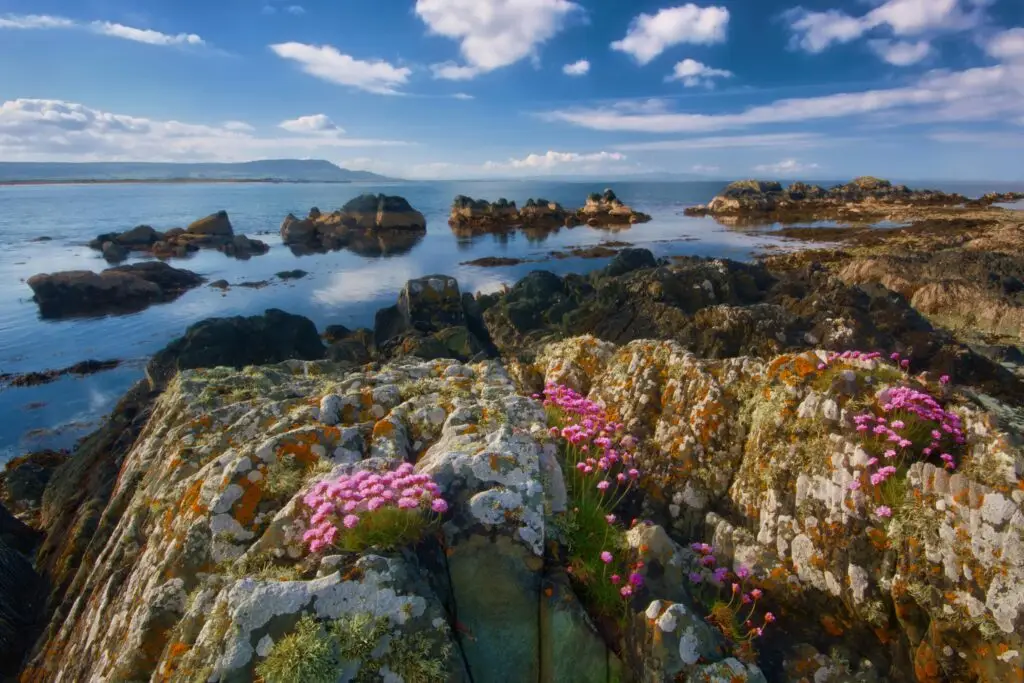
Ireland — the Emerald Isle — is a land wrapped in poetry, mythology, and dramatic natural beauty. Rolling green landscapes meet jagged coastlines, medieval castles stand watch over misty valleys, and vibrant coastal villages come alive with traditional music long after nightfall.
Although small, Ireland feels vast. Ancient mountains, fjord-like inlets, sweeping sandy beaches, Atlantic islands, boglands, oak forests, rugged cliffs, and tranquil farmland all coexist together. It is a country that rewards slow travel — where each region feels richly layered with culture, history, and folklore.
Wherever you go, you’ll sense Ireland’s deep past. Prehistoric tombs older than the pyramids lie silently in grassy fields. Celtic mythology infuses stone circles and lonely mountaintops. Viking harbors and Norman fortresses reflect centuries of conflict and exchange. And yet, Ireland is just as vibrant today: modern cuisine, literary creativity, global festivals, and a warm, inviting spirit define daily life.
From the dramatic Wild Atlantic Way to the Wicklow Mountains just outside Dublin, from lively Galway to windswept Donegal, from the monastic valleys of Glendalough to the stone deserts of the Burren — Ireland invites you not only to explore, but to feel.
It is a place where nature, culture, and story intertwine.
🧭 Quick regional index
Major Regions
- Dublin Region
- East / Wicklow
- Southeast (Waterford, Wexford, Kilkenny)
- Southwest (Cork, Kerry)
- West (Clare, Galway, Connemara)
- Northwest (Mayo, Sligo, Donegal)
- Midlands
- Northern Ireland (Belfast, Derry, Causeway Coast)
Major Cities & Towns
- Dublin
- Cork
- Galway
- Limerick
- Kilkenny
- Waterford
- Killarney
- Dingle
- Sligo
- Westport
- Donegal Town
- Belfast*
- Derry/Londonderry*
* Northern Ireland (politically UK but often included in travel-Ireland)
🌀 Ireland – Deep History Overview
Ireland’s journey begins long before written history. Its landscape holds stories stretching more than 10,000 years.
🏺 Prehistoric Ireland
After the Ice Age, the first hunter-gatherers arrived around 8,000 BCE. By 4,000–3,000 BCE, Neolithic societies built monumental stone tombs that still stand today — older than Stonehenge and the pyramids.
Key prehistoric sites
- Newgrange (Brú na Bóinne) — 5,000-year-old passage tomb aligned with the winter solstice
- Knowth & Dowth — ancient temple complexes
- Poulnabrone Dolmen (Burren) — portal tomb over limestone pavement
- Carrowmore Megalithic Cemetery (Sligo) — largest in Ireland
These ancient structures show advanced astronomy, engineering, and ceremonial culture.
⚔️ The Celts
Around 500 BCE, Celtic peoples arrived, shaping language, myths, social structures, and art.
They organized into tribes and smaller kingdoms — each with its own laws and customs.
Celtic mythology introduced stories of:
- The Tuatha Dé Danann
- Cú Chulainn
- Fionn mac Cumhaill
- Queen Medb
Many sacred places are tied to legends: mountains, lakes, stone circles, caves.
✝️ Christianity & Monastic Golden Age
The arrival of Christianity around the 5th century transformed Ireland.
Monasteries became centers of learning, art, and culture.
Key sites
- Glendalough (Wicklow)
- Clonmacnoise (Shannon)
- Skellig Michael (Kerry)
Irish monks created illuminated manuscripts such as:
- Book of Kells
- Book of Durrow
When Europe entered the Dark Ages, Irish monasteries preserved knowledge.
⚔️ Vikings (8th–11th c.)
Beginning in the 700s, Vikings raided Irish monasteries, then settled permanently.
They founded many coastal cities, including:
- Dublin
- Limerick
- Waterford
- Wexford
These became trading hubs blending Norse and Gaelic worlds.
🏰 Normans (12th c.)
The Normans arrived in 1169, building fortified towns and stone castles such as:
- Kilkenny Castle
- Trim Castle
They brought feudalism and new agricultural systems.
🇬🇧 British rule
Centuries of political conflict followed.
Religious suppression, plantation policies, and warfare marked Irish life, especially in Ulster.
🍂 The Great Famine (1845–1852)
Potato blight caused devastation — over a million died and millions emigrated.
Ireland’s population still hasn’t returned to pre-famine levels.
🇮🇪 Independence (20th c.)
Ireland fought a war of independence, establishing the Irish Free State (1921).
Northern Ireland remained under British rule.
In 1949, Ireland became a fully independent republic.
Today Ireland is a youthful, dynamic, creative nation — forward-looking but deeply connected to its past.
🍀 Irish Mythology & Folklore (Deep Dive)
Mythology is central to Irish identity — often tied to real places.
Key myth cycles
- Mythological Cycle (Tuatha Dé Danann)
- Ulster Cycle (Cú Chulainn)
- Fenian Cycle (Fionn mac Cumhaill)
- Kings’ Cycle
Famous figures
- Fionn mac Cumhaill — warrior who gained wisdom through salmon
- Cú Chulainn — heroic defender of Ulster
- Queen Medb — legendary queen of Connacht
- Leprechauns — tricksters safeguarding gold
- Banshee — ghostly omen of death
Many landscapes have mythic origins — mountains formed by battles of giants, lakes sprung from magic wells, cliffs created by fallen heroes.
You feel these stories everywhere.
🌍 Ireland Regions & Highlights (deeply expanded)
Now we explore Ireland region by region, with detailed highlights and nature features.
✅ DUBLIN REGION
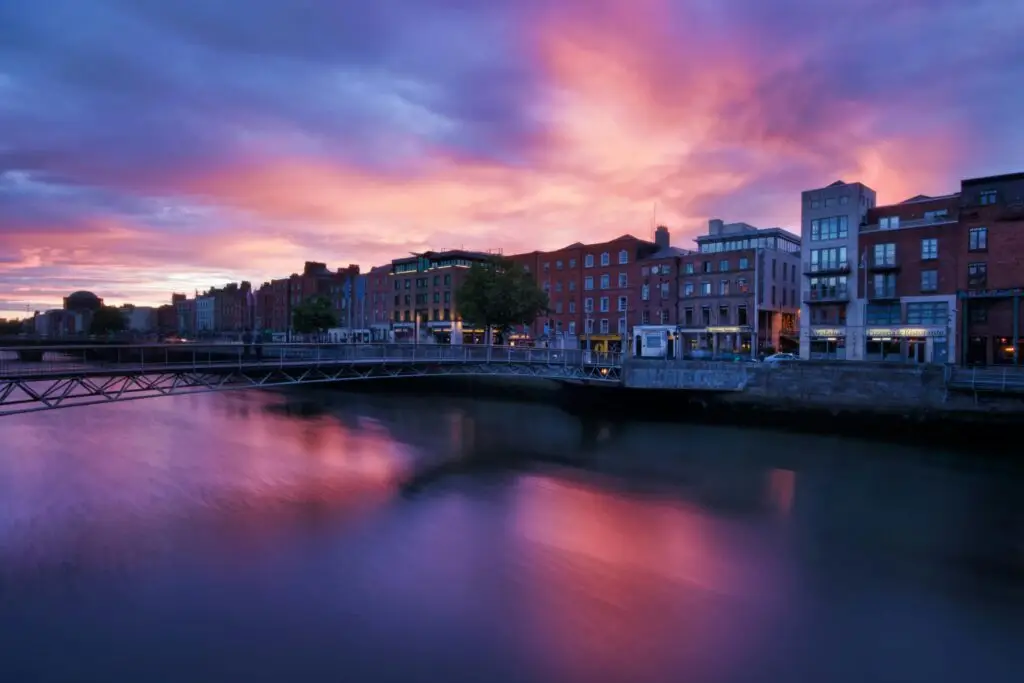
Dublin City
Ireland’s capital is rich in history, architecture, music, and literature.
Top landmarks:
- Trinity College & Book of Kells
- St Patrick’s Cathedral
- Christ Church Cathedral
- Dublin Castle
- Temple Bar
- Ha’Penny Bridge
- Phoenix Park
- Guinness Storehouse
- Kilmainham Gaol
Neighborhoods:
- Temple Bar — nightlife & culture
- Docklands — modern waterfront
- Grafton Street — shopping & buskers
- Trinity / College Green — historic core
- Smithfield — creative district
Parks:
- St Stephen’s Green
- Iveagh Gardens
- Phoenix Park (with deer)
✅ WICKLOW MOUNTAINS NATIONAL PARK (expanded)
Just south of Dublin — deeply scenic & historic.
Glacial valleys carved between granite mountains hold quiet lakes and ancient monasteries.
Glendalough
A serene valley founded by St Kevin in the 6th century.
Features:
- Round tower
- Churches
- Celtic gravestones
- Forest trails
- Upper & Lower Lakes
Hikes:
- Spinc & Glenealo Valley
- Glendalough forests
- Wicklow Way (long distance)
Other highlights:
- Lough Tay (Guinness Lake)
- Sally Gap & Military Road viewpoints
- Glenmacnass waterfall
Landscapes:
- Peat bog
- Heather moorland
- Birch & oak woods
- Fast flowing streams
Wicklow = spiritual + natural.
✅ EAST & SOUTHEAST (Kilkenny, Waterford, Wexford)
Kilkenny
Medieval lanes & cathedral stonework.
Kilkenny Castle dominates the city, set along River Nore.
Nearby:
- Jerpoint Abbey
- Dunmore Cave
Waterford
Ireland’s oldest city, founded by Vikings.
- Reginald’s Tower
- Viking Triangle
- Waterford Crystal heritage
Wexford
Known for coastal dunes, birding wetlands, and:
- Hook Peninsula
- Hook Lighthouse (one of world’s oldest operating)
✅ CORK & SOUTHWEST
Cork City
A lively port city with:
- English Market (food)
- Shandon Bells
- Victorian architecture
Cobh
Colorful harbor town — Titanic’s final port.
Kinsale
Beautiful seaside — gourmet capital.
- Charles Fort
- Sailing & coves
✅ KILLARNEY & KERRY (deeply expanded)
Killarney National Park
Lakes, oak forests, red deer, waterfalls, and mountain views.
- Torc Waterfall
- Muckross House & Abbey
- Ross Castle
- Lakes boat rides
MacGillycuddy’s Reeks
Ireland’s highest range.
Climb Carrauntoohil for alpine views.
Ring of Kerry
Ireland’s most famous scenic loop:
- Kenmare
- Sneem
- Caherdaniel
- Waterville
- Portmagee
- Glenbeigh
Features:
- Mountain passes
- Sandy bays
- Prehistoric ring forts
- Island lookouts
Skellig Michael
A UNESCO monastery clinging to a steep rock.
Stone beehive huts sit atop soaring cliffs — monks lived here 1,300+ years ago.
The smaller island, Little Skellig, hosts massive seabird colonies.
✅ DINGLE PENINSULA
One of Ireland’s most dramatic coastlines.
Dingle Town
Colorful streets + music pubs + coastal charm.
Slea Head Drive
Highlights:
- Dunquin Pier
- Coumeenoole Beach
- Gallarus Oratory (early Christian)
- Beehive huts (prehistoric)
Cliffs overlook Blasket Islands — once a stronghold of oral Gaelic culture.
✅ COUNTY CLARE & THE BURREN
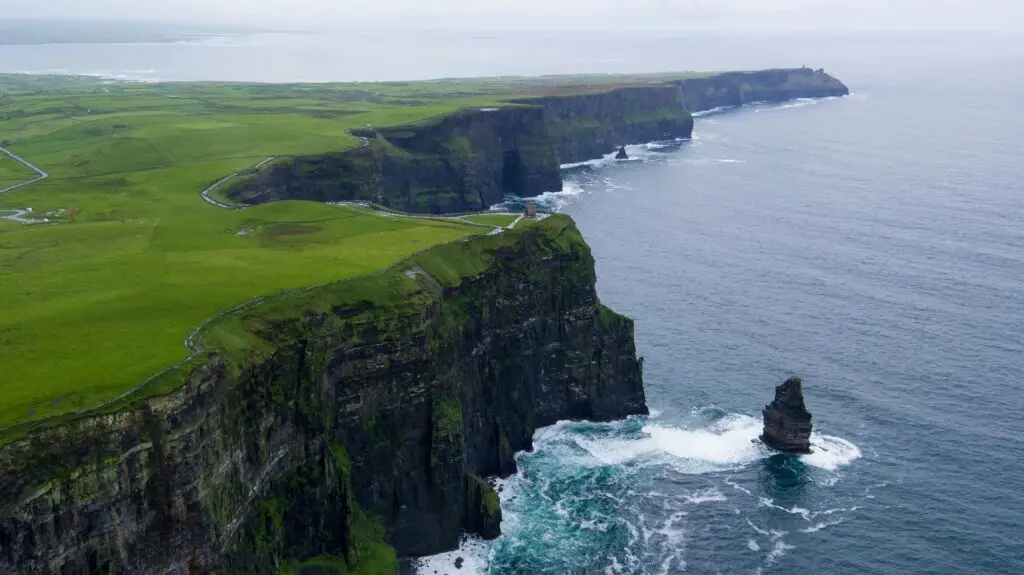
Cliffs of Moher
Gigantic cliffs (200m) falling into Atlantic.
- Views to Aran Islands
- Bird colonies
The Burren
Limestone karst = rare plants + ancient tombs.
A landscape where Alpine + Mediterranean plants grow side by side.
Poulnabrone Dolmen — portal tomb.
The Burren feels lunar — yet alive.
✅ GALWAY & CONNEMARA
Galway City
Festival life, music, food, medieval lanes.
Connemara (deep)
Boglands, stone walls, mountains, and fjords.
Twelve Bens
Jagged quartzite peaks.
Diamond Hill
Iconic hike — sweeping views.
Kylemore Abbey
Lakeside Benedictine abbey + formal gardens.
Killary Harbour
Ireland’s only fjord — glacier-carved.
Connemara is one of Ireland’s cultural soul regions — remote, poetic, wild.
✅ MAYO & SLIGO
Mayo
- Croagh Patrick pilgrimage mountain
- Wild Nephin NP (dark skies)
- Achill Island — beaches, cliffs, surfing
Sligo
Strong Yeats connection; dramatic Benbulben mountain.
✅ DONEGAL – THE WILDEST COUNTY
Remote, rugged, spectacular.
Slieve League
Among Europe’s highest sea cliffs.
Glenveagh National Park
Castle + mountain valley.
Malin Head
Northernmost point.
Beaches are pristine; mountains empty; roads winding.
Donegal often feels like Ireland at its wildest.
✅ NORTHERN IRELAND
Belfast
Cultural revival, maritime heritage.
Sites:
- Titanic Belfast
- Cathedral Quarter pubs
- Crumlin Road Gaol
- Peace walls & murals
Causeway Coast
- Giant’s Causeway — basalt columns
- Carrick-a-Rede Rope Bridge
- Dunluce Castle
- Dark Hedges (Beech avenue)
Derry / Londonderry
Walled city; stunning heritage.
Expanded Nature, Parks, Landscapes, Coastal Areas, Hiking & Ecosystems)
🌳 Ireland’s National Parks — Ultra-Deep Coverage
Ireland’s six official national parks offer a window into the country’s ecological past, present, and future. Although small compared to urbanized Europe, these protected spaces preserve rare species, ancient forests, extensive bog systems, and dramatic mountain scenery.
Below, each park is explored in even greater detail — including landscapes, flora, fauna, geology, culture, walks, and nearby highlights.
✅ 1) Killarney National Park (County Kerry) — Ultra-Deep
Killarney National Park is a microcosm of Ireland at its wildest and most romantic. The glacial valleys, peaceful lakes, patchwork forests, and rugged mountains form some of the country’s most iconic scenery.
🌄 Geological Formation
The park was sculpted during the last Ice Age (approx. 12,000 years ago).
U-shaped valleys and river channels carved into ancient sandstone now cradle forests and lakes.
🏞️ Landscape Zones
- Lowland Oak Woods — evergreen undergrowth, moss-draped branches
- Montane Heath — heather & bog plant life
- Glacial Lakes — Lough Leane, Muckross Lake, Upper Lake
- Reeks Mountain Range — granite & sandstone peaks
🦌 Wildlife
- Red Deer — Ireland’s only native deer; free-roaming herds survive since antiquity
- Sika Deer — introduced in the 19th c.
- Pine marten, fox, badger
🦅 Birds
- White-tailed sea eagles — reintroduced
- Peregrine falcons
- Herons & swans
🌿 Plant Life
- Ancient yew groves (rare in Europe)
- Oak & ash forests
- Moss carpets
- Fern valleys
🏰 Culture
- Muckross House — Victorian estate; gardens famous for vibrant rhododendrons
- Ross Castle — 15th-century stronghold at lake edge
- Muckross Abbey — quiet monastic ruins
🥾 Top Hikes
- Torc Waterfall → one of Ireland’s finest waterfalls
- Carrauntoohil summit — the roof of Ireland
- Old Kenmare Road → rugged old pilgrimage route
🛶 Activities
- Rowing
- Lakeside boating
- Pony trekking
- Historic estate tours
- Cycling the Muckross Loop
This park is especially atmospheric at sunrise — mist drifting over lakes beneath the mountains.
✅ 2) Connemara National Park (County Galway) — Ultra-Deep
Connemara is one of the most soulful landscapes in Ireland — a combination of rugged mountains, shimmering lakes, rainforest-like bogs, and stone-walled meadows.
🌄 Landscape
- Twelve Bens (Bens/Peaks)
A compact mountain system of jagged quartzite summits.
They rise sharply in clusters, creating dramatic skylines. - Roundstone Bog
A rare Atlantic blanket bog, thousands of years old — peat deposits, heather, and tiny pools stretching to the horizon. - Killary Harbour
Ireland’s only fjord — steep, glacially carved walls surrounding deep ocean water.
🐴 Wildlife Highlights
- Connemara ponies — elegant, hardy, friendly
- Red deer
- Foxes
- Otters along streams and lakes
🌿 Flora
- Heather & bog myrtle
- Orchids in summer
- Sphagnum moss — the living heart of bogs
🏛️ Nearby Cultural Sites
- Kylemore Abbey
A dramatic lakeside monastery with Victorian gardens - Remote stone cottages
- Gaelic culture strongholds
🥾 Top Hikes
- Diamond Hill Loop — panoramic
- Glencoaghan Horseshoe (major summit circuit)
- Lakeside farmland trails
Connemara is perfect for photography and slow exploration — light constantly shifts across mountains, peatlands, and water.
✅ 3) Wicklow Mountains National Park (County Wicklow) — Ultra Deep
Just south of Dublin lies a world of glacial valleys, mountain passes, and ancient monastery sites.
🏞️ Geology
Exposed granite formed by ancient volcanic activity → shaped by glaciers
Valleys = U-shaped with hanging lakes
The granite contrasts with dark forestry & waterfalls.
🌄 Glendalough — Spiritual Heart
Meaning “Valley of the Two Lakes,” Glendalough is simply one of the most mystical places in Ireland.
Founded by St. Kevin (6th c.)
- Round tower
- Medieval stone churches
- Celtic grave markers
- Reflections on still lake water
🌿 Landscape Zones
- Oak & birch woodlands
- Peat moorland
- Heather slopes
- River ravines
- Steep granite cliffs
🥾 Top Hikes
- Spinc Ridge Walk — elevated boardwalk + valley views
- Derrybawn Mountain
- Wicklow Way — 130 km long route
🌊 Water Features
- Glendalough Lower Lake
- Glendalough Upper Lake
- Glenmacnass River & waterfall
The valley can be silent — no wind, no birds, only water. One of Ireland’s most peaceful landscapes.
✅ 4) Glenveagh National Park (County Donegal) — Ultra-Deep
Remote + mountainous + empty = true wilderness.
🏞️ Geography
Dominated by the Derryveagh Mountains
Deep, narrow valleys
Quiet glacial lakes
🏰 Glenveagh Castle
A romantic 19th-century fortress on Lough Veagh
Surrounded by gardens with exotic shrubs & flowers
🌿 Ecology
- Blanket bogs — perfect peat showcase
- Rare moss species
- Rugged heathland
🦌 Wildlife
- Red deer thrive
- Golden eagles reintroduced — soar over valleys
- Buzzards, ravens
🥾 Hikes
- Lough Inshagh Trail
- Glenbeagh to Mullangmore Ridge
- Lakeside & glen trails
Glenveagh feels untouched, harsher, more ancient than most of Ireland — especially in winter fog.
✅ 5) Ballycroy / Wild Nephin National Park (County Mayo) — Ultra Deep
One of the last great wilderness boglands of Europe.
🌍 Landscape
- Atlantic blanket bog
- Nephin Beg range
- Owenduff River basin
🌌 Night Skies
This is one of Europe’s darkest Dark Sky Reserves
→ The Milky Way is visible to the naked eye.
Perfect for astro-photography.
🌿 Flora & Fauna
- Foxes
- Red deer
- Badger
- Migratory birds
- Rare bog flowers
This park feels otherworldly — especially beneath starlight.
✅ 6) Burren National Park (County Clare) — Ultra-Deep
The Burren is unlike anywhere else in Europe.
🏞️ Geology
Ancient seabed limestone uplifted, polished by glaciers →
Karst pavement with deep cracks (“grikes”)
and limestone blocks (“clints”).
The result is a surreal tabletop of stone.
🌺 Flora
Unique mix of:
- Alpine plants
- Arctic flora
- Mediterranean species
All growing side-by-side — nowhere else in the world does this occur.
🏛️ Heritage
- Poulnabrone Dolmen tomb
- Ring forts
- Stone walls
Used for grazing since prehistory — agriculture + ecology shaped each other.
🥾 Trails
- Mullaghmore Mountain Circuit
- Kilinaboy paths
- Burren Way
In spring + summer, wildflowers fill cracks between limestone — stunning.
🌋 Wild Landscape Typology of Ireland
Ireland’s terrain is shaped by:
✅ Repeated glaciation
✅ Ocean exposure
✅ Dormant ancient volcanism
✅ Limestone uplift
✅ Weather erosion
Leading to:
🔹 Glacial valleys
- Wicklow
- Connemara
- Donegal
🔹 U-shaped Uplands
- MacGillycuddy’s Reeks
🔹 Karst
- Burren
🔹 Peatlands (blanket bog)
- Mayo
- Connemara
- Donegal
- Kerry
🔹 Fjords
- Killary Harbour
🔹 Sea Cliffs
- Cliffs of Moher
- Slieve League
🔹 Sand Dunes
- Donegal
- Sligo
- Wexford
🌿 Ireland Ecosystems — Ultra Expanded
Because Ireland remained cool & wet after the Ice Age, peatlands spread widely.
Today, Ireland holds some of Europe’s largest bog systems.
Main ecosystems:
- Blanket bog
- Raised bog
- Upland heath
- Native oak woodland
- Yew woods
- Montane grasslands
- Coastal sand dunes
- Estuaries
- Freshwater lakes
🦊 Wildlife — Deep Expansion
Ireland’s fauna is subtle but fascinating.
⭐ Mammals
- Red deer
- Pine marten
- Fox
- Otter
- Badger
- Irish hare
- Hedgehog
⭐ Marine life
- Bottlenose dolphins
- Harbour seals
- Grey seals
- Basking sharks
- Minke whales
- Humpback whales in season
⭐ Birds
- Golden eagle (reintroduced)
- White-tailed eagle
- Peregrine falcon
- Puffins on islands
- Gannets
- Ravens
⭐ Why so few species?
When the Ice Age ended, Ireland was cut off from mainland Europe, preventing many species from arriving.
→ Therefore: fewer predators + simpler ecosystems
This isolation gives Ireland a unique biogeography.
🌊 Coastal Regions — Deep Expansion
Ireland has some of the rawest coastal scenery in Europe.
✅ West Coast
- Wild Atlantic Way
- Cliffs
- Windswept beaches
- Fishing villages
✅ Southwest
- Kerry peninsulas
- Island monasteries
- Deep coves
✅ Northwest
- Donegal headlands
- Uninhabited beaches
- Mountain + sea views
✅ East Coast
- Softer coastlines
- Sand dunes
- Fishing towns
🏝️ Islands of Ireland — Ultra Expansion
Ireland’s islands feel frozen in time.
⭐ Aran Islands
Gaelic stronghold
Stone walls everywhere
⭐ Skellig Islands
Monastic complex on rock rising from ocean
Seabird colonies
⭐ Achill Island
- Keem Bay
- Surfing
- Mountain drives
⭐ Clare Island
Ancient stronghold of pirate queen Grace O’Malley
⭐ Cape Clear
Birding paradise + Irish language
⭐ Tory Island (Donegal)
Remote → strong storytelling traditions
🥾 Great Irish Hikes — Ultra Expanded
Long-Distance
- Kerry Way
- Wicklow Way
- Dingle Way
- Beara Way
- Western Way
Mountains
- Carrauntoohil
- Mweelrea (Connemara)
- Lugnaquilla (Wicklow)
Coast
- Slieve League Cliffs
- Dingle coast
Easy Scenic
- Diamond Hill
- Glendalough lakes
- Torc Waterfall
(Cities, Culture, Society, Language, Food, Festivals, Literature & Road Trips)
🏙️ Major Cities & Towns — Deep Expansion
Although Ireland is renowned for its wild landscapes, its cities and towns are just as culturally rich. Each region has its own rhythm, architecture, music traditions, and local identity.
✅ Dublin — Ultra-Expanded
Dublin is Ireland’s dynamic capital — a city where history and modern life blend naturally.
Medieval churches stand beside Georgian townhouses, and lively pubs sit beside bustling cafés and theaters.
🧭 Districts
- Temple Bar — nightlife, cobblestones, galleries
- Trinity / College Green — universities, history
- Grafton Street — shopping, buskers
- Docklands — sleek modern HQs + tech
- Smithfield — creative, vintage, markets
⭐ Top Cultural Sites
- Trinity College & Book of Kells
- St Patrick’s Cathedral
- Christ Church Cathedral
- Dublin Castle
- General Post Office (Easter Rising)
- Kilmainham Gaol (political history)
🎭 Arts
Dublin is a UNESCO City of Literature with:
- James Joyce
- Oscar Wilde
- W.B. Yeats
- Samuel Beckett
- Seamus Heaney
The Abbey Theatre and Gate Theatre remain central to Irish drama.
🌳 Parks
- Phoenix Park — wild deer roaming
- St Stephen’s Green — ornamental & peaceful
- Iveagh Gardens — hidden gem
🎶 Nightlife
Pubs resist time — many centuries old. Trad music fills back rooms; nearly every night, impromptu sessions happen.
✅ Cork — Deep Expansion
Cork, often humorously called “the real capital,” has a rebellious, creative spirit.
📍 Highlights
- English Market — artisan food
- Shandon Bells — climb + ring bells
- Cork City Gaol — atmospheric ruins
- University College Cork + Ogham stones museum
🧭 Surrounding Urban Zone
Cork Harbor is one of the world’s largest natural harbors. Nearby Cobh is a charming, colorful port town.
Cork is known for sea-driven food, friendly humor, and great arts festivals.
✅ Galway — Deep Expansion
Galway is the beating heart of Ireland’s artistic culture — colorful, musical, youthful, and coastal.
The city’s medieval lanes host:
- Street performers
- Ocean-flavored markets
- Traditional pubs
- Art festivals
Quayside houses are famously painted in bright colors, reflecting Galway’s independent spirit.
🌊 Seaside Life
Galway Bay offers long sea walks, and in summer, locals swim daily — no matter how cold.
🎶 Music
Music is everywhere — fiddle, accordion, bodhrán, tin whistle. Trad sessions often erupt spontaneously.
Festivals
- Galway International Arts Festival
- Galway Film Fleadh
Nearby:
- Connemara National Park
- Aran Islands
- Wild Atlantic Way
✅ Limerick — Deep Expansion
Limerick mixes Georgian architecture, river views, and an emerging food and art scene.
Highlights
- King John’s Castle
- Hunt Museum
- People’s Park
Its location along the River Shannon gives the city a poetic rhythm.
✅ Kilkenny — Deep Expansion
A medieval jewel.
- Narrow laneways
- Black Abbey
- Kilkenny Castle (still furnished)
- Much folklore & arts
Kilkenny’s “Medieval Mile” is packed with heritage.
✅ Waterford — Deep Expansion
The oldest city in Ireland — founded by Vikings.
- Reginald’s Tower
- Viking Triangle
- Waterford Crystal heritage
Stone towers flank narrow pedestrian streets.
✅ Killarney — Deep Expansion
Gateway to Killarney National Park.
Bustling with walkers, cyclists, climbers, and lake explorers.
You can explore valleys by:
- Jaunting car (horse carriage)
- Bike
- Boat
- Trail
Atmosphere = friendly and scenic.
✅ Dingle — Deep Expansion
Dingle sits on the edge of Ireland’s wild west.
Colorful buildings, fresh seafood, incredible coastal roads — plus world-class pubs.
Nearby Slea Head Drive is one of Ireland’s most spectacular scenic circuits.
✅ Belfast (Northern Ireland) — Deep Expansion
Belfast has transformed dramatically over the past 30 years.
⭐ Must-See
- Titanic Belfast — interactive maritime museum
- Peace Walls & Murals — chronicling The Troubles
- Cathedral Quarter pub district
- Stormont Parliament Building
Once industrial and troubled, now artistic and modern; Belfast feels youthful and optimistic.
✅ Derry / Londonderry — Deep Expansion
A walled city where history resonates.
Walk the preserved stone fortifications, overlooking murals that reflect generations of conflict, resilience, and cultural identity.
Derry is also known for:
- Strong Gaelic traditions
- Halloween celebrations
- Riverfront promenades
🎭 Irish Culture — Deep Analysis
Irish culture blends ancient Celtic tradition with Christian heritage, rural character, maritime life, and modern creativity.
Core features:
- Storytelling
- Music & dance
- Community hospitality
- Humor
- Poetry
- Faith mixed with folklore
Ireland’s spirit is gentle yet strong; melancholy and joy intertwine.
🎶 Traditional Irish Music
Traditional Irish music (“trad”) is storytelling through melody.
Common instruments:
- Fiddle
- Tin whistle
- Uilleann pipes
- Accordion
- Guitar
- Bodhrán (drum)
Pub sessions are communal — musicians sit in a circle, improvising together. There is no formal stage; the audience and performers are intertwined.
The music expresses:
- Joy
- Nostalgia
- Sorrow
- Celebration
Even if you don’t know the language, you feel the emotion.
Riverdance and Irish step dancing combine deep rhythmic patterns with poetic footwork.
🗣️ Irish Language (Gaeilge)
Ireland has two official languages:
- English
- Irish (Gaeilge)
Irish is spoken daily in some areas — Gaeltacht regions — mainly in:
- Connemara
- Donegal
- Dingle Peninsula
- Aran Islands
Street signs appear in Irish first in these areas.
Place names reflect nature:
“Cill” = church
“Bally” (Baile) = town
“Lough” = lake
The language connects deeply to the landscape, myth, poetry, and identity.
📚 Literature & Storytelling — Deep Expansion
Ireland is one of the world’s great literary nations.
Nobel laureates
- W.B. Yeats
- George Bernard Shaw
- Samuel Beckett
- Seamus Heaney
Other giants
- James Joyce
- Oscar Wilde
- Jonathan Swift
Stories are not just entertainment — they preserve history and identity.
Ireland has a long oral storytelling tradition; folklore was passed down through bards and seanchaí (storytellers).
🍽️ Food & Gastronomy — Deep Expansion
Ireland’s cuisine reflects land + sea.
Traditional ingredients:
- Oats
- Potatoes
- Oysters
- Mussels
- Sea bass
- Beef, lamb
- Root vegetables
- Butter
- Soda bread
- Chutneys & jams
Modern Irish food is inventive, often using:
- Coastal seafood
- Local farms
- Artisan cheesemaking
Regional specialties vary:
- Dingle — crab, chowder, smoked fish
- Cork — markets & seafood
- Galway — oysters
- Donegal — rugged farming heritage
Desserts include:
- Apple cake
- Fruit tarts
- Bread-and-butter pudding
Tea culture is strong — tea is offered for warmth, friendship, and comfort.
🎉 Festivals — Deep Expansion
Ireland loves to celebrate.
Major Festivals
- St Patrick’s Festival (nationwide)
- Galway International Arts Festival
- Cork Jazz Festival
- Fleadh Cheoil (traditional music)
- Dublin Theatre Festival
- Kilkenny Arts Festival
- Halloween in Derry — one of the world’s largest celebrations
Festivals often combine:
- Music
- Food
- Dance
- Street theater
- Literature
- Fire displays
Summer festivals are joyful; autumn festivals have eerie mythic depth.
🚗 Road Trip Themes — Deep Expansion
Ireland is perfect for scenic drives.
✅ Wild Atlantic Way
The greatest coastal journey — Donegal → Cork.
Cliffs, coves, islands, villages, mountains.
✅ Ring of Kerry
Circular peninsula drive — landscapes of ancient forts, beaches, and peaks.
✅ Dingle Peninsula
Shorter but equally dramatic — coastal churches & stone huts.
✅ Causeway Coast
Northern Ireland’s crown — basalt pillars, rope bridges, castle ruins.
✅ Wicklow Loop
Mountains, monastic ruins, hidden lakes.
✅ Midlands Backroads
Castles, lakes, farming villages.
Road trips allow deep immersion into Ireland’s mosaic of nature + heritage.
🏛️ Ancient & Medieval Heritage — Deep Expansion
Ireland protects thousands of sites.
Prehistoric
- Newgrange
- Knowth
- Poulnabrone Dolmen
- Carrowmore
Celtic Monastic
- Glendalough
- Clonmacnoise
- Skellig Michael
Viking
- Dublin street grid
- Waterford foundations
Norman
- Kilkenny Castle
- Trim Castle
- Town walls
Georgian
- Dublin terraces
- Limerick design
🧱 Architecture — Deep Expansion
Styles include:
- Prehistoric megalithic
- Celtic ringforts
- Romanesque
- Early Gothic churches
- Norman castles
- Georgian townhouses
- Victorian grandeur
- Modern glass waterfronts
Ireland blends eras harmoniously.
🌦️ Ireland Climate — Deep Expansion
Ireland’s climate is oceanic, moderated by the Gulf Stream.
- Winters: mild, wet
- Summers: cool, pleasant
- Rainfall: frequent but light
Weather turns quickly — “four seasons in a day.”
Best times:
- May–June (good sun)
- September (stable, warm seas)
But Ireland is beautiful year-round:
- Winter: empty coasts, moody skies
- Spring: flowers, foals
- Summer: long days
- Fall: amber boglands
Light plays dramatically on sea and mountains.
🧘 Slow Travel in Ireland
Ireland rewards:
- walking
- cycling
- conversations
- pub evenings
- quiet scenic roads
There is no rush — landscapes unfold slowly.
(Hidden Gems, Practical Nature Guide, Advanced Itineraries & Field Notes)
🧭 Hidden Gems by Region (for future clickable micro-areas)
Dublin & East
- Howth Cliff Path (loop along sea cliffs, seals often visible)
- Poolbeg Lighthouse Walk (long sea wall stroll with city views)
- Iveagh Gardens (quiet alternative to St Stephen’s Green)
- Hell Fire Club (Dublin Mountains; hilltop ruins + sunset)
Wicklow
- Lough Ouler (heart-shaped lake below Tonelagee; moderate hike)
- Glenmacnass Waterfall (wild valley, fewer crowds)
- Devil’s Glen (woodland gorge trail; sculpture pieces en route)
Kilkenny & Southeast
- Jerpoint Abbey (Cistercian ruins with carvings)
- Hook Peninsula coves (windswept inlets near the lighthouse)
- Dunmore Cave (limestone cave, geological features)
Cork & West Cork Peninsulas
- Sheep’s Head Way (quietest peninsula; cliff-edge paths)
- Beara Ring (wilder sister of Ring of Kerry, Healy Pass viewpoints)
- Garinish Island (micro-climate gardens in Glengarriff)
Kerry
- Skellig Ring (mini roads beyond Portmagee; Valentia Island tetrapod trackway)
- Gap of Dunloe (glacial pass between purple mountains; early morning best)
- Rossbeigh Strand (vast beach near Glenbeigh)
Clare
- Loop Head (lighthouse cliffs, far fewer people than Moher)
- Bridges of Ross (sea arches on a raw headland)
- Caherconnell Stone Fort (ringfort & archaeology displays)
Galway & Connemara
- Roundstone & Dog’s Bay/Gurteen Bay (white sand, turquoise water)
- Inishbofin (quiet island, cliff walks, sandy coves)
- Maam Valley (misty, stone-walled mountain corridor)
Mayo & Sligo
- Downpatrick Head (sea stack Dun Briste; blowholes, ocean power)
- Keem Bay (Achill) (perfect crescent beach under cliffs)
- Benbulben Forest Walk (table-mountain views; photogenic)
Donegal
- Fanad Head Lighthouse (epic headland, storm watching)
- Silver Strand (Malin Beg) (amphitheatre beach, many steps—worth it)
- Poisoned Glen & Dunlewey Church (romantic ruins under Errigal)
Northern Ireland
- Mussenden Temple & Downhill Demesne (clifftop folly over wide sands)
- Murlough Bay (secluded bay with basalt cliffs)
- Silent Valley & the Mournes (reservoir set among granite peaks)
🏞 National Parks – Practical Visitor Notes
Killarney NP (Kerry)
- Best time: spring (rhododendrons), early autumn (rutting deer), winter mists
- Transport notes: jaunting cars, bikes, lake boats link Muckross–Dinis–Lord Brandon’s Cottage (combine with Gap of Dunloe traverse)
- Quiet hours: sunrise lakeshore; late evenings around Ross Castle
Connemara NP (Galway)
- Best time: late spring wildflowers on bog; crisp autumn light
- Trailheads: Visitor Centre at Letterfrack for Diamond Hill; park loops clearly signed
- Safety: sudden squalls—pack waterproofs even on sunny days
Wicklow Mountains NP
- Best time: weekdays outside 11:00–15:00; winter frost reflections
- Parking pressure: Glendalough fills early; arrive pre-10:00 or late afternoon
- Boardwalk etiquette: single-file on Spinc; keep dogs leashed (grouse habitat)
Glenveagh NP (Donegal)
- Access: shuttle from visitor centre to castle in high season; walk or cycle lakeside
- Weather: Donegal changes fast; layers essential
- Wildlife: golden eagle & red deer—bring binoculars
Wild Nephin/Ballycroy (Mayo)
- Terrain: pathless bog beyond short waymarked trails; only for experienced hikers with map/compass
- Dark Sky: plan new-moon trips; carry headlamp, check forecast for cloud cover
The Burren NP (Clare)
- Footing: limestone pavement is uneven—wear sturdy soles
- Flora timing: May–June peak bloom; stay off fragile patches
- Caves: Ailwee & Doolin nearby (outside the NP) for karst education
🗓 Wildlife & Nature Calendar (month-by-month)
- Jan–Feb: Storm seas on west coast; low sun = dramatic photography. Red deer visible in open glens.
- Mar: Early wildflowers; returning seabirds. Longer light, fewer crowds.
- Apr: Puffins arrive on islands; lambing season across rural regions (drive carefully).
- May–Jun: Wildflowers peak (Burren orchids); best overall hiking weather; long daylight.
- Jul–Aug: Warmest seas; island hopping, surfing, festivals; busiest period—go early/late in day.
- Sep: Atlantic swells for surfers; stable weather windows; autumn colours in oak woods.
- Oct: Deer rut in Killarney; moody mist, great for photos; fewer visitors.
- Nov: Aurora chances increase on very clear nights in the northwest; deep quiet.
- Dec: Short days, atmospheric towns; wild coastal storms for drama (observe safely, far back from edges).
⛰ Hiking & Trail Grades (with sample distances)
Grade Easy (family-friendly)
- Torc Waterfall Loop (Killarney): 2–4 km, 45–90 min; forest paths, falls.
- Diamond Hill Lower Loop (Connemara): 3 km, 1–1.5 h; boardwalk/gravel, coastal views.
- Glendalough Lakeshore (Wicklow): 3–5 km, 1–2 h; flat path, monastic ruins.
Grade Moderate
- Diamond Hill Upper Loop: 7 km, 2–3 h; final rocky steps, 360° panorama.
- Spinc & Glenealo (Wicklow): 9.5 km, 3–4 h; boardwalk + ridge views.
- Gap of Dunloe Traverse (Kerry): 11–14 km one-way (combine with boat); 4–5 h.
Grade Challenging
- Carrauntoohil (Kerry): 12–15 km, 6–8 h, 1,000 m ascent; mountain skills needed (avoid “Devil’s Ladder” if wet).
- Mweelrea (Mayo/Connemara): 12–14 km, 6–7 h; bog + steep ground; navigation essential.
- Lugnaquilla (Wicklow): 13–16 km, 5–7 h; plateau can white-out—map & compass.
Safety: Irish mountains are low but serious—rapid weather, bog, cliffs. Bring layers, waterproofs, OSI maps, charged phone + GPX backup; tell someone your route.
🚴 Greenways & Cycling
- Great Western Greenway (Mayo): 42 km traffic-free (Westport–Achill); coastal views, cafés.
- Waterford Greenway: 46 km (Waterford–Dungarvan); viaducts, tunnels, sea vistas.
- Limerick Greenway: 40 km through rural valleys.
- Royal Canal Greenway (East/Midlands): up to 130+ km in sections; locks & heritage.
🏄 Coastal & Water Activities
Surfing (best swells autumn–spring; summer mellow)
- Bundoran (Donegal) and Rossnowlagh
- Strandhill (Sligo)
- Lahinch (Clare)
- Easkey (Sligo) for point breaks
Sea-kayaking / SUP
- Dingle Bay & Blasket Sound (tidal awareness!)
- Kinsale & West Cork inlets (sheltered)
- Killarney Lakes (freshwater serenity)
Wild-swimming classics
- Forty Foot (Dublin)
- Blackrock Diving Tower (Galway)
- Keem Bay (Achill) (watch currents)
Always check local conditions, tides, and wind. Cold-water gear most of the year.
🌌 Dark-Sky & Night Photography
- Wild Nephin (Mayo) — Dark Sky Park status; Milky Way arches on new moon.
- Kerry International Dark-Sky Reserve (Iveragh Peninsula).
- Donegal coast — low light pollution.
Tips
- New-moon calendar; clear-sky forecast
- Headlamp with red mode
- Stable tripod; wide-angle lens; remote shutter
- Stay well back from cliff edges—absolute darkness can deceive depth
🏝 Island Logistics (ferries & timing)
- Aran Islands (Inishmore/Inisheer/Inishmaan): Ferries from Rossaveel (Galway) & Doolin (Clare); summer adds sailings; bikes ideal on the islands.
- Skellig Michael (Kerry): Small-boat landings May–early Oct (weather/sea state dependent). Strict quotas; strong legs for steep steps.
- Achill (Mayo): Road bridge access; easy for self-drive; allow time for Keem Bay & Atlantic Drive.
- Cape Clear & Sherkin (West Cork): Ferries from Baltimore.
- Tory Island (Donegal): Ferries from Magheroarty (seasonal, weather-dependent).
Always check day-of-sailing conditions; Atlantic swells can cancel crossings even in summer.
📸 Photography Hit-List (sunrise/sunset notes)
- Cliffs of Moher: sunset side-light on strata; sea haze adds mood.
- Slieve League: late afternoon golden tones; enormous scale—use a subject for scale.
- Dunquin Pier (Dingle): low sun lines the zig-zag slipway; respect farm gates and fences.
- Killarney Lakes: dawn mists, mirror reflections; Ross Castle blue hour.
- Glenveagh: autumn colours; castle lakeside symmetry.
- Downpatrick Head: long-exposures for Atlantic surge; keep far from edges.
- Benbulben: evening light on table mountain; foreground meadows for depth.
- The Burren: spring bloom in limestone grikes; overcast works well for texture.
🚗 Driving & Rural Road Etiquette
- Left-hand driving. Many rural roads are single-track with passing places—pull in for oncoming traffic; wave thanks.
- Sheep & cattle on roads—slow down; gates must be left as found (open/closed).
- Weather windows—have Plan B; coastal fog lifts suddenly; mountain rain arrives fast.
- Parking at honeypots (Glendalough, Moher, Giant’s Causeway) fills early; arrive pre-10:00 or after 16:00.
- Fuel—fill up before peninsulas and long loops (Beara, Iveragh, Dingle).
🧳 Packing Checklist by Season
Year-round essentials
- Waterproof jacket & over-trousers
- Warm mid-layer (fleece/wool)
- Hat & gloves (even summer evenings on cliffs)
- Hiking shoes/boots with grip
- Reusable bottle & thermos
- Paper map / offline GPX
- Power bank
Summer add-ons
- Sun protection (UV can be strong with wind)
- Lightweight quick-dry layers
- Insect repellent (midges around bogs on still days)
Winter add-ons
- Extra insulating layer
- Microspikes for icy hill paths (if venturing high)
- High-vis for roadside walks at dusk
♿ Accessibility & Family Travel Notes
- Boardwalks & paved paths: portions of Glendalough, Killarney lakeshore, Phoenix Park, Causeway coastal path boardwalk (NI) offer smoother access.
- Visitor Centres: National parks increasingly provide accessible facilities and exhibits.
- Family-friendly: Short waterfall loops (Torc, Glenmacnass), greenway cycling (trailers available), island day-trips (Aran—hire bikes with child seats).
Always check the latest local access details; conditions can change seasonally.
🍻 Pub & Music Etiquette (and useful Gaelic)
- In trad sessions, don’t talk over tunes near the musicians; clap between sets.
- Order at the bar (table service uncommon in classic pubs).
- Offer a round if you’re in a group; rounds culture is standard.
- Gaelic phrases
- Dia duit — hello
- Go raibh maith agat — thank you
- Sláinte — cheers
- An bhfuil Gaeilge agat? — do you speak Irish?
🧭 Themed Trail Ideas (ready-to-build subpages later)
- Monastic Trail: Glendalough → Clonmacnoise → Skellig Michael
- Castle Circuit: Trim → Kilkenny → Cahir → Dunluce (NI)
- Sacred Landscapes: Hill of Tara → Newgrange → Poulnabrone Dolmen
- Lighthouses & Headlands: Hook Head → Old Head of Kinsale → Loop Head → Fanad Head → Mizen Head
- Literary Dublin Walk: Grafton → Trinity → Sweny’s Pharmacy → Merrion Square (Wilde) → Martello Tower (Joyce)
- Music Trail: Dingle → Doolin → Galway → Westport
🗺 Sample Itineraries (3–21 days, no affiliates)
3 Days (Snapshot)
- Day 1: Dublin old core (Trinity, cathedrals, GPO), sunset at Howth cliffs
- Day 2: Wicklow Mountains (Glendalough + Sally Gap), return via coastal Dalkey
- Day 3: Meath prehistory (Newgrange/Knowth) or Boyne Valley castles
5 Days (East + West Taster)
- Day 1–2: Dublin & Wicklow
- Day 3: Galway city evening
- Day 4: Connemara (Diamond Hill, Kylemore)
- Day 5: Cliffs of Moher & Burren loop; depart via Shannon or back to Dublin
7 Days (Classic South/West)
- Day 1: Dublin → Kilkenny (castle, medieval mile)
- Day 2: Cork & Kinsale
- Day 3–4: Killarney NP + Ring of Kerry (Gap of Dunloe, lakes/boat)
- Day 5: Dingle Peninsula (Slea Head)
- Day 6: Cliffs of Moher + Burren orchids
- Day 7: Galway morning, return
10 Days (Wild Atlantic Spine)
- Day 1–2: Dublin/Wicklow
- Day 3: Galway
- Day 4: Connemara & Killary
- Day 5: Achill Island (Keem Bay)
- Day 6: Mayo dark-sky or Westport/Greenway
- Day 7: Sligo (Benbulben, Strandhill)
- Day 8: Donegal (Slieve League)
- Day 9: Glenveagh & Fanad Head
- Day 10: Causeway Coast (NI) → Belfast
14 Days (Ring Road-style Ireland)
- Days 1–3: Dublin, Wicklow, Kilkenny
- Days 4–6: Cork & West Cork peninsulas (Sheep’s Head, Beara)
- Days 7–8: Killarney & Ring of Kerry / Skellig Ring
- Day 9: Dingle
- Day 10: Clare (Moher, Loop Head, Burren)
- Day 11–12: Galway & Connemara
- Day 13: Mayo (Achill / Dark Sky)
- Day 14: Sligo → Donegal or return via Midlands
21 Days (Deep Immersion)
- Add: Aran Islands overnight, Inishbofin, Beara mountain passes, Donegal beaches loop, Mourne Mountains hike, Derry walls, Causeway Coast linger day, Monastic midlands (Clonmacnoise).
Swap days between NI and ROI depending on your focus.
🧯 Leave No Trace & Safety Quick-Code
- Stay on paths where provided; in boglands, avoid widening trails.
- Pack out all litter (including organics).
- Keep distance from cliff edges—Atlantic gusts are sudden.
- Respect wildlife seasons (ground-nesting birds, deer rut).
- Farm country: close gates; keep dogs leashed.
- In caves/sea arches: watch tides/swell forecasts.
🔬 Geology & Field Notes (cheat-sheet)
- Granite uplands (Wicklow): glacial valleys, hanging lakes.
- Quartzite peaks (Twelve Bens, Mweelrea): rugged ridgelines.
- Limestone karst (Burren): clints & grikes, rare flora.
- Basalt columns (Giant’s Causeway): columnar jointing from cooling lava.
- Sandstone ranges (Reeks, Kerry): reddish layers, steep corries.
- Blanket bogs (Mayo/Donegal): thousands of years of peat accumulation.
🗂 Extra Cities/Towns to Make Clickable (beyond the obvious)
- Westport (Mayo) — Georgian town, gateway to Croagh Patrick & Greenway
- Kenmare (Kerry) — food town, base for Beara & Iveragh
- Clifden (Connemara) — sky-blue houses, mountain backdrop
- Doolin (Clare) — trad music hub, ferries to Aran
- Sligo Town — surf culture + Yeats heritage
- Letterkenny (Donegal) — base for Glenveagh & Fanad
- Dungarvan (Waterford) — scenic end of the Greenway
- Cobh (Cork) — Titanic history + candy-row houses
📝 Rainy-Day Culture Ideas
- Museums: National Museum (Dublin), Hunt (Limerick), Ulster Museum (Belfast)
- Gaol tours: Kilmainham (Dublin), Cork City Gaol
- Distillery/brewery tours: for heritage & craft (non-affiliated mentions)
- Libraries & literature: Chester Beatty, Long Room (Trinity)
🎨 Crafts & Local Traditions
- Weaving & tweed (Donegal, Aran)
- Pottery & ceramics (Dingle, Kilkenny)
- Fiddle & flute making (various workshops—observe if open to public)
- Bodhrán makers (trad drums; occasional demos in the west)
Support small studios—ask permission before photographing workshops.
🧠 Build-Out Suggestions (site architecture)
Under “Ireland” create sub-hubs you can later make clickable:
- National Parks of Ireland (one page + 6 child pages)
- Wild Atlantic Way Sections (Donegal, Sligo/Mayo, Galway/Clare, Kerry/Cork)
- The Islands (Aran, Achill, Blaskets, Tory, Cape Clear)
- Hiking in Ireland (by region + difficulty filters)
- Castles & Monasteries (maps + era filters)
- Dark Sky & Photography (spots, seasons, safety)
- Greenways & Cycling (downloadable GPX later)
- Surf & Sea Adventures (by coast, season, exposure)
✅ Closing Thought
Ireland’s power lies in layers—geology, ecology, story, and sound.
Walk into any valley and you’ll meet all four at once: stone underfoot, flowers in the grikes, a legend in the air, and music awaiting you at day’s end.
 Related Articles
- Kakslauttanen Arctic Resort
- Top 10 Most Unique Places to Stay in Europe
- 10 Incredible Castles Around the World