
🇱🇻 — Forests, Baltic Soul & Quiet Northern Light
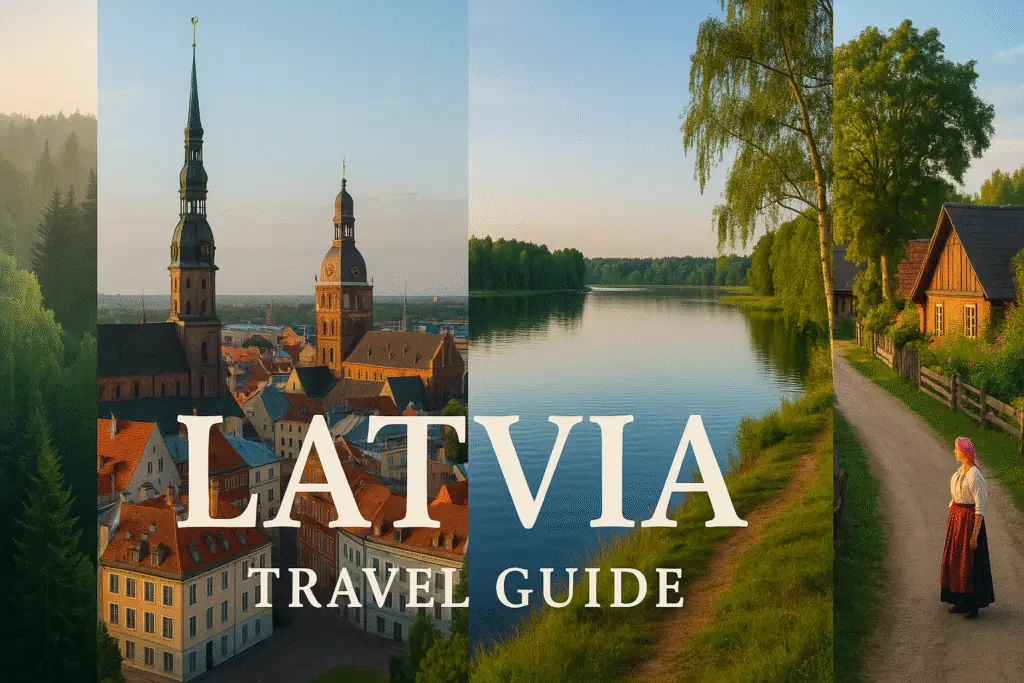
Latvia is a land shaped by wind, pine, mist, and memory.
Between Estonia and Lithuania, along the cold green-blue Baltic Sea, the country stretches as an expanse of forest, lakes, and meadows where northern silence and eastern spirit meet.
It feels spacious — even limitless — though the distances are modest; roads pass through dark evergreen woods, over gentle hills, past sleepy villages and lonely rivers. Everything moves slowly here. Time hangs in the air like morning fog drifting between birches.
Latvia is neither dramatic nor flashy.
Its beauty is subtle, earthy, and atmospheric — a poetry written not in mountains or deserts but in moss, rainwood, sandy coasts, and ancient oak groves whispering in the wind.
It is a country that reveals itself gradually, layer by layer, much like its history — centuries of Hanseatic trade, Swedish rule, Russian influence, German presence, Soviet occupation, and Baltic independence. Yet through it all, Latvia has preserved something profoundly its own: a quiet, persistent spirit rooted in land, language, and ritual.
The forest is not just scenery here; it is identity.
More than half of Latvia is wooded — pine stretching to the sea, oak rooted in deep loam, birch glowing white against winter sky. Villages sit small against these landscapes, and even the capital — lively Riga — carries the forest’s memory in its wooden houses, parks, and gardens.
Latvia is slow travel at its best. It is for those who like quiet wonder, time to breathe, simple beauty, and nature woven into daily life.
🌿 Riga — A City of Art Nouveau & Baltic Rhythm
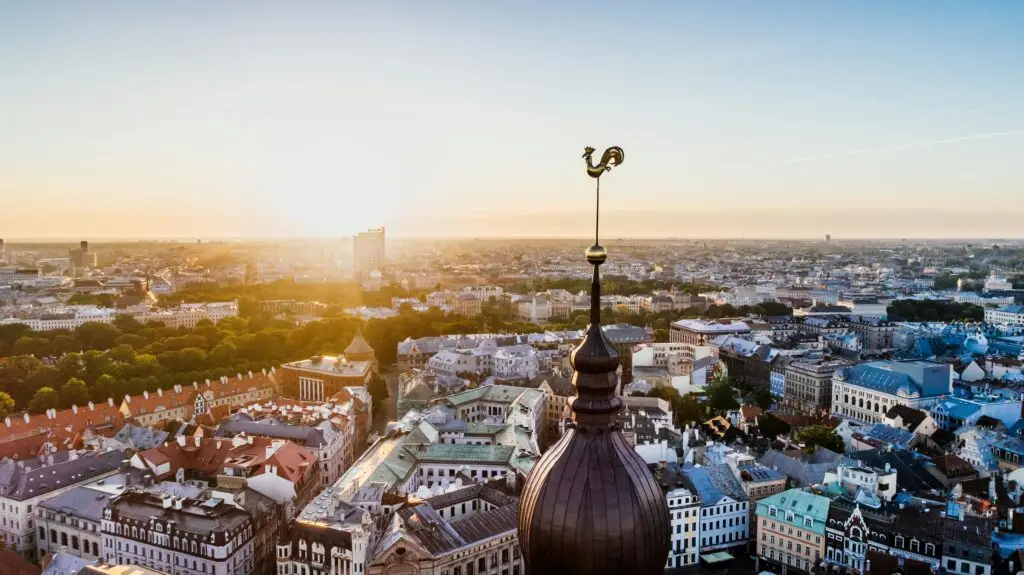
Riga sits at the mouth of the River Daugava, a city of wide boulevards, cobblestones, yellow trams, and golden light.
Its old town is a mosaic of steeples, courtyards, medieval lanes, amber shops, and tall brick churches. Spires draw the eye upward; narrow alleys draw the feet inward; cafés and beer gardens spill into squares where street musicians play in the evening.
Riga is the beating heart of Latvia — youthful, creative, and quietly confident. It is large enough to have energy but small enough to feel gentle. One can cross the old town by foot in an hour yet linger a lifetime in its details.
The Art Nouveau district north of the centre is its great treasure. Along streets like Alberta iela, façades twist and swirl with faces, flowers, serpents, and mythic figures — an architecture meant not just to shelter but to speak. Many buildings look alive: windows like eyes, all watching, dreaming, remembering.
Riga breathes history. Hanseatic merchants once traded on its waterfront; Swedish armies left their mark; German guilds built great halls; Russian czars left monuments; Soviet concrete added its own memories.
But none of this defines Riga completely.
The city’s soul lies in how old and new meet — a craft beer bar inside a warehouse, a jazz club below medieval arches, a design gallery beside a centuries-old cathedral.
The river moves slowly here; seagulls call above rooftops; bridges frame sunsets that drift across the water like drifting sheets of amber glass.
Riga is not loud. It is assured.
A quiet capital with a strong pulse beneath the surface.
🌲 The Latvian Landscape — A Forest Nation
To understand Latvia, leave Riga and follow the road east.
Before long, houses thin; towns shrink; the world turns into trees — pine rising straight and tall, sometimes so dense that sunlight becomes a soft green haze.
Latvia is composed of forest.
Not patches or remnants — but entire regions, continuous woodland stretching for miles. Birch mixes with fir; oak stands in solitary fields; moss carpets the ground in thick layers; mushrooms appear after rain; quiet ponds mirror the sky.
Lakes lie everywhere — still, reflective, edged with reeds and wooden docks. Many are shallow and warm in summer, calm enough to swim at dawn when mist curls above the surface like spirits dancing.
The countryside is gentle.
No Alps, no cliffs — only rolling land that invites wandering. It feels open yet private, spacious yet intimate.
Wildlife moves softly through it: elk in the shadows, foxes slipping through grass, storks nesting on village roofs, cranes calling at dusk across the marsh.
This is not wilderness meant to intimidate.
It welcomes you — a forest that feels like a friend.
🏖 The Baltic Sea — White Sand & Endless Sky
Latvia’s western edge is the sea — the Baltic, cold and wide.
But unlike many northern coasts, it offers long stretches of pale sand, dunes tufted with grasses, and pine forests that run nearly to the water’s edge.
The beaches seem endless.
You can walk for hours, often seeing almost no one.
Waves roll in long, calm lines; wind shapes the sand into delicate ripples; gulls wheel and cry.
Jūrmala, just west of Riga, is the country’s most famous seaside town — elegant, leafy, full of wooden villas and a beach that stretches seemingly without end. The town is lively in summer: families cycling beneath pines; cafés serving berry cake and coffee; children chasing the slow, cool waves.
Further north along the coast, everything becomes quieter.
Small fishing villages sit behind dunes; boats rest in grass; old wooden sheds lean into the wind.
On some beaches, amber washes ashore after storms — small golden stones polished by time, mysterious and warm against the skin. Locals walk the sand after rough nights, eyes scanning for the gleam of daňts — “sun-stones.”
The Baltic here is modest — less dramatic than the Mediterranean, less wild than the Atlantic — but it has a hushed beauty.
Under gray clouds, it feels melancholic; under evening sun, poetic; under the clear blue of summer, joyful.
The sea in Latvia is atmosphere more than spectacle.
🏰 Sigulda & The Gauja Valley — Latvia’s Quiet Heart
East of Riga lies the Gauja Valley — sometimes called the “Switzerland of Latvia,” though that name doesn’t quite fit. Switzerland has mountains; Gauja has something different — a softer, more fluid landscape of forested riverbanks, sandstone cliffs, and medieval castles rising above the trees.
Sigulda is the valley’s gateway — a small town perched above the river, surrounded by woods. Trails wind through the forest to Turaida Castle, a brick fortress looking over the Gauja like a storybook crown.
The valley changes with the seasons:
In spring, flowers pattern the forest floor; in summer, green overwhelms everything; in autumn, orange flames burn across the trees; in winter, snow quiets the world entirely.
Hiking trails follow the river; kayaks glide beneath cliffs; narrow roads twist through pines and oaks.
This is Latvia at its purest — nature close to history, history close to myth.
🏙 Cēsis — A Medieval Whisper
Cēsis is quiet and beautiful — a town of cobblestones, pastel façades, small cafés, and an old castle that still holds the bones of the Middle Ages.
Walk its streets and you feel softness: wooden houses, gardens full of lilacs, lanterns glowing at dusk. The ruined castle — moss-grown, ancient — stands beside the newer manor, and the relationship between them feels like history unfolding in real time.
Evenings in Cēsis are peaceful.
The light falls early behind the trees; smoke rises from chimneys; locals stroll slowly through the park; and the old castle walls turn gold in the last sun.
🪵 Latvian Villages — Wooden Houses & Garden Life
Outside the towns, Latvia becomes a world of villages — clusters of wooden houses, barns, and gardens surrounded by forest and fields.
Homes are simple:
brown or grey wood worn smooth by sun and winter; gardens full of vegetables, herbs, and flowers; small orchards heavy with apples. Chickens wander; cats nap on porches; storks nest on tall poles.
Life here follows the seasons:
firewood preparation in autumn, snowmelt in spring, berry picking in summer, mushroom gathering in fall.
Neighbors know one another; traditions are strong; nature is close.
It is a lifestyle not of nostalgia but continuity.
🎶 Culture of Song & Nature
Music is deeply tied to Latvian identity.
Folk songs — dainas — are short, metaphorical poems about nature, love, life, and the spirit of the land. Thousands have been passed orally for centuries; many Latvians can still sing them.
Festivals and gatherings celebrate song, dance, and seasonal change.
The midsummer celebration, Jāņi, is the most beloved:
people weave flower crowns, jump over bonfires, drink beer, sing all night, and greet the sunrise in forests or by lakes.
It is a ritual that feels ancient — almost pagan — connecting earth, sun, and people in a joyful circle.
🧭 Kurzeme, Latgale & Zemgale — Three Quiet Worlds
Latvia divides into several traditional regions.
Kurzeme, in the west, feels coastal and forested — fishing villages, sandy beaches, sea winds. Towns like Kuldīga charm with waterfalls and wooden houses.
Latgale, in the southeast, is a world of lakes — hundreds of them — reflecting sky, clouds, and birch. Orthodox churches gleam blue and gold in the sun; villages feel slower, older, more spiritual.
Zemgale, south and central, is open and fertile — wide fields, big skies, the earth’s heartbeat beneath every step. Palace estates lie surrounded by gardens; rural life blends past and present.
Each region is distinct, yet all share the Latvian quiet — the forest whisper, the lake mirror, the endless sky.
🌌 Seasons of Latvia
Latvia’s seasons define experience.
In winter, darkness falls early; snow covers forest and river; silence reigns. Houses glow warm; families gather indoors; the world shrinks to firelight and frost.
In spring, buds appear, birds return, fields wake from sleep. Ice melts, rivers swell, green spreads like breath.
In summer, days are long — nearly endless near solstice. People swim in lakes, pick berries, cycle under trees, laugh in night that never fully darkens. Wildflowers blanket meadows; the Baltic turns gentle.
In autumn, forests ignite — orange, red, yellow. Mist rises over lakes; leaves fall softly; the land prepares for cold.
Each season has its own beauty, its own rhythm.
🚗 Traveling Latvia
Distances are short; roads weave through pine, farm, and marsh.
Trains link cities; buses reach towns; renting a car opens everything.
You might drive an hour and feel as if you’ve crossed days — from seaside dunes to deep forest, from medieval lanes to wooden villages, from art nouveau splendor to silent lakes wrapped in birch.
Latvia is calm exploration — nowhere crowded, everywhere peaceful.
💛 Why Latvia Stays With You
Latvia leaves a quiet imprint.
It does not dazzle; it settles — deep, like roots beneath pine.
You remember:
the smell of forest after rain,
the sound of swimmers at a lake in twilight,
the gentle hum of Riga’s old town,
the dunes whispering at dusk,
the soft eyes of wooden houses watching the road.
Latvia’s beauty lies in the spaces between —
the slow paths, the small gestures, the wildflowers at the edge of the sea.
It is a country for listeners, wanderers, dreamers.
Not for those seeking spectacle, but for those seeking soul.
In Latvia, you learn to see differently —
to notice subtlety, to hear silence, to feel peace.
And when you leave,
a piece of its forest stays inside you —
quiet, enduring, green.
 Related Articles
- Kakslauttanen Arctic Resort
- Top 10 Most Unique Places to Stay in Europe
- 10 Incredible Castles Around the World