
🇱🇮 Alpine Quiet, Medieval Ridges & A Kingdom Between Peaks
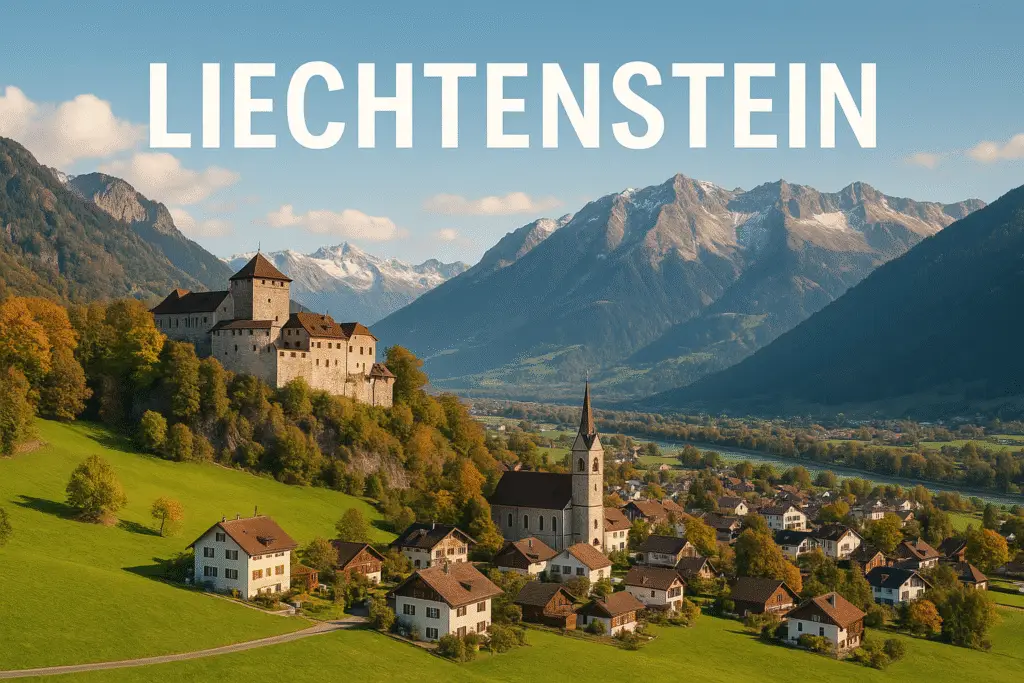
Liechtenstein is a nation that looks almost mythical on a map — small, slender, hidden between Switzerland and Austria, suspended along the upper Rhine Valley and pressed against the jagged stone of the Alps. It is one of the world’s smallest countries, yet everything about it feels tall: the mountains, the castles, the views, the legends.
In Liechtenstein, the landscape rises quickly.
The valley floor is narrow and green, dotted with tidy villages and church spires; above them, slopes climb into forests of beech and fir; farther up, rocky summits unfold into the sky, white with snow even when the valley blooms with summer roses.
Because of its size, Liechtenstein can be crossed in minutes — yet it never feels small.
The heights make the world feel immense; the quiet makes time stretch wide.
It is a place where you can hear cowbells echo from a distant slope, or water falling from high meadows, or the soft hush of snowflakes settling on rooftops in winter.
Liechtenstein is a country of contours — physical, historical, and spiritual.
A principality still ruled by a prince, deeply connected to its alpine land and to the rhythms of the seasons, it offers a gentle intimacy that is rare in Europe. Here, nothing is rushed; nothing is excessive. Everything is serene, precise, balanced — a miniature world of mountain stillness.
🌄 A Country Shaped by Mountains
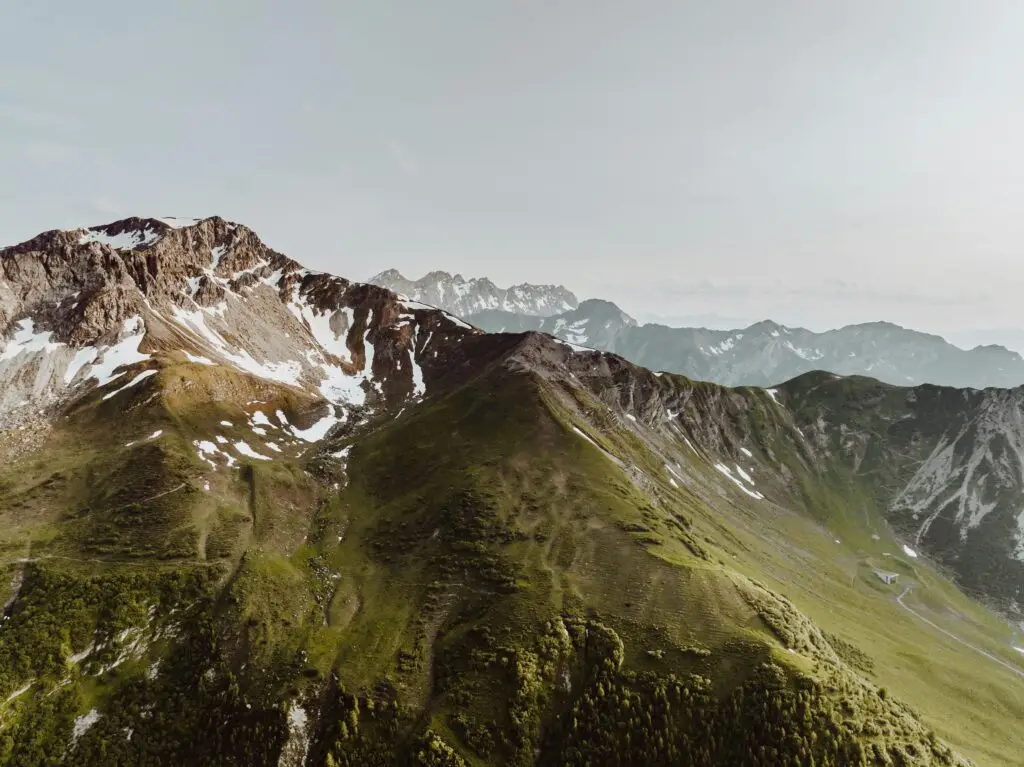
The Alps define Liechtenstein more than roads, buildings, or borders. They tower above everything — rugged, sheer, luminous in morning sun, violet at dusk. The Rhine flows like a silver ribbon at their feet, forming the natural boundary with Switzerland.
From many angles, the landscape looks like a painting: houses with steep roofs, lush green fields, narrow paths winding toward peaks that tear open the sky.
In summer, wildflowers bloom high in the meadows — yellow, violet, white — scattered across grass that sways beneath clean mountain wind. Cattle graze quietly; hikers follow ridgeline trails where views roll out for miles over valleys and distant ridges.
In winter, snow envelops everything.
The mountains become pale sculptures, and villages glow warmly beneath their shelter. Cozy inns serve soups and mountain dishes; skiers cross the slopes of Malbun; children race on sleds while church bells ring the hour.
Liechtenstein’s mountains are not simply scenery — they are identity.
They shape culture, language, agriculture, and the sense of calm that defines daily life here.
🏰 Vaduz — A Tiny Capital Beneath a Castle
Vaduz, the capital, sits quietly in the valley — a neat town of museums, pedestrian streets, cafés, and clean modern lines. It feels more like a village than a capital, yet it holds the dignified heart of the principality.
Above the town rises Vaduz Castle, the seat of the Princely Family. It stands on a wooded hill, white walls and towers perched against the mountain, watching over the valley below. The castle is not open to the public, but it is a powerful presence — a reminder that this is a country where monarchy is still living tradition.
Vaduz is calm, spacious, and walkable.
The streets are lined with sculptures, tidy gardens, small shops, and museums exploring art, history, and postage — Liechtenstein’s stamps are famous worldwide.
Evenings in Vaduz are quiet.
The mountains turn deep blue; lights flicker beneath the slopes; the Rhine drifts silently past fields in the distance. The town feels safe, reflective, unhurried — a peaceful heart at the centre of a hidden kingdom.
🏞 The Rhine Valley — Between River & Ridge
The Rhine Valley forms the spine of Liechtenstein.
It is a long green corridor between steep walls of mountain, with the river marking the border to the west.
Most of the population lives here, in tidy towns and villages:
Schaan, Nendeln, Eschen, Ruggel, Triesen, Balzers.
Each has its own character — churches, traditional houses, quiet streets, cafés — but all share the valley’s calm.
The Rhine is wide and controlled, flowing through a gravel bed surrounded by grassy banks and walking paths. Cyclists follow the river; farmers tend fields that stretch to the foot of the slopes; tall peaks watch over everything like guardians.
From the valley, roads weave upward into forest and meadow.
A short drive can take you from village lanes to panoramic viewpoints where the river shines far below, drifting through the landscape like a thread.
🏘 Villages of Wood, Stone & Alpine Calm
Liechtenstein’s villages feel timeless:
houses with flower boxes, neat gardens, painted shutters; small chapels glowing beneath trees; clear streams running past barns and orchards.
The villages are not touristic showcases —
they are living communities, quiet and authentic.
Church spires rise above rooftops; the smell of fresh bread drifts from bakeries; cows graze on hillsides, bells sounding softly through the air.
In autumn, trees turn gold and crimson; apples hang heavy in orchards; mornings are cool and still.
In winter, smoke rises from chimneys, and the villages look like postcards — small, warm, dreamy beneath the snow.
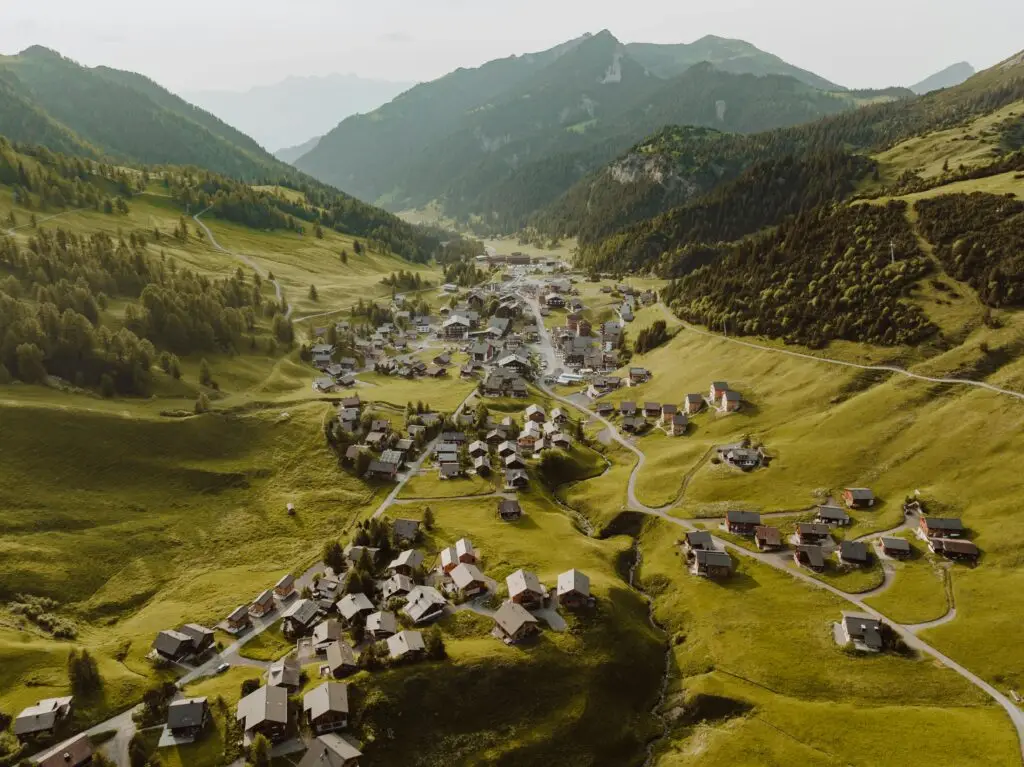
Triesenberg, perched above Vaduz, is especially atmospheric.
Wooden chalets cling to the slopes; roads twist upward; the views are vast — a whole country, and beyond it, the Swiss peaks, all from a single village balcony.
This is the soul of Liechtenstein —
not urban, not crowded, but gentle, orderly, and intimately connected to the land.
🎿 Malbun — A Small Alpine World
High above the valley lies Malbun, Liechtenstein’s mountain village and ski area.
The road climbs through forests and meadows until the landscape opens into a bright bowl of peaks and pasture.
In summer, Malbun is a place for walking —
trails cross grassy ridges, run beneath jagged stone, and lead to quiet huts overlooking lakes and passes. The air is crisp; marmots whistle from their burrows; sunlight flickers through the thin mountain air.
In winter, Malbun becomes a gentle ski village —
not enormous, not crowded, but charming and family-friendly. Snow blankets the slopes; skiers glide through pale sunlight; lodges offer warmth and simple, hearty dishes.
It feels untouched by time —
a place for peaceful winters rather than noisy après-ski.
Nearby, the Sareis ridge offers wide views across the Austrian Alps, the Rhine Valley, and beyond toward Switzerland. Standing there, with peaks rolling in every direction, it is easy to forget how small the country is.
🏛 History in a Narrow Kingdom
Liechtenstein has existed for centuries as a principality — a small yet enduring state shaped by monarchs, treaties, compromise, and cunning diplomacy.
For much of its early history, it was rural and agricultural, with villages tied closely to the land and to seasonal rhythms.
The country remained neutral during world conflicts; it modernized steadily; and today, it stands as one of the world’s wealthiest states, known for industry, finance, and high quality of life.
Despite its modernization, Liechtenstein preserved its rural character.
Traditional houses, alpine farms, and forest pastures remain central to the landscape. Local dialects survive; seasonal festivals continue; mountain life still feels authentic.
The princely family remains deeply involved in national life, and monarchy here is not symbolic but living — an institution tied to the land and people in a real and tangible way.
🏞 Hiking the Principality — Paths of Silence & Sky
Liechtenstein is a paradise for walkers.
The entire country is threaded with trails that climb from valley roads into high meadows, forests, and alpine summits.
Some paths are gentle — perfect for a quiet morning walk among cows and wildflowers. Others are steep, climbing ridgelines and offering views that seem impossibly vast for such a small nation.
The Fürstensteig is the country’s most dramatic hike —
a narrow path carved into rock high above the valley, passing exposed edges, ladders, and narrow ledges. The views are extraordinary: peaks folding into one another, valleys dropping away, clouds drifting beneath your feet.
The Three Sisters (Drei Schwestern) is another iconic hike —
a jagged formation whose ridgeline forms part of the border. The path is steep and thrilling, moving among limestone towers with broad views toward Austria.
Yet there are also gentle forest trails, meadow loops, and quiet pilgrim paths between villages.
Every hike is accompanied by the same soundtrack: wind through grass, distant cowbells, birdsong, the muted roar of river far below.
Here, you do not simply see the mountains —
you feel them.
🏘 People, Language & Daily Rhythm
Life in Liechtenstein is measured, orderly, and deeply tied to nature.
Villages are quiet; streets clean; houses immaculate; gardens well-tended.
The people speak Alemannic German, closely related to Swiss German.
It sounds musical, soft, warm — shaped by valley and peak.
Daily life moves gently:
children walk to school; shops close early; families gather for meals; weekends are spent walking, cycling, skiing, or visiting mountain huts.
It is a lifestyle in harmony with land —
modern, but anchored in heritage.
🌺 Seasons in Liechtenstein
Spring brings blossoms to orchards and fresh grass to high meadows.
The Rhine Valley greens first; snow lingers in the peaks; mornings are bright and hopeful.
Summer is full of life —
hikers crossing ridges; cows grazing in alpine pastures; streams running clear from melting snowfields. Villages fill with flowers, and warm nights settle slowly across the valley.
Autumn is peaceful —
forests turn gold and red; fields are harvested; the air cools. This is a season of calm, when the summer’s vigor softens.
Winter brings silence —
snow deepens in Malbun; frost clings to riverbanks; village windows glow warm with candlelight. Skiers pass like bright figures against white slopes; smoke rises from chimneys.
Seasons change, but the mountains remain — patient, firm, eternal.
💛 Why Liechtenstein Stays in the Heart
Liechtenstein is not a place of spectacle —
it is a place of softness, purity, quiet wonder.
You remember:
sunlight on snow in Malbun,
the path above the valley at Fürstensteig,
the castle watching over Vaduz,
the ringing of bells across high meadows,
evening shadows cooling the Rhine Valley,
flowers glowing on a village balcony under summer sky.
It is a country that feels protected —
not just by borders, but by nature, identity, and care.
Liechtenstein teaches you that smallness can be powerful —
that depth can exist in miniature —
that quiet can hold more meaning than noise.
It offers space to breathe,
to look,
to listen.
Mountains keep their watch;
life unfolds gently;
time slows.
And when you leave,
somewhere inside,
a part of you still walks the narrow trails beneath those high and silent peaks.
 Related Articles
- Kakslauttanen Arctic Resort
- Top 10 Most Unique Places to Stay in Europe
- 10 Incredible Castles Around the World