
🇱🇺 Forest Valleys, Quiet Fortresses & A Country of Small Distances, Deep Stories
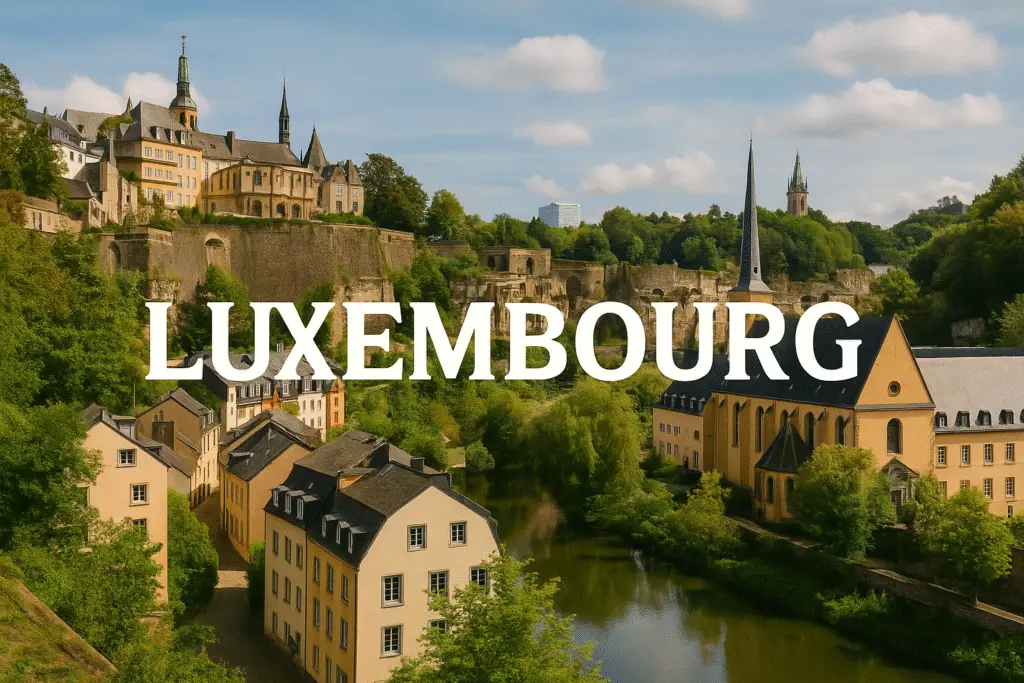
Luxembourg is a small nation with a surprisingly vast sense of space.
Wedged between Belgium, France, and Germany, it could easily be overlooked on a map — yet once you arrive, it expands before you: deep river valleys carved into stone, medieval fortresses perched on cliffs, rolling vineyards, quiet forests, and a cosmopolitan capital that feels both intimate and worldly.
Luxembourg holds a rare dual nature —
peaceful and compact, yet layered with centuries of strategic importance, cultural crossings, and subtle beauty.
It is a place where everything is close, yet nothing feels rushed;
where ancient rock walls rise over modern glass buildings;
where trains glide through pine-covered hills;
where languages mix as naturally as rivers meeting in a valley.
More than anywhere in Western Europe, Luxembourg feels like a living crossroads —
a bridge between cultures, landscapes, histories, and futures.
🌆 Luxembourg City — A Capital Suspended Over a Gorge
Luxembourg City is unlike any other capital.
It doesn’t sprawl; it flows — across plateaus, along cliffs, above river valleys, and into hidden ravines where old stone walls meet pathways lined with moss and quiet water.
The Grund, far below the upper city, lies cradled in the valley like a secret.
Houses cling to the slopes, bridges arch between cliffs, and the river Alzette winds beneath willows and gardens.
Walking here feels like stepping into a pocket of time — medieval walls rising above, church towers reflecting in the water, cobbled lanes twisting in silence.
Above, the Old Town spreads across the plateau — bright squares, government buildings, embassies, cafés and wine bars tucked beneath carved facades.
From terraces and balconies, you look down into a second world — a city beneath the city, woven between stone and river.
Luxembourg City is shaped by fortress architecture.
For centuries, it was one of Europe’s most fortified places, its cliffs carved with tunnels, its ramparts folded like petals of stone.
These underground passages — the Casemates — still exist today, a hidden labyrinth of corridors extending through the rock.
Even in the modern city, history lives beneath your feet.
Luxembourg City feels suspended —
between height and depth, past and future, grandeur and gentleness.
It is a capital designed not to impress loudly, but to reveal slowly.
🌉 The Casemates — Stone Veins Beneath a Nation
Beneath Luxembourg City lies a world of tunnels carved into the cliffs — the Casemates, nearly twenty kilometres of stone passageway, once used as barracks, storerooms, lookout posts, and defensive lines.
The experience of walking through these tunnels is dreamlike.
Cold stone walls on both sides; archways opening to river and sky; narrow windows cut like slits across deep air.
From certain openings high above the valley, you can see the small houses far below, the trees lining the river, the pathways curling through the slope.
These tunnels are like veins running under the capital, evidence of centuries of strategic importance, where Luxembourg stood at the crossroads of Europe’s wars, alliances, ambitions.
Today, they are part of the country’s cultural heart —
a reminder that even beneath modern life, history remains.
🌄 The Ardennes — Forest Hills & Silent Villages
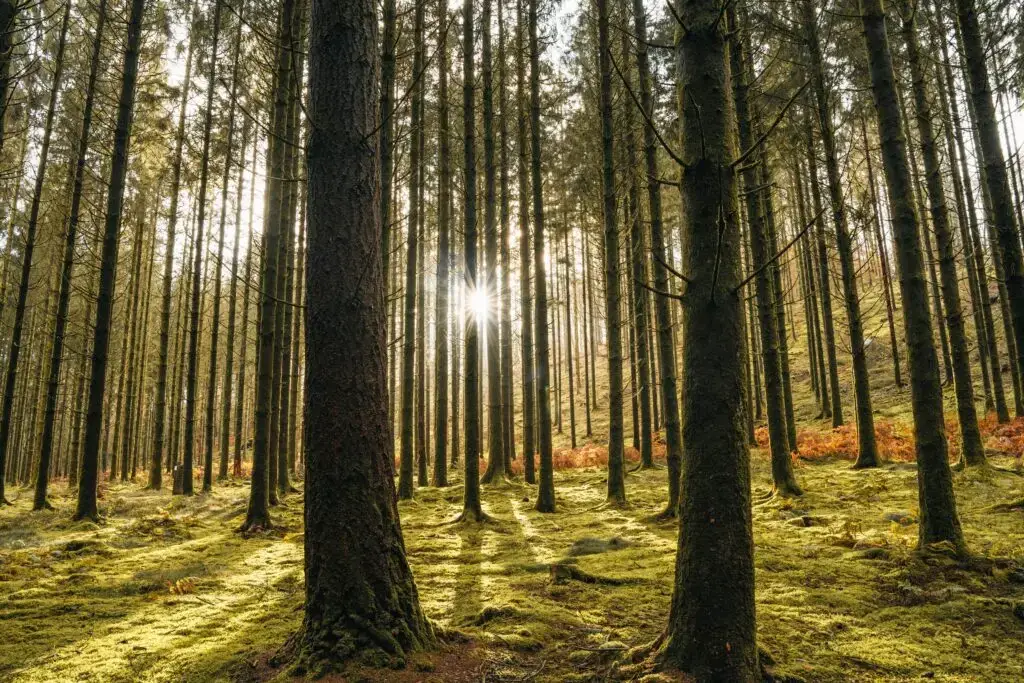
North of the capital, Luxembourg rises into the Ardennes — a region of rolling hills, deep woods, small stone villages, and quiet corners where time moves slowly.
This northern world is peaceful, sleepy, green — a place of distant horizons and clean air, where roads follow river valleys and forests open like cathedrals of pine.
Small farms lie against hills, cows grazing under fruit trees; church spires rise above old town squares; stone houses stand close together beneath slate roofs.
The Ardennes here is less dramatic than Switzerland, less remote than the Alps, but equally moving —
a soft world, built for walking, reflection, slow travel.
Meadows shimmer with wildflowers in spring; autumn turns forests orange and brown; winter blankets the land with quiet snow.
It is the kind of region where you wander along a river trail, hear nothing but water and wind, and feel the world breathe.
Many of Luxembourg’s most moving historical sites lie here — places that recall the battles of the Second World War, especially in the region around Clervaux, where the Battle of the Bulge left scars and memorials.
Yet even here, the land has healed into peace.
🏰 Vianden — A Castle Above the Clouds
Vianden is one of Luxembourg’s most iconic villages — a cluster of steep lanes and stone houses pressed against a forested hillside, watched over by a great medieval castle.
The castle rises dramatically above the town, its towers perched on a rocky ridge overlooking the valley below.
Seen from the bridge at dawn or dusk, Vianden looks like something from a storybook — mist swirling around turrets, the river glowing beneath stone, the forest whispering on the mountainside.
Climbing to the castle, you pass small houses with timber frames, gardens full of flowers, and viewpoints where the village falls away behind you like a miniature world.
Inside, restored halls and chambers reveal its long history — noble families, strategic battles, the slow passage of centuries.
Vianden is quiet, contemplative, atmospheric —
a place where the Middle Ages feel very close.
🏞 Esch-sur-Sûre — A Village in a River Bend
Deep in the Ardennes lies Esch-sur-Sûre, a tiny village wrapping around a tight river curve beneath a ruined castle.
The water and cliffs almost encircle it, making the village feel sheltered, intimate — a small world unto itself.
Houses sit tightly together along the river; narrow lanes wind upward toward the castle ruins; forest rises from every side.
The light here feels softer, the river’s voice gentle, the stone warm in the sun.
It is a place to wander quietly, to feel the land hold you.
Just beyond the village, hills open into a wider valley where the Upper-Sûre Lake stretches through forest — long fingers of blue between green slopes.
The lake is calm and still; the air is cool and scented with pine.
It is one of Luxembourg’s most peaceful landscapes — perfect for quiet walking, swimming, or simply resting by the water’s edge.
🌿 Müllerthal — The Little Switzerland of Luxembourg
To the east lies the Müllerthal, a region of sandstone cliffs, moss-covered gorges, creeks slipping over stone, and forest paths that feel ancient.
It is often called “Little Switzerland,” but its character is entirely its own —
more intimate, more mysterious, more like a forgotten fairyworld.
The rocks form narrow passageways; great slabs rest like scattered ruins; roots twist through crevices; ferns spill across boulders.
Walking here feels like wandering through a natural cathedral —
the ceiling a canopy of leaves, the floor dappled light and stone.
Streams run clear and gentle; footbridges cross ravines; caves lie hidden behind curtains of moss.
In places, the rock walls close tightly overhead, creating corridors where the world outside disappears and silence becomes profound.
It is a landscape for those who find magic in small wonders —
light on moss, water trickling over stone, leaves trembling beneath sunlight.
🍇 The Moselle — Vineyards Along a Silver River
Southeastern Luxembourg embraces the Moselle River, whose banks roll with vineyards and villages that feel gently Mediterranean in spirit.
Slopes rise from the water in green waves, patterned with vines; roads and cycle paths follow the curves; boats drift on wide, glassy bends.
Villages here are graceful — pastel houses, narrow lanes, wine terraces overlooking the river.
In places, the land opens and the sky feels enormous; in others, cliffs rise sharply, holding the valley like a bowl.
The Moselle region is Luxembourg’s wine heart —
and even without tasting a drop, the landscape itself is intoxicating.
To walk along the river at sunset is to feel peace —
golden light reflecting off water, vineyards glowing, village church towers turning pink with the last sun.
🏙 Echternach — Oldest Town, Living Soul
Echternach, near the German border, is Luxembourg’s oldest town —
a place of monastery stones, quiet squares, and river landscapes.
Its abbey once shaped intellectual life across Europe; today its buildings still hold that memory, their cloisters and walls resonant with centuries of prayer, study, and community.
The town rests beside the Sûre River, long bridges connecting Luxembourg to Germany.
Cafés line the main square; narrow streets wind between old houses; limestone cliffs rise just beyond, marking the gateway to the Müllerthal.
Echternach embodies balance —
spiritual, natural, historical.
It is small, but deep.
🛤 Small Distances, Endless Depth
Luxembourg is one of Europe’s easiest countries to travel.
Nothing is far —
yet every region feels distinct.
You can move from fortress city to river village, from vineyard to mossy gorge, from hilltop castle to pine forest in less than an hour.
Trains glide through the countryside; buses wind up valleys; roads slip between farm fields and woods.
The distances create a sense of intimacy;
the landscapes create a feeling of limitless wandering.
Luxembourg teaches you that depth does not require size.
🕊 Languages — A Meeting of Worlds
Luxembourg is a multilingual nation —
Luxembourgish, French, and German blend together in daily life, with English flowing easily in cities.
This linguistic richness shapes the culture —
a place comfortable with complexity, open to conversation, connected to many worlds at once.
Signs shift languages; conversations weave; identities overlap.
It is a small country with a global voice.
🕯 History — Quiet Permanence
Luxembourg’s history is stitched across its cliffs and valleys.
Fortresses mark centuries of warfare and strategy; castles recall feudal eras; villages carry stories of resistance and renewal; memorials reflect the battles that swept through during the 20th century.
Yet the country’s essence is resilience —
it endures, adapts, and thrives.
Today, Luxembourg stands as one of the world’s most stable and prosperous nations —
a testament to quiet strength.
🌸 Seasons Across the Land
Spring arrives slowly —
buds on trees, riverbanks softening, valleys glowing green beneath gentle sun.
Wildflowers spread across hills; vineyards start to breathe again.
Summer is warm, full of life —
terraces full in the capital, rivers shining beneath open skies, the Müllerthal shaded and cool.
Trails lead through forest and rock; the Moselle hums with quiet boat travel.
Autumn transforms the land —
vineyards turning red and gold; forests glowing; fog filling valleys at dawn; castles hovering like ghosts above the mist.
Winter brings depth —
snow on the Ardennes, warm lights in tiny villages, the capital luminous against dark sky.
It is a season of silence, beauty, and slow days.
🌟 Why Luxembourg Stays With You
Luxembourg is small on a map —
but large in memory.
It stays with you not because of a single monument or moment,
but because of the way everything fits together —
the valley beneath a fortress,
the vineyard reflected in river,
the quiet street disappearing into forest,
the stone bridge crossing centuries.
You remember how light fell into the Grund at evening;
how the Müllerthal felt ancient and alive;
how Vianden Castle stood against the sky;
how the Moselle sparkled beneath gentle wind.
Luxembourg is a place of balance —
city and village, history and future, stone and green, calm and depth.
It offers space to breathe,
to walk slowly,
to listen.
You arrive curious;
you leave quietly moved.
In a world of noise,
Luxembourg whispers —
and somehow, its whisper becomes unforgettable.
 Related Articles
- Kakslauttanen Arctic Resort
- Top 10 Most Unique Places to Stay in Europe
- 10 Incredible Castles Around the World