
🇲🇪 Montenegro — Fjords of Stone, Mountain Silence & Adriatic Light
Montenegro is a land where mountains meet the sea so sharply that the horizon folds into itself.
A small country of immense vertical power, it rises in stone waves above the Adriatic — a coastline of sun-washed towns, citadels, and quiet harbours backed by jagged peaks that catch the sky like blades.
Here, history lives in stone; nature speaks loudly; and silence settles in high pastures where shepherds once moved with seasons.
Montenegro’s beauty is not gentle — it is fierce and tender at once: steep cliffs plunging into blue bays, forests gripping mountainsides, rivers cutting deep into earth, villages perched like eagles above valleys.
It is a country that feels ancient and raw, yet serene; a place where you might stand on a ridge and see sea, snow, and meadow in a single turn.
Montenegro is small — yet it feels enormous.
Every road leads to another world, another altitude, another century.
🌊 Bay of Kotor — A Cathedral of Sea & Stone
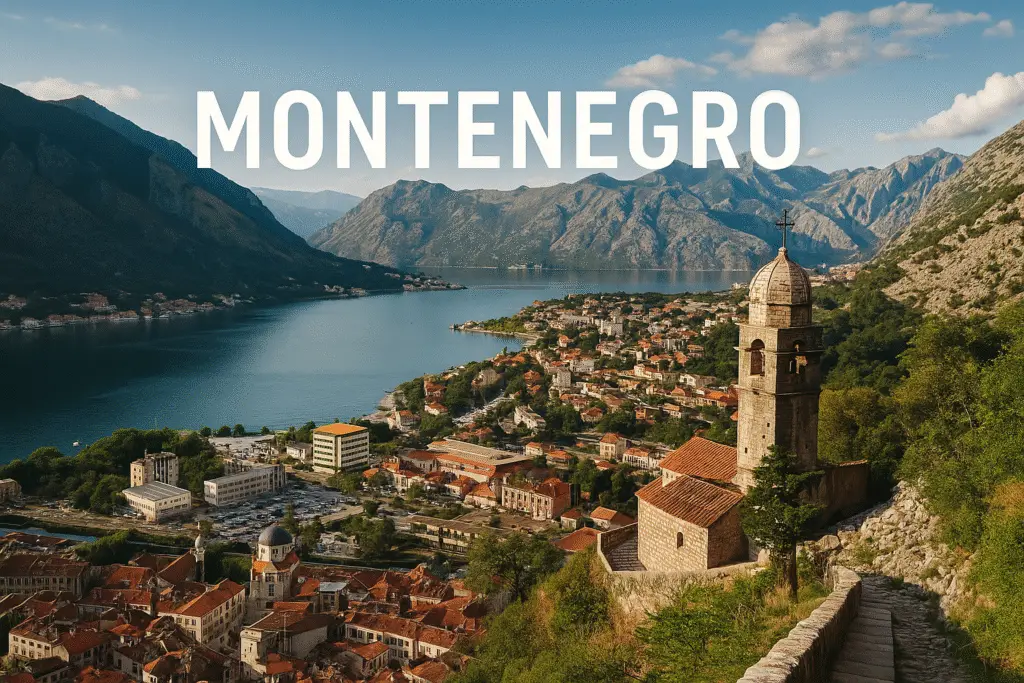
At Montenegro’s heart lies the Bay of Kotor, one of the most dramatic landscapes in Europe — a long fjord-like gulf surrounded by towering mountains that plunge straight into deep water.
The bay twists inward like a river, narrowing and widening between ridged walls.
Villages line its edges: stone houses with red roofs, churches watching over quiet squares, harbours where wooden boats rock beneath cliffs.
Kotor, at the end of the gulf, sits beneath St. John’s Fortress — a crown of walls climbing the mountainside in dizzying zigzags.
From above, the town looks like a mosaic of orange tiles surrounded by sea that glows green and blue.
Walking Kotor feels like entering another time:
narrow alleyways, archways opening into tiny piazzas, cats sleeping beneath carved windows, churches lit by candle flame.
The town is a labyrinth —
you wander with no destination, guided only by stone and light.
The mountains rise like cathedral walls around the bay, enclosing the water in silence.
When fog drifts down from the ridges, Kotor becomes dreamlike — a world suspended between water and sky.
🕯 Perast — Islands of Stillness
North of Kotor lies Perast, a quiet village of baroque palaces and stone houses pressed against the sea.
It feels frozen in time — elegant, hushed, luminous beneath steep mountains.
In front of Perast lie two tiny islands:
One natural — St. George, crowned with dark cypress;
one built — Our Lady of the Rocks, a pale sanctuary rising from the blue.
Boats cross to the islands, cutting simple paths over water.
The chapel holds centuries of devotion — paintings, silver votives, stone offerings placed by sailors.
Perast is the Adriatic at its quietest:
a few bells, oars moving through water, shadows of mountains falling across evening light.
🏰 Budva — Ancient Stones & Waves
Budva is one of the oldest settlements on the Adriatic —
a town where medieval walls surround a tight knot of streets facing the open sea.
The Old Town is built almost entirely of pale stone:
churches, squares, narrow lanes lined with shutters and bright flowers.
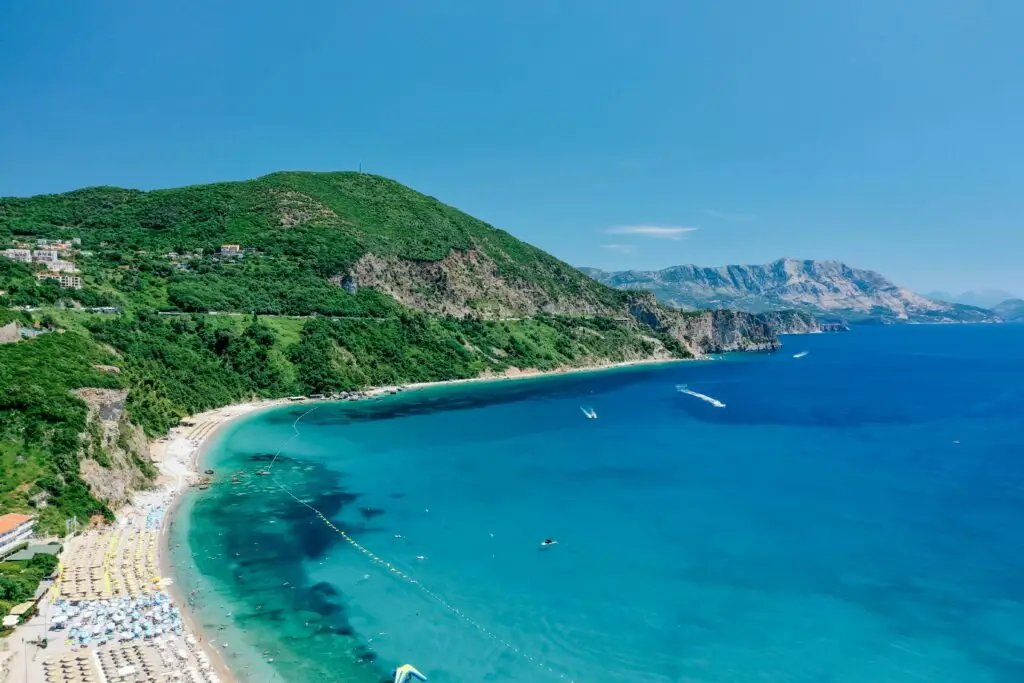
Above the walls, the sea gleams blue; beyond the walls, beaches stretch along curving coast.
Budva is alive —
in summer the streets hum with evening conversation, music, steps against cobblestone;
in winter it rests, quiet beneath soft waves.
Just offshore, Sveti Nikola rises from water —
a rugged island of rock and pine where beaches face the open Adriatic.
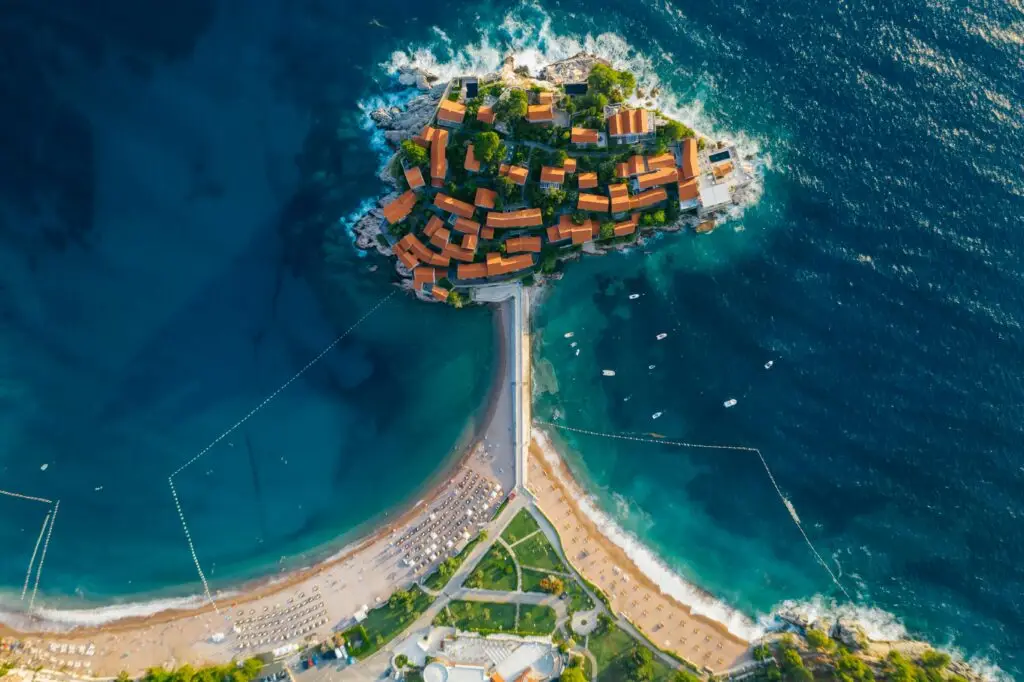
Southward lies Sveti Stefan, a fortified island-village connected to shore by a narrow causeway —
a cluster of terracotta roofs set above turquoise sea.
It is one of Montenegro’s most iconic images:
stone, sea, and sky in perfect balance.
⛰ Lovćen — Black Mountain, Heart of the Country
Montenegro takes its name from Lovćen — the “Black Mountain,” rising abruptly from the coast.
Forests cloak its lower slopes; the summit opens to rock and wind; from there, the whole world seems visible.
Atop Lovćen stands the mausoleum of Petar II Petrović Njegoš, poet-prince, philosopher, national memory.
The building sits above clouds, reached by a tunnel of stone steps leading into sky.
From the terrace, the view is enormous —
mountains folding into mountains, sea shimmering far below, villages hidden among ridges.
Lovćen feels sacred —
an altar of stone and wind.
The air is thin, clean;
ravens circle overhead;
silence becomes pure.
🌄 Cetinje — Old Royal Capital
At the base of Lovćen lies Cetinje, a town of museums, quiet streets, embassies preserved from another era, and old ministry buildings whose shutters fade under sun.
Cetinje was once Montenegro’s royal seat — a cultural heart where diplomacy and poetry flourished.
The palaces are modest, human in scale, surrounded by trees and quiet gardens.
It is a place of memory —
soft, dignified, introspective.
Walking Cetinje feels like reading a gentle chapter of a much larger story.
🏞 Durmitor — Alpine Light & Deep Silence
In northern Montenegro lies Durmitor National Park, a world of mountains, lakes, forests, and high meadows.
It is wild, vast, untouched —
one of Europe’s great alpine landscapes.
Peaks rise sharp from plateaus;
glacial lakes glow emerald and sapphire;
pine forests fill valleys;
wildflowers paint high fields in summer.
At the heart of Durmitor lies Black Lake (Crno Jezero), its water still and reflective beneath sharp ridges.
Walking around the lake, you hear only wind in pine, water touching shore, footsteps in soft earth.
Above the forests, peaks sharpen —
Bobotov Kuk, highest in the range, watches everything.
Those who climb it feel both humble and immense —
surrounded by a sea of stone.
Durmitor is where Montenegro’s spirit feels most ancient —
a land untouched by noise, a sanctuary of mountain breath.
🌊 Tara Canyon — River of Glass
From the Durmitor highlands, the Tara River cuts one of the deepest canyons in the world —
second only to the Grand Canyon.
The river is bright turquoise, cold, fast —
its water clean enough to drink straight from stream.
Cliffs plunge vertically into canyon;
forests cling to impossible angles;
mist rises from whitewater.
Crossing the high Đurđevića Tara Bridge, you look down into dizzying depth —
a green-blue line threading between walls of stone.
The canyon feels isolated, primordial —
the kind of place where silence becomes its own presence.
🦅 Prokletije — The Accursed Mountains
On Montenegro’s eastern edge lie the Prokletije, “The Accursed Mountains” —
jagged, sharp, wild.
Peaks lift like teeth;
valleys sink deep;
villages hide among slopes.
Trails cut across high ridges;
shepherds guide animals through meadows;
stone towers stand silent against sky.
This is Montenegro at its fiercest —
a geography that demands respect.
🏡 Villages of Stone & Meadow
Beyond the coast, Montenegro becomes quiet:
small stone villages, red-roofed houses, fields of hay, orchards leaning against hills.
Goats graze on slopes;
streams run through valleys;
smoke rises from chimneys in cold seasons.
Churches stand small and white among forests;
graveyards overlook meadows;
walls crumble gently into fields.
Life here follows seasons:
snow in winter, flowers in spring, grasses golden in summer, mist in autumn.
The villages feel timeless —
places where hours move slowly.
🕍 Monasteries — Spirit in Mountains
Orthodox monasteries lie tucked into Montenegro’s cliffs and forests —
silent sanctuaries where stone meets prayer.
The most dramatic is Ostrog, built into a sheer rock wall high above valley.
You climb to it through switchbacks;
from courtyards, the world falls away;
the monastery is both architecture and miracle —
rooms carved directly into mountain.
Inside, icons glow;
pilgrims whisper;
candles flicker against white stone.
Ostrog feels suspended between earth and heaven —
a place where silence itself becomes holy.
🔥 History — Empires at the Door
Montenegro has always stood on a threshold —
between empires, religions, cultures, ambitions.
Ottoman forces pressed from east;
Venice from north;
Austria from west;
yet Montenegro remained itself —
rugged, mountain-rooted, fiercely independent.
The land defended its identity through geography —
cliffs and mountains protecting communities, monasteries guiding spirit, villages bound by kin and tradition.
Even today, Montenegro’s soul feels ancient —
born in mountains, tempered by storm.
🌤 Seasons — Heat, Mist & Snow
Summer brings bright sun to the coast —
warm water, long days, evenings spent beneath olive trees.
In mountains, summer is gentler —
cool breezes across lakes, wildflowers in high fields.
Autumn paints forests gold;
valleys fill with mist;
grapes hang heavy;
light softens.
Winter belongs to mountains —
snow deep, ridges white, air clear as crystal.
Spring returns quietly —
grass greening beneath melting snow;
rivers swelling;
birds crossing sky.
Montenegro is a land of seasons felt through landscape.
🚗 Travel — Small Country, Endless Landscapes
Montenegro is easy to cross —
but every kilometre feels different.
From coast to mountain, only an hour:
sea beside you, then cliffs rising, then pine forest, then bare rock, then high plateau.
Roads curve sharply;
views open suddenly —
sea below, peaks above, villages between.
Travel here is never monotony —
always discovery.
💛 Why Montenegro Stays With You
Montenegro feels like a secret whispered by stone.
You remember:
the Bay of Kotor glowing beneath mountain walls;
the silence of Lovćen’s summit;
the turquoise flash of Tara River;
the call of a church bell across Perast;
the pale light of dawn in Durmitor;
the monastery of Ostrog clinging to cliff;
the presence of mountains in every breath.
You remember how small you felt
beneath peaks
and how wide the world seemed
from a single ridge.
Montenegro teaches humility —
that beauty does not need scale;
that depth does not need distance.
It asks only that you look slowly,
listen deeply,
breathe fully.
You come for the coast —
you leave thinking of mountains.
Because Montenegro is not simply seen —
it is felt.
A country of fierce landscapes and gentle hearts,
where every road leads to sky.
 Related Articles
- Kakslauttanen Arctic Resort
- Top 10 Most Unique Places to Stay in Europe
- 10 Incredible Castles Around the World