
🇳🇱 Water, Wind & Worlds of Quiet Beauty
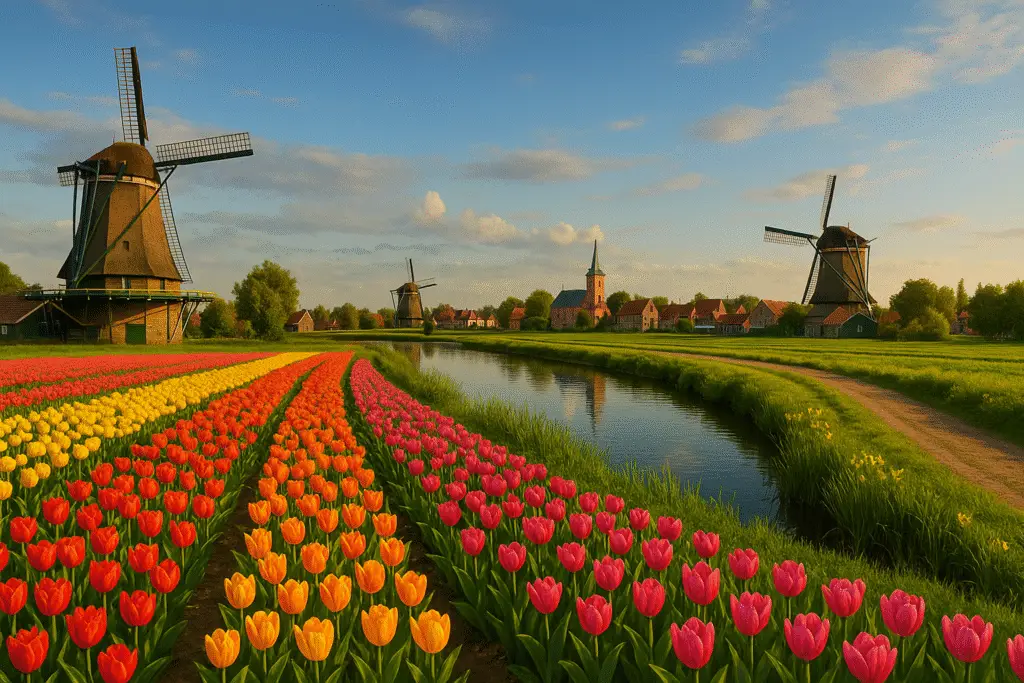
The Netherlands is a country of water and light.
A flat land shaped by tides, rivers, storms, and centuries of human determination.
Where narrow strips of land hold back the sea; where canals reflect old houses; where windmills turn endlessly beneath expansive skies.
It is a nation that grows from ground reclaimed, fields drained, polders dreamed into being by people who understood that earth can be woven, not just found.
The Netherlands is small — yet its character feels boundless.
From Amsterdam’s canal belts to Friesland’s lakes, Zeeland’s dunes, Limburg’s rolling hills, and the North Sea islands drifting beneath clouds, it is an intricate landscape threaded with waterways, villages, and fields alive with birdsong.
The rhythm here is peaceful:
bicycles gliding along dikes, bells ringing across town squares, boats sliding beneath stone bridges, wind brushing through reeds along quiet shores.
The Netherlands does not rush;
it invites you to notice —
light reflecting on water, tulips moving in wind, a heron watching from a canal edge.
🌆 Amsterdam — City of Water, Stone & Memory
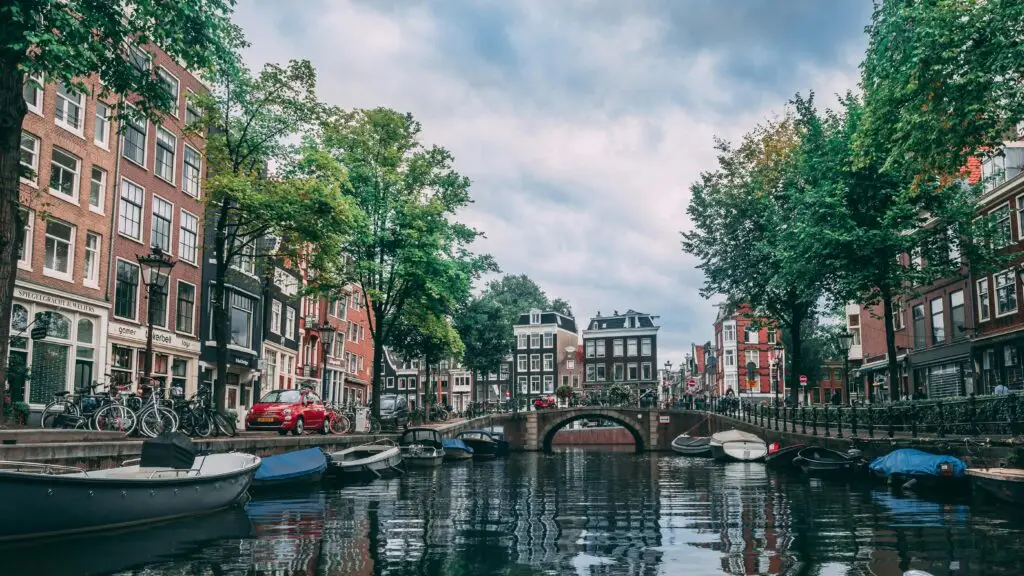
Amsterdam is unlike any other capital —
not built on grand boulevards or monumental squares,
but on soft curves, quiet canals, and crooked homes leaning toward water like old friends in conversation.
Water is everywhere —
more than 160 canals threading the city like veins,
crossed by ancient bridges, lined with narrow houses, bicycles, and trees whose leaves fall gently into the water.
The canal ring reveals Amsterdam’s soul:
17th-century merchant houses, tall and thin, with gables carved like poetry; windows reflecting sky; boats gliding in silence; cafés perched at corners where bridges meet.
Streets are intimate, human-scale;
voices echo softly;
air smells of roasted coffee, wet stone, and river wind.
The city is both scholarly and rebellious,
a place of painters and philosophers,
traders and dreamers,
where Rembrandt once walked and students now cycle toward lectures beside the Amstel.
In autumn, the city glows gold;
in winter, canals freeze and laughter carries over ice;
in spring, trees bloom against brick;
in summer, people sit along banks drinking wine as boats drift lazily through warm twilight.
Amsterdam teaches that a city can be quiet and alive at once —
full of history yet youthful,
refined yet unconventional.
🌉 Utrecht — Heart of Warmth & Water
Utrecht sits in the centre of the Netherlands, wrapped around canals that bend like soft arms around the medieval heart.
The Oudegracht canal is unique —
its wharves lie at water level, lined with cellar doors that open into cafés, studios, wine bars, small shops glowing beneath street lamps.
Above, medieval buildings rise in warm brick;
terraces perch just above the water, where people sit sheltered beneath old trees.
The Dom Tower watches from above —
tall, solemn, visible from almost everywhere,
marking the city like a quiet guardian.
Utrecht feels gentle —
the rhythm slower than Amsterdam,
the streets more inward,
the courtyards filled with bicycles rather than cars.
You wander narrow lanes,
finding churches, gardens, bookstores, quiet cafés where people talk softly or work beneath warm light.
Utrecht is a city for those who love old stone,
quiet water,
and time unhurried.
🌉 Rotterdam — A City of Sky & Renewal
Rotterdam is a rebirth —
a city reinvented after wartime destruction, now a place of bold architecture, wide rivers, and modern skyline.
Its buildings rise sharp and bright above the Maas:
glass towers, cubic houses, sweeping bridges like sculptures in motion.
The Erasmus Bridge, white and elegant, stretches across the river like a bird unfolding its wings;
ships pass beneath, water swirling, city shimmering around them.
Rotterdam feels spacious —
streets wide, horizon open, sky dominating.
And yet, along old harbours, warehouses transform into studios, cafés, apartments —
reminders that innovation grows from memory.
This is a city of movement,
of trade,
of tides —
unafraid of reinvention.
🌊 The North Sea — Wind, Dunes & Endless Light
West of the cities lies a long coastal world of dunes, wide beaches, and restless sea.
The coastline stretches from Zeeland to the Wadden Islands —
sand meeting sky in soft, eternal rhythm;
dunes covered with grasses;
sea birds crying;
wind shaping everything.
The beaches feel wild and open —
broad enough for a small country to breathe.
Villages sit behind dunes —
quiet, modest, touched by salt wind,
life moving with tides and seasons.
Sunsets here are enormous —
sky streaked pink and gold,
children flying kites,
waves rolling endlessly to shore.
The sea remembers everything.
🏰 The Hague — Palaces by the Sea
The Hague (Den Haag) is the Netherlands at its most elegant —
a city of royal palaces, embassies, international courts, and stately parks.
It is refined, diplomatic, thoughtful —
a place where world decisions are made beside tranquil canals and beaches.
The Binnenhof, seat of the Dutch government, sits above a pond, golden in late sunlight —
water reflecting towers and arches built across centuries.
Nearby lies Scheveningen,
where the sea stretches wide,
and wind rattles flags along the pier.
The Hague is both seriousness and softness —
power beside ocean,
politics beneath seagulls.
🌾 The Dutch Countryside — Polders, Farms & Quiet Roads
Beyond the cities, the Netherlands opens into a world of gentle fields, grazing cows, slow rivers, and villages of brick houses and church towers.
The countryside is defined by the hand of humans:
polders reclaimed from water,
flat plains patterned with ditches and canals,
farms standing sturdy beneath big skies.
Cows graze on endless green;
sheep wander along dikes;
horses stand in soft mist;
windmills watch from afar.
You travel past fields shining with dew in morning light,
narrow roads lined with trees,
farmers working land that their families have tended for generations.
Everything feels simple, peaceful —
a quiet conversation between land and people.
🌬 Windmills — Guardians of Land & Memory
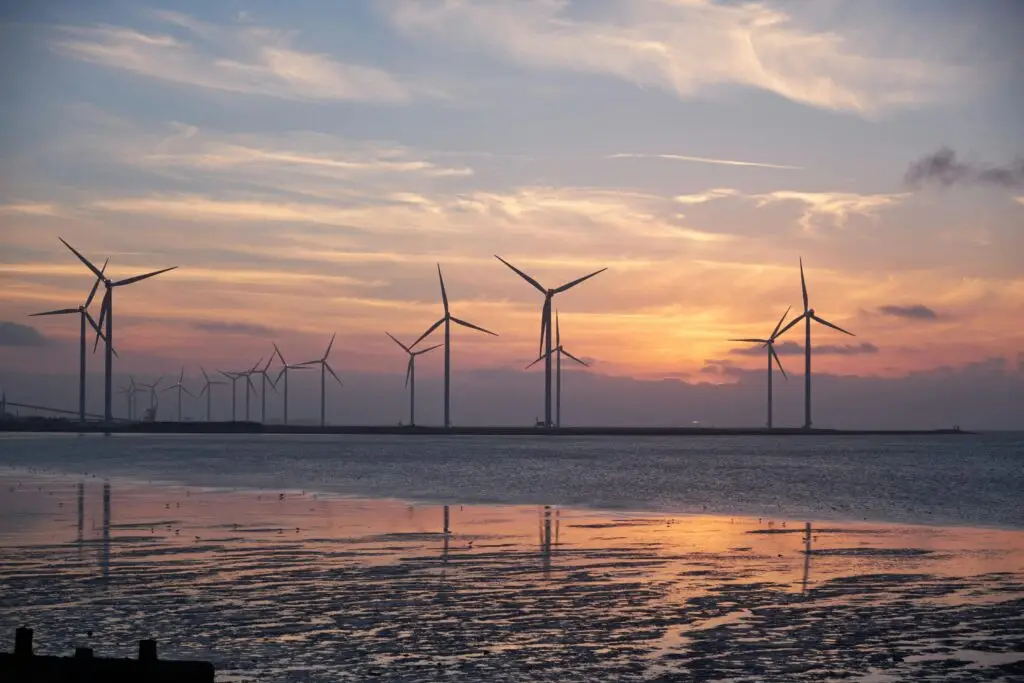
Windmills once powered the Netherlands —
draining water, grinding grain, shaping future.
Today, some still turn —
tall wooden bodies, long arms sweeping sky,
standing beside canals in villages and fields.
At Kinderdijk, nineteen mills line calm water —
reflections shimmering, reeds bending, sky stretching above.
They recall a time when people fought the sea not with walls but with wind.
Windmills are symbols —
of resilience,
of craft,
of harmony with elements.
They watch over the land like old companions.
🌺 Keukenhof — Spring’s Tapestry
Every spring, the Netherlands becomes a carpet of colour —
tulip fields stretching to horizon,
rows of red, pink, yellow, purple glowing beneath sky.
Keukenhof is the heart of this bloom —
gardens flowing with millions of flowers,
paths winding beneath trees,
ponds reflecting petals like stained glass.
People walk among tulips, daffodils, hyacinths —
breathing fragrance of spring,
feeling earth awaken.
Even outside Keukenhof, the fields themselves are art —
a patchwork of colours seen best from a quiet bike ride or train window.
🛶 Giethoorn — Village of Quiet Water
In the province of Overijssel lies Giethoorn,
a village without roads —
only canals, bridges, gardens, and silence.
Boats glide past thatched farmhouses;
willows sway over water;
flowers brighten every edge.
Life here moves slowly —
the sound of oars,
soft voices,
ducks swimming past doorsteps.
It feels like a fairy tale —
a world gently removed from noise.
🐚 Zeeland — Where Sea & Land Embrace
In the southwest lies Zeeland,
a province of islands, dams, beaches, and dunes —
a landscape shaped by wind and tide.
Villages nestle behind dunes;
lighthouses stand solitary;
the sea is constant.
Zeeland remembers the great floods —
and the Delta Works,
engineering marvels built to protect land from water.
But memory does not defeat beauty —
dunes bloom with wildflowers;
beaches stretch quiet beneath vast sky;
old towns glow with maritime history.
Zeeland feels open, peaceful —
the Netherlands at its most elemental.
🌿 Friesland — Waterways, Lakes & Islands
Northward lies Friesland,
a land of lakes, boats, sailing wind, and soft language distinct from Dutch.
Canals cross fields;
villages with narrow streets hold strong identity;
cows graze in wide meadows;
sailboats drift across shallow lakes.
Farther north, the Wadden Islands —
Texel, Vlieland, Terschelling, Ameland, Schiermonnikoog —
sleep beneath seabirds and sky.
Sand stretches for kilometres;
dunes roll inward;
waves whisper.
Friesland feels free,
airy,
alive with water.
⛰ Limburg — Hills Beneath Soft Horizons
Only in the far south does the Netherlands rise into hills —
a green world where villages sit in valleys,
and vineyards climb slopes.
Limburg feels different —
softer, slower,
its dialect warm,
its terrain rolling beneath quiet clouds.
Church towers rise above fields;
half-timbered houses line lanes;
fields glow in afternoon light.
It is a land of walking paths,
orchards,
gentle vistas.
💛 Why the Netherlands Stays With You
The Netherlands lingers in memory
not because of spectacle,
but because of subtleties.
You remember:
light on a canal at dusk;
wind moving across a quiet field;
church bells ringing over rooftops;
bicycles passing in calm rhythm;
tulips bending beneath spring rain;
the sea breathing beneath wide sky;
a heron waiting patiently at water’s edge.
You remember that the land is not given —
it is created,
shaped by hands,
dreamed into life by people who believe
that even ocean can be reasoned with.
The Netherlands teaches that beauty does not need height —
only harmony.
You come to see windmills, tulips, Amsterdam —
you leave thinking of water,
light,
silence,
and a country humble in scale
yet vast in spirit.
 Related Articles
- Kakslauttanen Arctic Resort
- Top 10 Most Unique Places to Stay in Europe
- 10 Incredible Castles Around the World