
Complete Travel Guide
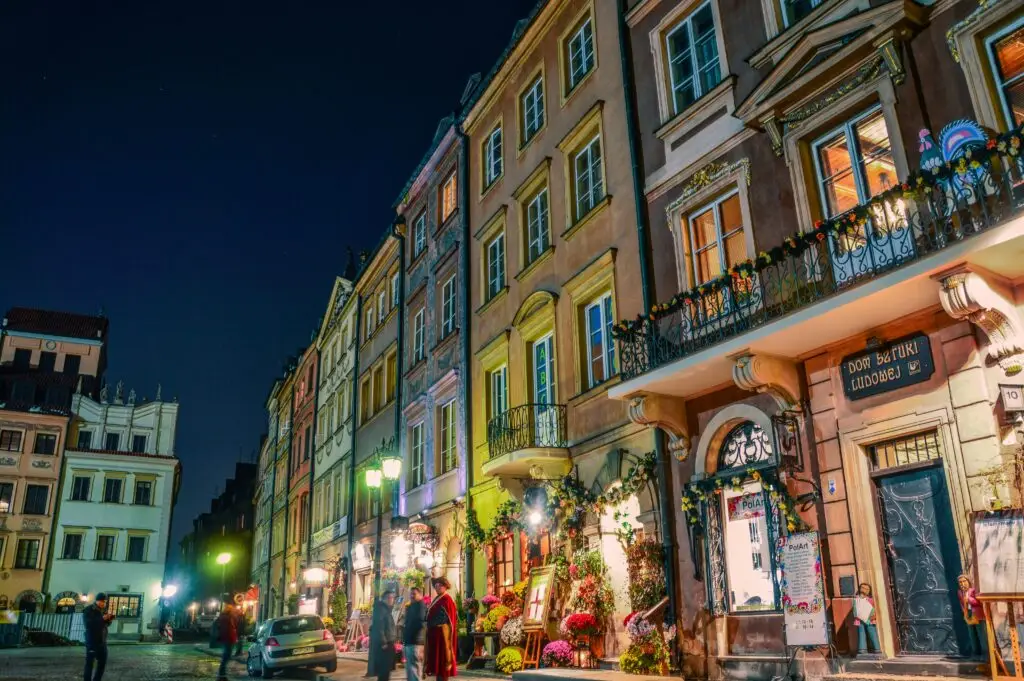
Poland is a country that invites curiosity. It is a place where old and new exist in a constant conversation, where Gothic spires rise beside lively cafés, and where lakes, forests, and mountains preserve a quiet sense of freedom. Though its history is long and often dramatic, Poland has emerged as one of Europe’s most energetic and welcoming destinations. You can walk medieval streets in Kraków, learn about the nation’s artistic and intellectual traditions, explore forests that have remained untouched for thousands of years, and discover hidden towns where time seems to move gently.
Traveling through Poland means moving across landscapes that change often. To the north lies a long Baltic coastline lined with sand dunes, fishing villages, and elegant port cities. In the central plains, farmland meets rivers and forests, while in the south the land rises into mountains where hiking, skiing, and village traditions remain deeply rooted. The cities vary widely — some feel like open-air museums, others hum with new creative energy. And everywhere you go, the hospitality feels natural, grounded in warmth, sincerity, and quiet resilience.
Polish culture is shaped by many influences — Slavic roots, European tradition, and centuries of exchange with neighboring regions. Music, art, and storytelling have always been important outlets, helping people preserve memory even in difficult times. But Poland is not frozen in its past. Its large student population brings vibrancy; galleries fill with new work; street festivals spill into squares; and cafés bloom each spring, turning urban corners into lively meeting places. Travelers often arrive expecting a country defined by history. They leave remembering a country full of life.
A Brief History
To understand Poland, it helps to recognize how deeply history has influenced its identity. The Polish state emerged in the 10th century, and by the 16th century it formed one of Europe’s largest and most culturally sophisticated political units — the Polish-Lithuanian Commonwealth. This era was marked by remarkable religious tolerance and intellectual openness, as well as a flourishing of science, literature, and art.
Yet Poland’s central position in Europe also brought vulnerability. In the late 18th century, the country was partitioned by neighboring powers — Prussia, Austria, and Russia — and disappeared from the map for more than a century. Yet its people maintained language, culture, and a sense of common identity. When Poland regained independence in 1918, the joy was enormous, but the next decades brought devastating upheaval.
During World War II, Poland suffered immensely. Millions of people were killed, cities were destroyed, and the country became one of the central sites of the Holocaust. After the war, Poland fell under Soviet influence, entering a communist period marked by hardship but also by resistance. The Solidarity Movement, born in the shipyards of Gdańsk, helped spark changes that contributed to the fall of communism in Central and Eastern Europe. In 1989, free elections marked a new beginning. Since then, Poland has rebuilt, reimagined, and reconnected with Europe, becoming a member of the European Union and developing a dynamic, modern economy.
This complex history remains visible everywhere — in museums, monuments, architecture, and stories shared by families. But it does not weigh Poland down. Instead, it deepens its character, giving travelers a sense that every street and landscape holds layers of memory and meaning.
Geography & Landscape
Poland stretches from the Baltic Sea in the north to the rugged Carpathian Mountains in the south. The interior of the country is a patchwork of farmland, lakes, pine forests, and rivers that flow quietly through towns and villages. Because the landscapes vary so much, traveling within Poland can feel like moving across several worlds.
In the north, long beaches line the Baltic Coast, shifting with the wind, bordered by fishing ports and seaside resorts. Sand dunes rise above the shore, especially in Słowiński National Park, where they shift gradually like desert formations. The water is cold for much of the year, but summer brings a gentle warmth that draws families to the coast. Forests grow close to the sea, their scent blending with salt and sunlight.
Central Poland is flatter, opening into plains where agriculture has shaped the land for centuries. Fields wave under the wind, and birch and pine mark the horizons. Rivers — especially the Vistula — carry stories from south to north, passing through major cities before merging with the Baltic. Small wooden villages appear at the edges of forests, and churches blend with old barns built from silvery timber.
In the northeast lies a region of lakes, marshes, wetlands, and rare wildlife. The Masurian Lakes are especially beloved — an enormous network of waterways where sailing, kayaking, and cycling bring visitors deep into nature. Białowieża Forest, along the border with Belarus, holds one of Europe’s last primeval woodlands, home to bison, wolves, and ancient trees that create a cathedral-like atmosphere.
To the south, the land rises into mountains. The Tatras, with their sharp peaks and alpine character, offer challenging hikes, dramatic views, and deep valleys filled with grazing sheep. In the foothills, traditional culture thrives in wooden houses decorated with carved details, and folklore remains part of daily life. The Carpathians stretch further east, offering gentler slopes, quiet trails, and a pastoral charm that invites slow exploration.
Poland’s geography gives the country a sense of balance — between sea and mountains, farmland and wilderness, cities and lakes. No matter where you travel, nature feels close.
Warsaw – Capital of Renewal
Warsaw is a city shaped by destruction and rebirth. During World War II, much of the city was reduced to rubble, yet its people rebuilt it with determination and pride. Today, Warsaw stands as a symbol of resilience — a modern capital where glass towers rise beside historic palaces, and where cafés and music halls coexist in neighborhoods once scarred by battle.
The Old Town, with its colorful facades and cobbled streets, looks centuries old but is in fact a meticulous reconstruction based on paintings and memories. Standing in its main square feels like standing in a story — one of loss, but also of restoration. The Royal Castle, similarly rebuilt, anchors the area with elegance and quiet dignity. A short walk leads to the Royal Route, a broad path lined with monuments, churches, and gardens that connect many of the city’s most important landmarks.
But Warsaw is not simply a tribute to its past. It is lively and forward-looking, with a growing arts scene, universities full of energy, and neighborhoods that feel distinctly modern. The district of Powiśle, along the Vistula River, has become a center of creativity, where old warehouses now hold galleries, restaurants, and studios. In summer, the riverbanks come alive with music, small bars, and outdoor events. The contrast between old and new gives Warsaw a fascinating rhythm — complicated but optimistic.
Museums deepen the story. The Warsaw Uprising Museum tells of the 1944 struggle against occupation with emotion and detail, while POLIN Museum of the History of Polish Jews offers a sweeping narrative of centuries-long Jewish life in Poland. Together, these places show how memory shapes identity and how history remains connected to the present.
Despite its size, Warsaw feels open. Parks spread across the city, providing green space for walks, cycling, and picnics. Łazienki Park, with its palace on the water and resident peacocks, is one of Europe’s most charming urban gardens. It invites moments of calm — sunlight through leaves, statues hidden among trees, lakes that reflect the sky.
Travelers who spend time here often remark on the city’s depth. Warsaw is not instantly picturesque; it asks for attention. But once you allow it to unfold, it reveals itself as a vibrant, thoughtful, and deeply human capital.
Kraków – Heart of History & Culture
Kraków feels timeless. Unlike Warsaw, it survived the destruction of World War II, and its Old Town remains largely intact, offering a rare window into medieval Europe. The city grows from its central square — Rynek Główny — one of the largest and most beautiful squares on the continent. Here, the Cloth Hall stands at its center, surrounded by elegant townhouses, while the twin towers of St. Mary’s Basilica rise above it all. Each hour, a lone trumpet plays from the tower, a melody that breaks off mid-note, honoring a legend from centuries past.
Walking through Kraków means moving through layers of history. Streets curve gently, lined with cafés, bookstores, and historical buildings whose stone faces have seen countless generations. The atmosphere is artistic and scholarly, shaped by the university founded here in the 14th century. Students give the city its youthful rhythm, while tradition holds its deeper notes.
The Wawel Hill rises above the river, topped by a castle that has served as the seat of kings and a symbol of national pride. Its courtyards, chambers, and cathedral form a complex that feels both monumental and intimate. From the hill, the Vistula River flows quietly, reflecting the city in its gentle currents.
Kazimierz, once the historic Jewish district, has become one of Kraków’s most atmospheric neighborhoods. Its synagogues, narrow streets, and small squares tell stories of centuries of Jewish life — flourishing and tragic. Today, Kazimierz blends memory with creativity, full of cafés, artisan workshops, and music that spills into the streets.
Kraków holds a warmth that many travelers remember long after leaving. It is a place of storytelling, music, art, and personal reflection — a cultural heart that beats softly but steadily at the center of Poland.
Gdańsk – Maritime Elegance on the Baltic
Gdańsk feels different from every other Polish city. Sitting along the Baltic coast, it has always been a gateway to the wider world — a place where merchants, sailors, craftsmen, and outsiders came together. As part of the Hanseatic trading network, Gdańsk developed a cosmopolitan spirit early, and that energy still moves through its streets today. When you walk along the Motława River, past narrow townhouses with richly ornamented façades, you feel the presence of centuries of trade and craftsmanship. The city seems to fold time effortlessly, allowing Gothic churches, Renaissance details, and modern glass to live side by side.
Much of Gdańsk’s beauty lies in its waterfront. The river curves gently through the city, lined with old granaries, cranes, and the iconic medieval harbor crane — a remarkable piece of wooden machinery that once lifted cargo from ships. Today, restaurants and cafés occupy restored buildings, and the atmosphere is warm and leisurely. Visitors wander the riverside promenades, watching sailboats pass under bridges or reflecting on the soft light that settles on the city’s colorful façades.
The long main street — Długi Targ — forms the ceremonial heart of Gdańsk. It opens into a wide avenue framed by mansions painted in bright pastels, crowned with gables that seem to climb toward the sky. This was once the home of wealthy merchants, and the buildings still radiate a sense of elegance. At one end stands the Neptune Fountain, a symbol of the city’s maritime heritage; at the other, the Green Gate leads toward the river. Throughout the day, street musicians perform, artists display their work, and the city’s rhythms carry effortlessly into the evening.
Gdańsk also holds a deep historical significance. It was here that World War II began, when shots were fired at Westerplatte. Decades later, the Solidarity movement emerged in the city’s shipyards, igniting political change across Eastern Europe. The European Solidarity Centre tells this story with great care, weaving together personal memories, objects, and photographs that reveal the quiet bravery of ordinary people. Walking through the galleries, it becomes clear how deeply Gdańsk shaped the Europe we know today.
Beyond the city, the Baltic coast stretches into sandy beaches, pine forests, and resort towns where life feels gentle. Together with neighboring Sopot and Gdynia, Gdańsk forms the Tricity — a region whose atmosphere balances urban creativity with seaside calm.
Wrocław – A City of Islands and Bridges
Wrocław is one of Poland’s most enchanting cities, though many travelers discover it later than Warsaw or Kraków. Built across dozens of islands connected by more than a hundred bridges, it feels like a place woven from water and stone. The Oder River flows through the city, curving around Gothic churches and university courtyards before stretching into wide green banks where locals gather on warm days. The rhythm of the river gives Wrocław an almost meditative quality; even at its busiest, the water brings a sense of calm.
At the heart of the city lies the Market Square, surrounded by colorful Renaissance townhouses arranged around the ornate Town Hall. The square is grand but never overwhelming; it feels like a natural meeting place, where markets, festivals, and casual gatherings unfold. Nearby streets lead to intimate courtyards, bookshops, cafés with outdoor seating, and tiny bridges that cross quiet channels. The atmosphere is relaxed and welcoming, shaped by a large student population that keeps the city youthful.
Ostrów Tumski, the oldest part of Wrocław, offers a different mood. Here, lanterns light the pathways at night, and the Gothic cathedral rises over gardens and cobblestones. Walking through its narrow lanes feels like stepping into the Middle Ages. The university also carries deep traditions — its baroque Aula Leopoldina, once used for ceremonies, glows with gilded ornamentation and frescoes.
Wrocław’s identity reflects its layered history. The city was once part of the Kingdom of Bohemia, later under Prussian control, then German, and finally returned to Poland after World War II. This long, shifting past appears in the architecture, language remnants, and cultural expressions. But today, the city feels distinctly Polish and forward-looking. One of its most playful touches is the presence of hundreds of tiny bronze gnomes scattered throughout the city. Originally symbols of anti-communist resistance, they now delight visitors who search for them on street corners, windowsills, and bridges.
Wrocław is a city to explore slowly, with curiosity — to watch light reflect off the river, to sit among students in the square, to wander until you lose the map and find something unexpected.
Poznań – Old Streets & Modern Pulse
Poznań balances tradition with modern energy. One of Poland’s oldest cities, it played a key role in the early formation of the Polish state. Cathedrals, palaces, and quiet islands along the Warta River speak to this deep history. Yet today, the city’s youthful atmosphere and entrepreneurial spirit make it feel fresh and dynamic.
The Old Market Square is one of Poznań’s highlights — a lively space edged by colorful townhouses whose narrow façades feature decorative triangles, arches, and painted scenes. At noon, crowds gather beneath the Renaissance town hall to watch two mechanical goats emerge from the clock tower to butt their heads, a charming symbol of the city.
Beyond the historical core, Poznań pulses with creativity. Cafés spill onto sidewalks, murals brighten older neighborhoods, and galleries host contemporary exhibitions. The student population keeps the city buzzing late into the night, especially in areas filled with music venues and small bars. Yet quiet spaces remain plentiful: riverside paths where joggers and cyclists move beneath willow branches, and green parks where locals gather for long conversations in summer.
Poznań feels neither too large nor too small. It has the energy of a major city without the rush, offering visitors a gentle pace and easy access to both history and modern Polish life.
Łódź – Industrial Heritage Reimagined
Łódź is one of Poland’s most surprising cities — not because of ancient castles or ornate churches, but because of what it has become. Once an industrial powerhouse known for textiles, it grew rapidly in the 19th century as factories rose across the landscape. The wealth of industrialists led to an eclectic mix of palaces, workers’ quarters, and enormous brick mills. When industry declined in the 20th century, the city struggled, yet in recent years it has reinvented itself as a center of creativity.
Walking through Łódź is like reading a story about transformation. At its core lies Piotrkowska Street, one of Europe’s longest commercial streets. It stretches for several kilometers, lined with historic façades that now hold cafés, restaurants, and boutiques. Street art covers walls and courtyards, creating colorful surprises around every turn. Former factories — once symbols of industry — have been reborn as cultural spaces, lofts, and shopping centers. The most famous of these, Manufaktura, combines brick industrial architecture with modern glass, creating an atmosphere that honors the past while opening boldly to the future.
Łódź has always been a multicultural city. Poles, Germans, Jews, and Russians lived and worked here for generations, shaping everything from architecture to cuisine. This legacy is visible in its synagogues, palaces, and cemeteries. The city remains reflective, but never static. Film studios brought global fame to Poland’s cinema industry, and today the city still fosters creativity — through design, fashion, music, and art.
Łódź rewards travelers who appreciate depth, texture, and a sense of evolution. It invites you to explore beyond the surface, to look at fading brick walls and imagine their past lives, and to see how new stories are woven from old ones.
Torun – Medieval Charm & Copernicus’ Legacy
Torun is a city that seems carved from legend. Located on the banks of the Vistula River, it is one of Poland’s best-preserved medieval towns, its streets lined with Gothic brick houses, towers, and churches that glow warm red in the afternoon sun. The Old Town remains almost unchanged for centuries, giving visitors a vivid picture of medieval life. Walking through Torun feels quiet and magical — as though time has slowed.
The city is also famous as the birthplace of Nicolaus Copernicus, the astronomer who reshaped humanity’s understanding of the universe. His presence is felt in museums, monuments, and stories told throughout the town. But Torun is not only defined by its intellectual heritage; it is known for its gingerbread as well. Shops near the main square offer both traditional and modern versions, filling the air with a sweet, spiced scent that feels especially comforting in winter.
Evenings in Torun are peaceful. Streetlights reflect on the river; the Gothic city walls cast long shadows; and students gather in small cafés tucked beneath vaulted ceilings. The atmosphere is deeply atmospheric, ideal for slow wandering.
Natural Landscapes & Regions
Poland’s quieter side unfolds in its natural landscapes. Beyond the cities lie vast areas where life moves more slowly, where forest paths disappear into shadow and wind ripples across broad lakes. Even a short journey from urban centers brings wide fields, small farms, and woodland trails that feel deeply rooted in the earth. Nature here does not overwhelm; it embraces. Travelers often remark that the Polish countryside carries a gentle rhythm — peaceful yet deeply alive.
In the northeast, the Masurian Lake District stretches like a green and blue mosaic. Thousands of lakes connect by rivers and canals, forming waterways that seem designed for slow exploration. Sailing here is not about speed; it’s about drifting past quiet villages, watching the sky reflected in glassy water, and hearing only the splash of oars or the soft call of birds. Forests line the shores, offering footpaths and bicycle routes that wind through pines scented with resin. At dusk, the lakes turn silver, fog settles low, and the landscape feels dreamlike.
Farther east lies Białowieża Forest, a UNESCO site and one of Europe’s last true primeval forests. Here, ancient oaks, limes, and spruces tower above mosses and wildflowers. Sunlight filters through layers of branches, illuminating a landscape that has never been fully shaped by humans. European bison — the continent’s largest land animals — wander through the undergrowth, while wolves and lynx move unseen. Entering Białowieża feels like stepping into another time; the forest seems to breathe, as though it holds memory in every root and leaf.
Toward the south, the land begins to rise. Rolling hills give way to foothills, then to mountain ranges where villages sit beneath peaks and rivers carve narrow valleys. The scenery becomes more dramatic as you approach the Tatras, which form a natural border with Slovakia. Their granite towers and deep glacial basins feel more like the Alps than Eastern Europe. Trails climb through high meadows, cross ridgelines, and descend into valleys where clear streams flow around boulders. In winter, snow covers everything, and mountain resorts come alive with skiers, sleigh rides, and evenings spent by wooden stoves.
The Tatra Mountains are just one part of southern Poland’s mountain chain. To the east lie the quieter Beskid and Bieszczady ranges, which offer more solitude and a pastoral charm. Shepherds lead flocks across grassy slopes, and wooden Orthodox churches stand hidden among trees. Hiking here brings a sense of peace; the paths are long, the views open, and the silence feels complete.
All these landscapes — lakes, forests, hills, mountains — shape Poland’s identity. They provide space for reflection, for movement, and for connection with the natural world. They invite visitors to slow down, breathe deeply, and listen.
Culture, Customs & Daily Life
Polish culture values family, tradition, and community. This spirit is visible in gatherings at long dinner tables, in summer festivals that fill village squares, and in the tenderness with which people speak about home. Music plays an important role — not only classical music, which flourished under composers like Chopin, but also folk traditions rooted in rural life. In mountain regions, violins, bagpipes, and flutes accompany energetic dances, while coastal towns present melodies shaped by seafaring rhythms.
Religion, especially Roman Catholicism, remains a significant part of social life, visible in churches, holidays, and local customs. Yet cultural expression extends far beyond faith. Art, literature, and theater thrive, particularly in cities that host festivals, exhibitions, and performances year-round. Polish poets have shaped global literature; filmmakers have earned recognition around the world; and visual artists experiment boldly with new forms.
Daily life in Poland feels grounded. People take time to enjoy meals with friends, to wander parks on weekends, and to travel to the countryside in summer. Seasons shape activities: spring brings fresh vegetables and flowers to markets; summer is for outdoor concerts, picnics, and lake journeys; autumn fills forests with mushrooms, which families gather on long walks; winter invites cozy evenings, warm drinks, and candlelight.
Hospitality in Poland has a quiet sincerity. Guests are welcomed with generosity, often with food prepared from family recipes. Conversations can be thoughtful and reflective, and humor — sometimes dark, sometimes playful — is a cherished way to navigate life’s complexities.
Cuisine & Culinary Traditions
Polish cuisine reflects centuries of blending influences — Slavic roots, Jewish heritage, Austrian and Hungarian flavors, and regional traditions. Meals are hearty and comforting, often built around seasonal ingredients and recipes passed down through generations. Sitting down to eat in Poland is never rushed; it is a moment of togetherness.
Pierogi, the iconic dumplings, appear in endless variations — filled with potato and cheese, mushrooms and cabbage, seasonal fruits, or meats spiced with marjoram and pepper. They are soft, warm, and deeply satisfying. Soups form another pillar of the cuisine: barszcz, a beet soup served hot or cold, glows a deep red; żurek, made with sour rye, is creamy and fragrant; and rosół, a clear chicken broth, feels like a universal comfort.
Main dishes often feature roasted meats, stews, and cabbage prepared in many ways. Bigos, sometimes called “hunter’s stew,” simmers for hours with sauerkraut, mushrooms, and smoked meats, developing rich layers of flavor. In mountain regions, smoked sheep’s cheese — oscypek — is served warm, its flavor distinct and slightly salty.
Bread holds a sacred place in Polish culture. Crusty loaves made from rye or wheat accompany nearly every meal, and bakeries fill streets with the smell of freshly baked pastries. Desserts, too, are beloved: poppy-seed cakes, fruit-filled buns, gingerbread from Toruń, and cheesecake with a dusting of sugar.
Markets are the soul of local culinary life. Stalls overflow with produce — cherries, plums, apples, wild mushrooms — and with honey, jams, and pickles that capture the colors and flavors of each season. Eating in Poland is more than nourishment; it is a celebration of tradition and memory.
Practical Travel Information
Traveling through Poland is straightforward. The country is well-connected by trains, buses, and modern roads. Intercity trains are comfortable and fast, linking major destinations such as Warsaw, Kraków, Gdańsk, and Wrocław. Smaller towns are reachable by regional trains and buses, while renting a car gives freedom to explore rural areas, lakes, and mountains at your own pace.
English is commonly spoken in cities, especially among younger people, though learning a few simple Polish phrases is always appreciated. The currency is the złoty (PLN), and prices are generally moderate, offering excellent value for travelers. Urban areas offer everything from budget hostels to luxury hotels, and dining options range from family-style eateries to fine restaurants.
Poland is safe and welcoming. Cities feel comfortable to explore on foot, and public spaces are lively yet orderly. As in any destination, it is wise to remain aware of your surroundings, but overall the environment is calm and inviting.
Best Time to Visit
Poland’s four seasons each offer a unique atmosphere. Spring brings fresh greenery and bright blooms, filling parks and countryside with new color. Summer is warm and lively, perfect for exploring cities, lakes, and mountains. Autumn might be the most poetic season — forests turn gold and amber, markets fill with mushrooms and apples, and the air holds a crispness that feels both peaceful and energizing. Winter can be cold, especially in the east and south, but the snow transforms towns into quiet, magical spaces.
Suggested Itineraries
Travelers with limited time can focus on a few key regions. A journey that begins in Warsaw, continues to Kraków, then heads to the Tatra Mountains gives a rich introduction to both cities and nature. Another route leads north to Gdańsk, then inland to lakes and forests. For those with more time, combining cities with mountain hikes, lakeside retreats, and slower exploration of the eastern countryside creates a deeper, more personal experience.
Poland rewards curiosity. Whether you follow established routes or wander off the map, you will find beauty, warmth, and stories everywhere.
Conclusion
Poland is a country of layers — historical, cultural, natural — that reveal themselves gradually, like pages turned in a long, compelling book. Its cities pulse with creativity and memory; its forests whisper with ancient quiet; its mountains rise sharply toward sky and cloud. The resilience of its people, their warmth, and the depth of their traditions make every journey meaningful. Here, past and present coexist, not in conflict, but in dialogue.
What stays with you after traveling in Poland is not only the beauty of its landscapes or the richness of its architecture, but the feeling of connection — to stories, to hospitality, and to a land that embraces both joy and sorrow. Poland invites you not just to see, but to sense; not just to explore, but to understand. And for many travelers, it becomes a place they long to return to, again and again.
 Related Articles
- Kakslauttanen Arctic Resort
- Top 10 Most Unique Places to Stay in Europe
- 10 Incredible Castles Around the World