
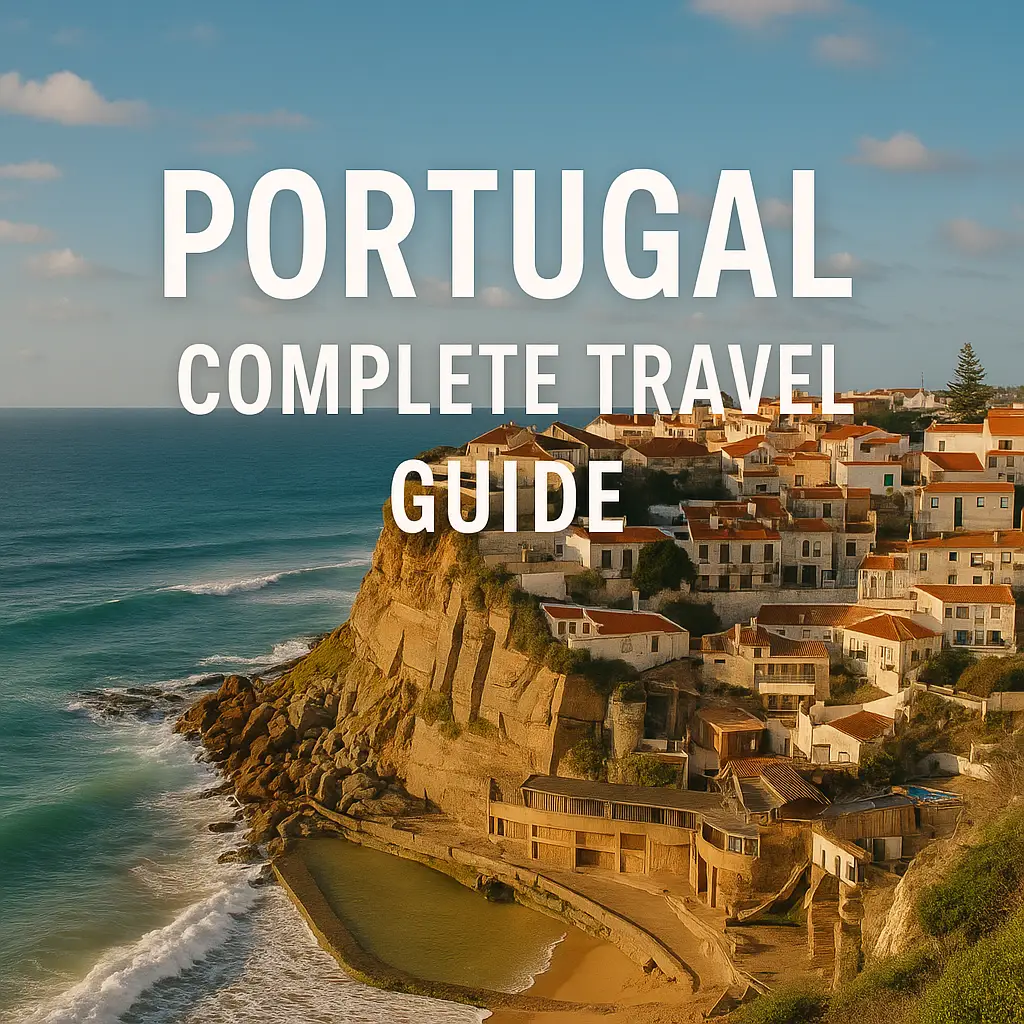
PORTUGAL TRAVEL GUIDE
A full country guide covering Lisbon, Porto, Algarve, Madeira, Azores, national parks, culture, food, history, itineraries, and more.
INTRODUCTION: WHY PORTUGAL IS ONE OF EUROPE’S MOST LOVED DESTINATIONS
Portugal is a country where golden beaches meet dramatic cliffs, ancient castles stand above tiled streets, and vibrant cities blend tradition with modern creativity. It is a land of warm hospitality, rich maritime history, flavorful cuisine, World Heritage sites, volcanic islands, and one of Europe’s most diverse coastlines. Though small in size, Portugal offers an extraordinary range of experiences: wandering through the pastel-colored neighborhoods of Lisbon, tasting port wine directly from cellars in Porto, hiking through lush volcanic lakes in the Azores, exploring the rugged peaks of Madeira, or relaxing on the sun-soaked beaches of the Algarve.
Portugal’s climate is one of the mildest in Europe, making it a year-round travel destination. Its culture is shaped by centuries of exploration, Moorish influence, Catholic traditions, and a strong emphasis on family, music, food, and community. Whether you’re looking for surfing, road trips, historic architecture, wine tourism, island adventures, or coastal relaxation, Portugal is a destination that offers something for everyone.
This extensive travel guide provides a complete overview of Portugal’s regions, cities, islands, attractions, food, nature, routes, and culture—ideal for a full country page on your website.
1. LISBON — THE COLORFUL, HILLY CAPITAL OF PORTUGAL
Lisbon is one of Europe’s most charismatic capitals. Built on seven hills overlooking the Tagus River, the city is a mix of cobblestone alleys, pastel buildings, historic trams, viewpoints, and districts filled with culture and nightlife. It has a warm Mediterranean atmosphere blended with a strong Atlantic identity.
The Historic Center & Neighborhoods
Lisbon’s downtown is made up of several districts, each with its own personality.
Baixa is the elegant 18th-century downtown rebuilt after the 1755 earthquake. Its grid streets are lined with cafés, shops, and squares like Praça do Comércio and Rossio.
Alfama is the oldest neighborhood in Lisbon, a maze of steep alleys, tiled houses, laundry-strung balconies, and Fado music venues. The views from the Miradouro da Graça and Miradouro de Santa Luzia are some of the best in the city.
Chiado blends old bookstores, theaters, and cafés with designer shops and historical charm. Meanwhile Bairro Alto transforms at night into one of Europe’s most vibrant nightlife districts.
Belém — Monuments of the Age of Discoveries
Belém is where Portugal’s explorers departed to navigate the world. The district features:
Belém Tower, a UNESCO World Heritage site standing at the river’s edge
Jerónimos Monastery, a masterpiece of Manueline architecture
Monument of the Discoveries, honoring Portugal’s navigators
The district is also famous for Pastéis de Belém, iconic custard tarts baked daily from a secret recipe.
Modern Lisbon
The Parque das Nações district showcases modern architecture, a large aquarium (Oceanário de Lisboa), waterfront promenades, and contemporary design. Lisbon’s creative energy is visible in its street art, markets, rooftop bars, and growing tech scene.
Lisbon deserves at least three to four days, though many travelers spend longer exploring nearby areas like Cascais and Sintra.
2. SINTRA — A FAIRYTALE TOWN OF PALACES & MOUNTAINS
Sintra is one of Portugal’s most magical destinations, sitting in a lush mountain range covered in forests, castles, palaces, and estates. It is a UNESCO World Heritage site famed for its romantic architecture.
Highlights
Pena Palace is the most famous structure—brightly colored towers rising above the misty forest. It looks like a dreamlike castle from a fantasy movie.
Quinta da Regaleira is known for its gardens filled with tunnels, lakes, sculptures, and the legendary Initiation Well.
Moorish Castle offers ancient stone walls overlooking the Atlantic Ocean and the entire region.
Monserrate Palace and Seteais Palace add to Sintra’s architectural richness.
Sintra is easily reached from Lisbon and makes a perfect day or multi-day trip for travelers interested in history and nature.
3. PORTO — PORTUGAL’S NORTHERN JEWEL
Porto is a beautiful coastal city along the Douro River, known for its port wine, bridges, and colorful riverfront buildings.
Ribeira District
The UNESCO-listed Ribeira district features narrow streets, old stone houses, and stunning views across the river. Traditional boats called rabelos once transported wine barrels from the Douro Valley to Porto’s cellars.
Port Wine Cellars
Across the river in Vila Nova de Gaia are historic port wine cellars offering tastings and tours. This region has been producing fortified wine for centuries.
Key Sights
Dom Luís I Bridge – an iron masterpiece designed by a student of Gustave Eiffel
Clérigos Tower – a baroque bell tower with panoramic views
Livraria Lello – one of the world’s most beautiful bookstores
São Bento Station – decorated with blue and white azulejo tiles
Porto has a more intimate feel than Lisbon, with a strong connection to tradition, food, and wine culture.
4. DOURO VALLEY — VINEYARDS & RIVER LANDSCAPES
The Douro Valley is one of the oldest wine regions in the world and a UNESCO World Heritage landscape. Terraced vineyards roll down steep hillsides toward the reflective waters of the Douro River.
Why It’s Special
The region is breathtaking from any angle—by car, boat cruise, or train. It is famous for:
Port wine production
Red and white DOC Douro wines
Scenic villages like Pinhão
The valley is perfect for relaxation, photography, wine tourism, and road trips through spectacular landscapes.
5. THE ALGARVE — SUN, BEACHES & COASTAL DRAMAS
The Algarve is Portugal’s southernmost region, famous for golden cliffs, turquoise water, sea caves, sandy beaches, and warm weather year-round.
Western Algarve
The western side is dramatic and wild, with some of the most iconic landscapes in Portugal.
Lagos is the region’s most famous town, offering beaches, historic walls, cliffs, nightlife, and easy access to Ponta da Piedade, a majestic coastal rock formation.
Sagres, at the southwestern tip of Europe, offers surfing, cliffs, and the dramatic Cabo de São Vicente lighthouse.
Central Algarve
Popular resort towns include:
Albufeira – nightlife, beaches, family resorts
Vilamoura – marina and golf
Carvoeiro – cliffs and coves
Benagil Cave is one of Portugal’s most photographed natural wonders.
Eastern Algarve
Quieter and more traditional. Towns like Tavira, Olhão, and Faro offer islands, markets, and peaceful lagoons within the Ria Formosa Natural Park.
The Algarve is ideal for beach vacations, water sports, coastal hikes, and family trips.
6. MADEIRA — THE “ISLAND OF ETERNAL SPRING”
Madeira is a subtropical volcanic island in the Atlantic known for its breathtaking cliffs, levada walks, lush forests, and dramatic coastline.
Funchal
The island’s capital blends historical streets, modern cafés, and botanical gardens with scenic ocean views.
Nature & Landscapes
Madeira is a paradise for hikers and nature lovers. Highlights include:
Ponta de São Lourenço – windswept volcanic peninsula
Cabo Girão – one of Europe’s highest sea cliffs
Laurisilva Forest – a UNESCO-protected forest
Pico do Arieiro to Pico Ruivo – one of Europe’s most spectacular mountain hikes
The island is also known for Madeira wine, natural swimming pools in Porto Moniz, and adventure activities like canyoning.
7. THE AZORES — VOLCANIC ISLANDS IN THE MID-ATLANTIC
The Azores is a nine-island archipelago filled with volcanic lakes, geothermal pools, crater lakes, whales, hot springs, waterfalls, and green mountains. The landscapes are some of the most extraordinary in Europe.
São Miguel
The largest island includes:
Sete Cidades – twin crater lakes
Lagoa do Fogo – wild crater lake
Furnas – hot springs, thermal pools, geysers
Tea plantations
Ribeira dos Caldeirões waterfalls
Pico Island
Home to Mount Pico, Portugal’s highest peak, and vineyards growing among black volcanic rocks.
Terceira, Faial, São Jorge, Flores, Corvo
Each island offers a unique blend of volcanic terrain, coasts, villages, and culture.
The Azores are ideal for hiking, whale watching, photography, and adventure travel.
8. CENTRAL PORTUGAL — COIMBRA, ÉVORA, TOMAR & HISTORIC HEARTLANDS
Central Portugal offers medieval towns, Roman ruins, castles, monasteries, mountains, and World Heritage sites.
Coimbra
Home to one of the world’s oldest universities, Coimbra combines river views, academic traditions, and historical architecture. The Joanina Library is a Baroque masterpiece.
Évora
A UNESCO-listed city known for:
Roman Temple of Évora
Chapel of Bones
Cathedral rooftop views
Medieval streets
Évora is the cultural heart of the Alentejo region.
Tomar
Famous for the Convent of Christ, headquarters of the Knights Templar.
Óbidos
A charming walled town with whitewashed houses, castle walls, and festivals year-round.
Central Portugal is rich in heritage and perfect for historical road trips.
9. NORTHERN PORTUGAL — NATURE, CASTLES & HERITAGE
Northern Portugal is mountainous, traditional, and filled with natural parks, historic villages, and cultural treasures.
Braga
Portugal’s religious capital, home to:
Bom Jesus do Monte
Sanctuary of Sameiro
Guimarães
Birthplace of Portugal, with a medieval castle and historical center.
Peneda-Gerês National Park
Portugal’s only national park, known for:
Waterfalls
Wild horses
Mountain villages
Lakes and hiking trails
The north is rural, scenic, and highlights Portugal’s deep cultural roots.
10. PORTUGUESE ISLANDS, BEACHES & NATURE
Portugal’s nature is incredibly diverse.
Best Beaches
Praia da Marinha (Algarve)
Falesia Beach (Algarve)
Comporta (Setúbal)
Guincho (Cascais)
Porto Santo (Madeira)
Waterfalls & Mountains
Gerês waterfalls
Madeira high peaks
Azores volcanic craters
Natural Parks
Ria Formosa
Arrábida
Serra da Estrela
Peneda-Gerês
Portugal is perfect for outdoor lovers, surfers, hikers, and nature photographers.
11. CULTURE, TRADITIONS & HERITAGE
Portugal has a deep cultural heritage shaped by centuries of maritime exploration and tradition.
Fado Music
A soulful, emotional style often performed in Alfama and Coimbra.
Azulejos
Blue and white tiles decorating buildings, train stations, churches, and palaces.
Festivals
Portugal celebrates everything from saints and seafood to medieval fairs.
Portuguese Lifestyle
Relaxed, family-oriented, and strongly connected to food, ocean, and community. Portugal is also one of the safest and friendliest countries in Europe.
12. PORTUGUESE CUISINE — FLAVORFUL, FRESH & VARIED
Portugal’s cuisine features seafood, olive oil, grilled meats, stews, pastries, and regional specialties.
Must-Try Dishes
Bacalhau (cod dishes)
Sardines
Caldo Verde soup
Grilled fish
Piri-piri chicken
Cozido (stew)
Francesinha (Porto sandwich)
Pastéis de Nata
Wine Regions
Douro Valley
Alentejo
Vinho Verde
Madeira wine
Port wine
Portuguese food is simple, honest, and delicious.
13. WEATHER & BEST TIME TO VISIT
Spring (March–May)
Perfect weather, flowers, fewer tourists.
Summer (June–September)
Hot, sunny, ideal for beaches and festivals.
Autumn (September–November)
Harvest season, great for wine travel.
Winter (December–February)
Mild in the south; Madeira is a winter-sun destination.
14. TRANSPORTATION IN PORTUGAL
Portugal is well-connected, affordable, and easy to explore.
Trains
Connect major cities and many towns.
Driving
Ideal for Algarve, Alentejo, mountains, and remote villages.
Buses
Great for regional travel.
Ferries & Flights
Used for Madeira and the Azores.
15. SUGGESTED ITINERARIES
7-Day Classic Portugal
Lisbon → Sintra → Porto → Douro Valley
10-Day City + Coast
Lisbon → Cascais → Algarve → Porto
14-Day Portugal + Islands
Lisbon → Porto → Douro → Algarve → Madeira
21-Day Ultimate Portugal
Add the Azores, Alentejo, and northern Portugal.
16. TOP 25 PLACES TO VISIT IN PORTUGAL
Lisbon
Porto
Sintra
Douro Valley
Algarve
Madeira
Azores
Coimbra
Évora
Tomar
Óbidos
Braga
Guimarães
Peneda-Gerês
Cascais
Setúbal coast
Nazaré
Aveiro
Porto Santo beaches
Ponta de São Lourenço (Madeira)
Furnas (Azores)
Cabo de São Vicente
Ponta da Piedade
Alfama district
Ria Formosa islands
Conclusion
Portugal is a land of history, culture, warm people, spectacular nature, islands, beaches, mountains, and some of Europe’s most charming cities. From the wandering alleys of Lisbon to the cliffs of the Algarve, the volcanic peaks of Madeira, and the lush lakes of the Azores, this country offers an endless range of travel experiences—whether you love history, food, adventure, or simple coastal relaxation.