
– Complete Travel Guide
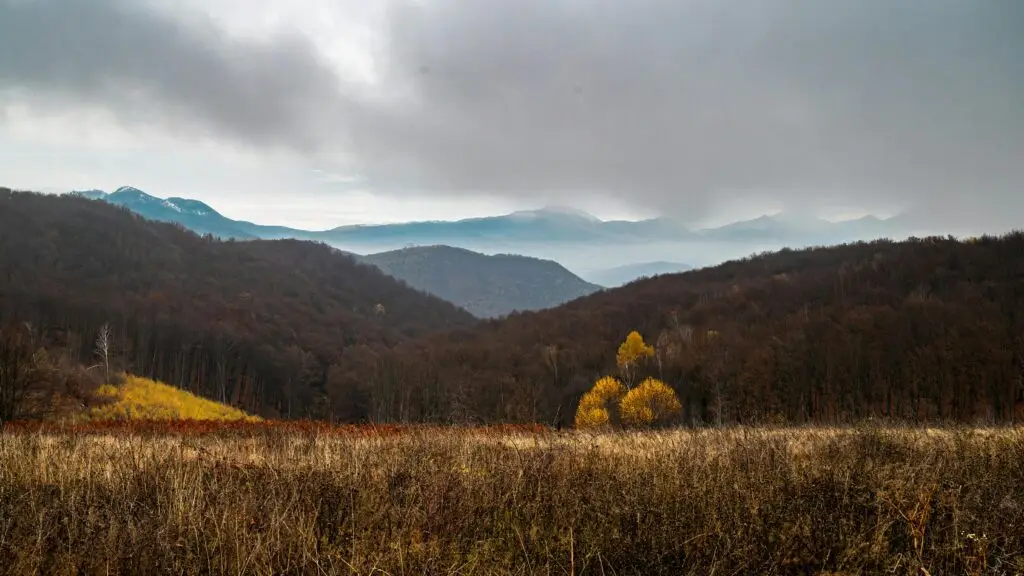
Romania is a land where myth and reality blend so naturally that you often cannot tell where one ends and the other begins. It is a country of vast forests, medieval fortresses, sprawling plains, and quiet mountain villages untouched by time. Here, horse-drawn carts move slowly down roads beside modern cars; shepherds guide their flocks across rolling hills; and ancient customs still breathe beneath the surface of everyday life. Romania’s landscapes feel both familiar and mysterious — green valleys, high ridges wrapped in clouds, castles hidden among forests, and towns where colorful houses seem to gather around central squares like families in conversation.
To travel through Romania is to feel history in motion — not as something sealed in glass cases, but as something alive. Roman ruins stand quietly near wooden churches; Saxon villages preserve German, Hungarian, and Romanian traditions side by side; and remote monasteries gleam with painted walls that blend heaven and earth. The country is a mosaic of cultures, languages, and traditions, shaped by its unique position at the crossroads of Central and Southeastern Europe.
Romania is also remarkably diverse. In the north, Maramureș keeps ancient rural life intact; in Transylvania, ornate towns and fortified churches rise from misty valleys; in the south, Bucharest pulses with modern energy; and in the east, the Danube Delta spreads into wetlands where pelicans and herons glide across mirror-like water. The Carpathian Mountains curve across the heart of the country, shaping its climate, culture, and imagination. Wolves, brown bears, and lynx still roam these forests — a reminder that Europe’s wilder days are not entirely gone.
Though Romania remains less visited than some neighboring countries, this quietness is its gift. It offers travelers the freedom to wander, to discover small details, to speak with locals who are genuinely curious and open, and to witness the country as it truly is — authentic, layered, and deeply human. Romania does not rush to impress; it reveals itself gradually, and that slow revelation is what makes it unforgettable.
A Brief History
Romania’s history stretches back more than two thousand years, shaped by migrations, empires, revolutions, and a deep desire for identity. The story begins with the ancient Dacians, who built fortified settlements in the Carpathians. Their encounter with the Roman Empire in the second century led to conquest, assimilation, and the foundation of a Romanized culture that would eventually form the basis of the Romanian language — a Romance language uniquely surrounded by Slavic neighbors.
After Rome withdrew, waves of tribes and cultures moved through the region: Goths, Huns, Avars, Slavs, and Magyars. By the Middle Ages, three main principalities emerged — Wallachia, Moldavia, and Transylvania. These lands became buffers between powerful empires: the Ottomans to the south, the Austrians to the west, and the Russians to the east. Despite pressure, the principalities managed to maintain autonomy through diplomacy, resistance, and shifting alliances.
In Transylvania, a strong Saxon presence developed, forming fortified towns and castles that still stand today. Wallachia and Moldavia took shape under rulers like Vlad Țepeș — known in legend as Dracula — whose fierce defense against Ottoman incursions eventually inspired stories of Gothic darkness. Though Vlad’s real life was political and military, the myth that followed cast a shadow that would centuries later draw travelers into Romania’s misty mountains.
The 19th century brought new aspirations. National identity grew stronger, eventually leading to the unification of Wallachia and Moldavia in 1859 to form modern Romania. Transylvania joined after World War I, creating the borders largely recognized today. The 20th century brought turbulence: monarchy, dictatorship, war, and communism followed one another in tight succession. The communist era under Nicolae Ceaușescu left deep marks on the nation — grand boulevards, massive buildings, economic hardship, and social wounds.
The 1989 revolution ended communist rule, opening Romania to democracy and new global connections. In 2007, the country joined the European Union, stepping firmly toward integration with Western Europe while retaining its distinct identity rooted in language, folklore, and landscapes. Today, Romania feels like a place that honors its past while moving carefully toward the future — modernizing but never abandoning the rhythms of rural life or the echoes of ancient memory.
Geography & Natural Landscape
Romania’s geography is one of contrasts — from the flat farmlands of the south to the rugged Carpathian Mountains that form a massive arc across the middle of the country. This natural curve shapes everything: weather, agriculture, culture, and even identity. The mountains feel like guardians, watching over centuries-old villages tucked into valleys where wooden houses sit beneath plum trees and shepherds still gather milk from grazing flocks.
The Carpathians are vast, with multiple ranges — the Southern, Eastern, and Western Carpathians — each offering different personalities. The Southern Carpathians, also known as the Transylvanian Alps, rise sharply above forests and flowered meadows. Peaks such as Moldoveanu and Negoiu tower over glacial lakes and crests that look untouched. Hiking here feels both dramatic and peaceful, with violets growing beside cold streams and clouds drifting close enough to touch.
On the eastern side, the mountains soften into hills and plateaus that stretch toward Moldova. Here, forests of beech and spruce cloak slopes that are home to wolves, bears, and lynx — animals long gone from most of Europe. Villages appear suddenly as though placed carefully among meadows, their churches built from timber and stone, their gardens filled with herbs and fruit trees.
The western mountains are gentler and dotted with caves, gorges, and limestone formations. Rivers have carved deep channels through rock, creating landscapes where water echoes against stone walls. Orchards and vineyards grow in warmer valleys, connecting Romania with traditions older than the Roman Empire.
South of the mountains lies the Wallachian Plain — fertile farmland through which the Danube flows, wide and powerful. The river marks Romania’s southern border before splitting into channels that lead to the Danube Delta in the east — one of Europe’s greatest wetlands. Here, water spreads into lakes, reed beds, floating islands, and labyrinthine canals. Pelicans glide across still surfaces; fishermen move silently in wooden boats; and the sky feels wide enough to hold every dream. The Delta is a world apart — quiet, slow, and full of life.
To the west, the Banat region reveals rolling hills and a blend of Romanian, Hungarian, and Serbian cultures. Fields stretch toward the horizon; small towns hold pastel buildings and leafy squares; and mountains rise suddenly like a surprise.
Romania’s geography is deeply tied to its people. The landscape influences everything — how homes are built, how festivals unfold, how stories are told, and how history has moved. It shapes the country’s character: proud, quiet, and rooted in the earth.
Bucharest – The Vibrant Capital
Bucharest is a city of layers — elegant, chaotic, warm, and constantly evolving. It cannot be understood with a single glance; its beauty hides in contrasts. Broad boulevards lined with stately buildings recall Parisian influence, yet narrow side streets reveal small cafes, art studios, and independent bookshops. Glass towers rise beside turn-of-the-century mansions; old churches hide between apartment blocks; students, musicians, workers, and poets cross paths in a bustle that never feels impersonal.
Walking through Bucharest is like reading a novel with shifting tones. The historic Lipscani district, with its cobbled lanes and lively cafés, feels youthful and energetic — a place where the atmosphere flows late into the night. Here, bars and restaurants gather inside restored buildings, offering music and conversation that spill into streets.
A few blocks away, 19th-century architecture speaks of another age. The Romanian Athenaeum, with its neoclassical dome and frescoed interior, hosts concerts that echo with emotion. Nearby parks offer quiet spaces where families stroll beneath chestnut trees, and old men play chess under linden branches.
Then, suddenly, the city becomes solemn: the Palace of the Parliament rises like a giant — one of the largest buildings in the world, built during Ceaușescu’s rule. Its scale is almost surreal, both impressive and unsettling. Wide boulevards flow toward it, lined with monumental apartment blocks that reflect the ambitions and contradictions of the communist era.
Yet despite its heavy history, Bucharest feels alive with creativity. Street art blooms on walls; design shops mix Romanian craft with modern form; and the city’s culinary scene is evolving, combining tradition with new influences. The people here are passionate, curious, witty — ready to share stories or recommend hidden corners where the city feels most itself.
In the evenings, the city glows. Terraces fill with conversation; music drifts through open windows; and the lights of theaters and cafés soften the air. Bucharest is not a city of polished perfection — it is a city of personality, one that invites you to explore without expectation and discover its charm through lived experience.
Transylvania – Forests, Fortresses & Mountain Shadows
Transylvania is the heart of Romania’s imagination — a region draped in forests, mist, and mountain silhouettes. It is a place where stories linger in the air, where villages seem unchanged for centuries, and where medieval towers rise above towns like watchful guardians. Yet beyond legend and myth, Transylvania is profoundly real: peaceful communities, quiet valleys, friendly people, and landscapes so vivid that dawn feels like a fresh painting every day.
The Carpathian Mountains encircle Transylvania like a natural wall, their slopes covered with spruce and beech. In the morning, fog drifts through the trees; in the afternoon, sunlight falls onto hayfields where farmers still use scythes to cut grass. Horses pull wooden carts; shepherds lead their flocks to high pastures; and time moves gently. At night, the sky opens wide, sprinkled with stars so bright they seem close enough to touch.
Transylvania’s history is written in stone — in fortified churches, in German-influenced architecture, and in citadels standing high above valleys. The region once hosted many communities: Romanians, Saxons, Hungarians. Their traditions blend in architecture, cuisine, music, and local customs, creating a cultural mosaic that feels both rich and harmonious.
Traveling through Transylvania is a journey through atmospheres. In some areas, the mood is pastoral and golden; in others, it feels almost Gothic, with thick forests and narrow passes that evoke legends. Perhaps this is why so many stories attach themselves to these lands — the landscape itself encourages imagination.
Brașov – A Gentle City in the Mountains
Brașov sits quietly beneath thick forests and the slopes of Mount Tâmpa, its red roofs spreading out like a warm mosaic against the green of the Carpathians. The city feels both intimate and atmospheric, a place where Gothic buildings, medieval fortifications, and quiet squares come together naturally. The Old Town is alive yet calm, surrounded by mountains that make it feel protected.
At its heart lies the Council Square, a broad plaza surrounded by historic houses and cafés. The Black Church, a massive Gothic structure, stands solemnly nearby — its name derived from the smoke that once darkened its walls centuries ago. Brașov’s streets branch from the square like threads from a tapestry, winding toward medieval gates, small shops, and stone towers that still guard the old walls.
The city invites wandering. Narrow alleys lead to staircases hidden behind colorful façades; wooded trails climb toward lookout points where Brașov spreads beneath you like a map. In the evening, terraces fill with locals and travelers sharing stories beneath warm lights. The atmosphere is relaxed, friendly, and balanced — a city with history that does not weigh heavily.
A short drive leads to tall mountains, dense forests, and castles wrapped in legend. Brașov feels like a gateway — a bridge between town life and wilderness.
Sibiu – Saxon Grace & Warm Golden Light
Sibiu is one of the most elegant towns in Romania, a place of red roofs, pastel façades, and open squares that glow softly in the late afternoon. Once home to Saxon merchants, the town still carries a distinctly European charm — orderly streets, sturdy houses, and watchful defensive towers. Walking through Sibiu feels like stepping into a preserved chapter of the Middle Ages, yet the city is full of life, art, and festivals.
The Upper Town opens into grand squares framed by Baroque buildings. The Lower Town descends in staircases and archways, where quiet streets are lined with colorful houses whose roof windows look like watchful eyes. The atmosphere is calm, intellectual, and slightly formal, softened by sunlight and the friendliness of locals.
Sibiu is surrounded by countryside where hills roll gently toward the mountains. Small villages hold fortified churches, barns, and houses adorned with carved wooden gates. Life here feels peaceful, rooted in slow rhythms. To sit at a café in Sibiu’s main square, watching shadows stretch across the cobblestones, is to feel time loosen its grip.
Sighișoara – A Medieval Citadel Suspended in Time
Sighișoara is perhaps Romania’s most romantic town — a perfectly preserved hilltop citadel where towers, gates, and walls still encircle narrow streets. Pastel houses lean toward each other as though sharing secrets, and cobblestones shine beneath the afternoon sun. Life seems to move quietly here, echoing footsteps across centuries.
This is a place of story. The Clock Tower rises above rooftops; its colorful tiles glimmer, and wooden galleries host small museums filled with objects from the town’s long life. Stone stairways climb toward the Church on the Hill, passing beneath old beams that creak softly. Everywhere you walk, you feel the presence of artisans who once shaped this city — goldsmiths, weavers, bakers — their craft still reflected in shop signs and preserved interiors.
Whether you wander at dawn or through evening light, Sighișoara feels dreamlike — a town so complete and intimate that it almost seems unreal.
Cluj-Napoca – Young Spirit, Old Heart
Cluj-Napoca is Transylvania’s modern pulse — a lively university city filled with music, art, and youthful energy. Its streets line with cafés, galleries, and quiet courtyards; its squares host festivals that spill into the night; and the blend of old and new gives Cluj a special harmony.
Historic churches, Baroque façades, and elegant buildings rise beside modern bars, bookshops, and creative spaces. Students gather on terraces, cyclists move through wide avenues, and the city feels open and progressive. Yet beyond the energy, Cluj still holds quieter corners — botanical gardens, old parks, and narrow alleys where ivy crawls over stone.
It is a city of balance — vibrant yet thoughtful, young yet rooted in history.
Castles, Citadels & Fortified Churches
Romania’s history is carved into its fortified stone. Castles perch on cliffs, churches hide behind battlements, and walled towns seem ready to resist time itself. Each site tells a story — of defense, community, faith, and imagination.
Bran Castle, with its white towers and red roofs, rises above a forested pass. Though often linked with Dracula, the castle’s real personality is quieter — a medieval fortress with wooden corridors, lookout windows, and rooms that make you imagine distant winters filled with firelight.
Râșnov Citadel stands on a ridge with views stretching across fields and mountains. Within its walls lie houses, wells, and narrow streets — a reminder that fortified citadels were more than military posts; they were entire communities, living in defense.
Across Transylvania, fortified churches stand in villages surrounded by fields. Their walls, thick and protective, hold silent sanctuaries within. These churches — in places like Biertan, Viscri, and Prejmer — reflect a deep connection between faith and protection. They are quiet, beautiful, and enduring.
Maramureș – Romania’s Living Heritage
Maramureș feels like a fragment of rural Europe preserved through care and continuity. It is a place of wooden churches, hand-carved gates, hay meadows, and ancestral customs. Here, life moves by seasons: spring brings planting; summer haying; autumn harvest; winter long nights by wood stoves.
Villages spread along river valleys, their houses adorned with intricate wooden gates — symbols of protection, status, and artistry. In courtyards, old looms weave wool into traditional patterns; behind houses, orchards grow apples, pears, and plums used to make țuică, a beloved fruit spirit.
Wooden churches rise above cemeteries in slender towers, their shingles dark and fragrant with age. Inside, hand-painted icons glow in flickering light. These churches are not relics — they are living centers of community.
People here speak softly but generously; they invite visitors to share homemade dishes, stories, and music. Weddings, festivals, and holidays carry folk costumes of bright colors and skillful embroidery. In Maramureș, tradition is not performed — it is lived.
Bucovina & the Painted Monasteries
In Bucovina, churches bloom with color. Their exterior walls are covered in paintings — bright blues, reds, and golds — depicting scenes of saints, angels, and biblical stories. These monasteries were created not only as places of worship but as storytellers, teaching through image.
Voroneț, often called the Sistine Chapel of the East, glows with deep blue walls that show scenes in extraordinary detail. Sucevița appears like a fortress of green; Moldovița and Humor hold warm reds and golds. Set among rolling hills, these monasteries feel peaceful — sanctuaries of art and devotion.
Surrounding villages add to the quiet beauty: wooden houses behind orchards, hills dotted with haystacks, roads that wander beneath evergreens. Bucovina feels like a soft whisper — gentle, spiritual, and deeply human.
The Danube Delta – A World of Water & Silence
At Romania’s eastern edge, the Danube ends its long journey, dissolving into a labyrinth of channels, lakes, and reeds. The Danube Delta is a place of water, silence, and endless sky — one of Europe’s last great wetlands. Here, nature moves calmly: pelicans rise from drifting waters; herons stand still among reeds; and small boats glide between floating islands.
Villages sit on small strips of land, their houses painted blue and white, and life unfolds by river rhythms. The Delta is a paradise for birdwatchers, photographers, and those seeking quiet. Sunsets stretch across mirrored water; nights fill with insects and distant bird calls. It feels timeless — untouched, gentle, and sacred.
Culture & Identity
Romanian culture is a tapestry woven from many threads — ancient Dacian roots, Roman influence, Byzantine spirituality, Slavic traditions, Saxon craftsmanship, and Ottoman echoes. These influences did not erase each other; they mingled, layering the country with diversity and complexity. Even today, each region carries its own character. In Transylvania you sense Central Europe’s order and quietness; in Wallachia, a Mediterranean warmth and hospitality; in Moldavia, a contemplative spiritual mood rooted in monasteries and folk tradition; and in Maramureș, an ancient rural life that feels almost ceremonial.
Folklore is not decoration — it is a living presence. Many villages still celebrate seasonal rituals tied to planting, harvest, winter, and spring. Costumes, dances, and songs vary from valley to valley, as though each small community held its own world of stories. The elders pass these traditions to the young with pride; their embroidery, music, and masks carry memory forward.
Romanian music draws from both joy and longing. Violins, pan flutes, and cimbalons thread lively rhythms across village squares, while softer melodies — doinas — express solitude and reflection. Storytelling is part of daily life; families recount myths, legends, and memories of ancestors who shaped the land.
Religion remains important, particularly Eastern Orthodoxy. Churches act as centers of spiritual and communal life. Their frescoes and icons shine with gold and deep color, offering a sense of sacred continuity. Even those who do not attend services regularly often feel culturally connected to the traditions around them.
What stands out most is kindness. Romanians welcome visitors with sincerity — a glass of wine, a plate of homemade food, stories told with humor and pride. There is a quiet generosity that feels deeply rooted, offering warmth even in the smallest gestures. Romania’s culture does not demand attention; it invites connection.
Cuisine & Culinary Traditions
Romanian food is grounded, warm, and flavorful — built from a blend of rural tradition, seasonal ingredients, and influences from across Eastern Europe and the Balkans. Meals are meant to be shared, often slowly, always generously. Many traditional dishes arise from life close to the land — from shepherding, farming, and preserving foods across seasons.
One of the most beloved staples is mămăligă — a cornmeal dish similar to polenta, often served with cheese, sour cream, or stews. Slow-cooked dishes anchor Romanian cuisine: sarmale, cabbage rolls filled with rice and meat; tocană, a rustic meat stew; and ciorbă, sour soups flavored with herbs, vegetables, and sometimes smoked meat. These meals are not hurried; they reflect the rhythm of rural life.
In mountain regions, shepherding shapes the table. Fresh and smoked cheeses, especially urso, carry the flavor of alpine pastures. Smoked meats and sausages complement hearty breads baked in village ovens, and pickled vegetables — cabbage, cucumbers, peppers — add bright acidity to winter meals.
Along the Danube and in the Delta, fish defines culinary life. Carp, catfish, and freshwater species are cooked simply with garlic, paprika, and herbs. Fishermen prepare soups over open fires, letting the aroma drift across the water. Here, meals taste of river and reed, quiet and simplicity.
Desserts often celebrate fruit. Plums, apples, cherries, and walnuts appear in pies and pastries, while honey sweetens cakes and breads. Papanași, fried or boiled dough pastries filled with cheese and topped with cream and jam, are rich and satisfying.
Drinks also reflect regional heritage. Țuică, a plum spirit, appears at celebrations, after meals, and as a welcome for guests — its warmth a sign of hospitality. Wines from Transylvania and Moldavia are gaining recognition, continuing traditions that stretch back to ancient times.
Romanian cuisine is comfort at its core — food shared at long tables, welcoming and sincere.
Nature, Wildlife & Outdoor Life
Romania remains one of Europe’s most biodiverse landscapes. The Carpathian forests shelter bears, wolves, lynx, and wild boar — species that have vanished in many other places. In these forests, silence becomes profound. Moss carpets glacial valleys; streams whisper along rocks; and the air smells of pine, earth, and mountain light. Hiking trails weave through flowered meadows, crossing ridges where the wind carries memories of centuries.
In spring and summer, the high pastures fill with sheep, and the sound of bells drifts toward the valley. Shepherds build temporary huts, making cheese and tending their flocks. The land here is not a backdrop — it is a partner in daily life. Wildlife frequently roams near villages, and encounters with deer, foxes, and even bears are not unusual.
The Danube Delta is another world. More than 300 species of birds inhabit its wetlands, along with countless fish and plants. Pelicans glide across glass-like water; cormorants gather in black clusters; and marsh reeds sway beneath open sky. Canoes and small boats move quietly through channels lined with willows and wildflowers. Time seems to soften here, drifting like water.
Romania’s coastline along the Black Sea adds another layer — wide sandy beaches bordered by dunes and low cliffs. Farther inland, caves and gorges invite exploration; limestone formations rise like ancient monuments; and river valleys lead to waterfalls hidden in dense forest.
For those who seek nature, Romania offers many paths: challenging alpine hikes, gentle village trails, untouched wetlands, and meadows where wildflowers turn summer hillsides into oceans of color. It is a country where outdoor life feels both accessible and deeply authentic.
Practical Travel Information
Traveling in Romania is surprisingly easy once you understand the rhythm of roads and railways. Major cities connect through reliable train lines, though the pace can be slow — a reminder that Romania prefers calm over speed. Buses serve smaller towns, while rural areas are best explored by car, allowing you to wander freely through villages and landscapes where time seems to rest.
English is spoken widely in cities and tourist regions, especially among younger generations, while rural areas remain more Romanian-speaking. The currency is the leu (RON), and costs are generally lower than in Western Europe — accommodation, meals, and transportation offer excellent value. Even in major cities, prices remain modest, making extended travel accessible.
Accommodation ranges from simple guesthouses to modern hotels, but some of the richest experiences come from traditional village stays — wooden houses, homemade meals, and families eager to share stories about their land. These stays reflect the heart of Romanian hospitality.
Romania is safe and welcoming. Cities are calm; rural areas are peaceful; and people are helpful. The only caution lies in nature: mountain weather changes quickly, and some trails require preparation. As always, respect is key — both for people and the landscapes they protect.
Best Time to Visit
Each season in Romania paints the landscape differently.
Spring arrives gently, with blossoms in orchards and green meadows beneath melting snow. Villages shake off winter quiet, and festivals celebrate renewal. Summer is warm and lush, ideal for mountain hikes, river journeys, and long days in rural regions. Haystacks rise in golden fields; forests hum with insects; and shepherds guide flocks across high pastures.
Autumn is perhaps the most poetic season — forests turn gold, orange, and crimson; vineyards ripen; and mist rolls across valleys each morning. It is a season of reflection, beauty, and movement. Winter brings snow to the mountains, transforming villages into quiet places of wood smoke and lantern light. In the cities, lights glow softly on historic squares, and Christmas markets gather warmth against cold air.
Romania is beautiful year-round; the best time depends on whether you seek sunlit forests, snowy peaks, or spring rebirth.
Suggested Itineraries
A journey through Romania might begin in Bucharest, where history and modern life weave together. From there, one can travel to Brașov, Sibiu, and Sighișoara — a route that reveals fortified towns, mountain valleys, and Transylvania’s quiet beauty. A longer journey leads north to Maramureș, where wooden churches rise among meadows, and traditions shape everyday life. To the east lie Bucovina’s painted monasteries — gentle hills, spiritual calm, and art glowing on ancient walls. The trip ends where the Danube meets the sea, in the Delta’s endless silence.
Other travelers may choose mountains: hiking peaks in the Făgăraș range, exploring gorges, or skiing in winter. Or they may move toward culture — villages, festivals, crafts, and music that reflect Romania’s deep heritage.
Romania does not demand a fixed path. It invites wanderers to choose their own rhythm — fast or slow, focused or open.
Conclusion
Romania is a country of atmosphere, memory, and quiet wonder. It is a place where ancient stories linger among trees, where time slows in village lanes, and where landscapes reveal both power and peace. The Carpathians shape its heart; rivers and plains broaden its horizon; and traditions bind its past to its present. Travel here is not only about seeing but about feeling — the hush of monasteries, the laughter in marketplaces, the warmth of shared meals, the whisper of forests at dusk.
Romania is not polished for tourists; it is real. Its beauty comes from authenticity — from hayfields lit by early light, from wooden gates carved with family history, from music played in small squares, from rivers that carry memory toward the sea. Those who come with patience and curiosity find a land that deepens with every step.
And when you leave, Romania stays with you — in the scent of mountain pines, the colors of painted monasteries, the taste of bread baked in wood-fired ovens, and the quiet knowledge that some places do not need to be grand to be unforgettable.
 Related Articles
- Kakslauttanen Arctic Resort
- Top 10 Most Unique Places to Stay in Europe
- 10 Incredible Castles Around the World