
🇷🇸 Serbia Travel Guide — Complete Country Overview
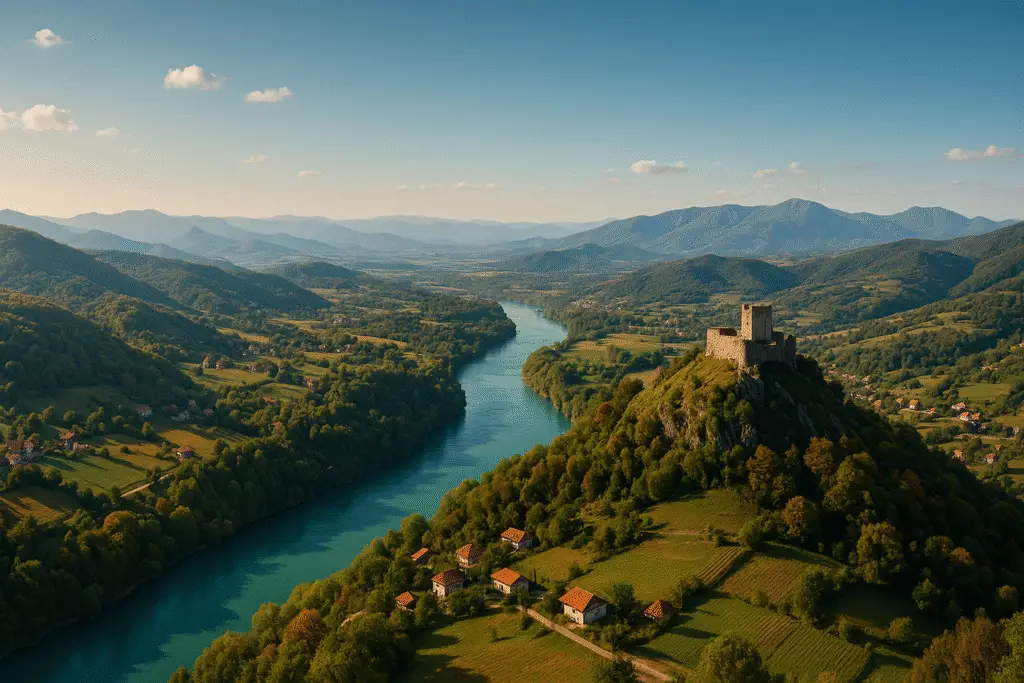
Serbia, positioned in the heart of the Balkan Peninsula, is a country where centuries of history, layered cultures, and warm hospitality come together to create a destination that feels both ancient and energetic. With a landscape shaped by river valleys, rugged mountains, fertile plains, and lively cities, Serbia blends the traditions of Central Europe and the Mediterranean with strong Slavic roots. The Danube, one of Europe’s greatest rivers, flows majestically through the nation, binding together cultures and cities along its banks, while the Dinaric Alps and forested plateaus rise in the south and west, offering scenic horizons and natural retreats.
Though often overlooked by travelers heading to its coastal neighbors, Serbia reveals itself as a rewarding destination filled with living history, soulful cuisine, vibrant music scenes, medieval fortresses, Orthodox monasteries, Ottoman heritage, and a strong cultural rhythm that pulses from its towns and countryside. Belgrade, the capital, is full of life: a city where Roman remains, Austro-Hungarian influences, Ottoman echoes, socialist-era architecture, bohemian cafés, and contemporary riverside districts coexist. Yet beyond Belgrade lies the deeper character of Serbia: monasteries hidden in wooded valleys, thermal spa towns echoing with centuries of wellness tradition, ancient archaeological sites, ethnographic villages, mountain chalets, vineyards, and quiet fields where time seems to move slowly.
Traveling through Serbia is also a journey through startling contrasts. Novi Sad exudes calm elegance, its pastel baroque architecture and leafy squares reflecting influences from Central Europe. Southern Serbia, meanwhile, holds older rhythms: market towns, folklore traditions, Byzantine monasteries, oriental bridges, and deep river gorges. The country’s history is equally complex and profound—an intersection of empires, religions, and migrations. Though it has known periods of conflict and transition, modern Serbia is friendly, dynamic, and proud of its identity. Visitors are welcomed with genuine warmth, hearty meals, strong coffee, and the ever-present invitation to stay longer, share stories, listen to music, and feel at home.
This guide introduces Serbia’s regions, culture, cities, nature, history, yearly rhythms, and travel experiences to help you truly understand this fascinating country.
Geography & Landscape
Serbia is landlocked and borders Hungary to the north, Romania and Bulgaria to the east, North Macedonia to the south, and Montenegro, Bosnia and Herzegovina, and Croatia to the west. Its northern province, Vojvodina, lies on the great Pannonian Plain. This region is characterized by river networks, grain fields, sunflower farms, and lakes. The Danube and Tisa shape landscapes where fertile land meets baroque towns, vineyards, and fishing communities. The terrain is flat, making it easy to travel and ideal for agriculture.
Central Serbia is a transitional region where gentle hills and fertile valleys rise gradually into mountains. Here the Morava River flows along ancient trade routes, connecting generations of people who shaped villages, monasteries, and market towns. Forested hills support wildlife, orchards, and vineyards. Many traditional Serbian grape varieties thrive in these fertile valleys, especially near towns like Aleksandrovac and Fruška Gora.
Southern and western Serbia become mountainous, dotted with national parks, ski resorts, herding settlements, and dramatic river gorges. The Tara Mountains, Zlatibor plateau, Kopaonik range, and Stara Planina offer pristine landscapes and diverse ecosystems. The Uvac Canyon, with its meandering emerald river and white cliffs, is one of Serbia’s most spectacular natural sights. Eagles nest high above labyrinthine bends, and the quietness of this wilderness contrasts sharply with Belgrade’s energy.
Large rivers define Serbia. The Danube, the Sava, and the Drina are central arteries for trade, culture, and travel. Medieval fortresses, Roman castra, and Ottoman bridges line their shores. Serbia’s geography has always placed it at a crossroads—between Eastern and Western Europe, between lowlands and highlands, between empires—and this is reflected in the character of its towns and people.
Historical Overview
Serbia’s history is long and richly textured. Prehistoric sites such as Lepenski Vir along the Danube date back more than 9,000 years and are among Europe’s earliest settled cultures. Later, the Romans ruled these lands, leaving behind archaeologically rich remains like Felix Romuliana, the palace of Emperor Galerius. After Rome, Slavic peoples settled here in the 6th and 7th centuries, forming principalities that evolved into the medieval Serbian state.
The medieval Serbian Kingdom and later Empire reached their peak in the 14th century under Tsar Dušan, whose rule extended into parts of Greece and the Balkans. This era left a spiritual and artistic legacy seen in monasteries like Studenica, Žiča, Sopoćani, and Gračanica, built with elaborate frescoes that still hold profound cultural importance. Monastic communities preserved literacy, philosophy, and artistic traditions during turbulent centuries.
After the fall of the Serbian Empire and the defeat at Kosovo Polje in 1389, the region entered centuries of Ottoman rule. Ottoman influences shaped everyday life—architecture, food, music, language. Towns organized around markets and mosques, and traditional crafts flourished. Meanwhile, monasteries remained important spiritual centers, protecting Serbian identity.
In the 19th century, Serbia rose in a series of uprisings and regained autonomy, later becoming a kingdom. After World War I, it became part of the Kingdom of Yugoslavia, then later the Socialist Federal Republic of Yugoslavia after World War II. Modern Serbia is a successor state emerging from Yugoslavia’s dissolution in the 1990s. Today’s Serbia is democratic, evolving economically, and increasingly present on the international stage.
Throughout its history, Serbia has balanced different influences while preserving distinct traditions. That mixture of resilience, creativity, and memory shapes its modern culture.
Cities & Regions
Serbia’s major cities each tell a different story, shaped by geography, empire, trade, and cultural exchange. Traveling from north to south feels like moving through different worlds.
Belgrade
Belgrade, the capital, stands at the meeting of the Danube and Sava rivers, a position that made it coveted by empires and influential in European history. Today, the city blends layers of architectural styles—Austro-Hungarian facades, Ottoman remnants, medieval fortifications, socialist blocks, and sleek new developments. On Kalemegdan hill, Belgrade Fortress has watched over the confluence for centuries; walking through its gates reveals a park, historic walls, towers, and views across the rivers. The neighborhoods surrounding it offer contrasting atmospheres: lively pedestrian streets, refined cafés under shaded trees, narrow alleys with hidden restaurants, and bohemian quarters where music spills into the night. Belgrade has an open, energetic spirit that embraces visitors quickly, inviting them to explore galleries, floating river bars, old markets, Orthodox churches, and quiet parks. The city feels authentic—slightly rough at the edges, but full of life and conversation.
Novi Sad
Novi Sad, the capital of Vojvodina in northern Serbia, presents a calmer personality. Spreading across the flat plains along the Danube, it grew under the Habsburgs and today displays elegant Central-European architecture. Pastel-colored townhouses line the main square, while tree-lined avenues lead to cafés filled with students, artists, and visitors. Across the river rises Petrovaradin Fortress, an enormous stone structure overlooking the city and the Danube. Tunnels, walls, and bastions stretch across the hill, once protecting empire frontiers and now serving as one of Serbia’s most beloved cultural landmarks. Each summer, the fortress hosts EXIT Festival, drawing musicians and travelers from around the world. Yet outside festival season, Novi Sad’s peaceful rhythm returns—its bookstores, churches, markets, and riverbanks illustrating a university town with creativity and quiet charm.
Niš
In southern Serbia lies Niš, one of the Balkans’ oldest cities. Famous as the birthplace of Emperor Constantine the Great, Niš carries a deep Roman legacy. Today the city blends Ottoman heritage—stone bridges, mosques, and traditional neighborhoods—with modern sprawl. Niš Fortress stands near the river, its walls enclosing leafy parkland and cultural venues. A darker historical site is the Skull Tower (Ćele Kula), built by Ottomans using the skulls of Serbian insurgents during the early 19th century; it remains a sobering monument to resistance. But Niš is not defined by sorrow—its streets are lively, filled with taverns, warm food, and a strong spirit of southern hospitality.
Vojvodina
Vojvodina, the northern province, is a flat expanse of fields, rivers, and villages shaped by centuries of mixed cultures. Hungarian, Slovak, Romanian, Serbian, and other traditions coexist, influencing cuisine, architecture, and local festivals. Baroque towns such as Sremski Karlovci display wine cellars, churches, and elegant buildings along quiet squares. The province feels relaxed compared to the rugged regions of southern Serbia—sunflowers bloom in summer, and riverbanks offer places for long, slow afternoons.
Western Serbia
Western Serbia is a region of deep gorges, conifer forests, mountain plateaus, wooden hamlets, and traditional crafts. The Tara Mountains host dense woodland, panoramic viewpoints, and the dramatic Drina River. Villages like Drvengrad—a wooden settlement built by filmmaker Emir Kusturica—celebrate traditional architecture and cultural life. Hiking, rafting, and train rides through remote landscapes feel like stepping into a quieter century.
Southern Serbia
Southern Serbia reveals more Ottoman heritage—old bazaars, cobbled quarters, mosques, bridges over narrow rivers, and market towns at crossroads. The landscape is rugged, and villages carry a strong folk tradition. Music, dance, and handcrafts shape daily life; hospitality is warm, plates are full, and social gatherings continue late into the night.
Culture & Identity
Serbia’s culture is defined by centuries of resilience, creativity, and warmheartedness. Village and city traditions exist side by side, often merging during celebrations. Serbian families are close-knit, and social life revolves around meals, music, conversation, and respect for guests. Visitors are often greeted with open generosity.
Hospitality is central; even strangers are invited to share meals or coffee. A strong coffee culture dominates—small cups of浓, slowly sipped brew enjoyed during long conversations. In cities, cafés line nearly every street. In villages, coffee is offered before any business or discussion begins; to decline can feel unusual, as it symbolizes friendship.
Orthodox Christianity shapes many cultural values. Families celebrate major religious holidays with unique rituals—especially Slava, the celebration of a family’s patron saint. Each household has its own Slava, passed down through generations, bringing relatives and neighbors together annually. Tables fill with homemade dishes, bread, wine, candles, and prayers. Music accompanies gatherings, reflecting a long folk tradition.
Serbia’s music culture ranges from traditional village melodies to modern pop, brass bands, and rock. In the countryside, the sound of accordion or flute may fill the evening air. In cities, festivals attract international artists and creative young crowds. Vocal expressiveness is common; people sing at celebrations, during long meals, and even casually among friends.
Art and craftsmanship thrive. Monasteries preserve frescoes and liturgical arts of profound historical value. Villages produce woodcraft, pottery, textiles, and wool garments. Many crafts survive through apprenticeships, passed from master to student.
While Serbs share cultural characteristics, regional differences remain strong—Vojvodina’s gentle hospitality contrasts with southern Serbia’s more fiery spirit; Belgrade’s confidence differs from mountain modesty. These contrasts enrich the national identity.
Religion
The majority of Serbs are Eastern Orthodox Christians. The Serbian Orthodox Church plays a foundational role in preserving identity, especially during centuries without statehood. Monasteries remain spiritual and cultural anchors; some lie in deep valleys, others stand atop cliffs with panoramic views. Their frescoes are invaluable treasures of medieval art, depicting saints, rulers, biblical scenes, and daily life. Even for non-religious visitors, the monasteries offer quietness, beauty, and insight into history.
Islam is present in certain regions, especially in the southwest, reflecting centuries of Ottoman rule. Catholic and Protestant communities exist as well, especially in Vojvodina, where diverse ethnic groups have lived together for generations. Religious coexistence is a lived reality; while tensions have existed historically, daily life in most of Serbia shows mutual respect.
Cuisine & Gastronomy
Serbian food is rooted in rural tradition, family heritage, and seasonal ingredients. Meals are hearty and generous, designed to be shared. The kitchen blends influences from the Balkans, Central Europe, the Mediterranean, and the Middle East. The result is strong, simple flavors — grilled meats, fresh vegetables, baked breads, slow-cooked stews, cheeses, fruit preserves — arranged on long tables where food becomes a celebration of connection.
In homes and restaurants, fresh bread accompanies every meal. Many families still bake their own loaves, with warm slices soaking up sauces or spreading thick white cheese. Dairy is abundant; kaymak — a silky, buttery cream — layers onto bread or grilled meats. Cheeses vary by region, from strong, aged mountain cheeses to soft, salty varieties found in markets.
The grill is a centerpiece of Serbian cuisine. At countryside restaurants, smoke rises from open fires where cevap — small, seasoned beef or mixed-meat sausages — cook over charcoal. Next to them lie pljeskavica, a large Balkan-style patty often filled with cheese or chili. Meat is rarely served alone: onions, ajvar (a roasted red-pepper spread), cabbage salads, bread, and kaymak fill the table. Ajvar, made every autumn in large batches, is a beloved national symbol — sweet, smoky, sometimes spicy, and eaten on everything from beans to grilled meats.
Stews and slow-cooked dishes appear during colder months. Beans simmer for hours with smoked meat; cabbage leaves wrap seasoned fillings; potatoes soften beside lamb in clay pots. In mountain regions, lamb roasted whole is a culinary highlight. South of Belgrade, pies made from thin, hand-stretched pastry dough — stuffed with cheese, spinach, pumpkin, or meat — are served fresh from stone ovens. These pies vary by region and technique, one of the most cherished aspects of Serbian cooking.
Fresh vegetables are abundant; tomato, cucumber, onion, and pepper salads accompany big meals even in winter. In summer, markets overflow with fruit: plums, apples, cherries, peaches, grapes, apricots. Plums are particularly important. They are eaten fresh, dried, turned into jam, baked into pastries, and distilled into rakija — Serbia’s signature spirit. Rakija is not simply alcohol; it is tradition, hospitality, and medicine in a glass. Visitors are often offered a shot upon arrival; to refuse is rare. Flavors vary by fruit: plum, quince, apricot, pear. Some are fiery, others smooth.
Desserts blend regional influences. Walnut cakes, honey pastries, and fruit preserves finish long meals. Slatko — a syrupy spoon sweet made from fruit — is served with water to welcome guests. Krofne (fluffy doughnuts), custard pastries, and filo-wrapped sweets reflect Central-European and Ottoman heritage.
Coffee culture is strong. Thick Turkish-style coffee is sipped slowly in homes, bars, and cafés, often accompanied by conversation that stretches for hours. In cities, espresso is widespread too; every corner hosts a café filled at most hours of the day.
Villages & Traditional Life
Beyond the cities, Serbia reveals its true soul in villages scattered across plains and mountains. Here the pace slows; neighbors share fruit and stories over fences, elders sit on benches under linden trees, and life moves to the rhythm of seasons. Houses are simple, with red-tiled roofs, gardens of vegetables, and orchards heavy with plums or apples. Chickens wander through courtyards; grapevines twist above stone paths. In autumn, smoke rises from outdoor ovens where peppers roast for ajvar.
Village culture revolves around family, church, and land. Weddings and religious holidays fill communities with music, dancing, and feasts. Traditional clothing — embroidered shirts, woolen vests, leather shoes — appears during festivals. Folklore groups perform songs and dances passed down through centuries. Instruments such as the frula (shepherd’s flute) or the gajde (bagpipe) echo through valleys.
In mountainous regions, shepherd settlements sit high in meadows. Wooden huts, haystacks, and pastures dominate landscapes where sheep graze freely. Many families still produce cheese and kaymak the traditional way, storing them in wooden barrels. Life here follows nature closely; winters are long, and neighbors support each other through harsh weather.
In Vojvodina, villages reflect multicultural heritage. Catholic church towers stand beside Orthodox ones; Hungarian, Slovak, Romanian, and Serbian traditions merge. Each ethnic group preserves its cuisine, dances, and customs. This diversity gives Vojvodina a gentle atmosphere — one of coexistence and layered beauty.
Monasteries & Sacred Heritage
Serbia’s medieval monasteries are among the most significant cultural treasures in Eastern Europe. They stand in valleys, on hillsides, along rivers, and at the foot of mountains — sanctuaries of art, spirituality, scholarship, and identity. Their white stone walls and dark domes hold frescoes that capture sacred scenes with expressive faces and vivid colors. Many monasteries were founded by medieval rulers from the Nemanjić dynasty, whose patronage encouraged faith, literacy, and craftsmanship.
Studenica, with polished white marble, contains masterful frescoes from the 13th century that glow beneath dim light. Sopoćani preserves some of the finest Byzantine-style paintings in the Balkans, while Žiča, painted red, served as the seat of the first Serbian archbishop. In Kosovo, Gračanica and Visoki Dečani represent artistic peaks, blending Byzantine tradition with local expression. These monasteries are living sites — monks and nuns maintain gardens, chant liturgy, and welcome pilgrims.
Visitors often speak of the spiritual calm that surrounds these monasteries. Whether religious or not, one feels a quiet continuity across centuries, a presence of devotion that still shapes modern Serbian culture. The monasteries are also historical landmarks; during Ottoman rule they safeguarded literature, art, and identity. Their frescoes show not only biblical scenes but portraits of rulers, peasants, architects, and everyday life.
Nature & National Parks
Although landlocked, Serbia holds some of the most varied landscapes in the Balkans. The northern plains stretch wide beneath endless skies, but further south, hills swell into dramatic formations. National parks preserve forests, canyons, pastures, and mountain peaks. They are places to breathe in pine-scented air, watch eagles circle rivers, and walk among limestone cliffs.
Tara National Park is one of Serbia’s most beloved natural areas. Deep forests of spruce and fir carpet mountains that rise above the Drina River. The air is clean, cool, and quiet; bears and deer roam among mossy rocks. From viewpoints such as Banjska Stena, the Drina appears far below — a ribbon of turquoise curving through steep cliffs. Morning mist drifts across the landscape, and in autumn the forests blaze gold and crimson.
Uvac Special Nature Reserve is famous for its meandering river valley — emerald water twisting through white limestone. Griffon vultures nest on cliff ledges, soaring above the canyon. Travelers hike to high viewpoints or explore by boat, where silence dominates the gorge. The area feels wild and untouched.
Zlatibor is a gentle, pastoral plateau with grassy slopes, wooden houses, and fresh mountain wind. Families come for fresh air, hiking, skiing, and slow days. Nearby lies Tara, more rugged, while Zlatibor is softer, with meadows and pine forests.
Kopaonik, Serbia’s highest ski area, becomes a lush alpine world in summer — flowered meadows, cold streams, and long trails.
Stara Planina in the east holds remote villages, shepherd paths, and tall waterfalls; winters are snowy, summers full of green.
Rivers shape the land. The Danube is majestic, wide and slow, passing castles, cliffs, and plains. The Iron Gate Gorge, where the Danube cuts through mountains, is one of Europe’s great natural wonders — a border of stone where the river narrows, deep and powerful. The Drina, fast and clear, flows through gorges and valleys; small boats drift between steep cliffs. The Sava and Morava form wide corridors that have guided travel and settlement for thousands of years.
Nature in Serbia feels intimate — less crowded than famous European parks, more personal. You can wander for hours and see only birds and sheep. The wilderness invites reflection, conversation, and peace.
Seasons & Rhythm of Life
Serbia experiences four distinct seasons, each bringing a different mood to the cities and countryside. Spring is fresh and hopeful. Fruit trees blossom across hillsides; market stalls fill with green vegetables; and riverbanks warm beneath gentle sun. Villagers prepare gardens, and cafés move their tables outdoors. It is a time of beginnings, weddings, and religious holidays. Trails grow soft under new grass, and the mountains open again for hikers after winter snow.
Summer is warm, sometimes hot, and full of long days that stretch well past dinner. In the north, wheat harvests turn fields gold, and the Danube becomes a playground for swimmers, boaters, and anglers. In Belgrade and Novi Sad, terraces brim with people late into the night. Music festivals take over fortresses, and riverboats thrum with laughter. In the mountains, summer feels quieter — pine forests offer shade, meadows bloom, and families picnic near streams.
Autumn is rich and flavorful. Vineyards ripen in Vojvodina and central Serbia; plums fall heavy from trees; peppers roast in courtyards; and people prepare jars of ajvar and jam. Forests explode with color, wrapping valleys in copper and amber. This is the season of food, wine, and harvest traditions. The air cools, and long walks through hills become a delight. Folk festivals gather communities to sing, trade handicrafts, and dance.
Winter is coldest in the mountains, where ski resorts become lively. Cities grow quieter; cafés glow warm behind windows fogged with breath. Snow dusts rooftops and monasteries, and riverbanks become still. Winter holidays bring families together — tables heavy with roasted meats, salads, and pastries; Slava feasts fill homes with light and laughter. In villages, people gather wood, cook slowly, and tell stories around stoves.
Each season shapes daily life, and travelers can experience Serbia differently depending on the month — energetic in summer, contemplative in winter, fragrant in spring, and abundant in autumn.
Arts, Music & Night Culture
Serbia has a creative spirit rooted in ancient traditions but always evolving. Art galleries, theaters, music halls, and open-air festivals display a cultural energy that surprises many visitors.
Music is everywhere. Traditional folk melodies echo through villages; brass bands play in festive processions; pop and rock dominate radio waves; and classical music fills elegant concert halls. Serbia is famed for its exuberant brass culture — especially in the western regions, where trumpeters lead weddings and celebrations deep into the night. These musical gatherings are passionate, emotional, and unforgettable.
Jazz clubs hide in basements; indie bands perform in former industrial spaces; and young musicians experiment with new genres. Novi Sad fosters creative youth culture — its theaters, cafés, and festivals highlight diverse voices. Belgrade, meanwhile, offers one of Europe’s liveliest night scenes. Floating clubs on the Sava and Danube vibrate until dawn, and quiet alleys lead to smoky bars filled with conversation and live music.
Visual arts flourish too. Wall murals add color to cities; modern galleries showcase painters, photographers, and sculptors; and artisan shops sell ceramics, wood carvings, and traditional textiles. Monasteries preserve religious art of extraordinary value — frescoes from the 13th and 14th centuries that still glow with emotion and technical mastery.
Film is another proud medium. Directors such as Emir Kusturica brought international fame to Serbian cinema, blending surreal storytelling with Balkan folklore. Film festivals are held year-round, often in unconventional spaces — fortresses, riverbanks, village squares.
Art in Serbia is both introspective and celebratory. It carries memory, humor, melancholy, and hope. It invites conversation and reflection — sometimes loud, sometimes quiet, always sincere.
River Life
Serbia’s rivers shape its landscapes, history, and lifestyle. The Danube, one of Europe’s greatest rivers, enters from the northwest, flows past Novi Sad and Belgrade, and continues toward the Iron Gate Gorge on the Romanian border. Along its banks lie vineyards, fishing villages, historic fortresses, sandy river beaches, and bustling ports.
In Belgrade, the Danube meets the Sava — a confluence visible from the heights of Kalemegdan Fortress. Beneath its walls stretch floating restaurants, cafés, and clubs. People walk along promenades, cycle, fish, and relax beneath willow trees. Boats glide lazily in summer; sunsets paint the water gold; and herons stalk in reed beds.
The Sava flows across central Serbia and links Belgrade to Bosnia. Its slower pace invites relaxation; its islands host weekend cottages and wild beaches.
The Drina, in contrast, is wild — fast, turquoise, and flanked by cliffs. Cottages stand on river rocks; rafts float down narrow gorges; and in summer the river becomes a cool retreat. The Drina has a poetic place in Serbian history, symbolizing both connection and separation with Bosnia.
These rivers are more than waters — they are meeting places, trade routes, playgrounds, and cultural landmarks.
Transportation & Infrastructure
Serbia’s location at the center of the Balkans makes it a crossroads for road and rail routes. Highways connect Belgrade to Novi Sad, Niš, and neighboring countries. Bus networks reach most cities and towns; they are reliable and inexpensive, though sometimes slow on mountain roads. Trains exist but are generally slower than buses; new high-speed rail between Belgrade and Novi Sad has improved travel in the north.
In cities, walking is easy. Belgrade’s center is compact, though steep in places. Novi Sad is flat and bicycle-friendly. Taxis are affordable; rideshare services operate widely.
Rural regions require patience. Mountain roads can be narrow and winding, but they reveal Serbia’s most beautiful landscapes. Renting a car offers freedom to explore monasteries, nature reserves, and small villages at your own rhythm.
Serbia has no coastline, so transportation focuses inland. River travel is more recreational than practical, though Danube cruises occasionally pass through.
Air travel connects Belgrade and Niš to Europe and the Middle East. Belgrade’s Nikola Tesla Airport is the country’s main international gateway.
Safety & Atmosphere
Serbia is generally safe for travelers. Violent crime is rare; petty theft is uncommon but possible in busy urban areas. People are helpful, curious, and often eager to guide visitors. Hospitality is strong; strangers sometimes offer directions, recommendations, or even invitations to their homes.
The atmosphere varies by region. Cities are lively; villages are quiet. Even in Belgrade, with its energetic nightlife, the mood is sociable rather than aggressive. It is common to see families walking together late in the evening.
In rural areas, people may not speak English, but communication finds a way — through gestures, smiles, or shared food. Hospitality bridges gaps. Visitors are often surprised by how warmly they are received.
Language & Communication
Serbian is the official language, written in both Cyrillic and Latin scripts. Most signs and documents appear in both. Serbian is a Slavic language similar to Croatian and Bosnian; speakers from these regions generally understand each other.
In cities, younger people often speak English. In villages, older generations may know German or Russian. Even if communication is difficult, people tend to be patient and helpful.
Hearing different scripts, languages, and dialects reminds travelers that Serbia sits at a cultural frontier — a place where borders have shifted and influences have mingled.
People & Personality
To understand Serbia is to understand its people. Serbs are expressive, curious, humorous, emotional, and loyal. Conversations are rarely neutral; people speak with passion. A simple chat about food, history, or football can turn into a lively debate. But beneath this intensity lies a generosity that defines social life. Guests are treated with respect; tables fill with food; and families insist you eat more, drink more, stay longer.
Serbs value friendship deeply. A friend is not a casual acquaintance but someone with whom loyalty endures. Shared meals, celebrations, and late-night talks strengthen bonds. Humor is dry and playful, often self-deprecating, sometimes philosophical. Music often accompanies gatherings, and dancing can erupt spontaneously at weddings or village festivals.
There is also resilience — a quiet strength shaped by historical hardship. Many families carry memories of war, migration, or economic struggle. These experiences created a culture where community support is essential. People help one another because life demands cooperation. This spirit survives today; even in cities, neighbors look after one another, and families remain tightly connected.
At the same time, Serbia is young in spirit. Cities buzz with students, artists, musicians, and entrepreneurs. Cafés fill with laptops and conversation. New galleries, co-working spaces, and design studios signal a country looking forward while still respecting its past. This blend of tradition and modernity shapes the personality of contemporary Serbia.
Regional Character
Serbia’s regions reflect different histories and cultures. In the north, Vojvodina feels calm and open — wide fields, vineyards, and a mosaic of ethnic groups. People here speak softly; rhythms are slower; life aligns with the seasons. In the south, life is warmer and more colorful — music is louder, humor is sharper, and traditions run deep. Mountain regions value self-reliance; villages are proud of their heritage. Western Serbia mixes rugged landscapes with gentle hospitality. Belgrade, meanwhile, stands apart — a crossroads that draws people from all regions and blends their voices into a dynamic cultural mix.
These regional differences give Serbia richness. Traveling from Novi Sad to Niš feels like crossing cultural borders, even though the distance is small. Yet across the country, one finds shared values: respect for guests, love of food, deep social ties, and pride in heritage.
Festivals & Celebrations
Serbia’s calendar is filled with celebrations that bring communities together. Slava, the family saint day, is the most important household celebration — guests visit throughout the day, tables overflow with food, and candles burn beside icons. Each family has a different saint, making Slava personal and unique.
Public festivals animate towns and cities. In Guča, the annual trumpet festival draws brass bands from across the region for days of ecstatic music, dance, and revelry. Novi Sad hosts EXIT Festival, one of Europe’s largest music festivals, held inside Petrovaradin Fortress. In winter, traditional masquerades celebrate the cycle of seasons; in summer, wine and fruit festivals fill market squares.
Religious holidays revolve around the Orthodox calendar, with Christmas and Easter celebrated with ancient rituals. Bread, wheat, and candles symbolize life and renewal. Bells ring across valleys; families gather; and villages become centers of communal spirit.
These traditions reflect Serbia’s identity—joyful, ritualistic, and deeply connected to history.
Daily Life & Modern Culture
Daily life in Serbia moves at different speeds. In Belgrade, mornings begin with coffee on terraces; commuters fill buses; students hurry to university. Afternoons slow down; people gather in parks; business meetings continue in cafés rather than offices. Evenings stretch long — dinner begins late; families stroll; and music drifts from bars.
In smaller cities and villages, life follows nature and seasons. Gardens, animals, and farm work structure days. Markets become social hubs; people buy fruit, vegetables, and cheese directly from farmers. Elders sit outdoors, greeting neighbors. Children play freely on quiet streets.
Technology and tradition coexist. Smartphones connect people, yet many still maintain gardens, make winter preserves, and celebrate seasonal rituals. This balance gives Serbia a special human quality — modern, but still grounded.
Travel Impressions & Emotional Landscape
Visiting Serbia is often an emotional experience. The land feels ancient, shaped by battles, songs, and stories. Villages breathe simplicity; cities pulse with energy. Mountains invite silence; rivers encourage reflection. The country is full of contrasts — not contradictions, but layers.
You can begin the day exploring a monastery where monks have prayed for eight centuries, then end it dancing beside a river in Belgrade. You can wander sunflower fields in Vojvodina, then climb craggy cliffs above the Drina. You can sit in a village kitchen eating homemade bread and cheese, then attend an art exhibition in a modern gallery.
These contrasts create a sense of fullness. Travelers often say Serbia feels alive — complex, emotional, authentic. It does not hide its scars. It shares them, turning pain into story, memory into music, and difficulty into humor. The country invites you to listen, taste, reflect, and feel.
Long-Form Conclusion
Serbia is a nation of crossroads — geographic, cultural, and emotional. It carries the weight of ancient kingdoms, great empires, spiritual heritage, and modern transformation. Its cities tell layered stories; its rivers carve histories into stone; its monasteries preserve art that survived centuries. Its mountains offer quiet refuge; its plains spread like oceans of wheat. But above all, Serbia is shaped by its people — warm, expressive, resilient, generous.
To travel here is to be welcomed not as a stranger, but as a guest. You sit at tables where bread is shared, where stories flow easily, where music lingers deep into the night. You walk through history that feels personal. You see art painted on stone 700 years ago. You hear echoes of empires in fortress walls. Yet you also meet a modern country full of creativity, humor, and ambition.
Serbia rewards those who travel slowly, who listen, who are curious. It offers no polished façade but something better: authenticity. Mountains covered in spruce whisper against deep skies; rivers shimmer beneath ancient cliffs; towns blend old customs with new ideas. Whether wandering Belgrade’s fortress at sunset, admiring frescoes in a monastery, hiking through Uvac Canyon, or enjoying coffee in a village yard, you feel connected — to the land, to history, to people.
In the end, Serbia is more than a destination. It is an encounter with memory and possibility, with tradition and change, with hardship and joy. Its beauty is both visible and hidden — in landscapes, in architecture, in stories, in human connections. Those who come with open hearts often leave with deep affection, wanting to return.
This is Serbia: unexpected, soulful, layered, unforgettable.
 Related Articles
- Kakslauttanen Arctic Resort
- Top 10 Most Unique Places to Stay in Europe
- 10 Incredible Castles Around the World