🇸🇮 Travel Guide — Complete Country Overview
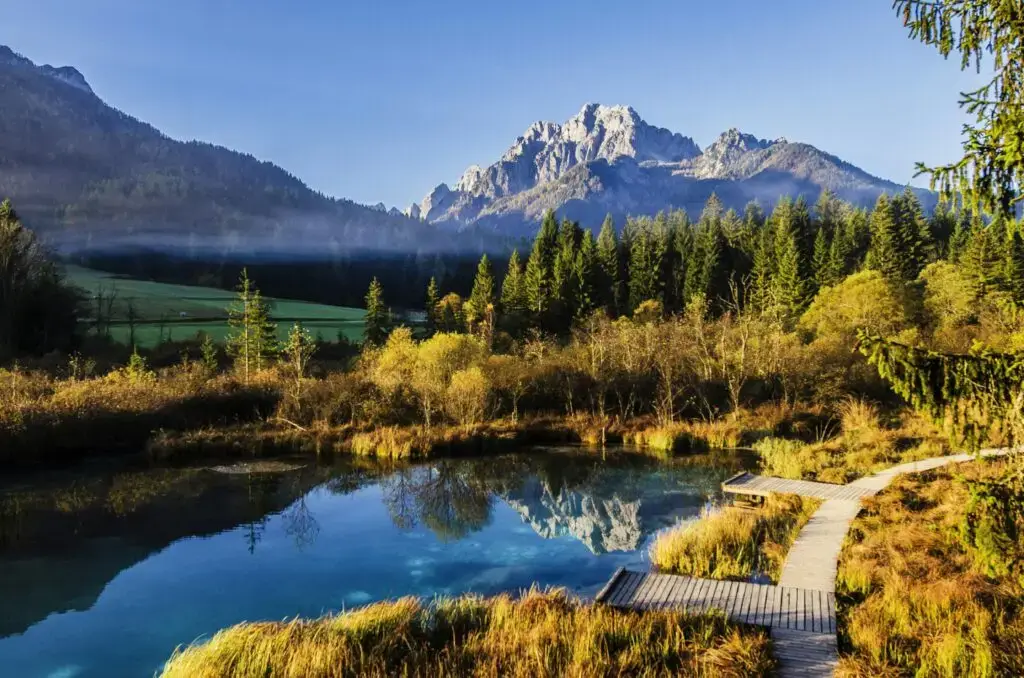
Slovenia is one of Europe’s most enchanting surprises — a small green heart tucked between Italy, Austria, Croatia, and Hungary, where the Alps descend into wine valleys, rivers gleam turquoise, and medieval towns cling to riversides like postcards come to life. For decades, the country remained relatively quiet on the global tourism map. Yet those who ventured here returned with glowing stories: crystal-clear lakes, forests that seem to breathe, caves carved like cathedrals beneath the earth, and a warmth among people that feels genuine and unhurried.
When we visited Slovenia, we expected beauty — Lake Bled appears everywhere online — but we did not expect such variety, intimacy, and serenity. One moment, we were walking through the crisp mountain air of the Julian Alps; the next, strolling Ljubljana’s pastel riverbanks with coffee in hand; then descending into the subterranean wonderland of Postojna Cave, watching stalactites drip slowly over thousands of years. We were struck by how effortless travel felt here: distances are short, cities are safe, nature is never far away, and even the most popular places retain a quiet harmony.
Slovenia felt like a place that values balance. The country protects its landscapes carefully; nearly 60% is forested, and regions are peppered with eco-villages, sustainable farms, and protected parks. Cities are lively yet gentle, blending modern culture with medieval roots. Traditions survive not because they are put on display for tourists, but because locals live them genuinely — beekeeping, winemaking, mountain hiking, holiday festivals, and wooden-boat rowing across still alpine lakes.
This guide explores Slovenia’s geography, history, cities, lakes, caves, Alpine towns, coastal corners, wine culture, cuisine, and personal impressions from our visit. While compact enough to explore in a week, Slovenia rewards slow travel — wandering forest trails, sipping wine in stone cellars, swimming in green lakes, watching sunsets from castle ramparts, and spending evenings along Ljubljana’s river terraces listening to music drift on warm air.
Before arriving, Slovenia was a country we admired from photos; after leaving, it was a place we carried in memory — still, calm, and deeply charming.
Geography & First Impressions
Slovenia’s landscape feels like a condensed dream of Europe: Alpine peaks in the northwest, rolling vineyards in the east, deep forests in the center, karst plateaus in the southwest, and a tiny but radiant coastline on the Adriatic Sea. What astonished us most was how quickly the scenery changed. Driving from the capital to the mountains took less than an hour; the coast, too, was within easy reach. Nothing felt rushed — everything felt accessible, harmonious, and thoughtfully preserved.
In the northwest rise the Julian Alps, dominated by Mount Triglav — the symbolic centerpiece of the Slovenian identity. We were lucky enough to see its pyramidal summit from a distance. Even from afar, you sense its cultural weight — Slovenes often say every citizen should climb Triglav at least once. Around these summits lie lakes, alpine rivers, waterfalls, spruce forests, and fairytale villages.
Forests cover most of the country; walking beneath tall beech and pine trees felt peaceful, grounding. Wildlife still thrives — brown bears roam in some areas, and rivers sparkle with trout. The air is crisp and clean; the natural world feels close, respected, and alive.
To the south lies the karst region, where limestone forms caves, gorges, and underground rivers. We visited Postojna Cave — a surreal underworld of dramatic halls, pillars, and rivers. It was unlike anything we had seen before — both vast and mysterious.
The coast is a short stretch but full of Mediterranean charm. Terracotta roofs, fishing boats, Venetian architecture, citrus trees, sea breezes — Slovenia’s maritime corner feels worlds away from the Alps, yet both landscapes coexist within the same small borders. Piran especially felt romantic: narrow lanes, stone houses, salty air, and the Adriatic fading into gold at sunset.
Green valleys dominate the central and eastern regions — vineyards, hilltop villages, castles, and thermal springs. We found the countryside gentle and welcoming, shaped by farmers, family-run wineries, and old traditions. The wine region felt slower than the Alps — more intimate, warm, and quietly proud.
Slovenia’s geography reveals layers — dramatic and soft, wild and cultivated — all within reach, all under one peaceful sky.
Historical Overview
Slovenia’s history is long and textured. Though small, it has been shaped by Celts, Romans, Slavs, Habsburg rulers, traders, pastoralists, and priests. Each left marks on architecture, cuisine, language, and customs.
In ancient times, Celtic tribes settled these valleys before Roman armies conquered the region. The Romans built roads, towns, and trade networks; remnants still appear in cities like Ptuj — the oldest town in Slovenia. Walking through Ptuj felt like stepping across centuries — medieval rooftops, Roman stones, quiet cobbled streets.
By the 6th century, Slavic tribes arrived, forming communities across the territory. Over time, these ancestors developed a distinct cultural identity. In the Middle Ages, castles spread across hilltops — defensive outposts guarding Germanic, Italian, and Hungarian borders. Many of these castles remain, weathered but grand, watching over modern life from ancient walls.
For nearly a millennium, Slovenia was part of the Habsburg Empire. This influence shaped architecture, cuisine, education, religion, and social life. It also gave Slovenians a connection to Central Europe — Vienna, Prague, and Budapest all nearby, cultural cousins sharing music, manners, and artistic traditions.
After World War I, Slovenia joined with Croats and Serbs, forming the Kingdom of Yugoslavia. After World War II, it became one of the republics of socialist Yugoslavia — distinct from much of the Eastern Bloc because it remained more liberal, economically developed, and connected to the West. This period shaped modern Slovenian identity: hard-working, independent, outward-looking, and balanced between Central Europe and the Balkans.
In 1991, Slovenia declared independence — a short conflict followed, but the country emerged quickly as a stable state. Since then, Slovenia has developed a strong economy, modern infrastructure, and one of Europe’s highest qualities of life.
While walking through Ljubljana’s old town — pastel façades, elegant bridges, baroque churches, art nouveau touches — we felt history layered everywhere. Slovenia does not display its past boastfully; rather, it carries it gently, allowing old and new to coexist gracefully.
Ljubljana — A Green, Gentle Capital
Ljubljana surprised us. We expected another pretty European city, but what we found was a calm, intimate capital where life moves at an easy rhythm. There are no noisy avenues, no overwhelming crowds. The river runs softly through the old town; willow trees lean toward the water; bridges — each with its own story — link both banks like threads of history and imagination.
The Ljubljana Castle sits above the city. Instead of intimidating, it felt welcoming — a protector rather than a ruler. We climbed up a shaded path, passing brick walls and leafy trees, and reached viewpoints overlooking red rooftops, the river, and distant hills. The castle was a place to breathe, look outward, and appreciate how everything in Ljubljana feels pleasantly human-sized.
Along the riverbanks, cafés overflowed with people talking, reading, laughing. Students, families, travelers, grandparents — everyone felt at home in the same public spaces. We walked along cobbled lanes, crossing Plečnik’s famous bridges — especially the Triple Bridge, one of the city’s most elegant creations. Plečnik, Ljubljana’s beloved architect, blended classical harmony with local spirit, reshaping plazas, colonnades, and markets into a masterpiece of human scale.
Evenings by the river were magical. Lantern light shimmered on the water; music drifted from cafés; and church towers glowed beneath the night sky. Ljubljaners seemed to savor life rather than rush through it — a lesson we brought home with us.
Lake Bled — Beauty You Dream About
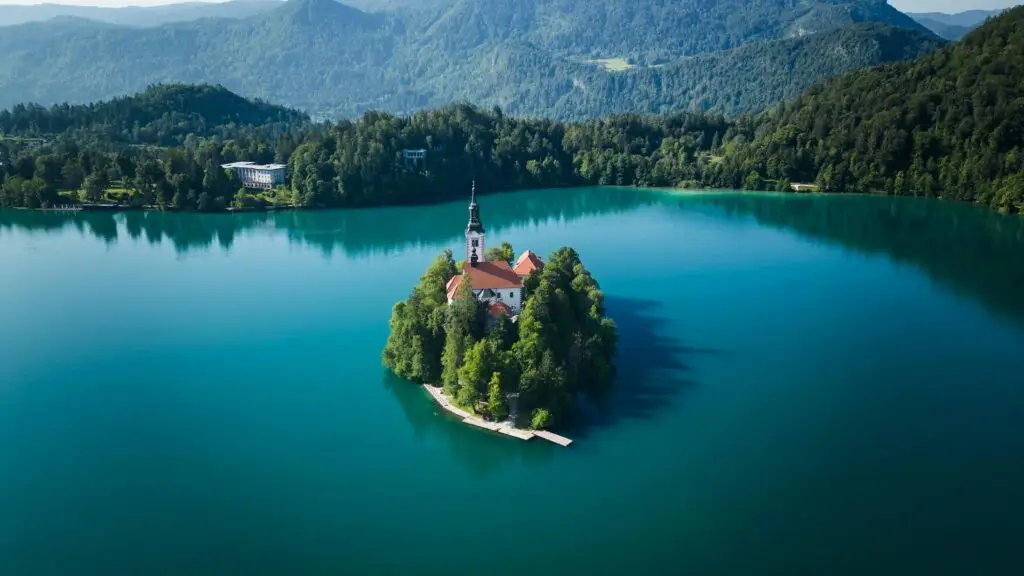
If there is one image that represents Slovenia to the world, it is Lake Bled — deep-green waters, a tiny island crowned by a church, and a medieval castle perched high on a cliff. We had seen countless photos before we arrived, but nothing prepared us for the real moment. The water shimmered like glass; clouds drifted lazily across the Julian Alps; and the bell at the island church rang faintly, echoing across the lake.
We walked the full loop around Bled — a peaceful, gentle trail skirting the shoreline. Every angle offered a new composition: swans drifting near the reeds, mountains reflected in water, and small wooden boats approaching the island. The pace here was slow; nobody seemed in a hurry. Cyclists rolled past lazily; couples sat under trees watching the lake shift colors.
Visiting Bled Island felt timeless. The wooden pletna boats rowed us across with quiet rhythm. The island is tiny — just a handful of steps to the church — but symbolic and beautiful. We rang the wishing bell like many visitors do. Even if you’re not superstitious, it feels sweet to add your hope to the echoes.
High above, Bled Castle watches like a guardian. We walked up a winding path, catching glimpses of the valley below until suddenly the lake opened beneath us like a giant mirror. The castle courtyard held fragments of medieval life — stone walls, wooden balconies, old scripts — but the real magic was outside along the ramparts, where wind and light danced across the lake.
One of our favorite moments came early one morning. We woke before sunrise and walked to a small viewpoint near the western shore. Mist rose from the water; the island hovered like a vision; and the first sunlight touched the bell tower in soft gold. It was quiet, still, almost sacred — a moment when time felt suspended.
Bled is popular, yes. But even with other travelers, it never felt noisy or chaotic. The lake carries a sense of peace; the mountains and forests shape a calm horizon. You feel, quietly, that Bled is a place to rest.
Lake Bohinj — Wilder, Deeper, More Mysterious
If Bled is dreamy elegance, Bohinj is purity. Just a short drive deeper into the Alps, we reached a larger, wilder lake — one that feels untouched, framed by towering peaks and dense forests.
The moment we arrived, we felt a shift. Bohinj was silent in a way that felt profound — no major boat traffic, no ring of cafés pressed against the water. It was just the lake, the mountains, the sky, and the wind. Here, reflection takes on new meaning — the water is so clear and calm that the world above double-paints itself onto the surface.
We swam — cold, refreshing, unforgettable. The water felt like it came straight from glaciers, pure as anything we’ve ever felt. The river feeding the lake, the Sava Bohinjka, flowed from hidden valleys; its stones were polished smooth by centuries of flow.
Small villages dot the shoreline — stone houses, tiny chapels, hay barns, and gardens filled with beans, apples, herbs. Life felt unhurried.
Near the lake stands the Church of St. John the Baptist, its frescoes faded but luminous. A wooden bridge crosses the river, and from this spot, the entire lake stretches out like a jewel framed by forest.
From Bohinj, trails lead into Triglav National Park. We hiked a forested path toward Savica Waterfall — a tall, white cascade rushing from a cleft in the rock. The route was shaded by moss and beech leaves; the sound of water grew louder with each step. At the end, the waterfall poured into an emerald pool — wild, cool, alive.
Bohinj gave us something priceless: a feeling of stillness so complete that even our thoughts slowed, matching the rhythm of the mountains.
Triglav National Park — The Heart of Slovenia
No place defines Slovenia like Triglav National Park. Named after Mount Triglav, the nation’s highest peak, the park protects an incredible mosaic of forests, alpine lakes, canyons, meadows, and peaks shaped by glaciers long ago.
Even if you only explore its lower valleys, you feel the spirit of Triglav — wild, powerful, sacred. Slovenians carry a deep bond with this mountain. For many, climbing Triglav is a rite of passage. We didn’t summit, but hearing locals speak about it revealed its importance — climbing is not about conquering nature but understanding it, respecting it, becoming part of its story.
Hiking in the park offered us some of the most peaceful hours of our journey. Trails followed turquoise rivers, passed stone farmhouses, crossed wooden bridges, and climbed into mountain meadows where cows grazed beneath towering cliffs. The soundscape shifted constantly — from birdsong to the roar of waterfalls to silence so complete that it felt like a meditation.
We stopped often, not because we were tired, but because the scenery demanded pause. Wildflowers painted the ground; ridges pierced the sky; valleys ran deep into shadow. Everything felt elemental.
Villages around the park, like Kranjska Gora, blend mountain tradition with outdoor culture. Timber houses with steep roofs line streets where hikers and skiers mingle. We sat at cafés drinking mountain tea, watching clouds drift over jagged summits.
Vintgar Gorge — A Walk Through Living Water
Just northeast of Bled lies Vintgar Gorge, a narrow passage carved by the Radovna River. We walked on wooden boardwalks suspended above jade-colored water. Rapids churned beneath us; the gorge walls rose dramatically, cloaked in moss and ferns.
The path felt intimate — close enough to touch the stone. Waterfalls burst through narrow splits, misting the air. Sunlight filtered between cliffs, catching droplets mid-air like tiny stars.
Reaching the end, we found Šum Waterfall — the river’s final leap into a wide pool. The entire gorge felt alive — not just scenery but a force moving purposefully through stone.
What We Thought
Vintgar Gorge captivated us. It wasn’t long, but every step felt full of presence — water, rock, green light, sound. It’s an easy walk, yet emotionally deep.
Kranjska Gora — Mountain Village at the Edge of Peaks
Kranjska Gora sits at the foot of the Julian Alps, a perfect village framed by dramatic mountains. We found it charming — quiet streets, alpine chalets, flower boxes, and peaks rising like guardians. The setting is one of the most beautiful in the country.
From here, we visited Jasna Lake, a small alpine lake with water so clear it reflected mountains perfectly. We dipped our hands — freezing. A bronze statue of a chamois stands on a rock, like a sentinel at the gateway to the higher mountains.
Kranjska Gora felt like a place where outdoor life is simply daily life. Families hiked with children; cyclists followed forest roads; climbers organized gear. The culture isn’t performative — it’s natural, part of everyday rhythms.
Evenings were peaceful. People gathered at small restaurants, sharing soups, grilled trout, dumplings, and wine. The stars above seemed close, bright, unpolluted.
What We Thought
Kranjska Gora felt honest. It didn’t try to impress; it just existed quietly, beautifully.
The Soča Valley — Turquoise, Wild, and Unforgettable
If we had to choose one place in Slovenia that moved us the most, it would be the Soča Valley. It is not only scenic — it feels enchanted, as though nature wanted to paint perfection into one long river corridor.
The Soča River is unlike any water we’d seen. Its color shifts from pale turquoise to deep emerald, almost glowing against the stones. Standing beside it, you feel something ancient. The clarity is astonishing — pebbles rest on the riverbed like coins, visible through meters of water. Sometimes the river flows gentle and glassy; other times, it churns through gorges, white and fierce.
We began in Bovec, a mountain town tucked between high ridges. The town blends outdoor energy with rural calm; people here live close to the elements. At sunrise, mist pooled low between the peaks; cows grazed in fields; and the river murmured quietly. Bovec felt like an invitation — to hike, to breathe, to be present.
We followed paths along the Soča, sometimes descending wooden steps to sit at small beaches of smooth stones. Even in shadow, the river seemed illuminated from within. Bridges hung over calm green pools; narrow trails wound beside deep blue channels. Everywhere we stopped, we stood silent, hypnotized by this river.
Further south, the valley widens. Near Kobarid, we visited the Kozjak Waterfall — hidden at the end of a shaded gorge. The path led along a riverbank where moss covered everything. At the end, inside a round stone chamber, water plunged from above into a perfect blue pool. Light filtered through the opening, illuminating the waterfall like a stage.
Above the valley, trails climbed into forested slopes, revealing aerial views of the Soča’s serpentine movement. We sat beneath beech trees, eating bread and local cheese, watching the river thread through the valley far below.
The valley carries more than beauty — it holds memory. World War I battles raged here, especially along the Soča Front. Today, the land is peaceful again, but the stories linger. Museums and old fortifications remind visitors that these turquoise waters once ran beside unimaginable hardship.
What We Thought
The Soča Valley felt like a poem — wild, luminous, quiet, and overwhelming in its beauty. It is the Slovenia we still dream about.
Tolmin Gorges — A Hidden Dialogue of Water and Stone
Not far from the Soča River lie the Tolmin Gorges, another world of water and rock. A steep path took us down into the canyon, where air cooled instantly and the voices of rivers grew louder. Tall walls rose on either side, narrow and moss-covered, while wooden paths clung to stone faces.
The water was icy blue. At the lowest point, two rivers met, swirling around a boulder. Sunlight barely reached the floor; it flickered in brief flashes, as though dancing.
There is a stillness here — even though the river moves quickly, the gorge feels protected and ancient. We stayed longer than planned, listening to water echo beneath high stone ribs.
What We Thought
Tolmin felt intimate, like a secret. Where Soča felt expansive and heroic, Tolmin felt close, whispered, personal.
Kobarid — Quiet Town with Deep Roots
Kobarid sits quietly among green slopes. Its streets are peaceful, lined with simple houses and balconies spilling flowers. We wandered, unhurried. The town holds memories — especially of World War I — captured in its museum. History here is not presented to shock; it is shared to remember, to honor, to understand.
At sunset, the valley turned gold. Church towers glowed; silence settled; and mountains framed the town like guardians.
Piran — Slovenia Meets the Adriatic
Leaving the Alps behind, we drove southwest toward the narrow coastline, where Slovenia meets the Adriatic Sea. The landscape changed suddenly — vineyards replaced pine forests, hills softened, and the air grew warmer.
Then we arrived in Piran — a medieval Venetian town curling around a crescent harbor. Red roofs spilled toward the sea, and narrow stone lanes wound through houses the color of honey and terracotta.
Piran felt like stepping into a Mediterranean novel — laundry hanging across alleys, cats sunbathing on walls, fishing boats rocking gently, and church bells echoing across slate-tiled rooftops. The sea shimmered, calm and inviting.
We climbed to the old city walls, where the view opened across all of Piran — a mosaic of rooftops against a canvas of deep blue. The sunset here was unforgettable. The sky turned apricot; the sea held its breath; and the town glowed as though lit from within.
Evenings on the promenade were gentle. People strolled slowly; children ran to and from the water; musicians played; and the smell of the sea mixed with citrus and basil. Waves slapped against the rocks; stars appeared one by one.
What We Thought
Piran charmed us deeply. It felt peaceful, poetic, quietly romantic — a place where life unfolds slowly, with elegance and joy.
Portorož, Izola & the Coastline
Not far from Piran lies Portorož, a modern seaside resort. Beaches, hotels, and palm-lined promenades gave it a playful, summery atmosphere. Izola, by contrast, was smaller and felt more local — fishing boats, pastel houses, a sense of everyday rhythm.
Though Slovenia’s coastline is small — just 46 km — it felt full of life. The sea, the hills, the olive groves, and the vineyards form a tapestry that feels both Mediterranean and uniquely Slovenian.
Postojna — A World Beneath the World
Heading inland again, we reached the karst region — a landscape shaped by limestone, time, and water. Beneath its surface lies one of Europe’s most extraordinary caves: Postojna.
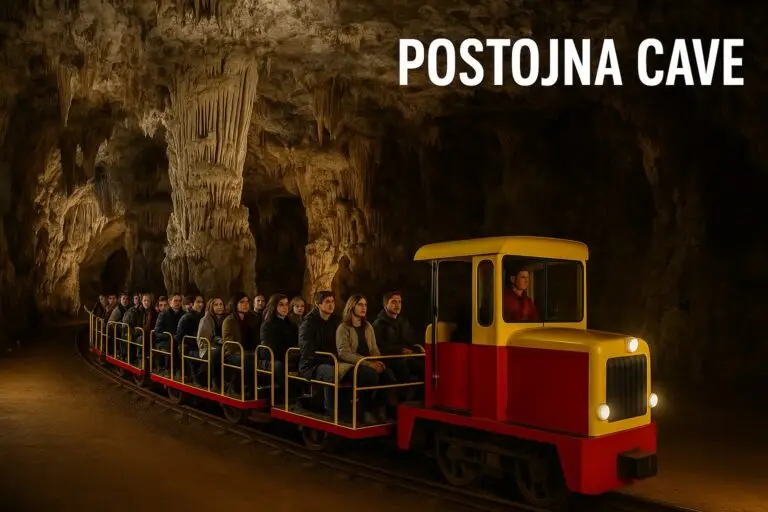
We joined the small train that carries visitors into the cave. As it moved, we entered a cathedral of stone — columns, stalactites, stalagmites, and formations that resembled organ pipes, curtains, towers. Some looked smooth and flowing; others sharp and angular. It felt like a frozen waterfall made of rock.
Deeper inside, the cave opened into vast halls where ceiling and floor seemed endless. Water droplets echoed from high above. The tour was quiet; people whispered instinctively, humbled by the scale.
We learned that the cave system stretches for kilometers, shaped over millions of years. Time behaves differently here — slow, patient, permanent.
What We Thought
Postojna felt like a sacred place — a reminder that the earth holds mysteries we rarely see. It was somewhere ancient, silent, and humbling.
Watch on YouTube: Postojna Cave, Slovenia
Škocjan Caves — The Underground Canyon
Nearby lie the Škocjan Caves, another spectacular karst wonder. Unlike Postojna, Škocjan felt wilder, more dramatic. The cave is essentially an underground canyon carved by the Reka River. We walked along a narrow pathway high above the river, suspended between stone walls. The roar was powerful; the scale immense. It felt as though we had entered the underworld.
The cavern’s vastness stunned us. Light was minimal; humidity hung thick; the river churned in darkness. It was thrilling, mysterious, and unforgettable.
What We Thought
If Postojna was graceful, Škocjan was elemental — raw nature at work.
Vipava Valley & Goriška Brda — Slovenia’s Wine Country
East of the coast unfold Slovenia’s wine valleys — gentle, sun-washed, and dotted with stone farmhouses. Rows of vines climb hills; cypress trees silhouette ridges; villages sit on hilltops like quiet crowns.
We drove through Vipava Valley, where bridges cross slow rivers, and orchards spread across the countryside. Wine cellars, many family-run, offered tastings of local varieties. Villages here are small — narrow lanes, stone walls, gardens fragrant with herbs. People greeted us with calm smiles.
Further west, Goriška Brda felt almost Italian — terracotta roofs, warm sun, rolling vineyards stretching to the horizon. Hilltop churches rang their bells; villages clustered protectively around small squares. Everything felt generous — landscapes, light, hospitality, silence.
What We Thought
The wine country felt like a secret — quiet, welcoming, restorativ
Slovenian Countryside — Slow, Gentle, and Close to Nature
Outside the cities and major sights, Slovenia reveals its deepest charm. The countryside is a quiet world of hay meadows, wooden barns, vineyards, and orchards. Roads wander through valleys where houses cluster around chapels, and roosters echo across hills in the morning. Many families still grow a portion of their own food — apples, beans, potatoes, herbs, grapes — with gardens blooming behind stone walls. We felt an immediate peace here, as if life still followed the rhythm of seasons rather than schedules.
We stayed one night in a rural farmhouse near the Vipava Valley. Our host woke before sunrise to tend to the vineyard. He served us homemade jam, bread he had baked that morning, and cheese from a neighboring farm. Everything tasted vivid, full of the valley’s soul. He explained that his grandfather had lived in the same house and that the family had always worked the land. Listening to him, we understood that Slovenia’s strength comes from roots — from generations who have passed down land, knowledge, and gratitude.
At dusk, fireflies appeared in the tall grass; the hills took on purple shadows; and distant church bells drifted through the quiet. We sat outside long after dark, hearing only crickets and the occasional dog, wrapped in the softest stillness. This was Slovenia at its most intimate — not a postcard, not a spectacle — just pure, simple beauty.
In eastern Slovenia, the land becomes more open — fields of wheat, orchards of apples and plums, and quiet villages with wide, tree-lined streets. We noticed how connected people are to nature; many know the forest paths by heart and collect herbs, berries, and mushrooms at specific times of year. These activities are not hobbies — they are part of cultural identity. The countryside is not something distant; it is part of daily life.
Everything felt slower here — not sleepy, just unhurried. People walked rather than rushed; conversations lingered; food was eaten with gratitude. We left the countryside with full hearts, feeling that Slovenia’s rural soul is one of its greatest treasures.
Maribor — Wine, River, and Rolling Hills
Maribor, Slovenia’s second-largest city, lies in the gentle embrace of wine hills along the Drava River. Though smaller than Ljubljana, Maribor has its own quiet charm — elegant squares, riverside promenades, and a strong connection to vineyards just outside the city.
We arrived late afternoon. The sunlight slanted across terracotta roofs, and the river glowed gold. Locals sat at terraces by the water, drinking wine and talking calmly. The city felt open, friendly, and pleasantly unpretentious.
Maribor is famous for having the oldest grapevine in the world, still growing on the riverbank — centuries old, yet still bearing fruit. Seeing it felt symbolic: Slovenia’s wine tradition is ancient, deep, and continuous. This vine has survived wars, empires, and changing borders — yet remains alive, quietly making grapes.
Behind the city rise the hills of Pohorje. We took an afternoon walk up a gentle path; forests opened into meadows; the town shrank below; and vineyards climbed across slopes like green stitching. Maribor struck us as a city where nature is never distant — where wine and forest shape daily life.
Evenings were calm. The old town buzzed softly; music floated from cafés; families strolled the river. There was no hurry, just an atmosphere of quiet contentment.
What We Thought
Maribor felt grounded — a city that welcomes you like a friend rather than trying to impress. We left refreshed, grateful for its simplicity.
Ptuj — Slovenia’s Oldest Town
Ptuj is ancient. Walking its cobbled streets feels like turning pages of a long and varied history. Roman stones lie beneath medieval houses; a castle crowns the hill; and the Drava River curves below like a protective ribbon.
We climbed to Ptuj Castle, where views stretched across red roofs and soft countryside. Inside, halls preserved medieval tools, musical instruments, and armor — artifacts that whispered stories of the people who lived and played here centuries ago. The castle felt lived-in, not sterile.
Back in town, we wandered quiet streets painted in warm colors — yellow, rust, pale rose. Flower boxes lined windows; cats slept on steps; church towers rang occasionally. Ptuj felt small yet full — a town that carries its age gently.
Traditions remain strong here. Each winter, Ptuj hosts Kurentovanje, a colourful festival where Kurenti — costumed figures wearing sheepskin, bells, and masks — parade to chase winter away. Even though we visited outside winter, locals spoke about it proudly; their eyes brightened as they described how the town transforms.
What We Thought
Ptuj felt like a secret — a living museum wrapped in peace. We loved its quiet soul.
Slovenian Food — Honest, Seasonal, Rooted in Place
Slovenian cuisine reflects its landscapes: Alpine purity, Mediterranean warmth, and Central European hearth. Every region has its specialties, but everywhere we found food prepared with care, simplicity, and love.
Meals often begin with soups — clear beef broth with noodles, mushroom soup, or hearty stews. Mushrooms, especially porcini, play a large role in Slovenian cooking; many families collect them in the forests.
In the Alps, dishes are rich and comforting — dumplings, roast meats, and cheeses. Žganci (buckwheat spoonbread) with milk or gravy reminded us of mountain tradition. Tolminc cheese from the Soča Valley and Bovški cheese from near Triglav tasted like distilled alpine air — earthy, complex, unforgettable.
Along the coast, food becomes lighter — fresh seafood, olive oil, herbs, and pasta influenced by Venetian history. We tasted black risotto by the sea; the flavors were simple yet full of depth — brine, citrus, herbs.
Bread is always excellent — crusty, warm, often baked locally. And honey plays an important cultural role: Slovenia is famous for beekeeping. We tasted floral honey that felt almost perfumed, unlike any we’d tried before.
Then there is dessert — potica, a rolled pastry filled with walnuts, poppy seeds, or tarragon. It is festive, comforting, and rich with memory.
Wine accompanied many of our meals — not showy, but expressive. The reds felt earthy; the whites, crisp and fragrant. Every bottle told a story of soil and tradition.
What We Thought
Slovenian food felt like home — nourishing, sincere, shaped by land and season. It is not elaborate; it is honest, comforting, and deeply human.
Lifestyle — Slow, Smiling, Outdoors
One of the things that impressed us most was Slovenia’s lifestyle. People here seem to understand balance — between work and rest, between tradition and innovation, between city and nature. Life does not feel rushed. Coffee breaks stretch longer; walks by the river are daily rituals; hiking is not something you “make time for” — it is simply part of life.
We saw people of all ages walking forest paths, swimming in lakes, cycling, skiing, gardening. There is a vitality here that feels natural, not forced. Even in Ljubljana, the rhythm felt calm — no one hurried; smiles came easily.
Slovenians also seem deeply connected to their heritage — old customs, farming, craftsmanship. But this connection does not prevent modern life; rather, it balances it. Old and new coexist gracefully.
What We Thought
Slovenia gave us a new understanding of slow living — not laziness, but intention. Doing things with care, joy, and awareness.
Safety & Atmosphere
Slovenia felt incredibly safe. We walked at night through cities and villages without worry. People were kind, helpful, and respectful. There was no sense of hostility or tension — only calm.
The general atmosphere was peaceful. Even popular places felt orderly and gentle, never chaotic. The landscape itself feels protective — mountains, forests, and rivers create a natural sense of harmony.
We never felt rushed. We never felt watched. We simply felt welcomed.
What We Thought
Slovenia radiates peace — it is one of the most comfortable countries we’ve traveled.
Personal Reflections — What Slovenia Meant to Us
When we look back on our journey through Slovenia, what returns most vividly is not just the scenery, but the feeling — an emotional imprint of calm, clarity, and warmth. It is rare to find a country that welcomes you so quietly and yet touches you so deeply. Slovenia is not a place that tries to impress through scale or spectacle; instead, it invites you to slow your breath, notice the small details, and meet nature with humility.
Every day felt balanced. In the mornings, soft light fell over mountains or lakes; afternoons brought wandering through villages or forests; evenings ended by the river with conversation drifting into dusk. The rhythm was neither fast nor forced. It was simply life in its most natural pace.
We noticed how people treated each other — with gentleness, patience, and a sense of shared space. There was no rush, no loudness. When you speak with locals, they look you in the eye, listen fully, and answer thoughtfully. Many people seemed genuinely content — not chasing perfection but living fully in each small moment.
It was during a quiet evening in Bohinj that Slovenia settled permanently in our hearts. The lake was still. Mountains rose like guardians, their silhouettes reflected in dark water. We sat on the shore under a sky washed with stars. Silence wrapped us gently. No cars, no chatter — only the hush of water against stones. Nothing happened, yet everything felt meaningful. That was Slovenia.
Why Slovenia Stands Out
Slovenia’s magic lies in contrast fused into harmony:
You can stand on a mountain ridge in the morning, share wine in a valley by afternoon, and watch the sun set into the Adriatic Sea that evening. Few countries offer such diversity in such a small space.
Yet Slovenia is not about “checking boxes.” It is about experience. Instead of grand monuments, it offers small wonders: forest paths, berry bushes, wooden chapels, stone bridges, hay barns glowing gold in twilight. These ordinary things become extraordinary in their simplicity.
Where some destinations dazzle with noise and crowds, Slovenia whispers — and somehow that whisper becomes unforgettable.
Why We Want to Return
We left Slovenia with the promise that we would return. There was unfinished business — not because we missed places, but because there is more to feel.
We want to climb deeper into Triglav National Park, waking early to catch the first light over limestone peaks. We want to spend more time in the Soča Valley, walking along the river and feeling its turquoise spirit draw us inward. We want to revisit Piran, sitting by the sea as the colors fade into night.
We want to stay again in small farmhouses, listening to stories of the land told by people who belong to it. We want to return to Ljubljana’s riverside cafés and watch the world float by slowly. We want to drink more mountain tea, taste more honey, eat more potica at long wooden tables beneath chestnut trees.
And more than anything, we want to feel that peace again — the peace that Slovenia gave us so generously.
Slovenia in Words & Memory
If we had to describe Slovenia in just a few words, we would choose:
Green. Gentle. Honest. Magical. Peaceful.
Slovenia is green — forests everywhere, clean rivers, breathable air.
It is gentle — people speak softly, landscapes flow smoothly.
It is honest — nothing feels exaggerated; life is simple but rich.
It is magical — beauty appears around every corner.
And it is peaceful — a calm that enters you slowly and never quite leaves.
Slovenia taught us that beauty does not need to shout. It can rest quietly in a valley, shimmer in a river, or glow beneath a castle wall. It exists in small things: a wooden boat on the water, a bowl of soup after a hike, a smile from a stranger.
We remember sitting in the Soča Valley one afternoon. The river was moving quietly. The mountains rose like storybook illustrations. Leaves rustled softly. And for a moment, everything felt perfectly aligned — nature, time, breath, and thought. Slovenia gave us that alignment.
Emotional Conclusion
Travel changes us. Sometimes it overwhelms us; sometimes it challenges us; and sometimes, if we are very lucky, it heals us.
Slovenia, for us, was healing.
It reminded us that life does not need to be loud or complicated to be full. It showed us that silence can be powerful; that nature is not something to conquer but something to listen to; and that beauty is often found not in grandeur but in harmony.
Slovenia is a country of soul more than spectacle. It is not a place you “visit and finish.” It is a place you carry with you — in the quiet corners of your mind, in the calmness of your breath, in the memory of turquoise rivers and alpine air.
When we think of Slovenia, we think of still mornings by the water, slow walks across wooden bridges, sunlight slanting through forests, and laughter shared over simple meals. We think of a land that welcomed us not as tourists but as companions.
Slovenia is not a postcard — it is a feeling.
And that feeling, once found, remains.
 Related Articles
- Kakslauttanen Arctic Resort
- Top 10 Most Unique Places to Stay in Europe
- 10 Incredible Castles Around the World
Grid
Postojna Cave, Slovenia – Europe’s Most Impressive Underground World
Best Winter Resorts in Europe