🇮🇱 – COMPLETE TRAVEL GUIDE
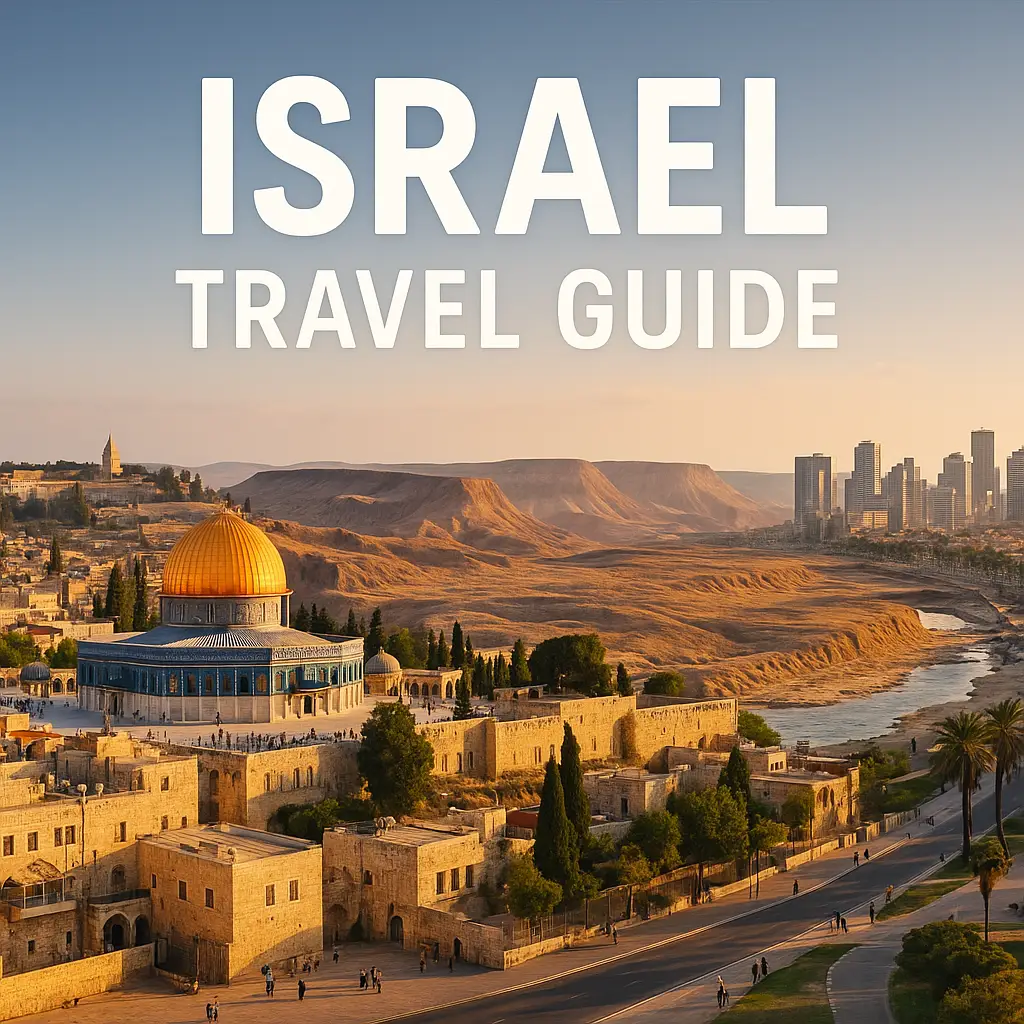
Israel: A Land of Ancient Stories, Sacred Landscapes and Vibrant Modern Life
Israel is one of the world’s most fascinating destinations — a land where ancient civilizations, spiritual traditions, desert landscapes, Mediterranean beaches and cutting-edge modern cities coexist in a way that feels almost surreal. Every corner of the country carries layers of history. Every path leads to a story thousands of years old. And yet, life feels young, energetic and full of creativity.
Located at the crossroads of Asia, Africa and Europe, Israel has served as a meeting point for cultures, religions and travelers for millennia. It is home to some of the most sacred places on earth, including Jerusalem’s Old City, the Sea of Galilee, Bethlehem, Nazareth and the Mount of Olives. But Israel is also a country of innovation, art, nightlife, food culture and natural beauty — from the Mediterranean coast and green hills of the north to the sweeping deserts of the Negev.
What makes Israel so captivating is its contrast.
A traveler can begin the morning exploring archaeological ruins, spend the afternoon floating in the Dead Sea, and enjoy dinner at a world-class modern restaurant in Tel Aviv. One day can be filled with desert silence; the next with city life and cultural festivals. Israel holds both ancient and modern identities with equal strength, creating a destination unlike anywhere else.
Despite its political complexity, travelers consistently describe Israel as warm, welcoming, eye-opening and unforgettable. Its mix of nature, spirituality, history and dynamic lifestyle creates a powerful emotional impact — the kind that stays with you long after you leave.
Jerusalem – A City Sacred to Millions and Filled With Timeless Atmosphere
Jerusalem is one of the most extraordinary cities on the planet — a place where spirituality, history and human emotion coexist at unbelievable depth. The city is perched high in the Judean Hills, its limestone buildings glowing gold during sunrise and sunset, giving Jerusalem the poetic nickname “The Golden City.”
Walking through Jerusalem’s Old City is like stepping through thousands of years of human history. The narrow stone alleys echo with prayer, market chatter, footsteps and bells. Sacred sites stand side by side:
The Western Wall, where worshippers place written prayers in ancient stones.
The Church of the Holy Sepulchre, believed to be the site of Jesus’ crucifixion and resurrection.
The Dome of the Rock, rising with its iconic golden dome above the Temple Mount.
These places are emotionally powerful, even for travelers without religious backgrounds. The blend of devotion, atmosphere and history makes Jerusalem one of the most meaningful destinations in the world.
Beyond the Old City, Jerusalem blends modern life with deep tradition.
Mahane Yehuda Market buzzes with spices, pastries, fresh produce and lively cafés.
The German Colony offers relaxed streets, boutique shops and historic architecture.
Museums like Yad Vashem and the Israel Museum offer profound cultural experiences.
Jerusalem is not a calm city — it is intense, passionate and deeply alive. Its spiritual energy, cultural richness and historical weight create a travel experience that feels both grounding and transformative.
Tel Aviv – Mediterranean Life, Creativity and Modern Energy
Just an hour from Jerusalem lies a completely different world: Tel Aviv, a modern, buzzing, youthful city filled with innovation, art, nightlife, beaches and Mediterranean charm. If Jerusalem is ancient and spiritual, Tel Aviv is modern and free-spirited.
The city stretches along a long coastline of golden sand and turquoise sea. Beaches like Gordon, Hilton and Frishman are lively and beautiful, filled with surfers, swimmers, volleyball players and people enjoying the sun. The promenade — the Tayelet — becomes a social center at sunset, glowing with warm light and ocean breeze.
Tel Aviv’s heart beats strongest in its neighborhoods:
Neve Tzedek, with its artistic vibe and boutique cafés.
Florentin, colorful with street art and youthful energy.
Sarona, a restored German Templar colony transformed into a stylish urban district.
Rothschild Boulevard, lined with modern bars, lively restaurants and Bauhaus architecture.
The city is also famous for its food scene — a fusion of Middle Eastern, Mediterranean and global influences. Fresh produce, seafood, spices and homemade breads define Tel Aviv’s culinary identity. Dining here feels warm, creative and social.
At night, Tel Aviv transforms. Rooftops fill with music, bars and clubs come alive, and the city glows with a playful, energetic atmosphere. It’s no exaggeration to say Tel Aviv has one of the most exciting nightlife scenes in the world.
Tel Aviv represents modern Israel — progressive, artistic, diverse and constantly evolving.
The Dead Sea – The Lowest Point on Earth and a Natural Wonder
South of Jerusalem lies one of the most extraordinary natural landscapes on Earth: the Dead Sea, the lowest place on the planet at more than 400 meters below sea level. Its water is so salty that floating is effortless — you lie on your back, weightless, surrounded by desert mountains and surreal scenery.
The mineral-rich mud of the Dead Sea is famous worldwide for its therapeutic qualities. Travelers cover themselves in the dark mud, rinse off in the warm water, and feel the desert air dry their skin under deep blue skies.
The surrounding landscape is dramatic, with cliffs, deep canyons and desert plains shifting color throughout the day. Sunrise over the Dead Sea is an unforgettable experience: the light reflecting on the shimmering water creates a peaceful, almost mystical atmosphere.
Nearby attractions like Masada — an ancient fortress perched high on a plateau — add layers of history to the region. Cable cars take visitors to the top, where panoramic views stretch over the Dead Sea and the Judean Desert.
The Dead Sea region is where nature, silence and history blend into a powerful travel experience: healing, peaceful and visually stunning.
The Galilee – Green Hills, Biblical Sites and Lakeside Peace
Northern Israel feels like a different world: green, fertile, calm and filled with peaceful landscapes. The Sea of Galilee, known for its role in Christian tradition, is surrounded by rolling hills, olive groves and small villages. The lake is calm and beautiful, with soft blue water reflecting the surrounding hills.
Towns like Tiberias and Kinneret offer lakeside promenades and warm hospitality. Nearby, important biblical sites like Capernaum, Mount of Beatitudes and the Jordan River attract both pilgrims and curious travelers.
The Galilee region feels gentle and soothing, ideal for scenic drives, local food tasting, farm stays and exploring nature reserves. It is one of the most peaceful and emotional places in Israel.
The Negev Desert – A Land of Silence, Stars and Timeless Geological Beauty
Covering more than half of Israel’s landmass, the Negev Desert is one of the country’s most captivating regions — raw, vast, quiet and filled with natural wonders. Unlike the dunes of Arabia or the shifting sands of the Sahara, the Negev’s beauty lies in its rock formations, deep craters, high plateaus and landscapes shaped by millions of years of wind, rain and tectonic forces.
One of the most extraordinary features of the Negev is the Makhtesh Ramon, a massive erosion crater unlike anything else in the world. Standing at its edge near the town of Mitzpe Ramon feels surreal — the crater extends for miles, its colors changing with the sun, revealing layers of red, yellow, black and purple stone. The silence is profound. Wind moves gently across the rocks, and at night the sky becomes a dome of stars brighter than most places on Earth.
Travelers hike through the geological formations, explore canyons, ride camels with local Bedouin families, or enjoy stargazing sessions guided by experts in one of the world’s darkest sky environments. The desert’s simplicity has a cleansing effect — every sound, color and moment feels magnified.
Bedouin culture remains alive here. Families offer hospitality, traditional meals and stories of desert life passed down for generations. Their tents, woven carpets, strong coffee and quiet smiles give visitors a glimpse of a lifestyle shaped entirely by nature.
The Negev Desert is not barren — it is a living, breathing world of color, silence and deep spiritual calm.
Eilat – Coral Reefs, Red Sea Blues and Sun-Soaked Relaxation
At Israel’s southern tip lies Eilat, a beach resort city where desert mountains meet the crystal-clear waters of the Red Sea. Known for its year-round sunshine and vibrant coral reefs, Eilat feels like a dreamlike escape from the world. Its waters shimmer in shades of deep blue and turquoise, and its beaches offer soft sand backed by dramatic red mountains.
Eilat’s greatest treasure is its marine life. Coral reefs flourish along the coastline, making snorkeling and diving incredible even directly from the beach. The Coral Beach Nature Reserve protects vibrant underwater ecosystems filled with colorful fish, sea turtles and intricate coral structures. Diving in Eilat feels like entering a living underwater painting — bright, calm and full of movement.
Above the water, Eilat’s desert mountains create a spectacular backdrop. The colors shift from bronze to pink as the sun sets behind the hills. The city offers a relaxed yet lively atmosphere, with promenades lined with restaurants, ice-cream stalls, cafés and small shops.
Boat trips, sunset cruises, hiking trails and desert experiences make Eilat a well-rounded destination. Yet its peaceful seaside mornings and golden sunsets remain the highlight — quiet moments when the Red Sea glows like molten glass.
The Red Sea Mountains – A Landscape of Color & Light
The mountains surrounding Eilat offer some of the most dramatic scenery in Israel. Red, purple and copper-colored rock formations rise above desert valleys, meeting the sky in sharp, jagged peaks. Trails snake through narrow canyons, natural arches and panoramic viewpoints.
Hiking here feels like stepping into a painting. The air is dry and warm, carrying the scent of desert wind. Light reflects off the rocks, creating a stunning mosaic of colors. The contrast between these rugged mountains and the tranquil Red Sea below is breathtaking — one of the most unique and beautiful landscape duos in the Middle East.
Haifa – A City of Harmony, Hills and Mediterranean Calm
On the northern coast sits Haifa, a city known for its peaceful coexistence, hillside neighborhoods and sweeping Mediterranean views. Built on the slopes of Mount Carmel, Haifa rises layer by layer, offering panoramic scenes of blue sea, green gardens and elegant architecture.
The city’s most famous landmark is the Bahá’í Gardens, a terraced garden complex that cascades down the hillside in perfect symmetry. The gardens, filled with exotic flowers, palm trees and peaceful walkways, create one of the most beautiful urban views in the world. From the top terrace, the Mediterranean stretches endlessly into the distance, and the city glows below like a mosaic.
Haifa has a gentle, inclusive spirit. Its neighborhoods reflect multicultural harmony, with cafés, restaurants, bookstores and markets representing Jewish, Christian, Muslim and Bahá’í communities living side by side. The atmosphere feels sophisticated yet relaxed, intellectual yet warm.
Beaches such as Bat Galim and Dado Beach offer soft sand, gentle waves and stunning sunsets. The city’s relationship with the sea gives it a breezy, coastal charm.
Haifa is one of Israel’s most peaceful destinations — a mix of natural beauty, cultural complexity and quiet elegance.
Akko (Acre) – Ancient Walls, Stone Portals and Crusader Echoes
North of Haifa lies Akko, one of the oldest continuously inhabited cities in the world. Surrounded by thick stone walls and overlooking the Mediterranean, Akko feels like a living museum of ancient civilizations. The city’s old streets are narrow and atmospheric, lined with bazaars, stone archways, colorful markets and quiet courtyards.
Akko’s heart lies in its Crusader Quarter, an underground world of massive stone halls, vaulted ceilings and fortress chambers. Walking through these medieval rooms feels like traveling back centuries. Above ground, the Ottoman-era walls, mosques, khans and port views add layers of history and charm.
The old port of Akko is picturesque — small boats sway with the waves, seafood stalls serve fresh dishes, and cafés line the water. The scent of the sea mixes with spices from the old market, creating a warm, nostalgic atmosphere.
Akko is both ancient and alive, filled with stories carved into stone and streets that glow under soft Mediterranean sunlight.
Nazareth – A City of Faith, Daily Life and Cultural Warmth
Nazareth, located in Galilee, is one of the world’s most important Christian cities — traditionally known as the hometown of Jesus. But beyond its religious significance, Nazareth is a vibrant, bustling Arab city filled with culture, food, markets and warm community life.
The Basilica of the Annunciation, one of the largest churches in the Middle East, rises dramatically above the city. Its modern architecture, mosaics and peaceful interior invite travelers to reflect and explore. Nearby, the old bazaar winds through narrow streets filled with sounds of vendors, cafés roasting coffee, and small workshops producing handmade goods.
Nazareth is atmospheric and emotionally rich. It blends faith, family traditions, culinary heritage and Middle Eastern hospitality in a way that feels genuine and deeply human.
The Golan Heights – Volcanoes, Valleys and Dramatic Nature
In the far north, the Golan Heights offer landscapes completely different from the rest of Israel: extinct volcanoes, wide plateaus, waterfalls, basalt cliffs and lush valleys. The region feels wild and expansive, with panoramic views of mountains, forests and open sky.
Nature reserves like Banias and Hazbani feature flowing streams, ancient ruins, tree-covered trails and refreshing pools. The air is cooler here, and the scenery greener. Travelers often describe the Golan Heights as Israel’s hidden treasure — peaceful, scenic and perfect for long drives and nature exploration.
Culture in Israel – A Tapestry of Identities, Voices and Stories
Israel is a country of extraordinary cultural richness. Its society is built on layers of history, migration, religion, art and human emotion. People come from dozens of backgrounds — Jewish, Arab, Druze, Bedouin, Circassian, Christian, Muslim, and many others — each contributing their own traditions, languages, music and daily customs.
This mix gives Israel a cultural intensity rarely found elsewhere. Conversations are passionate, hospitality is warm, and expression is everywhere — in dance, poetry, music, literature, festivals and everyday interactions. Israel’s culture feels alive, constantly shifting yet deeply rooted in ancient heritage.
Markets fill with spices, breads, olives, fruit and street food. Families gather for long Shabbat dinners filled with laughter and storytelling. In cities, you hear multiple languages as people move between cafés, synagogues, mosques, churches, music halls and outdoor events. There is a rhythm to Israeli life that is energetic, emotional and expressive.
Culture here is not quiet — it is vibrant, dynamic and woven into daily life.
Religion in Israel – Sacred Traditions and Global Spiritual Significance
Few places in the world hold as much religious meaning as Israel. It is the birthplace or spiritual center of Judaism, Christianity and Islam, making it one of the most important regions on the planet for billions of people.
In Jerusalem alone, the soundscape blends church bells, the Muslim call to prayer and Jewish chanting. Pilgrims walk the Via Dolorosa, worshippers pray at the Western Wall, and visitors from all backgrounds stand in awe before the golden Dome of the Rock.
Outside Jerusalem, spirituality fills the land in more subtle ways:
The Sea of Galilee feels peaceful and reflective.
Nazareth blends modern Arab life with sacred Christian history.
Safed (Tzfat) is a mystical center of Kabbalah, its streets filled with art and symbolism.
Bethlehem (in the West Bank), significant to Christian tradition, draws countless visitors.
Religion is not background noise here — it is part of the land itself. Travelers often say they feel a sense of gravity and emotion simply walking through these places, regardless of their beliefs.
Food in Israel – Mediterranean Freshness, Middle Eastern Spice & Cultural Fusion
Israel’s food culture is one of its greatest joys. The cuisine blends Jewish diasporic traditions, Middle Eastern flavors, Mediterranean freshness and global influences, creating a food scene that is colorful, aromatic and full of life.
Street food is iconic.
Falafel stands serve crisp chickpea balls stuffed into warm pita with tahini, pickles and fresh salads.
Shawarma rotates on vertical grills, sliced thin and wrapped with toppings.
Freshly baked pita, laffa and challah fill bakeries with warm scent.
Market stalls offer olives, cheeses, pastries, spices and fresh fruit. Dishes like hummus, labneh, shakshuka and Israeli salad are staples found everywhere from street side cafés to high-end restaurants.
Jewish diasporic cuisines add incredible diversity:
Iraqi sabich, Yemeni jachnun, Moroccan couscous, Russian soups, Polish pastries, Ethiopian injera, Persian rice dishes and more. The blending of all these culinary traditions creates a food scene that feels endless and exciting.
Modern Israeli restaurants, especially in Tel Aviv, have become famous worldwide for their creativity. Chefs combine farm-fresh produce with international techniques, creating dishes that feel both rustic and refined.
Eating in Israel is social, warm and filled with flavor — a true reflection of the country’s multicultural identity.
Modern Israeli Society – Creative, Emotional and Fast-Paced
Modern Israel is a country in constant motion. Its society is known for innovation, resilience, cultural expression and emotional intensity. Conversations are direct and passionate. People express opinions freely. Daily life feels energetic, spontaneous and full of personality.
Israelis take pride in community, family and social gatherings. Weekends are filled with beach days, hikes, café visits and long meals with friends. The Mediterranean lifestyle shapes many parts of Israeli culture — outdoor living, fresh food, warm nights and lively public spaces.
At the same time, Israel is one of the world’s leading hubs of technological innovation. Tel Aviv is often called the “Silicon Valley of the Middle East,” home to thousands of startups, research labs and creative industries. This gives the country a youthful, modern and forward-looking energy.
Yet despite its innovation and rapid pace, Israel remains connected to tradition. Holidays, ceremonies, family customs and cultural rituals play a central role, balancing modern life with historical identity.
Arts & Creativity – Expression, Storytelling and Emotion
Art in Israel is bold, expressive and deeply rooted in identity. Israeli artists often explore themes of history, conflict, memory, spirituality, daily life and personal stories. Museums and galleries showcase contemporary works that are emotional, symbolic and sometimes provocative.
The performing arts scene is strong — dance companies like Batsheva are internationally acclaimed, while theatre groups blend humor, drama and introspection. Music ranges from traditional Middle Eastern melodies to electronic beats, jazz, classical performances and global-inspired genres.
Street art is especially visible in Tel Aviv, where walls in Florentin and the south of the city are covered in colorful murals, political statements, poetry and creative symbolism.
Israel’s artistic identity is not uniform — it is a reflection of its diversity and emotional complexity, giving the country a creative heartbeat that resonates through every city.
Daily Life – Beaches, Markets, Social Gatherings & Strong Community
Daily life in Israel is social, warm and community-oriented. Beaches fill with people swimming, reading and playing volleyball. Markets overflow with energy as locals shop for fresh produce, pastries and spices. Small cafés, bakeries and restaurants fill with conversations that stretch for hours.
The Mediterranean climate shapes everyday routines. Mornings begin with strong coffee and fresh pastries. Afternoons pause for work, rest or family. Evenings come alive with sea breezes, lively streets and outdoor dining.
Families remain central in Israeli culture. Weekends often involve large meals with extended relatives, filled with laughter, stories and shared dishes. This sense of togetherness gives Israeli life its emotional grounding.
Jerusalem Outside the Old City – Modern Neighborhoods & Cultural Life
Beyond its ancient walls, Jerusalem is full of beautiful neighborhoods, leafy streets, elegant stone buildings and cultural institutions. Areas like Rehavia, Talbiya and the German Colony blend European-style architecture with Middle Eastern warmth. Cafés spill onto sidewalks, parks fill with families and students, and markets buzz with fresh produce.
The Israel Museum, home to the Dead Sea Scrolls and countless archaeological treasures, stands at the center of modern Israeli culture. Yad Vashem, the Holocaust remembrance center, offers one of the most powerful and emotional experiences in the country.
Modern Jerusalem balances spirituality with community life — a harmonious, complex blend that feels unique in the world.
Nightlife & Social Energy – Especially in Tel Aviv
Tel Aviv is the nightlife capital of Israel. Rooftop bars glow above the city, music fills clubs, and beaches remain alive well past midnight. The atmosphere is carefree, artistic and welcoming to everyone.
But nightlife exists beyond Tel Aviv — Haifa has a relaxed student vibe, Jerusalem offers wine bars and cultural evenings, and Eilat’s promenades glow with seaside lights.
Nighttime in Israel feels warm, social and filled with energy — a celebration of life after long days in the sun.
7-Day Israel Itinerary – A Perfect Introduction to a Land of Contrasts
Israel is compact but incredibly diverse, making it ideal for a one-week trip that covers sacred cities, deserts, beaches, markets, and ancient landscapes without ever feeling rushed.
Day 1–2: Jerusalem – Old City, Spirituality & Atmosphere
Begin your journey in Jerusalem, a city that feels like an emotional and historical universe of its own. Spend your first two days exploring the Old City: the Western Wall, Church of the Holy Sepulchre, the Via Dolorosa, and the maze-like markets filled with spices and handmade crafts.
Leave time to wander the ancient alleyways and simply absorb the atmosphere.
Beyond the walls, visit the Israel Museum, the Holocaust memorial Yad Vashem, and stroll through vibrant neighborhoods like the German Colony or Rehavia.
Day 3: The Dead Sea & Masada
Travel east toward the dramatic landscape of the Dead Sea. Float effortlessly in mineral-rich water, cover your skin in therapeutic mud, and enjoy the otherworldly desert silence. Nearby, take the cable car (or hike) up to Masada, an ancient fortress with sweeping views and powerful historical significance.
Day 4–5: Tel Aviv – Beaches, Creativity & Mediterranean Life
After the intensity of Jerusalem, Tel Aviv feels liberating and fresh. Spend two days enjoying its golden beaches, the seaside promenade, and vibrant neighborhoods like Neve Tzedek and Florentin. Tel Aviv is famous for its food culture, café life, artistic energy and nightlife — a perfect counterbalance to Jerusalem’s spirituality.
Day 6: Haifa – Bahá’í Gardens & Coastal Peace
Head north to Haifa, known for its hillside neighborhoods and multicultural spirit. The Bahá’í Gardens, cascading down Mount Carmel in perfect symmetry, offer one of the most breathtaking views in the Middle East. Explore the German Colony and relax by the sea.
Day 7: Akko or Galilee
Spend your final day exploring Akko (Acre), a walled port city with Crusader tunnels, narrow alleys and a picturesque harbor,
OR relax around the Sea of Galilee, a peaceful landscape of biblical history, hills and lakeside villages.
10-Day Israel Itinerary – A Deeper and More Balanced Journey
Follow the 7-day itinerary, then extend your trip:
Day 8: Nazareth & Surrounding Villages
Visit Nazareth, one of the most important Christian cities in the world. Explore the Basilica of the Annunciation, wander through the old market, and enjoy the welcoming atmosphere of this Arab-majority city. The surrounding Galilee hills add natural and historical charm.
Day 9: Golan Heights – Nature, Waterfalls & Volcanic Landscapes
Spend a day in the Golan Heights, hiking through forests, springs and ancient ruins. The region’s lush nature, dramatic viewpoints, and volcanic landscapes make it one of Israel’s most scenic areas.
Day 10: Return to Tel Aviv – Urban Culture & Nightlife
End your trip with a final day in Tel Aviv. Visit art galleries, stroll along Rothschild Boulevard, enjoy rooftop bars or dance the night away. The city’s youthful energy provides a perfect finale.
14-Day Grand Israel Journey – Complete Immersion
For travelers who want to truly absorb Israel’s depth, two weeks allows for nature, culture, history, beaches and desert life in equal measure.
Follow the 10-day plan, then add:
Day 11–12: Mitzpe Ramon & the Ramon Crater
Travel south into the Negev Desert and spend two days near Mitzpe Ramon. Walk along the cliffs of the world’s largest erosion crater, watch sunsets turn the rocks gold, and stargaze under crystal-clear desert skies.
The silence here feels almost spiritual.
Day 13: Eilat – Red Sea Blue & Coral Reefs
Continue to Eilat, where red mountains meet the turquoise Red Sea. Snorkel or dive at the Coral Beach Nature Reserve, enjoy warm breezes and relax along beaches framed by spectacular desert scenery.
Day 14: Final Reflections in Tel Aviv or Jerusalem
Return to either city for one final day of slow exploration. Enjoy the sea, revisit a favorite neighborhood, wander through a market, or simply sit at a café and reflect on everything you’ve experienced.
Final Conclusion – Why Israel Leaves a Lasting Mark
Israel is not just a destination — it is an experience that blends history, spirituality, emotion and nature in a way no other place can.
It is a land where stories are carved into every stone, where ancient ruins stand beside modern towers, and where people from countless cultures and traditions share a small but deeply meaningful stretch of land.
What makes Israel unforgettable is its contrast:
Sacred and modern
Jerusalem’s spiritual gravity and Tel Aviv’s creative freedom coexist only an hour apart.
Desert and sea
The silence of the Negev meets the coral reefs and blue waters of Eilat.
Ancient and youthful
3,000-year-old pathways blend seamlessly with vibrant nightlife and modern art.
Stillness and energy
You can float in total silence at the Dead Sea in the morning
and dance at a Tel Aviv rooftop by nightfall.
But Israel is unforgettable, above all, because of its emotion.
Travelers often describe the country as a place that feels alive — a land where every day offers a new story, a new perspective, or a moment that touches the heart.
It is a place of:
Light falling on golden Jerusalem stone.
Wind whispering across desert cliffs.
Voices echoing through markets and prayer sites.
Meals shared with warmth and generosity.
Cultures intertwining in everyday life.
Israel is a journey that stays with you — long after you return home.
 Related Articles
- Kakslauttanen Arctic Resort
- Top 10 Most Unique Places to Stay in Europe
- 10 Incredible Castles Around the World