
🇯🇴 — COMPLETE TRAVEL GUIDE
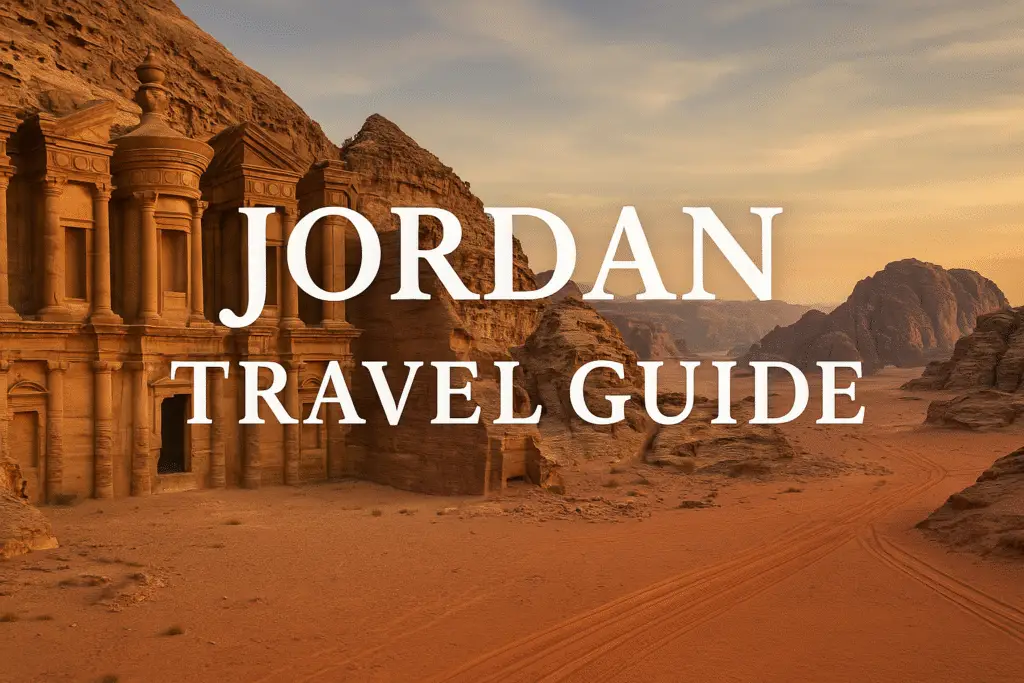
Jordan — A Land of Desert Light, Ancient Kingdoms and Warm Hospitality
Jordan is one of the most atmospheric, emotionally rich, and geographically diverse destinations in the Middle East. With its endless golden deserts, dramatic canyons, ancient civilizations carved into stone, and warm, generous people, Jordan offers a travel experience that feels both timeless and deeply human.
It is a place where history is written into the landscapes — from the rose-red temples of Petra to the star-filled silence of Wadi Rum, from the Roman streets of Jerash to the healing waters of the Dead Sea. Everywhere you travel, the land feels alive with memory, yet grounded in the peaceful rhythm of daily life.
What makes Jordan unforgettable is not only its beauty but its spirit. Jordanians are known for their hospitality — a cultural value embraced across villages, desert camps, towns and cities. Visitors are welcomed with tea, stories, music, and genuine kindness. Whether walking through a local market, sitting in a Bedouin tent beneath the night sky, or exploring a mountain village, travelers consistently describe Jordan as one of the most friendly and welcoming countries they have ever visited.
Jordan is a journey through space and time — a place where ancient cities rise out of mountains, where the desert glows at sunrise, and where culture, food, nature and tradition blend harmoniously. It is not just a destination to see, but a destination to feel.
AMMAN — The White City of Hills, Culture and Warm Middle Eastern Rhythm
Amman, Jordan’s capital, is a city built on seven steep hills, though today it stretches across many more. Seen from above, the city looks like a sea of pale stone houses, terraces and rooftops cascading across rolling hills. It is modern yet ancient, peaceful yet lively, traditional yet creative — a combination that gives Amman its unique personality.
The historic heart of the city is Downtown (Al-Balad). Here, markets burst with life as vendors sell spices, nuts, bread, fresh fruit, perfumes, handicrafts, and traditional sweets. The scent of cardamom coffee fills the air, and the streets echo with the mix of conversation, traffic and the call to prayer. At the foot of the hill stands the Roman Amphitheatre, a monumental 2nd-century structure where visitors can climb to the top for sweeping views over the city.
Above Downtown rises the Citadel, an archaeological hilltop where ancient ruins, including the Temple of Hercules, overlook the modern city. The panorama is one of the most iconic views in Jordan — endless slopes covered in tightly packed homes, glowing gold beneath the afternoon sun.
Beyond the historic core, districts like Jabal Amman, Rainbow Street, Jabal al-Weibdeh, and Abdoun offer a modern cultural vibe. Art galleries, rooftop cafés, bookstores, bakeries, boutiques and lively restaurants shape the city’s youthful, creative identity. Evenings in Amman feel warm and social, with families strolling, friends gathering in cafés, and music drifting softly from open windows.
Amman is the perfect introduction to Jordan — a place where Middle Eastern charm meets contemporary comfort, all wrapped in a welcoming atmosphere.
JERASH — A Roman City Preserved in Time
Just north of Amman lies Jerash, one of the most spectacular Roman archaeological sites in the world. Often called the Pompeii of the East, Jerash is remarkably intact, with colonnaded streets, plazas, temples and theaters standing exactly where they were nearly 2,000 years ago.
Visitors enter through the magnificent Hadrian’s Arch, built in honor of the emperor’s visit. From there, the site unfolds dramatically:
—the Oval Plaza, an enormous open space framed by elegant stone columns
—the Cardo Maximus, Jerash’s main avenue marked by chariot grooves
—the towering Temple of Artemis, perched above the city
—the North and South Theatres, where performances once echoed against stone
Jerash has a peaceful, sunlit beauty. The surrounding hills are green in winter and spring, golden in summer. Birds weave between the columns, and the wind moves softly through the ruins. Walking through the ancient marketplace or standing beneath the tall temple columns feels like traveling through time. Jerash remains one of Jordan’s most magical and awe-inspiring destinations.
MADABA & MT. NEBO — Mosaics, Pilgrimage Routes and Mountain Views
Southwest of Amman lies the charming town of Madaba, famous for its Byzantine mosaics. The most iconic is the Madaba Map, the world’s oldest known map of the Holy Land, made from millions of tiny colored stones. This detailed masterpiece still lies on the floor of St. George’s Church, where visitors can admire its intricate artistry.
A short drive away rises Mount Nebo, a peaceful mountain with panoramic views across the Jordan Valley. On clear days, the Dead Sea glimmers below, and the hills of Palestine appear softly in the distance. The air is quiet, fresh and reflective — a perfect stop on the journey south through Jordan.
THE DEAD SEA — The Lowest Point on Earth and a Place of Calm
The road from Amman descends dramatically into a surreal landscape of desert cliffs, cracked earth and soft golden sands. Here lies the Dead Sea, more than 400 meters below sea level — the lowest land point on Earth.
Floating in the Dead Sea is a strange and unforgettable sensation. The water is so salty that you simply lie back and drift effortlessly, surrounded by a shimmering, glass-like surface. The mineral-rich mud of the shore is used in natural skincare treatments, and the combination of sun, dry air, and saltwater creates a deeply relaxing experience.
The atmosphere is incredibly peaceful. Sunsets are extraordinary: the mountains on the horizon turn purple, then pink, then orange as the Dead Sea reflects the fading sky. It is a place of silence, stillness and light.
PETRA — The Rose-Red City Carved into Stone
Petra is the crown jewel of Jordan — a UNESCO World Heritage Site, a wonder of the ancient world, and one of the most breathtaking archaeological experiences anywhere on the planet. Hidden among sandstone mountains in southern Jordan, Petra was carved by the Nabataeans more than 2,000 years ago.
The journey into Petra begins through the Siq, a narrow gorge with towering cliffs glowing crimson and orange. The anticipation builds as the walls twist and curve — until suddenly, through a crack of light, appears the first glimpse of Al-Khazneh (The Treasury).
Its façade is carved with extraordinary precision, rising 40 meters high in warm rose-colored stone. At sunrise and sunset, the Treasury glows with soft gold and pink light — an unforgettable moment.
But Petra is vast — far beyond the Treasury:
—the Street of Facades, lined with ancient tombs
—the Theatre, carved entirely into rock
—the Royal Tombs, monumental structures cut into sheer cliffs
—the Monastery, reached by climbing 800 stone steps into the mountains
—the High Place of Sacrifice, offering panoramic views across the entire region
The landscapes around Petra are equally magical. Mountains shaped by wind and time stretch across the horizon, their colors shifting with every hour.
Petra is not only a historical site; it is a world of emotion, beauty and awe.
WADI RUM — The Valley of the Moon and Jordan’s Desert Wonderland
South of Petra lies Wadi Rum, one of the most stunning desert landscapes on Earth. Towering sandstone mountains rise from endless red sand valleys, creating a natural masterpiece shaped by wind, light and time.
The desert feels otherworldly — quiet, vast and luminous.
Its colors shift from deep red to gold to soft pink, depending on the time of day. The shadows of colossal cliffs stretch across the sand, and natural rock arches and canyons create breathtaking scenery.
Visitors explore Wadi Rum with local Bedouin guides, traveling by desert truck, camel, or on foot through narrow valleys and wide open plains. Evenings bring soft desert breezes and the scent of cardamom tea. As night falls, the sky explodes with stars — millions of them, bright and clear, creating one of the most spectacular night skies on the planet.
Staying overnight in a Bedouin-style camp is essential. Tents glow under lantern light, traditional meals are served around the fire, and stories drift into the night. Wadi Rum is not simply a place to visit — it is a place to feel, to breathe, and to fall in love with the desert.
AQABA — Red Sea Warmth and Coral Kingdoms
At Jordan’s southern tip lies Aqaba, the country’s coastal escape. With year-round warm weather, turquoise water, and vibrant marine life, Aqaba is perfect for snorkeling and diving.
The Red Sea’s coral reefs are home to colorful fish, sea turtles, underwater canyons and crystal-clear visibility. Aqaba’s calm waters make it ideal for beginners, while experienced divers can explore deeper reefs, shipwrecks and protected marine parks.
Outside the water, Aqaba’s relaxed atmosphere offers beach cafés, seaside promenades and a warm Red Sea breeze — a soothing contrast to desert and mountain adventures.
KERAK, SHOBAK & THE KING’S HIGHWAY — Castles and Mountain Horizons
Stretching between Madaba and Petra lies the legendary King’s Highway, a historic route winding through mountains, canyons and small villages. The views are breathtaking — cliffs dropping into deep valleys, plateaus stretching toward the horizon, and narrow roads hugging dramatic ridgelines.
Along this ancient road stand two of Jordan’s most atmospheric castles:
Kerak Castle, a massive Crusader fortress with stone chambers, echoing halls and sweeping mountain views.
Shobak Castle, perched on a lonely hilltop, surrounded by pure silence and desert light.
These sites reveal the layers of history that shaped Jordan — and the powerful landscapes that define it.
DANA BIOSPHERE RESERVE — Jordan’s Natural Mountain Paradise
Nestled between the highlands and the desert is Dana, one of Jordan’s most beautiful natural reserves. The scenery shifts dramatically from rugged mountains to green valleys and canyon cliffs dropping toward the plains below.
Hiking trails wind through terraced fields, ancient villages, forests, and open mountain plateaus. The air is fresh and cool, and the landscapes stretch endlessly into soft blue and gold.
Dana is a place of peace. The silence of its valleys, the breeze across its cliffs, and the warmth of local villagers create a natural retreat for anyone seeking nature and solitude.
JORDANIAN CULTURE — Hospitality, Heritage and Everyday Warmth
Jordanian culture is defined by generosity, family, storytelling and a strong connection to land and tradition. Hospitality is an essential value — guests are welcomed with tea, coffee, meals, or simply a conversation filled with warmth and sincerity.
Traditional Bedouin culture remains central to Jordan’s identity. In the desert, families serve mansaf (Jordan’s national dish), bake bread in the sand, recite poetry, and share stories passed down through generations. City life has a different rhythm — cafés filled with students, markets selling handmade crafts, and restaurants offering dishes that blend Bedouin, Levantine and Mediterranean influences.
Daily life in Jordan feels grounded, genuine and openhearted. Whether in a village, desert camp or modern city, the sense of connection and community is always present.
JORDANIAN CUISINE — Flavors of the Desert, Mountains and Mediterranean
Jordanian food is delicious, aromatic and full of character. Meals often feature fresh vegetables, yogurt, spices, rice, roasted meat and oven-baked bread.
Key dishes include:
Mansaf — lamb cooked in fermented yogurt sauce, served with rice
Maqluba — a layered dish of rice, vegetables and meat flipped upside down
Falafel & hummus — warm, crispy, soft and perfect for breakfast or lunch
Zarb — Bedouin barbecue cooked in an underground oven
Tabbouleh & fattoush — fresh salads filled with herbs, lemon and olive oil
Tea with mint and Arabic coffee flavored with cardamom are served throughout the day. Desserts like kunafa, baklava and date-filled pastries bring sweetness to the table.
Jordanian food is more than nourishment — it is a way of sharing time, love and tradition.
ITINERARIES
7-Day Jordan Itinerary (No driving tips)
Day 1–2: Amman
Day 3: Jerash and Northern Highlands
Day 4: Dead Sea
Day 5–6: Petra
Day 7: Wadi Rum
10-Day Jordan Itinerary
Includes the above plus:
Day 8: Dana Reserve
Day 9: Aqaba
Day 10: Back to Amman for culture and cafés
14-Day Complete Journey
Adds:
Mount Nebo, Madaba, Shobak, Kerak, King’s Highway villages, extended Wadi Rum stay, and additional hiking in Dana.
CONCLUSION — Why Jordan Stays in Your Heart
Jordan is a country of light, silence, story and emotion.
A place where rose-red mountains cradle ancient temples, where vast deserts glow beneath endless stars, where generosity is woven into daily life, and where every landscape carries thousands of years of memory.
What makes Jordan unforgettable is the feeling it gives:
peace in the desert, awe in Petra, calm at the Dead Sea, warmth in Amman’s cafés, joy in shared meals, and a connection to humanity that transcends time.
Jordan is not only a destination — it is an experience carved into the heart.
 Related Articles
- Kakslauttanen Arctic Resort
- Top 10 Most Unique Places to Stay in Europe
- 10 Incredible Castles Around the World