
🇱🇧 COMPLETE TRAVEL GUIDE
Lebanon: A Land of Mountains, Sea, Ancient Civilizations and Unforgettable Warmth
Lebanon is one of the most enchanting and emotionally powerful destinations in the Middle East. Set between the Mediterranean Sea and the snow-capped peaks of Mount Lebanon, the country blends extraordinary landscapes with a cultural depth shaped by thousands of years of history. Phoenicians, Romans, Ottomans, Greeks and countless civilizations left their mark here, creating a land where stories echo through mountain villages, archaeological ruins, cedar forests and coastal cities.
What makes Lebanon so special is its harmonious contrast: beach cafés sit below mountain roads that climb into misty forests; ancient Roman columns rise beside lively modern streets; traditional bakeries share neighborhoods with trendy bars and art studios; and the atmosphere shifts from Mediterranean calm to vibrant city energy within minutes. This mix gives Lebanon a character that feels both timeless and contemporary, peaceful and passionate, elegant and raw.
Lebanese hospitality is legendary. Visitors are welcomed with warmth, food, laughter and generosity. Whether enjoying a coffee in a mountain village, wandering through seaside promenades or exploring markets filled with spices, fruits and fresh bread, travelers are met with genuine smiles and heartfelt conversation.
Lebanon feels intimate — a country small in size but incredibly rich in beauty, spirit and story. Every corner reveals something new: stone terraces covered in olive trees, ancient temples carved into hillsides, waterfalls hidden between forests, and neighborhoods filled with the sound of music and social life. It is a destination that invites you to slow down, breathe deeply, taste everything, and fall in love with its rhythm.
Beirut – Culture, Sea Breeze, Nightlife and a City That Breathes Emotion
Beirut is unlike any other city in the region. It stands at the crossroads of history, Mediterranean lifestyle, art, nightlife and urban charm. Known as the “Paris of the Middle East,” Beirut combines elegance with raw authenticity. It is a city where the sea meets glimmering rooftops, where streets pulse with energy, and where every neighborhood has its own personality and story.
The Corniche, Beirut’s long seaside boulevard, is one of the city’s most iconic places. Early in the morning, the air is cool and filled with the scent of the sea. People walk, jog, fish, or sit quietly watching waves crash against the rocks. In the evening, the promenade glows with warm light as families, couples and friends stroll beneath the fading sun.
Beirut’s neighborhoods reveal the city’s layered identity. Hamra is lively and intellectual, filled with bookstores, cafés, pubs and students. Gemmayzeh and Mar Mikhael form the artistic heart of Beirut, where bars, galleries, street art and restaurants create an atmosphere of creativity and nightlife. Achrafieh combines elegant old buildings with modern boutiques, giving it a charming blend of past and present.
The city’s history is visible everywhere — in museums, Roman ruins tucked between streets, restored Ottoman-era houses, and seaside districts that whisper memories of earlier eras. Markets like Souk el Tayeb showcase Lebanon’s culinary richness, while the National Museum displays artifacts that connect the modern nation to its ancient Phoenician roots.
Beirut is emotional, vibrant and unforgettable. Travelers often describe it not as a destination, but as a living, breathing experience — a city full of contrasts, beauty and soul.
Byblos – One of the Oldest Cities on Earth, Wrapped in Mediterranean Calm
North of Beirut lies Byblos (Jbeil), a coastal town renowned as one of the oldest continuously inhabited cities in the world. With its picturesque harbor, ancient ruins and stone streets lined with flowers, Byblos feels like a tranquil, sunlit postcard.
The town’s archaeological site is extraordinary. Layers of civilizations reveal temples, walls, Phoenician structures, Roman ruins and medieval fortifications — all overlooking the blue Mediterranean Sea. Walking through the site feels dreamlike, as if time has folded and all eras coexist beneath the same warm sunlight.
Byblos’ old souk is charming and atmospheric. Stone pathways wind between shops selling handmade crafts, jewelry, soaps, spices and textiles. Cafés spill onto the streets, and the scent of Lebanese food fills the air — fresh bread, grilled meats, za’atar, citrus and coffee.
The port of Byblos, small and enchanting, is a place where fishermen mend nets beside boats that gently sway in the water. Sunset here is magical — the sky glows orange and pink as waves reflect the fading light, creating a peaceful Mediterranean moment travelers never forget.
Byblos blends romance, history and natural beauty in a way few places can.
Batroun – Lemonade, Old Streets and Coastal Serenity
Further along the coast lies Batroun, a small city known for its stone houses, seafront cafés and legendary lemonade. Batroun’s old town is charming and atmospheric, with narrow alleys framed by bougainvillea, ancient city walls and traditional Lebanese homes glowing warm in the sun.
The coastal area is perfect for relaxing days — swimming in the clear water, enjoying the cool breeze, and tasting fresh seafood from seaside restaurants. The town’s energy is peaceful, artistic and welcoming. Local bars and cafés create a laid-back nightlife scene that feels friendly and intimate.
Batroun also offers beautiful beaches, rock pools and snorkeling spots along its rugged coastline. The town’s quiet charm, combined with its history and natural beauty, makes it one of Lebanon’s most beloved coastal destinations.
Tripoli – Tradition, Souks and Northern Cultural Depth
In northern Lebanon lies Tripoli, a city rich in tradition, craftsmanship and authentic Middle Eastern atmosphere. Tripoli’s old city is extraordinary — one of the best-preserved medieval Mamluk cities in the world. Its narrow alleys are filled with soap workshops, spice merchants, pastry shops and artisans creating copper, wood and textile goods.
The scent of Tripoli is unforgettable: honey, flower water, sesame, spices and freshly baked sweets merge into a warm, comforting aroma. The city is famous for its Arabic sweets, especially knafeh and baklava. Traditional hammams, old mosques and historic khans add to the cultural richness.
Tripoli is lively, warm, and deeply connected to Lebanese tradition. It offers a glimpse into authentic daily life, far from modernized streets — a place where craftsmanship and heritage remain at the heart of the community.
Baalbek – Monumental Columns, Golden Light and the Echo of Ancient Civilizations
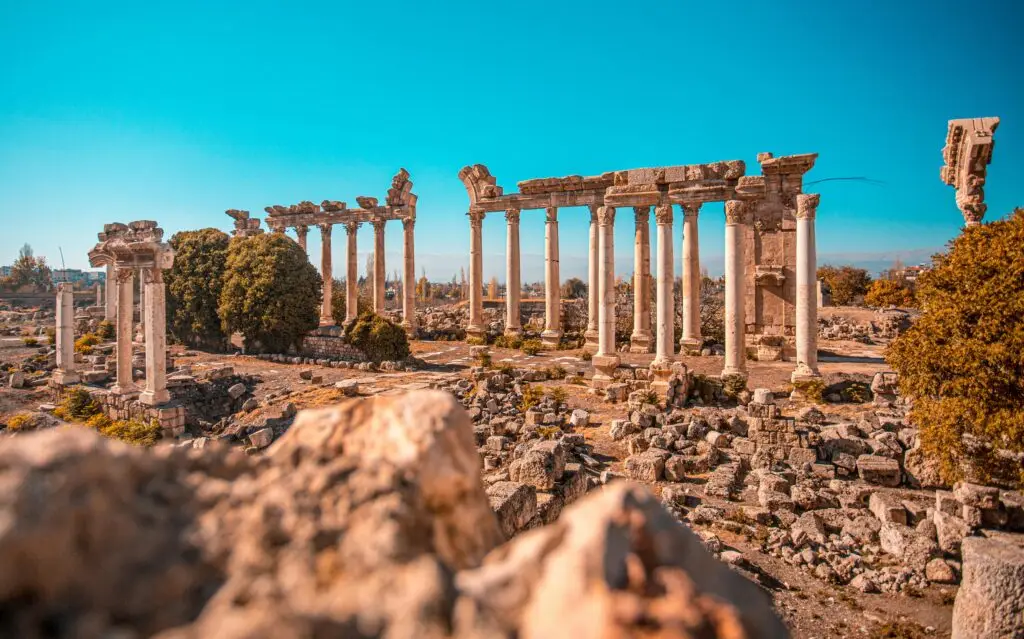
Baalbek is one of the most extraordinary archaeological sites in the world — a place where colossal Roman temples rise from the earth in a way that feels almost supernatural. Located in the fertile Bekaa Valley, Baalbek was once a major religious center of the Roman Empire, home to temples so massive that even today they leave visitors speechless.
When you step into the complex, the sheer scale overwhelms you. The Temple of Jupiter towers above everything, its remaining columns soaring into the sky like giants carved from golden stone. These columns glow at sunrise and sunset, turning warm orange, beige and deep amber as the light shifts across the valley. Nearby, the Temple of Bacchus — remarkably well-preserved — feels intimate and atmospheric, its carved friezes and monumental doorway revealing the unbelievable craftsmanship of ancient builders.
Walking through Baalbek feels like stepping into a lost world. Wind brushes across the ruins, birds fly between the stones, and the silence carries thousands of years of human history. The entire site has a sacred, timeless presence that stays with travelers long after they leave.
The Bekaa Valley – Vineyards, Villages and Mountain Horizons
Stretching between the Mount Lebanon and Anti-Lebanon mountain ranges, the Bekaa Valley is one of the most beautiful regions in the Middle East. It is a land of wide horizons, vineyards, fields of wheat and barley, orchards, and small villages surrounded by crimson and golden hills.
The valley is the agricultural heart of Lebanon. Vineyards produce some of the country’s most famous wines, while farms grow grapes, figs, peaches, olives, and vegetables that supply bustling markets throughout the country. The air feels fresh and open, the landscape peaceful and restorative.
Zahle, the valley’s cultural center, sits along the Berdawni River. With its riverside restaurants, mountain views, and lively cafés, Zahle has long been a beloved getaway for both locals and travelers. The town’s poetic charm has earned it the nickname “The Bride of the Bekaa,” a reflection of its elegance and scenic beauty.
In the Bekaa Valley, life moves slowly and naturally. Meals are filled with fresh produce grown steps away from the table. Evenings bring cool breezes drifting down from the mountains, and the sky at night stretches endlessly above the fields.
The Cedars of God – Ancient Giants Standing in Mist and Snow
High in the northern mountains above Bsharri stand the legendary Cedars of God, some of the oldest trees on Earth. These ancient cedars, symbols of Lebanon for thousands of years, are remnants of vast forests that once covered the mountains of the Levant. Today, they stand in a protected grove, their trunks thick and wise, their branches reaching out like open arms toward the sky.
Visiting the Cedars of God feels sacred. The air is crisp and pure. In winter, snow blankets the mountains in white silence; in summer, the cedars cast deep shadows across rocky paths. Many of these trees are hundreds — even thousands — of years old. Their scent, a mix of resin, wood and mountain air, feels grounding and timeless.
The cedars embody Lebanon’s heritage, strength and endurance. Standing beneath them, you feel a connection to the land that is emotional and profound.
Bsharri – Mountain Village of Poets, Snow and Deep Heritage
The village of Bsharri, perched above deep valleys and surrounded by towering peaks, is one of Lebanon’s most atmospheric mountain towns. Stone houses, red rooftops, narrow lanes and cool breezes give the town a nostalgic charm. Bsharri is also the hometown of Kahlil Gibran, the famous poet whose works have touched millions around the world.
The Gibran Museum, built into a cliffside monastery, houses his manuscripts, letters and artwork. Its quiet halls and panoramic windows allow visitors to experience the same landscape that inspired his writing — dramatic cliffs, forests of cedar, and mountains rising toward the clouds.
In winter, Bsharri is wrapped in snow, with ski slopes and cozy lodges. In summer, the mountains transform into green hiking trails filled with wildflowers, waterfalls and cool evening air. The combination of culture, nature and poetry makes Bsharri feel like a world of its own — a place of reflection and timeless beauty.
Qadisha Valley – Sacred Caves, Monasteries and Mountain Silence
One of the most breathtaking places in Lebanon is the Qadisha Valley, a deep gorge carved by ancient rivers, filled with monasteries, caves and forested slopes. The valley has been a refuge for spiritual communities for more than a thousand years. Monks carved dwellings into cliffs, built monasteries on narrow ledges, and lived in hermit caves overlooking the dramatic scenery.
Walking through the Qadisha Valley is like hiking through a living prayer. The air carries the scent of pine, earth and wild herbs. The cliffs rise steeply on both sides, their stone faces glowing in soft shades of red and gold. Small chapels appear between trees, their bells ringing gently across the valley.
The atmosphere is serene and contemplative. Birds echo through the canyon, and sunlight filters softly through tall trees. This is one of Lebanon’s most spiritual landscapes — a place of quietness, reflection and natural majesty.
The Chouf Mountains – Villages, Forests and Timeless Lebanese Heritage
South of Beirut lie the Chouf Mountains, a region of dramatic hills, oak forests, terraced fields and beautifully preserved villages. The Chouf embodies traditional Lebanese life, where stone homes overlook valleys and mountains roll endlessly toward the horizon.
The Chouf is home to some of Lebanon’s most charming towns:
Deir el Qamar, with its central square, fountains and elegant palaces;
Beiteddine, known for its magnificent 19th-century palace and intricate carvings;
and Barouk, surrounded by the largest cedar reserve in the country.
Walking through these villages feels peaceful and intimate. Locals greet travelers with warmth, offering coffee or homemade pastries. Narrow streets reveal traditional architecture, flower-filled balconies and hidden courtyards where families gather in the evening.
The Chouf region offers a beautiful blend of nature, culture, and tradition — a landscape where rural beauty meets historic elegance.
Jeita Grotto – Underground Beauty Sculpted by Water and Time
Just north of Beirut lies the Jeita Grotto, one of Lebanon’s natural wonders. It is composed of two interconnected cave systems filled with limestone formations, cathedral-like chambers, and underground rivers that flow quietly through the darkness.
The upper cave contains towering stalactites and stalagmites shaped by thousands of years of dripping water. These formations glow softly under subtle lighting, creating a dreamlike world of stone and silence. The lower cave is accessible by boat, drifting slowly across still waters that reflect ghostly patterns on the cave walls.
Jeita feels magical — a place where nature expresses its artistry in the form of crystal pillars, arches and carved stone curtains.
Harissa – Mountain Views and Spiritual Serenity Above the Sea
High above the coast near Jounieh stands Harissa, a mountaintop sanctuary overlooking the vast Mediterranean Sea. The statue of Our Lady of Lebanon, rising gracefully above the cliffs, offers panoramic views stretching from Beirut to the far northern horizon.
Reaching the top — often by cable car from Jounieh — feels like ascending into a world of calm and beauty. The sea shimmers far below, the mountains rise behind, and the breeze carries the scent of pine and ocean air.
Harissa is peaceful, emotional and inspiring — a perfect place for reflection.
Lebanese Culture – A Blend of Ancient Roots, Mediterranean Warmth and Timeless Identity
Lebanese culture is one of the richest tapestries in the Middle East — a vibrant blend of ancient heritage, Mediterranean charm, mountain traditions, poetry, music, food and a deeply ingrained sense of community. It’s a culture shaped by thousands of years of civilizations, yet its soul remains unmistakably Lebanese: warm, expressive, elegant and proud.
Lebanon’s identity is rooted in family bonds, hospitality, storytelling and a love for beauty — whether in architecture, food, landscapes or human connection. Each region has its own traditions, dialects, flavors and customs, but they all share the same cultural heartbeat. Whether you’re wandering through the lively streets of Beirut, sitting in a quiet village café in the Chouf mountains, or enjoying a seaside breeze in Batroun, the atmosphere feels open, emotional and deeply human.
Lebanese people are known for their warmth. Even travelers often say they feel “adopted” into families for meals or holidays. The Lebanese spirit is lively, expressive and full of heart — a mixture of Mediterranean laughter and mountain resilience.
Lebanese Cuisine – Fresh, Flavorful and One of the World’s Great Food Cultures
If there is one aspect of Lebanon that captivates every traveler instantly, it is the food. Lebanese cuisine is globally beloved for its freshness, color, generosity and Mediterranean balance. It brings together grains, fresh vegetables, olive oil, lemon, garlic, spices, herbs and handmade breads in dishes that are full of flavor but never heavy.
Meals often begin with mezze, a table filled with small plates:
hummus, labneh, baba ghanoush, fattoush, tabbouleh, grape leaves, falafel, grilled halloumi, olives, pickles and warm flatbread straight from the oven. Mezze is not just food — it is conversation, sharing, laughter and the joy of eating together.
Main dishes reflect Lebanon’s diverse geography. Mountain villages specialize in lamb, goat cheese, yogurt-based dishes and oven-baked platters. Coastal areas offer grilled fish, shrimp, calamari, octopus and seafood infused with lemon and herbs. In the Bekaa Valley, slow-cooked stews, fresh vegetables and hearty dishes define family meals.
And then there is dessert — baklava dripping with honey, knefeh with warm cheese and crispy semolina, maamoul filled with dates or nuts, and every variety of sweet pastries enjoyed with strong Arabic coffee.
Lebanese cuisine feels like a celebration of the land: every ingredient tastes alive, every dish feels crafted with love, and every meal brings people together.
Religion and Spiritual Life – Harmony, History and Sacred Atmosphere
Lebanon is home to diverse religious communities living side by side for centuries, including Maronite Christians, Greek Orthodox, Sunni Muslims, Shia Muslims, Druze and more. This diversity is woven into the country’s spiritual identity and cultural rhythm.
Church bells ring across mountain villages at dawn, the call to prayer echoes through coastal towns, and religious festivals bring entire communities together in celebration. The spiritual atmosphere feels ancient yet harmonious — a blend of traditions that enrich daily life.
In places like Harissa, Qadisha Valley, Jeita, Zahle, and Beirut’s historic quarters, spiritual landmarks stand as gentle reminders of Lebanon’s heritage. Shrines, monasteries, mosques and churches are not only places of worship but also of beauty, architecture and peaceful reflection.
Religion here is deeply cultural — shaping holidays, family gatherings, music, food and social customs that give Lebanese life its warm and celebratory character.
Arts and Creativity – Music, Poetry, Dance and Modern Expression
Lebanon has long been a center of artistic creativity in the region. From traditional music echoing through mountain villages to modern art exhibitions in Beirut’s galleries, Lebanese creativity is emotional, poetic and full of life.
Music is an essential identity marker. The sound of the oud, qanun and percussion gives traditional songs a nostalgic tone, while modern Lebanese artists blend these instruments with contemporary styles. Singers like Fairuz, Sabah and Wadih El Safi have shaped Lebanon’s musical soul, their voices filling cafés, homes and streets with timeless melodies.
Dance is equally important, especially the traditional dabke, performed at weddings, festivals and celebrations. Its synchronized steps and rhythmic energy symbolize unity and joy.
Visual arts thrive in Lebanon as well. Painters, sculptors, photographers and designers explore themes of memory, home, nature and identity. Street art decorates Beirut’s alleys, capturing the city’s emotions, humor and creativity.
Bohemian districts like Mar Mikhael, Hamra and Gemmayzeh showcase a vibrant artistic spirit — full of galleries, studios, cafés and spaces where artists express themselves freely.
Daily Life in Lebanon – Sea Mornings, Mountain Evenings, Social Nights
Daily life in Lebanon follows a Mediterranean rhythm shaped by the sea, the mountains and a strong sense of community.
Mornings begin with strong coffee, fresh thyme-scented mana’eesh, and sunlight reflecting off balconies filled with plants. Cities slowly wake up as bakeries open their doors and fruit vendors arrange their colorful displays.
In coastal cities like Beirut, Batroun and Sidon, mornings are spent walking along the sea, swimming or enjoying breakfast with ocean views. In the mountains, cooler air fills stone alleys, church bells ring softly and small cafés serve cups of tea infused with fresh herbs.
Afternoons revolve around family, work or rest. People gather for long lunches, relax in shaded courtyards, or enjoy quiet hours indoors during the warmer months.
Evenings are the heart of Lebanese life. Streets glow with warm lights, restaurants fill with families sharing mezze, and groups of friends gather on rooftops, terraces or by the sea. Conversation flows naturally; Lebanese people love storytelling, humor and lively debates.
Nighttime in Lebanon is social. Cities and towns come alive with music, nightlife, cafés, markets and celebrations that often continue late into the night.
Lebanese Identity – Pride, Hospitality and Emotional Connection to Land
Lebanese identity is rich, layered and deeply tied to the land. The mountains, the sea, the cedar forests, the villages and the olive terraces shape not only culture but also emotion. Families keep traditions alive through recipes, celebrations, crafts and storytelling passed down through generations.
Visitors often describe Lebanon as a place where life feels intensely lived — where emotions are expressed openly, where hospitality is sincere, and where people cherish moments of beauty, joy and connection.
Lebanese pride is palpable. It comes from ancient heritage, natural beauty, cultural depth and a collective sense of belonging. Even in simple moments — sharing coffee on a balcony, walking through a village at sunset, or dancing at a wedding — Lebanon’s spirit shines through.
It is a land that celebrates life, even in its quietest details.
Nightlife and Social Energy – A Mediterranean Pulse
Lebanon is famous for its vibrant nightlife — especially Beirut, often called the nightlife capital of the Middle East. Rooftops glow under warm sea breezes, bars and lounges play everything from Arabic classics to electronic music, and groups of friends gather to enjoy warm nights and lively conversations.
But nightlife isn’t limited to Beirut. Towns like Batroun, Jounieh and Gemmayzeh have their own social rhythms, often more relaxed but equally charming. Seafront bars, garden-style lounges and mountain-view cafés create a beautiful setting for evening experiences.
Lebanese nightlife is not just entertainment — it is a cultural ritual. It reflects the country’s love of socializing, music, food, community and celebration.
7-Day Lebanon Itinerary – A Beautiful Introduction to Mountains, Coast and Ancient History
Lebanon is small yet filled with astonishing variety. In just one week, travelers can experience coastal charm, mountain serenity, Phoenician ports, sacred valleys and vibrant city life — all without rushing.
Day 1–2: Beirut – City Energy, Sea Breeze and Cultural Warmth
Begin your journey in Beirut, a city that blends Mediterranean elegance with artistic soul. Spend two days wandering through Hamra, Mar Mikhael and Gemmayzeh, strolling along the Corniche, exploring museums, enjoying mezze dinners and soaking up the creative pulse of café culture and social nightlife.
Beirut gives you your first taste of Lebanese warmth, history and rhythm.
Day 3: Byblos – Ancient Stones and Sunset Over the Mediterranean
Travel north to Byblos, one of the world’s oldest cities. Wander through its Phoenician ruins, Mediterranean harbor and charming old souk. As evening falls, the sky glows orange above the ancient port — a quiet, unforgettable moment.
Day 4: Batroun – Coastal Calm and Seaside Beauty
Spend a day in Batroun, where stone streets, lemonade stalls, beaches and sea-scented breezes create a peaceful escape. Enjoy swimming, coastal walks and the town’s laid-back charm.
Day 5: Tripoli – Souks, Tradition and Middle Eastern Atmosphere
Tripoli offers an immersive look into Lebanon’s historical soul. Discover its Mamluk-era architecture, sweet shops, traditional soap factories and bustling markets.
Tripoli is warm, authentic and culturally rich.
Day 6: Jeita Grotto & Harissa – Underground Wonder and Mountain Serenity
Explore the magical Jeita Grotto with its limestone cathedrals and underground river. Then ascend to Harissa for sweeping coastal views, spiritual calm and fresh mountain air.
Day 7: Chouf Mountains – Villages, Cedars and Timeless Atmosphere
End your week in the Chouf, surrounded by cedar forests, terraced hills and traditional villages. Visit Deir el Qamar, Beiteddine and Barouk, where the mountains feel peaceful and deeply Lebanese.
10-Day Lebanon Itinerary – A Deeper Journey Through Mountains, Valleys and Heritage
Follow the first seven days, then continue:
Day 8: The Bekaa Valley – Vineyards, Landscapes and Open Horizons
Spend a tranquil day exploring the Bekaa Valley’s vineyards, villages and peaceful scenery. Zahle’s riverside restaurants and cool breezes offer a perfect escape.
Day 9: Baalbek – Monumental Temples and Ancient Magic
Experience Baalbek’s vast temples rising from golden stone — one of the greatest archaeological wonders in the world. The scale, silence and historical presence make this day unforgettable.
Day 10: Returning to Beirut – Art, Food and Evening Atmosphere
Finish with a final night in Beirut. Enjoy the city’s artistic districts, rooftop views, mezze dinners and vibrant social life.
14-Day Grand Lebanon Journey – Complete Immersion Into Beauty, Spirit and Culture
For travelers who want a full sensory and emotional experience, two weeks allows the land to unfold gently and completely.
Follow the 10-day itinerary, then add:
Day 11–12: Bsharri & the Cedars of God
Travel to the northern mountains to stay in Bsharri. Explore cedar forests, cliffside monasteries and poetic landscapes that inspired Kahlil Gibran. These days combine nature, culture and spiritual calm.
Day 13: Qadisha Valley – Sacred Silence and Mountain Trails
Walk through the Qadisha Valley, where ancient monasteries cling to cliffs and forested paths wind between rivers, caves and peaceful villages. This valley is one of Lebanon’s most moving landscapes.
Day 14: Final Reflections by the Sea or in the Mountains
Return to either Beirut or the coast for your final day. Sit in a café overlooking the sea, walk through an old town at sunset, or enjoy the quiet of a mountain terrace.
Lebanon is a destination that invites reflection — take your time to feel the beauty of everything you’ve experienced.
Final Conclusion – Why Lebanon Leaves an Unforgettable Mark on Every Traveler
Lebanon is a land of contrasts that somehow feel perfectly balanced. It is a country where sea and mountain meet within minutes, where ancient temples stand beside modern art galleries, and where hospitality is not a gesture but a way of life.
What makes Lebanon truly exceptional is the emotion woven into every part of it:
The land
Cedars rising toward the sky, deep valleys carved by time, Mediterranean sunsets turning the coastline gold, and villages wrapped in mountain peace.
The culture
A blend of Phoenician heritage, Mediterranean flavors, music, poetry, storytelling, and traditions carried in every family recipe and every handmade craft.
The people
Warm, expressive, proud and endlessly welcoming. Lebanese hospitality doesn’t feel formal — it feels like being embraced.
The daily rhythm
Coffee shared on balconies, laughter at long mezze lunches, late nights filled with music, and mornings scented with thyme, bread and sea breeze.
The spirit
Resilient, creative, emotional and deeply connected to beauty — in language, music, food, architecture and nature.
Lebanon stays with travelers because it feels alive.
It is not a place you simply visit — it is a place you feel, a landscape you breathe in, a culture that touches your heart in unexpected ways.
The mountains, the sea, the music, the food, the hospitality, the colors, the history — everything blends into a travel experience that is personal, intimate and unforgettable.
Lebanon is a destination of soul.
A country of light, story and generosity.
A place where every traveler finds beauty — not only in what they see, but in how deeply it makes them feel.
 Related Articles
- Kakslauttanen Arctic Resort
- Top 10 Most Unique Places to Stay in Europe
- 10 Incredible Castles Around the World