
🇵🇸 – COMPLETE TRAVEL GUIDE
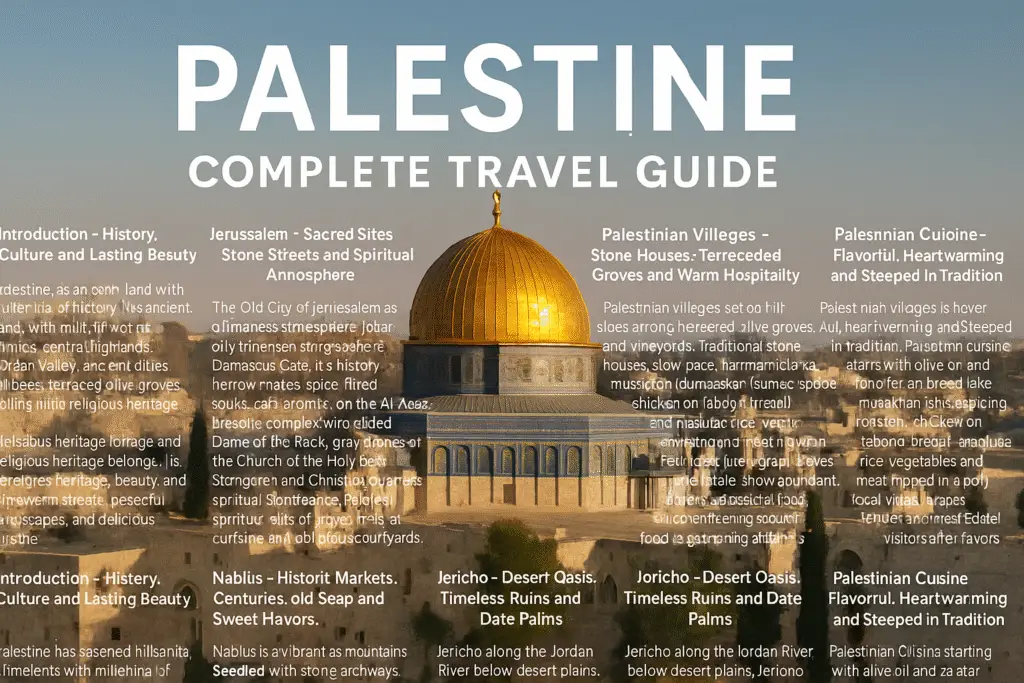
– Palestine: A Land of Deep History, Warm Hospitality and Living Tradition
Palestine is one of the most historically layered and emotionally resonant destinations in the world. It is a land of olive groves, ancient cities, vibrant markets, rolling hills, desert landscapes and communities whose traditions have been preserved for centuries. Every corner of Palestine carries a story — some thousands of years old, others still unfolding today. It is a place where daily life, history, spirituality and culture blend seamlessly.
Palestine offers travelers a rare combination of authenticity, warmth and profound cultural richness. From the stone streets of Bethlehem and the sacred atmosphere of Jerusalem’s Palestinian neighborhoods to the lively cafés of Ramallah and the serene landscapes of the Jordan Valley, Palestine feels intimate, human and emotionally powerful. The land is filled with heritage sites and peaceful natural scenery, but what truly defines Palestine is its people — known worldwide for their hospitality, generosity, storytelling and resilience.
Visitors often describe Palestine as a place that touches the heart in unexpected ways. The smell of fresh bread drifting from old bakeries, the sound of church bells blending with the call to prayer, the sight of ancient terraces carved into hillsides, and the experience of sharing tea with locals — these moments create a deep, lasting impression. Palestine invites travelers to slow down, connect, reflect and discover a culture that is vibrant, artistic and deeply rooted in the land itself.
Bethlehem – Ancient Streets, Spiritual Atmosphere and Human Warmth
Bethlehem is one of the most iconic and emotionally significant cities in the world. Known as the birthplace of Jesus, it attracts millions of pilgrims and travelers each year, but beyond its spiritual importance, Bethlehem is a living, breathing Palestinian city filled with culture, craftsmanship, history and warm community life.
The heart of Bethlehem is Manger Square, a lively plaza framed by cafés, markets and the entrance to the Church of the Nativity, one of the oldest continuously operating churches on Earth. Entering the church feels like stepping back in time. Ancient stone columns rise toward dimly lit ceilings, lanterns flicker softly, and narrow stairways lead to sacred grottos where centuries of faith and tradition converge. The atmosphere is quiet, contemplative and deeply moving.
Wandering through Bethlehem’s old town reveals narrow streets lined with stone houses, artisan workshops and bakeries producing sesame bread and ma’amoul pastries. The markets are colorful and full of life, offering hand-carved olive wood, embroidered dresses, spices, ceramics and handmade souvenirs created by local families. Bethlehem’s craftsmanship is world-famous and reflects traditions passed down over generations.
Outside the city center lie peaceful landscapes of terraced hills, olive trees and monasteries built into rock faces. The Shepherds’ Fields area, traditionally associated with biblical stories, still feels serene, with views stretching across the countryside. Visiting Bethlehem is not only a spiritual journey but a cultural and emotional one — a chance to experience Palestinian life at its most authentic.
Jerusalem (Palestinian Neighborhoods) – A Cultural and Spiritual Tapestry
East Jerusalem, home to many Palestinian communities, is one of the most atmospheric and historically rich places on Earth. Within the Old City, the Muslim and Christian Quarters form a world of winding alleys, stone arches, markets and sacred sites that carry thousands of years of meaning.
The Damascus Gate entrance opens into a vibrant labyrinth of market stalls selling fresh bread, spices, textiles, jewelry, fruit and handmade crafts. The air is filled with scents of incense and grilled meats, and the sounds of vendors calling out prices blend with the echo of footsteps on ancient stones.
The Al-Aqsa Mosque compound — which includes the Al-Aqsa Mosque and the Dome of the Rock — is one of the most important spiritual sites in the world for Muslims. The peaceful courtyards, tall cypress trees and golden dome create an atmosphere of serenity and reverence.
Nearby, the Church of the Holy Sepulchre in the Christian Quarter attracts pilgrims from every corner of the world, adding to the profound spiritual diversity of the city.
Outside the Old City walls, Palestinian neighborhoods like Sheikh Jarrah, Silwan, and the areas around Salah al-Din Street are filled with bakeries, bookstores, restaurants, cafés and daily life. These neighborhoods reveal a more contemporary side of Palestinian culture in Jerusalem, with young people gathering in social spaces, families shopping at markets, and traditional restaurants serving dishes like musakhan, maqluba and hummus.
Jerusalem’s Palestinian side is full of stories — some ancient, others shared by residents over tea — and travelers often find themselves deeply moved by the city’s energy, complexity and beauty.
Ramallah – Modern Culture, Arts and Palestinian Urban Life
Ramallah, located in the central West Bank, is one of Palestine’s cultural capitals. It is a city of artists, writers, musicians, entrepreneurs, students, cafés, galleries and intellectual life. The atmosphere is dynamic and youthful, with a strong creative spirit that defines the city’s identity.
The downtown area is lively and filled with energy. Streets are lined with bookstores, coffee shops, rooftop restaurants and pastry shops serving knafeh and baklava. Evening life in Ramallah is particularly vibrant, with locals gathering at cafés to talk, read, write and socialize late into the night. The city’s cultural centers host film festivals, poetry readings, exhibitions and live music — making Ramallah a thriving artistic hub.
At the same time, Ramallah retains traditional Palestinian charm. Markets sell fresh produce, spices, olives and bread baked in old ovens. Families visit parks, children play in courtyards, and artisans continue long-standing craft traditions. The mix of modern and old gives Ramallah a distinctive identity — sophisticated, warm and deeply human.
Ramallah also serves as a gateway to surrounding villages, each offering stone architecture, terraced hills, olive groves and breathtaking views of the West Bank countryside.
Hebron (Al-Khalil) – Ancient Streets, Craftsmanship and Cultural Depth
Hebron is one of the oldest continuously inhabited cities in the world. Its atmosphere is intense, historical and deeply rooted in Palestinian tradition. The old city’s architecture is extraordinary — stone archways, ancient markets, vaulted alleys, and buildings with centuries-old craftsmanship.
Hebron is famous for its glassblowing and ceramics workshops, where artisans create colorful lamps, vases and ornaments using methods passed down through generations. Watching these craftspeople work is mesmerizing — molten glass spun into delicate shapes, pottery painted with rich patterns, and deep cultural pride shining through every piece.
The Ibrahimi Mosque, one of the holiest sites in the region, stands at the heart of Hebron, its ancient stone walls holding thousands of years of religious significance. The atmosphere is solemn and powerful.
Walking through Hebron’s souks reveals a world filled with spices, sweets, embroidered clothing, honey, olive oil and handmade crafts. Despite its complexities, Hebron remains an essential part of understanding Palestinian heritage — strong, traditional, resilient and full of life.
Nablus – Mountains, Soap Heritage, Sweet Pastries and Timeless Markets
Nestled between Mount Ebal and Mount Gerizim, Nablus is one of Palestine’s most atmospheric and culturally rich cities. It is famous for its ancient old town, bustling souks, traditional industries and the warm hospitality of its residents. Nablus feels like a living museum — but one filled with life, color, aromas and human warmth.
The old city’s stone alleyways weave through archways, courtyards and historic khans. Vendors sell spices, za’atar, nuts, fresh bread, pomegranates and handwoven textiles. The scent of soap, cardamom and roasted coffee drifts through the air. Nablus is known worldwide for Nabulsi soap, a centuries-old craft made from olive oil and natural ingredients. Visiting a soap factory, where workers cut creamy white blocks into perfect bricks, feels like stepping into a tradition preserved through generations.
Nablus is also legendary for knafeh, a warm cheese pastry soaked in sweet syrup and topped with crunchy semolina. Eating knafeh here, straight from the oven, is a cultural experience on its own — rich, fragrant, and deeply tied to the city’s identity.
Beyond the markets, Nablus has a lively modern side. Cafés fill with students from nearby universities, families gather in parks, and young artists display their work in galleries around the city. It is a place where tradition and modernity blend naturally, creating a vibrant and welcoming atmosphere.
Jericho – One of the World’s Oldest Cities, Wrapped in Desert Light
Jericho, located near the Jordan River and the shores of the Dead Sea, is believed to be one of the oldest continuously inhabited cities in the world. Surrounded by palm trees, banana groves and warm desert winds, Jericho feels peaceful, green and timeless.
The landscape here is exceptional. The desert mountains above the city glow in pale gold, shifting in color as the sun moves across the sky. The air is dry, warm and filled with the scent of date palms. Life moves slowly in Jericho — people gather in outdoor cafés, farmers cultivate lush fields, and visitors explore ancient ruins under sunny skies.
The archaeological site of Tell es-Sultan reveals layers of civilization thousands of years old. Nearby, the Monastery of the Temptation clings dramatically to the cliffs of the Mount of Temptation. A cable car glides above the desert, offering breathtaking views of Jericho’s oasis and the wide valley stretching toward distant horizons.
Jericho is a place of serenity, where time feels suspended. The combination of history, warmth and desert scenery makes it one of Palestine’s most unforgettable landscapes.
Gaza – Mediterranean Beauty, Ancient Ports and Cultural Tradition
(Note: purely cultural & historical, no politics.)
Gaza, situated along the Mediterranean coast, has thousands of years of history as an ancient port city. Its relationship with the sea has shaped its culture, cuisine and traditions for generations. Travelers who learn about Gaza’s heritage discover a world of storytelling, artistry, poetry and craftsmanship.
The coastline has long beaches where the Mediterranean sparkles under the sun, and fishing boats rest gently on the water. Gaza’s markets (souks) historically buzzed with spice merchants, fishermen, bakers and artisans selling handmade embroidery and pottery. Traditional foods like sumaghiyyeh, fried fish, and fresh bread reflect centuries of culinary heritage shaped by both sea and land.
Gaza is home to ancient sites such as the Great Omari Mosque, historic khans and remnants of old trading routes. Its cultural identity is deeply connected to family life, storytelling, hospitality and strong community spirit.
While not easily accessible to tourists today, Gaza’s cultural heritage remains an important part of Palestine’s identity — a tapestry of resilience, creativity and Mediterranean warmth.
Palestinian Villages – Stone Houses, Olive Terraces and Mountain Breezes
Much of Palestine’s soul is found in its villages, many of which have barely changed in hundreds of years. These villages sit on hillsides or in valleys, surrounded by olive trees, vineyards, wheat fields and ancient terraces carved by hand.
Stone houses glow warm beige in the sunlight. Narrow lanes wind between fields and family homes. Elders sit outside drinking mint tea while children play in courtyards. Shepherds guide flocks through rolling hills that turn golden during the dry season and bright green in the winter.
Villages like Birzeit, Taybeh, Battir, Aboud, Sebastia, Zababdeh and many others give travelers an intimate look at traditional Palestinian rural life. Battir, a UNESCO World Heritage Site, is especially notable for its centuries-old agricultural terraces still irrigated by natural springs. Walking through these terraced fields feels like stepping into a landscape shaped lovingly by human hands and nature.
The villages of Palestine hold an atmosphere of peace, family traditions and connection to the land — beautiful, simple and deeply authentic.
Nature in Palestine – Hills, Valleys and Timeless Landscapes
Despite its small size, Palestine is incredibly diverse in natural scenery. The land shifts from rolling olive-covered hills to wide valleys, desert plains and fertile farmlands.
The Jordan Valley is warm, quiet and filled with date palms, citrus groves and farms. In the spring, wildflowers bloom across the hillsides, painting the landscape in shades of yellow, red and purple.
The central highlands offer cool breezes, hiking paths and panoramic views stretching to distant horizons.
The eastern deserts feel ancient and peaceful, with sunrise lighting the mountains in deep pinks and golds.
These landscapes create a sense of connection — not only to nature, but to the countless generations who lived on and worked this land before.
Palestinian Cuisine – Warm, Flavorful and Deeply Rooted in Family Tradition
Palestinian cuisine is one of the Middle East’s most beloved food cultures. It is rich, comforting, aromatic and built around fresh ingredients from local farms.
Dishes like musakhan — roasted chicken with caramelized onions, sumac and pine nuts atop taboon bread — represent the heart of Palestinian hospitality. Maqluba, meaning “upside-down,” is a layered rice dish with vegetables and meat flipped dramatically onto a platter. Makdous, stuffed grape leaves, olive oil pressed from local groves, and breads baked in stone ovens show how centuries-old cooking methods continue today.
Street food adds another layer: falafel, hummus, fresh bread, shawarma, and sweet pastries filled with cheese, nuts or dates.
Food in Palestine is more than nourishment — it is a symbol of family, hospitality, celebration and community. Meals are shared generously, with warmth and heartfelt conversation.
The Spirit of Palestine – Stories, Hospitality and Daily Life
What makes Palestine unforgettable is not only its landscapes and historical sites, but its people.
Hospitality is a core value. Guests are welcomed with tea, coffee, sweets or fruit — always offered with a sincere smile. Storytelling is cherished, and conversations often drift into history, family traditions, poetry, or memories of village life.
Daily life in Palestine blends old and new. Farmers tend olive groves as their ancestors did, while young people meet in cafés to read, study, work or play music. Markets fill with life each morning; evenings bring gatherings of families on balconies or in courtyards.
There is a quiet strength and deep warmth in Palestinian culture — a sense of connection to heritage, land and community that travelers never forget.
Modern Palestinian Culture – A Blend of Heritage, Creativity and Deep Identity
Modern Palestinian culture is a rich fusion of historical traditions and contemporary expression. Despite its ancient roots, Palestine today is creative, dynamic and full of intellectual life. Artists, musicians, writers, filmmakers and designers contribute to a cultural landscape that feels both deeply rooted and forward-looking.
The essence of Palestinian culture is storytelling — not only in words but also through food, music, embroidery, dance, poetry and architecture. Every cultural element carries memory, emotion and connection to the land. This makes modern Palestinian identity one of remarkable depth. Whether expressed through art, literature or daily customs, Palestinian culture feels intimate and emotionally resonant.
Cities like Ramallah, Bethlehem, Nablus and Jerusalem host exhibitions, film festivals, poetry gatherings and music performances. Cafés double as creative hubs where students, artists and professionals discuss ideas or work on projects for hours. There is a youthful energy in these spaces that balances the weight of history surrounding them.
Palestinian Arts – Expression Through Color, Sound and Memory
Palestinian art is powerful, symbolic and rich with emotion. It often reflects themes of family, memory, nature, land, resilience and identity. Painters use vivid colors to depict village life, olive trees, women in traditional dresses, jasmine flowers and abstract expressions of hope or longing.
Handmade crafts are another vital art form. Embroidery, pottery, glass, olive-wood carving and ceramics are cherished not only for their beauty but for the cultural stories they carry.
Embroidery, known as tatreez, is especially iconic. Each pattern and color reflects a region, village or historical meaning. Dresses decorated with tatreez represent centuries of identity and artistry passed down through generations. Today, young designers blend traditional embroidery with modern fashion, turning tatreez into a global cultural symbol.
Music fills Palestinian homes, weddings and gatherings. Traditional instruments like the oud and qanun create melodies that feel timeless, while modern musicians blend these sounds with global influences. Dance, especially dabke, is an expression of joy, unity and strength — performed at weddings, celebrations and cultural festivals with rhythmic steps and hand-in-hand formation.
Religious Heritage – Spiritual Depth Across Different Faiths
Palestine holds profound spiritual significance for several religions, and this diversity shapes everyday life and atmosphere.
Christian communities form an essential part of Palestine’s identity. Cities like Bethlehem, Beit Jala, Beit Sahour and Ramallah have long Christian traditions, with churches that ring bells on Sunday mornings, families celebrating Christmas with lanterns and lights, and communities maintaining ancient customs passed down for centuries.
Islamic culture is equally central. Mosques call to prayer five times a day, and religious holidays bring family gatherings, shared meals and beautiful traditions. The rhythm of daily life often aligns with these moments of reflection and connection.
In Jerusalem, the spiritual layers become especially visible. The soundscape of church bells, the call to prayer and the quiet songs of worship create a feeling of timeless spirituality. Regardless of personal beliefs, visitors often describe Palestine’s religious atmosphere as deeply touching — a reminder of humanity’s long search for meaning, hope and peace.
Handicrafts & Traditional Workshops – Keeping Heritage Alive
Palestinian handicrafts are not mere souvenirs — they are cultural legacies. Across cities and villages, artisans dedicate their lives to preserving ancient techniques.
Olive wood carving is one of the most iconic crafts of Bethlehem. Workshops smell of fresh wood as craftsmen shape nativity scenes, figurines, bowls and ornaments from olive trees pruned in nearby groves. Each piece feels warm, natural and beautifully symbolic.
Ceramics and pottery are vibrant in Hebron, where workshops paint intricate blue, green and red patterns onto bowls, plates and tiles. The process is mesmerising — artisans smoothing clay, firing pieces in traditional kilns, and adding bright hand-painted designs that feel both ancient and contemporary.
Glass-making is another treasured art. In traditional glassblowing workshops, craftsmen blow molten glass into colorful vases, lamps and ornaments using fire and breath in perfect harmony.
These crafts preserve culture, carry memory and allow travelers to bring a piece of Palestine’s soul home with them.
Family Traditions – Hospitality, Togetherness and Deep Warmth
Palestinian family life is built on connection, respect and loyalty. Hospitality is one of the most cherished values — guests are welcomed with tea, coffee, sweets, fruit or a warm meal, usually offered before a traveler can even decline.
Family gatherings are central to daily life. Weekends often involve large lunches where relatives come together to share dishes like maqluba or musakhan. Conversations are lively, full of humor and storytelling. Elders tell stories about village life or family history, while children run around courtyards and rooftops.
Weddings are joyful, colorful and filled with dancing. Dabke performances, traditional songs, ululations and feasts create celebrations that reflect Palestinian community spirit.
In every home — whether in a village stone house, a city apartment or a countryside farmhouse — there is a sense of warmth, belonging and pride in heritage.
Daily Life – Markets, Coffee Shops, Evenings on Balconies and Community Spirit
Palestinian daily life moves to a beautiful rhythm shaped by food, family, weather and community.
Morning begins with strong coffee, warm bread and the sound of shops opening their doors. Bakeries produce ka’ak (sesame bread), taboon bread and pastries that fill the air with comforting aromas. Markets come to life early, with vendors arranging fresh vegetables, olives, cheeses, herbs and fruit.
Afternoons slow down, especially in summer heat. People rest, work indoors, or enjoy shaded cafés where mint lemonade, iced coffee and desserts are shared among friends. Students study or meet for group projects, while elders sit outside greeting neighbors passing by.
Evenings are the heart of daily life. The sun lowers across hills and rooftops, and families gather on balconies or terraces. Children play until late, shops buzz with activity, and cities glow with warm lights. In cafés, conversations stretch into the night over tea, cardamom coffee or fresh juice.
Palestinian daily life feels social and grounded — shaped by community, hospitality and the enjoyment of simple moments.
The Emotional Landscape – A Deep Connection to Land, Memory and Home
What makes Palestine unforgettable is the emotional connection its people have with the land. Olive trees are not just agriculture — they symbolize family, heritage and continuity. Villages hold memories going back centuries. Ancient terraces tell stories of farmers who shaped the hills stone by stone.
Visitors often describe Palestine as a place where the land feels alive with history and identity. The landscapes — the valleys, hills, olive groves and desert light — carry a quiet poetry that leaves a lasting impression.
This emotional depth is reflected in art, food, storytelling, music and the way families welcome guests. It is a place where culture is lived, not just preserved, and where every moment holds a sense of meaning.
7-Day Palestine Itinerary – A Journey Through Culture, Spirit and Daily Life
Palestine is compact yet emotionally powerful, offering an incredibly rich travel experience in a short period of time. One week allows you to explore historic cities, meet local communities, and enjoy landscapes that feel timeless.
Day 1–2: Bethlehem – History, Atmosphere & Living Tradition
Begin in Bethlehem, where warm stone streets, artisan workshops and spiritual landmarks create a unique blend of history and humanity. Spend the first day inside the old city, visiting the Church of the Nativity and wandering the souks. The second day is perfect for exploring nearby villages such as Beit Sahour and Shepherds’ Fields, where rolling hills and terraces define the landscape.
Day 3: Jerusalem (Palestinian Areas) – Sacred Echoes & Daily Life
Spend a full day in East Jerusalem. Enter through Damascus Gate, explore the Muslim and Christian Quarters, enjoy fresh bread from Old City bakeries, and feel the ancient atmosphere around the Al-Aqsa compound and the surrounding markets. The entire district feels like a living tapestry of stories and spirituality.
Day 4: Ramallah – Creative Spirit & Modern Culture
Ramallah offers a refreshing contrast. Cafés fill with students and artists, cultural centers host exhibitions, and evening life feels vibrant and youthful. Spend time walking through the city’s streets, exploring bookstores, local restaurants and rooftop cafés. The city gives a modern perspective on Palestinian identity.
Day 5: Nablus – Heritage, Flavors & Historic Souks
Travel to Nablus to experience its lively old city, ancient soap factories and famous knafeh. Its markets feel authentic and welcoming, with vendors selling everything from spices to handmade garments. Nablus offers a deep, layered cultural experience.
Day 6: Jericho – Oasis Calm & Desert Light
Jericho’s warm climate and peaceful atmosphere make it perfect for a relaxing day. Enjoy views from the Mount of Temptation, explore ancient sites, and take in the serene beauty of palm groves and golden mountains.
Day 7: Villages & Hills – Quiet Beauty & Local Life
End your week in the countryside villages. Places like Birzeit, Taybeh or Battir offer terraces, olive groves, stone houses and breathtaking panoramas. These peaceful landscapes help travelers connect with Palestinian rural life.
10-Day Palestine Itinerary – A Deeper Immersion Into Culture & Nature
Follow the first seven days, then add:
Day 8: Hebron – Ancient Architecture & Craftsmanship
Spend a day exploring Hebron’s old city, where stone archways, traditional markets and glass-making workshops carry centuries of heritage. Observe craftsmen creating pottery and lamps, and walk through streets rich with cultural meaning.
Day 9: Northern Valleys & Landscape Walks
Explore the northern countryside — areas filled with green hills, orchards, and village pathways. These landscapes feel soothing and untouched, ideal for scenic walks, photography and conversations with locals.
Day 10: Art, Cafés & Cultural Nights
Return to Ramallah or Bethlehem for a day focused on culture. Attend a gallery event, browse craft stores, or simply enjoy the café culture that defines modern Palestinian social life.
14-Day Grand Palestine Journey – The Full Emotional Experience
Two weeks allows travelers to feel the full rhythm of Palestinian life and history.
Follow the first ten days, then add:
Day 11–12: Jericho & the Jordan Valley Exploration
Spend extra time around Jericho and the valley. Enjoy warm mornings beneath palm trees, explore ancient monasteries carved into cliffs, and admire the desert scenery that glows with soft pastel colors at sunrise.
Day 13: Coastal Heritage of Gaza (Cultural Context Only)
While currently not accessible to tourists, a cultural study day offers insight into Gaza’s ancient ports, traditional foods, maritime history, and artistic identity. Many museums in the West Bank display artifacts or artworks from Gaza, allowing travelers to understand this essential part of Palestinian culture.
Day 14: Final Reflections in Bethlehem or Jerusalem
End your trip in a peaceful place — a quiet café in Bethlehem, a rooftop overlooking Jerusalem’s stone buildings, or a village terrace surrounded by olive trees. Palestine is a land that invites reflection, gratitude and emotional connection.
Final Conclusion – Why Palestine Leaves a Lasting Impression
Palestine is not simply a place to visit — it is a place to feel.
Its landscapes, cities and villages carry thousands of years of memory, and its people express warmth, resilience, generosity and an extraordinary sense of identity.
What defines Palestine as a travel destination is the emotional depth woven into every experience:
The land
Terraced hills, olive groves, stone villages and desert light create scenery that feels both ancient and poetic.
The culture
Handmade crafts, embroidered dresses, olive-wood carvings, pottery, music and storytelling preserve a heritage of extraordinary richness.
The people
Hospitality is sincere. Conversations are meaningful. Families welcome visitors with open hearts, offering tea, meals and stories.
The daily life
Markets bustling with color, children playing in courtyards, elders chatting in the shade, and evenings spent on balconies smelling of jasmine.
The spirituality
Sacred places blend seamlessly with everyday moments of hope, reflection and tradition.
Travelers often say that Palestine leaves a mark on the heart — not because of spectacular monuments, but because of the human warmth and deep cultural identity found everywhere you go.
It is a destination of soul rather than spectacle, of authenticity rather than performance, of stories rather than attractions.
A place where beauty lives in the small moments: the smell of fresh bread, the sound of evening prayers, the sight of olive trees against stone hills, the kindness of strangers.
Palestine is unforgettable because it feels real, lived-in and profoundly human — a land where the past and the present breathe together.
 Related Articles
- Kakslauttanen Arctic Resort
- Top 10 Most Unique Places to Stay in Europe
- 10 Incredible Castles Around the World