🇦🇪 COMPLETE TRAVEL GUIDE
– A Modern Nation Built on Desert Sand, Vision and Endless Ambition
The United Arab Emirates is one of the most fascinating destinations on earth, a place where ancient desert traditions meet futuristic skylines, luxury blends with authenticity, and cultures from all corners of the world live side by side. What makes the UAE truly unique is not only its iconic buildings or record-breaking attractions but the contrast that defines everything here. It is a country where Bedouin history sits beside glass skyscrapers, where camels cross the sand near six-lane highways, and where centuries-old souks exist only minutes from the world’s largest malls. The UAE is both deeply traditional and boldly innovative—a place that celebrates its heritage while embracing the future with remarkable confidence.
Travelers arriving in the Emirates often feel as if they have stepped into a different realm. The landscapes shift dramatically from the moment you land: vast deserts with towering dunes, glittering city skylines, turquoise Gulf waters, rugged mountains, mangrove forests, palm-fringed resorts, and cultural heritage sites that have stood for centuries. Each emirate contributes its own personality to this federation of seven states, and exploring the UAE means discovering a tapestry of distinct identities, experiences and rhythms.
Dubai is the glamorous gateway, famous for its skyscrapers, shopping malls, beaches and futuristic attractions. Abu Dhabi is the cultural and political heart, home to world-class museums, royal palaces, mangrove parks and some of the country’s most important traditions. Sharjah is the cultural and historical center, preserving the artistic soul of the Emirates. Ras Al Khaimah and Fujairah offer mountains, beaches and adventure sports. Ajman and Umm Al Quwain bring a slower, more relaxed pace to the coastline. Together, these emirates create a travel experience that is far more diverse than many people imagine.
The UAE is a country built on ambition. In just a few decades, it transformed from a land of small pearl-diving communities and desert settlements into one of the world’s most advanced nations. Yet behind the modern vision remains a strong connection to the desert. Traditional music, camel racing, falconry, storytelling, Arabic hospitality and Bedouin values continue to shape daily life. The country celebrates these traditions through festivals, cultural centers, restored heritage villages and community gatherings. This balance between old and new gives the UAE its identity: modern, yet rooted; luxurious, yet modest; global, yet unmistakably Arabian.
Understanding the Emirates – A Country of Seven Unique Regions
The United Arab Emirates consists of seven emirates: Abu Dhabi, Dubai, Sharjah, Ajman, Umm Al Quwain, Ras Al Khaimah and Fujairah. Although they form a single nation, each emirate has its own ruler, character, landscapes and specialties. When travelers explore beyond Dubai and Abu Dhabi, they discover mountains, oases, archaeological sites, beaches, mangroves, desert dunes and cultural landmarks that paint a fuller picture of the UAE’s identity.
Abu Dhabi is the largest emirate by land, known for its cultural institutions, government buildings, national parks and luxury resorts. Its landscapes include deserts, islands, mangrove forests and protected wildlife areas. Dubai is smaller but far more populated, with a skyline that has become iconic around the world. The city is a symbol of modern architecture, innovation, entertainment and international diversity.
Sharjah is officially recognized as the cultural capital of the Arab world, home to dozens of museums, heritage districts, restored souks and Islamic architecture. Ras Al Khaimah contains some of the UAE’s most impressive natural scenery, including the Hajar Mountains and Jebel Jais, the country’s highest peak. Fujairah offers dramatic mountain-coast combinations along the Gulf of Oman, making it a favorite for divers and beach lovers. Ajman and Umm Al Quwain provide quiet beachfront resorts and traditional fishing communities, ideal for travelers seeking a peaceful escape.
Understanding the differences between the emirates allows visitors to appreciate the UAE not as one expansive city, but as a patchwork of unique regions that each contribute to the nation’s culture and identity.
Dubai – A City That Redefined the Meaning of Possible
Dubai is one of the most famous cities in the world, a destination that has become synonymous with innovation, luxury, ambition and spectacle. What makes Dubai extraordinary is not only its architecture or attractions but the vision behind them. The city was built with the idea that nothing is impossible. Desert became metropolis. Empty coastline became a global hub. Dreams became structures that defy engineering expectations.
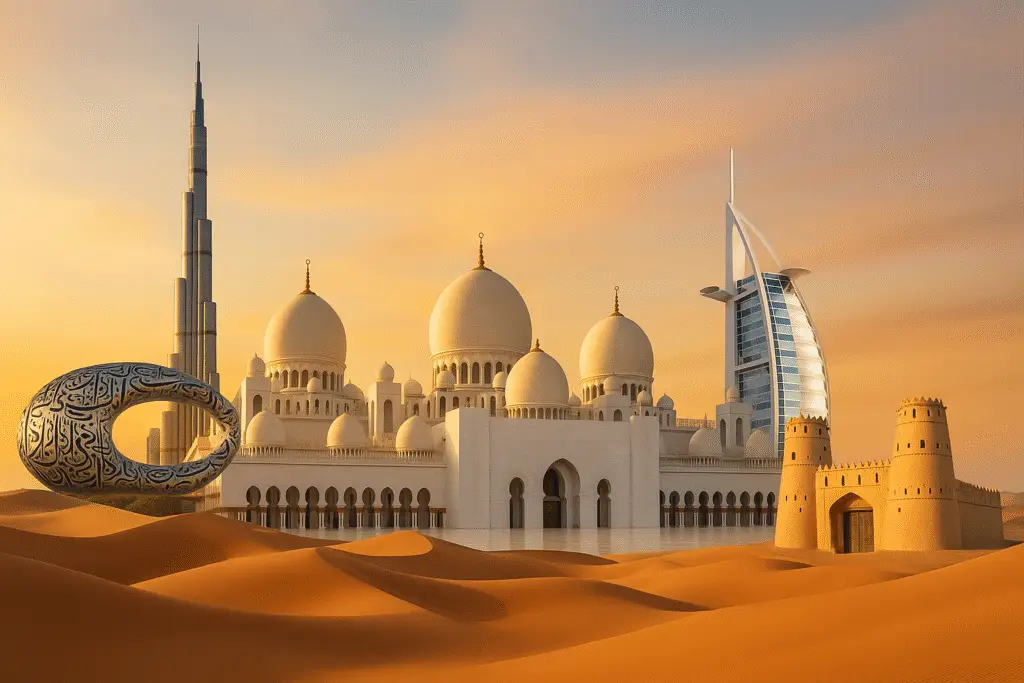
The skyline of Dubai reflects this ambition. The Burj Khalifa, towering over the city at 828 meters, is the tallest building in the world—and yet it feels like only one part of a much larger vision. Around it rise futuristic skyscrapers, each with unique shapes and architectural identities. The Dubai Fountain dances beneath the tower, sending water jets into the air in choreographed performances that draw crowds every evening. The Dubai Mall, one of the largest shopping centers on Earth, sits next door, offering everything from luxury brands to an aquarium, ice rink, cinemas and themed attractions.
But Dubai is far more than its city center. Travelers who explore its many districts discover a city that is surprisingly diverse. The historic area of Dubai Creek reveals the old trading routes that shaped the city long before the age of skyscrapers. Wooden abras (boats) cross the creek throughout the day, carrying locals and tourists between Deira and Bur Dubai. The souks—especially the Spice Souk and the Gold Souk—offer the scent of saffron, oud, cardamom and the glitter of jewelry displayed in bright shop windows. These markets show the heart of Dubai’s heritage: trade, craftsmanship, and cultural exchange.
Jumeirah Beach offers a completely different atmosphere with its palm-fringed coastline, luxury hotels and clear waters. The Burj Al Arab, shaped like a billowing sail, rises dramatically from its private island. Meanwhile, the Palm Jumeirah, a man-made archipelago shaped like a palm tree, has become one of the world’s most iconic human-made structures. Its hotels — including Atlantis The Palm — feature massive aquariums, waterparks and entertainment venues.
Dubai Marina is another modern district, a waterfront area lined with skyscrapers, promenades, restaurants and yacht clubs. In the evenings, the area glows with lights reflected on the water, creating a vibrant and energetic atmosphere. Adventure lovers can try skydiving over the Palm, jet-skiing along the skyline, desert dune bashing, camel riding or hot-air ballooning at sunrise over the desert.
What makes Dubai so compelling is its constant movement. Every year brings new attractions, museums, islands, theme parks and cultural districts. The Museum of the Future, with its elliptical structure and Arabic calligraphy, showcases the city’s focus on technology, sustainability and creativity. Al Seef and Al Fahidi Historic District preserve the cultural heritage of old Dubai, while the Dubai Opera brings world-class performances to the heart of Downtown.
Dubai is a city that invites travelers to be curious, imaginative and open-minded. It offers experiences that do not exist anywhere else, making it one of the most dynamic destinations in the world.
Abu Dhabi – Cultural Heart, Royal Heritage and Natural Beauty
While Dubai dazzles with its modernity, Abu Dhabi offers a more balanced blend of culture, nature, tradition and luxury. It is the capital of the UAE, home to the country’s political institutions, royal palaces, and some of its most important cultural landmarks. Abu Dhabi moves at a slower pace than Dubai, yet it is equally impressive in scale, architecture and ambition.
The city’s crown jewel is the Sheikh Zayed Grand Mosque, one of the most beautiful religious structures in the world. Its white marble domes, minarets and reflective pools create a peaceful and majestic presence. Inside, visitors find intricate floral mosaics, chandeliers made of Swarovski crystals, and one of the world’s largest hand-knotted carpets. The mosque represents the artistic, spiritual and architectural vision of the UAE, combining Islamic design with modern craftsmanship.
Abu Dhabi’s commitment to culture is further highlighted by Louvre Abu Dhabi, a world-class museum located on Saadiyat Island. The museum’s architecture is breathtaking: a massive geometric dome filters sunlight into patterned beams that create a “rain of light,” inspired by palm trees and Arabian courtyards. The museum displays global art, archaeology and history, creating a cultural dialogue between civilizations.
The city also offers vast natural attractions. The Mangrove National Park is a peaceful sanctuary where travelers can kayak through emerald waterways surrounded by wildlife. Yas Island offers entertainment with Ferrari World, Yas Marina Circuit (home to Formula 1), and Yas Waterworld. For a blend of beach, culture and wildlife, Sir Bani Yas Island provides luxury eco-resorts and a protected wildlife reserve where cheetahs, gazelles and Arabian oryx roam freely.
Abu Dhabi is a destination that balances innovation with heritage. Traditional markets, Bedouin storytelling, pearl-diving history and falconry coexist with modern art museums, international cuisine and luxury hotels. It is a city that reflects the soul and sophistication of the UAE.
Sharjah – The Cultural and Intellectual Heart of the Emirates
Sharjah is often regarded as the cultural capital of the UAE, a title officially recognized by UNESCO. It is a place deeply committed to heritage, education, literature, and Islamic arts. While Dubai and Abu Dhabi are known for their glittering skylines, Sharjah offers something different—an immersion into the history, language, and artistic soul of the Emirates. Walking through Sharjah feels like stepping into a world where tradition is carefully preserved and celebrated. The atmosphere is calm, scholarly, and authentic, with museums, galleries, heritage districts, and libraries spread across the emirate.
The Heart of Sharjah district is the centerpiece of this cultural identity. It is one of the largest heritage restoration projects in the region, dedicated to bringing old Sharjah back to life. Its narrow alleys, coral-stone buildings, restored souks, and wind towers create a beautiful blend of past and present. This area captures what Sharjah looked like long before the skyscrapers of the 21st century began rising across the Gulf. Souk Al Arsah, one of the oldest markets in the region, is a peaceful place to explore traditional crafts, perfumes, spices, and antiques.
Sharjah is home to more than twenty museums, each focusing on a different aspect of culture. The Sharjah Museum of Islamic Civilization holds manuscripts, scientific instruments, carpets, ceramics, and artefacts that illustrate the richness of Islamic history. The Sharjah Art Museum exhibits works by regional and international artists, emphasizing the emirate’s dedication to creativity. Meanwhile, the Sharjah Archaeology Museum reveals the deep historical roots of the UAE through artefacts dating back thousands of years. These museums offer insight into desert life, maritime history, trade routes, and early settlements.
One of Sharjah’s most impressive modern developments is Al Noor Island, a tranquil, art-focused retreat featuring gardens, sculptures, and the iconic Butterfly House—a unique architectural structure that houses thousands of butterflies. The island is a favorite for families, photographers, and couples seeking a quiet escape from the busy urban centers.
Sharjah also has a long coastline along the Arabian Gulf and the Gulf of Oman, offering beaches, lagoons, and dive sites. However, unlike Dubai, Sharjah remains more conservative in dress codes and laws, preserving traditional Islamic values. This is why the emirate appeals to travelers seeking a more culturally grounded experience—one that reflects the true heritage of the region.
Ras Al Khaimah – Mountains, Adventure and the Wild North
Ras Al Khaimah (RAK) is the northernmost emirate and one of the most naturally diverse regions in the UAE. It is known for its mountains, beaches, mangroves, deserts, and archaeological sites. The landscape here feels more rugged and dramatic than in other emirates, offering a completely different atmosphere from the glittering cities of Dubai and Abu Dhabi.
The Hajar Mountains dominate the region, rising sharply from the desert and creating one of the UAE’s most impressive natural environments. Their colors shift from deep reds to earthy browns, especially at sunrise and sunset. Hidden within these mountains are hiking trails, wadis (dry riverbeds), ancient stone houses, and viewpoints that reveal the dramatic beauty of northern Arabia.
Ras Al Khaimah’s crown jewel is Jebel Jais, the highest peak in the UAE. The Jebel Jais road, which winds through the mountains, is considered one of the most scenic drives in the Middle East. At the summit, visitors can walk along viewing platforms and experience cooler temperatures rarely felt elsewhere in the UAE. The mountain is also home to the world’s longest zipline, a thrilling attraction that draws adventure-seekers from around the globe.
Beyond the mountains, Ras Al Khaimah offers tranquil beaches and clear waters ideal for swimming, kayaking, paddleboarding, and sailing. The coastline is less developed than Dubai’s, giving visitors a more peaceful experience. Mangrove forests near the city center provide sanctuary for wildlife, including flamingos and fish species. Kayaking through the mangroves is one of the most relaxing activities in the emirate, offering a beautiful contrast to the rugged mountain environment.
Ras Al Khaimah is also rich in history. The emirate contains archaeological sites dating back more than 5,000 years, including Dhaya Fort, a hilltop fortress offering panoramic views over date plantations and the sea. Meanwhile, Al Jazirah Al Hamra, a preserved ghost town, provides a rare glimpse into pre-oil life in the Gulf. Its abandoned coral-stone houses, mosques, and courtyards remain intact, giving visitors a haunting yet fascinating view of traditional Emirati life.
RAK feels authentic, adventurous, and deeply connected to the land. It is ideal for travelers who want nature, mountains, cultural heritage, and outdoor activities without the crowds found in Dubai.
Fujairah – Mountains, Diving and the Gulf of Oman
Fujairah is the only emirate entirely situated along the Gulf of Oman rather than the Arabian Gulf, and this geographic distinction makes it one of the UAE’s most captivating areas. Known for its dramatic mountain scenery, clear waters, coral reefs, and relaxed atmosphere, Fujairah presents a side of the Emirates focused on nature, sea life and geology.
The Hajar Mountains stretch across much of the emirate, creating steep rocky ridges and dramatic desert valleys. The contrast between dark volcanic rocks and bright blue sea creates one of the UAE’s most visually striking landscapes. The mountains provide shade, cooler temperatures, and a sense of isolation that appeals to hikers and nature lovers. Wadis such as Wadi Wurayah offer freshwater pools, waterfalls, and protected wildlife areas—rare natural treasures in a region dominated by heat and desert.
Fujairah’s coastline is one of the best places in the UAE for diving and snorkeling. The waters around Snoopy Island, a small offshore rock formation, are filled with colorful fish, coral reefs and sea turtles. Local dive centers offer excursions for beginners and advanced divers, making Fujairah one of the top underwater destinations in the country.
The emirate also has a rich cultural heritage. The Fujairah Fort, one of the oldest and largest forts in the country, stands on a rocky hill overlooking date plantations. The Heritage Village showcases traditional Emirati life, including pottery, weaving, fishing and agriculture. Nearby, Al-Bidyah Mosque—the oldest extant mosque in the UAE—reflects the spiritual and architectural history of the region.
Fujairah’s beaches offer a calm escape from city life. Resorts line the coastline, offering quiet retreats with mountain views, warm waters and palm-lined gardens. This combination of sea and mountains gives Fujairah a character unlike any other emirate—an ideal destination for slow travel, relaxation and outdoor exploration.
Ajman – A Relaxed Coastal Haven
Ajman is the smallest emirate in the UAE, but its charm lies in its simplicity and tranquility. It offers a peaceful, intimate atmosphere along a beautiful stretch of coastline, with soft sandy beaches and calm waters perfect for swimming. Unlike Dubai or Abu Dhabi, Ajman is less focused on skyscrapers or mega-projects and more on relaxed living, local traditions and natural coastal beauty.
The emirate’s main attractions are its waterfront resorts, traditional markets and simple, friendly atmosphere. Ajman Corniche is a popular area for evening walks, with restaurants and cafés facing the sea. The calm waves and wide sandy beaches give the area a welcoming, family-friendly feel.
Ajman also has a rich cultural history. The Ajman Museum, located inside an 18th-century fort, provides insight into pearl diving, fishing, weaponry, and traditional Emirati daily life. The emirate is known for dhow building, a traditional craft passed down for generations. Visitors can sometimes see wooden dhow boats being constructed by hand—an impressive and rare sight in the modern Gulf.
Ajman is perfect for travelers who want peaceful beach days, local experiences and a slower pace without being far from Dubai or Sharjah.
Umm Al Quwain – Mangroves, Islands and Quiet Escape
Umm Al Quwain is the least populated and most laid-back emirate, known for its natural beauty, mangrove forests, islands and wildlife. It feels untouched compared to the more urban emirates, making it a perfect destination for nature lovers, families and travelers seeking a quiet retreat.
The emirate’s coastline is lined with mangroves that support diverse ecosystems and provide natural protection for birds, fish and marine life. Kayaking through these mangroves at sunrise or sunset is one of the most peaceful activities in the region, offering stillness, beauty and a connection to nature.
Umm Al Quwain is also home to the UAQ Marine Club, where visitors can enjoy water sports, boating and island trips. The nearby Siniya Island is an archaeological site and wildlife reserve with deer, seabirds and mangroves. The island has been inhabited for thousands of years, and archaeological digs continue to uncover artefacts from ancient trading communities.
Life in Umm Al Quwain moves slowly. Fishermen still bring in their catch every morning, traditional houses line quiet streets, and the sea remains the heart of daily life. It is the perfect emirate for travelers who want to experience the quieter, more traditional side of the UAE.
A Long and Layered History – From Ancient Desert Civilizations to Modern Nation
Although the United Arab Emirates rose to international fame in only a few decades, its history stretches back thousands of years. The region has been inhabited since prehistoric times, with archaeological discoveries revealing settlements, tombs, trading ports and artifacts dating as far back as 3000 BCE. The desert may seem empty at first sight, but beneath its sands lie stories of early hunters, fishermen, nomads, traders and pearl divers whose lives shaped the identity of the modern Emirati people.
For centuries, the region was part of important trade routes linking Mesopotamia, Persia, India and East Africa. Ancient coastal communities exported pearls, dates and pottery, while inland tribes moved with their camels across the desert, following the rhythm of seasons. Evidence of these ancient societies can still be found in places like Jebel Hafeet in Al Ain, where Bronze Age tombs lie scattered among the rocks, and in the Umm Al Nar archaeological site, where circular stone structures reflect a sophisticated early culture.
The arrival of Islam in the 7th century transformed the region spiritually and culturally. The Arabian Peninsula became a center of religious scholarship, trade and diplomacy. Tribes in the region embraced Islam and contributed to the growing cultural and economic networks of the wider Islamic world. Over the next centuries, coastal towns prospered as fishing centers, and pearl diving became a fundamental part of the local economy. For generations, men spent long months at sea, relying on wind-powered dhows, while women managed life at home—an arrangement that created strong, resilient communities.
By the 18th and 19th centuries, the Gulf’s strategic location attracted increasing international interest, especially from the British Empire, which sought to secure trade routes to India. Treaties were signed with local rulers, marking the beginning of the “Trucial States,” the political foundation upon which the UAE would eventually be built. Despite external influences, tribes retained strong independence, loyalty and identity tied to land, religion and family.
The modern transformation began in 1958 with the discovery of oil in Abu Dhabi. Unlike many nations overwhelmed by sudden wealth, the UAE chose long-term planning, investing heavily in education, infrastructure, healthcare and political unity. In 1971, the United Arab Emirates was officially formed — a rare moment in world history when several tribes and emirates united peacefully to create a new nation. Under the guidance of visionary leaders, particularly Sheikh Zayed bin Sultan Al Nahyan, the country embarked on a rapid journey into modernity.
What makes this history remarkable is that the UAE never abandoned its roots. Even in cities filled with skyscrapers, one still senses the desert heritage through traditions, architecture, clothing, cuisine and hospitality. The story of the UAE is therefore not solely about modern development but about the successful preservation of identity within a fast-changing world.
Culture – The Heartbeat of Emirati Identity
Emirati culture is built on a foundation of hospitality, honor, family values, and deep respect for tradition. The culture is influenced by Islamic principles, Bedouin customs, maritime life and centuries of desert survival. Although the population today includes people from more than 200 nationalities, the Emirati cultural identity remains distinct, visible and celebrated.
Hospitality is one of the most important aspects of local culture. Offering visitors coffee (gahwa), dates and a warm welcome is a tradition that goes back to Bedouin desert life, where survival depended on supporting one another. Even today, Emiratis take pride in treating guests generously. Inside traditional homes, majlis seating areas remain central gathering places where conversations, storytelling and decision-making take place.
Family is another pillar of Emirati culture. Large, multi-generational families often live near one another, and gatherings are frequent, especially on weekends and during religious holidays. Marriage, respect for elders, and strong community bonds shape social life. The country may be modern, but its social values remain rooted in tradition.
The arts also play a major role. Traditional music includes the use of drums, oud instruments and poetic chants. Dance traditions such as the Al Ayala — a rhythmic performance involving lines of men with sticks — reflect unity and heritage. Craftsmanship, especially weaving, pottery and boat building, continues to be practiced in cultural centers. Even falconry, once essential for desert hunting, is now a protected cultural symbol, with dedicated hospitals, museums and competitions celebrating this ancient skill.
Modern culture thrives alongside tradition. The UAE is a global center for design, film, architecture and digital arts. International festivals, art exhibitions and literary events take place throughout the year. The blend of heritage and innovation gives the country its cultural richness.
Religion – The Spiritual Foundation of the UAE
Islam is the official religion of the United Arab Emirates, and it shapes the country’s values, laws and daily rhythms. The call to prayer echoes across the cities five times a day, reminding people of the spiritual heartbeat of the nation. Mosques are present in every neighborhood, from small community prayer spaces to grand architectural masterpieces like the Sheikh Zayed Grand Mosque in Abu Dhabi.
Religious tolerance is an essential part of UAE society. While Islam is central, the country embraces diversity. Christian churches, Hindu temples, Sikh gurdwaras and other places of worship operate freely, reflecting the UAE’s multicultural population. Public religious celebrations from various communities — including Christmas, Diwali and Vaisakhi — are acknowledged with respect.
Ramadan, the holy month of fasting, is one of the most significant periods in the UAE. The atmosphere during Ramadan is peaceful and reflective. At sunset, families and communities gather for iftar meals, and mosques fill with evening prayers. Even non-Muslims experience the beauty of the month through cultural events, charity programs, night markets and reduced working hours.
Religion is woven into the social fabric not only through worship but through values: generosity, humility, respect, charity and community care. These principles help create the atmosphere of safety, tolerance and harmony the UAE is known for.
Language – Arabic Roots in a Multilingual Nation
Arabic is the official language of the UAE, and it reflects centuries of poetry, storytelling and tradition. Classic Arabic is used in religious contexts, literature and official communications, while Emirati Arabic is spoken in daily life. The local dialect is characterized by soft pronunciation, melodic flow and unique vocabulary influenced by desert, sea and trade history.
However, the UAE is one of the most multilingual countries on the planet. English functions as the primary international language, widely used in business, education, tourism and daily communication. In cities like Dubai and Abu Dhabi, it is common to hear people switch seamlessly between English and Arabic. Large communities from South Asia, the Philippines, Europe and Africa bring languages such as Hindi, Urdu, Malayalam, Tagalog, Russian, French and Swahili into daily conversation.
This linguistic diversity creates an environment where communication is fluid and inclusive. Visitors rarely experience language barriers, but learning a few Arabic phrases — such as “shukran” (thank you) or “marhaba” (hello) — is always appreciated and demonstrates respect for the local culture.
Architecture – From Wind Towers to Futuristic Skylines
Architecture in the UAE tells the story of a country that honors its past while embracing the future with bold ambition. Traditional Emirati architecture was shaped by the desert climate. Wind towers (barjeel), for example, acted as early forms of air conditioning, channeling cool breezes into homes. Coral stone, palm wood and gypsum were commonly used materials. Old neighborhoods like Al Fahidi in Dubai and the Heart of Sharjah preserve these traditional designs, with narrow lanes, shaded courtyards and earth-toned facades that reflect the simplicity and beauty of early Gulf architecture.
The modern architectural era of the UAE is defined by innovation, creativity and world records. Dubai’s skyline is famous for its unconventional shapes — twisting towers, sail-shaped hotels, oval museums and glass bridges. The Burj Khalifa remains the world’s tallest building, a symbol of engineering prowess. The Museum of the Future showcases a design unlike anything else, with calligraphic steel loops and no internal columns. Palm Jumeirah represents one of the largest land-reclamation projects ever completed.
Abu Dhabi’s architecture focuses on cultural elegance and environmental sustainability. Louvre Abu Dhabi’s floating dome, Qasr Al Watan’s shimmering royal palace, and Masdar City’s sustainable urban design illustrate the emirate’s blend of tradition and forward-thinking development.
Each emirate expresses its own identity through architecture, making the UAE an open-air museum of design — from ancient stone forts to futuristic eco-cities.
Daily Life in the UAE – Diversity, Warmth and Modern Ease
Daily life in the UAE is shaped by multiculturalism, comfort, safety and a unique blend of old and new lifestyles. With more than 80% of the population consisting of expatriates, the country feels like a meeting point of global cultures. Walk through any street in Dubai, Abu Dhabi or Sharjah, and you will see people from dozens of countries interacting smoothly and respectfully. This diversity makes the UAE one of the most cosmopolitan societies in the world.
Life here revolves around work, family, leisure and community. Weekends fall on Friday and Saturday, with Friday being a spiritual day for Muslims. Families gather for meals, and many restaurants offer Friday brunch — a beloved UAE tradition where friends and families share large buffets and long, relaxed conversations.
Shopping malls play a central role in social life, not just for retail but as climate-controlled environments where people meet, dine, exercise, skate, watch movies and attend events. Outdoor life blossoms in winter, when temperatures cool and parks, beaches, cafés and promenades fill with people. In summer, indoor life becomes more prominent due to the heat.
Despite rapid modernization, traditional values remain strong. Emiratis dress in traditional clothing—white kandura for men, black abaya for women—symbolizing national pride. Social etiquette is polite and respectful. Generosity toward guests, family bonds, and community support remain essential elements of life.
The UAE is known for its safety, cleanliness and efficiency. Public spaces are well-maintained, infrastructure is modern, and transportation is reliable. This creates a lifestyle that is both comfortable and welcoming for residents and visitors alike.
Nature in the UAE – A Diverse Landscape Beyond the Cities
Although many first-time visitors expect the UAE to be a land of endless desert, the country’s natural environment is far more diverse. The UAE contains rugged mountain ranges, fertile oases, mangrove forests, coral-filled coastlines, vast salt flats, freshwater springs, sand dunes, desert plains and unique ecosystems shaped by centuries of wind and climate. This variety makes the Emirates one of the most surprising natural destinations in the Middle East.
The country’s most dramatic natural feature is its mountain range — the Hajar Mountains — stretching across Ras Al Khaimah and Fujairah. These mountains rise sharply from the desert and provide stunning geological formations carved by millions of years of erosion. Their canyons, ridges and cliffs reveal layers of rock older than much of the Arabian Peninsula. The mountains also capture cooler temperatures and occasional rainfall, creating small pockets of vegetation and wildlife that thrive in an otherwise dry landscape.
Meanwhile, the desert regions of Abu Dhabi, Dubai and Sharjah showcase a completely different kind of beauty. Here, the sand dunes shift continuously with the wind, creating a landscape that looks different every day. The dunes glow in colors ranging from deep red to golden orange, especially at sunrise and sunset. Even though the desert may appear empty from a distance, it is full of life and history. It was home to Bedouin tribes for centuries, and today it remains a symbol of Emirati identity, resilience and spiritual connection to the land.
Beyond mountains and deserts, the UAE is also home to freshwater oases such as Al Ain Oasis, a UNESCO World Heritage site where date palms, falaj irrigation systems and centuries-old footpaths offer insight into the agricultural history of the region. The oasis is quiet, shaded and remarkably cool, creating a peaceful contrast with the country’s bustling cities.
The Desert – The Spiritual Heart of the Emirates
The desert is not just a landscape in the UAE; it is the soul of the nation. It shaped the lifestyle, culture, values and traditions of the Emirati people long before the modern skyscrapers were built. Life in the desert required resourcefulness, strong family bonds, hospitality and harmony with nature. These principles remain deeply embedded in the UAE’s identity.
The Empty Quarter (Rub’ al Khali), located partly in the southwestern region of the UAE, is one of the largest sand deserts in the world. Even a short visit reveals vast dunes that seem to stretch into infinity. The silence of the desert is profound — a stillness that many travelers describe as meditative. Overnight desert experiences, popular with tourists and locals alike, allow visitors to sleep in Bedouin-style tents, watch traditional performances, ride camels, and share food under the starry Arabian sky.
Desert safaris are among the UAE’s most iconic activities. These excursions range from gentle wildlife drives to thrilling dune-bashing adventures in off-road vehicles. Some tours focus on cultural immersion, offering falconry demonstrations, henna art, traditional coffee ceremonies and introductions to Bedouin customs. Others emphasize nature, spotlighting endangered species like the Arabian oryx, sand gazelles and desert foxes.
The desert also becomes a natural theater at night. With minimal light pollution, the sky fills with stars, creating a breathtaking view of constellations and the Milky Way. Many travelers say the desert night sky is one of the most unforgettable sights in the UAE.
Wildlife – A Surprising Diversity of Desert and Marine Species
Many people assume that wildlife in the UAE is scarce due to its climate, but the country is home to a remarkable variety of animals adapted to desert, mountain and marine environments. Decades of conservation efforts have helped preserve and reintroduce several native species, making the UAE a leader in wildlife protection.
The Arabian oryx, once extinct in the wild, now thrives in protected reserves thanks to dedicated breeding programs. These elegant antelopes symbolize survival and resilience and can be seen in reserves such as Sir Bani Yas Island, Dubai Desert Conservation Reserve and Al Marmoom Desert Conservation Reserve. Sand gazelles, Arabian gazelles and desert foxes are commonly found in protected areas, moving gracefully across the dunes.
Birdlife is abundant, especially around mangrove forests, coastal wetlands and lakes. Flamingos gather in large flocks at Dubai’s Ras Al Khor Wildlife Sanctuary, creating a vivid pink contrast against the skyline. Eagles, falcons, herons, osprey, hoopoes and countless migratory species pass through the UAE each year, making it an important stopover on global migration routes.
Marine life is equally rich. The waters of the Arabian Gulf and the Gulf of Oman are home to sea turtles, reef fish, whale sharks, dolphins and even occasional humpback whales. Coral reefs around Fujairah support colorful aquatic ecosystems, attracting divers and snorkelers from around the region. Conservation programs protect endangered species such as the hawksbill turtle, which nests along the UAE’s shores.
Falcons hold a special place in the national identity. Falconry is an ancient tradition, historically used for hunting and survival. Today, falcons are cared for with great respect, receiving medical care from specialized clinics like the Abu Dhabi Falcon Hospital, one of the most advanced facilities of its kind. The sport remains an important cultural practice, celebrated through festivals and competitions.
Coastlines and Islands – From Mangroves to Luxury Resorts
The UAE has more than 1,300 kilometers of coastline, offering a mix of sandy beaches, mangrove forests, coral reefs, lagoons, islands and modern waterfront developments. Each emirate contributes its own coastal character, creating a diverse marine environment for swimming, snorkeling, kayaking, boating and relaxation.
Abu Dhabi is the most island-rich emirate, with over 200 natural and man-made islands. Saadiyat Island offers pristine beaches and cultural attractions, while Yas Island focuses on entertainment and adventure. Delma Island, Sir Bani Yas Island and Marawah Marine Reserve provide untouched natural environments filled with wildlife and turquoise waters.
Dubai’s coastline is known for its iconic man-made feats: Palm Jumeirah, The World Islands and the extensive Jumeirah beachfront. These areas offer luxury resorts, water sports, marinas and promenades that combine urban modernity with ocean views. Kite Beach, La Mer and JBR Beach are popular spots for families, swimmers and surfers.
Sharjah and Ajman feature quieter beaches with a more traditional atmosphere, while Umm Al Quwain offers mangrove kayaking through calm, wildlife-rich channels. Ras Al Khaimah’s coast combines mountains and beaches, making it one of the most visually striking coastlines in the country.
Fujairah’s Gulf of Oman coastline is rugged, mountainous and ideal for snorkeling and diving. Its waters are cooler and richer in marine life, thanks to ocean currents from the Indian Ocean.
The UAE’s coastline represents a balance between development and preservation, showcasing both sustainability efforts and luxury tourism.
Modern Lifestyle – Luxury, Comfort, Innovation and Global Influence
Life in the UAE today is characterized by comfort, convenience and innovation. The country blends futuristic urban planning with a high standard of living, creating an environment where modern amenities are accessible, efficient and world-class. Residents enjoy advanced healthcare, excellent education, reliable transportation, and safe public spaces. From skyscrapers to smart cities, the UAE continuously reinvents itself.
Luxury is a visible part of the lifestyle, especially in Dubai and Abu Dhabi. Five-star resorts, Michelin-star restaurants, beach clubs, designer malls, spas and entertainment centers create an atmosphere of glamor. Yet beyond the luxury lies genuine warmth and simplicity rooted in heritage. Emiratis value modesty, kindness, generosity and family—qualities reflected in everyday interactions.
The UAE is one of the most multicultural societies in the world. People from all races, religions and backgrounds live and work together, forming a social fabric that is open, tolerant and diverse. International cuisine, festivals, art galleries, fashion districts, tech startups and cultural events shape the rhythm of daily life.
The country also focuses heavily on innovation. Smart transportation systems, autonomous vehicle testing, sustainable energy projects, AI research labs and futuristic architecture signal the nation’s ambition to shape the future. Expo 2020 reinforced the UAE’s global vision, highlighting themes of sustainability, mobility and opportunity.
Despite rapid modernization, the Emirati lifestyle still cherishes old traditions. Majlis gatherings, camel races, dhow regattas, fishing communities, and desert family retreats continue to thrive. This blend of heritage and modern comfort makes the UAE’s lifestyle both unique and inspiring.
Tourism in the UAE – A Global Hub for Every Type of Traveler
Tourism is one of the UAE’s strongest industries, offering experiences for luxury travelers, adventurers, families, honeymooners, culture seekers and nature lovers. Visitors can explore deserts, islands, mountains, theme parks, mosques, futuristic attractions, traditional souks, museums and wildlife reserves—often within an hour of each other.
Dubai remains the top global destination, known for entertainment, shopping, nightlife and record-breaking landmarks. Abu Dhabi attracts travelers who seek culture, sophistication and island escapes. Fujairah appeals to divers and mountain lovers, while Ras Al Khaimah attracts hikers and adventure seekers. Sharjah draws culture and art enthusiasts, and smaller emirates offer peace, quiet and coastal charm.
The UAE’s tourism strategy focuses on sustainability, long-term development and cultural preservation. The country aims to show the world that it is not just a luxury destination—but a place of history, nature, innovation and soul.
UAE Itineraries – Explore the Emirates at Any Pace
The United Arab Emirates offers an almost unlimited variety of travel experiences, and its compact size makes it easy to combine cities, deserts, beaches, mountains and cultural sites within a single trip. Whether visitors have a few days or two full weeks, the UAE can be shaped into the perfect journey—fast-paced and glamorous, slow and nature-focused, or deeply cultural. These itineraries are written in long-form, narrative style to help travelers imagine the rhythm and atmosphere of each journey.
A 7-Day Classic Highlights Itinerary
A one-week itinerary in the UAE typically focuses on Dubai and Abu Dhabi while adding a taste of desert life and coastal scenery. This route is ideal for first-time visitors who want a broad overview of what the Emirates have to offer.
The journey begins in Dubai, a city that welcomes visitors with energy, movement and architectural wonder. The first two days are spent exploring Dubai’s must-see landmarks: the Burj Khalifa, Dubai Mall, the dancing fountains, Souk Madinat Jumeirah, and the Palm Jumeirah coastline. Travelers wander between modern districts like Downtown and Dubai Marina, then contrast the experience with a visit to the historic Al Fahidi neighborhood, where wind-tower houses and narrow pathways reveal the city’s humble beginnings. An evening abra ride along Dubai Creek connects past and present in a single moment.
On the third day, visitors travel into the desert. A desert safari—whether cultural, luxurious or adventure-focused—allows travelers to experience camel rides, falcon demonstrations, sandboarding, Bedouin-style meals and sunset views over the dunes. An overnight desert camp offers a serene night under a sky filled with stars, far from city lights.
The next two days shift to Abu Dhabi, where the tone changes from fast-paced modernity to cultural richness and elegant architecture. The Sheikh Zayed Grand Mosque is a highlight, offering a breathtaking experience of spiritual beauty and artistic mastery. Travelers then explore Louvre Abu Dhabi, the Corniche waterfront, and Saadiyat Island’s peaceful beaches. Yas Island adds entertainment for those seeking excitement—whether Formula 1 tracks, Ferrari World, or theme parks.
The final day returns to Dubai for relaxation. Travelers may enjoy a beach day at Kite Beach, brunch at a seaside restaurant, or a dhow cruise through Dubai Marina as the skyline glows at night. This 7-day itinerary captures the essence of the UAE’s two most famous emirates—glamour, culture, nature and innovation.
A 10-Day Cultural and Nature Itinerary
Travelers with 10 days can experience deeper layers of the UAE by exploring Sharjah’s heritage, Fujairah’s mountains and Ras Al Khaimah’s rugged landscapes in addition to Dubai and Abu Dhabi.
The journey begins in Sharjah, where two days immerse visitors in museums, heritage districts and artistic neighborhoods. The Heart of Sharjah offers a serene and refined introduction to Emirati culture. Traditional architecture and restored souks reveal the region’s past, while Al Noor Island adds a dreamy blend of nature and modern art. By the time travelers leave Sharjah, they have a richer understanding of the UAE’s cultural heart.
Next, the route shifts east toward Fujairah, where towering mountains and turquoise waters define the scenery. The coastline along the Gulf of Oman feels more wild and dramatic than Dubai’s beaches. Travelers spend time snorkeling around Snoopy Island, hiking through wadis, exploring Fujairah Fort and relaxing in mountain-framed beach resorts. Fujairah offers a sense of calm and isolation rarely found in the larger cities.
From Fujairah, the itinerary continues north to Ras Al Khaimah, the adventure capital of the UAE. Travelers ascend to Jebel Jais for breathtaking views from the UAE’s highest peak. Some choose to ride the world’s longest zipline, while others prefer slower mountain walks, scenic drives or evenings by the beach. Ras Al Khaimah’s landscapes feel raw and inspiring, filled with geological history and desert mountains that seem older than time.
The final four days unfold across Dubai and Abu Dhabi. Travelers explore museums, beaches, souks, desert retreats, and architectural landmarks, choosing experiences based on their personal preferences. A 10-day itinerary allows the UAE’s diversity to unfold naturally—mountains, sea, cities, heritage and desert all within easy reach.
A 14-Day Grand UAE Journey
For travelers who want the deepest and most complete experience, a two-week journey through all seven emirates provides a rare and comprehensive understanding of the UAE’s identity.
The itinerary begins in Dubai, where travelers spend three full days exploring everything from glamorous beaches and futuristic museums to historic souks and multicultural neighborhoods. Dubai’s versatility allows visitors to shape these days however they like: one traveler may focus on luxury shopping and rooftop dining, while another spends their time exploring local cafés and artistic districts like Alserkal Avenue.
From Dubai, the route heads into Abu Dhabi for three more days of cultural immersion. Sheikh Zayed Grand Mosque and Louvre Abu Dhabi form the core of this experience, supported by visits to Saadiyat’s beaches, mangrove kayaking, Qasr Al Watan palace tours, and desert island excursions. Travelers leave Abu Dhabi with a deep understanding of the country’s political and cultural foundations.
Next, the journey shifts north into Sharjah, where visitors explore museums, academic districts, and artisan workshops. Here, travelers encounter the UAE’s most traditional emirate, where culture takes precedence over skyscrapers. After two days of heritage and quiet reflection, the itinerary moves into Ajman and Umm Al Quwain, the two smallest and most peaceful emirates. These days are intentionally slower, allowing time to relax on quiet beaches, visit local fish markets, walk along calm corniches and experience small-town Emirati life.
From here, travelers move into Fujairah for two days of mountains and diving. The cooler winds from the Gulf of Oman refresh the senses, and the geological formations of the Hajar Mountains offer breathtaking views at sunrise and sunset.
The final days take place in Ras Al Khaimah, where the UAE’s adventure and nature converge. Whether standing atop Jebel Jais, exploring ancient forts or relaxing in coastal resorts, travelers finish their two-week journey with a profound sense of how diverse the UAE truly is.
This 14-day route transforms the UAE from a single destination into a rich tapestry of landscapes, cultures and emotions.
Final Conclusion — Why the UAE Is One of the Most Fascinating Countries in the World
The United Arab Emirates is a country of contrasts—a place where past and future exist side by side, always in conversation with one another. It is impossible to visit the UAE without feeling this duality. One moment you stand before a historic coral-stone house that survived the desert winds for centuries, and moments later you gaze up at one of the tallest skyscrapers ever built. You step into a quiet mosque scented with incense, then emerge into a cosmopolitan district filled with international cuisine, art, music and innovation. You travel from mountain roads carved into red rock to beaches lined with turquoise water, from golden desert dunes to mangrove forests home to flamingos.
This blend of ancient and modern gives the UAE its emotional depth. The country’s story is not just one of wealth or architecture—it is a story of preservation, identity and transformation. The UAE’s leadership has prioritized education, innovation, environmental conservation and cultural heritage, creating a nation that looks boldly toward the future without forgetting its roots.
But what truly defines the UAE is its people—both Emiratis, who carry forward traditions with pride and openness, and the global communities who bring their cultures, languages and dreams into this modern desert nation. This multicultural environment creates a sense of harmony rarely found elsewhere. People from all over the world walk the same streets, work together, eat together, celebrate together and learn from one another. The UAE is not merely a place to visit; it is a place to experience humanity in all its diversity.
For travelers, the UAE offers something different every day: sunrise in the desert, lunch in a world-class city, afternoon diving along mountain-framed coasts, and evening strolls through heritage districts filled with history. The country’s landscapes are mesmerizing, its cities inspiring, its nature surprisingly rich and its culture welcoming to all.
The UAE is a destination where imagination becomes reality, where traditions are honored, where innovation never stops, and where visitors leave with a sense of wonder. It is a country that shows the world what is possible when vision, determination and cultural respect come together.
For all these reasons, the United Arab Emirates stands not only as a modern marvel, but as one of the most rewarding, emotional and unforgettable travel destinations on earth.
 Related Articles
- Kakslauttanen Arctic Resort
- Top 10 Most Unique Places to Stay in Europe
- 10 Incredible Castles Around the World