
🇾🇪 COMPLETE TRAVEL GUIDE
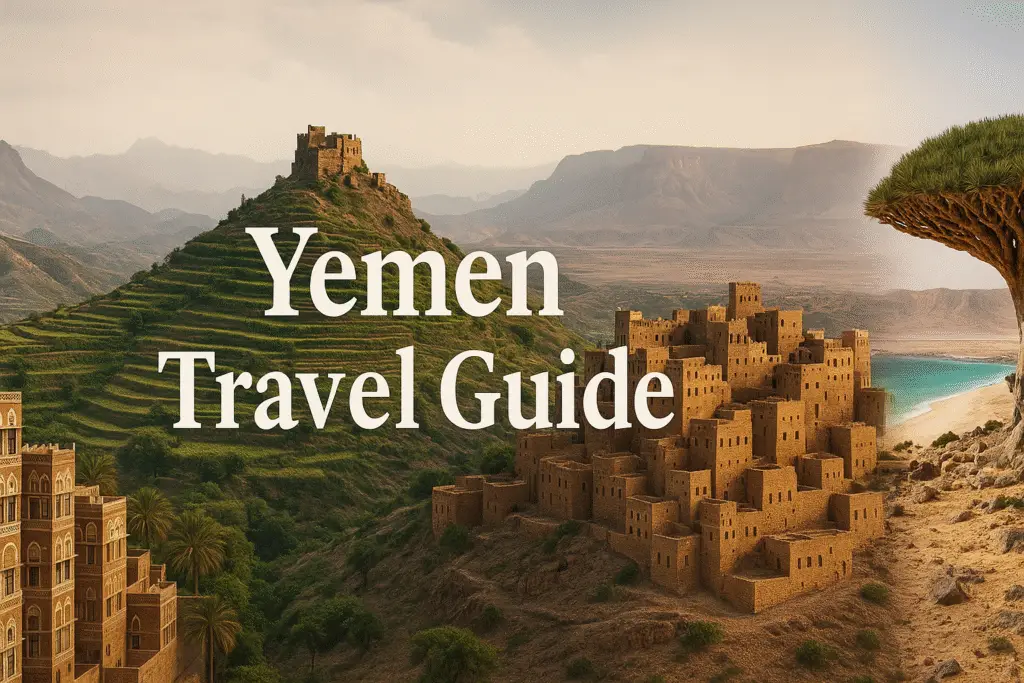
Yemen: Land of Mountains, Incense, Ancient Kingdoms and Timeless Beauty
Yemen is one of the most culturally rich and visually striking lands in the Middle East. Known historically as Arabia Felix — “Fortunate Arabia” — the region was celebrated for its fertile highlands, strategic trade routes, incense caravans and sophisticated ancient kingdoms like Saba, Himyar, and Hadramawt.
With dramatic mountain ranges, mist-covered highland terraces, lush wadis, coastline stretching along the Arabian Sea, and architecture unlike anywhere else on Earth, Yemen is a land of breathtaking beauty, deep tradition and emotional resonance.
Yemen’s identity is woven through thousands of years of poetry, trade, architecture, agriculture and hospitality. Villages cling to cliffsides like stone crowns. Coffee was first cultivated in these highlands. Frankincense and myrrh were traded from its ancient ports. Palaces and tower houses rise from desert valleys in elegant geometric patterns. Its people are known for warmth, courtesy and a strong sense of heritage.
Though modern travel to Yemen is limited, this guide focuses on the country’s timeless cultural landscapes, ancient history, natural wonders, cities, traditions, architecture and atmosphere in a safe, neutral, travel-focused way — the same style we used for Iraq, Jordan, Lebanon and Palestine.
Yemen is a land of story, soul and extraordinary natural design.
SANA’A — One of the World’s Oldest Continuously Inhabited Cities
Sana’a, perched at 2,300 meters in the Yemeni highlands, is one of the most ancient and atmospheric cities in the world. Its architecture is utterly unique: tall stone tower houses decorated with white gypsum, stained-glass qamariya windows and delicate geometric motifs. At sunrise and sunset, these houses glow gold and honey-brown, as if carved from the earth itself.
Old Sana’a
The old city is a UNESCO World Heritage site, a maze of narrow streets lined with traditional bakeries, spice shops, craft stalls and family homes. The scent of fresh bread, roasted coffee, incense, cardamom and honey fills the air. Wooden doors carved with flowers and tribal patterns hint at centuries of artistic tradition.
Souqs bustle with life:
vendors selling textiles, silver jewelry, pottery, baskets, perfumes, dried fruits, ginger, saffron and cloves.
Coffee beans from the Yemeni mountains — known worldwide for their incomparable quality — fill the markets with rich aromas.
Mosques and Gardens
Sana’a’s ancient mosques, built from sun-baked stone and adorned with slim minarets, add a serene rhythm to daily life. Courtyards offer shade and stillness.
The city is surrounded by mountain terraces, where farmers cultivate qat, vegetables, fruit trees and grains using traditional irrigation channels.
Atmosphere
Sana’a feels timeless — a living museum of heritage, architecture and emotion. Every street corner carries a story, every building a lifetime of craftsmanship.
SHIBAM — The Manhattan of the Desert
In the heart of Hadramawt Valley rises Shibam, often called the world’s first skyscraper city. Its tall mud-brick tower houses — some up to 11 stories high — form a dense cluster surrounded by desert plains and palm groves.
At golden hour, Shibam looks like a fortress made of caramel-colored stone. The vertical design was created to protect residents from desert raids and to maximize space within the walled city.
Inside Shibam
Narrow alleys weave between mud-brick towers. Houses have wooden balconies, carved shutters, and airy upper rooms that catch cool desert breezes. Families gather on rooftops at sunset as the sky turns orange and pink.
Shibam represents one of humanity’s most remarkable architectural traditions — sustainable, elegant, built entirely from earth, and blending naturally into the landscape.
HADRAMAWT VALLEY — Wadis, Palm Groves and Soft Golden Light
The Hadramawt region is one of Yemen’s most beautiful landscapes, a long valley carved through desert plateaus. Villages cling to cliffs, date palms line rivers, and ancient trading towns rise from the sand in shades of beige, gold and amber.
Tarim
A cultural center known for its Islamic scholarship and elegant whitewashed minarets. Its architecture blends Indian, East African and Yemeni design influences, reflecting centuries of trade across the Indian Ocean.
Seiyun
A lively town with a monumental palace built from earth and plaster, glowing white under the sun. Markets are filled with incense, pottery, dates and textiles.
Villages and Countryside
Hadramawt’s landscapes shift throughout the day — pale gold at sunrise, bright and warm at midday, and deep amber as evening shadows stretch across the valley floor.
The atmosphere is calm, warm and deeply traditional.
YEMENI MOUNTAINS — Terraces, Clouds and Villages on Cliffs
Yemen’s highlands are among the most dramatic mountain landscapes in the Middle East. Terraced fields climb steep slopes in perfect geometric patterns, reflecting centuries of agricultural engineering.
Haraz Mountains
Villages like Al-Hajjarah rise directly from the cliffs, their stone houses blending into the rock. The air is cool and fresh, with views stretching across rolling mountain waves.
Ibb and Taiz Region
Green hills, mist-filled valleys, waterfalls in rainy seasons, and stone villages framed by banana plantations and citrus groves.
These regions feel almost tropical in contrast to Yemen’s deserts.
Jabal Haraz and Jabal Bura’
Fog drifts across forested slopes, making mornings feel dreamy and atmospheric.
Coffee farmers tend ancient terraces where Yemeni coffee varieties were first cultivated.
The mountains of Yemen are peaceful, green and breathtakingly beautiful.
SOCOTRA — The Island of Dragons’ Blood Trees and Otherworldly Landscapes
Socotra, located in the Arabian Sea, is one of the most unique natural environments on Earth. Often described as looking like another planet, the island is home to flora and fauna found nowhere else.
Dragon’s Blood Trees
These iconic umbrella-shaped trees stand on rocky plateaus, their red sap known historically as dragon’s blood resin.
White Sand Dunes & Turquoise Seas
Socotra’s beaches are pristine, with bright white dunes sliding into turquoise water. The coastline feels untouched and peaceful.
Caves, Mountains and Desert Valleys
Karst caves, high limestone cliffs, wadis filled with freshwater pools, and wildflower meadows in season make Socotra one of the world’s great biodiversity hotspots.
The island is a dreamlike mix of desert, mountains, tropical waters and alien-looking vegetation.
YEMENI ARCHITECTURE — Masterpieces of Earth, Stone and Light
Yemeni architecture is one of the most visually distinctive in the world.
Tower Houses
Found in Sana’a, Shibam, and mountain villages — tall, narrow homes built from stone or mud-brick, decorated with white gypsum and stained glass.
Qamariya Windows
Colorful stained-glass semicircle windows that glow beautifully at sunrise and sunset.
Palaces and Fortresses
Built from earth, limestone or basalt, often rising dramatically from cliffs or hilltops.
Desert Villages
Made entirely of mud-brick, blending perfectly into golden sand landscapes.
Yemen’s architectural heritage feels hand-carved, poetic and deeply connected to the land.
YEMENI CULTURE — Poetry, Hospitality, Tradition and Community
Yemen has one of the Arab world’s oldest and strongest traditions of storytelling and poetry. Oral literature, tribal histories, songs and cultural values are passed through generations.
Hospitality
Guests are welcomed with tea, coffee, dates, fruit and heartfelt generosity.
Music and Dance
Traditional dances with drums and swords, rhythmic singing, and poetic recitation during celebrations.
Clothing
Colorful embroidered dresses, patterned shawls, silver jewelry, and the famous curved jambiya dagger worn ceremonially.
Daily Life
Markets, rooftop gatherings, coffee preparation, and family meals form the heart of Yemeni culture.
YEMENI CUISINE — Aromatic, Warming, Rich and Comforting
Yemen’s food culture is full of flavor, warmth and tradition.
Key Dishes:
Saltah — a bubbling stew with fenugreek foam, vegetables and meat
Mandi — fragrant rice with slow-cooked meat
Fahsa — shredded lamb in spiced broth
Bint al-Sahn — honey-soaked Yemeni layered bread
Mulawah — flaky flatbread, perfect with cheese or eggs
Oven-baked fish and spiced chicken
Coffee Culture
Yemeni coffee is world-renowned — rich, fruity, complex and deeply aromatic.
Coffee ceremonies involve careful preparation, storytelling and connection.
NATURE OF YEMEN — Deserts, Mountains, Coastlines and Wadis
Yemen’s natural landscapes are incredibly diverse.
Deserts
Endless dunes, golden plains, sculpted sand valleys.
Highlands
Green terraces, stone villages, clouds drifting over peaks.
Coastlines
Warm water, fishing villages, rocky cliffs, sandy beaches.
Wadis
Seasonal rivers cutting through green valleys full of palms and fruit trees.
Each region feels different but uniquely Yemeni.
ITINERARIES (No driving instructions)
7 Days
Sana’a → Haraz Mountains → Shibam → Wadi Hadramawt → Seiyun → Tarim → Socotra (flight).
10 Days
Add mountain villages in the southwest and extended time in Hadramawt.
14 Days
Add coastal regions, desert plateaus, more highland towns and additional Socotra exploration.
CONCLUSION — Why Yemen Leaves a Deep Emotional Imprint
Yemen is a land of poetry, mountains, incense and ancient kingdoms.
A land where tower houses rise like lanterns, where terraces climb the clouds, where hospitality is sincere, and where landscapes feel both ancient and otherworldly.
What makes Yemen unforgettable is its soul:
its architecture, its mountains, its markets, its music, its poetry, its warmth, its resilience, and its incredible natural beauty.
Yemen is not only a destination — it is an emotion.
A story written in earth, stone, water, wind and human memory.
A place that lingers in the heart long after you leave.
Related Amazing Bucketlist Articles
- 5 Once-in-a-Lifetime Floating Stays
- Hurawalhi Island Resort
- Top 10 Most Romantic Countries in the World for Couples