
🇧🇸 Bahamas Travel Guide
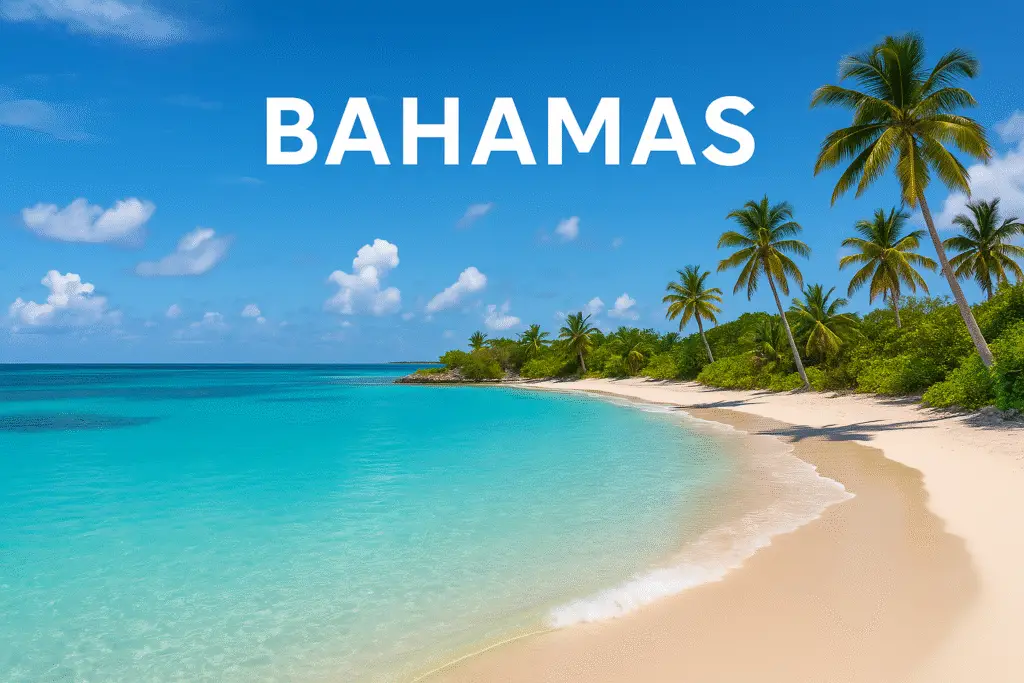
The Spirit of the Bahamas: Turquoise Water, Island Rhythms, Warm Breezes & the Soul of a Hundred Islands
The Bahamas is not one place — it is more than seven hundred islands scattered across the Atlantic in a mosaic of turquoise, sapphire, emerald and pale crystal blue. Light bends differently here. Sea and sky melt together in colors that seem impossible anywhere else. The air is warm, the breeze soft, the palm trees slow-dancing to rhythms carried from Africa generations ago. Boats rock gently on clear water. Sand glows white under the sun, almost silver at midday, almost pink at dusk. People greet you with warmth that feels effortless and sincere.
The Bahamas is a country shaped by ocean and wind, by history and movement, by African roots and island resilience. Each island has its own spirit. Some feel lively and urban, some remote and serene, some glamorous, some rustic, some untouched. Yet all share a common soul — calm, bright, uplifting, friendly, peaceful and undeniably Caribbean.
Travel in the Bahamas is travel through light and openness. It is waking up to the sound of waves rolling over shallow sandbanks. It is seeing stingrays glide through water so transparent it looks like floating glass. It is hearing Junkanoo drums echoing in the streets. It is tasting fresh conch salad made with lime and peppers. It is stepping onto a sandbar that only exists at low tide, standing in warm knee-deep water stretching to the horizon.
This is the Bahamas — a country of beauty, history, soul and sea. Bahamas
The Identity & Soul of the Bahamas — Warm, Rhythmic & Ocean-Born
Life in the Bahamas feels gentle and grounded. Bahamians speak with a melodic accent, moving through the day with a calm, friendly confidence. Community matters. Humor is woven into conversations. Music is everywhere — rake-and-scrape rhythms tapping through neighborhood bars, Junkanoo drums filling festivals with energy, gospel echoing from churches, reggae and soca vibrating through beach bars at sunset.
The national identity blends African heritage, island tradition, British colonial history, and a deep relationship with the sea. Generations of Bahamians have lived from the ocean — fishing, diving for conch, sailing, navigating by stars, and building boats by hand. That seafaring spirit remains alive today in regattas, festivals, and even casual conversations where locals talk proudly about currents, winds, reefs, and tides.
The Bahamas feels warm but not overwhelming, peaceful but not sleepy, proud but never closed. There is a quiet strength in the culture — a resilience shaped by storms, salt, community and history. There is joy in the way people laugh, in the way musicians play drums, in the way children run barefoot along beaches, in the way elders sit on porches telling stories in the evening light.
The Bahamas is a place where the ocean is not just scenery — it is identity.
Geography & Natural Atmosphere — Water, Light & Overwater Horizons
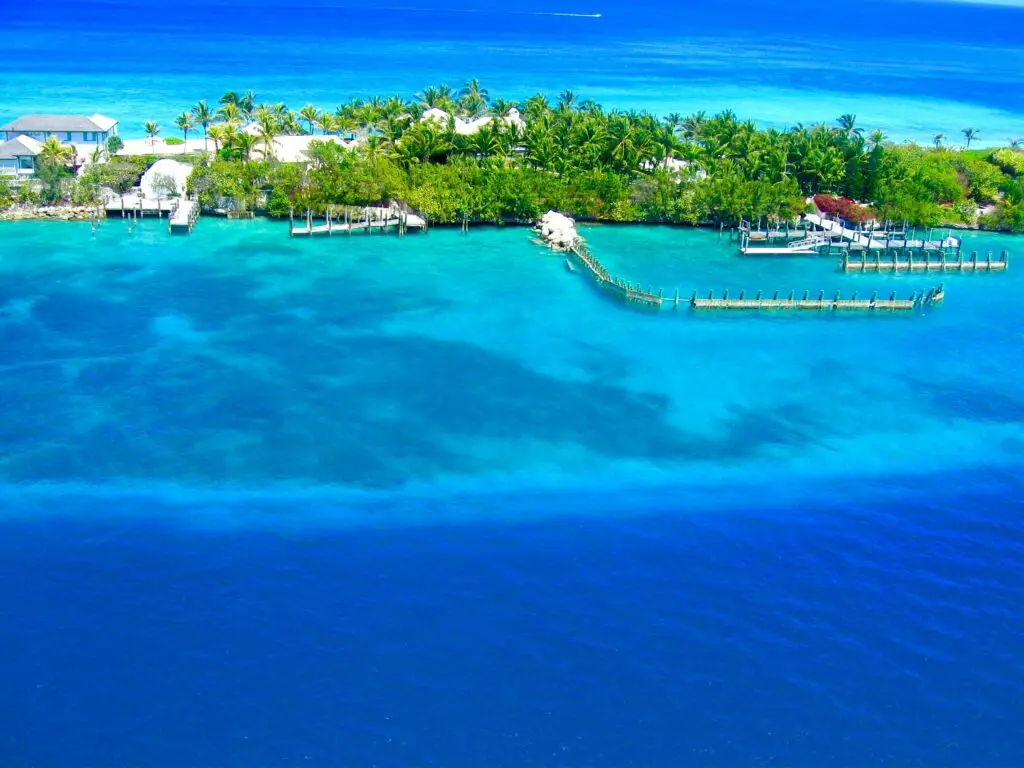
What makes the Bahamas extraordinary is not just the islands, but the water between them — a shallow, sunlit sea unlike anywhere else on Earth. Sandbanks stretch for miles beneath warm, crystal-clear water, creating color gradients that shift from mint green to bright turquoise to deep sapphire. The sea is so clear that from an airplane you can see the outlines of reefs, sandbars, dolphins, boats and even shadows of sharks gliding effortlessly through the shallows.
The islands vary hugely. New Providence and Grand Bahama are lively, developed, filled with resorts, restaurants and activity. The Out Islands — also called the Family Islands — feel untouched, local, and dreamlike: empty beaches, pastel houses, wooden docks, mangroves, quiet villages, friendly fishermen, wild flamingos and tiny airports with runways barely larger than the islands themselves.
The natural world of the Bahamas is gentle but impressive. There are coral reefs full of tropical fish, caves with prehistoric formations, blue holes dropping straight into darkness, mangrove forests protecting shorelines, pine forests rustling in the wind, and beaches that stretch for miles without a single footprint.
The landscape feels open, bright and full of light — a place where sky and sea blur together.
History — Pirates, Freed Slaves, Shipwrecks & the Making of a Nation
The Bahamas has one of the most dramatic and fascinating histories in the Caribbean. For centuries, the islands were a crossroads for explorers, traders, privateers and pirates. Nassau was once the pirate capital of the world — home to Blackbeard, Calico Jack, Anne Bonny and Benjamin Hornigold. The Golden Age of Piracy left behind hidden coves, shipwreck stories and legends that still shape the imagination of locals.
But the most important chapter in Bahamian identity is its African heritage. After British colonization and the horrors of the slave trade, the Bahamas eventually became a safe haven for freed Africans — including groups of Liberated Africans rescued from illegal slave ships in the 1800s. Their descendants shaped the country’s culture, rhythm, language, music, cuisine and resilience.
In the 20th century, the Bahamas became a world tourism icon, but beneath that exterior remains a deep cultural history tied to community strength, family ties and island pride. Bahamians hold tight to their heritage — Junkanoo, bush medicine, folklore, storytelling, music and faith.
History in the Bahamas is not hidden — it lives in voices, festivals, ruins, museums, and everyday life.
🌴 NEW PROVIDENCE — NASSAU & PARADISE ISLAND
The Heartbeat of the Country: Color, Culture, Energy & Island Light
New Providence is the most populated island in the Bahamas and home to Nassau, the capital. It is the cultural and economic center of the country — lively, colorful, historical, and filled with the sounds of cars, street vendors, birds, music and ocean wind.
But unlike big capitals around the world, Nassau still feels like an island — laid-back, bright and full of charm.
Nassau — Culture, Heritage, Color & Everyday Caribbean Life
Nassau blends old and new in a way that feels alive. Colorful colonial buildings line the streets. Markets overflow with crafts, spices, fruits and handmade jewelry. Murals decorate walls with Bahamian stories. Churches ring their bells on Sunday mornings, and Junkanoo music echoes through alleys during festivals.
Downtown Nassau is small but vibrant — with pink government buildings, tree-shaded squares, narrow lanes, pastel homes, and views of the sparkling harbor.
The Straw Market is filled with crafts handwoven from palm leaves. Queen’s Staircase, carved by enslaved Africans, leads through limestone cliffs into a quiet, shaded walkway. Fort Fincastle offers a panoramic view of the city and the sea.
Nassau feels warm, energetic, colorful and deeply rooted in culture. Bahamas
Paradise Island — Atlantis, Beaches & Bright Blue Sea
Connected to Nassau by a bridge, Paradise Island is where the Bahamas becomes playful, glamorous and resort-driven. The island is home to the world-famous Atlantis Resort — a massive complex of towers, aquariums, pools, lagoons, luxury suites, restaurants, water slides and casinos.
But it is not only Atlantis. Paradise Island has some of the most beautiful beaches on New Providence, including Cabbage Beach — an endless ribbon of soft sand and clear blue water where waves break gently against the shore.
Walking here feels like moving through pure Caribbean radiance — the sand warm, the water glowing, the air tasting like salt and sunlight.
Paradise Island feels polished, vibrant, exciting and beautifully tropical.
Cable Beach — Sunset Luxury & Calm Caribbean Waters
On the opposite side of Nassau, Cable Beach offers a different atmosphere — softer, relaxing, glowing with afternoon light. Resorts line the shore, but the beach remains peaceful, with gentle waves that shimmer gold at sunset. Offshore coral patches attract snorkelers. Families stroll along the shoreline. Coconut palms sway above quiet coves.
Cable Beach feels elegant, warm and easygoing.
Local Life on New Providence — Culture, Food & Warm Hospitality
Away from the tourist areas, New Providence reveals its true heart. Colorful neighborhoods sit above hills facing the sea. Grocery shops play reggae and rake-and-scrape. Schoolchildren in uniforms laugh as they walk home. Street vendors sell conch salad freshly chopped with citrus and peppers. Families barbecue chicken and fish on weekends.
There is a feeling of familiarity, comfort and pride in the way people live.
The island’s cultural life is rich — with Junkanoo festivals, gospel choirs, storytelling, art galleries, straw weaving, boat regattas and traditional cuisine.
New Providence feels grounded, expressive, friendly and alive with Bahamian soul.
🏝️ GRAND BAHAMA — Nature, Quiet Beaches & Community Spirit
Grand Bahama is the second most visited island in the Bahamas, yet it feels far more peaceful than New Providence. It is a place of pine forests, mangroves, long beaches, blue holes, quiet neighborhoods and friendly local communities.
The island has a gentle personality — calm, natural and filled with soft breezes.
Freeport is the commercial center, built with wide streets, markets, plazas and a marina. But the real beauty of Grand Bahama lies outside the city — in the national parks, beaches and small settlements scattered along the coast.
Lucayan National Park is a gem of the island — a world of mangroves, caves, boardwalks, birds, and Gold Rock Beach, where shallow water stretches across sandbanks that disappear at low tide. When the tide recedes, the beach becomes an endless mirror reflecting sky and clouds.
Further along the island, Eight Mile Rock and West End reveal a more traditional Bahamian lifestyle — fishermen launching their boats at dawn, families sitting on porches, the sea turning pink at sunset.
Grand Bahama feels refreshing, open, laid-back and peaceful.
🌺 The Out Islands — The True Soul of the Bahamas
Beyond New Providence and Grand Bahama lies the heart of the country — the Out Islands, also known as the Family Islands. This is where the Bahamas becomes quiet, unspoiled, and deeply authentic. No crowds. No noise. No rush. Just pure island life. Bahamas
This section of the guide begins with Eleuthera, Harbour Island and Andros — with the remaining Out Islands covered in Parts 2 and 3.
Eleuthera — Pink Sand, Cliffs, Pine Forests & Endless Blue
Eleuthera is long, narrow and stunning — an island of pink-sand beaches, dramatic limestone cliffs, turquoise shallows, pineapple farms, and small vibrant settlements. It stretches for more than 160 kilometers but remains peaceful, rural and filled with wide open spaces.
The island’s pink-sand beaches glow at sunrise. Waves leave soft footprints in rose-colored grains. Cliffs drop into deep blue water. Small coves hide between rocks. Villages like Governor’s Harbour have pastel houses, church steeples and quiet bays where fishermen clean their catch as the sun sets.
Glass Window Bridge is one of the most dramatic sights in the Bahamas — a slender strip of land where the deep Atlantic meets the calm Bahama Bank. On one side, waves crash violently against cliffs. On the other, the ocean sits calm, clear and turquoise.
Eleuthera feels wild, artistic, soothing and almost otherworldly in its beauty.
Harbour Island — Pastel Houses & the Iconic Pink Sand Beach
Just off Eleuthera lies Harbour Island, a small, elegant island famous for its long ribbon of pink-sand beach and its charming town, Dunmore Town.
This island feels refined yet relaxed — golf carts roll down narrow lanes, hibiscus flowers bloom beside white picket fences, roosters crow in gardens, and the sea glows in surreal pastel colors.
Pink Sand Beach stretches for kilometers, washed in soft, powdery sand that turns blush at sunrise and sunset. The water is clear and gentle, ideal for swimming.
Harbour Island feels romantic, stylish, peaceful and dreamlike.
Andros — Blue Holes, Mangroves, Reefs & Deep Island Spirit
Andros is the largest island in the Bahamas but one of the least developed — a wilderness of mangroves, forests, blue holes, creeks and reefs. It is a place for divers, explorers, fishermen and nature lovers. The Andros Barrier Reef is one of the world’s longest, and blue holes drop into mysterious underwater caverns that stretch for kilometers.
Villages on Andros are small and welcoming. Life is slow and deeply tied to nature. Bonefishing flats stretch endlessly. Mangroves twist their roots into clear water. Birds fill the forests at dusk.
Andros feels ancient, primal, peaceful and full of wild beauty.
Exuma, Long Island, Cat Island, San Salvador, Rum Cay, Ragged Island, Acklins, Crooked Island, Inagua & Bimini — The Soul of the Out Islands
The Bahamas becomes truly magical when you travel beyond the well-known islands and step into the Out Islands — places where time stretches, nature feels untouched, and the ocean seems to glow with its own inner light. These islands reveal the full emotional range of the Bahamas. Some feel wild and windswept. Others feel soft, gentle, peaceful. Some feel remote, shaped by isolation. Others feel intimate, alive with community warmth. Every island has its own identity, its own rhythm, its own voice.
Part 2 of your guide explores these quiet jewels — the islands that define the Bahamas not as a tourist destination, but as a living culture, a natural treasure, and an emotional experience.
Exuma — 365 Islands of Light, Sandbars, Turtles & Impossible Blues
Exuma is perhaps the most visually breathtaking region in the entire Caribbean. It is not one island but a chain of cays that stretch across shallow, glowing water — each cay a dot of sand, rock, palms or coral floating above some of the clearest water on Earth. The famous images of sandbars turning white under the sun, the luminous turquoise channels, the gentle slopes of sea grass where turtles feed — all of this is Exuma.
Great Exuma and Little Exuma are the inhabited islands, full of small settlements, pastel houses, docks with fishermen selling freshly caught conch, and beaches empty for miles. Life feels slow and soothing here. Children play barefoot in sandy lanes. Goats wander across hillsides. Boats drift in the harbor as the tide moves in and out.
The Exuma Cays, stretching north, are a world of their own — tiny private islands, beaches accessible only by boat, mangrove channels, lagoons sparkling like liquid crystal, and shallow water that seems endless.
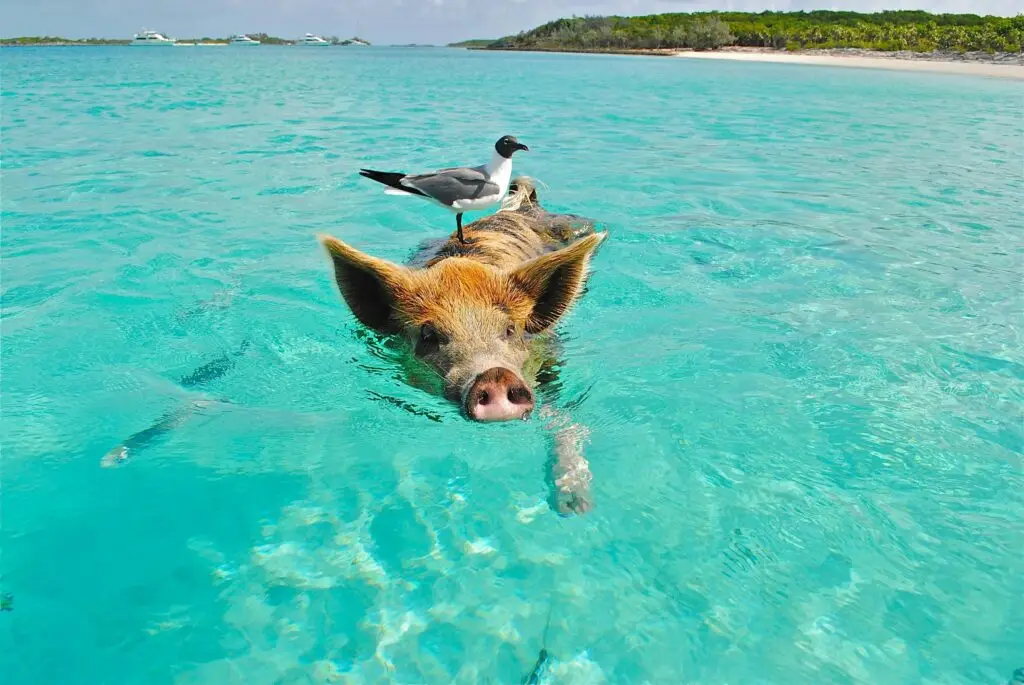
Swimming pigs have made Big Major Cay famous, but the true heart of Exuma lies in its untouched serenity: nurse sharks gliding through turquoise shallows at Compass Cay, sea turtles surfacing gently at Little Farmer’s Cay, starfish resting on sandy bottoms, and long ribbons of sand appearing only when tides pull the sea away.
The light in Exuma is softer, brighter, cleaner — as if the sky and sea agreed to meet halfway.
Exuma feels like the dream Caribbean.
Long Island — Cliffs, Caves, Deep Blue Holes & Quiet Villages
Long Island is long, narrow and striking — an island where two contrasting worlds meet. On the eastern side, the Atlantic crashes dramatically against limestone cliffs, sending spray into the wind. On the western side, calm turquoise shallows stretch endlessly across the Exuma Bank. Between the two coasts lie farmland, small settlements, white churches, palm groves, salt ponds and quiet beaches that feel untouched.
Dean’s Blue Hole is the star of Long Island — a deep, circular underwater abyss tucked into a calm cove of white sand. It plunges more than 200 meters into darkness. Free divers from around the world come here to train in silence and depth. The water changes from transparent turquoise at the surface to dark navy in the center where the hole begins — a place where nature feels almost supernatural.
Cape Santa Maria, at the northern tip of Long Island, has one of the softest, most pristine beaches in the Bahamas. The sand feels like powder. The water is crystal clear and warm, barely moving. Sunsets cast pastel colors across the sky and sea.
Long Island feels peaceful, introspective, wild at the edges and soft in the center — a place where cliffs meet calmness.
Cat Island — Spiritual, Quiet, Green & Rich in History
Cat Island is one of the most soulful islands in the Bahamas — a place of gentle hills, lush green landscapes, winding empty roads, and beaches with soft sand and bright water. It feels remote and spiritual, shaped by music, traditional culture and a slower rhythm of life.
At the island’s center rises Mount Alvernia, the highest point in the Bahamas, topped by The Hermitage — a tiny stone monastery built by a Catholic priest in the early 20th century. The view from the top feels like standing above the entire nation, with the Atlantic on one side and the calm Caribbean on the other. The Hermitage is simple, small, artistic and deeply peaceful.
Villages on Cat Island feel spread out and quiet. Houses stand among palm trees and hibiscus bushes. Children walk along roadsides. Locals fish in shallow coves. The island is known for Rake-and-Scrape music, played with goatskin drums, concertinas and saw blades scraped with metal tools — a sound that is uniquely Bahamian, rhythmic, lively and full of history.
Cat Island feels nostalgic, thoughtful, green and emotionally rich.
San Salvador — Landfall of Columbus & Island of Blue Water
San Salvador is steeped in history — widely considered the first island reached by Christopher Columbus in 1492. Today it is far quieter, known for its rocky coastline, inland lakes, shipwrecks, reefs and dramatic underwater landscapes.
The sea around San Salvador is an intense shade of blue, quickly dropping into deep water where sharks, rays, dolphins and large fish roam. The island is beloved by divers — coral walls, swim-throughs, caverns and clear visibility make the underwater world here spectacular.
On land, San Salvador feels open and windswept. Beaches stretch long and empty. Narrow roads follow the coast. Historical monuments mark places tied to exploration and colonial history. Small settlements have churches, local shops, pastel homes and the warmth of close-knit community life.
San Salvador feels historical, wild, oceanic and deeply atmospheric.
Rum Cay — Unspoiled, Undeveloped & Naturally Beautiful
Rum Cay is one of the least developed islands in the Bahamas, full of rolling hills, pine forests, quiet beaches and coral reefs that shimmer under sunlight. The island has a rustic charm — small communities living simply, nature overwhelming everything, and a coastline lined with hidden coves shaped by waves and wind.
The water here is incredibly clear, with reefs close to shore, perfect for snorkeling and diving. The interior of the island feels rugged and rural — scattered houses, farmland, and old ruins from plantations long gone.
Rum Cay feels raw, undisturbed, authentic and deeply soothing.
Acklins & Crooked Island — Shallow Flats, Birds, Silence & Space
These two islands sit beside each other, forming a vast lagoon, shallow flats, mangrove channels and desert-like landscapes that feel ancient and untouched. This region is one of the most remote parts of the Bahamas.
Acklins is quiet, with small settlements, long stretches of coastline and landscapes shaped by salt ponds, cacti, limestone and wind. Crooked Island faces the beautiful Bight of Acklins — a shallow, luminous expanse of water where bonefish glide in small schools and the bottom glows white beneath the sun.
Life here is slow, simple and deeply tied to the environment. Birds nest in mangroves. Water ripples gently. Villages feel peaceful and far removed from the world’s noise.
Acklins and Crooked Island feel spacious, silent, reflective and full of natural purity.
Ragged Island — Remote & Resilient
Ragged Island is tiny, far from the main population centers, and home to a few hundred residents who live mostly in Duncan Town. Life here revolves around fishing, family, church and the sea. The island was heavily damaged by storms in the past, but its community remains strong, rebuilding with determination.
The island has rocky shores, shallow reefs and quiet beaches. The pace of life is extremely slow — a place where days blend into each other in calm simplicity.
Ragged Island feels humble, proud and resilient.
Inagua — Flamingos, Salt Flats & Wild Nature
Inagua sits at the southern edge of the Bahamas — a world of salt lakes, wetlands, flamingos, parrots and wide-open natural spaces. The island is rich with wildlife thanks to its protected national parks.
Great Inagua is home to one of the world’s largest populations of West Indian flamingos, their pink feathers glowing brightly against the blue water and white salt flats. They gather in enormous groups, moving slowly across shallow lakes where they feed.
The island’s Morton Salt facility covers huge areas, reflecting sunlight in shimmering pools. Wild donkeys roam freely. Birds of all kinds fill the wetlands. The landscape feels dry, sunny, wide and full of silence.
Inagua feels wild, open, remote and deeply ecological.
Bimini — Hemingway’s Island, Blue Water & Gateway to the Gulf Stream
Bimini sits closest to the United States — two small islands floating near deep ocean trenches where currents run strong and marine life is abundant. Ernest Hemingway spent years here fishing, writing and absorbing the raw energy of the sea. Bimini still holds that rugged, adventurous spirit.
The color of the water around Bimini is an intense electric blue. The Gulf Stream creates deep channels, attracting sharks, dolphins, marlin and other large fish. The island is famous for diving — the Bimini Road, a mysterious rock formation underwater, sparks theories of ancient civilizations. Reefs and wrecks in the area create a world of vibrant sea life.
On land, Bimini feels lively and local — golf carts buzzing down narrow roads, fishermen selling their catch, homes painted brightly, reggae playing from porches, and sunsets that turn the sea orange.
Bimini feels adventurous, charming, ocean-focused and full of character.
Culture of the Out Islands — Community, Simplicity & Deep Bahamian Roots
The Out Islands preserve the purest form of Bahamian life. People know each other by name. Families help each other. Traditions are strong. Churches are central to community life. Festivals revolve around music, boats, food and the sea. Children play freely in open fields. Elderly residents sit on porches watching the wind move through coconut palms.
The culture here is slower, more reflective, more grounded. Storytelling is important — tales of hurricanes, fishermen’s adventures, old island days, folklore, spirits, sailors, pirates and family histories. Music is softer, more acoustic. Food is fresher, simpler, made with love.
The Out Islands feel like the Bahamas in its truest form — warm, open, gentle and full of soul.
Culture, Music, Junkanoo, Food, People, Nature, Wildlife & the Emotional Soul of the Islands
The Bahamas, beyond its beaches and turquoise water, is a nation defined by rhythm, community, tradition and a deep sense of identity. It is a place where history lives in music, where the sea writes the rhythm of life, where families gather on porches as the sun sets, where laughter fills warm island nights, and where the concept of time becomes softer, slower and gentler. The country’s beauty is not only in its landscapes but in its people, its culture, its food, its festivals, its rituals and its everyday moments.
This final part of your guide explores the emotional and cultural heart of the Bahamas — the part that stays with travelers long after the scenery fades.
Bahamian Culture — Warm, Rhythmic, Proud & Full of Heart
The culture of the Bahamas is shaped by African heritage, island traditions, community values and the resilience of a people who have lived through storms, history and change. Bahamians speak with a musical accent full of rhythm and emotion. Conversations are expressive, full of humor and storytelling. Elders share wisdom, children play freely in sandy yards, and families gather for Sunday meals after church.
Community is everything. In small settlements, everyone knows each other. Neighbors help each other. People check in on the elderly. Churches are central to life, providing not only spiritual connection but also social gatherings, music, support and joy. Bahamian culture is deeply tied to the idea of unity — villages, families and friends forming a web of care and companionship.
The pace of life is slow and grounded. People sit outside, enjoying the breeze. They call out greetings to everyone passing by. They smile easily, laugh often and speak with openness. Even in more developed islands like New Providence, there is an underlying calmness and warmth that shapes daily life.
Bahamian identity is joyful and proud — built on history, strength and a deep connection to the sea.
Junkanoo — The Spirit of Celebration
Junkanoo is the heartbeat of Bahamian culture — a burst of color, sound, movement, emotion and spirit. It is more than a festival. It is a cultural expression rooted in African traditions brought by enslaved people centuries ago. It carries history, resilience and celebration. It is the Bahamas dancing through its past into its present.
During Junkanoo, the streets of Nassau come alive with the sound of goatskin drums, cowbells, whistles and brass instruments. Dancers move in vivid costumes decorated with feathers, sequins and handcrafted paper art. The drums echo through the night and into dawn. The air vibrates with rhythm. People cheer from the sidewalks. The parade becomes a river of color and sound flowing through the city.
The energy of Junkanoo is overwhelming — joyful, powerful, emotional, artistic and communal. It is a reminder of the island’s heritage, the strength of its people and the ability to transform history into celebration.
Music — Rake-and-Scrape, Goombay, Reggae & the Sound of the Islands
Music in the Bahamas is everywhere — in church choirs, in schoolyards, in bars, in marketplaces, on porches, on boats and on beaches. It flows naturally through daily life.
Rake-and-Scrape is one of the most distinct Bahamian musical styles. It uses goatskin drums, saws scraped with metal tools, concertinas and rhythmic clapping to create a sound that feels raw, joyful and deeply African in origin. It is the music of island gatherings, family celebrations and small community events.
Goombay music blends African beats with Caribbean rhythms, producing melodies that feel warm, grounded and uniquely Bahamian. Reggae and soca are also embraced across the islands, blending seamlessly into the soundscape.
In the Out Islands, music is softer and more acoustic — guitars, hand drums, singing voices and wind blowing through palm leaves create an intimate atmosphere that feels ancient and true.
Music here is not just entertainment. It is communication, identity and emotion.
Food — Fresh, Simple, Flavorful & Tied to the Sea
Bahamian cuisine is comforting, hearty, fresh and full of flavor. It is deeply tied to the ocean. Conch is a national treasure — served raw in salads with lime and pepper, fried into crispy fritters, cooked in chowders or stewed with tomatoes and spices. Fresh fish like snapper, grouper, mahi-mahi and barracuda are grilled, baked or fried, often served with peas and rice, plantains and coleslaw.
Cracked conch, a beloved dish, is tender, golden and eaten with a squeeze of lemon. Conch salad is bright, spicy and refreshing — the Bahamian version of ceviche. Johnnycake, a dense, slightly sweet bread, pairs with everything. Baked macaroni, seasoned with onions, peppers and cheese, appears at family gatherings. Stewed chicken and pork simmer in rich Caribbean gravies infused with herbs and spices.
On the Out Islands, ingredients are local — fresh coconut, guava, plantains, pineapples and sea salt harvested from the ocean. Meals are simple but filled with care and tradition.
Food in the Bahamas feels homemade, warm and deeply satisfying.
Bahamians — Warm, Playful, Resilient & Proud
The soul of the Bahamas is its people. Bahamians speak with humor, kindness and authenticity. They are known for generosity and friendliness. They help strangers as easily as friends. They smile often, joke easily and share stories openly.
In villages, daily life unfolds in slow moments — men playing dominoes under a tree, children running across schoolyards laughing loudly, women cooking meals while music plays softly from a nearby radio. Elders sit on porches watching the breeze move through palm leaves. People wave when they pass your car. Everyone greets you.
Despite storms, hurricanes, hardships and historical challenges, Bahamians remain strong. Their resilience is woven into their culture. They rebuild with determination. They care deeply for family. They hold onto faith, music, laughter and community.
Bahamians embody the emotional strength and warmth of the Caribbean.
Nature — Mangroves, Reefs, Pine Forests, Blue Holes & Wildlife
The Bahamas is a natural paradise with ecosystems shaped by shallow seas, limestone, coral and sunlight. Mangroves form the lungs of the islands. Their roots twist into clear water where baby fish find shelter. Birds nest in their branches. The water between their roots glows emerald.
Pine forests stretch across islands like Abaco and Grand Bahama, filled with tall Caribbean pines, sandy soil and birds that sing at sunrise. Reefs surround nearly every island, alive with fish, sea fans, sponges, rays and sharks. The underwater world is vibrant, colorful and full of movement.
Blue holes drop suddenly into darkness, filled with ancient marine fossils, saltwater layers and secret caverns. They feel mysterious, vast and alive.
The wildlife of the Bahamas is gentle and fascinating. Iguanas bask on rocky shores. Sea turtles glide through shallow bays. Dolphins play in channels between islands. Flamingos gather in bright pink flocks on Inagua, their feathers creating a living painting against salt flats. Sharks patrol the edges of reefs, important to the health of the ecosystem.
The natural world of the Bahamas feels pure, warm, luminous and deeply connected to the sea.
The Ocean — The True Masterpiece of the Bahamas
Everything in the Bahamas begins and ends with the water. The ocean shapes identity, culture, navigation, history, food and daily life. It is the country’s greatest treasure.
The sea here has countless shades of blue — colors impossible to describe unless seen in person. The shallows glow turquoise. The sandbanks turn mint green. The deep channels are sapphire. Reefs sparkle with light. Waves ripple gently across endless flats.
Sailing between the islands feels like floating above a world made of light. You can see starfish resting on white sand ten meters below. You can watch rays glide across the bottom. You can see schools of fish moving like silver clouds.
The sea changes constantly — calm in the morning, glowing at midday, golden at sunset, silver under the moon.
The ocean of the Bahamas feels alive, sacred and endlessly beautiful.
Spirituality — Faith, Meaning & Connection
Faith plays a central role in Bahamian life. Churches are everywhere — small wooden chapels painted pastel colors, large stone churches with bells that call communities together, and open-air worship spaces where people sing and pray under the sky. Gospel music fills Sunday mornings. Prayer is woven into daily routines. Faith brings comfort during storms, joy during celebrations and unity during gatherings.
But spirituality in the Bahamas also exists in the natural world. The sea feels like a sacred presence. The quiet of the Out Islands feels meditative. Sunsets feel like blessings. The wind carries a sense of peace. Time slows. The mind quiets. Nature becomes a form of spiritual connection.
Spirituality here feels calm, grounded and deeply intertwined with both community and environment.
The Everyday Atmosphere — Light, Laughter & Island Rhythm
The everyday life of the Bahamas is full of moments that feel simple yet beautiful. The sound of waves rolling gently onto a beach early in the morning. The smell of fried fish drifting from a small restaurant. Children riding bicycles along quiet streets. A fisherman cleaning conch on a dock while talking with friends. Families gathering for meals. Neighbors sharing fruit from their trees.
The islands move with a rhythm of ease. The sun rises softly over calm water. The day warms slowly. The breeze picks up. Boats appear at the horizon. Music begins to play somewhere in the distance. People laugh. The sun sets in warm orange light.
The Bahamas is a country that lives in moments.
The Emotional Essence of the Bahamas
The Bahamas stays with you long after you leave.
It stays in the color of the water, the kind you remember forever.
It stays in the warmth of voices greeting you with ease.
In the softness of evenings filled with music and breeze.
In the glow of sunlit sandbars stretching endlessly under the sky.
In the laughter of children on quiet streets.
In the sound of Junkanoo drums rising from deep cultural memory.
In the feeling of peace as you float in warm shallow water.
In the strength of people who rebuild after storms with courage and unity.
In the taste of conch salad fresh from the sea.
In the sparkle of stars over calm black water at night.
In the gentle rhythm of daily life.
The Bahamas is not just a destination — it is a feeling.
A place of beauty, heart and light.
A country that touches the soul like the sun touches the sea.
A place you never truly forget.
 Related Articles
- Kakslauttanen Arctic Resort
- Top 10 Most Unique Places to Stay in Europe
- 10 Incredible Castles Around the World