
🇨🇺 Cuba Travel Guide
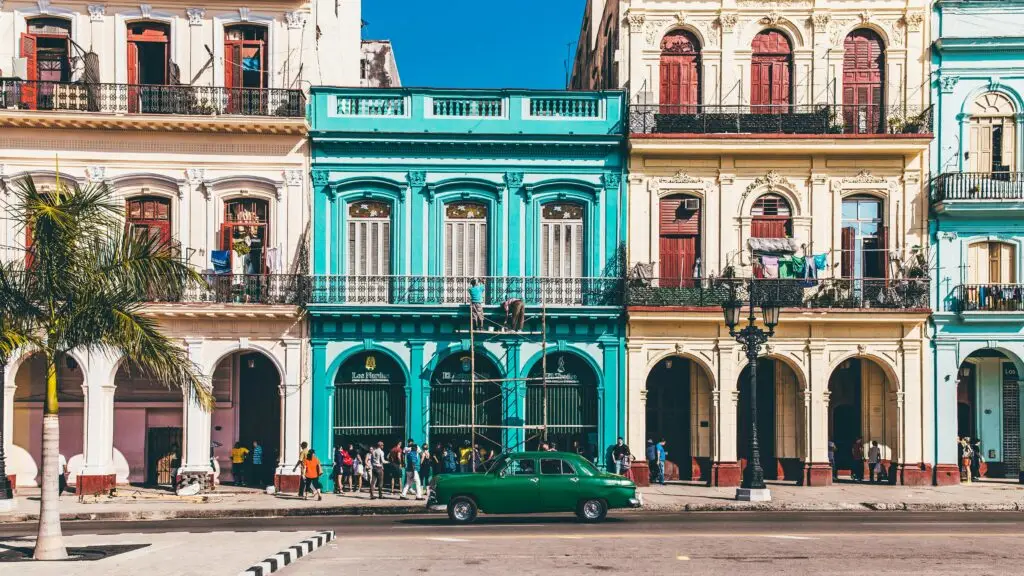
Havana’s Soul, Cuban Rhythm, Island Identity & the Atmosphere of a Country Frozen in Time Yet Full of Life
Cuba is not a destination you simply visit; it is a place you feel.
It is a country where history lingers in the air, where music drifts from balconies, where people move with rhythm in their step, where old American cars glide under fading colonial facades, and where the Caribbean sun paints everything in warm, golden tones. The island’s character runs deep — emotional, expressive, nostalgic, bold, colorful and undeniably alive.
Cuba is a world suspended between time periods. The architecture speaks of Spanish colonial influence and revolutionary ideals. The cars come straight from 1950s America. The culture blends African, European and Caribbean roots. The landscapes range from tobacco valleys to turquoise beaches to mountains heavy with mist. And everywhere, people live with warmth, humor, resilience and heart.
When you arrive in Cuba, the first thing you notice is not a building or a beach — it is the feeling that wraps around you.
The smell of tropical fruit, sea breeze and gasoline from vintage cars.
The sound of salsa, son and bolero echoing through narrow streets.
The vibrant colors of pastel buildings, bright clothing, fresh produce and lively murals.
The expressive way people talk, gesture, sing and tell stories.
The slow, steady rhythm of a culture shaped by joy and struggle.
Cuba is more than a place. It is an atmosphere. A mood. A living story.
This first part of the guide explores the emotional heartbeat of Cuba — Havana, the capital and cultural center of the island, where past and present weave together in a vibrant, unforgettable tapestry.
Havana — A City of Dreams, Decay, Beauty & Endless Rhythm
Havana (La Habana) is one of the most evocative cities in the world — a place where every street feels like a film set, every building has a story, and every moment carries the sound of music or the movement of the sea. The city stands proudly on the northern coast of Cuba, facing the Straits of Florida, its skyline a mix of domes, colonial mansions, crumbling facades, oceanfront walls and colorful houses packed tightly together.
Havana is not polished, and that is precisely its charm.
The paint peels.
The plaster cracks.
Balconies lean gently forward.
Old buildings display centuries of history in their weathered walls.
Yet the colors — pale pinks, sea greens, sky blues, soft yellows — glow beautifully in Caribbean light.
Walking through Havana is an emotional experience. The streets hum with life. Children play baseball in open squares. Vendors sell mango slices and coconut water. Street musicians create melodies that drift through warm air. Elderly men sit outside their homes smoking cigars. Classic cars in shimmering reds, purples and turquoise shades rumble past, their engines growling like memories brought back to life.
Havana is romantic, nostalgic, chaotic, poetic and endlessly fascinating.
Old Havana (Habana Vieja) — The Soul of the Capital
Old Havana is the historical heart of the city, a UNESCO World Heritage Site filled with plazas, cobbled streets, cathedrals, fortresses, palaces and grand colonial structures. The neighborhood feels like a time machine — yet it is alive with contemporary Cuban energy.
The streets are narrow and intimate. Laundry hangs from balconies. Children laugh and chase each other. Music pours out of open doorways. The sound of a guitar or trumpet is never far away. The scent of coffee and fresh bread wafts through the air. The light falls softly between old stone buildings, creating a warm glow on the streets below.
Old Havana is full of plazas where history unfolds:
Plaza Vieja, lined with restored mansions and cafés.
Plaza de Armas, shaded by tall trees and surrounded by antique stalls.
Plaza de la Catedral, where the baroque cathedral rises beautifully in white coral stone.
At every corner, you feel centuries of culture merging with the present moment.
Havana Vieja is not quiet; it is lively, expressive and full of soul.
The Malecón — Havana’s Oceanfront Heartbeat
Stretching for eight kilometers along Havana’s northern edge, the Malecón is the city’s emotional spine. It is more than a seawall — it is a gathering place, a meeting point, a front-row seat to daily life and the endless waves of the Atlantic. At sunset, the entire city seems to walk here. Couples sit on the wall sharing quiet moments. Friends drink rum and play music. Fishermen cast lines into the rough blue sea. The breeze is warm and salty. The sky turns shades of orange, red and purple.
Night brings a different energy. The streetlights reflect on the ocean’s surface. Classic cars roll by with headlights glowing. People sing, dance, laugh and enjoy the cool air. The Malecón is a place where Havana breathes — where life moves with rhythm and the sound of waves accompanies everything.
It is impossible to understand Havana without the Malecón.
Music Everywhere — The Pulse of Cuban Life
Music is not a performance in Cuba — it is a way of life.
Havana’s soundscape is a constant blend of genres born on the island and shaped by its people:
Son Cubano — the foundation of Cuban music, emotional and rhythmic.
Salsa — sensual, powerful and full of fire.
Bachata and merengue from neighboring islands.
Jazz with Cuban flair, improvisational and soulful.
Bolero, slow and romantic, sung with deep emotion.
Rumba, rooted in African tradition with drums that speak a spiritual language.
In Havana, music comes from small cafés, balconies, street corners, living rooms and courtyards. Groups gather with guitars, maracas and trumpets, creating spontaneous performances that feel intimate and electric at the same time.
The music reflects the Cuban spirit — expressive, passionate, emotional and alive.
Classic Cars — Rolling Icons of Cuban Identity
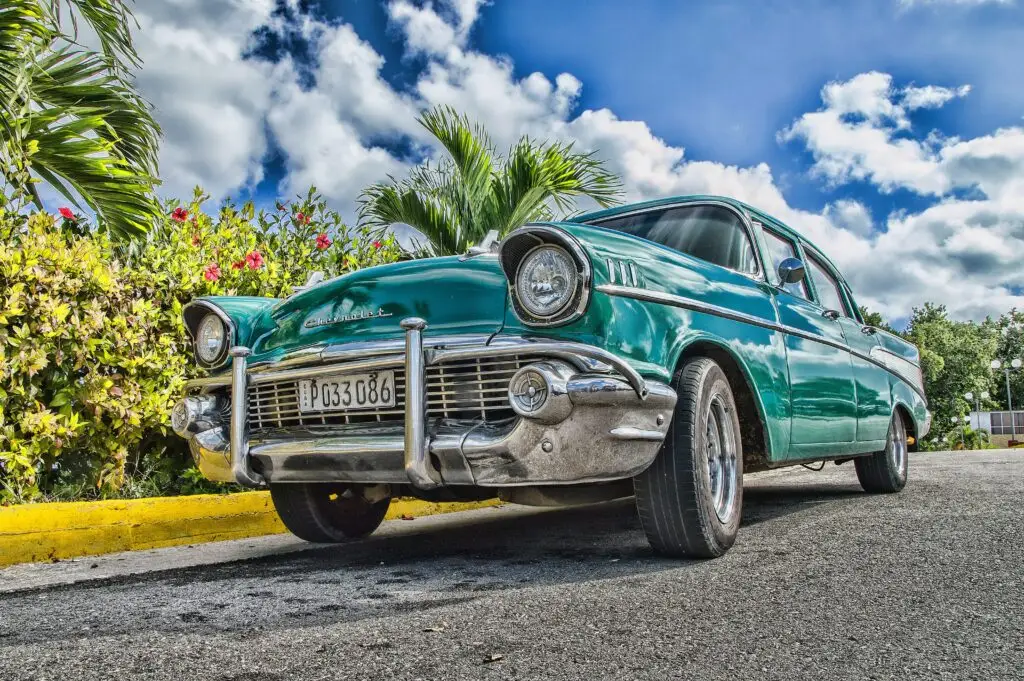
One of the most iconic images of Cuba is its vintage American cars — Chevrolets, Cadillacs, Pontiacs and Plymouths from the 1940s and 1950s, restored and preserved with incredible skill. These cars rumble through Havana’s streets like colorful ghosts from another era, their chrome gleaming in the sun, their engines growling deeply.
In most countries, these cars would be museum pieces.
In Cuba, they are everyday life.
Taxis, family vehicles, wedding cars, tour cars — they are a symbol of Cuban creativity and resilience.
Each car has its own personality.
Some are polished and shiny.
Others are patched together with makeshift parts.
But every single one carries the soul of the island.
Seeing these cars lined up on the Malecón at sunset is like stepping into a living postcard.
Daily Life in Havana — Community, Expression & Warmth
The beauty of Havana lies not only in its buildings or music but in its people.
Cuban culture is warm, social, expressive and deeply communal. People talk to strangers freely. Neighbors share food, coffee and stories. Doors and windows remain open, allowing the breeze — and conversation — to flow inside. Life is lived outside, on the street: children play baseball with makeshift bats, women chat on steps, men play dominoes with intensity, and families gather every evening to cool off and socialize.
Despite hardships, Cubans live with humor, generosity and optimism.
This resilience is part of the island’s identity.
Walking through Havana, you feel welcomed. You feel the vibrancy of a community that values connection and expression. And you begin to understand why travelers fall in love with this city — because it feels real, emotional and alive.
The Architecture of Time — Crumbling Beauty & Restored Grandeur
Havana’s architecture tells the story of its history in every crack, column and balcony. Spanish colonial mansions line wide streets. Neoclassical facades tower over plazas. Art deco structures add geometric beauty. Some buildings are restored to their former glory, shining brightly in pastel colors. Others crumble slowly, their paint peeling but their charm untouched.
This contrast — restored vs. decaying — is part of Havana’s emotional impact.
Nothing here feels artificial.
Everything carries the weight of time.
Photographers adore Havana, because the city offers endless texture, color and character.
Cuban Spirit — Pride, Identity & Cultural Depth
Cubans are proud of their culture, heritage, music, literature, dance and history. The island has produced world-famous artists, writers, musicians and thinkers. The Afro-Cuban influence runs deep, shaping everything from religion to rhythm. The revolutionary history still echoes in murals and stories.
Cuba is complex.
It is political and poetic.
Fiery and peaceful.
Joyful and nostalgic.
Modern and frozen in time.
This complexity is part of what makes the island so fascinating — it has layers, contradictions and emotional depth.
Viñales Valley, Tobacco Culture, Western Cuba’s Countryside & the Slow Rhythm of Rural Life
Leaving Havana and traveling west feels like entering a completely different world. The noise of the city fades, the energy softens, and the landscape opens wide. Suddenly, Cuba becomes a place of rolling hills, red earth, tobacco fields, limestone mountains and quiet rural villages where life moves with unhurried rhythm. This region — especially the Viñales Valley — is one of the island’s most breathtaking natural treasures.
The road into western Cuba feels almost cinematic. The air smells of earth, sugarcane and banana leaves. Palm trees sway gently along the roadside. Farmers ride horses along dirt paths. Ox-drawn plows carve lines in the soil. You pass small towns where pastel-painted houses sit under tall royal palms, Cuba’s national tree. There is a deep sense of calm and authenticity in the countryside — a simplicity that feels timeless.
Western Cuba is the heart of tobacco country. It is where the famous Cuban cigars begin their life in fields of emerald green. It is also where nature takes on dramatic shapes — limestone mountains rising like giant cliffs from the valley floor, caves that stretch deep into the earth, and viewpoints that reveal landscapes so stunning that they feel almost unreal.
This part of Cuba is full of silence, beauty, and tradition.
Viñales Valley — A Landscape of Red Earth, Emerald Fields & Towering Mogotes
The Viñales Valley is one of the most iconic landscapes in the Caribbean — a UNESCO World Heritage Site that feels like a giant natural amphitheater sculpted by time and tropical climate. The valley floor is a rich, deep red, the color of fertile soil used for growing some of the world’s finest tobacco. Above this soil rise enormous limestone formations called mogotes, steep-sided mountains covered in lush greenery.
In early morning, the valley fills with mist. The fog drifts slowly across the fields, settling at the base of the mogotes. Sunlight slices through the haze in golden rays. Farmers walk to their fields with horses and oxen. Birds call from the trees as the day warms. Everything feels fresh, quiet and deeply peaceful.
The colors of Viñales are intense.
Green tobacco plants sway in the breeze.
Red earth contrasts sharply with blue sky.
White clouds drift lazily overhead.
Palm trees stand tall and elegant across the valley.
The mogotes create dramatic silhouettes against the horizon.
Walking or riding a horse through the valley is like stepping into a painting.
The silence is powerful.
The air is warm and earthy.
The beauty is humbling.
The valley represents Cuba at its most natural and pure.
Tobacco Farms — The Soul of Cuban Cigar Culture
Cuban cigars are known worldwide, and their story begins here in the Viñales Valley. Visiting a tobacco farm gives you insight into a craft that has been passed down through generations with great care, skill and pride.
The tobacco barns — called secaderos — are tall wooden structures with thatched roofs made from dried leaves. Inside, rows of tobacco leaves hang from rafters, drying slowly in warm air. The smell is rich, sweet, earthy and unforgettable. Farmers explain how the leaves are selected, dried, fermented and rolled into cigars by hand.
Everything is done with patience.
Nothing is rushed.
This is an art form.
The farmers speak with pride about their land and their craft. They show you leaves at different stages of drying, explain how the flavor develops, and demonstrate how a cigar is rolled with precise movements. Some invite visitors to sit on wooden benches in the shade, offering coffee or a sip of homemade rum while sharing stories about life in the valley.
In these moments, you feel the heart of rural Cuba — warm, honest, welcoming and deeply connected to tradition.
Horseback Riding Through the Valley — TimeSlows Down
One of the most beautiful ways to explore Viñales is on horseback. Riding along narrow dirt paths, you pass fields of cassava, corn, coffee, pineapple and, of course, tobacco. The horses move with gentle rhythm, their hooves softly tapping the earth. The air smells of warm soil and scattered wildflowers. Farmers wave as you pass, and children, barefoot and smiling, greet you from their porches.
The landscape shifts constantly — one moment you ride between tall palms, the next beneath towering mogotes that rise dramatically above you. Streams trickle through the valley. Butterflies dance between plants. The pace of life feels slower and more peaceful than anywhere else on the island.
Time here seems to stretch.
You forget about schedules.
You breathe deeper.
You become part of the landscape.
The simplicity and beauty of the valley stay with you long after the ride is over.
Caves of Western Cuba — Hidden Worlds Beneath the Surface
The limestone mountains of western Cuba hide a vast underground network of caves, some of the most impressive geological formations in the Caribbean. These caves feel ancient, mysterious and filled with natural wonder.
One of the most famous is Cueva del Indio, where you enter through passages of cool rock before boarding a small boat that floats through an underground river. The air is cool and damp. Stalactites hang overhead like stone icicles. Light filters through small openings, illuminating the water in silver-blue reflections.
Another remarkable cave is Gran Caverna de Santo Tomás, the largest cave system in Cuba and one of the most extensive in Latin America. Its chambers stretch across multiple levels, filled with caverns, tunnels and formations carved by centuries of flowing water. Exploring these caves is a humbling experience, reminding you of the natural complexity hidden beneath the island’s surface.
The caves of western Cuba reveal a quiet, ancient side of the island — a world carved by time and untouched by the noise of the modern age.
Viñales Town — Pastel Streets, Friendly Faces & Slow Caribbean Rhythm
The small town of Viñales sits at the entrance to the valley, surrounded by hills and farmland. The town feels peaceful, welcoming and full of local charm. Its houses are mostly one-story, painted in soft pastels — blue, pink, yellow and green — with rocking chairs on their porches where families gather in the evenings.
Life here moves slowly and gently.
Roosters crow at dawn.
Children play in the streets.
Neighbors greet each other warmly.
Music drifts from open windows.
Dogs sleep in the shade of mango trees.
In the central square, tall trees create pockets of shade where people sit and talk. Small cafés serve sweet Cuban coffee, fresh juices and simple meals. At night, local musicians play live music in restaurants, creating an intimate atmosphere full of joy and warmth.
Viñales feels like a place where time pauses — a place that reminds you of the beauty in simple, everyday life.
Mural de la Prehistoria — Art on a Mogote
One of the most unique sights in the valley is the Mural de la Prehistoria, a massive piece of art painted directly onto the side of a mogote. The mural depicts ancient life forms, fossils and early humans in bold colors. While opinions vary about its artistic merit, there is no denying its dramatic presence in the landscape.
Set against lush vegetation and steep rock, the mural becomes a vivid splash of color that contrasts with the natural beauty of the valley. The surrounding area is peaceful, with small paths, tropical plants and views of the mountains.
It is a reminder of how culture and nature intertwine in Cuba — in ways both unexpected and memorable.
The Silence of Sunset — Viñales at Day’s End
As the sun begins to set, the valley transforms into a world of soft, golden light. The mogotes cast long shadows across the fields. Smoke rises gently from farmhouses preparing dinner. Birds return to their nests. Horses graze quietly. The heat of the day fades into a warm, comforting breeze.
The sky changes color slowly — first orange, then pink, then purple, then deep blue as the stars appear. The valley becomes still, except for the distant sounds of animals and the soft murmur of wind moving through the palms.
Sunset in Viñales feels spiritual.
It is a moment when time truly stops.
A moment when you feel deeply connected to the earth.
It is one of the most peaceful experiences in all of Cuba.
The Rural Spirit of Western Cuba — Authentic, Honest & Full of Heart
The western countryside shows a side of Cuba that is untouched by tourism and rich in authentic charm. It is a world of farmers, families, traditions, horses, laughter, sharing, hard work and deep pride. People here live simply but joyfully, valuing relationships, community and nature.
You see it in:
The way neighbors stop to talk for twenty minutes.
The way children wave excitedly at passing travelers.
The way farmers smile even after long days of labor.
The way families gather each evening on their porches.
The way music slips into every part of daily life.
Western Cuba offers not only scenery — it offers humanity
Trinidad’s Colonial Soul, Cienfuegos’ French Elegance, Santa Clara’s Revolutionary Heart & The Dreamy Beaches of Central Cuba
Central Cuba feels like the beating heart of the island — a region where history, culture, architecture, music and natural beauty blend into one of the most atmospheric areas in the Caribbean. Travelling through this part of Cuba is like moving through chapters of a book, each city offering a different story, a different rhythm, a different emotional tone. The landscapes shift from mountains covered in mist to wide valleys filled with palm trees to coastlines of shimmering turquoise water.
This is the Cuba many travellers fall in love with: colonial towns frozen in time, plazas lined with pastel buildings, cobblestone streets warmed by Caribbean sun, musicians playing on corners, horses pulling wooden carts, and people gathering on their porches as evening light settles over terracotta roofs. It is a world where every narrow street feels like a painting.
In this part of the guide, you explore Trinidad, Cienfuegos, Santa Clara, the Escambray Mountains, the waterfalls of El Nicho and Topes de Collantes, and the white-sand beaches of Cayo Santa María — together forming a region that feels both serene and deeply alive.
Trinidad — A City Preserved in Golden Light
Trinidad is one of the most magical towns in the Americas — a perfectly preserved colonial jewel where time has slowed to a gentle rhythm. Set against the green slopes of the Escambray Mountains, the town glows softly under the Caribbean sun. Its cobblestone streets twist between pastel-colored houses, elegant mansions, wrought-iron balconies and clay-tiled roofs that have watched centuries pass. Walking here feels like entering a living museum, yet the atmosphere is anything but static. Trinidad lives and breathes with music, laughter, voices and the smell of home-cooked food drifting from open windows.
In the morning, the town is quiet and peaceful. The sunlight falls across cobblestones with a golden hue. Women sweep the front of their homes. Horses pull carts down narrow streets. The warm breeze stirs the leaves of palm trees. Birds sing above the rooftops. It feels like the town is waking slowly, stretching its arms after a long night.
By midday, Trinidad becomes livelier. Tourist groups arrive on foot or in vintage cars whose bright colors shine under the sun. Market stalls open in Plaza Carillo and Plaza Mayor, selling handmade ceramics, woven crafts, paintings and jewelry. Musicians begin tuning their guitars. Locals sit on stoops talking about the news, the weather or baseball. The heat climbs, but shade can always be found beneath arcades or inside small cafés that serve fresh juices and strong Cuban coffee.
But it is at sunset and after dark that Trinidad becomes truly magical.
The town glows warm as streetlights and house lamps illuminate the cobblestones.
Live music pours from open bars and restaurants — soft guitar, rhythmic percussion, passionate voices.
People dance spontaneously on the streets.
The air cools and becomes fragrant with the scent of grilled meats, tobacco smoke and tropical night.
You feel wrapped in history and nostalgia.
Trinidad at night feels like a dream you don’t want to wake up from.
Plaza Mayor — The Cultural Centerpiece of Trinidad
Plaza Mayor is the heart of Trinidad — a beautifully preserved square surrounded by white stone churches, palm trees and grand colonial mansions. The plaza feels like a snapshot from the 18th century, with elegant buildings reflecting the wealth of Cuba’s sugar-trade era.
Around the square stand historic homes painted in soft yellows and pale blues, now transformed into museums showcasing furniture, art and artifacts of the sugar barons who once ruled the region. The church towers rise above the rooftops, their bells echoing softly throughout the town.
Sitting on a bench in Plaza Mayor at sunset is one of the most peaceful moments in Cuba. Musicians play slow boleros. Horses trot past carrying families. Children play in the square’s open spaces. The sky turns golden, then orange, then a deep Caribbean blue. The plaza becomes a gathering place for locals and travelers alike, united by warmth and music.
The Valle de los Ingenios — A Landscape of Sugar Mills & Quiet Beauty
Just outside Trinidad lies the Valle de los Ingenios — the Valley of the Sugar Mills — a vast region filled with plantations, green fields, old stone towers, rusting machinery and the history of Cuba’s once-booming sugar economy. The landscape is open and quiet, framed by mountains and dotted with tall palms swaying in gentle breeze.
Walking or horseback riding through the valley offers a glimpse into the island’s past. Abandoned estate houses stand in silence, their walls weathered by time. Watchtowers rise above the fields, once used to oversee workers and guard plantations. The valley’s calmness contrasts with its history, creating a space where reflection comes naturally.
Today, farmers grow sugarcane, mangoes, corn and tropical fruits in small plots. Horses graze freely. Streams run through the valley, their waters clear and cool. The air is warm and scented with earth and vegetation.
The Valle de los Ingenios is a place of quiet reflection, where nature and history blend into a moving, unforgettable landscape.
Cienfuegos — The Pearl of the South
Cienfuegos has a different personality from any other city in Cuba — elegant, spacious, refined and touched by French influence. Often called “La Perla del Sur” (the Pearl of the South), the city has a unique architectural style that blends neoclassical beauty with tropical light and Caribbean sea breeze.
The streets are wide and airy, lined with bright pastel buildings decorated with columns, arches and carved facades. The sea hugs the city, creating a peaceful waterfront where fishing boats sway gently in calm water. The atmosphere is relaxed, romantic and filled with soft coastal charm.
Cienfuegos feels less chaotic than Havana and less rustic than Trinidad — it sits gracefully in between, offering a perfect balance of culture and serenity.
Parque Martí — The Elegant Heart of the City
Parque Martí is the central square of Cienfuegos, a meticulously maintained plaza surrounded by stunning architecture that reflects the city’s French heritage. The Teatro Tomás Terry, with its ornate Italian-style interior, faces the square like a grand guardian of Cuban performing arts. The Cathedral of the Immaculate Conception stands nearby, its twin towers rising above palm trees.
The air in Parque Martí feels peaceful, cooled by ocean breezes. Schools and government buildings line the plaza with dignified presence. Locals walk through the square on their way to shops and cafés. Elderly couples sit on benches reading newspapers. A soft murmur of conversations fills the air, blending with the sound of footsteps and rustling leaves.
In the late afternoon, musicians often gather to play slow, melodic songs that drift across the square. The atmosphere becomes romantic, nostalgic and deeply atmospheric.
Punta Gorda — Cienfuegos’ Waterfront Paradise
South of the city center lies Punta Gorda, a narrow peninsula extending into the calm blue bay. This area feels bright and relaxed, with sea breeze rolling gently across wooden porches and open-air restaurants.
Along the waterfront, Art Nouveau and Moorish-style mansions stand facing the sea, including the stunning Palacio de Valle — a fantasy of domes, towers, carved arches and intricate stonework. Its pastel colors glow beautifully in afternoon light.
Walking the promenade of Punta Gorda at sunset is one of the most serene experiences in Cuba.
The water glistens softly.
Sailboats drift across the bay.
The sky turns to gold.
Families gather for evening walks.
The air cools and carries the scent of the sea.
Cienfuegos feels structured, romantic and bathed in soft Caribbean elegance.
Santa Clara — The Revolutionary Heart of Cuba
Where Cienfuegos feels refined and Trinidad feels timeless, Santa Clara is bold, emotional and deeply tied to Cuba’s revolutionary identity. This is a city where history is not an echo — it is alive in the streets, monuments and collective memory of its people.
Santa Clara is known above all for being the site of Che Guevara’s decisive battle that helped end the Cuban Revolution. The atmosphere of the city holds pride, seriousness and powerful emotion.
The Che Guevara Mausoleum is the city’s centerpiece — a monumental complex containing his remains and a museum dedicated to his life. The statue of Che overlooks the plaza, a symbol of strength and revolutionary significance. The museum is filled with personal items, letters, photographs and stories that humanize a figure often mythologized.
But Santa Clara is more than its revolutionary legacy. It is a youthful and vibrant city filled with students, artists and musicians. Street art murals add color to walls. Music spills from cafés. Life feels passionate, expressive and full of creative energy.
Topes de Collantes — Misty Mountains & Refreshing Forests
High in the Escambray Mountains lies Topes de Collantes — a lush, green nature reserve filled with tropical forests, waterfalls, caves and cool mountain air. This region offers a refreshing break from Cuba’s coastal heat.
The forests here are rich with biodiversity.
Fern-covered slopes glisten with moisture.
Tall trees create a canopy of shifting shade.
Birds call from branches hidden in mist.
The wind moves through the woods like a soft whisper.
Hiking through Topes de Collantes is an immersive, sensory experience — the smell of wet earth, the sound of cascading streams, the feel of cool mountain air on your skin.
El Nicho — Turquoise Waterfalls Hidden in the Mountains
One of the crown jewels of central Cuba’s nature is El Nicho, a series of waterfalls and natural pools set deep within a lush mountain valley. The water is turquoise, clear, refreshing and surrounded by thick jungle where palm fronds and wildflowers grow in abundance.
The journey to El Nicho is as beautiful as the destination — winding roads through mountain passes, valleys filled with grazing horses, and scenic viewpoints where mist drifts across green hills.
At the falls, the sound of rushing water creates a peaceful rhythm. The pools shimmer under patches of sunlight. Small fish swim in clear shallows. The smell of fresh water and vegetation fills the air.
Swimming here feels like stepping into a natural sanctuary — cool, pure, revitalizing and unforgettable.
Cayo Santa María — A Dream of White Sand & Caribbean Light
After traveling through mountains, valleys and colonial towns, arriving at the beaches of Cayo Santa María feels like entering a tropical paradise. This region, on Cuba’s northern coast, is famous for sugar-white sand, aquamarine water and long, tranquil stretches of unspoiled coastline.
The sand here is soft like powdered sugar.
The water is crystal-clear in shades of turquoise, jade and sapphire.
Sea breeze carries the scent of salt and sunshine.
Waves roll gently, creating a soft, soothing soundscape.
Cayo Santa María feels peaceful, bright and endless — a perfect place to rest after exploring the depths of Cuba’s culture and history.
The Emotional Beauty of Central Cuba
Central Cuba is a region that stays in your heart because it shows the many sides of Cuba:
The history of Trinidad carved into cobblestones.
The elegance of Cienfuegos glowing softly in ocean light.
The passion of Santa Clara beating like a drum.
The misty forests of Topes de Collantes.
The blue waterfalls of El Nicho.
The white sands of Cayo Santa María.
It is a place where culture, nature and emotion come together beautifully.
Santiago’s Afro-Cuban Soul, Baracoa’s Tropical Wilderness, Eastern Mountains, National Parks & The Emotional Essence of Cuba
Eastern Cuba feels like a world apart — wilder, more tropical, more intense, more spiritual, and filled with deeper cultural roots than anywhere else on the island. The further you travel east, the more Cuba reveals its African heritage, its Caribbean energy, its poetic mystery, its mountains rising into humid clouds, and its landscapes that feel untouched by time. Everything becomes more dramatic. More emotional. More alive.
This part of the island is dominated by the Sierra Maestra, Cuba’s largest and most powerful mountain range — a place of revolutionary history, misty slopes, hidden trails and forests full of birdsong. Along the coast, the Caribbean Sea meets lush wilderness, black-sand beaches, coconut palm forests and tiny fishing villages clinging to the edges of mountains. On the eastern tip sits Baracoa, Cuba’s oldest settlement, surrounded by rivers, waterfalls and dense green jungle. And to the south lies Santiago de Cuba, the island’s cultural furnace — birthplace of son, home to the most passionate carnival in the Caribbean, and a city soaked in Afro-Cuban rhythm and revolutionary memory.
Eastern Cuba is raw, emotional, musical, exotic and deeply human — a place where the island’s soul shows itself fully.
Santiago de Cuba — The Island’s Cultural Heartbeat
Santiago de Cuba is unlike any other city in Cuba.
Where Havana is nostalgic and Trinidad is timeless, Santiago is fiery, rhythmic, emotional and full of movement. Located on a deep blue bay framed by mountains, the city is a melting pot of African, French, Haitian, Spanish and Caribbean influences. Music pulses through its streets like blood through veins. Conversations are expressive. Laughter is easy. Voices are strong. The rhythm is everywhere.
Santiago feels hotter — both in temperature and in spirit.
The air is humid and heavy with tropical scent.
The sun glows intensely on pastel buildings.
The breeze tastes like salt and spices.
Every street seems alive with activity.
Walking through Santiago is an immersive sensory experience. Street vendors sell fried plantains, sweet coffee and tropical fruits. Musicians play guitars and bongos under balconies. Groups of friends gather on street corners talking loudly, gesturing with animated hands. Kids run through alleyways between bright houses. Old men smoke cigars in doorways, watching life unfold with quiet pride.
There is no city in Cuba with more cultural intensity than Santiago.
Casa de la Trova — The Soul of Cuban Son
One of the most iconic places in the city is Casa de la Trova, a legendary music venue where some of Cuba’s greatest musicians have performed. Entering the Casa feels like stepping into the beating heart of Cuban music. The air buzzes with the sound of guitars, maracas, bongos and voices blending in perfect harmony. Couples dance in tight circles. Musicians smile as they play. The room is filled with warmth, sweat, rhythm and magic.
The music in Santiago is not just entertainment — it is identity.
It is ancestry.
It is expression.
It is life.
You feel it vibrating in your chest, moving through your body, pulling you into a world where every song is a story and every rhythm is a memory.
Revolutionary Memory — Moncada Barracks & Heroic History
Santiago is also a city of deep revolutionary significance.
The attack on the Moncada Barracks in 1953, led by a young Fidel Castro, marked the beginning of the Cuban Revolution. Today, the yellow-and-red fortress stands as both a museum and a reminder of the island’s political past. The walls display bullet holes and restored details. Inside, photographs, objects and documents tell the story of a moment that changed Cuba forever.
The city carries this history with solemn pride.
It is a place where revolutionary ideals, Afro-Cuban culture and strong identity blend into a powerful regional character.
Carnival de Santiago — The Most Passionate in the Caribbean
If there is one event that defines Santiago’s spirit, it is Carnival.
Held in July, the festival transforms the city into a world of color, music and pure emotion. Streets fill with dancers in vibrant costumes. Drums echo through neighborhoods. Floats move slowly past crowds cheering with explosive joy. The energy is intoxicating — a whirlwind of culture, rhythm, excitement and human connection.
Carnival in Santiago is not just a party — it is heritage, unity and celebration of identity.
Sierra Maestra — Mountains Full of Mist, Memory & Majesty
Leaving the city and traveling into the Sierra Maestra feels like entering another universe. The mountains rise dramatically from the earth, covered in thick forests, deep ravines, high ridges and valleys filled with morning mist. The air becomes cooler and fresher. The soundscape shifts from city noise to birdsong, rustling leaves and distant waterfalls.
The mountains have an almost mystical presence.
Light filters through the canopy in shimmering beams.
Clouds cling to peaks like soft white blankets.
Rivers carve paths through polished stones.
Ferns, orchids and moss cover the forest floor.
The Sierra Maestra is also the birthplace of modern Cuba. In these mountains, Fidel Castro and his guerrilla fighters hid, planned and marched during the revolution. Today, ruins of their camps — places like Comandancia de la Plata — remain hidden in the forest, reachable only by hiking trails. Walking these paths feels like moving through a living chapter of Cuban history.
But even without the revolutionary importance, the Sierra Maestra is one of the most breathtaking natural landscapes in the Caribbean — lush, wild, silent and majestic.
Baracoa — Cuba’s Tropical Eden
If Santiago is fire and rhythm, Baracoa is softness, mystery and rainforest magic.
Located on the easternmost tip of Cuba, surrounded by mountains and jungle, Baracoa is the oldest Spanish settlement on the island and one of the most enchanting destinations in the entire Caribbean.
Reaching Baracoa often feels like a pilgrimage. The winding road known as La Farola climbs steeply through mountains covered in rainforest. Mist drifts across the ridges. Palm trees sway wildly. The landscape becomes greener, wetter and more intense as you approach the coast.
And then—suddenly—you see it.
Baracoa appears like a tropical dream: a small town resting between a deep blue bay, lush hills and the mystical flat-topped mountain El Yunque, which dominates the skyline like a silent guardian.
Baracoa feels different from the rest of Cuba in every possible way.
It rains more.
The vegetation is thicker.
The atmosphere is humid, earthy and richly scented.
The people are warm, gentle and deeply connected to the land and sea.
Life here moves slowly, wrapped in tropical calm.
Rivers, Waterfalls & Chocolate — The Taste of Baracoa
Baracoa is famous for its rivers and waterfalls, which carve through rainforest and flow into calm coastal lagoons. The most beautiful include the Río Toa and Río Duaba, both surrounded by dense vegetation where butterflies, birds and crabs create a lively ecosystem.
Swimming in these rivers feels like discovering a hidden paradise. The water is cool, fresh and crystal clear. Sunlight sparkles on the surface. The jungle whispers with wind and wildlife. You feel completely embraced by nature.
This region is also the cacao capital of Cuba.
Chocolate has been produced here for centuries, and the flavor is rich, strong and deeply aromatic. Drinks made from pure cacao, crushed nuts, spices and coconut milk taste like ancient recipes passed down through generations.
Everything in Baracoa feels handmade, local, natural and filled with heart.
Black-Sand Beaches & Wild Coastlines
The beaches around Baracoa are different from the white sands of central Cuba. Many are black-sand beaches, created by volcanic minerals washed down from mountains. They glimmer under sunlight like fine powdered silver. Waves crash softly against the shore. Coconut palms lean toward the sea. The atmosphere feels quiet and untouched.
Walking along these beaches gives a sense of solitude, peace and deep connection to nature.
Eastern Cuba’s Wildlife — A Kingdom of Birds, Forests & Hidden Creatures
The eastern region is one of Cuba’s richest in biodiversity. Here you find:
Trogons with iridescent feathers that glow in sunlight
Tiny hummingbirds flitting between bright flowers
Butterflies in shades of orange, blue and emerald
Tree frogs singing at night
Endemic lizards sunning themselves on warm rocks
Crabs crossing roads in the rainy season like colorful armies
Wild pigs rustling in undergrowth
Tropical birds calling from deep in the forest
The air is alive with sound.
The forest feels ancient and breathing.
Nature becomes a cathedral of green light and movement.
Guantánamo Province — Remote, Rugged & Sun-Burned
Further south lies Guantánamo Province, a region of dry hills, sparse vegetation and almost desert-like landscapes that contrast sharply with Baracoa’s rainforest. The coastline here is rocky, sun-baked and dramatic, with waves crashing against cliffs that rise sharply from the sea.
This area is remote and rarely visited, giving it a sense of untouched isolation.
It embodies the wildest, most rugged part of Cuba.
The Emotional Essence of Cuba — A Closing Tribute
Cuba is not a place you forget.
It is a place that stays with you, not because of one specific sight or experience, but because of the feeling it creates deep inside you.
You remember the sound of Havana’s streets at night — guitars, laughter, footsteps, engines.
You remember Viñales’ morning mist settling gently over red earth.
You remember dancers moving to son in Trinidad under warm yellow lamps.
You remember the French elegance of Cienfuegos glowing in evening light.
You remember the revolutionary pride of Santa Clara.
You remember the cool forests of Topes de Collantes and the turquoise pools of El Nicho.
You remember the powdered-sugar sand of Cayo Santa María.
You remember the fire and rhythm of Santiago.
You remember the tropical poetry of Baracoa — rain on palms, river water, cocoa, mountains in clouds.
But most of all,
you remember the people.
Their warmth.
Their humor.
Their music.
Their resilience.
Their soul.
Cuba is not just an island — it is a feeling, a memory, a rhythm, a dream, a contradiction, a heartbeat.
It is a place where time slows down, where emotions deepen, where culture surrounds you, where the sea shines brighter, where the nights feel alive, and where every moment feels touched by something magical.
Cuba stays with you forever.
 Related Articles
- Kakslauttanen Arctic Resort
- Top 10 Most Unique Places to Stay in Europe
- 10 Incredible Castles Around the World